
Feature · Granada
Costa Tropical: The Complete Guide to Granada's Subtropical Coast
Wedged between the foothills of the Sierra Nevada and the Mediterranean Sea, the Costa Tropical is defined by dramatic cliffs, sheltered pebble coves and a unique subtropical microclimate. It offers a quieter, more agricultural alternative to its heavily developed neighbours.
By Dan · Updated 16 July 2026 · 9 min read
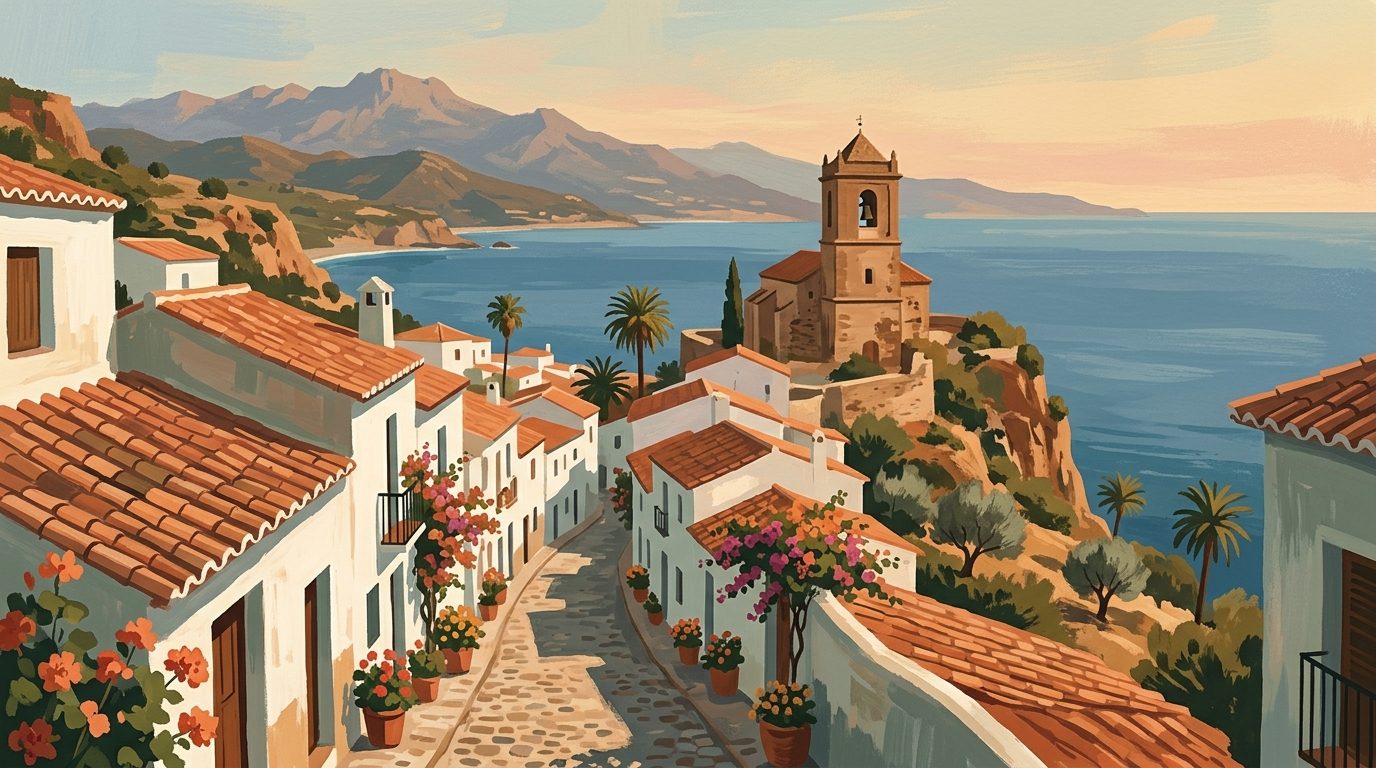
Wedged between the foothills of the Sierra Nevada and the Mediterranean Sea, the Costa Tropical is defined by dramatic cliffs, sheltered pebble coves and a unique subtropical microclimate. It offers a quieter, more agricultural alternative to its heavily developed neighbours.
Granada's coastline spans just over 70 kilometres, making it one of the shorter coastal stretches in Andalucía. However, it packs an extraordinary topographical punch. The Sierra Nevada mountains plunge almost directly into the Mediterranean Sea, creating a rugged and steep landscape. This geography forms a natural barrier against cold northern winds, resulting in a sheltered microclimate that averages 20 degrees Celsius year-round. This unique weather allows local farmers to cultivate avocados, mangoes, cherimoyas and papayas on terraced hillsides right above the water.
The Costa Tropical suits travellers who want a distinctively Spanish coastal experience. The high-rises are fewer, and the package tourism footprint is significantly smaller than on the Costa del Sol. Instead, you find working agricultural towns, historic Moorish castles perched on rocky outcrops, and dark sand or pebble beaches that attract domestic holidaymakers from Granada and Madrid. The dramatic drop-offs make the water exceptionally clear, drawing scuba divers to the western edges near La Herradura. While it lacks the endless white sand dunes of the Atlantic coast, the Costa Tropical rewards visitors who appreciate quiet coves, excellent seafood and an unpretentious atmosphere.
The towns, west to east
La Herradura: Marking the western edge of the Costa Tropical, La Herradura takes its name from its distinctive horseshoe-shaped bay. The town is flanked by two large rocky promontories, Punta de la Mona and Cerro Gordo, which protect the beach from strong winds. This geological setup makes the bay a major hub for water sports, particularly scuba diving. The underwater marine reserve at Cerro Gordo is renowned for its clear visibility and abundant marine life, including orange coral and moray eels. Ashore, the town retains a relaxed, low-rise feel with a pleasant promenade lined with low-key seafood restaurants.
Almuñécar: Heading east, Almuñécar is the largest and most developed resort town on this coast. It has a long architectural record, dating back to a Phoenician settlement called Sexi. Visitors can still explore the ruins of a Roman fish-salting factory and marvel at the impressive Roman aqueduct sections located just outside the town centre. The winding alleys of the old town lead up to the Castillo de San Miguel, a fortress expanded by the Moors and later the Christians. Almuñécar appeals to those who want historical sights alongside their beach holiday, as well as a lively tapas scene around the Plaza de la Constitución.
Salobreña: Salobreña is arguably the most visually striking town on the Costa Tropical. The historic centre is a cluster of tightly packed, whitewashed houses clinging to a massive rock that rises abruptly from a flat coastal plain. At the very top sits a formidable Moorish castle, offering panoramic views over the surrounding fruit plantations and the sea. The walk to the summit is steep, but the labyrinthine streets, lined with bright geraniums and small local bars, make the climb worthwhile. Below the rock, the newer part of town spreads out towards long, pebbly beaches, keeping the historic core remarkably intact.
Motril: As the commercial and industrial engine of the coast, Motril feels quite different from its neighbours. It is set back slightly from the sea and is surrounded by vast expanses of greenhouses and sugar cane fields. While it is not a conventional holiday resort, it offers an authentic slice of Andalucían working life. The town centre is busy and functional, featuring excellent markets and a strong tapas culture. Motril also hosts the region's main commercial port, where you can watch the daily fish auction or catch a ferry to the Spanish enclave of Melilla or ports in Morocco such as Nador and Al Hoceima. The nearby Playa Granada provides a large, flat expanse of sand that is popular with local families.
Castell de Ferro: Further east, the mountains push even closer to the sea, forcing the coastal highway to carve its way through steep cliffs. Castell de Ferro sits in a small, rugged cove. It is a traditional fishing village that has embraced a modest level of domestic tourism. The beaches here are primarily shingle and pebble, drawing visitors who want to avoid the crowds of the larger resorts. A ruined hilltop castle overlooks the town square, where locals gather in the evenings. The atmosphere is quiet, decidedly Spanish and focused on family life.
La Rábita: The easternmost point of the Costa Tropical before crossing into Almería province is La Rábita. This small seaside town is heavily defined by its agricultural surroundings, marking the beginning of the intensive greenhouse farming that characterises the neighbouring coastline. Despite the plastic-covered fields inland, the seafront remains a pleasant, authentic spot to eat freshly caught fish. The main beach features dark sand and calm waters, protected by modern breakwaters, making it a peaceful final stop on the Granada coast.
Best beaches along the Costa Tropical
The shoreline here is characterised by dark sand, pebbles and shingle, resulting in incredibly clear water that is perfect for snorkelling.
- Playa de Cantarriján: A sheltered, clothing-optional cove bordering the Malaga province, famous for its exceptionally clear water and relaxed beach bars.
- Playa de la Herradura: A wide, horseshoe-shaped bay of dark sand and pebbles that is highly favoured by windsurfers and scuba divers.
- Playa de San Cristóbal: Almuñécar's main urban beach, offering excellent facilities, beachfront restaurants and a long, palm-lined promenade.
- Playa del Tesorillo: A tiny, sheltered crescent in Almuñécar guarded by an ancient Moorish watchtower, ideal for a quiet morning swim.
- Playa de la Guardia: A quiet, crescent-shaped pebble beach in Salobreña, separated from the main town by working agricultural fields.
- Playa de la Joya: An isolated cove near Motril accessible only by a steep staircase, rewarding visitors with pristine conditions and total privacy.
- Playa Granada: A long stretch of flat, dark sand in Motril that appeals to kite surfers and families needing easy parking.
- Playa de Rijana: A spectacular, dark-sand cove near Castell de Ferro backed by a ruined tower and steep cliffs, perfect for snorkelling.
Where to base yourself
Families
Almuñécar is the most practical choice for families travelling with children. It offers the widest range of accommodation, from large resort hotels to self-catering apartments. The town features a water park, a botanical garden and long, accessible beaches with calm waters and plenty of facilities. The historical sites provide excellent half-day excursions when the midday sun becomes too intense.
Couples
Couples seeking a romantic setting should look no further than Salobreña. The whitewashed streets of the old town provide an atmospheric backdrop for evening strolls, and the views from the castle at sunset are spectacular. While you have to walk or drive down to the beach, staying in a traditional townhouse on the rock offers a highly authentic and memorable Andalucían experience.
Surfers and Divers
La Herradura is the undisputed centre for marine activities on this coast. The sheltered bay provides safe conditions for windsurfing and paddleboarding, while the nearby Cerro Gordo natural area offers the best scuba diving in southern Spain. The town is filled with diving schools and equipment rental shops, making it incredibly easy to organise boat trips and certification courses.
Foodies
Motril might not be the most pretty base, but it is the culinary heavyweight of the coast. Food-focused travellers will appreciate the daily fish market and the authentic tapas bars scattered around the commercial centre. Staying in or near Motril also provides easy access to the local agricultural cooperatives, where you can buy tropical fruits directly from the growers.
Party-goers
If your main holiday requirement is late-night clubbing and beach clubs, the Costa Tropical might not be the right destination. The nightlife here revolves around extended dinners and late drinks in local squares rather than superclubs. However, Almuñécar is the liveliest option during the peak summer month of August, when domestic tourists arrive en masse and the beachfront bars stay open until the early hours. For a dedicated party scene, you are better off travelling an hour west to the Malaga province.
Food specific to this coast
The culinary profile of the Costa Tropical is entirely unique within Andalucía, driven by its warm microclimate. This is the only place in mainland Europe where tropical fruits are grown on a commercial scale. Menus across the coast feature locally grown avocados, mangoes, papayas and cherimoyas (custard apples). You will frequently find these fruits incorporated into savoury dishes, such as mango gazpacho, avocado salads and grilled meats served with sweet fruit reductions.
Seafood is naturally a staple, but the standout local delicacy is the quisquilla de Motril. This small, blue-egged shrimp is prized throughout Spain for its intense sweetness and delicate texture. It is usually served raw or lightly boiled in seawater to preserve its flavour. You will also find traditional Andalucían fish dishes, such as fritura malagueña (mixed fried fish) and sardines cooked over open fires on the beaches of Almuñécar, though the latter is an import from the neighbouring Costa del Sol.
The area also has a long history of sugar cane production, an industry brought by the Moors that survived here until the early 21st century. While the commercial sugar factories have closed, the legacy lives on in local rum production. Ron Montero, a distillery based in Motril, continues to produce excellent dark rums that are a point of local pride. A glass of Ron Pálido with ice is the traditional way to end a large seafood lunch.
Getting there and around
Accessing the Costa Tropical is straightforward, though it requires a bit more effort than reaching the resorts around Malaga. The closest major transport hub is Malaga Airport (AGP), located about an hour's drive west of La Herradura. Alternatively, Federico García Lorca Granada-Jaén Airport (GRX) is situated about an hour north of Motril, though it serves fewer international routes.
Driving is by far the most convenient way to explore this region. The A-7 motorway runs parallel to the coast, elevated slightly inland, allowing you to zip between the major towns in minutes. However, to truly appreciate the dramatic scenery, you should take the old N-340 coastal road. This winding route hugs the cliffs, dipping down into secluded coves and offering spectacular views of the Mediterranean.
If you are travelling by public transport, the ALSA bus company operates a reliable network along the coast (check their website directly to verify transit times). Regular services connect Malaga and Granada to La Herradura, Almuñécar, Salobreña and Motril. There is no coastal train line in this part of Andalucía, so buses are the only public transit option for moving between the towns.
How it differs from the other costas
The Costa Tropical sits geographically and stylistically between its neighbours, yet it retains a character entirely its own. Compared to the Costa del Sol to the west, it is noticeably less developed. You will not find the sprawling golf courses, massive expat communities or high-rise party resorts of Marbella or Torremolinos. The beaches here are predominantly dark sand, shingle or pebble, rather than the fine yellow sand found further west. The lack of a coastal railway line has naturally throttled mass tourism, keeping the Granada coastline much more Spanish in its atmosphere and daily rhythms.
When compared to the Costa de la Luz on the Atlantic side, the differences are stark. The Atlantic coast is defined by flat, windy expanses of white sand and rolling dunes, whereas the Costa Tropical is defined by steep, plunging cliffs and sheltered, wind-free coves. The water here is significantly warmer and calmer, making it better for swimming and snorkelling, though less appealing for traditional wave surfing.
Finally, looking east to the Costa de Almería, the climate shifts dramatically. While Almería is famous for its arid, desert-like conditions and volcanic landscapes, the Costa Tropical is lush and green, defined by the tiered terraces of mango and avocado trees. It is a working coastline where agriculture and local life comfortably coexist with a modest, relaxed tourism industry.
Last reviewed: 21 June 2026 · Editorial policy
Related guides
Beyond the High Peaks: A Guide to the Costa Tropical
Discover the Costa Tropical, a unique stretch of Granada's coastline where high mountains meet orchards of exotic fruits and ancient Moorish castles.
8 min read
Costa de Almería: The Complete Guide
The Costa de Almería is an arid, volcanic stretch of coastline where the Mediterranean meets the desert. It is the least developed of the Andalucían costas and offers vast natural parks alongside quiet fishing villages.
9 min read
Playa de los Caños de Meca: A Guide to the Cádiz Coastline
Discover the wild Atlantic beauty of Playa de los Caños de Meca, from its freshwater springs to the historic Cape Trafalgar lighthouse.
7 min read
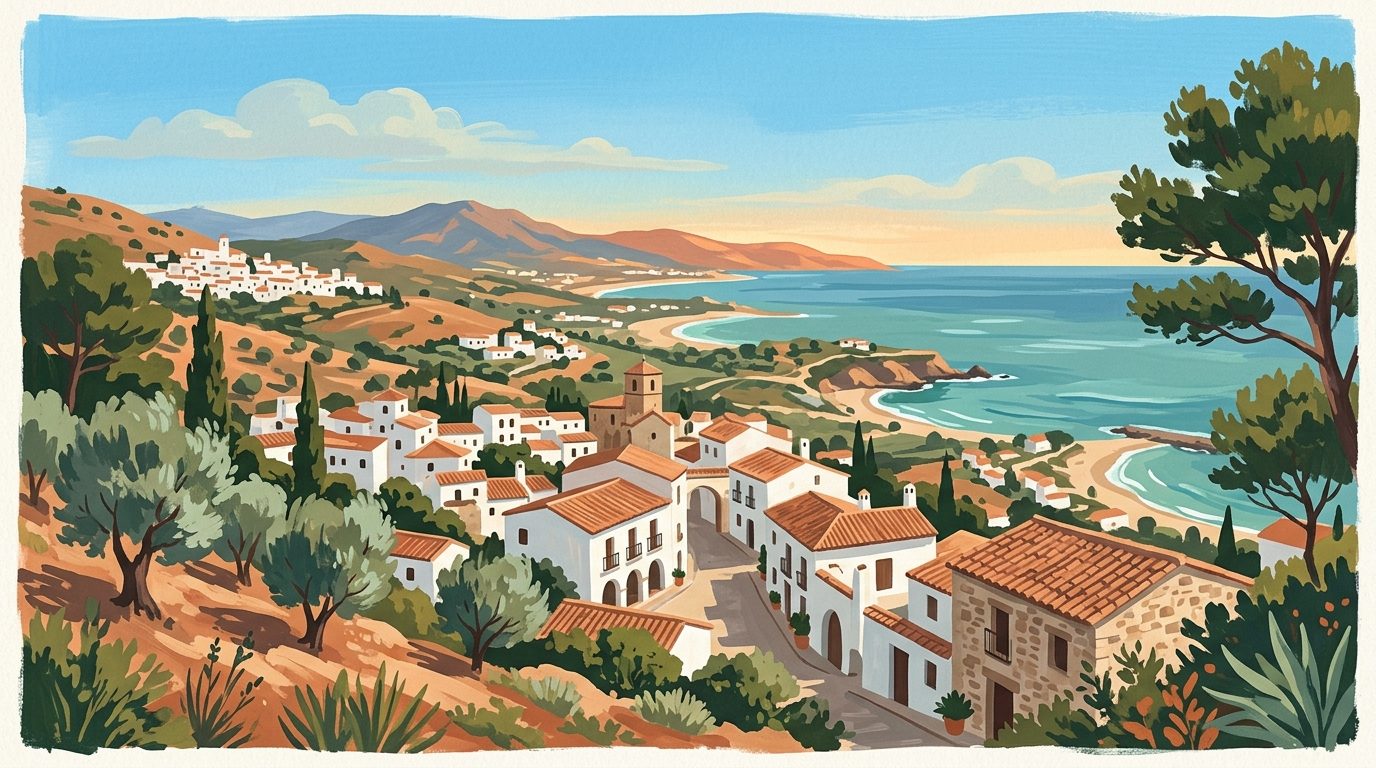
Beyond the Sun-Drenched Shore: A Local’s Guide to Costa del Sol Occidental
Discover the real Costa del Sol Occidental, from the glitz of Marbella and Puerto Banús to the quiet, whitewashed streets of Casares and the culinary delights of Benahavís.
11 min read
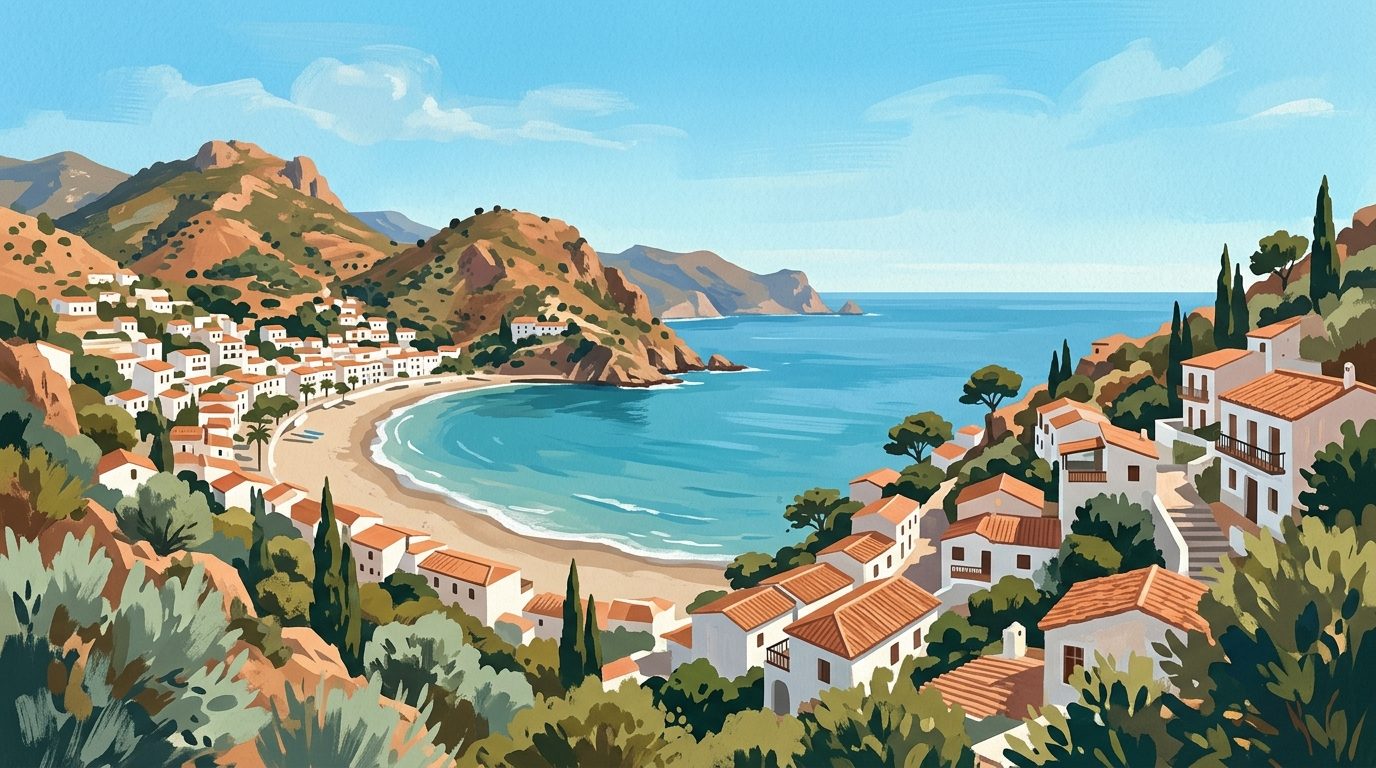
A Guide to La Herradura: Granada’s Curved Coastal Retreat
A perfect horseshoe bay on the Costa Tropical, La Herradura offers some of the best diving in Spain and a slower pace of life than its western neighbours.
6 min read
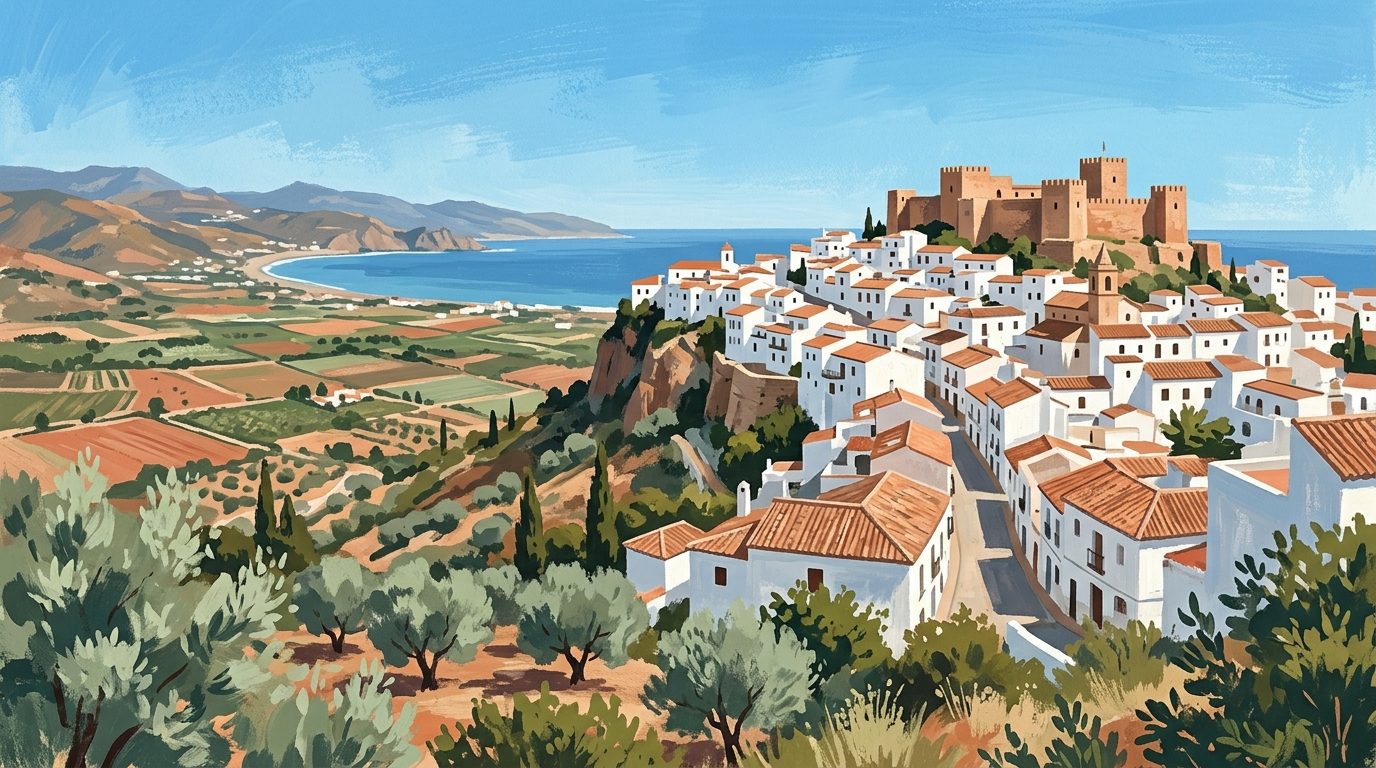
Salobreña: The White Town of the Costa Tropical
Salobreña is a striking white town crowning a rocky crag on Granada’s subtropical coast. It offers a distinct blend of Moorish history and agricultural legacy, surrounded by a sea of green sugar cane fields and the Mediterranean.
6 min read
More from Granada
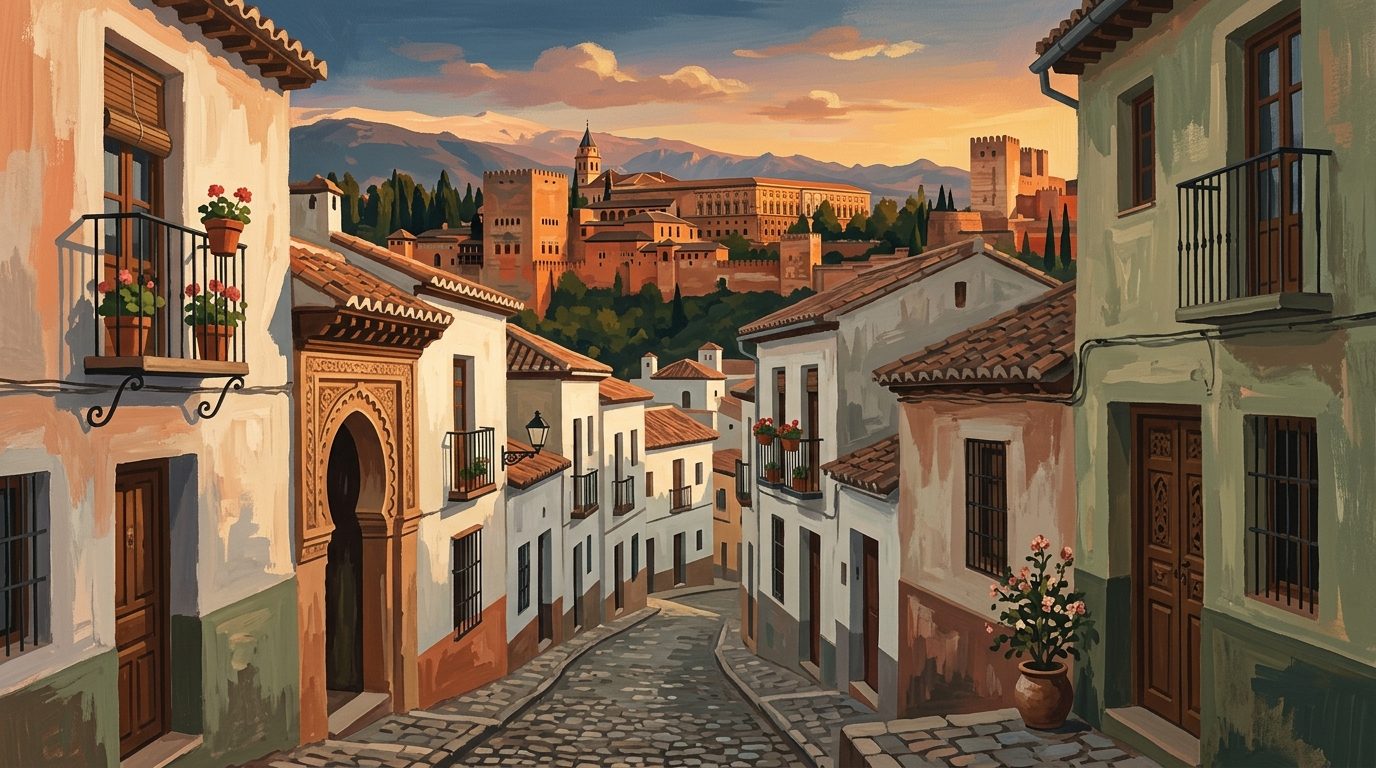
Nasrid Granada: The Last Islamic Kingdom of Iberia
Discover how the Nasrid dynasty forged a pragmatic mountain emirate that survived for over two centuries, creating the Alhambra and leaving a lasting architectural legacy.
8 min read
Lorca and the Repression in Granada
The assassination of Spain's most celebrated poet was just one part of a systematic campaign of terror. Today, the ravines of Víznar and Alfacar hold the stories of thousands whose voices were silenced.
7 min read
The Frontier of Granada: Life and War on the Edge of Al-Andalus
For over two centuries, the borderland separating the Christian Crown of Castile from the Nasrid Emirate of Granada was defined by watchful towers and sudden raids. Yet this military frontier was equally a zone of profound cultural exchange, where merchants, captives and diplomats negotiated daily survival in a divided land.
7 min read
The Morisco Revolt of the Alpujarras
The Morisco Revolt of 1568 transformed the mountainous terrain of the Alpujarras into the theatre of a brutal war. Driven to rebellion by laws erasing their culture, the descendants of Granada's Muslim population fought a desperate campaign against the Spanish Crown.
8 min read
The Fall of Granada, 1492
On the second of January 1492, the keys to the Alhambra were handed over to Ferdinand and Isabella, bringing a close to almost eight centuries of Muslim rule in the Iberian Peninsula. The capitulation of Granada reshaped the political and religious landscape of Europe forever, ending a long war of attrition.
8 min read
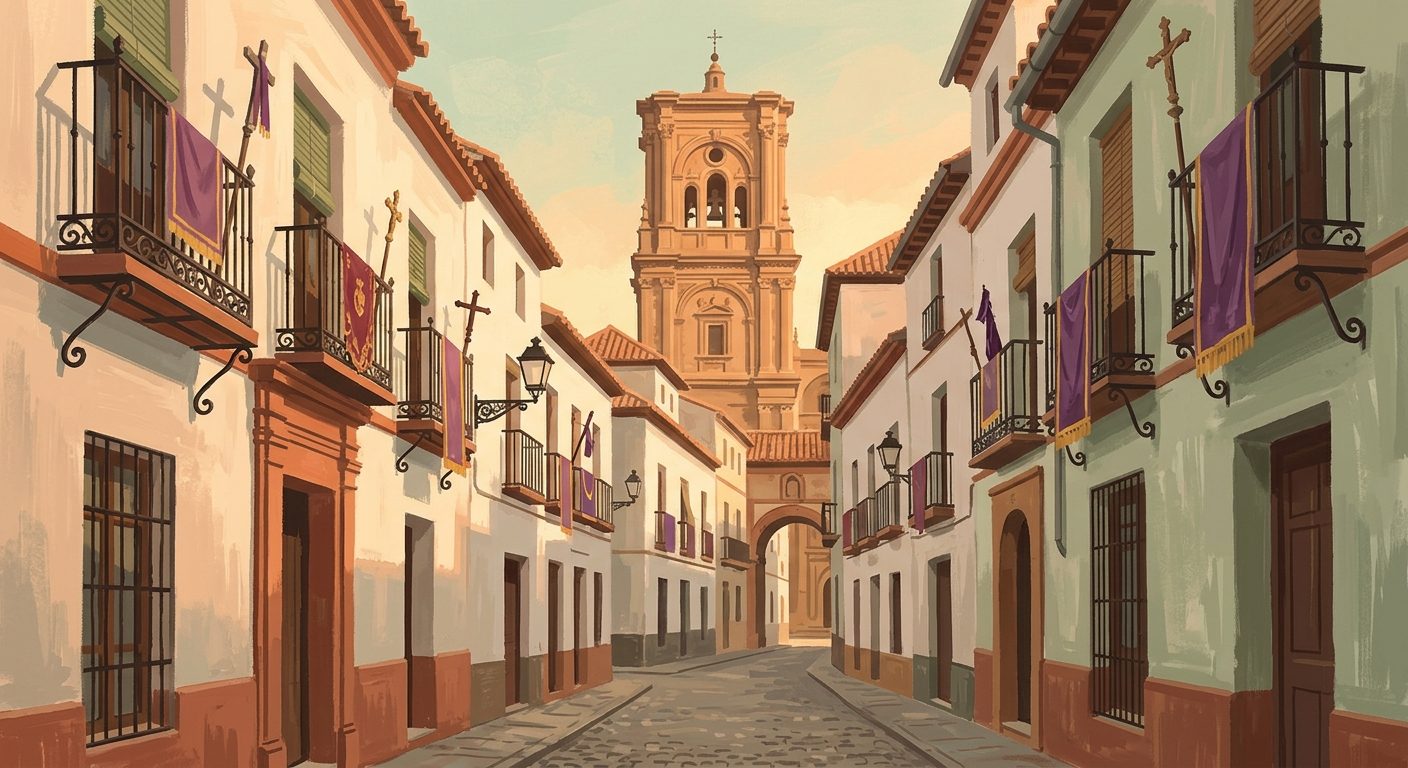
Semana Santa in Granada: A Complete Visitor Guide
Semana Santa in Granada swaps broad avenues for narrow Moorish streets and steep hillsides. Watching an illuminated wooden float emerge from the grounds of the Alhambra or ascend into the caves of Sacromonte offers a profound emotional experience that feels intimately tied to the landscape itself.
8 min read
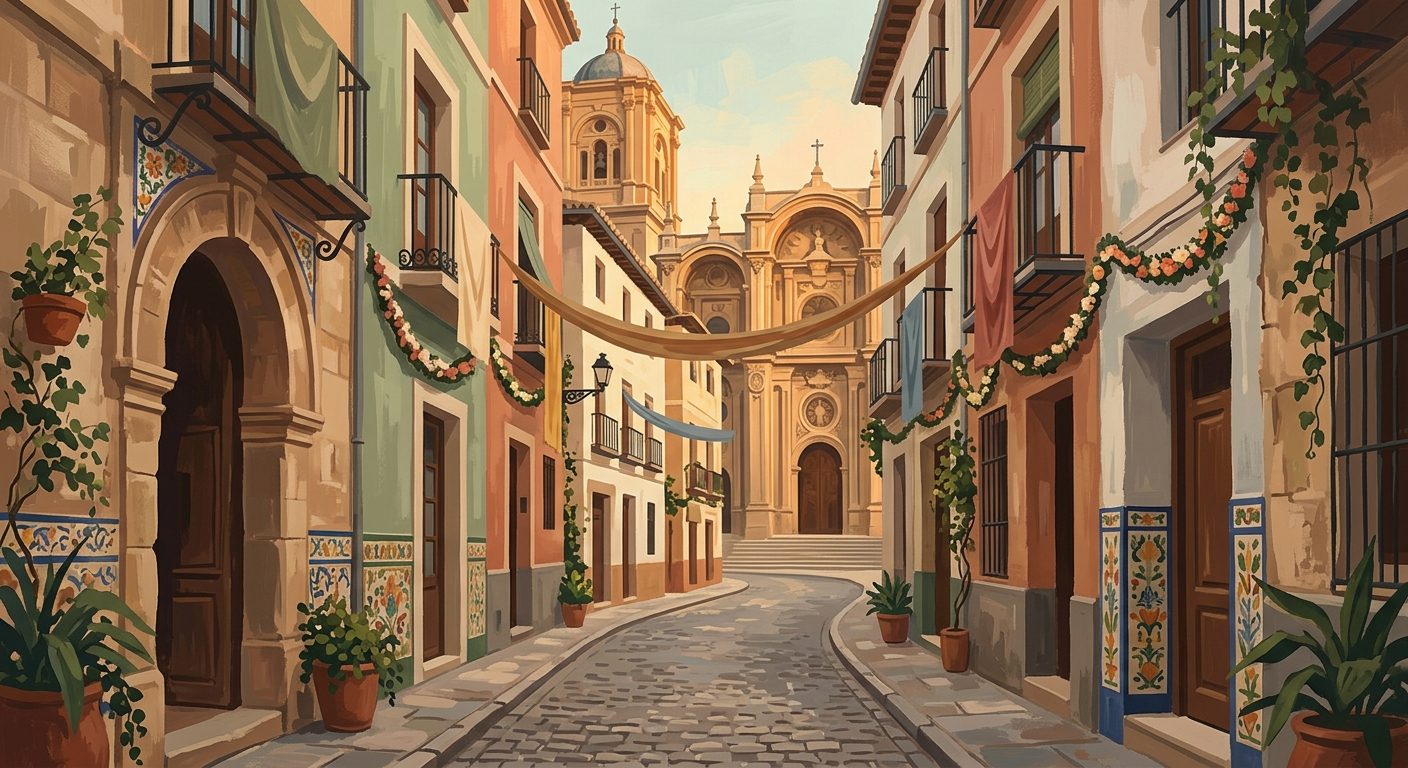
Corpus Christi in Granada: The Definitive Guide
In Granada, Corpus Christi is far more than a solemn religious observance. It is the city's largest annual festival, combining the scent of fresh rosemary crushed underfoot during the sacred Thursday procession with the unapologetic joy of the week-long public feria in Almanjáyar.
10 min read
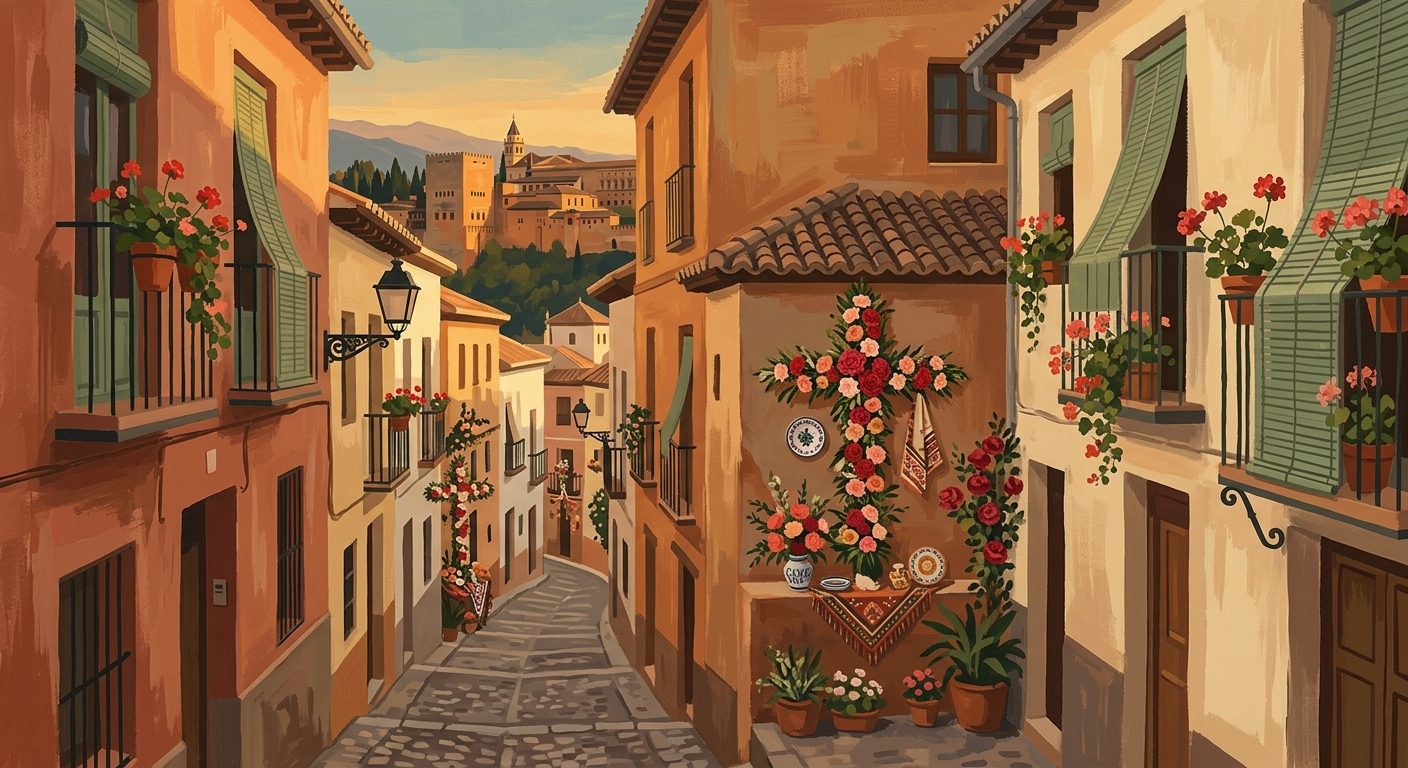
Cruces de Mayo in Granada: A Complete Guide
Discover how Granada transforms during the Cruces de Mayo festival. We detail where to find the most spectacular floral crosses, the local traditions to observe, and how to navigate the celebrations.
9 min read
The Resistance of the Plate: Why Granada Refuses to Sell Its Soul
In a world of monetised moments and rising margins, Granada holds fast to a radical social contract: the gift of a plate with every glass.
7 min read
Newsletter
More stories from Andalucía
Weekly notes, seasonal picks, and the next guides worth bookmarking.