
attraction · Granada
Museo del Agua
Andalucía 365 · Updated 18 July 2026
Our Verdict
“A masterclass in sustainable architecture, Lanjarón's Museo del Agua transforms a derelict slaughterhouse into a sensory exploration of the region's hydrological heritage.”
Last verified: July 2026
Situated at the entrance to the Sierra Nevada Natural Park, the Museo del Agua is a focused interpretation centre dedicated to the element that defines Lanjarón. Designed by architect Juan Domingo Santos, the museum occupies a former municipal slaughterhouse and watermill alongside the Lanjarón River. Rather than a traditional collection of historical artefacts, this space offers an architectural experience exploring the relationship between water, the rugged landscape, and the town's historic spa culture. Through flooded courtyards, recycled materials and audiovisual exhibits, the museum explains how snowmelt from the high peaks is channelled through ancient irrigation ditches to sustain local agriculture and industry. It is an essential introduction for anyone interested in industrial heritage, contemporary architecture or the hydrological systems that shape this corner of Granada province.
The History of the Site
Long before it became a museum, the site on the eastern edge of Lanjarón served vital industrial functions for the local community. Originally constructed as a watermill, the stone and brick buildings harnessed the power of the adjacent river and the network of acequias (irrigation channels) laid down during the Moorish occupation of the region. In later years, the complex was converted into a municipal slaughterhouse, a utilitarian role that eventually left the structures abandoned and deteriorating.
When the town council decided to create a space dedicated to its most famous natural resource, the decision to repurpose this derelict site was driven by a desire to protect the riverside from encroaching urban speculation. The project aimed to weave the new cultural venue into the existing fabric of the town, creating a pedestrian itinerary that links the museum with other surviving examples of traditional water infrastructure, including old public laundries and historic mills. This approach ensured that the building itself became the primary exhibit, standing as a physical testament to the enduring utility of water in the region.
Architectural Rebirth
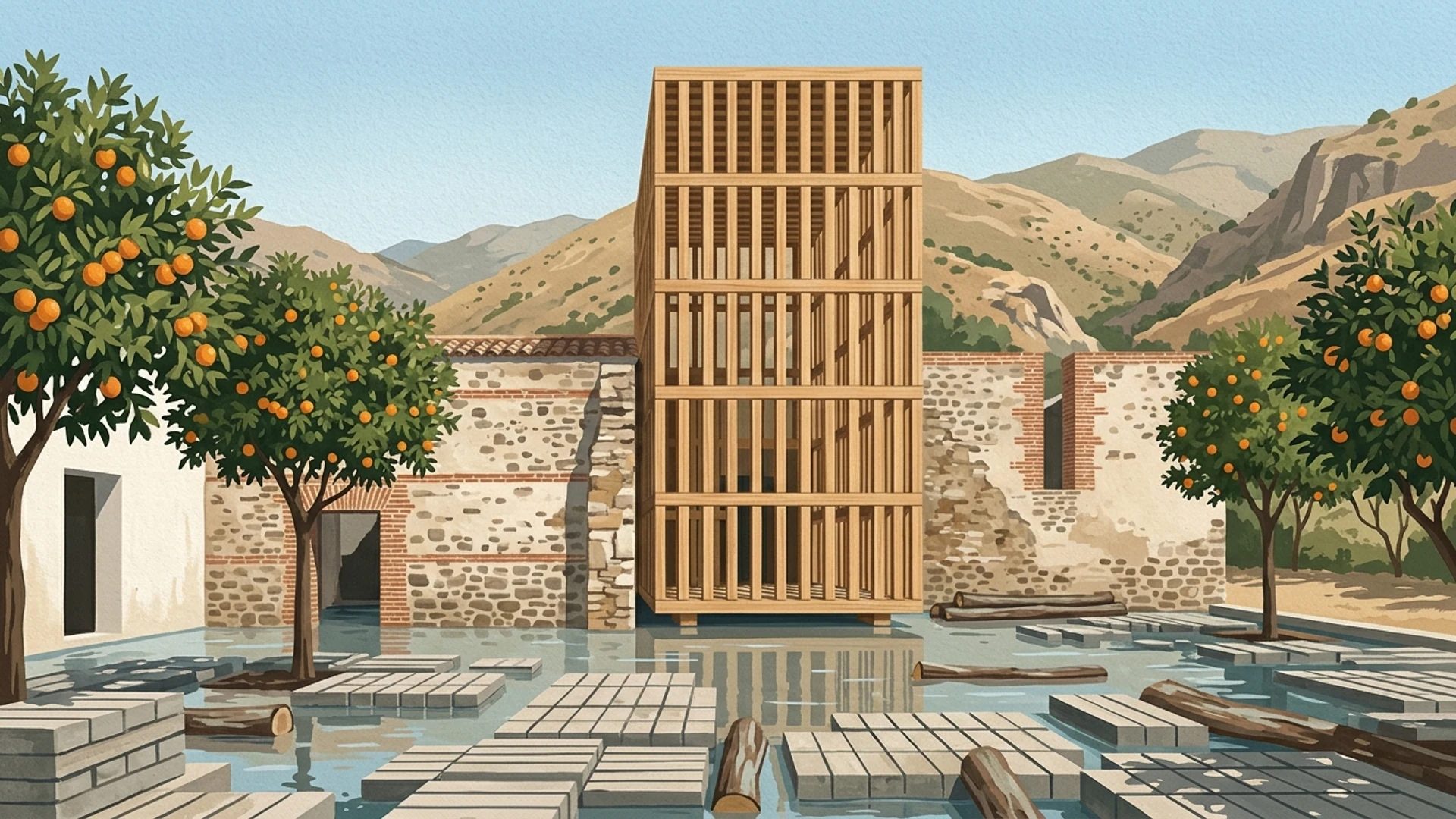
The transformation of the site by Juan Domingo Santos is widely regarded as a highly successful example of sustainable, context-sensitive architecture. Operating with a strictly limited budget, the design team focused on the recycling and reuse of local materials, ensuring the intervention felt organic to its setting. The most celebrated feature of the museum is its entrance courtyard, a slightly elevated plaza planted with orange trees. Here, stacked concrete prefabricates and eucalyptus trunks of varying sizes are periodically flooded by water diverted from the adjacent acequia. This creates a dynamic, ever-changing environment where the sound of cascading water, the scent of orange blossom and the shifting reflections on the flooded ground set a deeply contemplative tone before visitors even step inside.
Rising from this courtyard is a striking nine-metre-tall wooden pavilion that serves as the main entrance. This contemporary structure was directly inspired by the eighteenth-century wooden canopy that once protected the Capuchina spring, Lanjarón's first medicinal water source. The pavilion acts as a sensory transition zone, using slatted wood to filter natural light and create an atmosphere of penumbra that prepares the eyes for the audiovisual exhibits within. Inside the old mill, the original stone walls have been preserved and contrasted with crisp white panels, while glass floors in certain areas reveal the water still flowing beneath the building.
The Exhibition Spaces
The interior of the museum is divided into distinct thematic areas that rely on immersive audiovisual presentations to tell the story of the region's hydrology. The visitor route is structured around several core themes:
- The journey of water: Illustrating how winter precipitation in the high altitudes of the Sierra Nevada filters slowly through the porous mountain rock, eventually emerging years later in the mineral-rich springs of Lanjarón.
- Water resources: Examining the practical and economic applications of this resource. It details the sophisticated Moorish irrigation networks that continue to sustain the terraced agriculture of the Alpujarra Granadina, while also exploring the modern commercial bottling industry.
- Memories of water: Tracing the historical evolution of Lanjarón as a prominent spa destination since the late eighteenth century, when its curative waters first drew visitors from across the country seeking health and wellness.
Together, these rooms provide a comprehensive overview of how a single natural element has dictated the fortunes of an entire community.
Our verdict
The Museo del Agua is a compact, specialist attraction that delivers a highly effective experience in terms of architectural design and atmospheric execution. It is not a sprawling, full-day museum, nor does it house extensive collections of physical artefacts or historical objects. Instead, it functions as a highly focused interpretation centre that provides valuable context for the surrounding landscape.
For architecture enthusiasts, the sensitive repurposing of the industrial buildings and the ingenious use of the flooded courtyard are significant draws in their own right. For general visitors, the museum offers a brief but engaging primer on why water is so central to the identity of Lanjarón. The primary limitation is its size; a typical visit lasts no more than forty-five minutes. However, when combined with a walk along the river, a hike into the nearby hills, or a visit to the town's famous spa, it adds a highly meaningful layer of understanding to the region.
Practicalities
The museum is located on the eastern edge of Lanjarón, situated just off the main A-348 road as it heads towards the wider Alpujarra region, making it an ideal stop on a Granada and the Alpujarras loop. It is easily reached on foot from the town centre, and its position near the river makes it a logical starting point for local walking trails that explore the surrounding chestnut forests and historic irrigation channels.
Access to the museum involves navigating the exterior courtyard, but the main exhibition spaces are generally accessible on a single level. Because the museum relies on municipal funding and staffing, its opening hours are highly specific, often limited to certain days of the week, and subject to seasonal changes. Visitors should always consult the official website or contact the local tourist office to confirm current access arrangements and entry fees before planning a trip.
Nearby worth your time
A few well-placed stops for extending the day without turning it into a checklist.
Continue through The Alpujarra Granadina
Step back into the wider landscape with local guides, nearby places and the province overview.
Place guide · 7 min
Playa de Calahonda (Granada) Beach Guide
Playa de Calahonda in Granada offers deep, crystal-clear waters and a dramatic limestone cliff backdrop. This Blue Flag beach is a favourite for snorkelling and authentic Andalucían seafood.
Place guide · 7 min
A Guide to Playa de Salobreña on the Costa Tropical
Playa de Salobreña is a vast stretch of dark sand and clear water on the Costa Tropical, overlooked by a historic Moorish castle and dramatic cliffs.
Itinerary · 10 min
Two Days in Granada: A Step-by-Step Itinerary
Two days in Granada gives you just enough time to explore the Alhambra and lose yourself in the steep alleys of the Albaicín. This itinerary balances major monuments with the city's legendary free tapas culture.