
attraction · Granada
Humedales de Padul y Aula de Naturaleza El Aguadero
Andalucía 365 · Updated 18 July 2026
Our Verdict
“An accessible, family-friendly wetland reserve offering rich birdwatching and a unique prehistoric narrative, though best avoided during the sweltering summer months.”
Last verified: July 2026
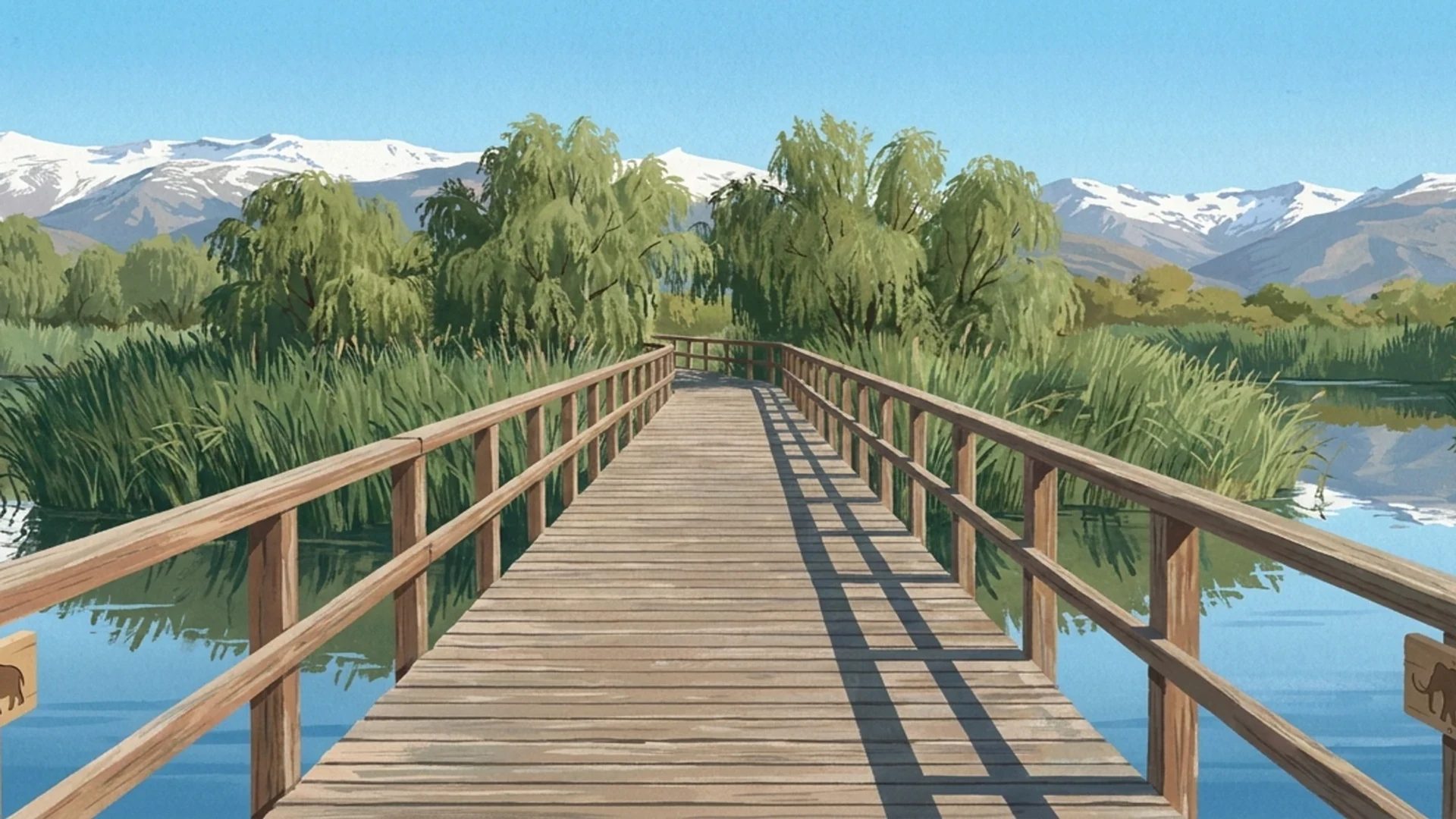
Situated at the foot of the Sierra Nevada, the Humedales de Padul y Aula de Naturaleza El Aguadero form the most significant wetland and peat bog in the province. This protected Ramsar site is a vital refuge for over 150 species of migratory and resident birds. Beyond its ecological value, the area holds immense paleontological importance; the peat layers have preserved the remains of woolly mammoths that roamed the valley thousands of years ago. Today, a network of accessible wooden boardwalks allows visitors to explore the reed beds and lagoons without disturbing the fragile ecosystem. It is an excellent destination for birdwatchers, families and walkers seeking a flat, immersive nature experience while exploring Padul and the wider region.
A Prehistoric Peat Bog in the Lecrín Valley
The Humedales de Padul represent the largest peat bog in southern Europe and the only endorheic wetland in the province. Formed in a closed basin where water naturally accumulates without draining to the sea, the landscape is a stark contrast to the arid slopes of the surrounding mountains. For centuries, the wetlands were systematically drained for agriculture and commercial peat extraction, which significantly altered the natural water table. However, recent conservation efforts have allowed much of the flooded terrain to recover its original character.
The dense, oxygen-poor layers of peat acted as a natural time capsule, preserving the bones of prehistoric mammals with remarkable clarity. The discovery of woolly mammoth remains dating back up to 40,000 years proved that these cold-adapted giants once thrived in this southern latitude during the Pleistocene epoch. This paleontological wealth adds a fascinating layer of natural history to any journey beyond the Alhambra.
The Mammoth Route and Boardwalks
To protect the sensitive marshland while allowing public access, a series of marked trails has been established across the reserve. The most popular is the Ruta del Mamut, a flat, circular itinerary that guides walkers through the heart of the wetlands. Much of this path consists of elevated wooden boardwalks that float above the water and weave through dense thickets of reeds, willows and fig trees. The boardwalks keep foot traffic away from the fragile peat and nesting grounds while providing an immersive perspective of the marsh.
Along the way, life-sized sculptures of a woolly mammoth, a woolly rhinoceros and a sabre-toothed tiger provide a tangible link to the area's prehistoric past, capturing the imagination of younger visitors. The boardwalks make the route highly accessible for wheelchair users and pushchairs. For those looking to extend their walk, the reserve features several other marked paths:
- Ruta de los Quinientos: A trail that passes near an old Ibero-Roman road, offering a glimpse into the historical trade routes of the valley.
- Ruta Ojo Oscuro: A longer path that delves deeper into the agricultural fringes of the wetland, passing by traditional water channels.
- Ruta del Agia: The most extensive circuit, tracing the wider periphery of the protected lagoon system.
Birdwatching and Biodiversity
As a designated Special Protection Area for Birds, the wetlands are a crucial stopover for avian migration between Europe and Africa. Depending on the season, the lagoons and reed beds host a shifting population of waterfowl, waders and raptors. The dense vegetation provides excellent cover for breeding species, while the open water attracts wintering flocks seeking refuge from colder northern climates.
Patient observers stationed in the wooden hides might spot little bitterns, marsh harriers, purple herons and kingfishers darting across the channels. The water network also supports a variety of amphibians and reptiles, including the Mediterranean painted frog, the Iberian ribbed newt and the viperine snake. The biodiversity peaks during the winter months and the spring migration, when the flooded areas are at their most expansive and the air is filled with the calls of arriving flocks.
Aula de Naturaleza El Aguadero
Serving as the primary gateway to the wetlands, the Aula de Naturaleza El Aguadero is an environmental education centre located near the main lagoons. The facility provides essential context for the ecosystem, detailing the geological formation of the peat bog, the mechanics of the endorheic basin and the history of human intervention in the valley. The centre is managed with a focus on conservation and public awareness, ensuring that visitors understand the delicate balance required to maintain the wetland.
The centre frequently hosts workshops on bird ringing, recycling and traditional crafts, aimed primarily at school groups and families. It is the best starting point for picking up trail maps, learning which bird species are currently present, and understanding the ongoing efforts to protect the habitat. For current access details and educational programmes, consult the official visitor portal.
Our verdict
The Humedales de Padul offer a refreshing departure from the typical mountain hikes of the region. The combination of flat, accessible boardwalks and rich wildlife makes it a highly rewarding stop, particularly for families and birding enthusiasts. The prehistoric context adds an engaging narrative to the walk, elevating it above a standard nature trail.
However, the experience is highly dependent on the season. During the height of summer, the water levels drop significantly, bird activity decreases, and the exposed trails offer almost no shade from the intense Andalusian sun. The landscape can feel parched and quiet during these months. It is a destination best appreciated in the cooler, wetter months of winter and spring, when the lagoons are full and the migratory birds are present in large numbers.
Practical advice
The wetlands are located just off the N-323 road, approximately 20 kilometres south of the provincial capital, making them an easy addition to a Granada province guide itinerary. Parking is available near the Aula de Naturaleza El Aguadero or near the Padul town hall for those starting the Mammoth Route from the urban centre. If you are travelling further south, the area serves as a natural prelude to a guide to Dúrcal and the wider Lecrín Valley.
The wooden boardwalks are wide and flat, providing excellent mobility access, though some connecting dirt paths can become muddy and uneven after heavy rain. Early morning or late afternoon visits are highly recommended to secure the best birdwatching opportunities and to enjoy the softer light across the reed beds. Visitors should bring binoculars, insect repellent and, if visiting in the warmer months, ample water and sun protection, as facilities along the trails are non-existent.
Nearby worth your time
A few well-placed stops for extending the day without turning it into a checklist.

Continue through The Lecrín Valley
Step back into the wider landscape with local guides, nearby places and the province overview.
Place guide · 7 min
Playa de Calahonda (Granada) Beach Guide
Playa de Calahonda in Granada offers deep, crystal-clear waters and a dramatic limestone cliff backdrop. This Blue Flag beach is a favourite for snorkelling and authentic Andalucían seafood.
Place guide · 7 min
A Guide to Playa de Salobreña on the Costa Tropical
Playa de Salobreña is a vast stretch of dark sand and clear water on the Costa Tropical, overlooked by a historic Moorish castle and dramatic cliffs.
Itinerary · 10 min
Two Days in Granada: A Step-by-Step Itinerary
Two days in Granada gives you just enough time to explore the Alhambra and lose yourself in the steep alleys of the Albaicín. This itinerary balances major monuments with the city's legendary free tapas culture.