
attraction · Granada
Monumento Natural Tajos de Alhama
Andalucía 365 · Updated 18 July 2026
Our Verdict
“A dramatic and historically rich gorge hike that rewards steep climbs with spectacular views of Alhama de Granada.”
Last verified: July 2026
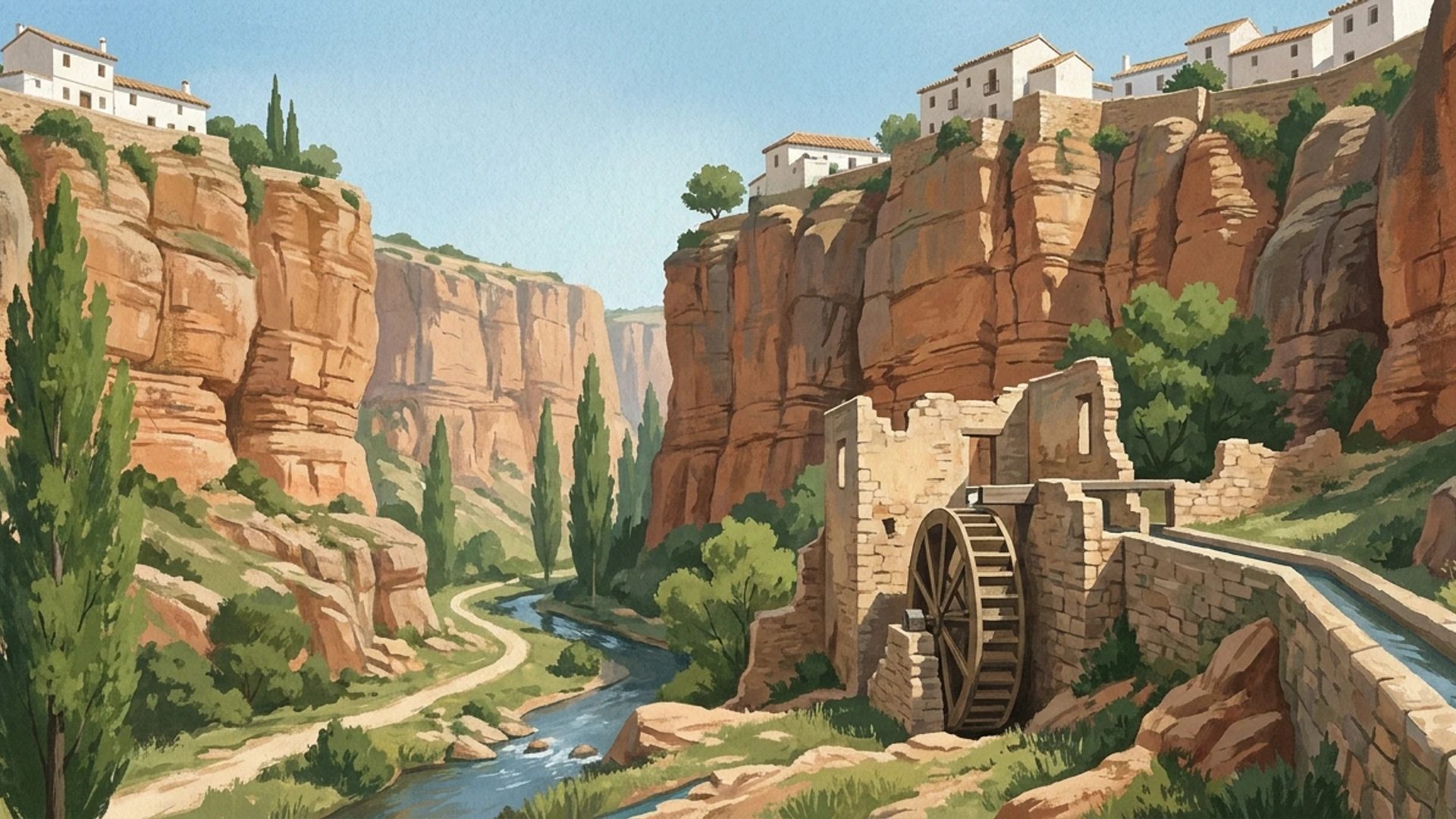
Plunging more than 80 metres below the historic town of Alhama de Granada, the Monumento Natural Tajos de Alhama is a dramatic sandstone and conglomerate gorge carved by the relentless flow of the Alhama River. This protected ravine forms a striking natural moat around the town, blending sheer geological power with centuries of human history. Walkers descending into the canyon are met with a shaded riverbank lined with towering poplar trees, abandoned flour mills, and medieval pathways echoing the region's agricultural past. The site appeals directly to hikers, geology enthusiasts, and anyone exploring the western reaches of the Granada province. While the main trails are relatively short, they require navigating steep inclines and uneven terrain, rewarding the physical effort with spectacular perspectives of the town clinging precariously to the cliff edge above.
A Landscape Carved by Water and Seismic Force
The sheer vertical walls of the Tajos de Alhama are the result of millions of years of differential erosion. The Alhama River has sliced through deep layers of bioclastic calcarenites and Miocene conglomerates, exposing a rugged cross-section of the region's complex geological past. This natural erosion was further accelerated by historical seismic activity, with severe earthquakes causing significant rockfalls that helped shape the jagged, fractured profile of the gorge seen today. The resulting canyon spans approximately four kilometres in length, creating a distinct microclimate at its base. This sheltered environment supports dense riparian vegetation, contrasting sharply with the arid, sun-baked agricultural lands that dominate the plateau above. The geological significance of the site was formally recognised in December 2011 when the regional government declared it a protected Natural Monument.
Walking the Camino de los Ángeles
The most popular way to experience the gorge is by following the Camino de los Ángeles, a historic pathway that winds down from the town into the base of the canyon. The descent immediately immerses walkers in a cooler, shaded environment dominated by the sound of rushing water and the rustling of leaves. Along this route sits the Ermita de los Ángeles, a small, modest shrine carved directly into the rock face during the sixteenth century. Historically, this was a mandatory resting point for muleteers, merchants, and travellers who would pause to ask for safe passage before navigating the treacherous, winding paths out of the valley. Today, the trail provides a tranquil walking route shaded by tall poplars, ash trees, and overhanging rock formations, offering a peaceful retreat from the urban environment above.
Flour Mills and Historic Infrastructure
The Monumento Natural Tajos de Alhama is not solely a geological feature; it is deeply intertwined with the agricultural and economic history of the Alhama de Granada municipality. For centuries, the reliable flow of the river was harnessed to power a network of traditional flour mills, known locally as molinos harineros. The stone ruins of these mills still line the riverbank, accompanied by a complex system of medieval irrigation channels, or acequias, which diverted water to the grinding stones and nearby agricultural terraces. These crumbling structures serve as a physical record of the era when the gorge was a vital industrial hub for the surrounding Poniente Granadino region, processing grain for the town and nearby frontier settlements before modern machinery rendered them obsolete.
Navigating the Escalerillas del Diablo and Mazmorras
While the valley floor offers a relatively flat and leisurely walk, entering and exiting the gorge requires tackling steep gradients that test the stamina of visitors. The most notorious of these ascents is the Escalerillas del Diablo, or Devil's Stairs. This steep, zigzagging stone staircase was carved directly into the rock by sixteenth-century stonemasons. It challenges the legs but delivers increasingly impressive views of the gorge with every step upward. For those seeking the definitive vantage point without the strenuous climb from the very bottom, the area around the Mazmorras provides a sweeping panorama. The Mazmorras themselves are thirteenth-century Moorish silos later used as dungeons, and the adjacent viewpoints offer a clear sight of the whitewashed houses suspended directly above the canyon. The visual relationship between the sheer natural precipice and the built environment is the defining characteristic of the monument, illustrating how early settlers utilised the landscape for natural defence.
Practicalities and Access
Access to the gorge is free and open year-round, with the most common entry points located near the Plaza del Ayuntamiento and the Huerta de Santa María on the edge of the town centre. When planning a descent into the gorge, visitors should keep several practical considerations in mind:
- Footwear: The paths consist of loose gravel, uneven stone steps, and dirt tracks, making sturdy walking shoes absolutely essential for a safe visit.
- Weather conditions: Following heavy rain, the stone steps and dirt paths can become highly slippery. Visitors should exercise caution near the riverbanks during wet weather.
- Summer heat: During the peak summer months, the base of the gorge offers welcome relief from the intense heat of the Granada province, though the steep climbs back up to the town are best tackled in the early morning or late afternoon to avoid the midday sun.
- Supplies: There are no facilities, toilets, or drinking water taps within the gorge itself, so walkers must carry their own supplies for the duration of the hike.
Our verdict
The Monumento Natural Tajos de Alhama delivers a highly rewarding, compact hiking experience that perfectly encapsulates the rugged character of western Granada. It is a brilliant demonstration of how historical settlements adapted to extreme topography, using the landscape for both industry and defence. The physical remnants of the mills and the sheer scale of the cliffs make it a compelling detour for anyone travelling between the city of Granada and frontier towns like Loja. However, the steep descents, lack of handrails in certain sections, and uneven stairs mean it is entirely unsuitable for wheelchair users or those with limited mobility. For able-bodied walkers prepared for a short but strenuous climb, it remains an essential and visually arresting natural excursion that grounds the history of the town in its dramatic physical environment.
Nearby worth your time
A few well-placed stops for extending the day without turning it into a checklist.

Continue through Poniente Granadino
Step back into the wider landscape with local guides, nearby places and the province overview.
Place guide · 7 min
Playa de Calahonda (Granada) Beach Guide
Playa de Calahonda in Granada offers deep, crystal-clear waters and a dramatic limestone cliff backdrop. This Blue Flag beach is a favourite for snorkelling and authentic Andalucían seafood.
Place guide · 7 min
A Guide to Playa de Salobreña on the Costa Tropical
Playa de Salobreña is a vast stretch of dark sand and clear water on the Costa Tropical, overlooked by a historic Moorish castle and dramatic cliffs.
Itinerary · 10 min
Two Days in Granada: A Step-by-Step Itinerary
Two days in Granada gives you just enough time to explore the Alhambra and lose yourself in the steep alleys of the Albaicín. This itinerary balances major monuments with the city's legendary free tapas culture.