
attraction · Granada
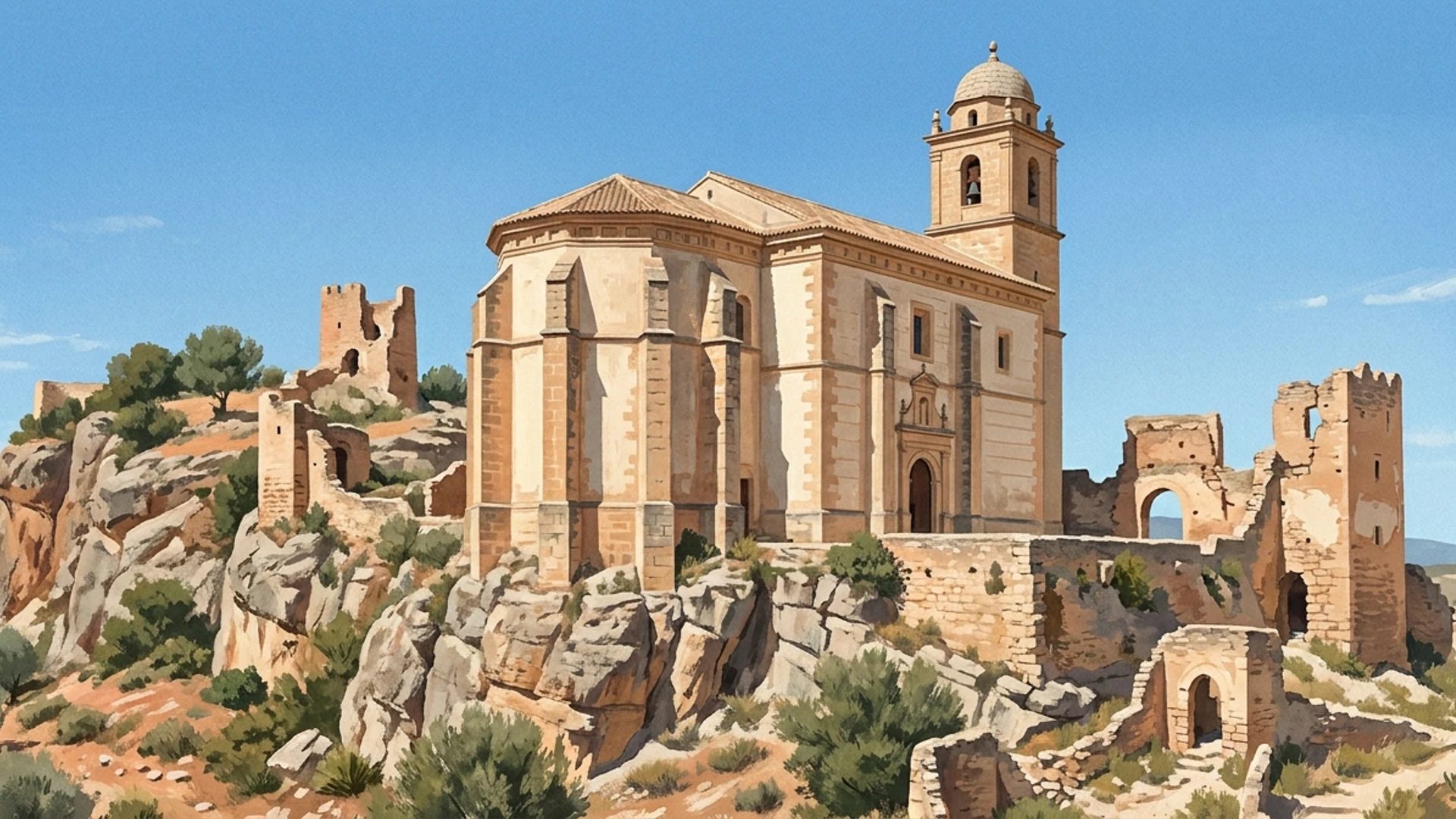
Castillo e Iglesia de la Villa de Montefrío
Andalucía 365 · Updated 18 July 2026
Our Verdict
“A dramatic fortress-church complex offering sweeping views and a deep dive into the final days of Al-Andalus, though the steep ascent requires determination.”
Last verified: July 2026
Crowning a sheer rocky crag above a sea of whitewashed houses and olive groves, the Castillo e Iglesia de la Villa de Montefrío is a striking monument to Spain’s turbulent medieval history. Originally a 14th-century Nasrid fortress defending the Emirate of Granada, the site was transformed after the Christian conquest when a Gothic-Renaissance church was built directly over the military stronghold. Today, this imposing complex houses an interpretation centre dedicated to the final years of Al-Andalus. It appeals to history enthusiasts and photographers drawn to its dramatic topography. While the steep ascent requires physical effort, the panoramic views from the summit are among the most celebrated in Andalusia, making it an essential focal point for anyone exploring the western reaches of the Granada province.
A Nasrid Border Stronghold
Constructed in 1352 under the orders of Yusuf I, the original fortress was a vital defensive node for the Emirate of Granada. Designed by the same master architect responsible for the Alcazaba of the Alhambra, the castle was engineered to protect the volatile north-western border against relentless Castilian incursions. For over a century, Montefrío served as a heavily fortified garrison town, anchoring a network of watchtowers that communicated across the rugged valleys. The military complex featured a prominent homage tower, multiple parade grounds, and large rock-hewn cisterns designed to sustain the population during prolonged sieges. It even served as a temporary residence for Aben Ismael III before he ascended to the throne as Yusuf V. Today, remnants of the Islamic defensive walls, the foundations of the old keep, and the original water storage systems are still visible on the outcrop, grounding the site firmly in its martial origins.
The Christian Transformation
Following the conquest of Montefrío by the Catholic Monarchs in 1486, the military function of the crag was gradually superseded by religious and political symbolism. In the 16th century, the acclaimed architect Diego de Siloé, who also designed the Cathedral of Granada, was commissioned to build the Iglesia de la Villa directly atop the ruined fortress. The resulting Gothic-Renaissance structure was designed as a visual assertion of Christian dominance. Its rectangular nave, robust buttresses, and semi-octagonal apse dominate the skyline, creating a silhouette that defines the town. The church remained the spiritual centre of the community for over two centuries. However, its exposed position made it vulnerable to the elements. In 1767, a severe lightning strike during a service prompted the congregation to abandon the hilltop entirely. They relocated to the valley floor, eventually constructing the neoclassical Iglesia de la Encarnación, leaving the hilltop church to stand as a silent sentinel over the town.
The Centinela Interpretation Centre
The interior of the Iglesia de la Villa now functions as the Centro de Interpretación de la Última Frontera de Al-Andalus, aptly named "El Centinela" (The Sentinel). The exhibition space uses the church’s austere stone nave and vaulted ceilings to explore the complex dynamics of the borderlands during the 14th and 15th centuries. The permanent exhibition is divided into thematic areas, including:
- The Scene of the Events: An overview of the geographical and political landscape of the medieval frontier.
- Who was Who: Profiles of the key military and political figures from both the Nasrid and Castilian sides.
- Games of Strategy: An examination of the siege tactics, weaponry, and defensive architecture used during the conflict.
Interactive panels and scale models provide valuable context for understanding the broader historical landscape of the Poniente Granadino. The centre does an excellent job of framing the border not merely as a line of conflict, but as a porous zone of cultural and economic exchange between two rival kingdoms.
The Ascent and the Views
Reaching the summit is an integral part of the visitor experience. The climb navigates the steep, narrow streets of the old Arab quarter, winding upward until the whitewashed town gives way to the raw rocky precipice. From the top, the vantage point offers sweeping, unobstructed views over the olive-carpeted hills of the Granada province. The contrast between the rugged natural terrain and the precise geometric dome of the Iglesia de la Encarnación directly below is particularly striking. These panoramas have earned international recognition, cementing the town's reputation as a premier destination for landscape photography. The bell tower provides an even higher perspective, featuring informational panels that identify the distant watchtowers and geographical landmarks that once formed the medieval frontier network.
Our verdict
The Castillo e Iglesia de la Villa de Montefrío is a visually arresting site that physically embodies the layered history of Andalusia. The sheer scale of the rock and the architectural ambition of building a church upon it make for a compelling and memorable visit. However, the steep climb is genuinely demanding, and the interior opening hours can be restrictive, particularly outside the peak summer season. Even if you arrive to find the interpretation centre closed, the exterior viewpoints alone easily justify the physical effort. It is a highly rewarding stop for those exploring Montefrío or undertaking a wider road trip through the historic frontier towns, such as nearby Loja. The combination of dramatic geography and deep historical resonance is hard to match.
Practicalities
Access to the complex is strictly on foot for most visitors. The primary pedestrian route begins in the town centre and ascends via Calle San Sebastián and Calle Santiago. This path is steep, winding, and uneven, requiring sturdy footwear and a reasonable level of cardiovascular fitness. Visitors with reduced mobility can access a higher drop-off point near the old cemetery (Cementerio Viejo), where a public car park is available, though navigating the final stretch to the church still involves uneven ground and steps. During the summer months, the exposed rock absorbs significant heat, making early morning or late afternoon the most comfortable times to tackle the climb. There is little shade at the summit, so sun protection is essential. For current opening schedules, ticket prices, and access arrangements, consult the official Montefrío tourism website before travelling.
Nearby worth your time
A few well-placed stops for extending the day without turning it into a checklist.
Continue through Poniente Granadino
Step back into the wider landscape with local guides, nearby places and the province overview.
Place guide · 7 min
Playa de Calahonda (Granada) Beach Guide
Playa de Calahonda in Granada offers deep, crystal-clear waters and a dramatic limestone cliff backdrop. This Blue Flag beach is a favourite for snorkelling and authentic Andalucían seafood.
Place guide · 7 min
A Guide to Playa de Salobreña on the Costa Tropical
Playa de Salobreña is a vast stretch of dark sand and clear water on the Costa Tropical, overlooked by a historic Moorish castle and dramatic cliffs.
Itinerary · 10 min
Two Days in Granada: A Step-by-Step Itinerary
Two days in Granada gives you just enough time to explore the Alhambra and lose yourself in the steep alleys of the Albaicín. This itinerary balances major monuments with the city's legendary free tapas culture.