
Things to do · Almería
Cycling in Almería: The Ultimate Guide to Desert Trails and Mountain Passes
Discover the rugged beauty of Almería on two wheels, from the cinematic Tabernas Desert to the challenging switchbacks of the Alto de Velefique.
By Dan · Updated 16 July 2026 · 6 min read
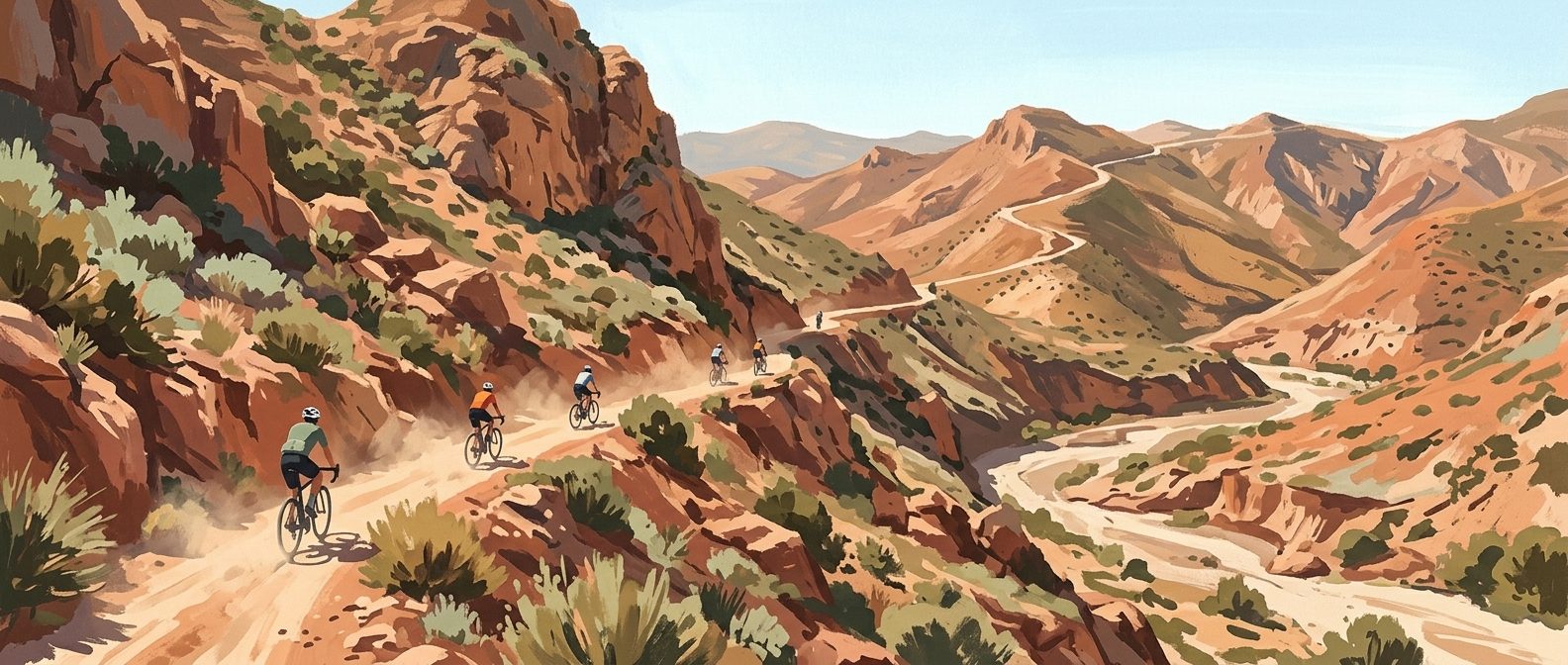
Almería provides some of the most varied cycling terrain in Europe, ranging from coastal flatlands to high-altitude mountain passes that test the mettle of professional teams. It is a region where the arid desert landscape meets the Mediterranean, offering a unique backdrop for both road cyclists and mountain bikers seeking quiet roads.
While many cyclists flock to the popular hubs of Mallorca or Girona, Almería remains a somewhat overlooked location for those who prefer their rides with a side of raw, cinematic landscapes and minimal traffic. The province is home to the only actual desert in Europe, the Tabernas, but it also contains the high-altitude peaks of the Sierra de los Filabres and the rugged, volcanic coastline of Cabo de Gata. This variety means you can spend one day grinding up switchbacks that mimic the Alps and the next spinning along coastal roads where the only sound is the waves hitting the cliffs.
The climate here is a significant draw. Almería is officially the driest and sunniest place in Europe, making it a reliable choice for winter training camps. Between November and March, when much of the continent is shivering, cyclists here are often seen in short sleeves. The infrastructure for cyclists has improved significantly over recent years, with better signage and a growing number of specialist bike shops and tour operators who understand the specific needs of international riders. Almería delivers a grounded, authentic experience far removed from the mass-market tourism found elsewhere.
Best Places for Cycling in Almería
The Cabo de Gata Coast Road
For those who enjoy the smell of sea salt and coastal views, the road through the Cabo de Gata-Níjar Natural Park is essential. The route from the city of Almería towards San José and onwards to Rodalquilar is spectacular. The road is relatively flat as you leave the city, but once you enter the park, the terrain begins to undulate. One of the most famous stretches is the climb up to the Arrecife de las Sirenas lighthouse. It is a short, sharp ascent, but the view from the top over the volcanic rock formations is worth the effort.
The ALP-822 is the main artery here. It is a narrow, winding road that hugs the coastline, providing access to remote beaches like Playa de los Genoveses. Traffic is generally light, especially outside of the peak summer months. If you are looking for a guided experience to navigate the labyrinth of coastal trails, local tour operators offer excellent local knowledge on the best time to avoid the coastal winds. Most road cyclists use 25mm or 28mm tyres here, as the asphalt is generally well-maintained, though the occasional patch of wind-blown sand requires caution.
The Tabernas Desert Routes
Cycling through the Tabernas Desert feels like riding through the set of a Western film, and that is because many of them were filmed here. The landscape is stark, lunar, and mesmerising. This area is a playground for gravel bikers and mountain bikers, with countless ramblas (dry riverbeds) that provide a natural network of trails. The ground is often a mix of hard-packed sand and loose shale, so wider tyres are a necessity. A popular route starts near the town of Tabernas and heads into the Sierra de Alhamilla, offering views over the "Mini Hollywood" film sets.
For road cyclists, the N-340a road provides a long, steady stretch through the heart of the desert. It is a wide road with a good shoulder, often used by pro teams for time trial practice because of its straight sections and consistent gradients. If you need to hire a high-spec mountain bike or a gravel bike specifically tuned for desert conditions, check with rental agencies in Tabernas or Almería city (verify stock on their websites before travelling), as they often provide GPS tracks for the best desert loops. Be prepared for the heat; there is very little shade in the desert, and the sun reflects off the light-coloured rocks.
The High Passes of Los Filabres
If you are a climber, the Sierra de los Filabres is your playground. This mountain range contains some of the most challenging ascents in Spain, frequently featured in the Vuelta a España. The crown jewel is Calar Alto, which sits at 2,168 metres above sea level and is home to a major astronomical observatory. There are multiple ways to climb it, but the ascent from Gérgal is perhaps the most famous. It is a long, grinding climb of over 20 kilometres with an average gradient of around 6%, though it pitches up significantly in places.
Another legendary climb in this area is the Alto de Velefique. Often compared to Alpe d'Huez because of its perfectly sculpted switchbacks, it offers a consistent 7 to 8% gradient over 13 kilometres. The view from the top, looking back down at the road snaking up the mountainside, is one of the most iconic images in Spanish cycling. You can base yourself in the village of Olula del Río or Macael to access these routes. Local cycling logistics companies can arrange support vehicles for these high-altitude rides, which is recommended given the lack of facilities at the summits.
The Almanzora Valley and the Greenway
For a more relaxed experience, the Almanzora Valley offers the Vía Verde del Almanzora. This is a "Greenway" built on the defunct railway line that once transported iron ore and marble from the local quarries. Because it follows an old rail bed, the gradients are never more than 2 or 3%, making it perfect for families or those who want a recovery ride. The trail is part of a planned 100-kilometre route, with major sections between Olula del Río and Arboleas now fully paved and accessible. It winds through olive groves and citrus orchards, passing through old railway stations that have been converted into cafes and museums.
The valley is also the gateway to the marble-producing region of Macael. You can ride through the valley and see the massive white scars on the hillsides where the famous Macael marble is extracted. The roads here are wide and generally in excellent condition, as they were built to handle heavy machinery. It is a great area for a circular loop that combines the flat valley floor with short, punchy climbs into the surrounding foothills. Local shops provide comfortable trekking bikes and e-bikes for exploring the Vía Verde at a slower pace.
Practical Information
Cycling in Almería requires some preparation, particularly regarding the weather. The best season is undoubtedly from October to May. During July and August, temperatures frequently exceed 40°C, making strenuous cycling dangerous during the day. Most local riders are off the road by 10:00 am in the summer. Cost-wise, Almería is very affordable compared to other European cycling hubs. A high-quality carbon road bike rental typically costs between €30 and €50 per day (check exact prices on the operator's website before travelling). If you are bringing your own bike, ensure you have a compact groupset (34-tooth chainring) if you plan on tackling the Sierra de los Filabres, as the climbs are long. Always carry two water bottles and basic repair tools; while the roads are quiet, you can often go long distances between villages with open shops. Helmets are legally required on all intercity roads in Spain, and you should always carry a form of identification.
Local Tips
The wind is a major factor in Almería. Learn the difference between the Levante (an easterly wind that is often humid) and the Poniente (a westerly wind that is drier and can be very strong). Check the forecast before heading out, especially for coastal routes, as a headwind in Cabo de Gata can turn a flat ride into a slog. For a post-ride meal, look for a local "Venta" or roadside inn. In Almería, you still get a free tapa with every drink, which is the perfect way to refuel. Try the "migas," a traditional flour-based dish that is incredibly calorie-dense and popular with local cyclists after a long morning in the saddle.
Last reviewed: 21 June 2026 · Editorial policy
Related guides
A Guide to Cycling in Málaga: From Coastal Paths to Mountain Peaks
Discover the best of cycling in Málaga, from the gentle coastal Senda Litoral to the challenging peaks of the Montes de Málaga and the rugged Axarquía hills.
6 min read
Cycling in Cádiz: A Guide to the Best Coastal and Mountain Routes
From the family-friendly Vía Verde de la Sierra to the challenging climbs of the Grazalema mountains, Cádiz province is a premier destination for cyclists of all levels.
6 min read
A Guide to Cycling in Granada: From High Peaks to Valley Floors
From the highest paved road in Europe to technical mountain bike trails through olive groves, Granada offers some of the most varied terrain in Andalucía for cyclists of all disciplines.
6 min read
Cycling in Jaén: From Infinite Olive Groves to Rugged Mountain Peaks
Discover why Jaén is Spain’s best-kept secret for cyclists, from the flat Vía Verde del Aceite to the technical trails of the Sierras de Cazorla.
6 min read
Cycling in Córdoba: The Best Routes and Practical Guide
From the flat trails of the Guadalquivir valley to the rugged peaks of the Sierras Subbéticas, Córdoba offers a diverse landscape for cyclists of all abilities.
6 min read
Bikepacking in Andalucía: A Complete Guide to Two-Wheeled Adventures
Discover how to plan the ultimate bikepacking adventure in southern Spain. Our guide covers route planning, essential gear, weather windows, and tips for navigating wild terrain.
13 min read
More from Almería
The Best Water Sports in Almería: A Coastal Guide
Discover the rugged volcanic coastline of Almería through world-class diving, kayaking, and paddleboarding in the protected waters of Cabo de Gata.
6 min read
The Best Day Trips from Almería: From Desert Film Sets to Whitewashed Villages
Discover the rugged beauty of Almería with day trips to the volcanic Cabo de Gata coast, the cinematic Tabernas Desert, and the white-washed streets of Mojácar.
6 min read
Hiking and Walking in Almería: Deserts, Volcanic Coasts and High Sierras
Discover the raw beauty of Almería’s diverse landscapes, from the volcanic cliffs of Cabo de Gata to the rugged badlands of the Tabernas Desert.
6 min read
Newsletter
More stories from Andalucía
Weekly notes, seasonal picks, and the next guides worth bookmarking.