
Feature · Almería
Beneath the White Canopy: Understanding Almería’s Extraordinary Sea of Plastic
A deep dive into Almería's 'Mar de Plástico', the 30,000-hectare sea of greenhouses that transformed a desert into Europe's primary winter garden.
By Dan · Updated 16 July 2026 · 7 min read
Story context
This is a narrative feature, not a breaking-news report or a legal/practical guide. It is kept on the site because it adds local texture and reading value alongside the more practical Andalucía 365 guides.
Use the links below for planning details, current access, places to stay, transport or food guidance connected with the story.
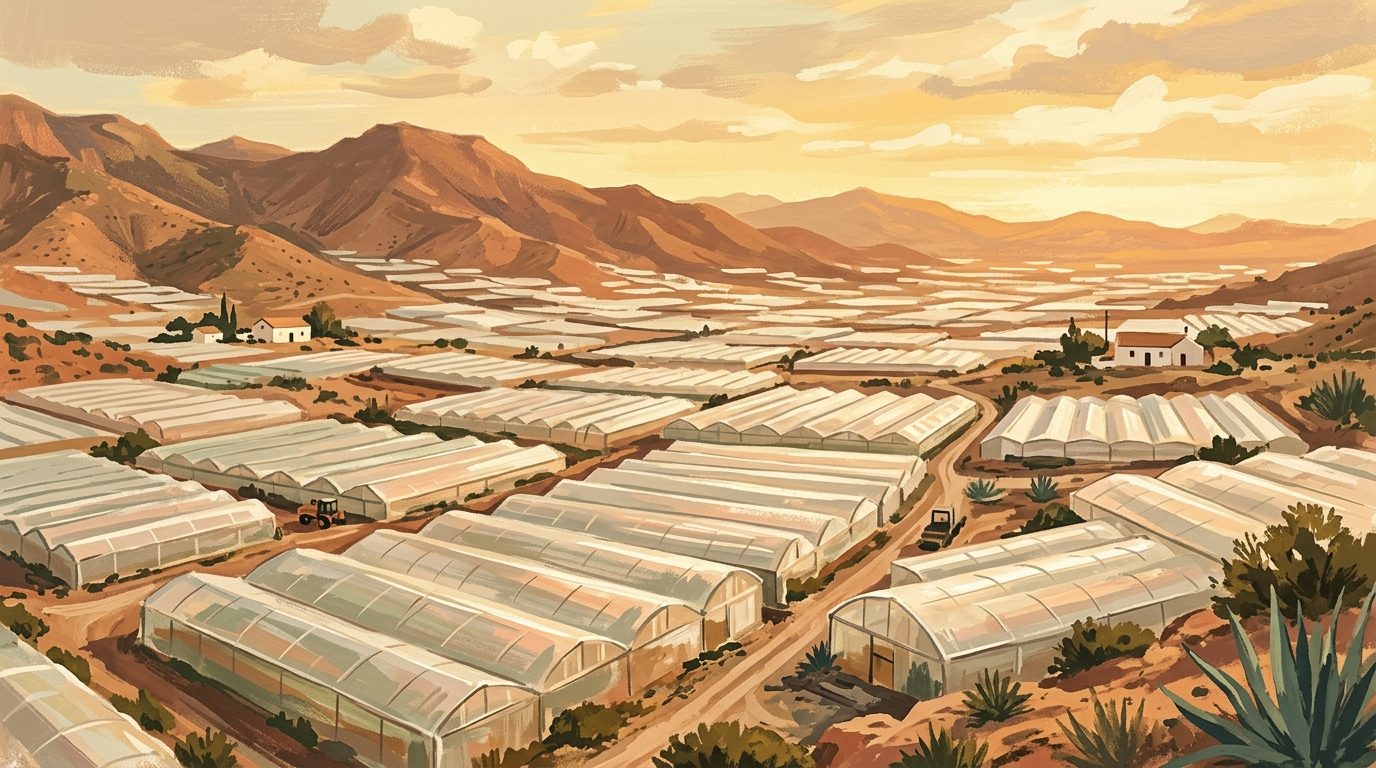
If you have ever flown into Almería airport during the daylight hours, you will have witnessed a sight that defies immediate comprehension. From thirty thousand feet, the horizon doesn't meet the blue of the Mediterranean with the expected yellow of sand or the grey of rock. Instead, it meets a blinding, shimmering expanse of white. It looks like a massive glacier has somehow detached itself from the Sierra Nevada and slid down to the coast, or perhaps like a low-hanging cloud has decided to permanently anchor itself to the earth. This is the Poniente Almeriense, better known to the world as the Mar de Plástico, the Sea of Plastic.
Covering more than 30,000 hectares, this is the largest concentration of greenhouses on the planet. It is a landscape that is often dismissed as an eyesore or an environmental catastrophe, yet to look at it through such a narrow lens is to miss one of the most remarkable stories of human ingenuity and survival in modern Europe. It is a place of intense heat, incredible productivity, and a complex social fabric that feeds hundreds of millions of people across the continent every single winter.
The Desert That Learned to Bloom
To understand why this white sea exists, you have to look back sixty years. In the 1950s, Almería was the poorest province in Spain. It was a sun-baked, wind-scoured corner of the southeast where almost nothing grew. Rainfall was (and remains) minimal, often less than 200mm a year. The landscape was so desolate that it famously provided the backdrop for the Spaghetti Westerns of the 1960s. If you wanted to film a movie about the end of the world or the lawless plains of the American West, you came here.
The transformation began with a simple but revolutionary technique called enarenado. Farmers discovered that by layering the salty, poor soil with a thick coating of manure and then topping it with a layer of fine beach sand, they could create a thermal blanket. The sand allowed water to penetrate but prevented it from evaporating, while the manure provided the nutrients. When they eventually added the plastic covers to protect the crops from the fierce 'Lebeche' winds and to trap the intense solar heat, the 'Almería Miracle' was born.
What followed was an economic explosion. Families who had spent generations living in relative poverty suddenly found they could grow two, three, or even four harvests a year. Tomatoes, peppers, cucumbers, and courgettes began to flow out of this corner of Andalucía, first to the rest of Spain and then, following the country's entry into the European Union, to the supermarkets of London, Paris, and Berlin. Today, if you buy a punnet of cherry tomatoes in a British supermarket in February, there is an incredibly high probability they were grown right here, under a sheet of polyethylene in the Almerian sun.
A Walk Through the Plastic Labyrinth
Driving through the heart of the Mar de Plástico, perhaps heading towards towns like El Ejido or Roquetas de Mar, is a surreal experience. The roads are flanked by high white walls of plastic, occasionally broken by the roar of a cooling fan or the sight of a lorry being loaded with crates of bright red produce. It is a world of straight lines and functional architecture. There is a specific scent here, too: a mixture of warm earth, green vine stalks, and the faint saltiness of the nearby sea.
If you manage to step inside one of these structures, the atmosphere changes instantly. The light is diffused, creating a soft, shadowless environment that feels strangely serene. The temperature is several degrees higher than outside, and the humidity is palpable. Here, the plants don't grow in the ground in the traditional sense; they are often suspended in bags of coconut fibre or rockwool, fed by computer-controlled drip irrigation systems that deliver exactly the amount of water and nutrients required. It is precision engineering disguised as gardening.
There is a warmth to the people you meet here, a pride in what they have built from nothing. These aren't usually massive corporate plantations; the majority of the greenhouses are still family-owned. You will see fathers and sons working the rows together, discussing the price of peppers in the morning auctions or the latest biological pest control methods. They have moved away from heavy chemical use, increasingly employing 'good bugs' like ladybirds and predatory mites to manage aphids, a shift that has made Almería a world leader in integrated pest management.
The Weight of the White Sheets
Of course, a story this size is never without its complications. The Mar de Plástico faces significant challenges that the local community is constantly grappling with. The sheer volume of plastic waste is the most visible issue. While recycling programmes have improved immensely, the sight of discarded sheeting caught in fences or washed into dry riverbeds is still a reality that the region is working hard to eliminate. Then there is the water. In a desert, every drop is precious. The province has become a pioneer in desalination and wastewater reclamation, but the pressure on the deep aquifers remains a constant concern for the future.
There is also the human story. The success of the greenhouses has drawn thousands of migrant workers from North Africa and Eastern Europe. They are the backbone of the harvest, and their presence has transformed Almería into a melting pot of cultures. While many have found a path to a better life, the struggle for adequate housing and social integration in towns like San Isidro or Níjar is a topic of constant local debate. It is a place of hard work and high stakes, where the rewards are great but the labour is intense.
The Surprising Beauty of the High-Tech Garden
It might seem strange to suggest that a sea of plastic could be beautiful, but there is a certain majesty to it, especially at the edges of the day. At sunset, when the light hits the plastic at a low angle, the entire valley seems to glow with an ethereal, pearlescent light. The harsh white softens into shades of pink and gold, and the geometric patterns of the roofs create a rhythmic, almost hypnotic texture against the rugged, dark backdrop of the mountains.
For the curious traveller, exploring this area offers a different kind of insight into Andalucía. It isn't the Andalucía of flamenco and white-washed hill villages, though those are only a short drive away in the Alpujarras. This is the Andalucía of the future, a place that has looked at a desert and seen a garden. It reflects the grit and determination of the Almeriense people, who refused to let their province remain a footnote in Spain’s economic history.
How to Experience the Poniente
To truly appreciate the scale, I recommend taking the climb up to the mountain village of Enix. From this elevated vantage point, the sheer magnitude of the greenhouses becomes clear. You can see how they follow the contours of the land, flowing down to the Mediterranean like a frozen river. It is the best place to grasp the geography of the miracle.
Afterwards, head down to the coast for lunch. In places like Almerimar or Aguadulce, you can taste the produce at its absolute peak. Try the local 'pimientos de Almería' fried simply with sea salt, or a gazpacho made with tomatoes that were likely picked just a few miles from your table. There is a freshness here that is hard to replicate once the produce has travelled two thousand miles north.
The Mar de Plástico isn't a traditional tourist destination, but it is one of the most significant sites in modern Europe. It is a place that challenges your perceptions of agriculture, environment, and beauty. It is a landscape shaped by the sun and by the hands of people who dared to dream of more than dust. While it may not fit the classic image of a Mediterranean escape, it is an essential piece of the Andalucían story: a story of survival, innovation, and an unwavering commitment to making the impossible grow.
As you leave, driving back towards the airport or perhaps east towards the wild, untouched beaches of Cabo de Gata, the white sea will remain in your mind. It is a reminder that even in the harshest environments, with a bit of ingenuity and a lot of plastic, life can find a way to flourish on a scale that is nothing short of spectacular.
Last reviewed: 21 June 2026 · Editorial policy
Related guides
Beyond the Silver Screen: Exploring the Rugged Wilds of the Tabernas Desert
Discover the parched badlands and cinematic history of the Tabernas Desert, Europe's only true desert, where rugged hiking trails meet the ghosts of the Spaghetti Western era.
6 min read
The Resurrection of the Chalk: How Sherry Escaped the Dusty Sideboard
For decades, the wines of Marco de Jerez were relegated to the back of the liquor cabinet; today, a new generation of winemakers is digging into the white earth to prove Sherry is the world's most misunderstood terroir wine.
7 min read
The Ghost in the Garden: Searching for the Al-Andalus Within
Eight centuries of Al-Andalus did not vanish in 1492; they simply moved indoors, into the kitchens, and onto the tip of the tongue.
7 min read
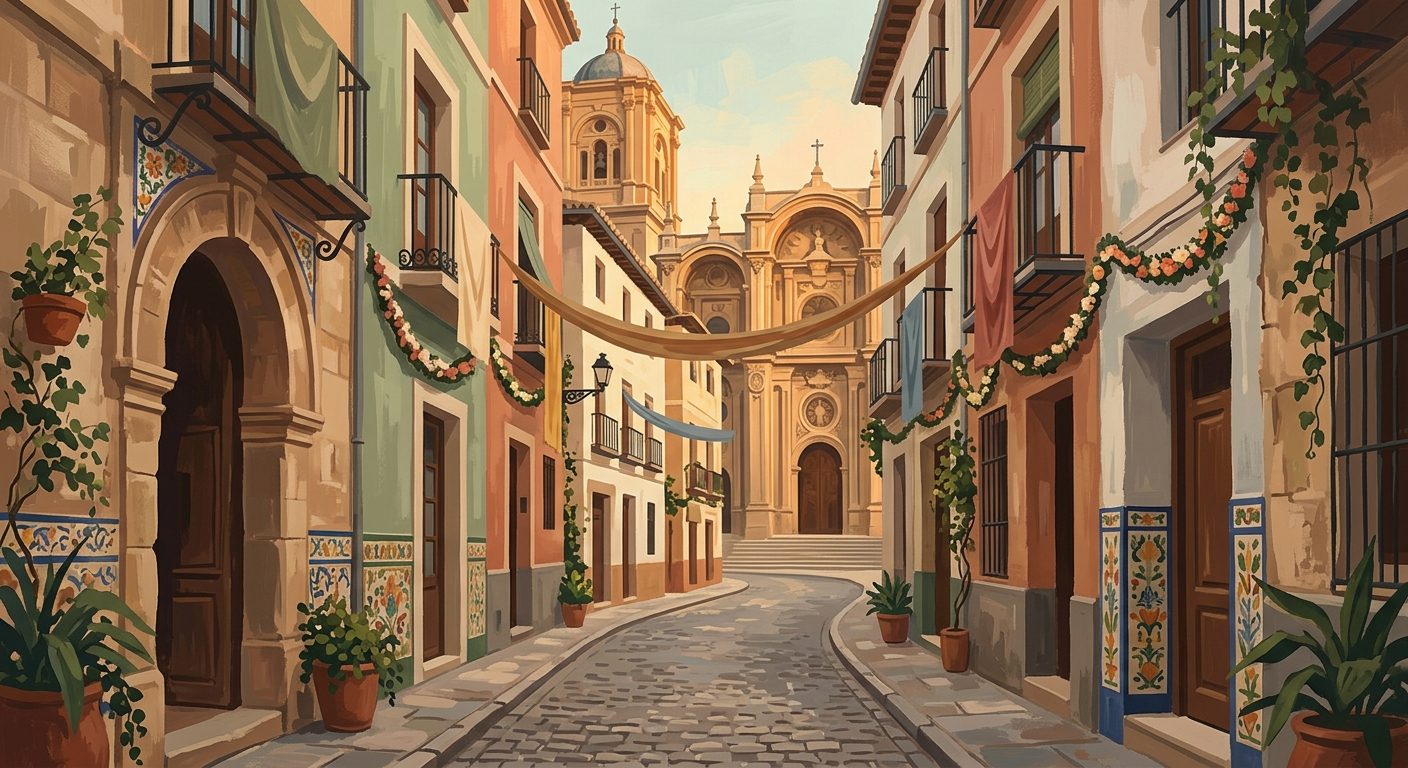
Corpus Christi in Granada: The Definitive Guide
In Granada, Corpus Christi is far more than a solemn religious observance. It is the city's largest annual festival, combining the scent of fresh rosemary crushed underfoot during the sacred Thursday procession with the unapologetic joy of the week-long public feria in Almanjáyar.
10 min read
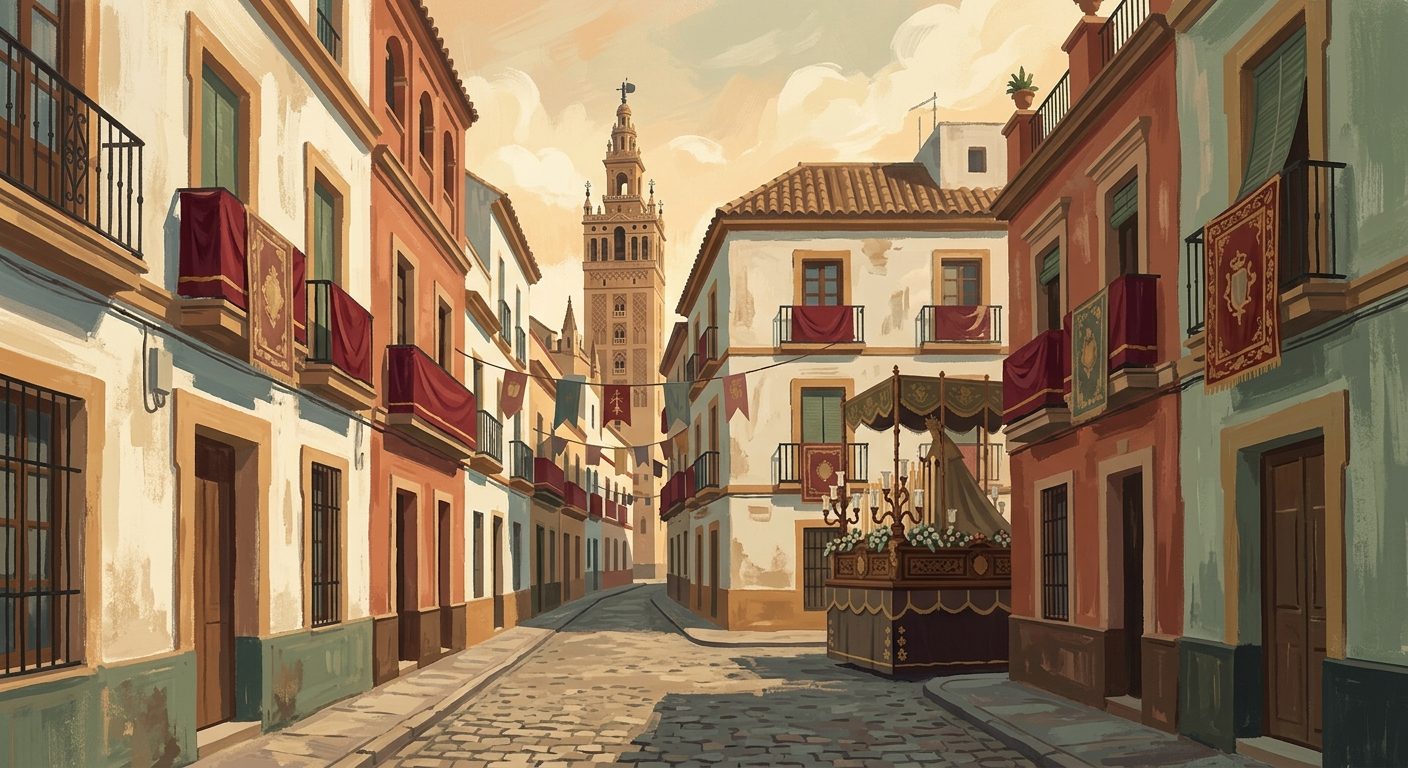
Semana Santa in Sevilla: A First-Timer's Guide
Semana Santa in Sevilla is an intense expression of faith, art and civic identity. Unlike other cities, the spectacular wooden floats are carried from below by hidden costaleros, moving to the slow beat of mourning marches or absolute silence.
8 min read
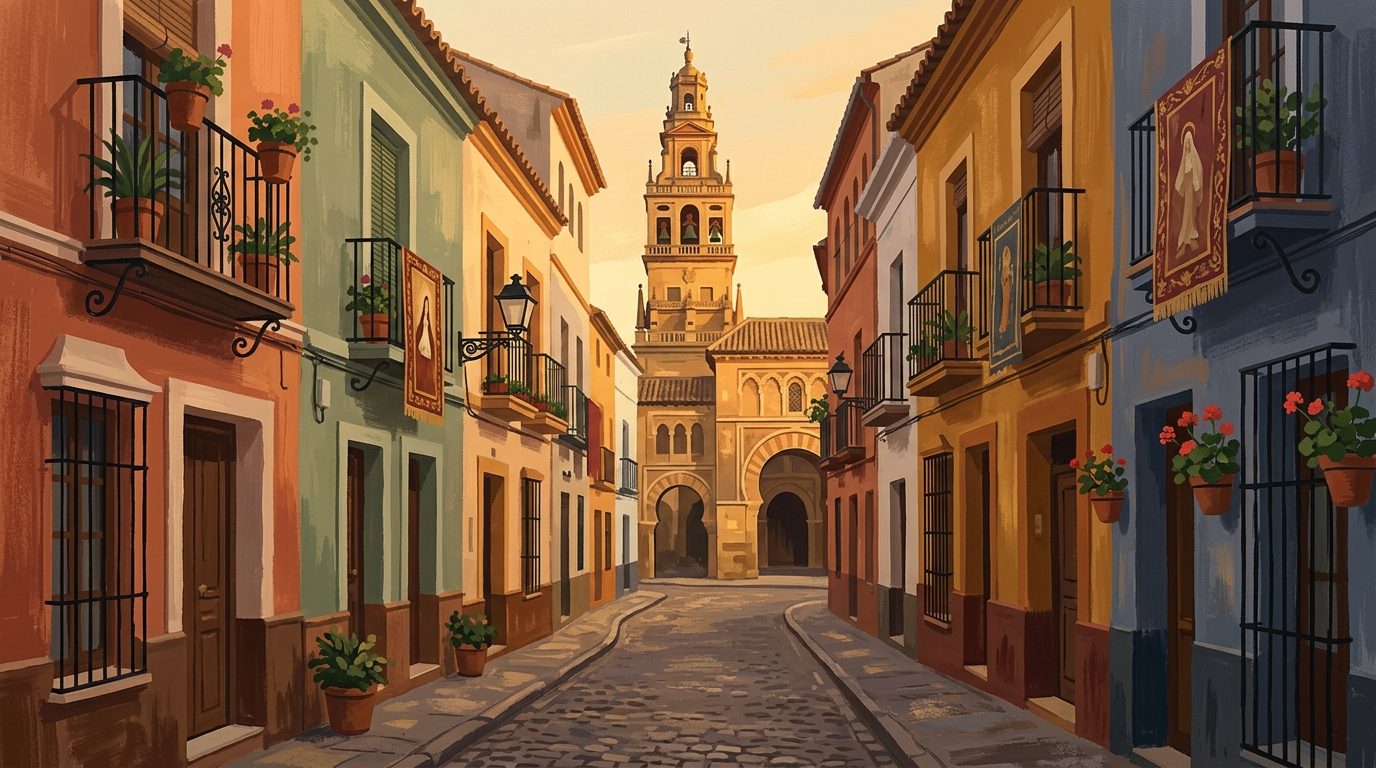
Semana Santa in Córdoba: The Definitive Guide
During Semana Santa in Córdoba, the air smells of orange blossom and incense as penitential floats pass beneath the candy-striped arches of the Mezquita.
8 min read
More from Almería
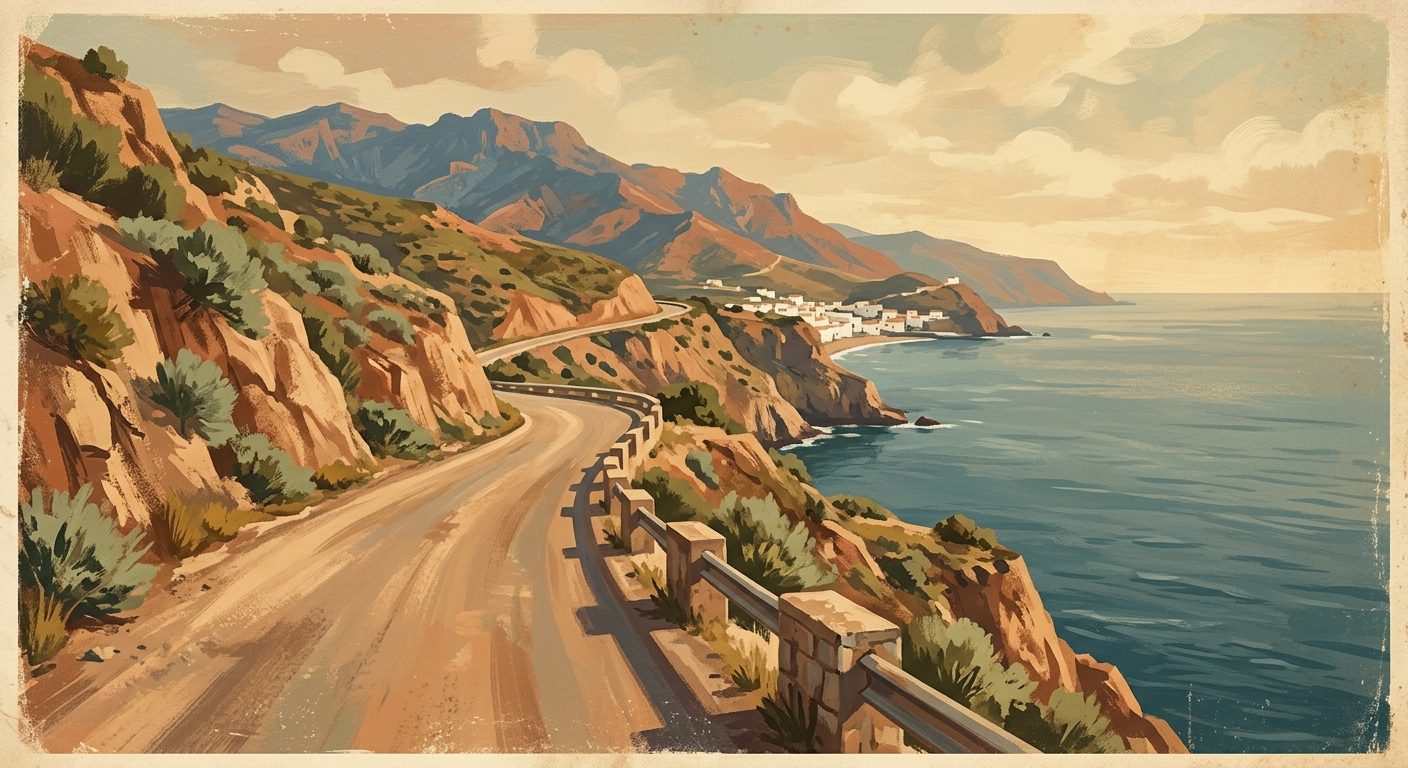
Málaga and the Carretera de Almería: The Tragedy of La Desbandá
In February 1937, tens of thousands of civilians fled Málaga along a narrow coastal road to escape advancing troops. The ensuing bombardment from sea and air created one of the deadliest civilian tragedies in modern European history.
8 min read
Costa de Almería: The Complete Guide
The Costa de Almería is an arid, volcanic stretch of coastline where the Mediterranean meets the desert. It is the least developed of the Andalucían costas and offers vast natural parks alongside quiet fishing villages.
9 min read
The Ghost of the Outlaw in the Badlands of Almería
The dust in Tabernas does not merely sit on the surface; it inhabits the lungs, a fine, ochre silt that has tasted both Hollywood gunpowder and the silence of the ancient seabed.
6 min read
Newsletter
More stories from Andalucía
Weekly notes, seasonal picks, and the next guides worth bookmarking.