
Itinerary
Two Weeks in Andalucía: The Complete Circuit
A definitive 14-day loop through Andalucía’s eight provinces, balancing world-renowned monuments with the rugged sierras of Huelva and the olive seas of Jaén.
By Dan · Updated 7 June 2026 · 12 min read
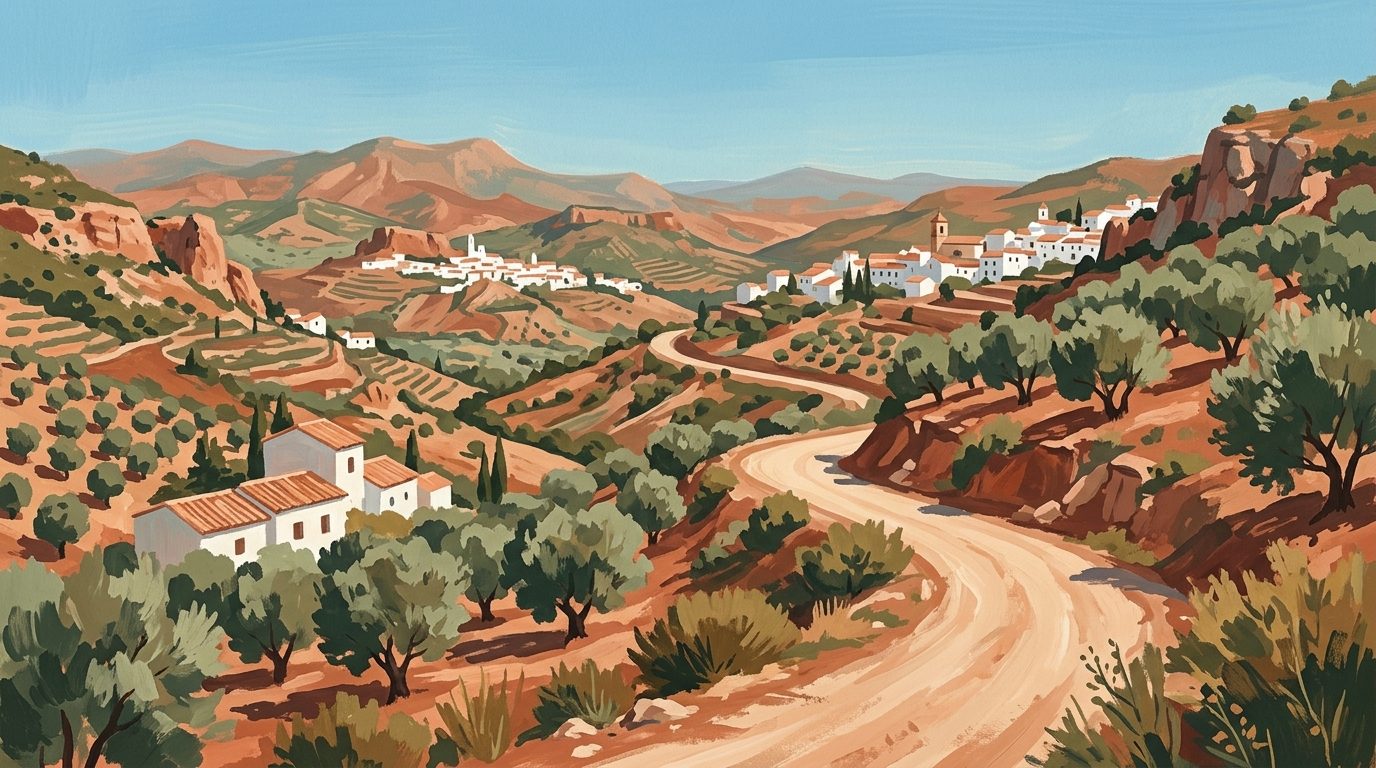
This 14-day loop is designed for those who want to see the complete picture of southern Spain, moving beyond the famous monuments into the rugged west and the high-altitude north. It is a logistical marathon that rewards the disciplined traveller with a deep understanding of the region’s diverse identity.
Most visitors to Andalucía stick to the 'Golden Triangle' of Sevilla, Córdoba, and Granada. While those cities are essential, they represent only a fraction of the region’s character. This itinerary intentionally pulls you away from the crowds, taking you into the prawn-hauling ports of Huelva, the Renaissance palaces of Jaén, and the white-tipped peaks of the Alpujarras. It is a circuit that requires a rental car and an appetite for long, scenic drives through olive groves and cork forests.
This plan works because it follows a logical geographic loop, starting and ending in Málaga, which usually offers the most flexible flight connections. It is suited for travellers who prefer to stay on the move, spending two to three nights in major hubs and single nights in strategic mountain towns. You will see the Moorish architecture that defines the region, but you will also see the Atlantic influence of the west and the Renaissance grandeur of the north.
Day 1: Arrival and Málaga’s Coastal Energy
Upon landing at Málaga-Costa del Sol Airport (AGP), collect your rental car immediately. Drive 20 minutes into the city centre and drop your bags. Spend your morning at the Atarazanas Market (closed Sundays); the stained-glass window at the back is spectacular, but the real draw is the fried fish stalls. Order a plate of boquerones fritos (fried anchovies) standing up at the counter.
In the afternoon, walk to the Museo Picasso Málaga (open 10:00 to 19:00). It is housed in the Palacio de Buenavista and offers a focused look at the local artist’s evolution. Skip the beach today; instead, climb the ramparts of the Alcazaba and Gibralfaro for a view of the Mediterranean at sunset. For dinner, head to the Soho district. This is the city’s creative quarter, away from the cruise ship crowds. Eat at La Cosmo for modern interpretations of Malagueño classics.
Day 2: The Caminito del Rey and Ronda’s Gorge
Leave Málaga early for El Chorro (approx. 1 hour drive). You must book your tickets for the Caminito del Rey at least three months in advance. This walkway, pinned 100 metres up the walls of the Gaitanes Gorge, takes about three hours to complete. It is not for those with severe vertigo, but the engineering is astounding.
After the walk, continue the drive to Ronda (1 hour 15 minutes). The road (A-366 or A-367 depending on route) is winding and requires concentration. Check into your accommodation in the Ciudad (the old Moorish part of town). Before dinner, walk across the Puente Nuevo, the 18th-century bridge that spans the 120-metre deep Tajo gorge. While most tourists eat on the New Town side, cross back into the Old Town to Casa Maria. There is no menu; they simply bring you what is fresh that day. It is one of the most honest dining experiences in the province.
Day 3: Through the Pueblos Blancos to Jerez
Today is about the drive. Take the A-372 from Ronda towards Grazalema. This is the heart of the Sierra de Grazalema Natural Park. The village of Grazalema is often the wettest place in Spain, which results in an unusually green landscape. Stop for a coffee in the Plaza de España before continuing over the Puerto de las Palomas pass, a high-altitude road with hair-raising bends and views that stretch to the Atlantic.
Descend through Zahara de la Sierra, where the castle sits atop a crag overlooking a turquoise reservoir. Aim to reach Jerez de la Frontera by late afternoon. Jerez is the capital of Sherry and horses. Book a late afternoon tour at Bodegas Lustau. Unlike the larger, more commercial bodegas, Lustau offers a technical look at the solera system. Stay in the historic centre near the Alcázar.
Day 4: Dancing Horses and Vejer de la Frontera
In the morning, visit the Real Escuela Andaluza del Arte Ecuestre at 12:00 for the 'How the Andalusian Horses Dance' show. It is a formal, disciplined display of classical dressage that is deeply rooted in local culture. After the show, drive 45 minutes south to the coast.
Instead of the modern resorts, head to Vejer de la Frontera. This is a walled town perched on a hill overlooking the Atlantic. It is exceptionally well-preserved. Spend the evening walking the narrow, whitewashed alleys. For dinner, you must book a table at El Jardín del Califa. It serves North African and Middle Eastern cuisine in a restored 16th-century courtyard, acknowledging the town’s Moorish heritage. Order the Maghreb feast.
Day 5: Roman Ruins and the Atlantic Wind
Drive 20 minutes down to the coast to Bolonia. Here you will find Baelo Claudia (closed Mondays), one of the most complete Roman ruins in Spain. The fact that an ancient Roman theatre and basilica sit right on the edge of a white-sand beach is remarkable. Walk to the top of the Bolonia sand dune (a natural monument) to see the African coastline across the Strait of Gibraltar.
Afterwards, drive to Tarifa, the southernmost point of mainland Europe. The town is dominated by windsurfers and a laid-back, international crowd. Walk the Guzmán el Bueno castle walls. If you have time, drive back towards Vejer and stop at El Palmar for sunset. This is a long, raw stretch of Atlantic beach where the sunset is a daily ritual for locals. Stay another night in Vejer to avoid constant packing.
Day 6: Arcos and the Arrival in Sevilla
Leave the coast and head north towards Sevilla. Stop at Arcos de la Frontera, another 'white village' that clings to a limestone ridge. The view from the Plaza del Cabildo is terrifyingly steep. Continue to Sevilla (1 hour 15 minutes from Arcos).
Sevilla is the soul of Andalucía. Park your car in a public garage (do not try to park on the street in the centre) and head to the Barrio Santa Cruz. In the evening, cross the Isabel II bridge into Triana. This was the traditional gitano (gypsy) quarter. Avoid the touristy flamenco shows on the main drags and look for a small peña or a bar like Casa Anselma (though it opens very late). For dinner, eat at Las Golondrinas in Triana: order the punta de solomillo (sirloin tips).
Day 7: The Great Monuments of Sevilla
You must book the Real Alcázar for the first slot of the morning (09:30). This allows you to see the Patio de las Doncellas before the heat and the crowds become oppressive. Spend at least three hours here. Next, visit the Sevilla Cathedral, the largest Gothic cathedral in the world. Climb the Giralda bell tower for a view over the orange-tree-filled courtyards.
In the afternoon, escape the sun in the María Luisa Park and visit the Plaza de España. Many tourists just take a photo and leave, but it is worth walking the entire semi-circle to see the tiled provinces. For dinner, return to the centre to El Rinconcillo, the oldest bar in the city (founded 1670). Eat standing at the mahogany bar, where the waiters still chalk your bill directly onto the wood.
Day 8: Doñana and the Wild West of Huelva
Today you head west into Huelva, a province most tourists ignore. Your destination is El Rocío. This village looks like a film set from an American Western, with sandy streets instead of tarmac and hitching posts for horses outside the houses. It is the centre of the most famous pilgrimage in Spain. Visit the Ermita de la Virgen del Rocío.
From here, take a 4x4 tour into the Doñana National Park, one of Europe's most important wetlands. You will need to book this in advance through the official visitor centres (Acebuche or El Acebrón). In the evening, drive into Huelva city. It is a gritty, industrial port but the food is world-class. Go to the port area and find a restaurant serving Gambas Blancas de Huelva (white prawns). They are expensive and worth every cent.
Day 9: The Mountains of Ham and Arrival in Córdoba
Drive north from Huelva into the Sierra de Aracena. This is the home of Jamón Ibérico de Bellota. Visit the town of Aracena and go underground into the Gruta de las Maravillas (Cave of Marvels), an enormous limestone cave system under the town’s castle.
Afterwards, drive to the village of Jabugo, the most famous name in Spanish ham. Visit a secadero (drying room) to see thousands of hams hanging from the rafters. After a lunch of cured meats, start the long drive east to Córdoba (approx. 2.5 hours). Arrive in time for a late walk through the Judería (Jewish Quarter). The streets here are narrow and winding, designed to provide shade and security. Stay in the area near the Mezquita.
Day 10: The Mezquita and the Sea of Olives
The Mezquita-Catedral is the most significant Moorish monument in the West. If you arrive between 08:30 and 09:30 (Monday to Saturday, excluding religious feast days), entry is free for individual visitors, allowing you to experience the forest of red-and-white arches in relative silence. Note that you cannot take a guided tour during this free hour. After the Mezquita, visit the Palacio de Viana, which has 12 distinct Andalucían patios.
In the afternoon, drive east into the province of Jaén. The landscape changes dramatically here into an endless 'sea of olives'. Drive to Úbeda, a town that looks more like Renaissance Italy than Southern Spain. The architecture here is the work of Andrés de Vandelvira. Walk the Calle Real and end at the Plaza Vázquez de Molina. This square is one of the most harmonious architectural ensembles in Europe.
Day 11: Úbeda, Baeza, and Liquid Gold
Spend the morning exploring Úbeda’s sister city, Baeza, just 15 minutes away. Visit the Baeza Cathedral and the old University. These towns were the power centres of the Spanish Renaissance, funded by the local nobility.
Since you are in the world’s most productive olive oil region, book an 'oleoturismo' session. Visit an estate like Castillo de Canena to learn about the harvest and taste the difference between Picual and Arbequina oils. It will change how you view olive oil forever. Return to Úbeda for dinner. Eat at Cantina la Estación, a restaurant themed like an old railway carriage that serves sophisticated, modern Jaén cuisine.
Day 12: The Road to Granada and the Alhambra
Drive south from Úbeda to Granada (1.5 hours). The approach to Granada, with the Sierra Nevada mountains rising behind the city, is spectacular. You must have your Alhambra tickets booked months in advance. Your entry time to the Nasrid Palaces is strict: if you are five minutes late, they will not let you in.
Spend the afternoon at the Alhambra and the Generalife gardens. In the evening, walk up to the Albayzín, the old Moorish quarter. Head to the Mirador de San Nicolás for the classic view of the Alhambra lit up at night. It will be crowded. For a quieter evening, walk further up to the San Miguel Alto hermitage. For dinner, remember that Granada is the land of free tapas; you buy a drink, and a plate of food arrives. Try Los Diamantes on Calle Navas for fried seafood.
Day 13: Sacromonte and the High Alpujarras
In the morning, visit the Sacromonte district, where the houses are carved into the caves of the hillside. Visit the Museo Cuevas del Sacromonte to understand the history of the Romani communities who lived here.
By midday, drive south into the Alpujarras. These are the high valleys on the southern slopes of the Sierra Nevada. The road is steep and full of switchbacks. Drive to the Poqueira Gorge and the village of Pampaneira. This area was the last refuge of the Moors after the fall of Granada. The architecture (flat roofs and 'tinao' walkways) is unique. Buy a hand-woven rug (jarapa) and eat Plato Alpujarreño (potatoes, eggs, ham, and sausage). Stay overnight in Bubión or Capileira for mountain air and silence.
Day 14: Nerja Caves and Return to Málaga
Descend from the mountains towards the coast. This drive takes you from alpine scenery to the tropical coast in under 90 minutes. Stop in Nerja to visit the Nerja Caves (Cueva de Nerja). These are some of the largest and most impressive caves in Europe, containing the world's largest stalactite.
Finish the loop by driving the final 45 minutes back to Málaga. If you have a late flight, have a final lunch of espetos de sardinas (sardines grilled on bamboo skewers) at a chiringuito (beach bar) in El Palo or Pedregalejo. Return your rental car at the airport. You have covered over 1,000 kilometres and all eight provinces of the region.
Getting Around
For this specific itinerary, car hire is non-negotiable. While Sevilla, Córdoba, and Granada are well-connected by high-speed train (AVE), the sections through Huelva, the Sierra de Grazalema, and the Alpujarras are impossible to navigate efficiently with public transport.
Expect some challenging drives. The mountain roads in the Alpujarras and the Sierra de Grazalema are narrow and require confidence. In the cities, do not attempt to drive to your hotel door; always look for a peripheral public car park. Driving times are generally reliable, but the A-4 motorway between Sevilla and Córdoba can be heavy with freight traffic.
Where to Stay
- Málaga: Look for apartments or hotels in Soho or near Calle Larios. Avoid the beachfront skyscrapers of Malagueta if you want a local feel.
- Ronda: Stay in the La Ciudad (Old Town) district. It is quieter and more atmospheric than the commercial New Town (El Mercadillo).
- Sevilla: The Barrio Santa Cruz is beautiful but touristy. For a more authentic experience, look at San Vicente or Triana.
- Úbeda: Book within the Casco Antiguo (Old Town) to be within walking distance of the Renaissance monuments.
- Granada: The Albayzín is stunning but involves lots of hills and stairs. Realejo is a flatter, trendy alternative.
Best Time for This Itinerary
The ideal windows are April to June and September to October. In July and August, the temperatures in Sevilla, Córdoba, and Jaén regularly exceed 40°C, making the afternoon segments of this itinerary physically draining and potentially dangerous. Spring offers the bonus of wildflowers in the Grazalema mountains and the scent of orange blossom in Sevilla. If you travel in May, you may catch the Córdoba Patio Festival.
Practical Planning
Total Budget: Expect to spend approximately €150 to €200 per day per couple, excluding car hire and flights. This covers mid-range accommodation, fuel, museum entries, and dining out.
Advance Bookings: This is the most critical part of your planning. You must book the following at least two to three months in advance:
- The Alhambra (Nasrid Palaces)
- The Caminito del Rey
- The Real Alcázar of Sevilla
- Doñana 4x4 tours
Entry Requirements: Most monuments require a passport or ID number at the time of booking, and you must carry that same ID with you for entry. Digital tickets on your phone are widely accepted.
Last reviewed: 21 June 2026 · Editorial policy
Related guides
Game of Thrones Filming Locations: The Ultimate Andalucían Road Trip
For years, fantasy tourists flocked to the freezing coastlines of Northern Ireland and the medieval streets of Croatia. But it was the sun-baked architecture and cracked deserts of southern Spain that brought the most exotic kingdoms of Westeros to life.
10 min read
Ten Days in Andalucía: The Classic Route
A definitive ten-day guide through Málaga, Ronda, Sevilla, and Granada, focusing on the essential sights, the best sherry bodegas, and the most authentic tapas bars.
11 min read
Winter Sun in Andalucía: A 7-Day Escape
Escape the winter gloom with a sun-drenched week in southern Spain, from the cultural streets of Málaga to the historic palaces of Sevilla.
9 min read
Moorish Andalucía: A Cultural History Route
A definitive 7-day guide through the architectural and political legacy of al-Andalus, tracing the evolution from the Caliphate of Córdoba to the Nasrid Kingdom of Granada.
8 min read
Two Weeks in Andalucía with Kids
A comprehensive 14-day route through Southern Spain designed to balance cultural immersion with the practical needs of families, from the beaches of Almería to the palaces of Sevilla.
9 min read
The Pueblos Blancos Road Trip: A Five-Day Route Through Andalucía’s White Villages
A definitive five-day driving route from the cliffs of Ronda to the Atlantic-facing walls of Vejer de la Frontera, focusing on limestone peaks and Moorish history.
9 min read
More guides
5 Days in Jaén: Renaissance Cities and Cazorla
A realistic five-day driving itinerary through Jaén province, balancing the monumental Renaissance architecture of Úbeda and Baeza with the rugged mountain wilderness of the Sierra de Cazorla.
11 min read
5 Days in Huelva: Atlantic Coast, Doñana and Sierra
A realistic five-day driving route through Huelva province, linking the maritime history of the capital with the tidal wetlands of Doñana and the chestnut forests of the Sierra de Aracena.
12 min read
5 Days in Almería: City, Desert and Cabo de Gata
A realistic five-day driving itinerary through Almería province, balancing the historic capital, the cinematic Tabernas badlands, and the protected volcanic shores of Cabo de Gata.
13 min read
One Week in Sevilla: A Complete Seven Days Itinerary
Spending a full week in Sevilla allows you to slow down and adopt the local rhythm. You can explore the monumental centre, wander through neighbourhood markets, and take the train to nearby Andalucían cities without feeling rushed.
13 min read
Two Days in Granada: A Step-by-Step Itinerary
Two days in Granada gives you just enough time to explore the Alhambra and lose yourself in the steep alleys of the Albaicín. This itinerary balances major monuments with the city's legendary free tapas culture.
10 min read
48 Hours in Sevilla: A Weekend Itinerary
Spend a weekend in Sevilla navigating the royal palaces, historic tapas bars and shaded plazas. This two-day plan balances major architectural sights with long lunches and evening walks along the river.
8 min read
Three Days in Sevilla: The Complete Itinerary
Spend 72 hours exploring the heart of the Andalucían capital. This pacing allows time for the Real Alcázar, late tapas in Triana and the essential afternoon siesta.
9 min read
Two Days in Sevilla: A Complete Itinerary
Two days in Sevilla requires strict prioritisation to avoid exhaustion under the Andalucían sun. This itinerary balances the grand monuments of the historic centre with the slower, more local rhythm of Triana and Santa Cruz.
10 min read
A Weekend in Cordoba: Two Days in Andalucía's Caliphate City
Spend 48 hours in Cordoba exploring the mesmerising Mezquita, getting lost in the whitewashed streets of the Judería, and eating excellent salmorejo.
9 min read
Newsletter
More stories from Andalucía
Weekly notes, seasonal picks, and the next guides worth bookmarking.