
Things to do · Huelva
Exploring Huelva on Two Wheels: From Martian Landscapes to Coastal Pines
Discover the diverse cycling routes of Huelva, from the iron-red trails of the Rio Tinto to the shady chestnut forests of the Sierra de Aracena.
By Dan · Updated 16 July 2026 · 6 min read
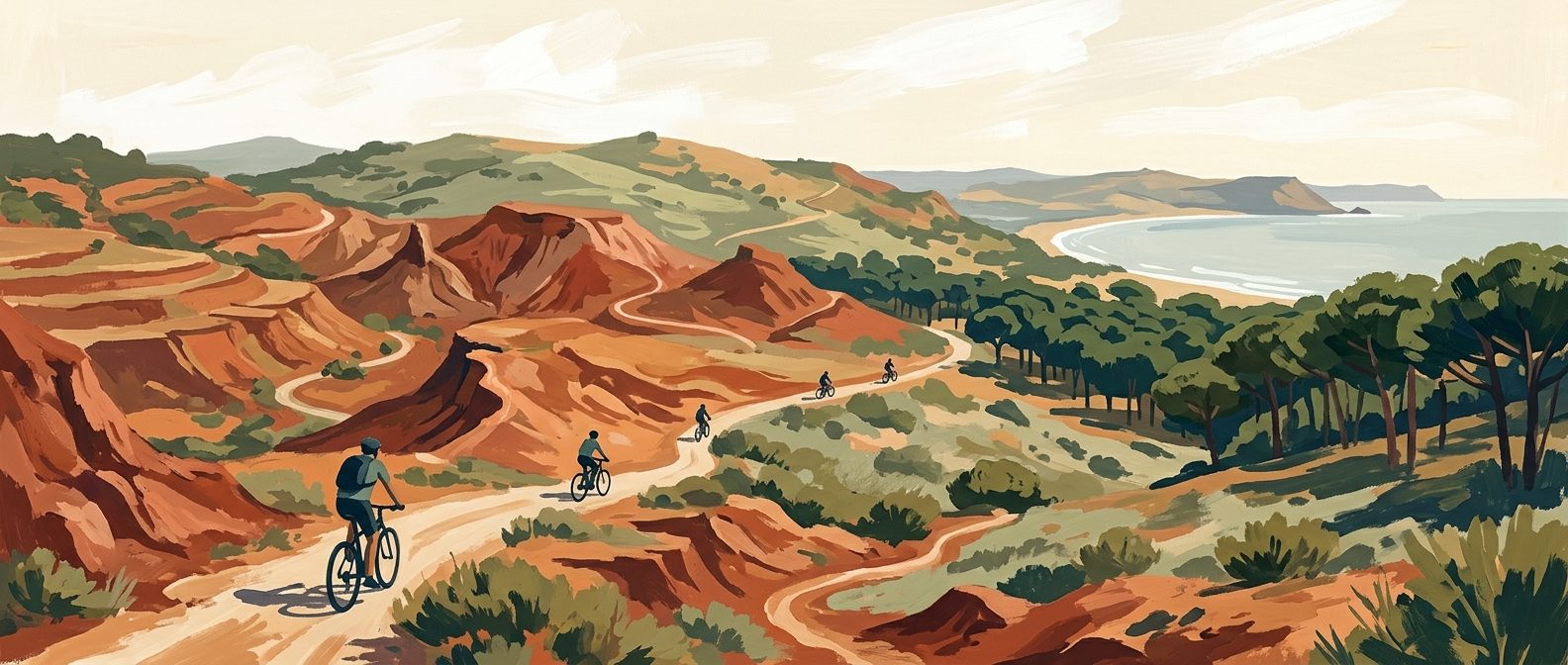
Huelva offers some of the most varied terrain in Andalucía, ranging from the surreal red banks of the Rio Tinto to the dense chestnut forests of the north. Whether you prefer flat coastal trails or demanding mountain ascents, this province provides ample space to ride away from the crowds.
Huelva is often the overlooked corner of Andalucía, overshadowed by the famous peaks of the Sierra Nevada or the busy beaches of the Costa del Sol. However, for those who travel with a bicycle or plan to hire one, this province is a revelation. It is a region defined by its edges: the Atlantic Ocean to the south, the Portuguese border to the west, and the Extremaduran plains to the north. Between these boundaries lies a landscape that changes dramatically every twenty miles.
The cycling infrastructure here relies heavily on the Vías Verdes, repurposed railway lines that once carried minerals from the deep interior to the docks of Huelva city. These paths provide flat, car-free corridors through otherwise rugged terrain. Beyond the railways, the Sierra de Aracena offers a network of ancient stone paths and quiet asphalt roads that challenge the lungs and reward the eyes. Along the coast, the routes are defined by soft sand, towering dunes, and the scent of stone pine forests. Huelva delivers a sense of space and quietude that is increasingly hard to find in Southern Spain.
Best Places for Cycling in Huelva
The Vía Verde del Río Tinto
The Río Tinto is world-renowned for its acidic, deep-red waters, a result of thousands of years of mining. The Vía Verde del Río Tinto follows the old mineral railway line, offering a unique cycling experience. Starting near the town of Minas de Río Tinto and heading south towards the coast, the path takes you past rusted Victorian steam engines and through tunnels carved into the dark rock.
The terrain is mostly fine gravel and very manageable for hybrid or mountain bikes. The gradient is generally downhill if you start in the mining district, making it an excellent choice for families. You will see landscape features that NASA has used to simulate Mars missions, with iron-rich soils creating a kaleidoscope of ochre, crimson, and purple. Several local operators offer bike hire and shuttle services, such as Fieldwork Río Tinto, who can arrange drop-offs at the top of the trail. Expect to pay around €25 for a full-day bike hire (check on the operator's website before travelling).
Sierra de Aracena and Picos de Aroche
In the northern part of the province, the landscape shifts into a lush, green mountain range. This is the land of the Iberian pig and the famous Jabugo ham. For cyclists, the Sierra de Aracena is a playground of technical trails and winding backroads. The towns of Aracena, Alájar, and Almonaster la Real serve as perfect bases. The climbs here are punchy rather than Alpine, with gradients often hitting 10% or 12% as you move between white-washed villages.
One of the most rewarding loops starts in Aracena, heads out to Los Marines, and climbs up to the Alájar balcony for views across the entire province. The descent back through the chestnut groves is spectacular in autumn. For mountain bikers, the GR-41 and GR-47 trails provide challenging rocky descents and river crossings. Be aware that these trails are also used by hikers and livestock, so keep a bell handy. Local specialists like Babel Nature in Aracena provide guided e-bike tours, which are highly recommended if you want to tackle the steeper climbs without the lactic acid build-up.
Marismas del Odiel
Located just across the water from Huelva city, the Marismas del Odiel is a UNESCO Biosphere Reserve and one of the most important wetland areas in Europe. For cyclists, it offers a completely flat, paved route that takes you deep into the marshes. The main trail, the Carretera del Dique de Juan Carlos I, stretches for about 12 kilometres into the estuary.
This is birdwatching territory. As you pedal, you are likely to see flamingos, spoonbills, and ospreys. The path is exposed to the wind, which can be fierce coming off the Atlantic, but the lack of incline makes it accessible for any fitness level. It is best to start from the Paseo de la Ría in Huelva, where you can find several bike-sharing stations and private rental shops like Enclave Deportivo. This route is particularly striking at sunset when the salt pans reflect the orange light of the sky.
The Coastal Pine Forests: Mazagón to Matalascañas
The stretch of coast between Mazagón and Matalascañas is a preserved wilderness bordering the Doñana National Park. A dedicated cycle path runs parallel to the A-494 road, separated by a wide wooden fence or thick vegetation, providing a safe 30-kilometre route through the Médano del Asperillo. These are some of the highest fossil dunes in Europe.
The riding here is tranquil, with the Atlantic breeze keeping temperatures down. You can stop at the Cuesta de Maneli and leave your bike at the racks to walk the boardwalk down to a completely wild beach. The path is largely flat with some gentle undulations. If you are staying in Matalascañas, you can hire bikes from several hotels or small beachside kiosks for approximately €15 to €20 per day (check on the operator's website before travelling). It is an ideal way to see the coastline without the hassle of finding a parking space in the crowded summer months.
Vía Verde del Litoral
The Vía Verde del Litoral follows the old railway line between the port of Huelva and the Portuguese border at Ayamonte. While parts of the track near the city are more industrial, the western section near the marshes of Isla Cristina and Ayamonte is stunning. The path takes you through the Marismas de Isla Cristina, where the smell of salt and sea air is constant. It is an easy, linear route that connects several coastal towns, making it a great option for a day trip involving a seafood lunch in Ayamonte followed by a ferry ride across the Guadiana river to Portugal with your bike.
Practical Information
Huelva is a year-round destination, but timing is vital. The best months for cycling are from late September to June. July and August can see temperatures exceeding 40°C in the interior, particularly around the Rio Tinto and the city. If you must ride in summer, finish your session by 11:00 am. Most local bike shops in Huelva city and Aracena are closed on Saturday afternoons and Sundays, so plan your repairs or rentals accordingly.
Water is your most important resource. While the white villages of the Sierra have public fountains (fuentes) with potable water, the Vías Verdes and coastal paths are quite isolated with very few places to refill. Always carry at least two litres of water and some basic tools, as mobile signal can be patchy in the deeper valleys of the Picos de Aroche. Expect to pay between €20 for a basic mountain bike and €50 for a high-end e-bike for a daily rental (check on the operators' websites before travelling).
Local Tips
In the Sierra de Aracena, the paths are often lined with dry-stone walls. These are beautiful but narrow, so if you encounter a herd of Retinto cattle or a group of Iberian pigs, give them a wide berth and wait for them to pass. On the coast, always check the wind direction before heading out; the 'Poniente' wind from the west can make the return leg from Matalascañas to Mazagón feel twice as long. Finally, try the local 'mosto' (grape juice or young wine) in the villages around La Palma del Condado: it is the traditional cyclist’s recovery drink in this part of Spain.
Last reviewed: 21 June 2026 · Editorial policy
Related guides
A Complete Guide to Cycling in Andalucía
Andalucía offers some of the most varied cycling terrain in Europe, ranging from the gruelling climbs of the Sierra Nevada to family-friendly paths along converted railway lines.
6 min read
Cycling in Jaén: From Infinite Olive Groves to Rugged Mountain Peaks
Discover why Jaén is Spain’s best-kept secret for cyclists, from the flat Vía Verde del Aceite to the technical trails of the Sierras de Cazorla.
6 min read
Cycling in Córdoba: The Best Routes and Practical Guide
From the flat trails of the Guadalquivir valley to the rugged peaks of the Sierras Subbéticas, Córdoba offers a diverse landscape for cyclists of all abilities.
6 min read
Bikepacking in Andalucía: A Complete Guide to Two-Wheeled Adventures
Discover how to plan the ultimate bikepacking adventure in southern Spain. Our guide covers route planning, essential gear, weather windows, and tips for navigating wild terrain.
13 min read
A Guide to Cycling in Málaga: From Coastal Paths to Mountain Peaks
Discover the best of cycling in Málaga, from the gentle coastal Senda Litoral to the challenging peaks of the Montes de Málaga and the rugged Axarquía hills.
6 min read
Cycling in Cádiz: A Guide to the Best Coastal and Mountain Routes
From the family-friendly Vía Verde de la Sierra to the challenging climbs of the Grazalema mountains, Cádiz province is a premier destination for cyclists of all levels.
6 min read
More from Huelva
The Best Day Trips from Huelva
Huelva serves as the perfect launchpad for exploring the crimson Rio Tinto, the caves of Aracena, and the wild marshes of Doñana National Park.
6 min read
Mastering the Atlantic: A Guide to Water Sports in Huelva
From the Atlantic swells of Islantilla to the rust-coloured waters of the Río Tinto, Huelva offers a distinct maritime playground for kayaking, surfing, and sailing.
6 min read
Hiking and Walking in Huelva: Trails from the Mountains to the Atlantic
Huelva offers a remarkable variety of terrain, from the dense chestnut forests of the Sierra de Aracena to the salt marshes of the Atlantic coast. It remains one of the least developed provinces for walking, providing quiet trails and authentic mountain villages.
6 min read
Newsletter
More stories from Andalucía
Weekly notes, seasonal picks, and the next guides worth bookmarking.