
Food & drink · Huelva
Where to Eat in Huelva: From Atlantic Prawns to the Heights of Jabugo
Discover the culinary secrets of Spain's southwestern corner, where the Atlantic's finest white prawns meet the world's best acorn-fed ham.
By Dan · Updated 16 July 2026 · 6 min read
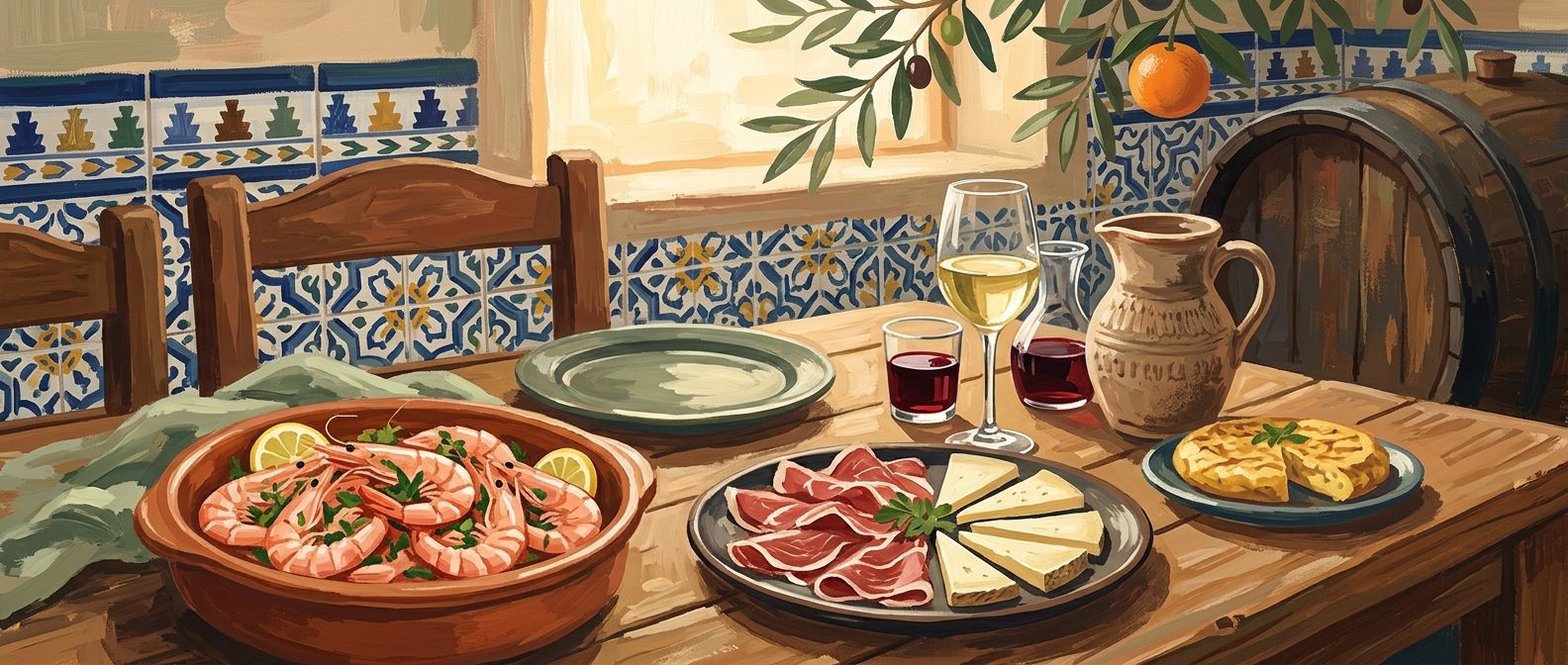
Huelva is the kitchen of Andalucía, a province where the raw ingredients are so exceptional they rarely need more than a splash of olive oil and a pinch of sea salt. From the depths of the Atlantic to the oak forests of the Sierra, this is a landscape defined by its appetite.
Huelva is often overlooked by travellers rushing towards the beaches of the Algarve or the monuments of Sevilla. This is a mistake. For those who travel to eat, Huelva is arguably the most rewarding province in Spain. It lacks the self-consciousness of more famous food destinations; here, the focus remains stubbornly on the quality of the product rather than the theatre of the service. The province is split into two distinct culinary halves: the coast, dominated by the marismas (salt marshes) and the Atlantic Ocean, and the Sierra de Aracena y Picos de Aroche, a cool, green highland where the cerdo ibérico (Iberian pig) reigns supreme.
In the city itself, the atmosphere is unpretentious. You will find locals crowded around zinc bars, peeling gambas blancas (white prawns) with practised speed or debating the merits of a particular vintage of Manzanilla. The food culture here is deeply seasonal and fiercely local. You are tasting a specific geography. This guide avoids the tourist traps to show you where the real flavours of Huelva reside.
The Crown Jewel: Gambas Blancas de Huelva
The gamba blanca is the undisputed queen of the Huelva coastline. Unlike the red prawns of Dénia or Palamós, the Huelva white prawn is prized for its delicate, sweet flavour and a texture that is firm yet creamy. These prawns are caught by the artisanal fleet using traditional trawling methods that respect the seabed. The best way to eat them is cocidas (briefly poached in sea salt) or a la plancha (grilled with a touch of coarse salt).
When you sit down at a traditional marisquería, look for the prawns that still have their long, intact whiskers, a sign of freshness and careful handling. The orange fat inside the head is the most sought-after part; locals will tell you that if you don't suck the heads, you haven't really eaten the prawn. For a benchmark experience, head to Azabache in Huelva city (€€). It is a small, often packed space where the product speaks for itself. Their gambas al ajillo (garlic prawns) are excellent, but the simple boiled prawns are the true test of their quality.
The Black Hoof: Jamón Ibérico and the Sierra
Drive an hour north from the coast and the air cools as the landscape shifts into the dehesa, ancient oak pastures. This is the home of the pata negra. The town of Jabugo has become shorthand for the finest ham in the world, specifically the Jamón 100% Ibérico de Bellota. These pigs spend their final months roaming the hills, gorging on bellotas (acorns) which gives the fat a low melting point and a distinct nutty flavour.
Eating ham here is a ritual. It must be hand-carved into translucent, bite-sized lonchas (slices) that melt on the tongue. Beyond the ham, look for carne de retinto (local beef) and the various cuts of the Iberian pig: secreto, pluma, and presa. These are best enjoyed charcoal-grilled. In the village of Aracena, Restaurante Casas (€€, check on the operator's website before travelling) offers a masterclass in mountain cooking. Their croquetas de jamón are legendary, and they treat the local seasonal mushrooms, like the tanas (Amanita caesarea), with great reverence.
Mercado del Carmen: The City's Pulse
To understand Huelva’s food, you must visit the Mercado del Carmen. This modern market building replaced the old one, but it retained all the character and chaos. It is one of the most impressive fish markets in Europe. Walking the aisles, you will see chocos (cuttlefish so central to the city's identity that residents are nicknamed choqueros), corvina (meagre), and the prehistoric-looking cañaíllas (sea snails).
The market isn't just for shopping; it’s a dining destination. Several bars located inside and around the perimeter serve whatever was landed that morning. Bar Hermanos Macías (€, check on the operator's website before travelling) is a local favourite for a quick tapa. Order the adobo (fried fish marinated in vinegar and spices) or papas con chocos, a thick, comforting stew of potatoes and cuttlefish that is the definition of Huelva home cooking. It is loud, it is hectic, and it is entirely authentic.
Isla Cristina and the Atlantic Bounty
Isla Cristina is the busiest fishing port in Andalucía, and much of the seafood you eat in Madrid or Sevilla started its journey here. The lonja (fish auction) is a sight to behold, but the real joy is eating in the town's unassuming taverns. This is the place to try coquinas, tiny wedge clams sautéed with garlic and parsley. They are smaller and sweeter than standard clams and are addictive.
In Isla Cristina, Casa Rufino (€€€) is an institution. They have been serving the coast's bounty for decades and are experts in tuna. While the Almadraba tuna season is a highlight, their treatment of white fish like hake or sole is impeccable. Try the atún en manteca (tuna preserved in lard), a traditional way of keeping the fish moist and flavourful.
Ordering Like a Local
Dining in Huelva follows the classic Spanish rhythm, but with a few local quirks. Lunch is the main event, rarely starting before 2:00 PM. If you are at a bar, it is perfectly acceptable to order a media ración (half portion) to allow you to sample more dishes. This is particularly useful when ordering expensive items like jamón or gambas.
When the bill arrives, it is usually paid at the end, and tipping is modest: rounding up to the nearest few euros is sufficient. Don't be surprised to see picos (small, crunchy breadsticks) on every table; they are the essential accompaniment to ham and cheese. If you want to drink like a local, ask for a Condado de Huelva wine. These white wines, made from the Zalema grape, are crisp, acidic, and designed specifically to cut through the richness of fried fish or the saltiness of seafood. For something stronger, a Vino Naranja (orange-infused fortified wine) is a traditional local aperitif.
Where to Find the Best
Huelva City
- Bar Juan José: Widely considered to have one of the best tortilla de patatas in Spain. It is runny, onion-heavy, and usually sells out by mid-afternoon (check on the operator's website before travelling). (€)
- Finca Alfoliz (Aljaraque): Located just outside the city, chef Xanty Elías focuses on sustainable, Michelin Green Star-awarded cooking. A more refined way to experience local ingredients (check on the operator's website before travelling). (€€€)
- Portichuelo: A classic choice for those who want traditional Huelva cuisine in a slightly more formal setting. Their stews and revueltos (scrambled eggs with seasonal ingredients) are standout. (€€)
The Sierra (Aracena & Jabugo)
- Restaurante Juan Hormigo (Aracena): Known for creative takes on mountain ingredients. The solomillo ibérico with a chestnut sauce is a highlight of the autumn menu. (€€)
- Mesón Sánchez (Jabugo): The place to go for a pure, unadulterated plate of the best ham you will ever eat. It is simple, rustic, and focused entirely on the pig (check on the operator's website before travelling). (€€)
The Coast (El Rompido & Punta Umbría)
- Doña Rosa (El Rompido): Overlooking the river Piedras, this is the spot for grilled fish. Ask for the pescado del día (fish of the day), often borriquete or lubina (sea bass). (Check on the operator's website before travelling). (€€)
- El Marinero (Punta Umbría): A fantastic spot for fritura malagueña style fried fish, but using Huelva’s superior Atlantic catch. Their puntillitas (baby squid) are exceptionally crisp (check on the operator's website before travelling). (€€)
Last reviewed: 21 June 2026 · Editorial policy
Related guides
Master the Art of the Andalucían Kitchen: The Best Cooking Classes in Southern Spain (2026 Guide)
Discover the secrets of the Andalucían kitchen, from masterclasses in the markets of Sevilla to sherry-infused cooking in the hills of Cádiz.
7 min read
Where to Eat in Málaga: From Beachfront Espetos to Soho Small Plates
Forget its reputation as a mere transit point; Málaga has transformed into one of Spain’s most compelling food cities, balancing salt-crusted beach traditions with a sharp, modern dining scene.
7 min read
Where to Eat in Cádiz: From Atlantic Seafood to Market Tapas
Discover the salt-tangled flavours of Europe’s oldest city, where bluefin tuna, paper cones of fried fish, and crispy shrimp fritters define the culinary landscape.
6 min read
A Guide to Eating in Almería: Tapas, Seafood, and Desert Traditions
Discover the unique food culture of Almería, from the tradition of free-choice tapas to the legendary 'cherigan' toast and the freshest red prawns in the Mediterranean.
7 min read
Beyond the Tapas Bar: A Journey Through the Flavours of Andalucía
Discover the essential dishes of Southern Spain, from the chilled salmorejo of Córdoba to the smoky espetos of the Málaga coast.
7 min read
A Local’s Guide to Eating and Drinking in Jerez de la Frontera
Discover the authentic taste of Jerez de la Frontera, from the traditional tabancos serving sherry from the cask to the rich, slow-cooked stews of the Santiago quarter.
7 min read
Newsletter
More stories from Andalucía
Weekly notes, seasonal picks, and the next guides worth bookmarking.