
Food & drink · Málaga
A Guide to Eating and Drinking in Ronda
Ronda’s culinary identity is built on rugged mountain ingredients, world-class red wines and the slow-braised richness of rabo de toro. From refined cliffside terraces to sawdust-floored tapas bars, here is where to find the town’s authentic flavours.
By Dan · Updated 24 July 2026 · 7 min read
This article contains affiliate links. If you book through them, we may earn a small commission at no extra cost to you.
Ronda’s culinary identity is built on rugged mountain ingredients, world-class red wines and the slow-braised richness of rabo de toro. From refined cliffside terraces to sawdust-floored tapas bars, here is where to find the town’s authentic flavours.
To understand the food of Ronda, you have to look at the landscape. Surrounded by the limestone peaks of the Serranía de Ronda and the Sierra de Grazalema, this is a town defined by its isolation and its altitude. While the coastal chiringuitos of the Costa del Sol are frying boquerones, the kitchens of Ronda are busy with game, wild mushrooms, chestnuts, and the heavy scents of slow-cooked stews. This is comida serrana, or mountain food, designed to fortify you against the crisp winters and provide a sturdy accompaniment to the region’s powerful red wines.
Ronda is famously divided by the Tajo gorge, and your dining experience will often depend on which side of the Puente Nuevo you find yourself. The older Moorish quarter, La Ciudad, offers quiet, atmospheric spots, while the 18th-century El Mercadillo district houses the social heart of the town, where locals crowd into narrow bars for a quick caña (small beer) and a plate of jamón. Avoiding the tourist traps requires a bit of local knowledge, but the rewards are significant: Ronda is currently undergoing a gastronomic revival, balancing its deep-rooted traditions with a new wave of sophisticated, produce-led cooking.
The Art of the Oxtail: Rabo de Toro
Ronda is the spiritual home of modern bullfighting, and that heritage extends directly onto the dinner plate. Rabo de toro (oxtail stew) is the town’s signature dish. It is a masterclass in patience, typically braised for hours in a rich gravy of red wine, onions, carrots, and leeks until the collagen melts and the meat slips effortlessly from the bone.
For a traditional experience, Restaurante Pedro Romero (€€), located directly opposite the bullring, is an institution. The walls are lined with bullfighting memorabilia, but the kitchen stays focused on the classics. Their version of rabo de toro is dark, sticky, and deeply savoury. If you prefer a more contemporary take, head to Restaurante Almocábar (€€) in the Barrio de San Francisco. It is far enough from the main tourist trail to maintain a local atmosphere, and their oxtail croquettes are a revelation of concentrated flavour. Look out for yema de Ronda for dessert: a sweet, golden egg-yolk confection that has been made by the local convents for centuries.
High-Altitude Grapes: The Wines of the Serranía
Ronda is one of the most exciting wine-producing regions in Spain right now. After the phylloxera plague wiped out the vineyards in the 19th century, the industry lay dormant until the 1980s. Today, the Serranía de Ronda DO (Denominación de Origen) is producing exceptional reds, often using Petit Verdot, Syrah, and the indigenous Tintilla de Rota grape. The high altitude, around 700 to 1,000 metres, provides cool nights that allow the grapes to retain acidity, resulting in wines that are powerful yet remarkably fresh.
To sample these locally, skip the supermarket shelves and visit Entre Vinos (€€) on Calle Pozo, 2. This is a dedicated wine bar where the staff can talk you through the nuances of local producers like Descalzos Viejos (housed in a former oratory) or Bodega Schatz. Order a glass of Juncus or Payoya and pair it with a plate of Queso Payoyo: a multi-award-winning cheese made from the milk of indigenous Payoya goats and Merina Grazalemeña sheep. It is tangy, nutty, and arguably the finest cheese in Andalucía.
Views vs. Value: Cliffside Dining
The temptation to eat overlooking the Tajo gorge is strong, and for good reason, as the view is one of the most spectacular in Europe. However, many restaurants with a 'balcony' view sacrifice food quality for their location. To avoid the 'view tax' while still enjoying the scenery, you must choose carefully.
Restaurante Albacara (€€€) inside the Hotel Montelirio offers some of the best views of the Puente Nuevo with a menu that actually matches the setting. Expect refined dishes like Iberico pork tenderloin with a reduction of local Pedro Ximénez sherry. For something more casual but equally scenic, Azahar (€€€) provides a stunning terrace overlooking the rolling hills of the valley. Here, the focus is on seasonal vegetables and locally sourced meats, served in a space that feels sophisticated without being stiff.
The Heart of the Town: Mercado de Abastos
For a true sense of the local larder, a visit to the Mercado de Abastos (the central market) on Calle Doña Elvira is essential. It is smaller than the grand markets of Sevilla or Málaga, but it is where the town’s chefs source their setas (wild mushrooms) in the autumn and their asparagus in the spring.
Inside the market and in the surrounding streets, you will find ultramarinos (traditional grocers) selling honey from the Sierra, chestnuts from the Genal Valley, and mountain-cured cecina (dried beef). A morning spent here, followed by a mollete, a soft, floury bread roll toasted and drizzled with extra virgin olive oil and rubbed with garlic, is the most authentic way to start a day in Ronda. Look for olive oils from the nearby LA Organic estate, which produces some of the most refined organic oils in the province.
Beyond the Bridge: Traditional Ventas
To eat as the locals do on a Sunday afternoon, you need to leave the town centre and head for a venta. These are traditional roadside inns that serve honest, bulky portions of rural cooking. They are the backbone of Andalucían food culture.
Venta La Vega (€), located just a short drive out towards Benaoján, is a classic example. This is the place for plato de los montes, a mountain plate usually consisting of lomo en manteca (pork loin preserved in lard), chorizo, fried eggs, peppers, and chips. Another local favourite is Venta El Abogado (€€), known for its chivo lechal (suckling kid goat). The meat is incredibly tender, usually roasted with garlic and herbs. These establishments aren't about white tablecloths; they are about family gatherings, noisy dining rooms, and food that tastes of the earth.
Ordering Like a Local
In Ronda, the tapa culture is alive and well, but it differs from the free-tapa tradition of nearby Granada. Here, you usually pay for your tapa, but the portions are generous. When you enter a bar like the legendary El Lechuguita (€), don't expect a menu. You’ll be given a small slip of paper and a pencil to tick off your choices. Their eponymous lechuguita (a wedge of crisp lettuce with a secret vinegar dressing) is a local rite of passage.
Always ask for the sugerencias del día (daily suggestions) or anything fuera de carta (off-menu). If it’s autumn, ask for tagarninas (golden thistle), which are often sautéed with garlic and ham or served in a revuelto (scrambled eggs). If you see migas on the menu, order them. This humble dish of fried breadcrumbs, garlic, and bits of pork was traditionally a shepherd’s breakfast and remains a beloved comfort food in the mountains. Pair your meal with a copita of Fino or Manzanilla from the nearby Jerez region, or stick to the local Ronda reds to support the local bodegueros.
Where to Find the Best
The New Town (El Mercadillo)
Tragatá: The more casual sibling of the two-Michelin-starred Bardal (as of 2026). Chef Benito Gómez offers clever, punchy tapas like the salmonete (red mullet) brioche or the incredible Russian salad. It is modern, busy, and consistently excellent. (€€)
Casa Mateos: A family-run tavern that has been serving Ronda since the 1920s. It is the place for traditional tapas with a slightly elevated touch. Try the artichokes with ham or the local sausages. (€€)
The Old Town (La Ciudad)
De Locos Tapas: Tucked away near the Puerta de Almocábar, this tiny spot is run by a Basque-Polish couple. The food is an eclectic mix of international influences and local ingredients. Booking is essential as it only has a handful of tables. (€€)
Bar El Campillo: For a simple drink with a view that won't break the bank. It sits right on the edge of the cliffs in the old town. The food is basic, but for a glass of wine and some olives as the sun sets, it is hard to beat. (€)
The Surrounding Countryside
Kortijo: Located a few kilometres outside Ronda, this restaurant focuses on '0km' ingredients. Much of the produce comes from their own garden. It is a fantastic spot for a long, slow lunch in a rural setting. (€€€)
Venta El Pontón: Situated on the road to Sevilla, this is a no-frills stop for exceptional grilled meats. Their secreto ibérico (a prized cut of pork) cooked over charcoal is a masterclass in simplicity. (€€)
Last reviewed: 21 June 2026 · Editorial policy
Related guides
The Art of the Tapeo: A Local Guide to Tapas Culture in Andalucía
Discover the unwritten rules of the Andalucían tapeo, from the legendary free tapas of Granada to the historic tabernas of Sevilla.
6 min read
A Local’s Guide to Eating and Drinking in Jerez de la Frontera
Discover the authentic taste of Jerez de la Frontera, from the traditional tabancos serving sherry from the cask to the rich, slow-cooked stews of the Santiago quarter.
7 min read
A Serious Eater's Guide to Granada: From Free Tapas to Fine Dining
Beyond the Alhambra lies a city where the drink-to-food ratio remains the best in Spain, anchored by a free tapas culture that rewards the adventurous diner.
7 min read
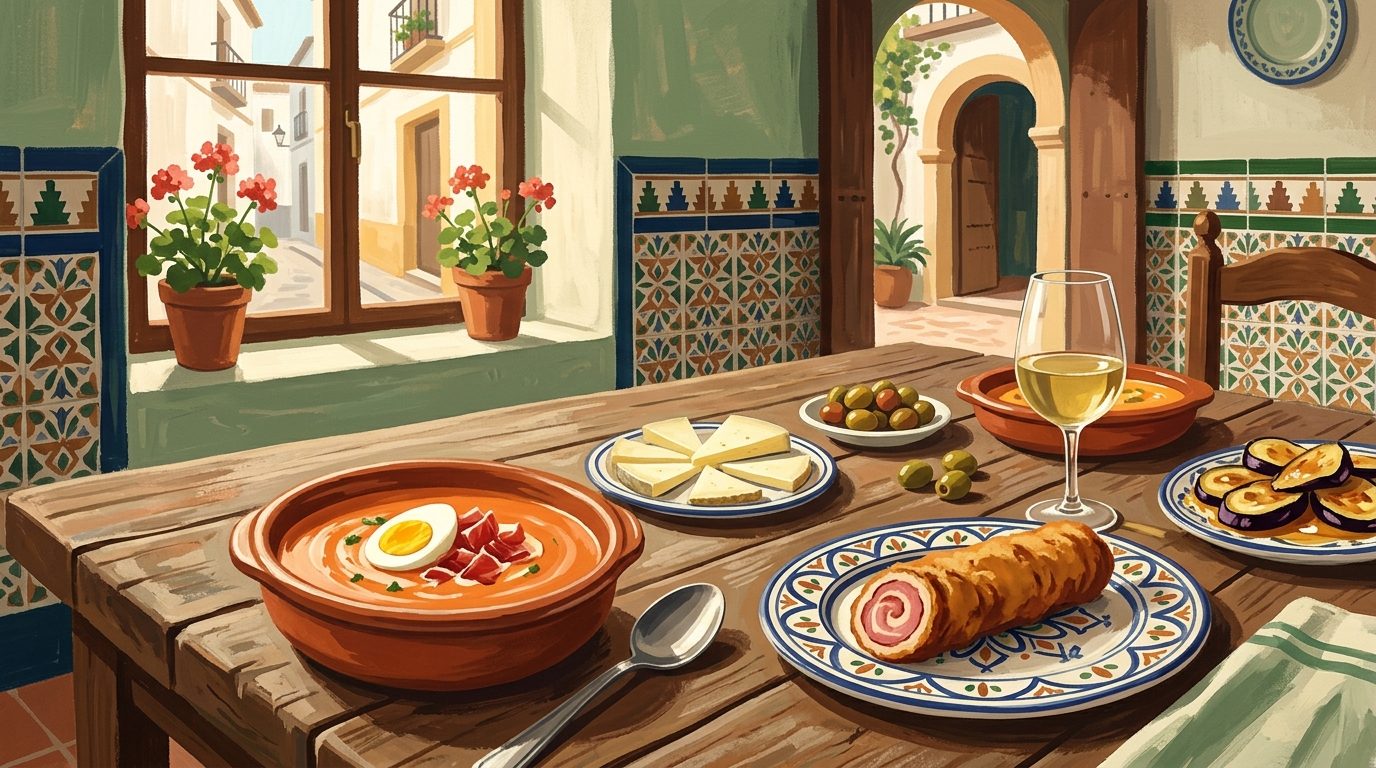
A Guide to Eating and Drinking in Córdoba
Discover the culinary heart of Córdoba, from the creamy depths of salmorejo cordobés to the historic wine taverns serving Montilla-Moriles.
7 min read
Andalucía for Food Lovers: A 7-Day Gastronomic Route
Forget the tourist menus; this is a rigorous seven-day map of Andalucía’s most authentic kitchens, from the sherry bodegas of Jerez to the olive groves of Jaén.
8 min read
Where to Eat in Málaga: From Beachfront Espetos to Soho Small Plates
Forget its reputation as a mere transit point; Málaga has transformed into one of Spain’s most compelling food cities, balancing salt-crusted beach traditions with a sharp, modern dining scene.
7 min read
More from Málaga
Newsletter
More stories from Andalucía
Weekly notes, seasonal picks, and the next guides worth bookmarking.