
Things to do · Córdoba
Water Sports in Córdoba: A Guide to the Inland Sea and the Great River
Escape the heat of the city and discover the best spots for kayaking, paddleboarding, and sailing across the province of Córdoba.
By Dan · Updated 16 July 2026 · 6 min read
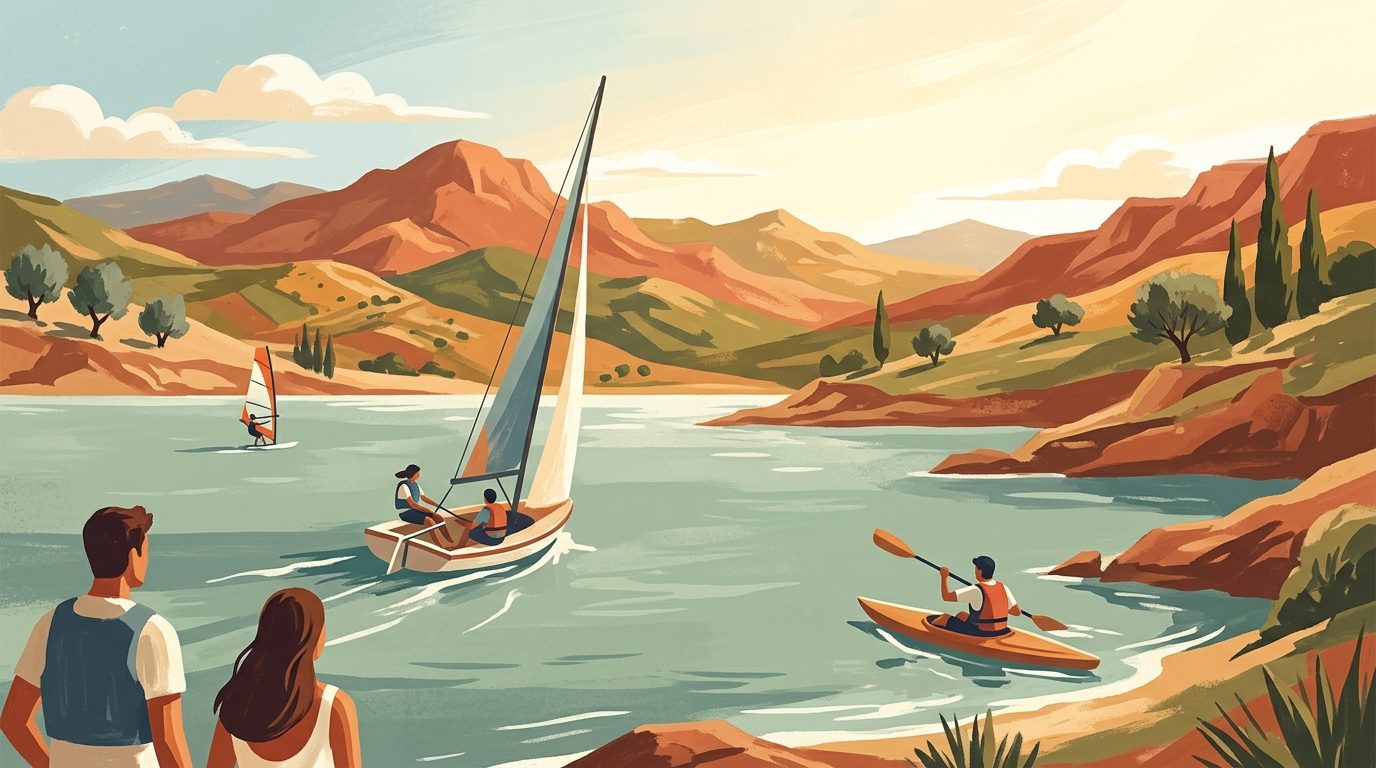
Beyond the sun-baked stones of the Mezquita lies a network of reservoirs and river routes that transform the hottest province in Spain into a playground for water sports. From kayaking the historic Guadalquivir to windsurfing on the massive Iznájar reservoir, Córdoba offers plenty of ways to stay cool.
When the mercury rises in the city, the local response isn't just to retreat behind thick stone walls and shaded patios. While Córdoba is famous for its architecture and inland heat, it is also home to some of the largest bodies of water in Andalucía. These reservoirs, or embalses, are often referred to as the 'inland sea', providing hundreds of kilometres of shoreline for kayaking, paddleboarding, sailing, and even wakeboarding.
The geography of the province is defined by the Guadalquivir river, which cuts through the centre, and the dramatic Sierra Morena mountains to the north. These features have allowed for the creation of massive man-made lakes that serve as hubs for outdoor activity. Córdoba has a surprisingly diverse range of options, from a gentle afternoon paddle with a view of the Roman Bridge to a high-octane morning of water skiing. This guide focuses on practical locations, established operators, and the best ways to get onto the water without the coastal crowds.
Best Places for Water Sports in Córdoba
The Guadalquivir River: Kayaking through History
The Guadalquivir is the soul of Córdoba, and there is no better way to understand the city’s layout than from the waterline. Kayaking here is generally calm, as the river flows slowly through the city centre. The most popular route takes you between the Roman Bridge (Puente Romano) and the San Rafael Bridge. This stretch offers an unparalleled view of the Mezquita-Catedral, providing a perspective that most tourists walking the bridges never get to see.
A key area for paddlers is the Sotos de la Albolafia, a protected natural area within the riverbed. While you cannot paddle directly into the most sensitive zones to protect bird life, the surrounding waters are open for exploration. You will likely see egrets, grey herons, and cormorants while you navigate. The operator Quivir Ocio is the primary contact for river activities in the city. They offer guided tours and equipment hire. A standard two-hour kayak tour usually costs around €20 to €25 per person.
Iznájar Reservoir: The Inland Sea
Located at the southern tip of the province, the Iznájar reservoir is the largest in Andalucía. It is so vast that it feels like the coast, complete with its own beach, the Playa de Valdearenas. This is the premier destination for wind-based water sports in the province. Because of its size and the way the surrounding hills funnel the wind, it is a fantastic spot for sailing and windsurfing.
The Estación Náutica Lago de Andalucía is the hub of activity here. You can rent stand-up paddleboards (SUP), canoes, and pedalos. For those wanting to learn a new skill, the sailing school offers introductory courses in dinghy sailing. The water is remarkably clear and remains warm well into October. If you prefer something motorised, there are also options for boat trips around the lake to see the town of Iznájar, which sits on a high promontory overlooking the water.
La Breña II: Adrenaline and Views
Situated near the town of Almodóvar del Río, just a short drive from the capital, the La Breña II reservoir is a favourite for locals. It is particularly well-known for its cable ski park, the first of its kind in Andalucía. This system allows wakeboarders and water skiers to be pulled by an overhead cable rather than a boat, making it more accessible and environmentally friendly. The operator Active Andalucía manages many of the activities here, including the cable park and climbing walls near the water.
Beyond the cable park, La Breña is an excellent spot for stand-up paddleboarding. The water is usually flat and mirror-like in the mornings, perfect for beginners. There is also a designated swimming area with a small 'beach' club where you can grab a cold drink after your session. The sight of the Almodóvar del Río castle perched on the nearby hill provides a striking backdrop as you paddle along the shoreline.
Puente Nuevo Reservoir: The Quiet Alternative
For those who find Iznájar or La Breña a bit too busy during the summer weekends, the Puente Nuevo reservoir in the Guadiato Valley is a peaceful alternative. Located near the town of Belmez, this spot is favoured by kayakers and those interested in freshwater fishing. It lacks the large-scale commercial infrastructure of the other reservoirs, which is precisely its draw. You will need to bring your own equipment or coordinate with smaller local adventure companies like TNT Aventura, who occasionally organise group descents and expeditions in the area.
San Rafael de Navallana
Located just northeast of the city, Navallana is another significant body of water frequently used for rowing and canoeing. It is the training ground for several local rowing clubs. While it is more functional than Iznájar, it is a great spot for serious paddlers looking to put in some distance. The access points are straightforward, and the lack of motorised traffic makes it a safe environment for long-distance rowing and flat-water kayaking.
Practical Information
The water sports season in Córdoba typically runs from late March through to the end of October. During July and August, it is essential to plan your activities for the early morning (starting by 9:00 or 10:00) or late afternoon to avoid the peak intensity of the sun. Temperatures on the water can be slightly cooler than in the city, but the reflection off the surface increases the risk of sunburn.
Costs: Kayak and SUP rentals generally range from €10 to €15 per hour. Guided tours or specialised activities like cable skiing usually start around €25 for a session. Most operators provide life jackets (chalecos salvavidas), which are mandatory on all reservoirs and the river.
What to bring: Always carry high-factor sun protection, a hat with a chin strap, and plenty of water. If you are renting equipment, most centres provide waterproof bags for your phone and car keys, but it is worth bringing your own if you have one. For the river in the city, no special permits are required if you are with an operator, but if you bring your own vessel to a reservoir, you may technically need a Declaración Responsable de Navegación from the Guadalquivir Hydrographic Confederation (CHG).
Local Tips
If you are heading to Iznájar, look for the 'Blue Flag' area at Valdearenas (check official listings to confirm its 2026 status); this indicates the highest standards of water quality and safety. For a unique experience, look for 'Moonlight Paddling' events hosted by operators in the city during the summer months. Navigating the Guadalquivir under a full moon with the Mezquita illuminated is something few people experience. Finally, always check the water levels before travelling long distances to the smaller reservoirs; during particularly dry years, some access points can become muddy or difficult to reach as the waterline recedes.
Last reviewed: 21 June 2026 · Editorial policy
Related guides
A Guide to Water Sports in Granada: From Reservoirs to the Tropical Coast
Discover the best spots for diving, kayaking, and reservoir swimming in Granada, from the marine reserves of La Herradura to the turquoise waters of Los Bermejales.
6 min read
A Guide to Water Sports in Málaga: From SUP to Scuba
Discover the best locations for stand-up paddleboarding, diving, and jet skiing along the Costa del Sol with our practical guide to Málaga's water sports.
6 min read
Water Sports in Sevilla: Navigating the Guadalquivir
Discover the best ways to explore Sevilla's Guadalquivir river, from sunset paddleboarding and city kayaking to professional rowing and nature tours in the marshes.
6 min read
A Guide to Water Sports in Andalucía: Where to Surf, Dive, and Paddle
From the windswept Atlantic coast to the calm waters of the Mediterranean, Andalucía offers world-class conditions for surfing, diving, and kayaking.
5 min read
Riding the Atlantic: A Guide to Water Sports in Cádiz
Discover the best kitesurfing, surfing, and whale watching across the province of Cádiz, from the wind-whipped shores of Tarifa to the Atlantic rollers of El Palmar.
6 min read
Where to Find the Best Water Sports in Jaén
Discover the unexpected side of Jaén, where mountain reservoirs and limestone gorges offer world-class kayaking, rafting, and canyoning away from the coastal crowds.
6 min read
More from Córdoba

Golf in Córdoba Province: Courses, Holidays, and Shops
Discover practical tips, course details, and holiday planning advice for playing golf in Córdoba province, from the mountain fairways of Sierra Morena to the historic greens of Los Pedroches.
10 min read

Exploring the Trails of Córdoba: From the Sierra Morena to the Subbética
Escape the city heat and explore the diverse landscapes of Córdoba, from the rugged limestone peaks of the south to the Mediterranean forests of the Sierra Morena.
6 min read

Beyond the Mezquita: The Best Day Trips from Córdoba
Discover the best day trips from Córdoba, from the ruins of Medina Azahara to the white villages and olive groves of the Subbética mountains.
9 min read
Cycling in Córdoba: The Best Routes and Practical Guide
From the flat trails of the Guadalquivir valley to the rugged peaks of the Sierras Subbéticas, Córdoba offers a diverse landscape for cyclists of all abilities.
6 min read
Newsletter
More stories from Andalucía
Weekly notes, seasonal picks, and the next guides worth bookmarking.