
Nature & wildlife
Reptiles of Andalucía: A Field Guide to Europe’s Herpetological Stronghold
Discover the incredible biodiversity of Andalucía's reptiles, from the giant Ocellated Lizard to the elusive Mediterranean Chameleon and the rare Lataste’s Viper.
By Dan · Updated 8 May 2026 · 7 min read
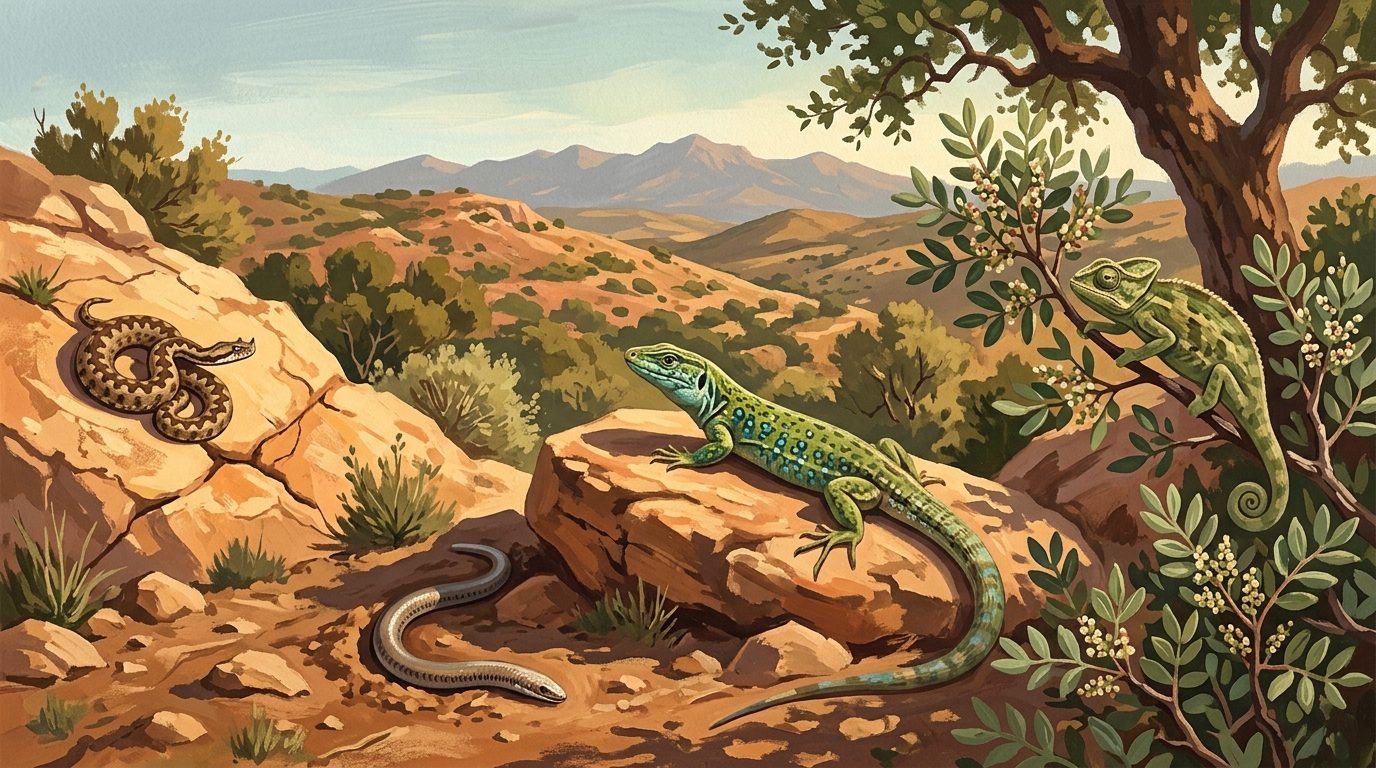
Andalucía serves as the primary bridge between the European and African continents, a geographic position that has fostered one of the most diverse herpetological populations in the Palearctic realm. With over 25 species of reptiles, ranging from the prehistoric-looking Ocellated Lizard to the critically endangered Mediterranean Chameleon, the region offers a level of biodiversity unmatched in more northerly latitudes. The varied topography, encompassing the high alpine environments of the Sierra Nevada, the arid volcanic plains of Cabo de Gata, and the seasonal wetlands of Doñana, creates a matrix of microclimates where specialised reptiles thrive.
The Lacertids: Large Lizards and Skinks
The undisputed king of Iberian lizards is the Ocellated Lizard (Timon lepidus). As Europe’s largest lizard, reaching lengths of up to 70 centimetres, it is a formidable predator. Adults are easily identified by their bright green scales punctuated by striking blue ‘ocelli’ (eye-spots) along their flanks. They are frequently observed basking on dry stone walls or the edges of olive groves. While widespread, they are particularly abundant in the dehesas of the Sierra Norte de Sevilla and the Serranía de Ronda. If approached, they are remarkably fast, often making a loud rustling sound as they retreat into thick brambles or stone crevices.
In higher altitudes, such as the scree slopes of the Sierra Nevada above 2,000 metres, the Ocellated Lizard is replaced by more specialised species like the Sierra Nevada Rock Lizard (Iberolacerta koenigi). These smaller, flatter lizards have evolved to navigate the harsh, wind-swept granite environments. Meanwhile, the Large Psammodromus (Psammodromus algirus) is perhaps the most common reptile in the region, easily identified by the long, keeled scales on its back and two distinct yellowish stripes. It is a constant presence in the Mediterranean scrub (maquis) and can be heard scuttling through leaf litter long before it is seen.
Fossorial and Secretive Species
Less frequently encountered are the skinks and slow-worms. The Western Three-toed Skink (Chalcides striatus) and Bedriaga's Skink (Chalcides bedriagai) possess reduced limbs and a serpentine movement, making them look more like snakes to the untrained eye. Bedriaga's Skink is an Iberian endemic, often found under logs or stones in moist areas of the Grazalema mountains. The Slow-worm (Anguis fragilis), actually a legless lizard, is extremely rare in the south but persists in the cooler, humid pockets of the Alcornocales Natural Park.
The Mediterranean Chameleon: A Coastal Specialist
The Common Chameleon (Chamaeleo chamaeleon) is one of Andalucía's most iconic yet elusive residents. Unlike many other reptiles, its distribution is largely restricted to the coastal strip of the provinces of Málaga, Cádiz, and Huelva, with a significant population also found in Almería. These arboreal specialists are perfectly adapted to the retama (weeping broom) bushes and pine forests that line the Atlantic and Mediterranean shores.
Finding a chameleon requires patience and a sharp eye. They move with a rhythmic, rocking motion designed to mimic a leaf blowing in the wind. Their independent eye movement and prehensile tails make them unique among European fauna. The best locations for sightings include the dunes of the La Barrosa beach in Chiclana de la Frontera and the Axarquía coastline east of Málaga. These populations are currently under immense pressure from urban sprawl and habitat fragmentation, making the remaining protected corridors essential for their survival.
The Snakes of Andalucía: Predators of the Scrub
Andalucía is home to 13 species of snakes, the majority of which are non-venomous colubrids. Understanding their behaviour and identification is crucial for any naturalist exploring the countryside.
The Giants: Montpellier and Ladder Snakes
The Montpellier Snake (Malpolon monspessulanus) is the largest snake in the region, occasionally exceeding two metres in length. It is a highly active, diurnal hunter with prominent 'eyebrows' (supraocular scales) that give it a fierce, piercing gaze. Though it is venomous, it is back-fanged (opisthoglyphous), meaning it poses little threat to humans as it cannot easily inject venom during a defensive strike. It is a generalist predator, often seen crossing tracks in the Doñana National Park in search of rabbits or lizards.
The Ladder Snake (Zamenis scalaris) is another common find. Juveniles are easily identified by the 'ladder' pattern on their backs, which fades into two parallel longitudinal stripes as they mature. They are excellent climbers and are often found around abandoned farmsteads (cortijos) where they hunt rodents.
The Venomous Specialist: Lataste’s Viper
The only snake in Andalucía that poses a significant medical risk to humans is Lataste’s Viper (Vipera latastei). It is easily distinguished by its triangular head, vertical pupils, and a small 'horn' or protrusion on the end of its snout. It typically inhabits rocky, montane environments like the Sierra de Cazorla and the Torcal de Antequera. This is a shy, sedentary snake that relies on camouflage. Bites are rare and usually occur when a hiker accidentally treads on the animal. Sturdy hiking boots and caution when placing hands on rock ledges are recommended.
Chelonians: Tortoises and Terrapins
The Spur-thighed Tortoise (Testudo graeca) finds one of its last European strongholds in the province of Almería. These herbivores inhabit arid, scrubby landscapes and are most active in the spring before the intense summer heat forces them into aestivation (a period of dormancy). In the wetlands, the Spanish Terrapin (Mauremys leprosa) and the European Pond Terrapin (Emys orbicularis) can be found. The Spanish Terrapin is particularly hardy, often seen basking on logs in the Guadalquivir river or the Marismas of Huelva. It is distinguishable by its flatter profile and often ‘dirty’ appearance (hence the name leprosa), caused by algae growth on its shell.
A major threat to these native species is the introduction of the Red-eared Slider (Trachemys scripta), an invasive pet species that outcompetes native terrapins for basking sites and food. Conservation programmes in Andalucía now focus on the removal of these exotics from sensitive watersheds.
Best Times and Locations for Wildlife Viewing
To maximise the chances of successful reptile watching, timing is everything. Most reptiles in Andalucía follow a biphasic activity pattern during the warmer months.
- Spring (March to June): This is the peak season. Following winter dormancy, reptiles emerge to mate. Lizards are at their most colourful, and snakes are frequently on the move. Basking occurs throughout the day as temperatures are moderate.
- Autumn (September to October): A second peak occurs as the summer heat wanes. Juvenile snakes and lizards emerge during this period.
- Summer (July to August): Most reptiles become crepuscular or nocturnal to avoid the midday sun. Early morning (7:00 AM to 9:00 AM) is the only viable time for basking observations.
Top Hotspots
- Doñana National Park: Exceptional for Montpellier Snakes, Ocellated Lizards, and both species of native terrapins. The dunes provide habitat for the Spiny-footed Lizard.
- Sierra de Grazalema: The high rainfall and limestone karst provide ideal conditions for vipers and endemic lizards.
- Cabo de Gata-Níjar: The best location for arid specialists such as the Spur-thighed Tortoise and the Fringe-toed Lizard.
- La Breña y Marismas del Barbate: A key site for observing the Common Chameleon in the coastal umbrella pines.
Practical Advice for the Field
When searching for reptiles, a pair of close-focus binoculars (8x32 or 8x42) is invaluable. This allows for detailed observation and identification without getting close enough to trigger a flight response. Always stick to established paths in protected areas to avoid crushing camouflaged nests or compacting the soil.
For those interested in photography, a macro lens or a telephoto lens (300mm+) is recommended. Never handle snakes unless you are an expert, as the misidentification of a viper can lead to dangerous consequences. If you encounter a snake, simply maintain a distance of two metres; the animal will almost always seek to escape rather than confront.
Conservation and Threats
The reptiles of Andalucía face significant challenges. Habitat loss due to intensive agriculture and coastal tourism development is the primary driver of decline for the Mediterranean Chameleon. Furthermore, road mortality is a massive issue; many snakes and lizards are killed while basking on tarmac, which retains heat after sunset. Climate change also threatens montane species like the Sierra Nevada Rock Lizard, as their high-altitude 'islands' shrink with rising temperatures.
Responsible wildlife tourism plays a role in conservation by demonstrating the economic value of these ecosystems. Visitors are encouraged to report significant sightings to organisations such as the Asociación Herpetológica Española (AHE) or via citizen science apps like iNaturalist, which help biologists track population trends and distribution shifts across the region.
Andalucía remains one of the few places in Europe where one can see a chameleon, a tortoise, and a two-metre-long snake all in a single weekend. By approaching these ancient lineages with respect and curiosity, we ensure that the sun-drenched hills of the south continue to echo with the subtle rustle of scales for generations to come.
Last reviewed: 21 June 2026 · Editorial policy
Related guides
The Ultimate Whale Watching Guide: Strait of Gibraltar
Fourteen kilometres of churning water separate Europe from Africa, creating a turbulent bottleneck that serves as one of the world's greatest pelagic highways. Here, in the Strait of Gibraltar, you can watch wild orcas hunt bluefin tuna and sperm whales dive into the abyss just miles from the Andalucían coast.
9 min read

Whale and Dolphin Watching in the Strait of Gibraltar
The Strait of Gibraltar is a premier marine sanctuary where Atlantic and Mediterranean waters meet, offering reliable sightings of orcas, sperm whales, and several dolphin species.
7 min read
Wildlife of the Sierra Nevada: High Altitude Biodiversity in Southern Spain
Discover the unique biodiversity of the Sierra Nevada, from the iconic Spanish ibex and Golden eagles to rare endemic flowers found nowhere else on Earth.
7 min read
The Complete Caminito del Rey Guide: How to Walk Spain's Most Famous Gorge
Walking the precipitous boardwalks of the Caminito del Rey is a thrilling encounter with sheer limestone cliffs and fascinating engineering heritage. This guide details exactly how to secure tickets, navigate the linear route, and plan your logistics.
10 min read
A Guide to Hiking and Walking in Andalucía
Discover the best hiking trails in Andalucía, from the high peaks of the Sierra Nevada to the volcanic coast of Cabo de Gata and the lush forests of Grazalema.
7 min read
Horse Riding in Andalucía: A Practical Guide to Equestrian Travel
Discover the best spots for horse riding in Andalucía, from the sandy dunes of Doñana to the rugged mountain trails of the Alpujarras and the royal stables of Jerez.
5 min read
More guides
Doñana National Park: A Guide to Europe’s Great Wetland Wilderness
A vital sanctuary for the Iberian lynx and millions of migratory birds, Doñana National Park is a landscape of shifting dunes and vast seasonal marshes.
7 min read
Sierra de Cazorla: Spain's Largest Protected Area
Covering over 200,000 hectares of rugged limestone peaks and deep river canyons, the Sierra de Cazorla forms the green heart of the Iberian Peninsula.
7 min read
Los Alcornocales: Europe's Finest Cork Oak Forest
Spanning the Cádiz mountains, Los Alcornocales preserves a prehistoric ecosystem of subtropical cloud forests and vast cork oak woodlands unique in Europe.
7 min read
Where to See the Iberian Lynx: Andújar and Beyond
Discover the best ways to see the world's rarest cat in the Sierra de Andújar. This guide covers the best viewing spots, seasonal timing, and the diverse wildlife of Jaén's rugged Mediterranean scrubland.
6 min read
Cabo de Gata Natural Park: Wild Coast Guide
Discover the volcanic cliffs, salt lagoons, and crystalline waters of Cabo de Gata-Níjar Natural Park, Europe’s only warm desert landscape and a haven for rare Mediterranean wildlife.
7 min read
Snorkelling & Marine Life of the Costa Tropical
Discover the underwater world of Granada's Costa Tropical, where clear Alborán waters host octopus, peacock wrasse, and protected seagrass meadows.
6 min read
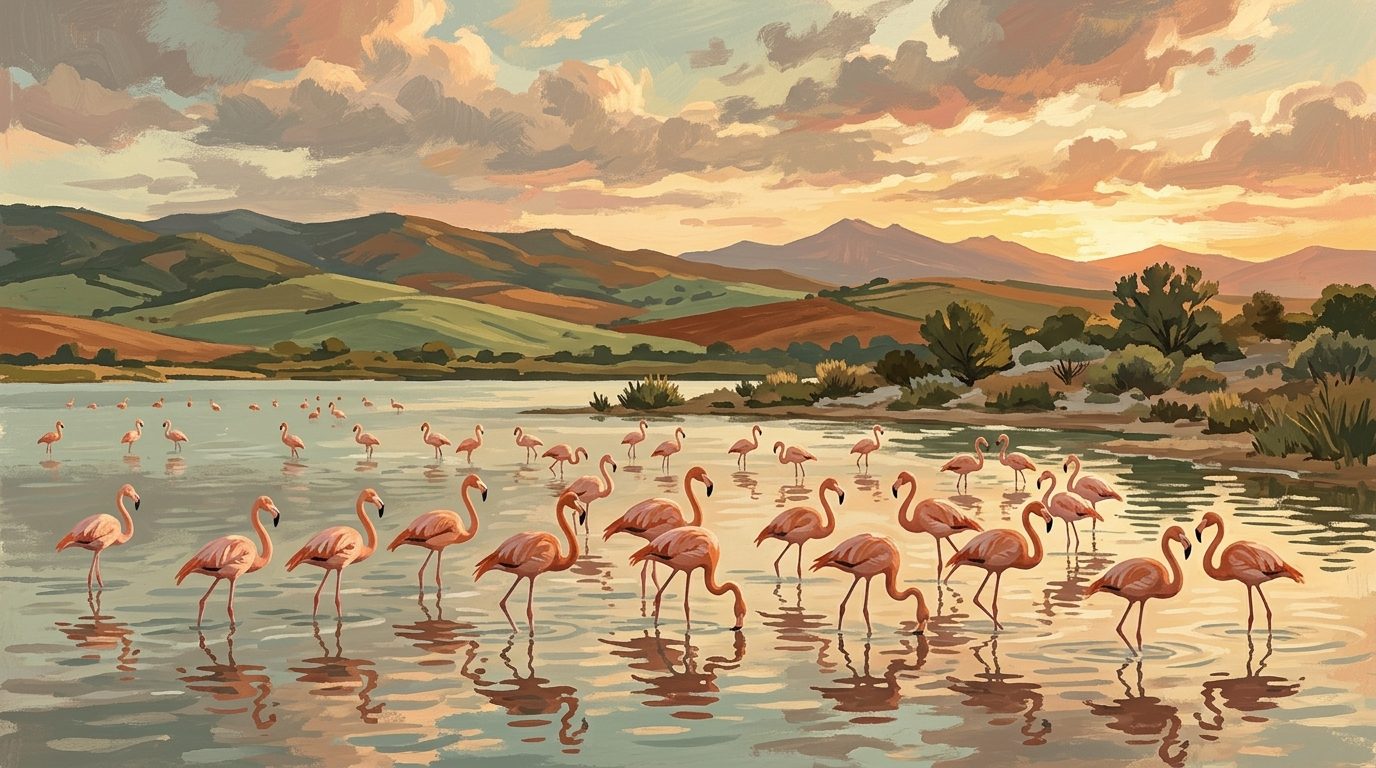
Fuente de Piedra: Andalucía's Flamingo Lake
Discover the vital breeding grounds of the Greater Flamingo at the Laguna de Fuente de Piedra, a hypersaline wetland in the heart of Málaga province.
7 min read
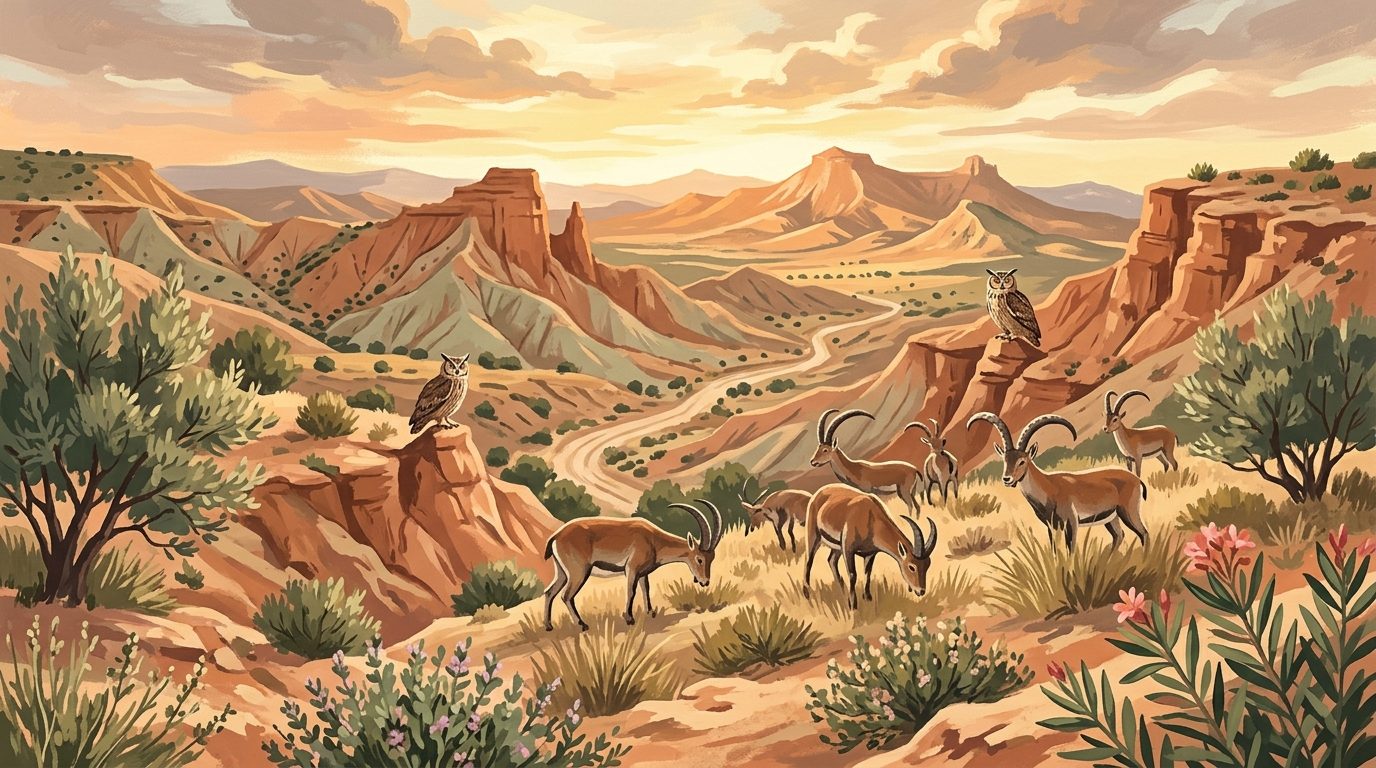
Tabernas Desert: Europe's Only True Desert
Explore the unique ecology of the Tabernas Desert, Europe's only true desert, where Saharan-style badlands provide a sanctuary for rare Trumpeter Finches and specialist flora.
7 min read
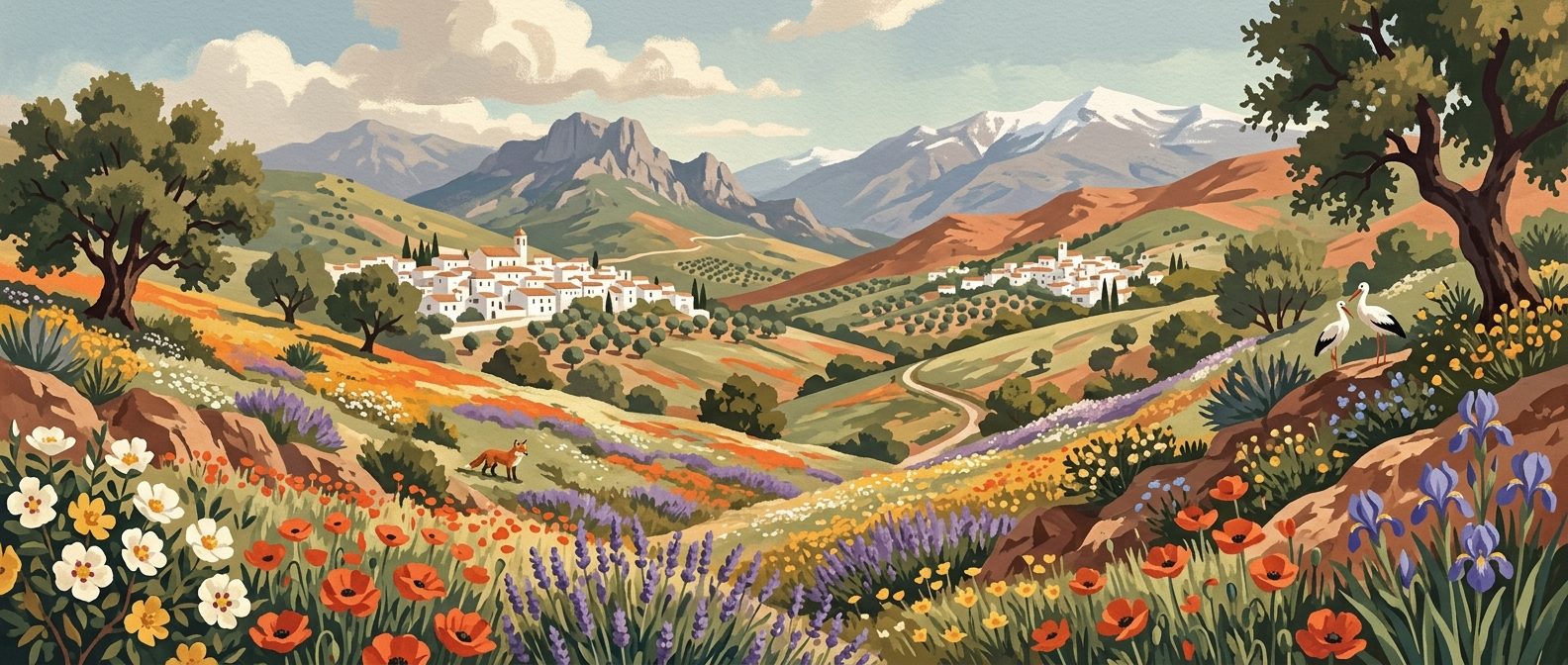
The Spring Wildflower Season in Andalucía
Discover the exceptional botanical diversity of southern Spain, from the orchid-rich limestone sierras to the rare peonies of the cork oak forests.
7 min read
Newsletter
More stories from Andalucía
Weekly notes, seasonal picks, and the next guides worth bookmarking.