
attraction · Huelva
Parque Arias Montano
Andalucía 365 · Updated 18 July 2026
Our Verdict
“A refreshing, structured pause in the heart of the Sierra de Aracena. Parque Arias Montano trades wild mountain terrain for French-inspired promenades and botanical shade, offering a convenient resting place before descending into the town's caves or after a rich local lunch.”
Last verified: July 2026
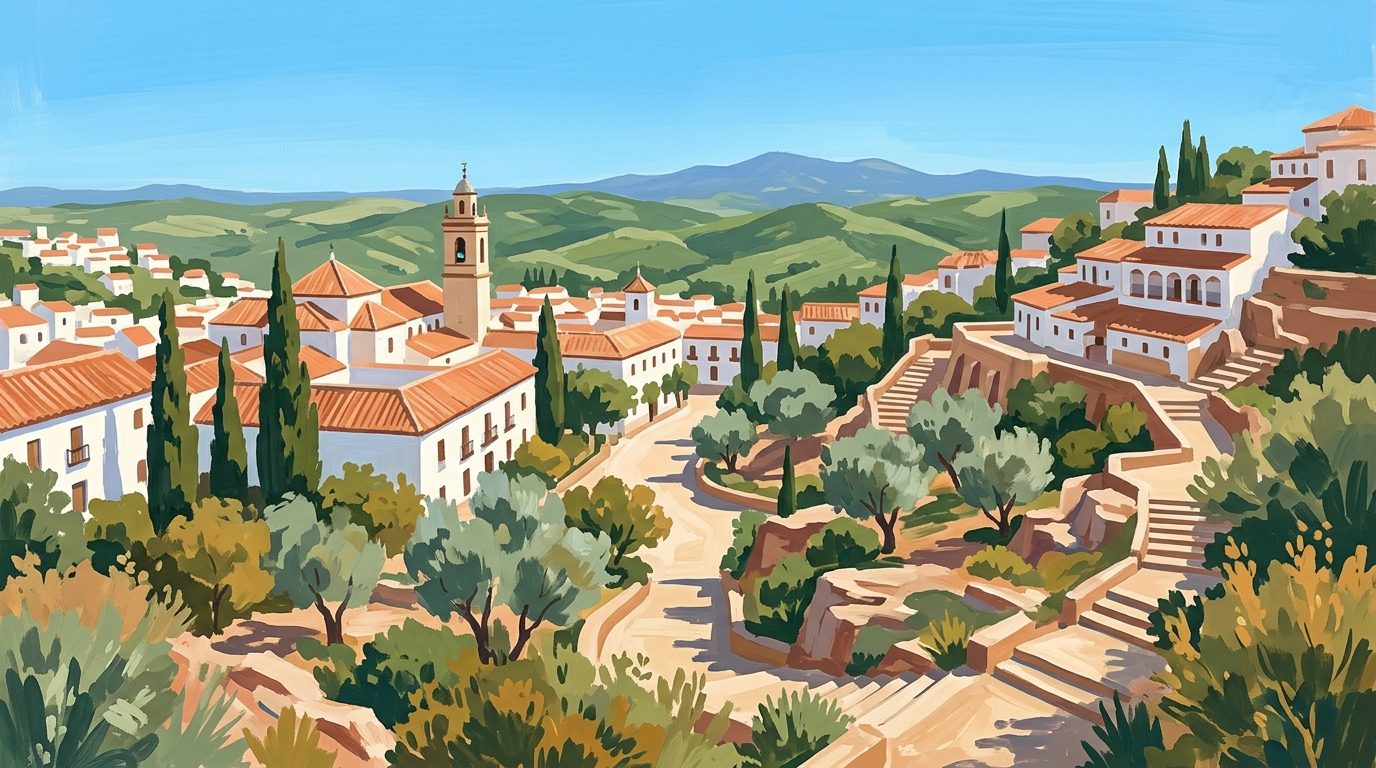
Initiated in 1937 during the Spanish Civil War and formally opened to the public in 1943, Parque Arias Montano offers a formal burst of French-inspired botanical geometry within the rugged mountain town of Aracena. Spread across nearly 8,000 square metres on the Avenida de Andalucía, the park takes its name from Benito Arias Montano, the prominent sixteenth-century humanist and polymath who founded Aracena's Latin Chair in 1597. Rather than the wild oak and chestnut groves that typify the wider region, visitors stepping into this enclosure walk along exact diagonal pathways bordered by precise hedging. The air carries the distinct scent of jasmine and oleander, while the dense canopy of mature trees provides a stark and welcome temperature drop from the sunbaked pavements of the main avenue outside.
Why It Matters
While the subterranean Gruta de las Maravillas dominates the town's international tourism profile, Parque Arias Montano functions as an essential, everyday civic lung for local residents. It provides an accessible green space that adapts to the community's daily rhythms, offering an environment where architectural ambition meets direct municipal utility. Mayor José Moreu originally envisioned a sophisticated botanical garden to elevate the town's urban planning and provide a tranquil retreat. Today, the park successfully maintains that historical elegance while accommodating modern community needs, proving that heritage spaces can remain actively useful without losing their original 1940s design ethos.
Botanical Diversity and French Geometry
The park layout diverges sharply from traditional Andalucían courtyard gardens, adopting instead a multi-sided irregular polygon layout intersected by straight, formal avenues and diagonal paths. The horticultural collection reflects both the humid microclimate of the Sierra de Aracena and a historical desire to showcase international species alongside local flora. Visitors walk beneath a towering canopy of white firs, Spanish firs known locally as pinsapos, stone pines, and indigenous strawberry trees. Laurel bushes and tall palm trees create contrasting textures against the formally maintained hedges. In spring and summer, dedicated flowerbeds in the central hub inject bold colours into the heavily shaded woodland environment, maintained by modern irrigation systems that prioritise strict water conservation.
Water Features and Municipal Improvements
Water plays a defining role in regulating the park's ambient temperature and drowning out the noise from nearby traffic. At the José Andrés Vázquez street entrance, a small traditional pool sits quietly, providing a visual anchor for the space. Further along the slope, a three-tiered fountain system actively takes advantage of the natural incline to create a gentle cascading effect. Recent municipal updates have introduced a highly efficient closed-circuit feeding system for these hydraulic features. This modern infrastructure allows the water to be recycled rather than drawn continuously from the urban supply, setting a tranquil tone for the surrounding walkways while significantly reducing the park's environmental footprint.
Community Infrastructure and The Central Pergola
The physical centre of the park is anchored by a large seating area covered by a spectacular pergola. Between 2014 and 2015, this central structure was carefully demolished and rebuilt, transitioning from its original heavy cement construction to a lighter wooden frame to improve both aesthetics and structural safety. This area provides a reliable shaded space for civic gatherings and daily rest. Beyond the main promenade, the town council has installed outdoor exercise equipment for adults and a comprehensive children's playground. A dedicated, fenced dog recreation area ensures that the main pedestrian avenues remain clean and orderly, reflecting a highly practical approach to modern municipal landscaping and shared civic areas.
A Candid Assessment
Parque Arias Montano is not a destination that demands a multi-hour detour, but it excels as a transitional, functional space. It lacks the wild, untouched drama of the surrounding mountain trails, yet this formal, manicured structure is precisely what makes it valuable to visitors. The geometric paths and dense shade provide rapid relief on a hot afternoon. While earlier claims suggested a perfectly flat terrain, the park actually navigates a natural slope, meaning visitors must negotiate a slight incline. It serves as an ideal palate cleanser between heavy sightseeing or rich meals, suiting families, botany enthusiasts, and anyone seeking a quiet place to sit.
How to Visit and Accessibility
Located on Avenida de Andalucía, the park is a short, straightforward walk from the historic centre of Aracena. The terrain transitions between hard paving, added during recent drainage renovations, and fine, compacted earth, so comfortable walking shoes are recommended. Visitors can use the provided ramps and newer paved sections to navigate the slope, but wheelchair users should remain aware of the natural gradients and earth paths that still exist in certain sections. For official guidelines regarding the playgrounds and canine areas, visitors should consult the official Ayuntamiento de Aracena website.
Sensible Nearby Pairings
After resting under the canopy, walk west into the historic core to explore the town's famous subterranean caves or to sample the regional cured meats. If you prefer to stay outdoors and explore the wider landscape, the park acts as a convenient starting point before driving deeper into the northern Huelva mountains to visit legendary Iberian ham producing villages such as Jabugo.
Nearby worth your time
A few well-placed stops for extending the day without turning it into a checklist.
Continue through Sierra de Aracena y Picos de Aroche
Step back into the wider landscape with local guides, nearby places and the province overview.
Place guide · 7 min
Playa de Castilla: The Wild Frontier of the Doñana Coastline
Playa de Castilla is a vast, 20-kilometre stretch of wild Atlantic coastline bordered by the spectacular orange cliffs of the Doñana National Park.
Place guide · 7 min
Playa de Isla Canela Beach Guide: Huelva Coastline
Playa de Isla Canela is a vast stretch of fine sand where the Guadiana River meets the Atlantic, famous for its shallow lagoons and family-friendly atmosphere.
Itinerary · 12 min
5 Days in Huelva: Atlantic Coast, Doñana and Sierra
A realistic five-day driving route through Huelva province, linking the maritime history of the capital with the tidal wetlands of Doñana and the chestnut forests of the Sierra de Aracena.