
Things to do
Cycling the Vías Verdes of Andalucía: A Complete Guide
Explore the disused railway lines of Andalucía. Discover the best Vías Verdes for cycling, from the tunnels of Cádiz to the olive groves of Jaén.
By Dan · Updated 24 July 2026 · 7 min read
This article contains affiliate links. If you book through them, we may earn a small commission at no extra cost to you.
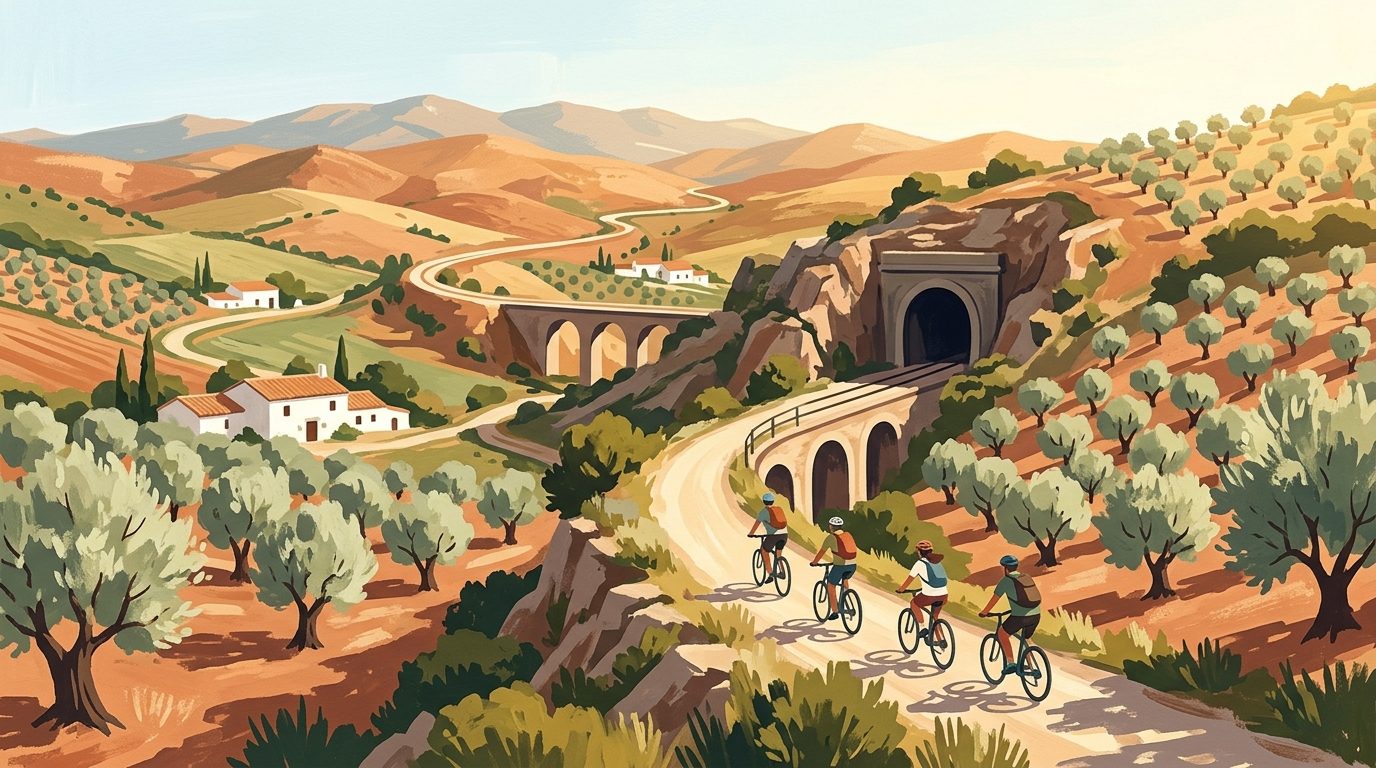
Andalucía possesses one of the most extensive networks of disused railway lines in Europe, now repurposed as cycle and walking paths known as Vías Verdes (Greenways). These routes offer a unique way to traverse the region’s diverse geography without the stress of motor traffic or the lung-bursting gradients usually associated with southern Spain’s mountainous interior.
Because these paths follow old train tracks, the inclines are strictly limited to what a steam engine could handle, usually no more than a 3% gradient. This makes them accessible for families, casual cyclists, and those using hybrid or gravel bikes. With over 25 individual routes across the eight provinces, choosing where to pedal can be a challenge. Here is a breakdown of the best routes, the logistics of bike hire, and the practicalities of navigating the Andalucían countryside on two wheels.
1. Vía Verde de la Sierra (Cádiz and Sevilla)
Often cited as the most impressive route in Spain, the Vía Verde de la Sierra runs for 36 kilometres between the white village of Olvera and the town of Puerto Serrano. It follows the path of a railway line that was surveyed and built in the 1920s but never actually carried a single train.
Key Features
The route features 30 tunnels, some over 900 metres long, and four viaducts. The most significant natural highlight is the Peñón de Zaframagón, a massive limestone crag that houses one of the largest colonies of Griffon vultures in Europe. A dedicated interpretation centre at the old Zaframagón station allows you to watch the birds via a live remote camera positioned on the cliffs.
Practical Logistics
Distance: 36km (one way).
Surface: Compacted gravel and asphalt.
Bike Hire: Sesca serves both ends of the trail. You can rent a mountain bike or e-bike in Olvera and they provide a shuttle service to bring you back from Puerto Serrano if you do not want to cycle the return leg. Prices in 2026 typically range from €15 to €25 for a standard bike per day, though it is advisable to check seasonal rates on the provider's website.
Eating: The old stations at Olvera, Coripe, and Puerto Serrano have been converted into restaurants and small hotels. The terrace at Coripe is a reliable spot for a mid-ride plate of secreto ibérico.
2. Vía Verde del Aceite (Jaén and Córdoba)
The "Oil Greenway" is the longest in Andalucía, stretching 128 kilometres from the city of Jaén to Puente Genil in Córdoba province. It is named after the "Olive Oil Train" that once transported liquid gold from the groves of Jaén to the port of Málaga.
The Landscape
Expect a sea of olive trees stretching to the horizon. The route is defined by its massive metal viaducts, many of which were designed by engineers from the school of Gustave Eiffel. Crossing the 200-metre-long Guadajoz viaduct provides views over the border between the provinces of Jaén and Córdoba.
Notable Stops
Zuheros: A spectacular village perched on a cliffside. It is worth leaving the trail for an hour to climb into the village for lunch.
Doña Mencía: Home to a dedicated motorhome park and a very active bike rental centre (Centro Cicloturista Subbética).
Luque: The station here houses a restaurant and a small museum dedicated to the local olive oil culture.
For those not looking to complete the full 128km, the section between Doña Mencía and Cabra is particularly scenic, passing through the Sierras Subbéticas Natural Park.
3. Vía Verde de Riotinto (Huelva)
The Vía Verde de Riotinto offers a landscape unlike any other in Andalucía. This route follows the path of the minerals extracted from the Rio Tinto mines. The river itself is famous for its acidic, deep red water, caused by high levels of iron and heavy metals in the soil.
The Route
The trail starts near the Minas de Riotinto and heads south toward the coast. It is roughly 35km long, though parts are still being improved. The most accessible section for cyclists starts at the old station in Valverde del Camino. The terrain is stark, with rusted mining machinery and ochre-coloured earth providing a striking contrast to the pine forests found elsewhere in Huelva.
Practical Advice
The surface here can be coarser than on the Vía Verde de la Sierra. A mountain bike or a sturdy hybrid is recommended. There are fewer services on this route, so carry sufficient water, especially during the warmer months between May and September.
4. Vía Verde del Litoral (Huelva)
If you prefer coastal breezes to mountain air, the Vía Verde del Litoral is the best choice. This 49-kilometre path runs from Gibraleón (near Huelva city) to Ayamonte on the Portuguese border.
Why it is worth the trip
The path skirts the Marismas de l'Odiel and the Marismas de Isla Cristina, protected marshlands that are a major stop-over for migratory birds. You can often spot flamingos, spoonbills, and storks from the saddle. The route is almost entirely flat, making it the easiest of the major Andalucían greenways.
Logistics
The trail passes through Lepe and La Redondela. You can easily break the journey into smaller sections. The section between Isla Cristina and Ayamonte is particularly popular for a relaxed afternoon ride before crossing the Guadiana river by ferry into Portugal.
5. Vía Verde de Lucainena de las Torres (Almería)
Located in the arid interior of Almería, this is a shorter, more specialised route. At just over 5km (currently being extended), it follows an old mining track from the village of Lucainena de las Torres, which is frequently cited as one of the prettiest villages in Spain.
What to expect
The landscape is semi-desert, reminiscent of the Tabernas Desert nearby. You will pass old lime kilns and mining ruins. The path is well-maintained with white-washed walls and plenty of shade at the start. It is an excellent option for those staying in the Cabo de Gata area who want a short, scenic cycle away from the coast.
6. Vía Verde del Guadalimar (Jaén)
Starting near the city of Linares, this 15km route takes you through the northern reaches of Jaén’s olive territory and into the foothills of the Sierra Morena. It crosses the Guadalimar river via a high bridge and passes through several long tunnels. It is a quieter route than the Vía Verde del Aceite, offering a more solitary experience for those looking to avoid the weekend crowds.
Planning Your Trip: Essential Practicalities
Best Time to Cycle
The window for cycling in Andalucía is wide, but the summer months (July and August) should be avoided. Temperatures in the Jaén and Sevilla interiors frequently exceed 40°C. The ideal months are March to June and September to November. Even in January and February, the daytime temperatures are often a pleasant 15-18°C, though you will need layers for the shaded sections of tunnels.
Tunnels and Lighting
While many of the longer tunnels on the Vía Verde de la Sierra and Vía Verde del Aceite are fitted with motion-sensor lighting, these systems are not always reliable. Always carry a powerful front light and a rear red light on your bike. In the longest tunnels, the darkness is absolute and the ground can be damp or uneven.
Bike Transport and Trains
The relationship between the Vías Verdes and the modern rail network is mixed. While the paths use old lines, they are often disconnected from current stations.
Renfe (Spanish Rail): You can take bikes on MD (Media Distancia) and Cercanías (Suburban) trains. On MD trains, you often need to book a bike space in advance for a small fee (check the Renfe website before travelling).
Buses: Alsa and other regional bus companies allow bikes in the hold if they are partially dismantled or bagged, but this varies by driver and route.
Shuttles: Most established bike rental companies located at the start of the Vías Verdes offer a pick-up service. This is usually the most efficient way to handle a one-way trip.
Water and Supplies
Do not rely on finding fountains along the trails. While the old stations have often been converted into cafes, they are not always open, especially on weekdays outside of the high season. Always start with at least two litres of water and some basic snacks. A basic puncture repair kit is also essential, as the gravel surfaces can be hard on tyres.
Safety and Etiquette
The Vías Verdes are multi-use paths. You will share the space with walkers, dog-owners, and sometimes horse riders.
Bell: Use a bell to alert walkers before passing.
Speed: These are not tracks for high-speed road cycling training. Keep your speed moderate, especially when approaching tunnels or bridges.
Livestock: In rural areas, you may encounter gates. Always leave them as you found them (open or closed) to ensure livestock does not wander onto the trail.
Accommodation
For a unique experience, look for the "Estación" hotels. Several old railway stations have been refurbished into boutique accommodation. The Hotel Estación de Vía Verde in Olvera and the Albergue de la Estación de Doña Mencía are excellent examples. Staying at the trail-head allows for an early start before the heat of the day builds up.
Summary of the Top Routes
| Route Name | Province | Length | Difficulty |
|---|---|---|---|
| Vía Verde de la Sierra | Cádiz/Sevilla | 36km | Easy/Moderate |
| Vía Verde del Aceite | Jaén/Córdoba | 128km | Moderate (due to length) |
| Vía Verde del Litoral | Huelva | 49km | Easy |
| Vía Verde de Riotinto | Huelva | 35km | Moderate |
Cycling the Vías Verdes provides a perspective of Andalucía that is impossible to gain from a car window. Whether it is watching vultures circle above the Sierra de Grazalema or crossing the massive iron viaducts of the Subbética, these routes represent some of the best outdoor experiences the south of Spain has to offer. They are practical, well-maintained, and provide a direct link to the region’s industrial and agricultural heritage.
Last reviewed: 21 June 2026 · Editorial policy
Related guides
Family Days Out in Andalucía: A Practical Guide
Finding ways to keep children entertained in Southern Spain is easy when you know where the locals go. From desert film sets to immersive wildlife parks, here is how to navigate the region with the whole family in tow.
7 min read
A Complete Guide to Cycling in Andalucía
Andalucía offers some of the most varied cycling terrain in Europe, ranging from the gruelling climbs of the Sierra Nevada to family-friendly paths along converted railway lines.
6 min read
Subterranean Andalucía: A Guide to Caving and Show Caves
Discover the underground wonders of Andalucía, from the record-breaking columns of Nerja to the sparkling gypsum crystals of Sorbas.
7 min read
Bikepacking in Andalucía: A Complete Guide to Two-Wheeled Adventures
Discover how to plan the ultimate bikepacking adventure in southern Spain. Our guide covers route planning, essential gear, weather windows, and tips for navigating wild terrain.
13 min read
A Guide to Cycling in Málaga: From Coastal Paths to Mountain Peaks
Discover the best of cycling in Málaga, from the gentle coastal Senda Litoral to the challenging peaks of the Montes de Málaga and the rugged Axarquía hills.
6 min read
Cycling in Cádiz: A Guide to the Best Coastal and Mountain Routes
From the family-friendly Vía Verde de la Sierra to the challenging climbs of the Grazalema mountains, Cádiz province is a premier destination for cyclists of all levels.
6 min read
More guides
The Definitive Guide to Feria de Abril in Sevilla
Discover the cultural nuances, strict dress codes, and insider advice for navigating Sevilla's exclusive spring fair like a seasoned local.
9 min read

Golf in Jaén Province: A Practical Guide to Courses, Clubs, and Holidays
Discover the reality of playing golf in Jaén. From the 9-hole course at La Garza to local societies and combining rounds with olive oil tourism.
12 min read

Golf in Córdoba Province: Courses, Holidays, and Shops
Discover practical tips, course details, and holiday planning advice for playing golf in Córdoba province, from the mountain fairways of Sierra Morena to the historic greens of Los Pedroches.
10 min read

The Ultimate Guide to Golf in Cádiz Province
Discover the finest golf courses, resorts, and practical tips for planning your next golf holiday in the province of Cádiz. From championship layouts to essential details on green fees and club hire, everything you need is covered.
11 min read

Golf in Sevilla Province: Courses, Holidays and Local Pro Shops
Swap the crowded coastal fairways for the refined courses of Sevilla province. Discover top layouts designed by golfing legends, local shops, and expert tips for your next trip.
10 min read

A Complete Guide to Golf in Málaga Province
From championship courses in Marbella to practical advice on club rentals and tee times, discover everything you need to know about playing golf in Málaga province.
11 min read

Golf in Granada Province: A Practical Guide to Courses, Holidays and Gear
Plan your perfect golfing trip with our practical guide to Granada's 18-hole courses. Discover green fees, club rental, and the best locations for a golf holiday.
12 min read

Hands-on Gastronomy: The Best Cooking Classes in Andalucía
Discover the art of Andalucían cuisine through hands-on workshops, from Triana's market-based schools to specialist Sherry cooking classes in Vejer.
6 min read

Exploring the Heavens: A Practical Guide to Stargazing in Andalucía
Andalucía offers some of Europe’s clearest night skies, particularly within its expansive Starlight Reserves. This guide covers the best locations and practical tips for observing the Milky Way across the southern Spanish landscape.
6 min read
Newsletter
More stories from Andalucía
Weekly notes, seasonal picks, and the next guides worth bookmarking.