
Feature
July 1936 in Andalucía: The Coup and the Fall of Sevilla
On 18 July 1936, General Gonzalo Queipo de Llano used bluff, intimidation, and brutal swiftness to seize Sevilla. His actions ignited a conflict that rapidly tore the region apart.
By Dan · Updated 22 June 2026 · 8 min read
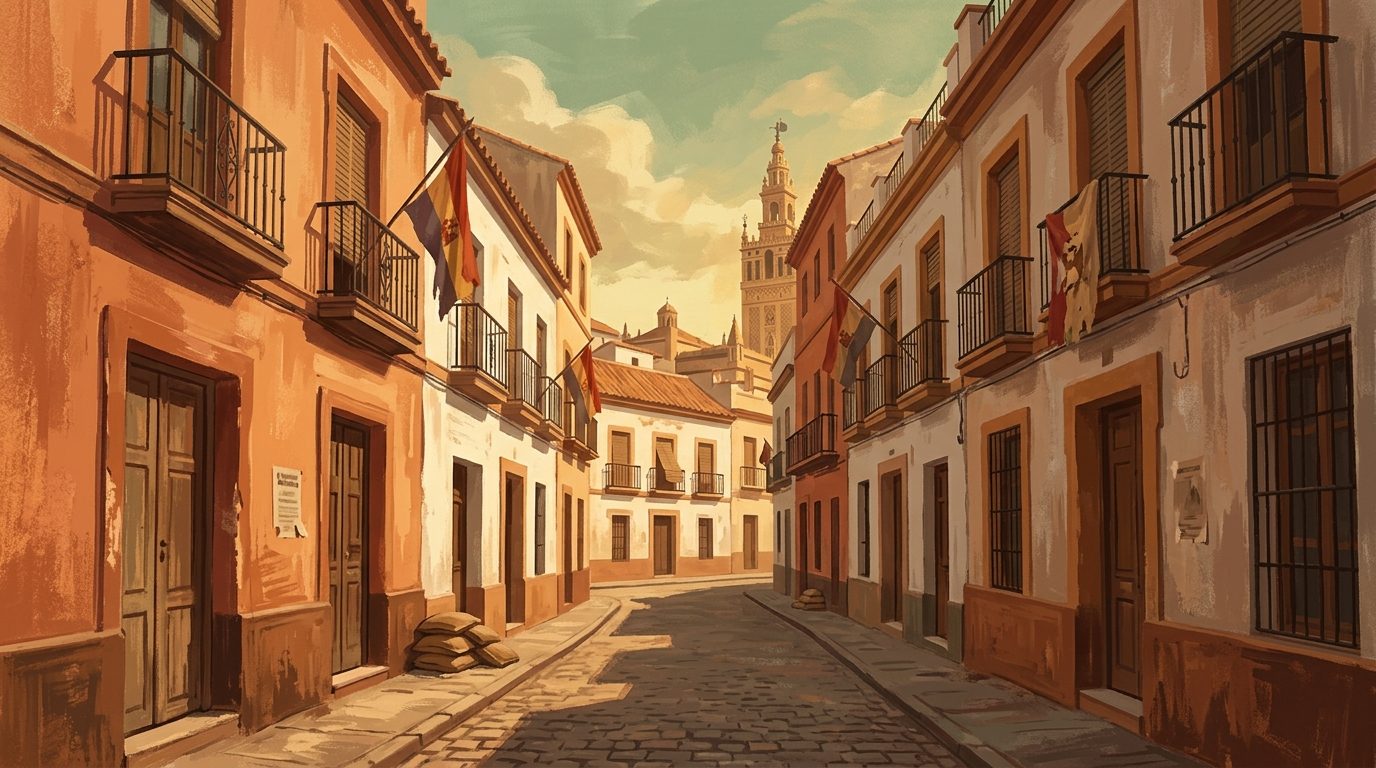
On the afternoon of 18 July 1936, an ageing, marginalised general walked into the military headquarters of Sevilla and, through sheer audacity and intimidation, captured the city. It was the catalyst that would plunge western Andalucía into terror and dictate the course of a brutal conflict.
On 18 July 1936, the summer heat in Sevilla was suffocating. Inside the grand Edificio de Capitanía General, the military commander of the region, General José Fernández de Villa-Abrille, hesitated. Across the desk stood General Gonzalo Queipo de Llano, an officer who had arrived seemingly without a substantial force, yet acting with absolute authority. Queipo had come to execute a military coup. Through a combination of sheer bluff, shouting, and the threat of a loaded pistol, he placed Villa-Abrille under arrest and unilaterally declared martial law. This dramatic confrontation in a quiet office marked the ignition point of the Spanish Civil War (1936 to 1939) in the south of the country. By sunset, Queipo and a handful of rebel officers controlled the historic centre. Within days, his ruthless tactics would crush the local resistance and secure a vital bridgehead for the military uprising in Andalucía. The rapid Nationalist takeover of the Andalucían capital was not a predetermined certainty, but a direct consequence of fatal hesitation on the part of the Republican authorities and terrifying decisiveness from the insurgents. The events of that single July weekend would reshape the region forever.
The Bluff that Took a City
General Gonzalo Queipo de Llano was the Inspector General of the Carabineros, a role that allowed him to travel freely across Spain inspecting border guards. The government in Madrid suspected a military plot but failed to act firmly against senior officers. When the uprising began in North Africa on the evening of 17 July, Queipo moved immediately into action in Sevilla. He did not have overwhelming military backing in the city. In fact, most of the garrison, numbering roughly 4,000 men, was undecided. Queipo relied entirely on theatrical aggression.
After detaining Villa-Abrille, whose hesitation remains a point of intense debate among historians, Queipo moved to the San Hermenegildo artillery barracks. Some scholars argue Villa-Abrille was secretly sympathetic to the rebels, while others maintain he was simply paralysed by the responsibility of shedding Spanish blood. Queipo exploited this paralysis. When the commander at the artillery barracks refused to join the rebellion, Queipo simply dismissed him on the spot, threatened the junior officers, and ordered them to fall in line. Intimidated by his sheer force of personality, they obeyed.
Next, he ordered field artillery pieces to be dragged into the Plaza Nueva. He commanded his men to fire directly at the civil government building, where loyalist officials were desperately trying to coordinate a response. The physical damage to the stone facade was minimal, but the psychological impact was devastating. The civil governor surrendered, and by the end of the day, Queipo had effectively captured the administrative heart of Sevilla with fewer than two hundred loyal men.
The Microphone and the Machine Gun
Controlling the public squares was only half the battle. Queipo recognised the immense power of mass communication. On the evening of 18 July, rebel troops seized the studios of Radio Sevilla, located on Calle Tetuán. Taking over the microphone, Queipo began a series of nightly radio broadcasts that became a defining and terrifying feature of the conflict.
His speeches were often unscripted, fuelled by local wine and deep malice. Broadcasting from a small studio, he projected his voice across the Andalucían countryside. He deliberately exaggerated his troop numbers to demoralise the Republicans, claiming that massive columns of soldiers were already marching on Madrid. More chillingly, he promised horrific violence against anyone who resisted. He used crude local slang to mock the Republic, listed the names of trade union leaders, and graphically threatened left-wing women with sexual violence. This weaponisation of the radio for psychological warfare was entirely unprecedented in European conflict, and it paralysed many rural towns with fear before a single rebel soldier even arrived.
The Fall of the Barrios
Despite the terror broadcast over the airwaves, the working-class neighbourhoods of Sevilla immediately fought back. In Triana across the river, and Macarena in the north, trade unions called a general strike and civilians threw up barricades. They used furniture, cobblestones, and overturned carts to block the narrow streets. Republican militias gathered in central spaces like the Plaza de la Encarnación, armed with little more than hunting rifles, old pistols, and a desperate resolve.
However, the civil governor had previously refused to distribute military weapons to the workers, leaving them critically outgunned when the regular army finally moved against them. To break the barricades, Queipo deployed field artillery at point-blank range down residential streets. Crucially, he also secured the transport of hardened combat troops from the Army of Africa. Moroccan mercenaries, known as Regulares, and Spanish Legionnaires began arriving by air from Tetuán, facilitated by transport planes supplied by Nazi Germany.
These professional soldiers were unleashed on the civilian neighbourhoods. By 22 July, the resistance in Triana had been broken. The Macarena district was violently subdued shortly after. The subsequent repression was systematic and merciless. Thousands of union members, teachers, and suspected Republican sympathisers were rounded up, taken to the city walls or the cemetery, and executed without trial.
A Divided Region
The shockwaves of the Sevilla coup rippled rapidly across Andalucía. The element of surprise, combined with the paralysis of civil authorities, allowed the rebels to seize several major cities within the first forty-eight hours. In Cádiz, General López Pinto and General José Enrique Varela secured the vital naval port, ensuring the rebels could bring in further reinforcements by sea from Africa. In Córdoba, Colonel Ciriaco Cascajo used artillery to force the immediate surrender of the civil government on 18 July. Granada fell two days later, leading to a wave of repression that would soon claim the life of the poet Federico García Lorca.
However, the Nationalist takeover was not uniform. The province of Huelva resisted until late July, eventually falling to a brutal, fast-moving rebel column sent from Sevilla. Meanwhile, eastern Andalucía held its ground. The civil governors in Málaga and Almería managed to maintain control, supported by loyal elements of the security forces and heavily armed workers. The coup essentially cleaved Andalucía in two, establishing a hostile frontline that would divide the region for the remainder of the war.
Where to see it today
Edificio de Capitanía General: Located at the grand Plaza de España in Sevilla, this imposing brick and ceramic building was the military headquarters where Queipo de Llano executed his initial coup. Originally built for the 1929 Ibero-American Exposition, it remains a working military administrative building. While the interior office where General Villa-Abrille was arrested is closed to the public, visitors can observe the grand exterior from the Plaza de España and appreciate the scale of the headquarters Queipo brazenly walked into.
Plaza de la Encarnación: Today dominated by the enormous wooden Metropol Parasol structure, this central square in Sevilla was a key gathering point for Republican civilians and union members in the chaotic early hours of the uprising. Standing in the square today, you can trace the routes taken by the workers as they attempted, in vain, to march on the military positions in the city centre.
The Macarena Walls (Murallas de la Macarena): The yellow Almohad-era city walls stretching towards the Macarena Basilica (where Queipo de Llano was buried until his remains were exhumed in 2022 under the Law of Democratic Memory) stand as a silent witness to the brutal suppression of the working-class neighbourhoods. The area immediately surrounding these walls, and the nearby San Julián district, saw intense street fighting. In the weeks that followed, the walls themselves were frequently used as execution sites by rebel firing squads.
The Wall of Memory at San Fernando Cemetery: To understand the true human cost of July 1936, visit the main municipal cemetery of Sevilla. The exterior brick walls were the site of mass executions in the weeks and months following the coup. Inside the grounds, several mass graves from this period have been excavated in recent years. The Pico Reja pit excavation was completed in 2023, and the site is now a permanent memorial that prominently honours the thousands of victims of the repression, providing a sobering counterpoint to the monumental architecture of the city centre.
If you visit
For those exploring the history of July 1936, Sevilla is the most logical starting point. The sites associated with the coup are centrally located and easily accessed on foot. The climate in the Andalucían summer can be dangerously hot, making autumn or spring the most comfortable seasons for historical walking tours. The Plaza de España, Plaza de la Encarnación, and the Macarena walls are open public spaces accessible at any time of day. When visiting the San Fernando Cemetery to see the memorial, check the municipal opening hours, as the gates typically close by early evening. While Sevilla lacks a single 'Civil War Museum', the permanent 'Sala de la Memoria', various memorial plaques, and the official 'Itineraries of Memory' routes provide necessary context. Bringing a specialist history guidebook or hiring a local historical guide will also greatly help in contextualising the streets and squares where these defining events unfolded.
Further Reading
For deeper context on the events of July 1936 in Andalucía, the works of renowned historians and resources from the official Memoria Democrática portal of the Junta de Andalucía are highly recommended. Key texts include The Spanish Holocaust by Paul Preston, The Battle for Spain by Antony Beevor, and regional studies by Francisco Espinosa Maestre, which provide extensive details on the repression and military manoeuvres during the conflict.
Last reviewed: 14 July 2026 · Editorial policy
Related guides
The Fall of Córdoba, 1236
In 1236, a daring winter raid by Castilian frontiersmen escalated into a full siege of the former Umayyad capital. The subsequent surrender of Córdoba marked a decisive turning point in the medieval history of the Iberian Peninsula.
8 min read
Unveiling Granada's Soul: A Journey Through the Albaicín and Sacromonte Quarters
Walk through Granada’s Albaicín and Sacromonte quarters with context on Moorish streets, cave houses, flamenco heritage, viewpoints and practical routes.
7 min read
The Ghost in the Garden: Searching for the Al-Andalus Within
Eight centuries of Al-Andalus did not vanish in 1492; they simply moved indoors, into the kitchens, and onto the tip of the tongue.
7 min read
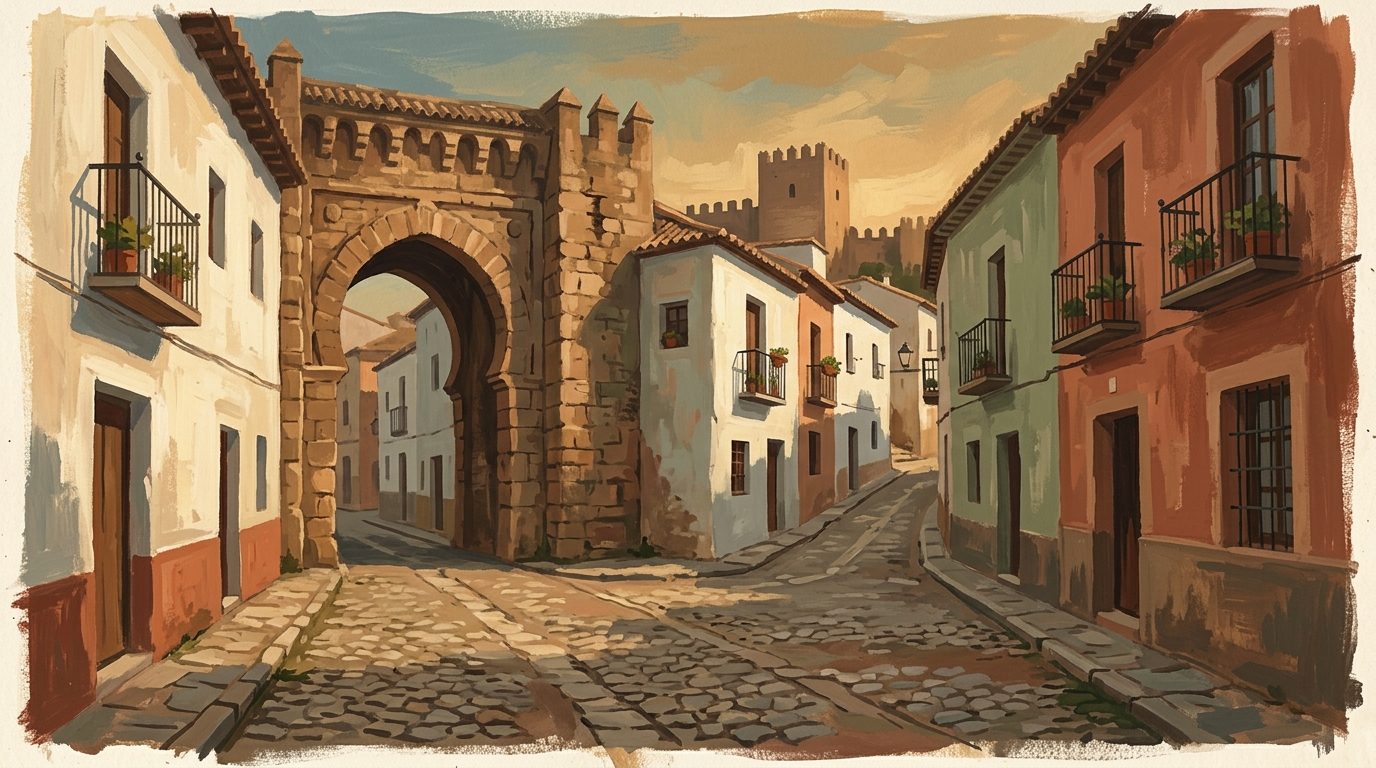
The Reconquista in Andalucía
The centuries-long Christian conquest of southern Iberia redefined the physical and cultural landscape of the peninsula. How did the military campaigns of the northern kingdoms dismantle the Islamic territories of Al-Andalus and forge the modern region of Andalucía?
7 min read
Corduba and Roman Baetica
Discover the political and intellectual might of Corduba, the wealthy administrative capital of Roman Baetica and the birthplace of the philosopher Seneca.
7 min read
Al-Andalus: Eight Centuries of Moorish Rule in Andalucía
For nearly eight hundred years, Islamic civilisation flourished on the Iberian Peninsula. How did a distant province of the Umayyad empire become a beacon of science, art, and poetry in medieval Europe?
8 min read
More guides
UNESCO World Heritage Sites in Andalucía
A curated guide to the cultural and natural sites in Andalucía recognised by UNESCO for their universal value. These landmarks offer a profound insight into the diverse civilisations of the region.
6 min read
The Best Beaches in Andalucía
From the Atlantic dunes of Huelva to the volcanic coves of Almería, the coastline of southern Spain offers an unparalleled variety of maritime landscapes.
6 min read
Phoenicians and Tartessians in Andalucía
Around three thousand years ago, eastern Mediterranean merchants arrived on the Iberian coast seeking silver and copper. Their arrival sparked a cultural collision that transformed local chiefdoms into the legendary civilisation of Tartessos.
6 min read
Roman Andalucía: Ruins and Archaeological Sites
Discover the monumental legacy of the Roman province of Baetica, from grand amphitheatres in the Guadalquivir valley to maritime cities on the Atlantic coast.
7 min read
Geological Wonders: Caves and Karst Landscapes of Andalucía
Discover the subterranean wonders and prehistoric secrets preserved within the limestone massifs and gypsum deposits of southern Spain.
6 min read
Castles and Fortresses of Andalucía
The fortresses of Andalucía are the stone guardians of a complex past, marking the ancient frontiers between empires and offering some of the most spectacular views in the southern peninsula.
6 min read
The Iberians in Andalucía: Warlords, Sculptors and the Dawn of Iron
Who were the sophisticated, iron-working peoples who controlled southern Spain before the Roman conquest? Their fortified hill towns and striking stone sculptures reveal a formidable culture caught between ancient local traditions and Mediterranean ambition.
6 min read
UNESCO Geoparks and Natural Wonders of Andalucía
Discover the geological heritage of Southern Spain through its UNESCO-designated geoparks and natural wonders. Explore the tectonic history and diverse ecosystems of Almería, Granada, and Cádiz.
6 min read
Cathedrals and Great Churches of Andalucía
A guide to the monumental religious architecture of Southern Spain, from the vast Gothic nave of Sevilla to the Renaissance masterworks of Jaén and Granada.
6 min read
Newsletter
More stories from Andalucía
Weekly notes, seasonal picks, and the next guides worth bookmarking.