
Feature
The Long Decline and Final Abolition of the Inquisition in Andalucía
The twilight of the Holy Office was a slow, bureaucratic fading rather than a sudden collapse. Enlightenment ideals and political upheaval finally dismantled a system that had overseen centuries of religious orthodoxy.
By Dan · Updated 9 May 2026 · 8 min read
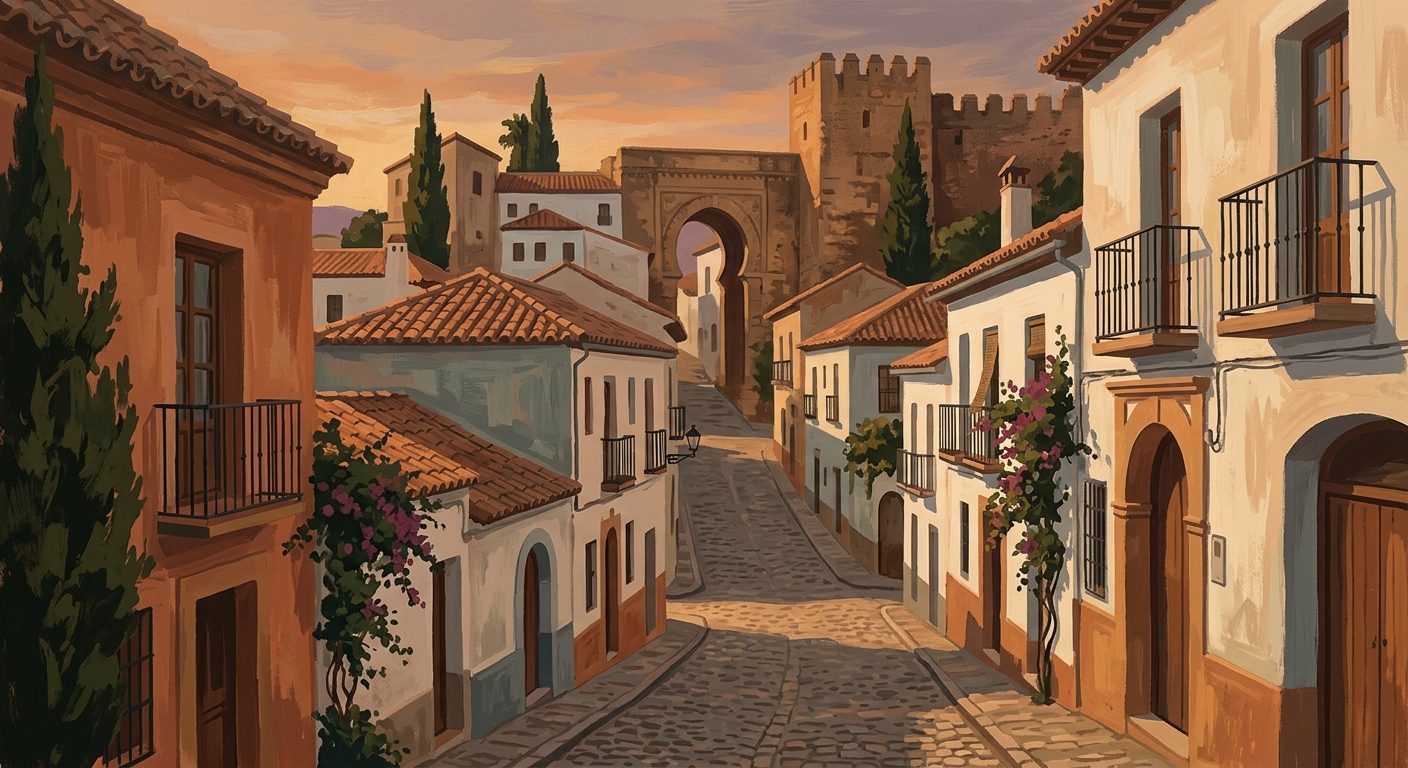
The twilight of the Holy Office was a slow, bureaucratic fading rather than a sudden collapse. Enlightenment ideals and political upheaval finally dismantled a system that had overseen centuries of religious orthodoxy.
In 1776, Pablo de Olavide, the progressive Intendant of Andalucía, found himself standing before the dreaded tribunal. Olavide had spent years modernising Sevilla, reforming university curricula, and establishing new agricultural colonies in the rugged terrain of the Sierra Morena. Yet his Enlightenment ideals, his vast library of foreign books, and his tendency to question clerical authority drew the intense suspicion of conservative factions. His subsequent trial and imprisonment highlighted a profound shift in the religious and political landscape. During the long era of the Spanish Inquisition (1478 to 1834), the institution had originally operated as a terrifying instrument of absolute religious orthodoxy, but by the late eighteenth century, it was struggling to maintain its relevance against a tide of modern, rationalist thought.
Olavide became one of the last high-profile victims of the Holy Office, but his case provoked international outrage and embarrassment rather than religious awe. By this time, the great public fires of the autos de fe had largely been extinguished across the Iberian Peninsula. The Inquisition, once a feared engine of social control, was slowly suffocating under the weight of its own bureaucracy, shifting political landscapes, and the changing moral compass of society. The final decades of the Inquisition in Andalucía reflect a protracted twilight, defined by philosophical debate, artistic critique, and a series of dramatic political abolitions and resurrections before its ultimate demise in the nineteenth century.
The Enlightenment and the Holy Office
Throughout the eighteenth century, the Bourbon monarchs introduced a series of administrative and economic reforms. Charles III, in particular, sought to modernise the Spanish state and economy. While the monarchy remained fundamentally Catholic, it increasingly viewed the autonomous power of the Inquisition with irritation. The tribunals in Sevilla, Córdoba, and Granada were still fully staffed, but their daily operations had transformed significantly. Rather than hunting down hidden religious minorities, the inquisitors became heavily focused on ideological censorship and the suppression of the Enlightenment, known in Spain as the Ilustración.
This intellectual battle was particularly fierce in Andalucía. The coastal cities, especially the great maritime hub of Cádiz, were the primary entry points for international trade and, consequently, foreign ideas. The Inquisition appointed special commissioners to patrol the docks and inspect incoming cargo. They scoured ship manifests for contraband literature, desperately trying to intercept the smuggled works of Voltaire, Rousseau, and Montesquieu before they could reach the salons of Sevilla and Córdoba. The Holy Office maintained a vast network of informers and published the Index Librorum Prohibitorum, a continuously updated list of banned books. However, wealthy merchants and progressive aristocrats simply paid smugglers to hide these philosophical texts inside barrels of salted fish or bolts of imported cloth. The Inquisition was fighting a losing battle against the modern world, expending vast amounts of bureaucratic energy to stem a tide of progressive thought that had already taken root among the educated classes of Andalucía.
Francisco de Goya and the Changing Tide
While the Enlightenment philosophers dismantled the intellectual foundations of the Inquisition, it was Francisco de Goya who delivered the most devastating visual critiques. Although Goya was an Aragonese painter working primarily for the royal court in Madrid, his art perfectly captured the shifting national sentiment and heavily influenced how the institution was viewed by the contemporary public across all regions, including Andalucía.
In the late eighteenth and early nineteenth centuries, Goya produced a series of paintings and etchings that stripped the Holy Office of its religious majesty. In works such as The Inquisition Tribunal, he depicted the proceedings not as solemn acts of divine justice, but as grotesque spectacles of human cruelty, superstition, and ignorance. Goya focused on the visual humiliation of the accused, who were forced to wear the coroza (a tall, pointed hat) and the sanbenito (a penitential tunic). He painted the inquisitors as shadowy, oppressive figures looming over isolated, terrified individuals. Goya captured a crucial change in public perception. The populace, who had once gathered in the grand squares of Sevilla and Granada to witness the pronouncement of sentences as a communal religious duty, were beginning to view the ageing institution with deep unease, scepticism, or outright derision. The terrifying aura of the Holy Office had been broken, replaced by a growing recognition of its inherent barbarity.
The Cortes of Cádiz and the First Abolition
The ideological decline of the Inquisition was rapidly accelerated by the brutal reality of the Peninsular War. In 1808, Napoleon Bonaparte invaded Spain, placing his brother Joseph on the throne. The French administration, eager to present itself as an enlightened force, immediately abolished the Inquisition. However, this decree carried little moral weight, as it was issued by an occupying foreign power. The true death knell for the institution came from the heart of the Spanish resistance, which was based in Andalucía.
By 1810, the French army had overrun much of the country, and the provisional Spanish government was forced to retreat to the fortified coastal city of Cádiz. Surrounded by French troops and enduring constant bombardment across the bay, the Cortes of Cádiz (the national assembly) convened to debate the future of the nation. In this crucible of war, liberal deputies drafted the Constitution of 1812, a remarkably progressive document that established national sovereignty and a constitutional monarchy.
The existence of the Inquisition was completely incompatible with these new ideals of liberty and rational governance. On the 22nd of February 1813, after intense and passionate debate, the Cortes of Cádiz formally declared the Holy Office abolished. Liberal deputies argued forcefully that the secret tribunals, the use of torture, and the suppression of free thought were contrary to both the new constitution and the true teachings of the Gospel. This was a monumental and deeply symbolic moment. As the decree was read out in towns across Andalucía that had not fallen to the French, crowds gathered to celebrate. In several municipalities, local citizens stormed the empty Inquisition offices, tearing down the coats of arms and throwing open the heavy doors of the holding cells.
Restoration and Final Demise
The triumph of the liberals in Cádiz proved to be tragically short-lived. Following the defeat of the French, King Ferdinand VII returned to the Spanish throne in 1814. He swiftly rejected the liberal constitution, dissolved the Cortes, and reinstated the absolute power of the monarchy. Eager to punish the liberal politicians who had opposed him and to restore the old social order, Ferdinand resurrected the Inquisition.
However, this restored institution was a pale shadow of its former self. It operated almost entirely as a reactionary political police force, hunting down liberals, Freemasons, and supporters of the 1812 Constitution rather than religious heretics. This began a chaotic period of alternating suppression and restoration. The Inquisition was abolished yet again during the Liberal Triennium (1820 to 1823) when military officers forced the King to accept the constitution, only to be informally restored through local Juntas of Faith when absolute monarchy returned.
The definitive end finally arrived on the 15th of July 1834. Following the death of Ferdinand VII, the country plunged into political crisis. Needing the support of liberal factions to secure the throne for her infant daughter Isabella II, the Queen Regent Maria Christina issued a royal decree that officially and permanently abolished the Spanish Inquisition. Across Andalucía, the remaining inquisitors were dismissed. The vast properties of the Holy Office, including its headquarters in Córdoba, Sevilla, and Granada, were confiscated by the state. The formidable archives, containing centuries of trial transcripts, anonymous denunciations, and bureaucratic correspondence, were packed into wooden crates and shipped to national repositories, finally closing the book on one of the most oppressive institutions in European history.
Where to see it today
To understand the physical reality of the Inquisition in its final centuries, modern travellers can visit several key sites and archives that preserve its memory.
Alcázar de los Reyes Cristianos (Córdoba)
This imposing fortress served as the headquarters of the Inquisition in Córdoba for over three centuries. Today, visitors can walk through the severe stone corridors and stand in the courtyards where the tribunal conducted its daily business. The Torre de la Inquisición (Inquisition Tower) still stands as a stark physical reminder of the power the institution held over the city. The contrast between the meticulously maintained, geometric Moorish-style gardens and the grim history of the adjacent stone chambers provides a profoundly moving historical experience.
Castillo de San Jorge (Sevilla)
Located on the banks of the Guadalquivir River, right next to the Triana market, are the excavated ruins of the Inquisition headquarters in Sevilla. The site was abandoned and eventually demolished after the 1834 abolition, but extensive archaeological work in the 1990s uncovered the foundations. It now operates as an interpretation centre. Visitors can walk along the raised walkways above the foundations of the jail cells, the notary offices, and the interrogation rooms. The sensory deprivation of the lower holding areas is still palpable, offering a chilling glimpse into the lived experience of those awaiting trial.
Archivo Histórico Nacional (Madrid)
While located outside of Andalucía, this national archive is the final resting place for the vast majority of the surviving bureaucratic records from the Andalucían tribunals. Following the 1834 abolition, the meticulous ledgers, trial transcripts, and censorship orders from Sevilla, Córdoba, and Granada were transferred here. Historians and researchers still comb through these fragile pages. The sheer volume of paper, the endless lists of confiscated books, and the detailed transcripts of philosophical debates illustrate exactly how the institution spent its final decades obsessing over administrative procedure as its actual power slipped away.
If you visit
For a traveller looking to understand this complex era, the best place to start is the Castillo de San Jorge in Sevilla, as the interpretation centre explicitly breaks down the daily operations and eventual collapse of the tribunal. Spring and autumn are the ideal seasons for walking between these historical sites without enduring the extreme heat of the Andalucían summer. If you plan to visit the Alcázar de los Reyes Cristianos in Córdoba, it is highly advisable to book your tickets in advance online, particularly if you are travelling on a weekend or during the busy Easter period. Entry to the Castillo de San Jorge varies (check the official Sevilla City Council portal before travelling for current fee structures and opening hours), as policies frequently change on regional public holidays.
Last reviewed: 21 June 2026 · Editorial policy
Related guides
Iberian Art and Sculpture: The Great Ladies and Warrior Shrines
The monumental stone carvings of the Iberians reveal a society deeply concerned with lineage, divine protection, and the afterlife.
7 min read
The Iberians in Andalucía: Warlords, Sculptors and the Dawn of Iron
Who were the sophisticated, iron-working peoples who controlled southern Spain before the Roman conquest? Their fortified hill towns and striking stone sculptures reveal a formidable culture caught between ancient local traditions and Mediterranean ambition.
6 min read
The Museum and the Metropolis: Málaga’s Radical Reinvention
Once a gritty industrial port and a mere transit hub for the Costa del Sol, Málaga has spent two decades undergoing a radical cultural transformation that has turned it into a global art capital.
7 min read
Ink and Olive Groves: A Literary Journey through Andalucía
Discover the literary heart of Southern Spain, from the tragic poetry of Lorca in Granada to Hemingway’s dramatic Ronda and the contemplative prose of Machado in Sevilla.
10 min read
The Auto-da-Fé in Andalucía: Spectacle and Judgement
The auto-da-fé was not merely a trial, but a highly choreographed spectacle of religious and political power. Across the great squares of Sevilla, Córdoba and Granada, these public acts of faith transformed the grim mechanics of judgement into grand urban theatre.
8 min read
Expulsion of the Jews and the Conversos
The Alhambra Decree of 1492 forced a devastating ultimatum upon the Jewish population of Andalucía: exile or conversion. For those who chose baptism, the decision marked the beginning of centuries of relentless inquisitorial surveillance.
7 min read
More guides
UNESCO World Heritage Sites in Andalucía
A curated guide to the cultural and natural sites in Andalucía recognised by UNESCO for their universal value. These landmarks offer a profound insight into the diverse civilisations of the region.
6 min read
The Best Beaches in Andalucía
From the Atlantic dunes of Huelva to the volcanic coves of Almería, the coastline of southern Spain offers an unparalleled variety of maritime landscapes.
6 min read
Phoenicians and Tartessians in Andalucía
Around three thousand years ago, eastern Mediterranean merchants arrived on the Iberian coast seeking silver and copper. Their arrival sparked a cultural collision that transformed local chiefdoms into the legendary civilisation of Tartessos.
6 min read
Roman Andalucía: Ruins and Archaeological Sites
Discover the monumental legacy of the Roman province of Baetica, from grand amphitheatres in the Guadalquivir valley to maritime cities on the Atlantic coast.
7 min read
Geological Wonders: Caves and Karst Landscapes of Andalucía
Discover the subterranean wonders and prehistoric secrets preserved within the limestone massifs and gypsum deposits of southern Spain.
6 min read
Castles and Fortresses of Andalucía
The fortresses of Andalucía are the stone guardians of a complex past, marking the ancient frontiers between empires and offering some of the most spectacular views in the southern peninsula.
6 min read
UNESCO Geoparks and Natural Wonders of Andalucía
Discover the geological heritage of Southern Spain through its UNESCO-designated geoparks and natural wonders. Explore the tectonic history and diverse ecosystems of Almería, Granada, and Cádiz.
6 min read
Cathedrals and Great Churches of Andalucía
A guide to the monumental religious architecture of Southern Spain, from the vast Gothic nave of Sevilla to the Renaissance masterworks of Jaén and Granada.
6 min read
The White Villages of Andalucía: A Guide to the Pueblos Blancos
Discover the iconic white villages of Cádiz and Málaga, where lime-washed houses and narrow Moorish streets define the rugged mountain landscape of Andalucía.
6 min read
Newsletter
More stories from Andalucía
Weekly notes, seasonal picks, and the next guides worth bookmarking.