
Feature · Granada
Lorca and the Repression in Granada
The assassination of Spain's most celebrated poet was just one part of a systematic campaign of terror. Today, the ravines of Víznar and Alfacar hold the stories of thousands whose voices were silenced.
By Dan · Updated 24 June 2026 · 7 min read
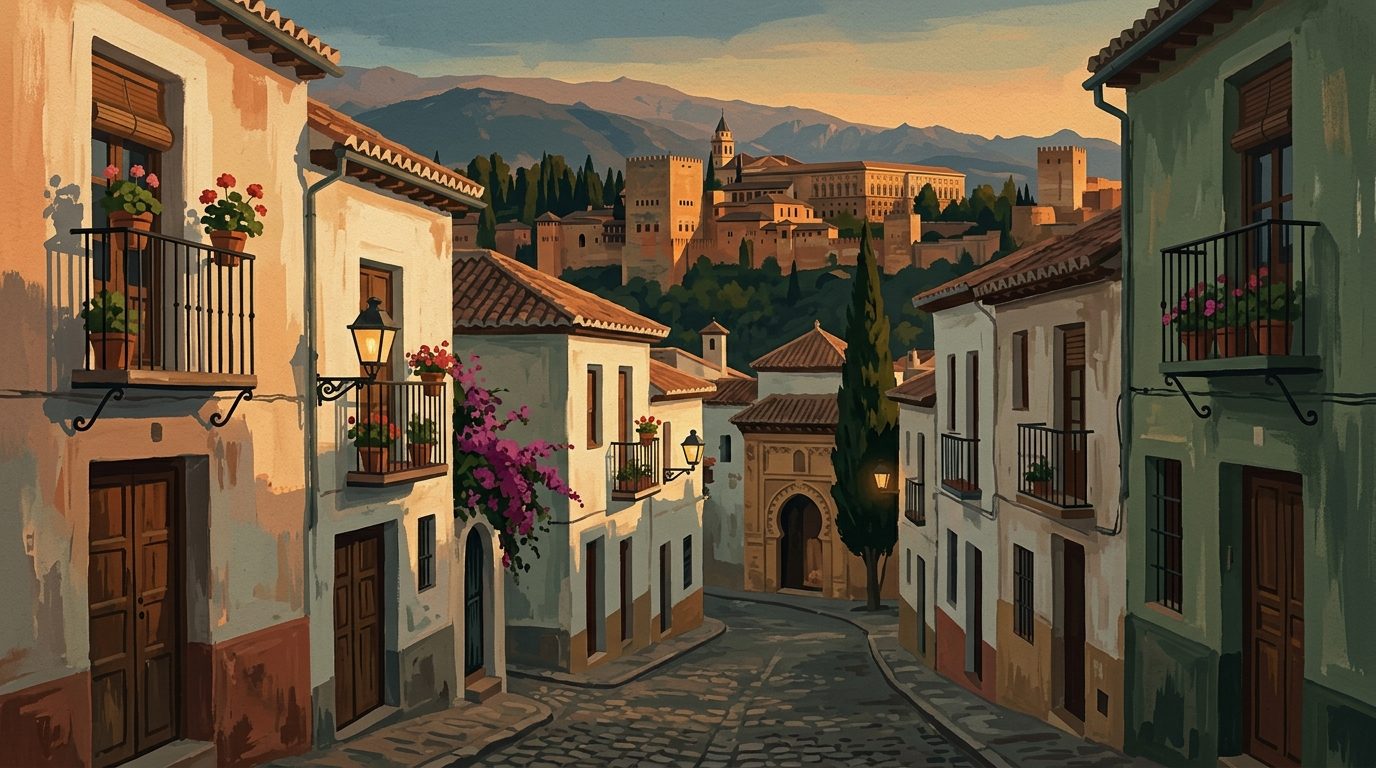
The assassination of Spain's most celebrated poet was just one part of a systematic campaign of terror. Today, the ravines of Víznar and Alfacar hold the stories of thousands whose voices were silenced.
On the 14th of July 1936, Federico García Lorca arrived in his home city of Granada. He had fled the mounting political violence of Madrid, seeking the familiar refuge of the Huerta de San Vicente, his family's rural summer estate on the edge of the Vega plains. He planned to celebrate the feast day of Saint Frederick with his parents in relative peace. It proved to be a fatal miscalculation. Within days, the military uprising that sparked the Spanish Civil War (1936 to 1939) swept across the Iberian Peninsula. While much of Andalucía initially resisted the coup, the conservative military garrison in Granada seized control of the city centre with swift, brutal efficiency. Lorca, globally famous for his poetry and theatrical works, was suddenly trapped in a rebel stronghold.
As a known progressive, a republican intellectual, and an openly homosexual man, the poet was a prime target for the new right-wing regime. On the 16th of August, armed men dragged him from the home of the Rosales family, a prominent Falangist household where he had desperately sought sanctuary. Three days later, under the cover of darkness, he was driven up into the foothills of the Sierra Nevada. Beside a dirt road connecting the villages of Víznar and Alfacar, a firing squad ended his life. Yet Lorca was not the only victim. His murder was merely the most internationally recognised execution in a sprawling, systematic campaign of repression that turned the ravines of Granada into a vast landscape of mass graves.
The Fall of Granada and the Reign of Terror
The military coup in Granada succeeded within a week of the initial July uprising. Led by General José Valdés Guzmán, who swiftly installed himself as the civil governor, the nationalist authorities immediately began purging the city of anyone suspected of leftist sympathies, republican loyalties, or trade union membership. The repression was methodical and ruthless, encouraged by the inflammatory radio broadcasts of General Gonzalo Queipo de Llano from Sevilla, which called for the violent eradication of political opponents.
Night after night, trucks known locally as "sacas" collected prisoners from the overflowing provincial jail and makeshift detention centres like the convent of San Marcos. The victims included teachers, lawyers, union leaders, and local politicians. Among the very first to be executed was Manuel Fernández Montesinos, the socialist mayor of Granada and Lorca's brother-in-law, who was shot at the walls of the local cemetery on the 16th of August, the exact same day the poet was taken into custody.
At the cemetery of San José in Granada, historians estimate that over 4,000 people were executed by firing squad during the conflict and the ensuing dictatorship. The bullet marks are still visible on parts of the old cemetery walls today, serving as a permanent scar on the city's architecture.
The Arrest and Final Days of the Poet
Lorca's decision to hide at the home of the Rosales family highlights the complex, highly personal nature of the conflict in Granada. Luis Rosales was a fellow poet and a close friend, but his brothers were leading figures in the local Falange, the Spanish fascist party. Lorca believed their high standing would protect him from the roaming death squads. This illusion of safety was shattered when a former conservative parliamentary deputy named Ramón Ruiz Alonso led a heavily armed group to the house to arrest the poet.
The arrest warrant reportedly contained absurd accusations, claiming Lorca was a spy for the Soviet Union and operated a secret radio transmitter. These charges were merely a veneer of legality for a political assassination. Lorca was taken to the civil government headquarters before being transferred to Víznar, a small village in the foothills that the rebels had transformed into a staging ground for executions.
His final hours were spent at La Colonia, a former water mill that had served as a children's holiday camp during the Second Republic. The rebels had repurposed it into a holding pen for those awaiting execution. Lorca spent his last night here alongside three other men: Dióscoro Galindo, a dedicated republican schoolteacher who was missing a leg, and two anarchist bullfighters named Francisco Galadí and Joaquín Arcollas.
The Road to Alfacar and the Mass Graves
In the early hours of the 18th or 19th of August, the precise date remains a matter of minor historical debate, Lorca and his three companions were driven out of La Colonia. They were taken along the winding, rugged road that connects Víznar to the neighbouring village of Alfacar. This specific terrain was chosen for a dark, practical reason. The landscape is dominated by deep ravines, known as barrancos, where the soft earth made it easy to force prisoners to dig shallow trenches before they were shot.
The four men were executed by a firing squad composed of local volunteers and assault guards. They were buried together in an unmarked trench. Decades of forced silence followed. The Franco dictatorship officially recorded Lorca's death as being "due to war wounds" and strictly banned the publication of his work until the early 1950s. To speak of the murders in the ravines was strictly forbidden, leaving families to mourn their missing relatives in absolute secrecy.
The Enduring Mystery of Lorca's Remains
The exact location of Federico García Lorca's grave is one of the most fiercely debated mysteries in modern Spanish history. In the 1960s, the renowned historian Ian Gibson interviewed a man named Manuel Castilla, who claimed to have buried the poet. Castilla pointed to a specific olive tree near a natural spring known as the Fuente Grande in Alfacar.
For decades, this location was widely accepted as the definitive burial site. However, when the Andalucían government finally authorised an official archaeological excavation of the site in 2009, the results shocked the public. The archaeologists reached solid bedrock without finding a single human bone. A subsequent search in 2014 in an adjacent area also yielded no results.
This lack of physical evidence has fuelled intense historical debate. Some researchers maintain that the execution squad buried the men in a different, undiscovered trench further up the Víznar ravine, where the topography has shifted over eighty years. A more controversial, persistent theory suggests that Lorca's wealthy and influential family secretly bribed local authorities to exhume his body shortly after the execution, relocating his remains to a private family vault or the grounds of the Huerta de San Vicente. This theory remains unproven, and Lorca officially remains the world's most famous "desaparecido", a disappeared person, a tragic symbol of the countless others whose bodies have never been recovered.
Where to see it today
The physical legacy of Lorca and the tragedy of 1936 can be intimately explored at several key locations in and around Granada.
Huerta de San Vicente (Granada): This white-walled farmhouse, where Lorca spent his summers and wrote masterpieces like Bodas de Sangre and Yerma, has been meticulously preserved. Today, it stands within the modern Federico García Lorca Park in the city centre. Visitors can walk through his bedroom, view his original writing desk, and see the piano where he played traditional Andalucían folk songs. The house retains its original green shutters and period furniture, offering a poignant look at his life just weeks before his death.
Parque Federico García Lorca (Alfacar): Located in the foothills outside the city, this solemn memorial park was constructed in 1986 around the olive tree once believed to mark Lorca's grave. While we now know the bones are not directly beneath it, the park serves as a symbolic tomb. A large commemorative stone honours Lorca and all victims of the Spanish Civil War. The surrounding pine grove is remarkably quiet, offering a space for reflection.
Barranco de Víznar: Just a short distance from the Alfacar park lies the rugged ravine of Víznar, officially designated as a Place of Memory by the Andalucían government. Major archaeological campaigns have taken place here since 2021, with forensic teams continuing the slow, painstaking work through the 2025 season and into 2026, recovering and identifying the remains of the hundreds of unnamed individuals executed in the area.
If you visit
To fully understand the narrative, begin your day in Granada at the Huerta de San Vicente to connect with Lorca's life and creative genius. Dedicate your afternoon to the foothills. Renting a car or taking a taxi is the most practical way to travel between Granada, Víznar, and Alfacar, as local bus services to the memorial sites are highly infrequent. Spring and autumn offer the most comfortable weather for walking the exposed trails around the Barranco de Víznar. Keep in mind that the Huerta de San Vicente, like most municipal museums in the region, is closed on Mondays (check on the operator's website before travelling), so plan your itinerary accordingly.
Last reviewed: 21 June 2026 · Editorial policy
Related guides
The Fall of Granada, 1492
On the second of January 1492, the keys to the Alhambra were handed over to Ferdinand and Isabella, bringing a close to almost eight centuries of Muslim rule in the Iberian Peninsula. The capitulation of Granada reshaped the political and religious landscape of Europe forever, ending a long war of attrition.
8 min read
The Museum and the Metropolis: Málaga’s Radical Reinvention
Once a gritty industrial port and a mere transit hub for the Costa del Sol, Málaga has spent two decades undergoing a radical cultural transformation that has turned it into a global art capital.
7 min read
Ink and Olive Groves: A Literary Journey through Andalucía
Discover the literary heart of Southern Spain, from the tragic poetry of Lorca in Granada to Hemingway’s dramatic Ronda and the contemplative prose of Machado in Sevilla.
10 min read
The Auto-da-Fé in Andalucía: Spectacle and Judgement
The auto-da-fé was not merely a trial, but a highly choreographed spectacle of religious and political power. Across the great squares of Sevilla, Córdoba and Granada, these public acts of faith transformed the grim mechanics of judgement into grand urban theatre.
8 min read
Expulsion of the Jews and the Conversos
The Alhambra Decree of 1492 forced a devastating ultimatum upon the Jewish population of Andalucía: exile or conversion. For those who chose baptism, the decision marked the beginning of centuries of relentless inquisitorial surveillance.
7 min read
Foundation of the Sevilla Inquisition Tribunal
In 1478, a papal bull established the Spanish Inquisition. Sevilla became the testing ground for a systematic pursuit of heresy that would define an era.
7 min read
More from Granada
Nasrid Granada: The Last Islamic Kingdom of Iberia
Discover how the Nasrid dynasty forged a pragmatic mountain emirate that survived for over two centuries, creating the Alhambra and leaving a lasting architectural legacy.
8 min read
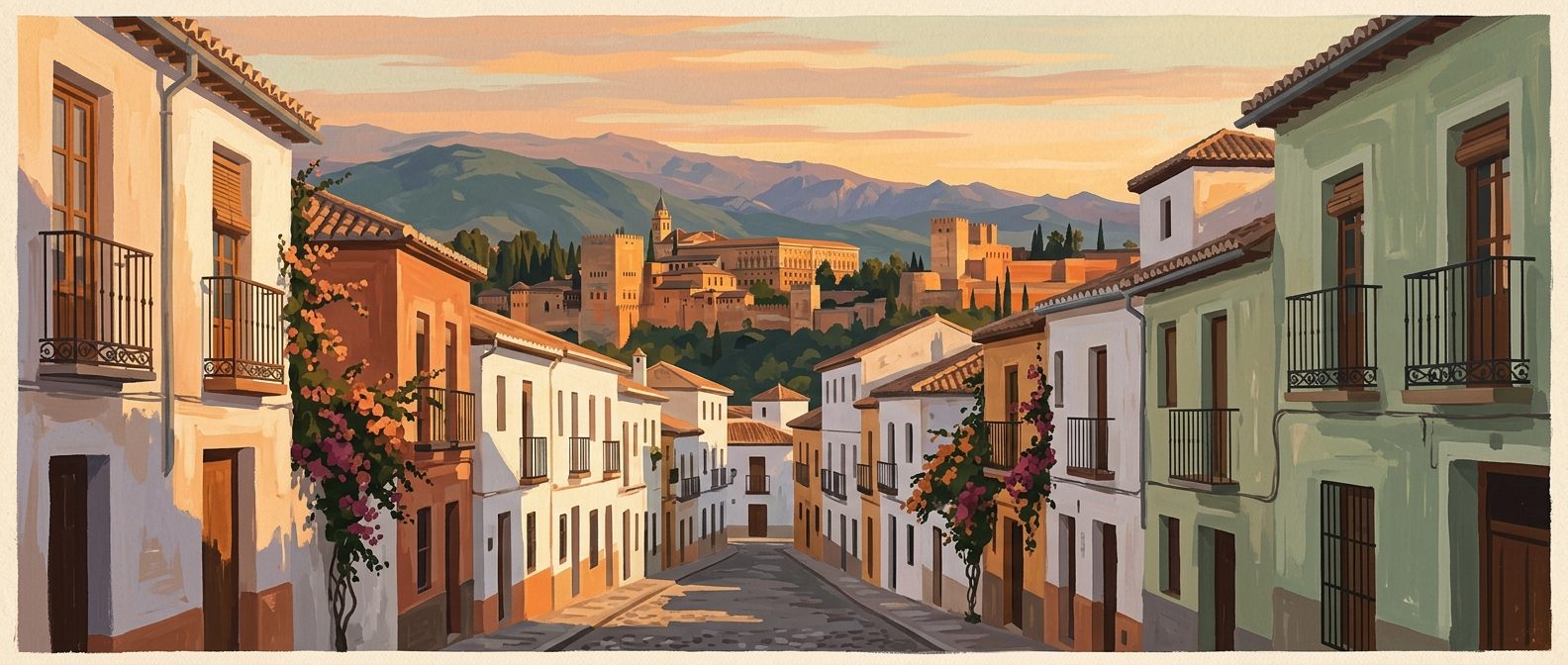
The Frontier of Granada: Life and War on the Edge of Al-Andalus
For over two centuries, the borderland separating the Christian Crown of Castile from the Nasrid Emirate of Granada was defined by watchful towers and sudden raids. Yet this military frontier was equally a zone of profound cultural exchange, where merchants, captives and diplomats negotiated daily survival in a divided land.
7 min read
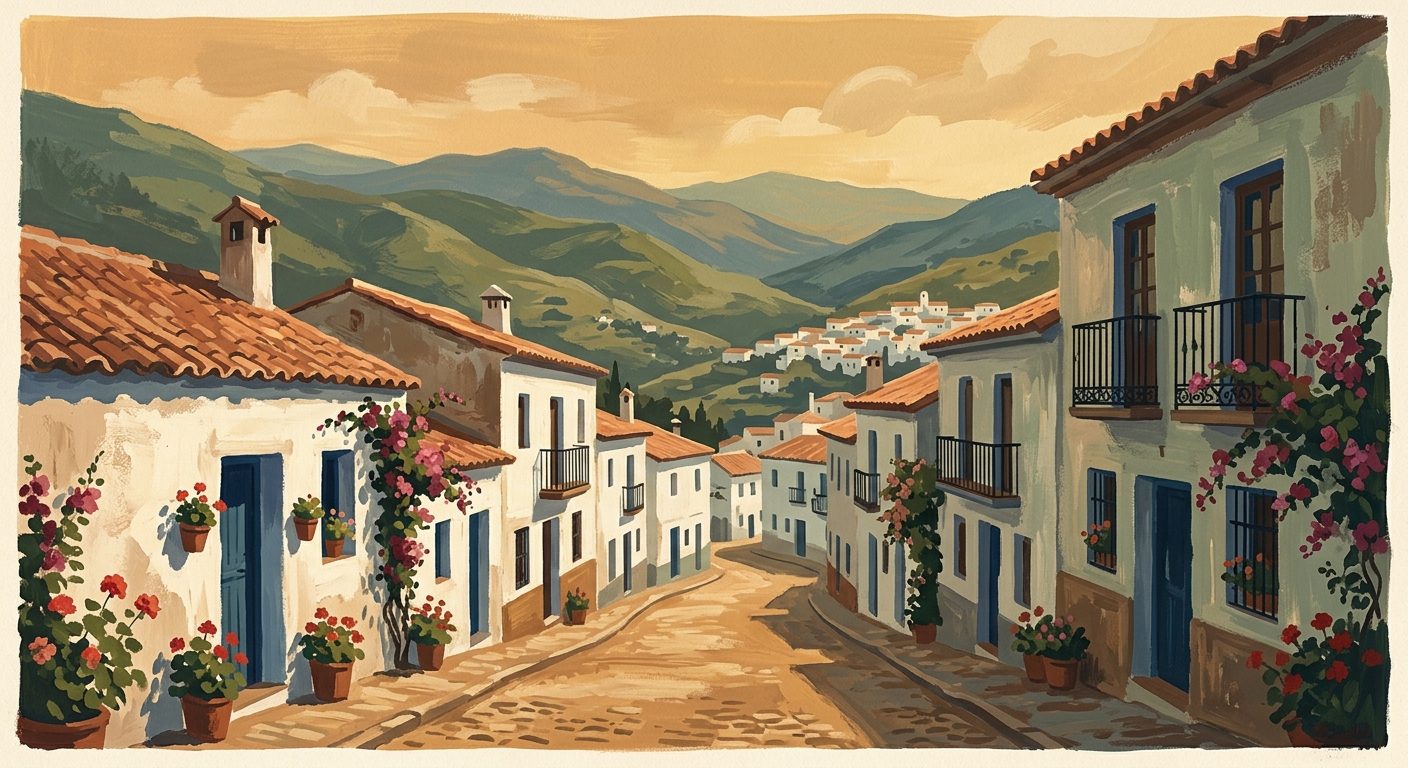
The Morisco Revolt of the Alpujarras
The Morisco Revolt of 1568 transformed the mountainous terrain of the Alpujarras into the theatre of a brutal war. Driven to rebellion by laws erasing their culture, the descendants of Granada's Muslim population fought a desperate campaign against the Spanish Crown.
8 min read
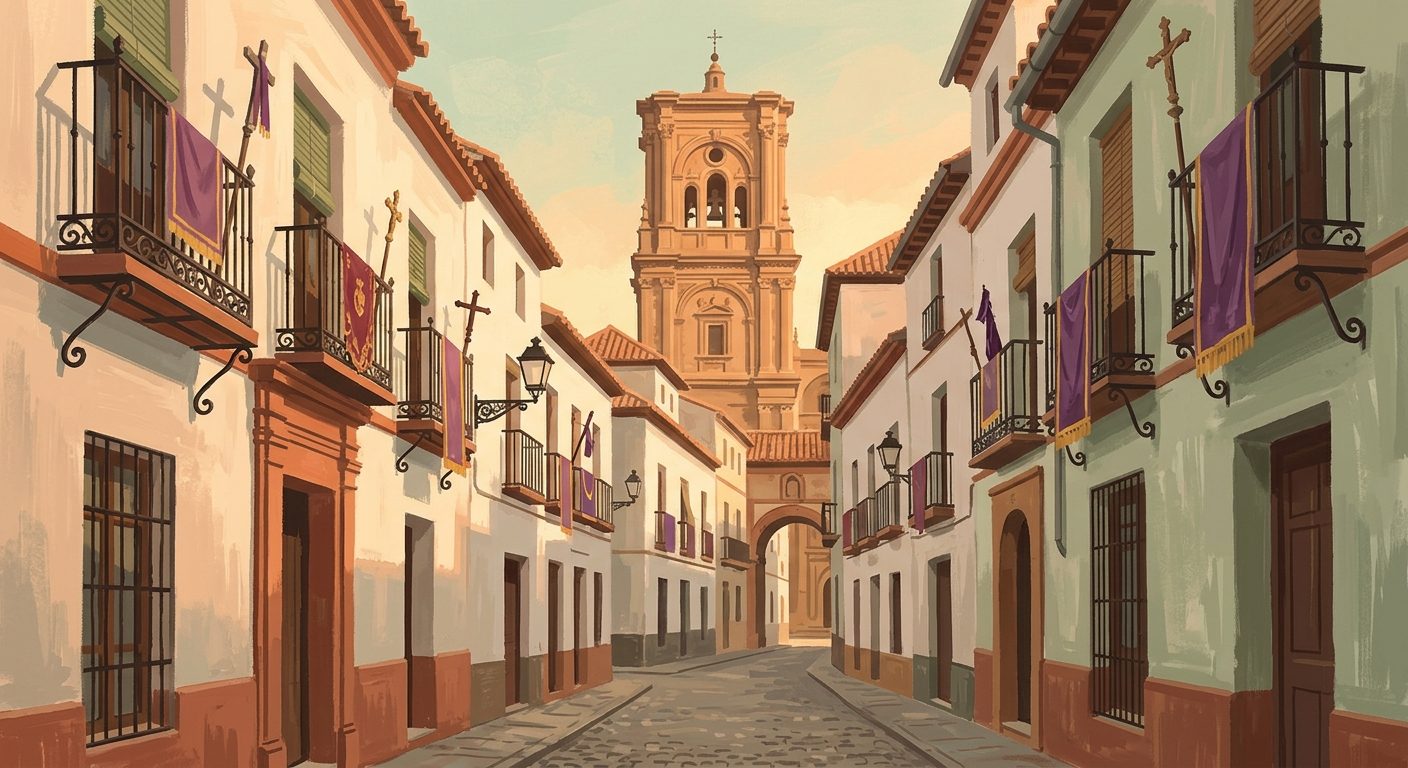
Semana Santa in Granada: A Complete Visitor Guide
Semana Santa in Granada swaps broad avenues for narrow Moorish streets and steep hillsides. Watching an illuminated wooden float emerge from the grounds of the Alhambra or ascend into the caves of Sacromonte offers a profound emotional experience that feels intimately tied to the landscape itself.
8 min read
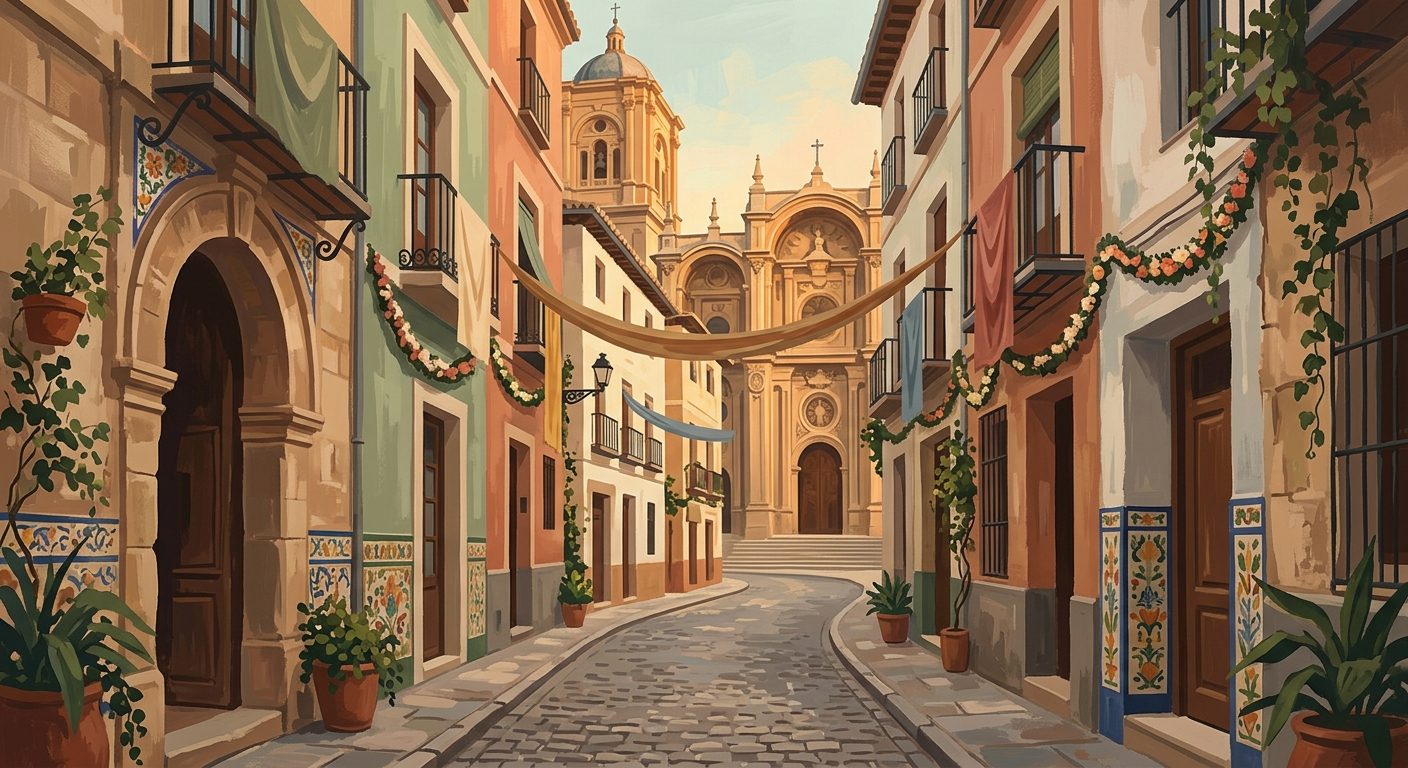
Corpus Christi in Granada: The Definitive Guide
In Granada, Corpus Christi is far more than a solemn religious observance. It is the city's largest annual festival, combining the scent of fresh rosemary crushed underfoot during the sacred Thursday procession with the unapologetic joy of the week-long public feria in Almanjáyar.
10 min read
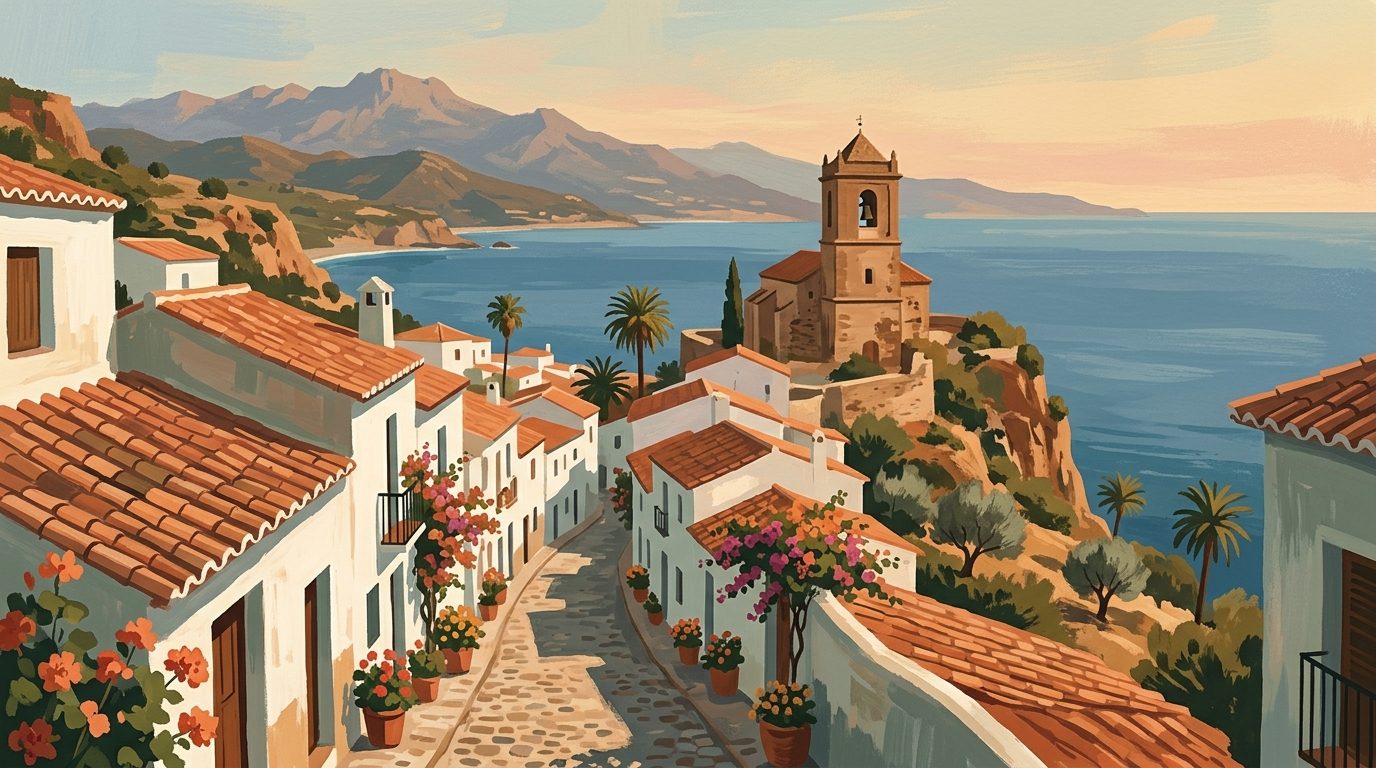
Costa Tropical: The Complete Guide to Granada's Subtropical Coast
Wedged between the foothills of the Sierra Nevada and the Mediterranean Sea, the Costa Tropical is defined by dramatic cliffs, sheltered pebble coves and a unique subtropical microclimate. It offers a quieter, more agricultural alternative to its heavily developed neighbours.
9 min read
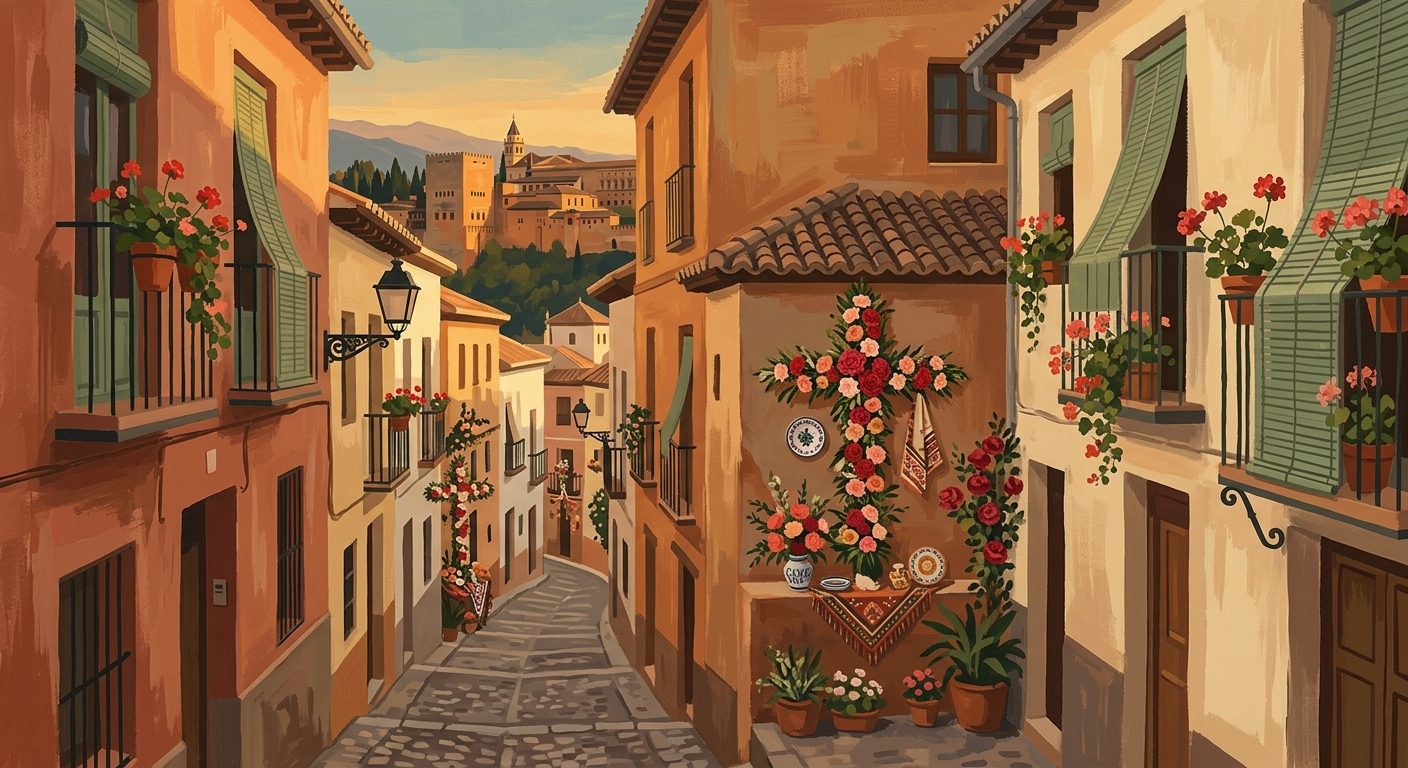
Cruces de Mayo in Granada: A Complete Guide
Discover how Granada transforms during the Cruces de Mayo festival. We detail where to find the most spectacular floral crosses, the local traditions to observe, and how to navigate the celebrations.
9 min read
The Resistance of the Plate: Why Granada Refuses to Sell Its Soul
In a world of monetised moments and rising margins, Granada holds fast to a radical social contract: the gift of a plate with every glass.
7 min read
Beyond the White Caves: The Unseen Struggle of Sacromonte
The whitewash on Curro’s fingers is thick as paste, a seasonal ritual of reclaiming a home from the damp appetite of the hillside.
7 min read
Newsletter
More stories from Andalucía
Weekly notes, seasonal picks, and the next guides worth bookmarking.