
Feature
Historical Memory and Exhumations in Andalucía: Unearthing the Past
For decades, the earth of southern Spain held the silent victims of systematic repression. Today, meticulous forensic exhumations are restoring names and dignity to thousands who lay forgotten in unmarked mass graves.
By Dan · Updated 24 June 2026 · 7 min read
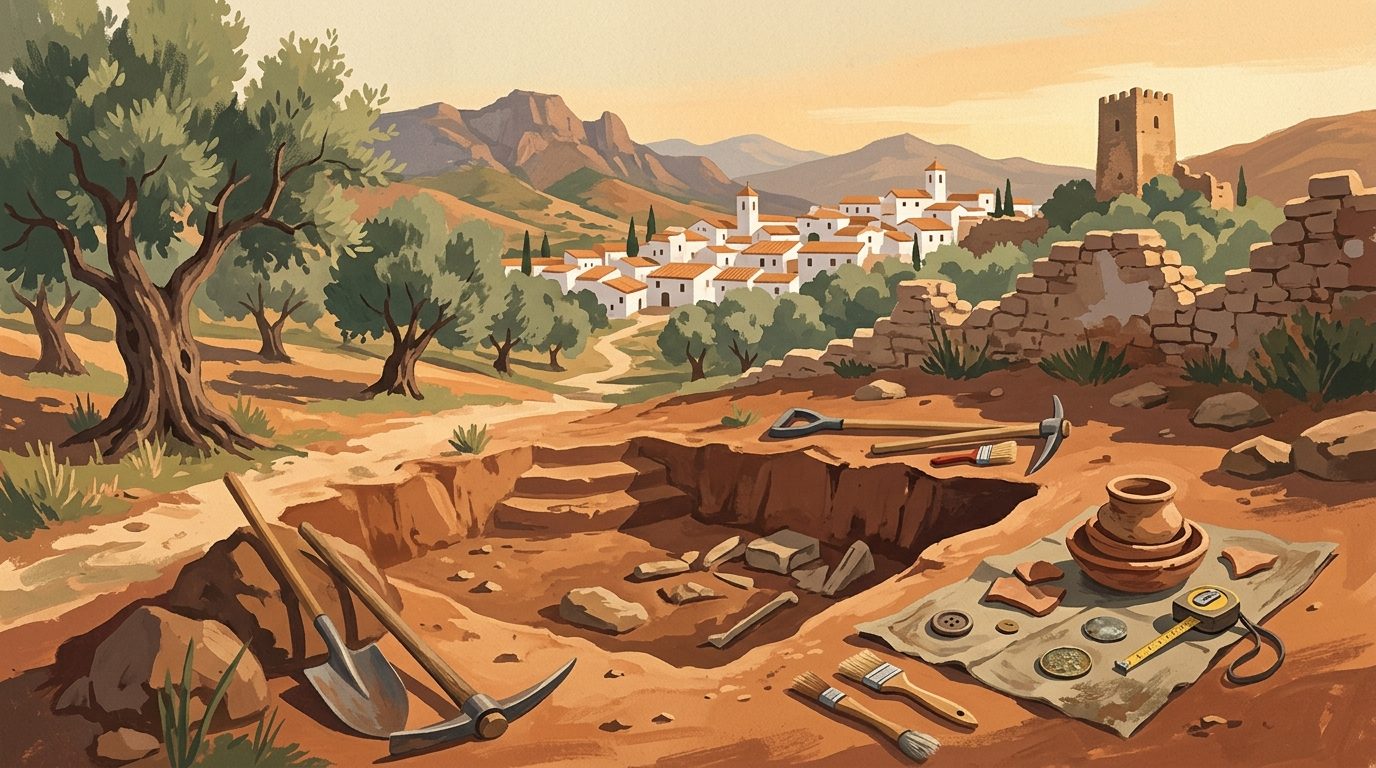
For decades, the earth of southern Spain held the silent victims of systematic repression. Today, meticulous forensic exhumations are restoring names and dignity to thousands who lay forgotten in unmarked mass graves.
The morning sun breaks over the whitewashed walls of the Cementerio de San Fernando in Sevilla, casting sharp shadows across a carefully delineated trench. Here, forensic archaeologists kneel in the dry earth, delicately brushing soil away from shattered skulls and bound wrists. For more than eighty years, the soil of the Pico Reja mass grave held its secrets tightly. The ground contained the remains of local politicians, union members, teachers and ordinary citizens who were taken from their homes in the dark and never seen again. During the Spanish Civil War from 1936 to 1939, when the country fractured violently along ideological lines, Andalucía witnessed profound, immediate repression. Yet, the physical evidence of this trauma was paved over, left unmarked and deliberately ignored for the better part of a century.
It was only in the early 21st century that a true, institutional reckoning began. Grandchildren of the disappeared started to demand answers, refusing to let their ancestors remain anonymous statistics in communal pits. The exhumations at Pico Reja, and subsequently at Pico Pala and other sites across the region, represent some of the most significant forensic efforts in Western Europe. This is not merely an academic exercise in cataloguing bones. It is a painstaking process of historical memory, driven by a powerful grassroots campaign to match DNA, restore names to the dead and finally offer grieving families a physical place to lay flowers.
Breaking the Pact of Forgetting
Following the end of the dictatorship in 1975, Spain transitioned to a democratic system under a tacit agreement known as the Pact of Forgetting. The 1977 Amnesty Law prevented the prosecution of past political crimes, and in the interest of social stability, the graves of the defeated were left untouched. For the families of those buried in ditches and cemetery corners across Andalucía, this meant living with a profound, unresolved grief. They knew the approximate locations where their fathers and grandfathers had been killed, but speaking about it openly remained a strict societal taboo.
By the year 2000, a significant generational shift altered the cultural landscape. The grandchildren of the victims, unburdened by the immediate, paralysing trauma that had silenced their parents, began searching for physical evidence. Small associations formed to locate and open mass graves, initially relying on volunteer archaeologists and private donations. This movement eventually pushed the regional and national governments to act, culminating in formal democratic memory laws that provided public funds and institutional support to locate the missing.
Unearthing Pico Reja
Sevilla fell rapidly to nationalist forces in the summer of 1936. Under the strict command of General Gonzalo Queipo de Llano, the city and its surrounding towns became a theatre of intense, systematic repression. Thousands of people perceived to be loyal to the Republic, or simply holding progressive views, were detained and executed. Their bodies were loaded onto municipal carts and dumped in unmarked pits at the city cemetery.
When the excavation of the Pico Reja grave began in 2020, researchers estimated they would find the remains of approximately 850 victims. Over the next three years, digging down to a depth of four metres, the archaeological team uncovered a much more harrowing reality. They recovered the remains of 1786 victims of violent repression, intermingled with thousands of others who had died of natural causes in hospitals or in extreme poverty. The forensic evidence of execution was undeniable. Skeletons were found face down, clustered together in unnatural, chaotic positions, with wrists bound by wire and skulls bearing the distinct entry and exit fractures of close range gunshot wounds.
Alongside the human remains, the earth yielded deeply personal, heartbreaking artefacts. Excavators sifted through the soil to find wire spectacles, fountain pens, union membership cards, wedding rings, buttons and coins dated right up to 1936. Each object helped the forensic team to reconstruct the final moments of the victims, transforming an anonymous, silent grave into a meticulously documented historical crime scene.
Continuing the Work at Pico Pala and San Rafael
The completion of the Pico Reja excavation in 2023 was a monumental achievement for Andalucían historical memory, but the work in Sevilla continues. Attention has now turned to Pico Pala, another massive pit within the same cemetery complex. Historians believe Pico Pala holds the remains of thousands more, potentially including Blas Infante, the politician and writer formally recognised as the father of Andalucía, who was executed in August 1936. His remains have never been conclusively identified, making the ongoing digs and active DNA matching a focal point of regional identity. However, DNA identification for specific historical figures like Infante remains an ongoing challenge, as decades in the earth have severely degraded the necessary bone material.
The pursuit of historical memory is equally pronounced in the province of Málaga. Between 2006 and 2009, investigators opened the mass graves at the Cementerio de San Rafael. This monumental effort became one of the largest single exhumation projects in modern European history. Archaeologists recovered the remains of 2840 individuals from a network of deep pits. The forensic teams faced immense logistical challenges, as decades of subsequent cemetery expansion and landscaping had disturbed some of the original burial sites. Quicklime had also been poured over many of the bodies, a practice intended to mask the smell of decomposition, which paradoxically preserved some bones while severely degrading the genetic material needed for future identification.
The Science and the Debate
The modern exhumation process relies on a rigorous, multidisciplinary combination of historical research, archaeology and forensic anthropology. Before breaking ground, researchers comb through military archives, prison logs, cemetery registry books and oral testimonies to pinpoint the exact burial coordinates. Once a grave is open, archaeologists use precise stratigraphy to understand the sequence of the burials, noting how bodies were layered over time. Finally, geneticists attempt the incredibly complex task of matching degraded DNA extracted from teeth and long bones with saliva samples provided by elderly, living relatives.
Despite the overwhelming scientific clarity of the exhumations, historical memory remains a subject of intense public and political debate. While there is broad consensus among academic historians about the scale and systematic nature of the repression, friction persists over how these sites should be interpreted, memorialised and funded. Some political factions argue that digging up the past reopens old wounds and violates the conciliatory spirit of the democratic transition. Conversely, memory associations and human rights groups maintain that true reconciliation is impossible while thousands of citizens remain discarded in unmarked pits. The physical evidence uncovered in places like Pico Reja serves as a stark, objective counterweight to political rhetoric, grounding the debate in undeniable forensic reality.
Where to see it today
The physical legacy of these exhumations can be visited by those wishing to understand this sobering aspect of Andalucían history. The sites have been carefully transitioned from active archaeological trenches into permanent places of reflection, dignity and education.
Cementerio de San Fernando (Sevilla)
The principal municipal cemetery of Sevilla is a sprawling, monumental space lined with tall cypress trees. Visitors can walk to the site of the Pico Reja grave, which is now marked and protected to honour those recovered from the earth. A newly constructed columbarium and memorial list the names of the identified victims, offering a physical space for remembrance amidst the grand, historic family pantheons. You can also observe the areas near Pico Pala and the Monumento, where active archaeological exhumation and DNA matching are now underway, supported by initiatives detailed on the Sevilla City Council's democratic memory portal. The sheer scale of the cemetery, and the stark contrast between the ornate marble tombs and the sites of the mass graves, provides a powerful sense of the work involved in locating and identifying the remains.
Centro de la Memoria de San Rafael (Málaga)
Located near the site of the former mass graves, the Centro de la Memoria de San Rafael (Málaga) offers crucial context for the modern traveller. The centre documents the massive exhumation effort at the San Rafael cemetery, displaying photographs, historical documents and explanations of the forensic techniques used to recover the bodies. Nearby stands a striking pyramidal mausoleum, inaugurated in 2014, constructed from white marble. It contains the remains of the 2840 victims recovered from the site. The walls of the monument are inscribed with the names of over 4000 people known to have been executed in Málaga, serving as a permanent, highly visible public acknowledgement of their lives.
If you visit
Visiting these historical memory sites requires a quiet, respectful approach, as they remain active places of mourning and reflection for many local families. The cemeteries are open throughout the year, but if you are travelling to Andalucía during the summer months, it is extremely wise to arrive early in the morning to avoid the intense midday heat, as shade is often limited. In Sevilla, the Cementerio de San Fernando is located in the northern part of the city and is easily reached by local bus or taxi from the historic centre. When planning a visit to the Centro de la Memoria de San Rafael in Málaga, it is recommended to check the official Málaga City Council (Ayuntamiento de Málaga) website or the Asociación contra el Silencio y el Olvido portal for current opening times, as public access to the indoor interpretation centre and its specific archival exhibits can vary depending on the season and local public holidays.
Last reviewed: 21 June 2026 · Editorial policy
Related guides
Ink and Olive Groves: A Literary Journey through Andalucía
Discover the literary heart of Southern Spain, from the tragic poetry of Lorca in Granada to Hemingway’s dramatic Ronda and the contemplative prose of Machado in Sevilla.
10 min read
The Auto-da-Fé in Andalucía: Spectacle and Judgement
The auto-da-fé was not merely a trial, but a highly choreographed spectacle of religious and political power. Across the great squares of Sevilla, Córdoba and Granada, these public acts of faith transformed the grim mechanics of judgement into grand urban theatre.
8 min read
Expulsion of the Jews and the Conversos
The Alhambra Decree of 1492 forced a devastating ultimatum upon the Jewish population of Andalucía: exile or conversion. For those who chose baptism, the decision marked the beginning of centuries of relentless inquisitorial surveillance.
7 min read
Foundation of the Sevilla Inquisition Tribunal
In 1478, a papal bull established the Spanish Inquisition. Sevilla became the testing ground for a systematic pursuit of heresy that would define an era.
7 min read
The Long Decline and Final Abolition of the Inquisition in Andalucía
The twilight of the Holy Office was a slow, bureaucratic fading rather than a sudden collapse. Enlightenment ideals and political upheaval finally dismantled a system that had overseen centuries of religious orthodoxy.
8 min read
The British in Río Tinto: Copper, Colony and the Rio Tinto Company
In 1873, a British syndicate purchased the ancient copper mines of Huelva from a bankrupt Spanish government. The resulting Rio Tinto Company Limited transformed the landscape into a massive industrial enterprise, leaving behind a profound legacy of Victorian architecture, immense open-pit mines, and pioneering railway engineering in western Andalucía.
8 min read
More guides
UNESCO World Heritage Sites in Andalucía
A curated guide to the cultural and natural sites in Andalucía recognised by UNESCO for their universal value. These landmarks offer a profound insight into the diverse civilisations of the region.
6 min read
The Best Beaches in Andalucía
From the Atlantic dunes of Huelva to the volcanic coves of Almería, the coastline of southern Spain offers an unparalleled variety of maritime landscapes.
6 min read
Phoenicians and Tartessians in Andalucía
Around three thousand years ago, eastern Mediterranean merchants arrived on the Iberian coast seeking silver and copper. Their arrival sparked a cultural collision that transformed local chiefdoms into the legendary civilisation of Tartessos.
6 min read
Roman Andalucía: Ruins and Archaeological Sites
Discover the monumental legacy of the Roman province of Baetica, from grand amphitheatres in the Guadalquivir valley to maritime cities on the Atlantic coast.
7 min read
Geological Wonders: Caves and Karst Landscapes of Andalucía
Discover the subterranean wonders and prehistoric secrets preserved within the limestone massifs and gypsum deposits of southern Spain.
6 min read
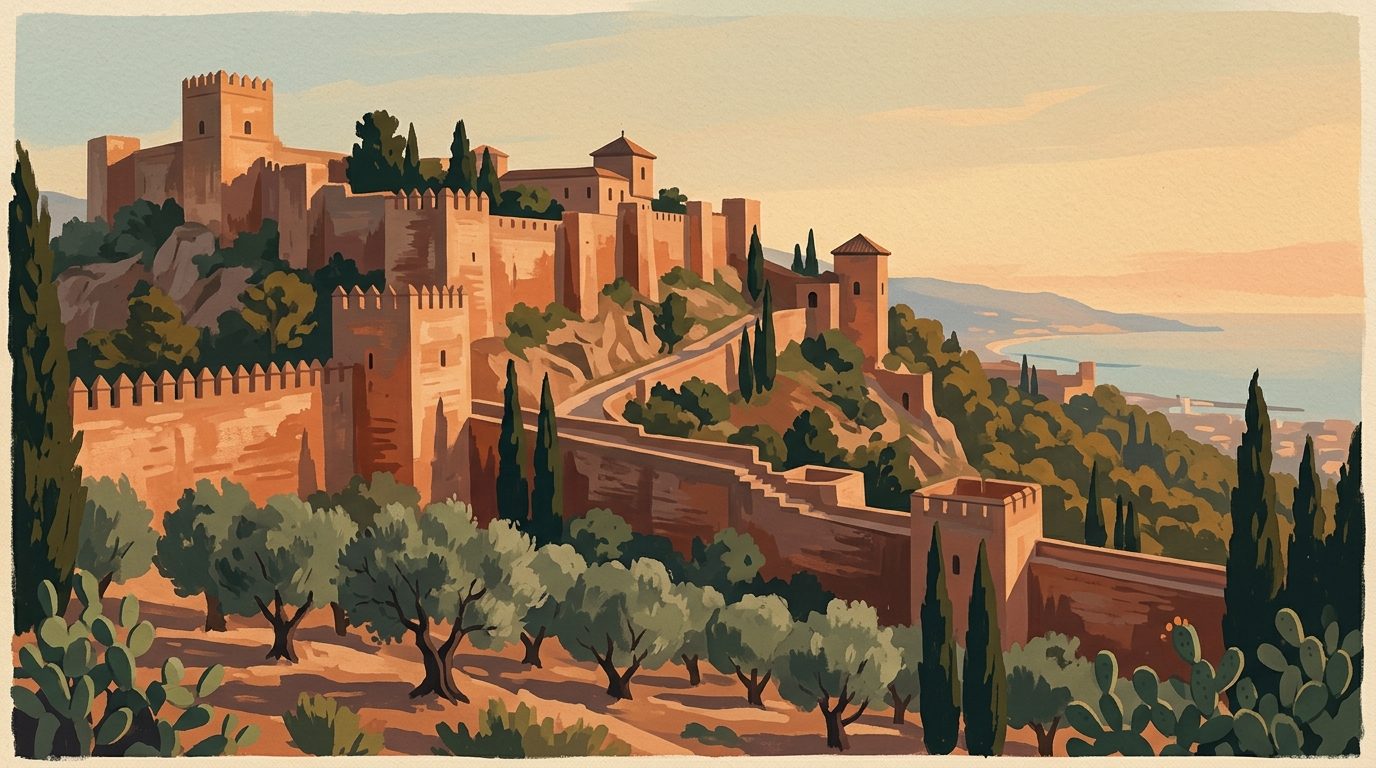
Castles and Fortresses of Andalucía
The fortresses of Andalucía are the stone guardians of a complex past, marking the ancient frontiers between empires and offering some of the most spectacular views in the southern peninsula.
6 min read
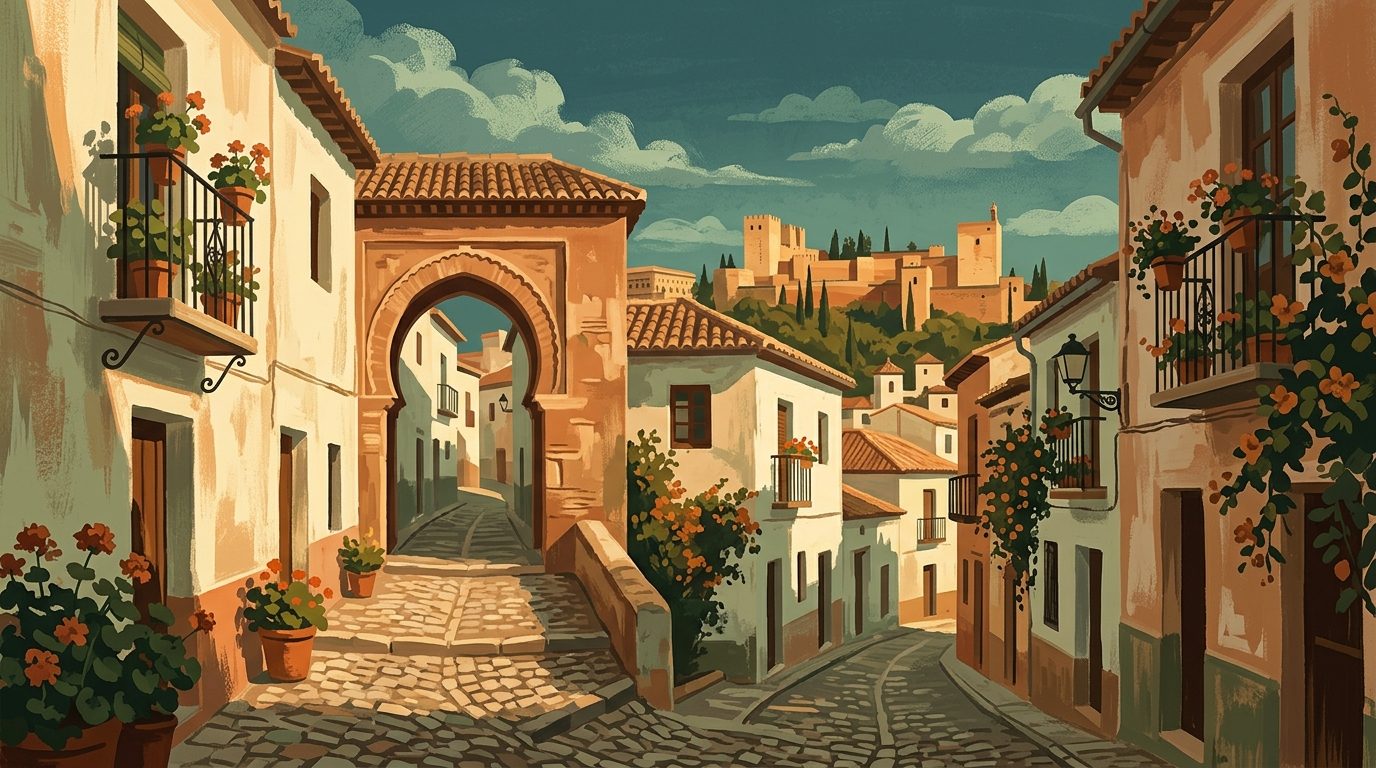
The Iberians in Andalucía: Warlords, Sculptors and the Dawn of Iron
Who were the sophisticated, iron-working peoples who controlled southern Spain before the Roman conquest? Their fortified hill towns and striking stone sculptures reveal a formidable culture caught between ancient local traditions and Mediterranean ambition.
6 min read
UNESCO Geoparks and Natural Wonders of Andalucía
Discover the geological heritage of Southern Spain through its UNESCO-designated geoparks and natural wonders. Explore the tectonic history and diverse ecosystems of Almería, Granada, and Cádiz.
6 min read
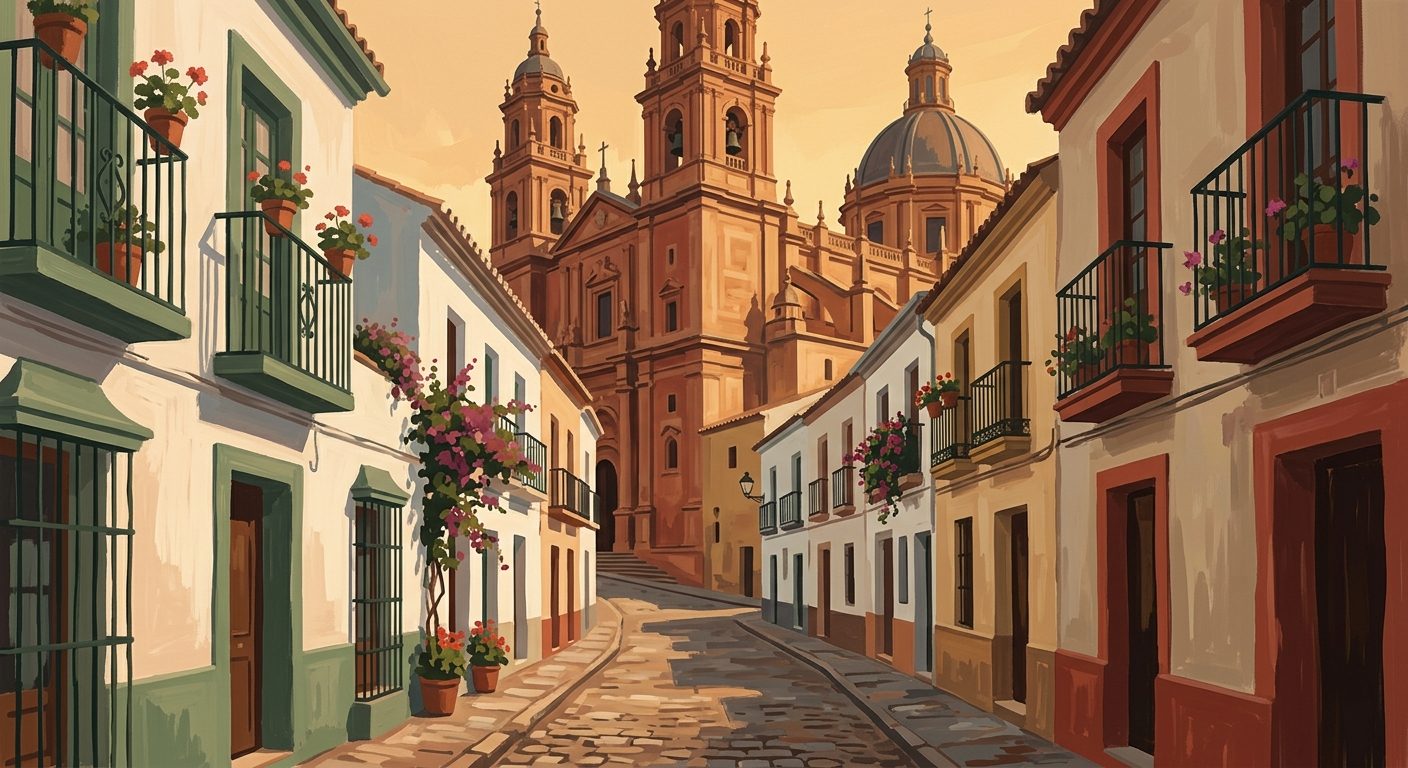
Cathedrals and Great Churches of Andalucía
A guide to the monumental religious architecture of Southern Spain, from the vast Gothic nave of Sevilla to the Renaissance masterworks of Jaén and Granada.
6 min read
Newsletter
More stories from Andalucía
Weekly notes, seasonal picks, and the next guides worth bookmarking.