
Feature
Gadir: Founding the Western Mediterranean
At the edge of the known world, Phoenician sailors established a fortified trading post on a small Atlantic archipelago. Known as Gadir, this settlement anchored a vast maritime network and laid the foundations for the oldest continuously inhabited city in Western Europe.
By Dan · Updated 14 July 2026 · 7 min read
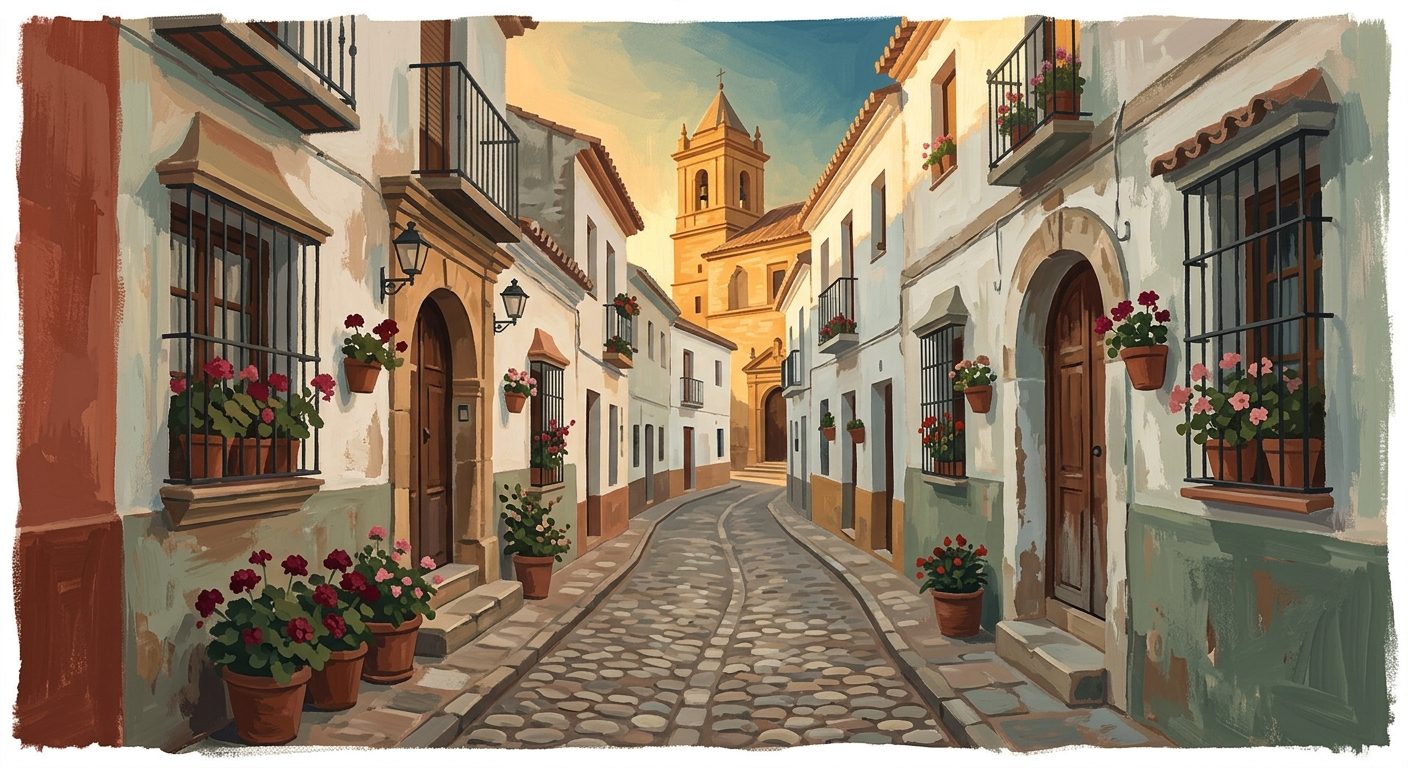
At the edge of the known world, Phoenician sailors established a fortified trading post on a small Atlantic archipelago. Known as Gadir, this settlement anchored a vast maritime network and laid the foundations for the oldest continuously inhabited city in Western Europe.
Long before Roman legions marched into the Iberian Peninsula, the sea routes of the Atlantic coast were mastered by navigators from the Levant. During the era of the Phoenicians and Tartessians between 1100 and 500 BC, an ambitious maritime enterprise reached the far edge of the known world. Seeking silver, tin and new markets, sailors from the city of Tyre dropped anchor off the coast of modern-day Andalucía. They chose a small, defensible archipelago of three islands just outside the Strait of Gibraltar. Here they founded Gadir.
Meaning "walled enclosure" in the Phoenician tongue, Gadir was perfectly positioned. It offered deep, sheltered anchorages for merchant galleys and a strategic vantage point overlooking the ocean currents. From this coastal foothold, merchants forged lucrative alliances with indigenous Iberian communities and transformed the local economy. The Tyrian colonists brought with them ironworking, the potter's wheel, advanced shipbuilding techniques and a written alphabet. They also established a monumental sanctuary dedicated to their chief deity, Melqart. This temple complex would become famous across the classical world as the Sanctuary of Hercules.
The foundation of Gadir marked a definitive shift in Mediterranean history. It bound the Iberian Peninsula into an international web of trade that stretched across the sea to Cyprus, Egypt and the Levantine coast. What began as a distant outpost evolved into a wealthy, cosmopolitan metropolis.
The Classical Date and the Archaeological Debate
According to Roman historians such as Velleius Paterculus, Gadir was founded exactly eighty years after the fall of Troy. This places the foundation at roughly 1104 BC. For centuries, historians accepted this early date as unshakeable fact. However, when modern archaeologists began systematic excavations in the historic centre of Cádiz, they faced a complex problem. The oldest material evidence recovered from the soil consistently dated to the ninth century BC, nearly two hundred years later than the literary accounts suggested.
This discrepancy sparked a long-running debate among historians. Some scholars argued that the classical texts were exaggerated, designed to give the city an aura of mythical antiquity to elevate its status within the Roman Empire. Others maintained that the original eleventh-century settlement must have been a small, temporary anchorage, leaving little trace in the archaeological record. The physical landscape of Cádiz further complicates the search. The modern city sits directly on top of the ancient one, and millennia of changing sea levels, tsunamis and continuous urban development have buried or washed away the earliest layers of human occupation.
In recent years, the gap between legend and archaeology has begun to close. Advanced radiocarbon dating of organic material found at the lowest levels of excavation has pushed the confirmed presence of Phoenicians in the Bay of Cádiz back into the late tenth century BC. While the exact year of 1104 BC remains unproven, the evidence confirms that Gadir is one of the oldest, if not the oldest, continuously inhabited cities in Western Europe.
An Archipelago City
A modern traveller walking the streets of Cádiz might struggle to picture the original Phoenician landscape. Today, the city is a single peninsula connected to the mainland by a narrow strip of sand. In antiquity, Gadir was an archipelago consisting of three distinct islands: Erytheia, Kotinoussa and Antipolis.
The northernmost island, Erytheia, was the site of the main residential and commercial settlement. It was a dense, heavily fortified town with narrow streets and flat-roofed houses built from mud bricks and timber. The urban layout was remarkably organised for its time, featuring terraced buildings that adapted to the natural slope of the island. Just to the south lay Kotinoussa, the largest island of the group. Kotinoussa housed the city's sprawling necropolis, industrial workshops and, at its southernmost tip, the famous Temple of Melqart. The third island, Antipolis, corresponds to the modern mainland area of San Fernando and served as a secondary base for trade and agriculture.
A shallow channel divided Erytheia and Kotinoussa. Known today as the Bahía-Caleta channel, this waterway served as a natural, sheltered harbour for Phoenician ships. It allowed trading vessels to unload their cargoes safely away from the fierce Atlantic swells. Over the centuries, river silting, changing tides and deliberate land reclamation filled in this channel. The two main islands eventually merged into the single landmass we recognise today, burying the ancient harbour beneath what is now the central market district of Cádiz.
The Cult of Melqart
Religion and commerce were deeply intertwined in the Phoenician world. The Temple of Melqart on Kotinoussa was not merely a place of worship. It functioned as an economic institution, a bank, a diplomatic neutral ground and a maritime lighthouse. Melqart was the patron god of Tyre, and his sanctuary in Gadir legitimised the distant colony, binding it to the mother city across the Mediterranean.
Classical writers described the temple as a magnificent complex with two great bronze pillars at its entrance. These pillars supposedly gave rise to the geographical term "Pillars of Hercules", referring to the Strait of Gibraltar. The temple held immense prestige for centuries. It was said that Hannibal came here to offer vows before marching on Rome, and Julius Caesar reportedly wept before a statue of Alexander the Great within its precincts, lamenting that he had achieved so little by the same age.
Unfortunately, the temple itself has never been found. It is believed to lie off the southern coast near the modern islet of Sancti Petri, submerged by rising sea levels and centuries of relentless coastal erosion. Small bronze offerings, including statuettes of priests and deities, have been dragged up from the seabed in this area, offering tantalising hints of the sanctuary's former wealth. The most famous of these finds is a small, gilded bronze statue of a Phoenician deity, often interpreted as Melqart himself, which serves as a poignant reminder of the lost temple.
Trade and the Tartessian Connection
Gadir did not grow rich in isolation. Its prosperity relied heavily on the vast mineral wealth of the Andalucían interior. The Phoenicians established trading outposts up the Guadalquivir river, making direct contact with the indigenous culture known to history as Tartessos.
The Tartessians controlled rich veins of silver and copper in the Sierra Morena mountains. In exchange for these precious metals, the merchants of Gadir traded luxury goods from the Eastern Mediterranean. They imported fine wheel-thrown pottery, carved ivory, glass beads, scented oils and wine. This exchange profoundly transformed the indigenous society. Tartessian elites began to adopt Phoenician customs, burial practices and artistic styles, creating a hybrid culture that flourished for several centuries.
Beyond the metal trade, Gadir developed a massive maritime industry. The waters of the Atlantic were teeming with tuna, which migrated through the Strait of Gibraltar every spring. The Phoenicians introduced large-scale fishing techniques and built extensive salting factories along the coast. Salted fish and early versions of the fermented fish sauce known as garum became highly prized exports. They also exploited the local murex sea snails to produce Tyrian purple dye, a luxury commodity demanded by royalty across the ancient world. These products were shipped in specially designed amphorae on broad-beamed cargo ships, cementing Gadir's position as a maritime powerhouse.
Where to see it today
The most immersive physical evidence of Phoenician Gadir lies directly beneath the modern streets of Cádiz. At the Yacimiento Arqueológico Gadir (Gadir Archaeological Site), excavations have revealed a remarkable section of the ninth-century BC city. Visitors can walk on suspended glass walkways over the foundations of eight Phoenician houses and two paved streets. The layout demonstrates highly sophisticated urban planning. The mud-brick walls still retain traces of clay rendering, and the remains of a cattle skeleton lie exactly where the animal died nearly three millennia ago. If you look closely at the clay surface of the ancient street, you can spot the footprints of a local cat that walked through the wet mud, perfectly preserved to this day.
To understand the wealth and artistry of Gadir, a visit to the Museo de Cádiz is essential. The museum holds the city's most famous archaeological treasures: two spectacular anthropoid sarcophagi. Carved from marble in the fifth century BC, these human-shaped coffins reveal the deep cultural connections between Gadir, Egypt and Greece. The male sarcophagus was discovered in 1887 at the Punta de la Vaca necropolis, while the female sarcophagus was unearthed over a century later in 1980 under a house in the Pelícano neighbourhood. The ground floor of the museum also displays imported Greek pottery, Phoenician amphorae used for the salted fish trade, and exquisite gold jewellery found in the ancient cemeteries of Kotinoussa.
If you visit
Cádiz is well-connected by train from Sevilla and is easily explored on foot. The ideal time to visit is during the spring or autumn, avoiding the intense heat of the Andalucían summer. Begin your exploration at the Museo de Cádiz on the Plaza de Mina to see the sarcophagi and gain an understanding of the ancient burial goods. The museum is generally closed on Mondays, so plan your itinerary accordingly. Afterwards, take the short walk to the Yacimiento Arqueológico Gadir. Entry to the underground archaeological site is usually free (check on the operator's website before travelling), but visitor numbers are strictly controlled to protect the remains, and you must join a guided tour. Reserving a time slot online in advance via the official Cádiz Tourism website is essential, as daily capacity is strictly limited.
Last reviewed: 14 July 2026 · Editorial policy
Related guides
Phoenician Religion in the South: The Sanctuaries of Melqart and Astarte
At the extreme edge of the known world, Phoenician mariners raised monumental sanctuaries to Melqart and Astarte, transforming the coast of Andalucía.
7 min read
Ink and Olive Groves: A Literary Journey through Andalucía
Discover the literary heart of Southern Spain, from the tragic poetry of Lorca in Granada to Hemingway’s dramatic Ronda and the contemplative prose of Machado in Sevilla.
10 min read
The Auto-da-Fé in Andalucía: Spectacle and Judgement
The auto-da-fé was not merely a trial, but a highly choreographed spectacle of religious and political power. Across the great squares of Sevilla, Córdoba and Granada, these public acts of faith transformed the grim mechanics of judgement into grand urban theatre.
8 min read
Expulsion of the Jews and the Conversos
The Alhambra Decree of 1492 forced a devastating ultimatum upon the Jewish population of Andalucía: exile or conversion. For those who chose baptism, the decision marked the beginning of centuries of relentless inquisitorial surveillance.
7 min read
Historical Memory and Exhumations in Andalucía: Unearthing the Past
For decades, the earth of southern Spain held the silent victims of systematic repression. Today, meticulous forensic exhumations are restoring names and dignity to thousands who lay forgotten in unmarked mass graves.
7 min read
The Long Decline and Final Abolition of the Inquisition in Andalucía
The twilight of the Holy Office was a slow, bureaucratic fading rather than a sudden collapse. Enlightenment ideals and political upheaval finally dismantled a system that had overseen centuries of religious orthodoxy.
8 min read
More guides
UNESCO World Heritage Sites in Andalucía
A curated guide to the cultural and natural sites in Andalucía recognised by UNESCO for their universal value. These landmarks offer a profound insight into the diverse civilisations of the region.
6 min read
The Best Beaches in Andalucía
From the Atlantic dunes of Huelva to the volcanic coves of Almería, the coastline of southern Spain offers an unparalleled variety of maritime landscapes.
6 min read
Phoenicians and Tartessians in Andalucía
Around three thousand years ago, eastern Mediterranean merchants arrived on the Iberian coast seeking silver and copper. Their arrival sparked a cultural collision that transformed local chiefdoms into the legendary civilisation of Tartessos.
6 min read
Roman Andalucía: Ruins and Archaeological Sites
Discover the monumental legacy of the Roman province of Baetica, from grand amphitheatres in the Guadalquivir valley to maritime cities on the Atlantic coast.
7 min read
Geological Wonders: Caves and Karst Landscapes of Andalucía
Discover the subterranean wonders and prehistoric secrets preserved within the limestone massifs and gypsum deposits of southern Spain.
6 min read
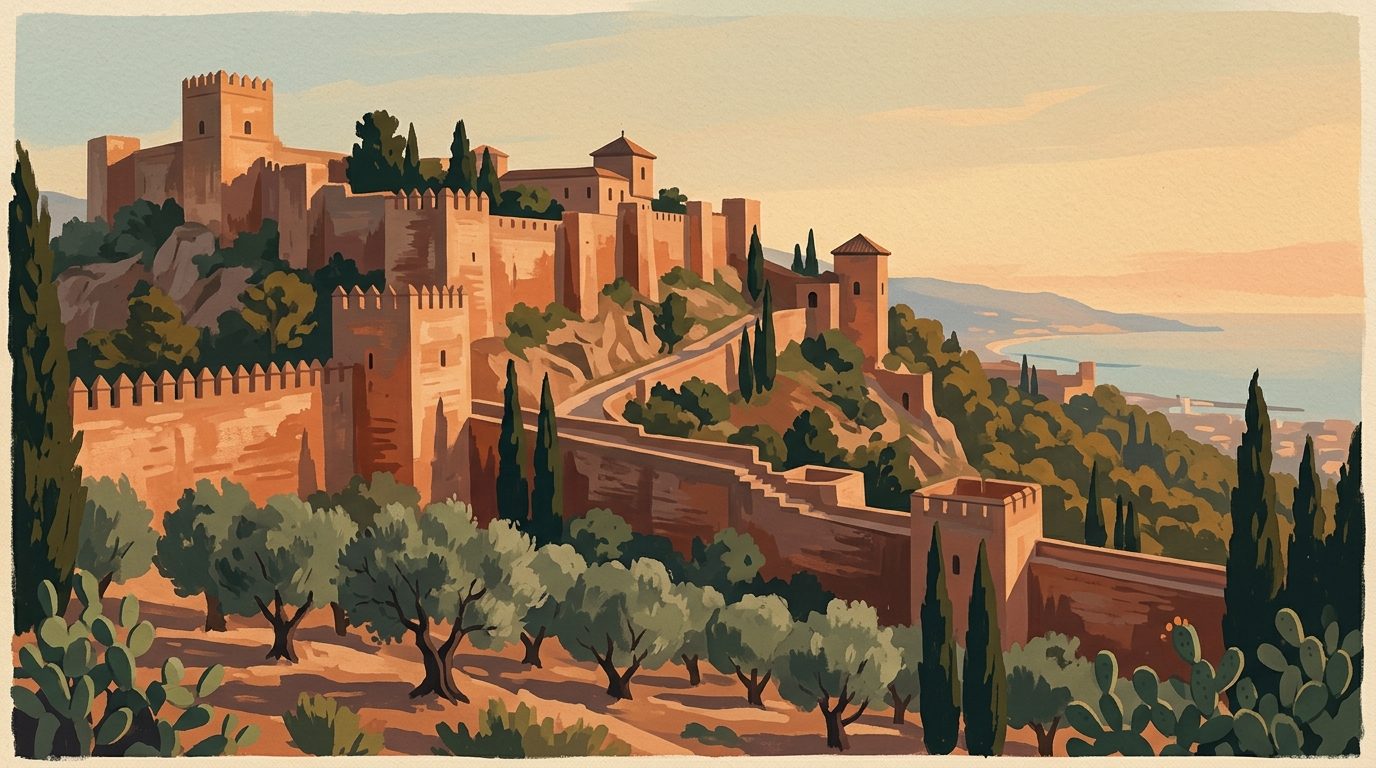
Castles and Fortresses of Andalucía
The fortresses of Andalucía are the stone guardians of a complex past, marking the ancient frontiers between empires and offering some of the most spectacular views in the southern peninsula.
6 min read
The Iberians in Andalucía: Warlords, Sculptors and the Dawn of Iron
Who were the sophisticated, iron-working peoples who controlled southern Spain before the Roman conquest? Their fortified hill towns and striking stone sculptures reveal a formidable culture caught between ancient local traditions and Mediterranean ambition.
6 min read
UNESCO Geoparks and Natural Wonders of Andalucía
Discover the geological heritage of Southern Spain through its UNESCO-designated geoparks and natural wonders. Explore the tectonic history and diverse ecosystems of Almería, Granada, and Cádiz.
6 min read
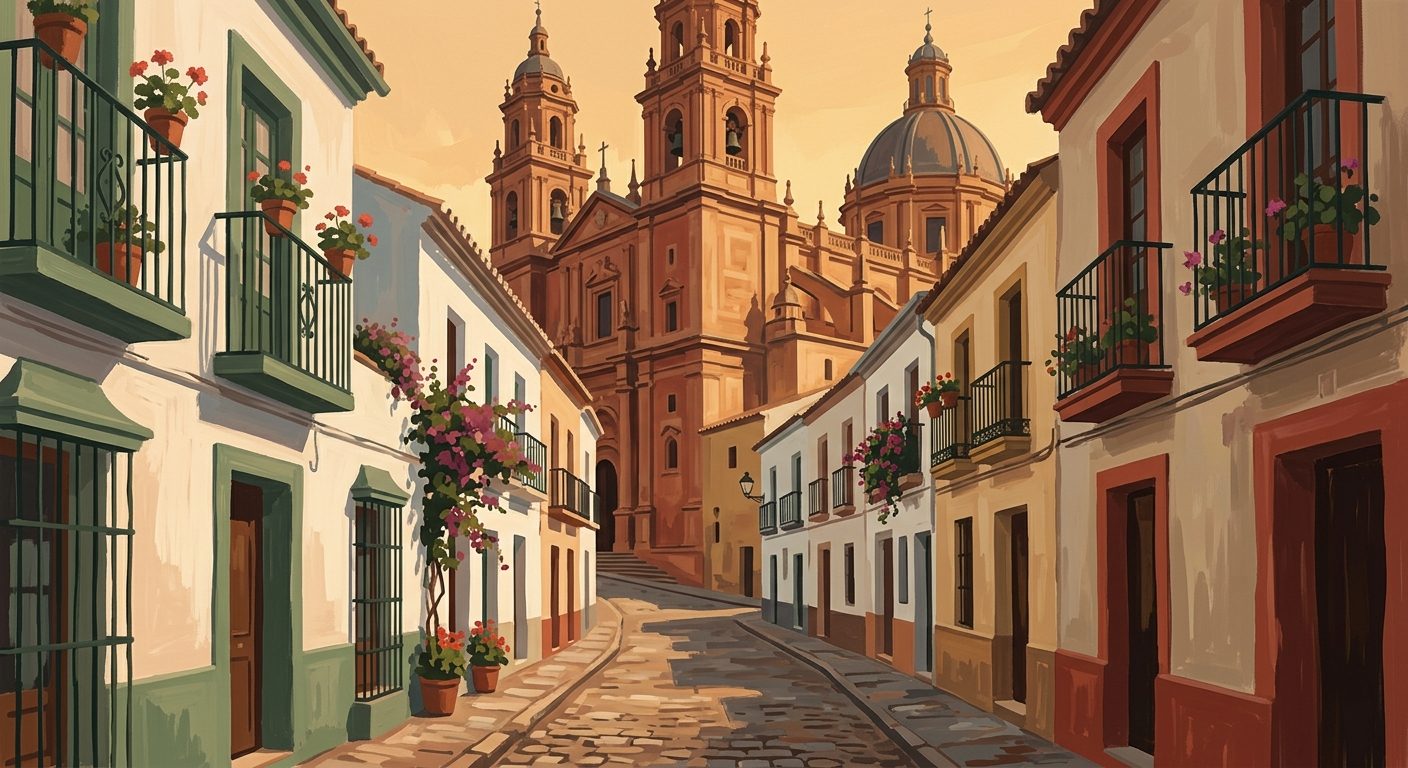
Cathedrals and Great Churches of Andalucía
A guide to the monumental religious architecture of Southern Spain, from the vast Gothic nave of Sevilla to the Renaissance masterworks of Jaén and Granada.
6 min read
Newsletter
More stories from Andalucía
Weekly notes, seasonal picks, and the next guides worth bookmarking.