
Feature
The Turdetani and Bastetani: Indigenous Peoples of Pre-Roman Andalucía
Before the Roman legions marched across the Iberian Peninsula, southern Spain was divided among powerful indigenous confederations. The Turdetani and Bastetani emerged as the dominant forces of this era, leaving behind written laws, monumental stone sculptures, and wealthy towns.
By Dan · Updated 16 July 2026 · 7 min read
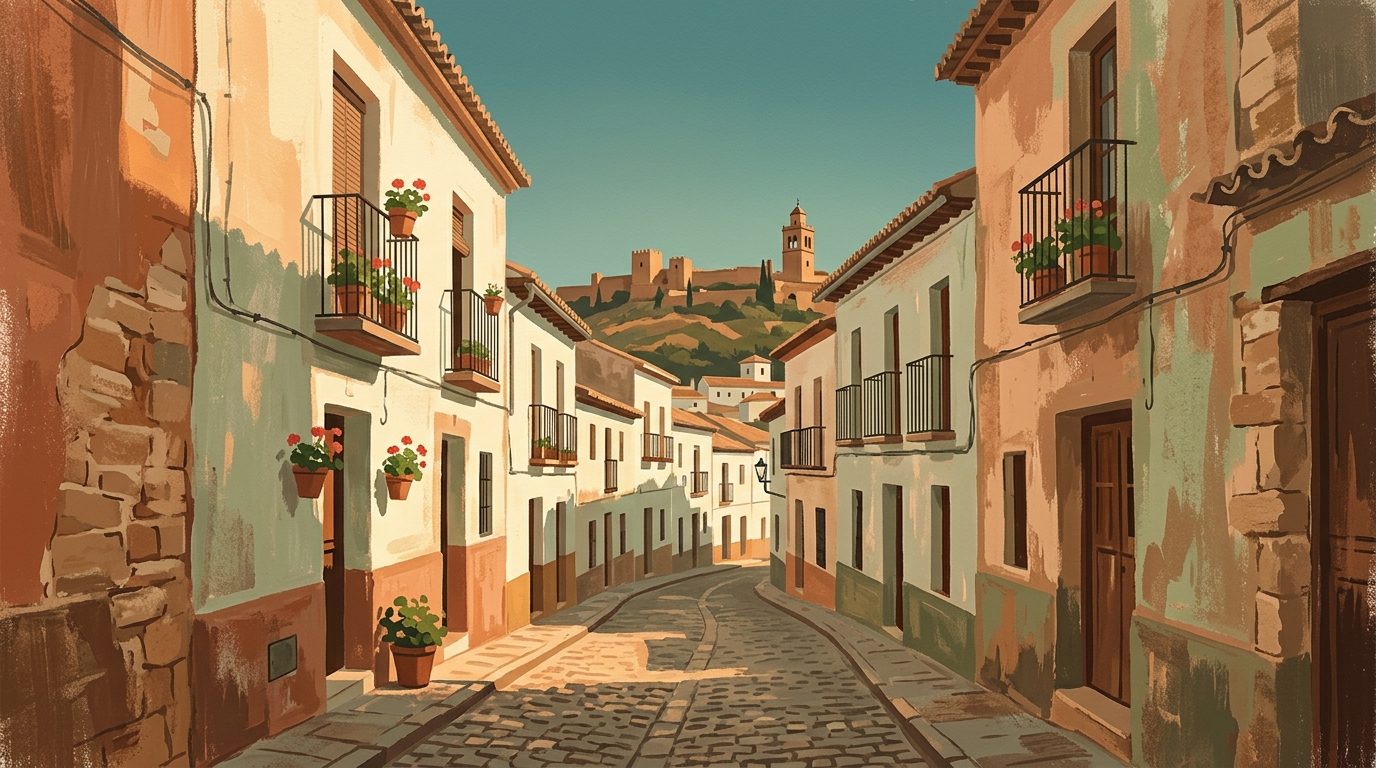
Before the Roman legions marched across the Iberian Peninsula, southern Spain was divided among powerful indigenous confederations. The Turdetani and Bastetani emerged as the dominant forces of this era, leaving behind written laws, monumental stone sculptures, and wealthy towns that rivalled the great civilisations of the Mediterranean.
During the era of the Iberians, from roughly 600 to 200 BC, the southern stretch of the Iberian Peninsula was far from a quiet frontier. When Greek and Roman geographers first recorded the demographics of the region, they described a complex geopolitical landscape dominated by two primary groups: the Turdetani in the west and the Bastetani in the east. Rather than disorganised bands, these were sophisticated societies living in large fortified towns known as oppida. The Turdetani controlled the fertile basin of the Guadalquivir river, drawing on centuries of Mediterranean contact to develop a highly literate, urbanised culture. Further east, the Bastetani controlled the rugged highlands and valleys from modern Granada to the borders of the Mediterranean coast, commanding strategic trade routes and producing some of the most remarkable funerary art of the ancient world.
Together, these two peoples defined the cultural and economic reality of southern Hispania on the eve of the Roman conquest. Their legacy survives today in the monumental stone carvings of aristocratic lineages, the remnants of massive defensive walls, and the profound agricultural wealth that would soon make Andalucía an indispensable province of the Roman Empire.
The Turdetani and the Guadalquivir Valley
The Turdetani are widely considered the direct cultural heirs of Tartessos, the semi-mythical kingdom that flourished in southwestern Spain during the early Iron Age. Centred in the broad, fertile valley of the Baetis river, which is today the Guadalquivir, Turdetanian territory encompassed present day Sevilla, Huelva, and Córdoba.
The Greek geographer Strabo, writing in the first century BC, described the Turdetani as the most cultured of all the Iberians. According to his accounts, they possessed a written grammar and had compiled laws and poems in verse that they claimed were six thousand years old. While historians view this timeline as classical hyperbole, archaeological evidence confirms a highly advanced society that communicated using its own paleohispanic script.
Their wealth was legendary. The Turdetani exploited the massive silver and copper deposits of the Sierra Morena. The mining operations at Riotinto in Huelva were vastly expanded under their control. Labourers extracted ore from deep shafts, processing the metal in massive smelting operations that left slag heaps still visible today. This industrial production made Turdetanian elites immensely wealthy. They traded heavily with Phoenician and Carthaginian merchants on the coast, but they did not form a single unified empire. Instead, they operated as a loose network of powerful city states bound by shared culture and economic agreements.
Their agricultural system was equally formidable. They exported vast quantities of grain, olive oil, and wine, laying the agrarian foundation that the Romans would later exploit. Turdetanian towns were dense and prosperous, minted their own coinage, and featured complex social hierarchies ruled by local kings or aristocratic councils.
The Bastetani of the Eastern Highlands
To the east of the Turdetani lived the Bastetani, whose territory spanned the mountains and valleys of modern Granada, Almería, eastern Jaén, and extended north towards Albacete. Their name derives from their principal city, Basti, located near the modern Andalucían town of Baza.
If the Turdetani were defined by broad river valleys, the Bastetani were shaped by the challenging terrain of the Baetic Cordillera. Their economy relied heavily on mining, livestock, and the harvesting of esparto grass, a vital material for rope and basketry throughout the ancient Mediterranean. Bastetanian society was intensely martial and deeply aristocratic, dominated by elite warrior lineages who controlled the strategic mountain passes.
The most famous shows Bastetanian culture is the Dama de Baza, an extraordinary limestone sculpture dating to the fourth century BC. Discovered in 1971, the statue depicts an elite woman seated on a winged throne, holding a pigeon. Most significantly, the statue served as a funerary urn. A cavity in the side of the throne contained the cremated ashes of a high-status woman, alongside a rich collection of weapons and imported pottery. The presence of four sets of warrior weapons arranged at the foot of her throne has sparked intense debate among historians. Some argue the weapons belonged to male relatives paying tribute, while others suggest she was a revered warrior queen or a priestess associated with a martial goddess. This discovery forced archaeologists to reassess the role of women in Iberian society, proving that some held supreme religious or political authority.
Society, Warfare and Religion
Both the Turdetani and Bastetani lived in oppida, fortified settlements built on elevated terrain to control the surrounding agricultural land and trade routes. These towns featured advanced urban planning, with rectilinear streets, complex drainage systems, and massive defensive walls constructed from cyclopean masonry.
Warfare was a constant reality. Iberian warriors were highly sought after as mercenaries, fighting for both Carthage and Rome during the Punic Wars. They were equipped with the falcata, a devastating forward-curving sword that terrified Roman legionaries. The iron forging techniques of the Iberian metallurgists were highly advanced. They buried iron plates in the ground, allowing the weaker metal to rust away before forging the remaining high-carbon steel into weapons. When an Iberian warrior died, his falcata was often bent or deliberately destroyed in the funerary fire. This process was meant to kill the weapon so it could accompany its owner into the afterlife and never be wielded by an enemy.
Religious life was deeply tied to the landscape. Rather than building large urban temples, the Turdetani and Bastetani worshipped at rural sanctuaries located at natural boundaries, caves, and springs. Caves in particular were viewed as sacred gateways to the underworld. The sanctuary at Cerro de los Santos in Albacete sits exactly on the frontier of Bastetanian territory. Here, worshippers dedicated hundreds of stone statues, known as ex-votos, to the gods. These rigid, stylised figures depict men offering vessels and women wearing elaborate headdresses, providing historians with vital clues about Iberian clothing, hierarchy, and ritual practice.
The Arrival of Rome
The independent era of the Turdetani and Bastetani ended with the clash of empires. During the late third century BC, the Carthaginian general Hamilcar Barca and his son Hannibal rapidly expanded their control over southern Spain to secure silver and mercenaries for their impending war with Rome.
When the Second Punic War erupted from 218 to 201 BC, the Iberian tribes were caught in the conflict. Some allied with Carthage, while others threw their support behind the Roman general Scipio Africanus. Following the defeat of Carthage, Rome chose to stay. The Turdetani, concentrated in the accessible Guadalquivir valley, rebelled but were quickly subdued by 195 BC. Their transition to Roman rule was rapid, and they became among the first indigenous peoples to adopt Latin and Roman civic structures. The Bastetani, protected by their mountainous terrain, resisted longer, but eventually integrated into the Roman province of Hispania Ulterior.
Where to see it today
The material culture of these ancient peoples is preserved in several outstanding institutions across Spain. The Museo Íbero in Jaén is the preeminent facility dedicated entirely to Iberian archaeology. It houses spectacular aristocratic monuments, including the sculptural groups from El Pajarillo. These carvings depict wolves, lions, and a hero in combat, perfectly illustrating the martial ideology of the regional elites.
To understand the Bastetani, the Archaeological Museum of Baza in Granada offers a deep dive into the excavations of the ancient city of Basti. The museum displays a faithful replica of the Dama de Baza in a careful recreation of her burial chamber. The original sculpture, along with the vast collection of stone figures recovered from the Cerro de los Santos sanctuary in Albacete, is held in the National Archaeological Museum in Madrid.
For Turdetanian artefacts, the Archaeological Museum of Sevilla (currently housed in its temporary location at the Convento de Santa Inés during renovations) contains excellent examples of their painted pottery, which frequently features complex geometric designs and stylised animals. The museum also displays early paleohispanic inscriptions that showcase the sophisticated written language Strabo so admired.
If you visit
For the most comprehensive introduction to the indigenous peoples of southern Spain, begin your journey at the Museo Íbero in the centre of Jaén. It is highly advisable to visit during the spring or autumn months to avoid the extreme summer heat of the inland provinces. Like many regional museums in Andalucía, it is closed on Mondays and operates on reduced hours during Sunday afternoons and public holidays. Entrance to many state-owned and regional museums in Andalucía is currently free for residents of the European Union (with valid ID), while visitors from other nations typically pay a nominal fee (check on the museum's official website before travelling).
Last reviewed: 21 June 2026 · Editorial policy
Related guides
Ink and Olive Groves: A Literary Journey through Andalucía
Discover the literary heart of Southern Spain, from the tragic poetry of Lorca in Granada to Hemingway’s dramatic Ronda and the contemplative prose of Machado in Sevilla.
10 min read
The Auto-da-Fé in Andalucía: Spectacle and Judgement
The auto-da-fé was not merely a trial, but a highly choreographed spectacle of religious and political power. Across the great squares of Sevilla, Córdoba and Granada, these public acts of faith transformed the grim mechanics of judgement into grand urban theatre.
8 min read
Expulsion of the Jews and the Conversos
The Alhambra Decree of 1492 forced a devastating ultimatum upon the Jewish population of Andalucía: exile or conversion. For those who chose baptism, the decision marked the beginning of centuries of relentless inquisitorial surveillance.
7 min read
Foundation of the Sevilla Inquisition Tribunal
In 1478, a papal bull established the Spanish Inquisition. Sevilla became the testing ground for a systematic pursuit of heresy that would define an era.
7 min read
Historical Memory and Exhumations in Andalucía: Unearthing the Past
For decades, the earth of southern Spain held the silent victims of systematic repression. Today, meticulous forensic exhumations are restoring names and dignity to thousands who lay forgotten in unmarked mass graves.
7 min read
The Long Decline and Final Abolition of the Inquisition in Andalucía
The twilight of the Holy Office was a slow, bureaucratic fading rather than a sudden collapse. Enlightenment ideals and political upheaval finally dismantled a system that had overseen centuries of religious orthodoxy.
8 min read
More guides
UNESCO World Heritage Sites in Andalucía
A curated guide to the cultural and natural sites in Andalucía recognised by UNESCO for their universal value. These landmarks offer a profound insight into the diverse civilisations of the region.
6 min read
The Best Beaches in Andalucía
From the Atlantic dunes of Huelva to the volcanic coves of Almería, the coastline of southern Spain offers an unparalleled variety of maritime landscapes.
6 min read
Phoenicians and Tartessians in Andalucía
Around three thousand years ago, eastern Mediterranean merchants arrived on the Iberian coast seeking silver and copper. Their arrival sparked a cultural collision that transformed local chiefdoms into the legendary civilisation of Tartessos.
6 min read
Roman Andalucía: Ruins and Archaeological Sites
Discover the monumental legacy of the Roman province of Baetica, from grand amphitheatres in the Guadalquivir valley to maritime cities on the Atlantic coast.
7 min read
Geological Wonders: Caves and Karst Landscapes of Andalucía
Discover the subterranean wonders and prehistoric secrets preserved within the limestone massifs and gypsum deposits of southern Spain.
6 min read
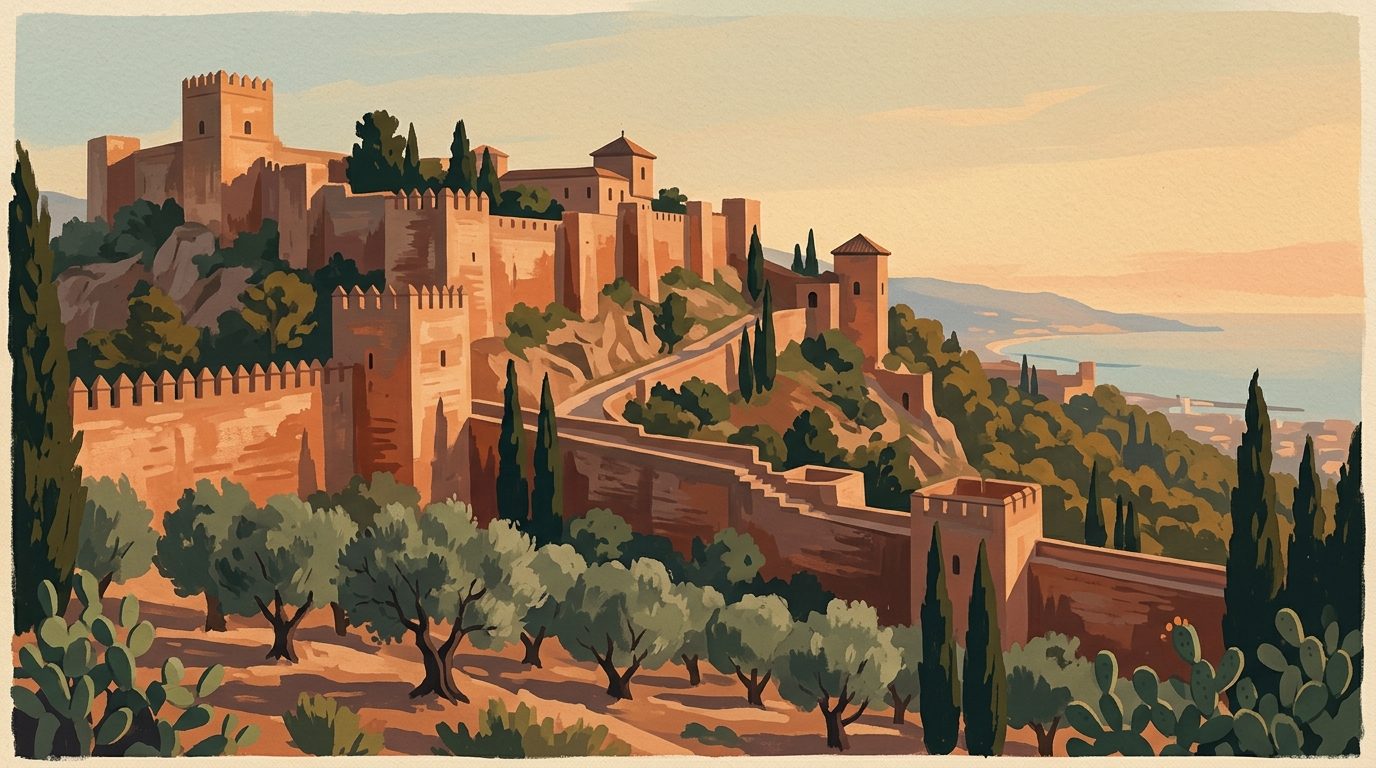
Castles and Fortresses of Andalucía
The fortresses of Andalucía are the stone guardians of a complex past, marking the ancient frontiers between empires and offering some of the most spectacular views in the southern peninsula.
6 min read
The Iberians in Andalucía: Warlords, Sculptors and the Dawn of Iron
Who were the sophisticated, iron-working peoples who controlled southern Spain before the Roman conquest? Their fortified hill towns and striking stone sculptures reveal a formidable culture caught between ancient local traditions and Mediterranean ambition.
6 min read
UNESCO Geoparks and Natural Wonders of Andalucía
Discover the geological heritage of Southern Spain through its UNESCO-designated geoparks and natural wonders. Explore the tectonic history and diverse ecosystems of Almería, Granada, and Cádiz.
6 min read
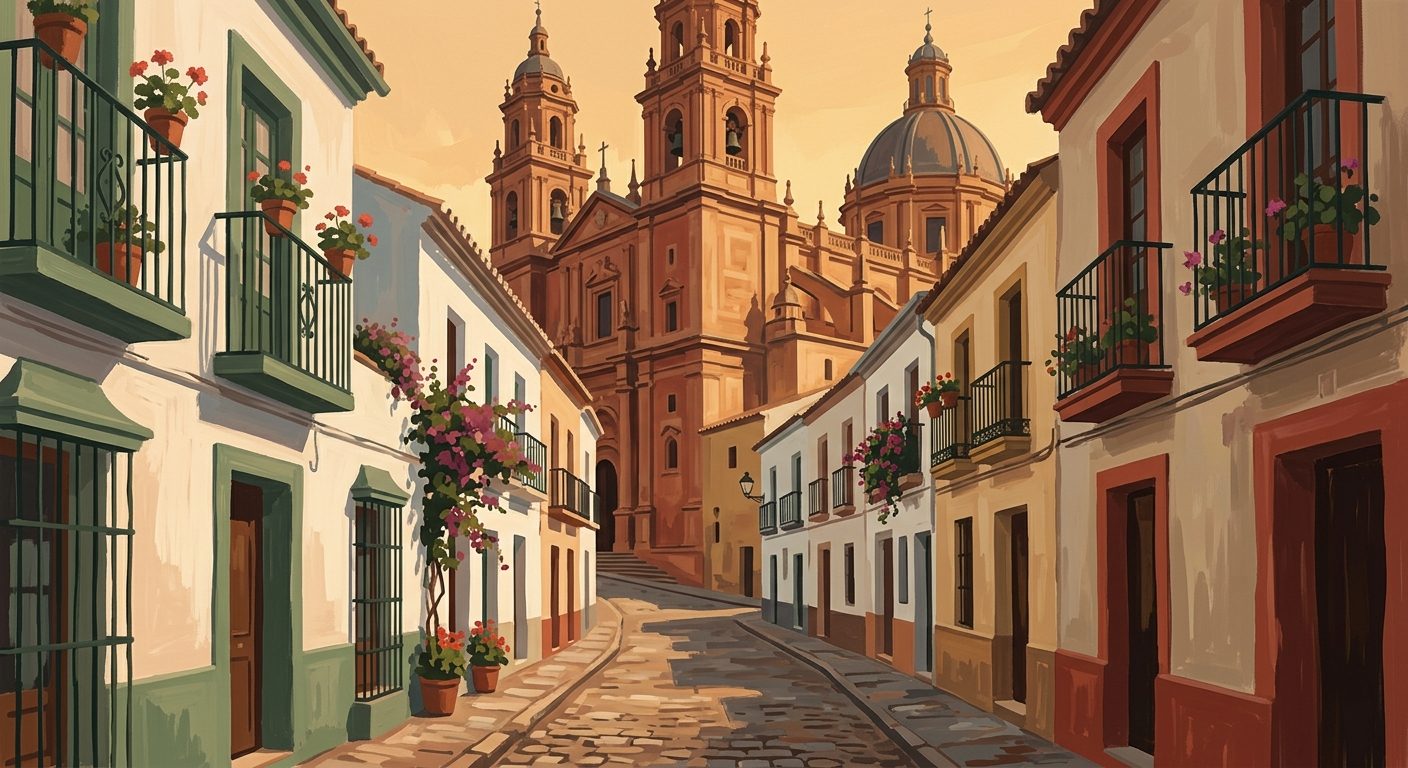
Cathedrals and Great Churches of Andalucía
A guide to the monumental religious architecture of Southern Spain, from the vast Gothic nave of Sevilla to the Renaissance masterworks of Jaén and Granada.
6 min read
Newsletter
More stories from Andalucía
Weekly notes, seasonal picks, and the next guides worth bookmarking.