
Feature
Iberian Cities and Oppida: The Fortified Hilltop Towns of Andalucía
The ancient Iberians transformed the landscape of southern Spain with massive fortified settlements known as oppida. These hilltop towns were the centres of a powerful aristocratic society built on agriculture, mining and Mediterranean trade.
By Dan · Updated 24 June 2026 · 7 min read
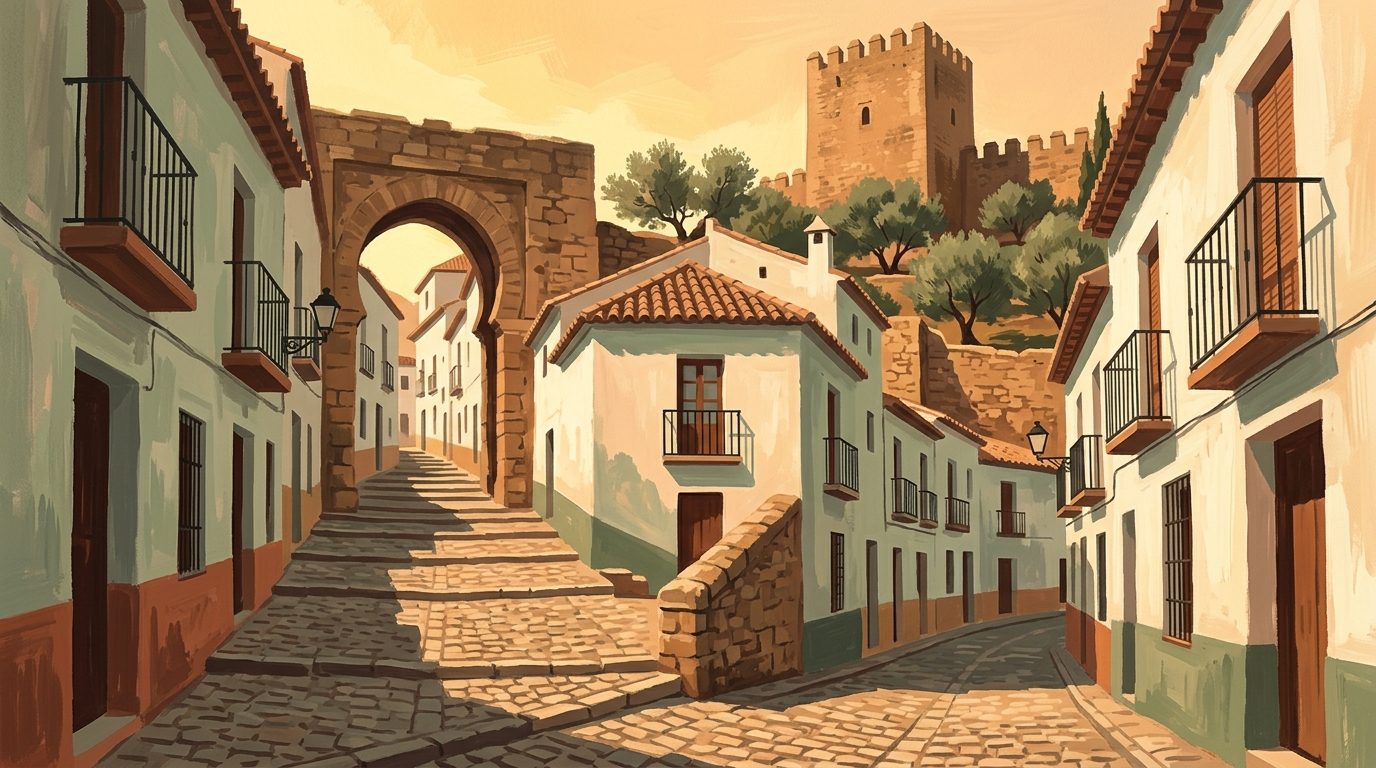
The ancient Iberians transformed the landscape of southern Spain with massive fortified settlements known as oppida. These hilltop towns were the centres of a powerful aristocratic society built on agriculture, mining and Mediterranean trade.
High on a limestone plateau above the Guadalbullón river, the rulers of Puente Tablas commanded a sweeping view of their domain. It was the fourth century BC, a time when the native peoples of the southern Iberian Peninsula were building an increasingly complex, urbanised society. During the broader era of the Iberians (c. 600 to 200 BC), scattered farming communities across the Upper Guadalquivir valley coalesced into formidable hilltop fortresses known to the Romans as oppida.
These settlements were much more than military refuges. They were the political, economic and religious capitals of a highly stratified society ruled by warrior aristocrats. Behind thick stone walls, a new urban reality took shape. Plazas were laid out, monumental sanctuaries were built to harness the movement of the sun, and palaces were constructed to house the ruling elite alongside their agricultural surplus.
The landscape of modern Jaén and northern Granada is still marked by these ancient strongholds. Because these regions controlled vital agricultural plains and the lucrative silver and lead mines of the Sierra Morena, they became the most densely populated and powerful Iberian territories in Andalucía. The story of these oppida is the story of how indigenous communities, stimulated by trade with Phoenician and Greek merchants, forged their own distinctive urban civilisation before the armies of Carthage and Rome arrived to tear it down.
The Architecture of Power
The defining characteristic of an Iberian oppidum is its monumental fortification. Prior to the sixth century BC, the indigenous population lived in small, undefended farming hamlets. The shift to fortified hilltops marks a period of profound social change. As certain lineages accumulated wealth through control of mining and agriculture, they needed to protect their assets from rival groups and project their newfound authority.
The walls of these cities were massive engineering projects that required hundreds of labourers to construct. At sites like Puente Tablas, builders erected formidable perimeter walls using large stone blocks for the foundation and lower courses, topped with sun-dried mudbrick superstructures. These walls were often flanked by square towers and sophisticated bastions designed to funnel attackers into narrow, easily defended kill zones.
Inside the walls, the oppidum was a planned environment. Unlike the organic, haphazard layout of earlier villages, these cities featured a regular street grid adapted to the natural topography of the hill. Main arteries ran parallel to the contour lines, intersected by stepped alleys that climbed the slopes. The houses themselves were robust, rectangular structures with stone footings, mudbrick walls and flat roofs made of branches and clay. This architectural standardisation points to a strong central authority capable of imposing a unified urban plan on the community.
Inside the Oppidum: Princes and Artisans
The society that built these cities was strictly hierarchical. At the top was a ruling elite of warrior aristocrats, often referred to by modern historians as princes or reguli. The power of these leaders is clearly visible in the archaeological record, most notably in the form of palatial residences located at the highest and most easily defended points of the oppida.
The prince's palace was not just a home. It was the administrative and economic nerve centre of the city. Excavations at Puente Tablas have revealed a sprawling complex organised around central courtyards, featuring private living quarters, reception rooms for entertaining clients and large storage magazines for grain, wine and olive oil. Controlling this agricultural surplus was the primary source of the prince's power, allowing him to feed dependents, maintain a retinue of warriors and trade for luxury goods brought by Mediterranean merchants.
Surrounding the palace were the workshops and homes of the artisans. The Iberians were highly skilled craftspeople. The introduction of the fast potter's wheel from the eastern Mediterranean allowed them to mass-produce fine, painted ceramics. Ironworking, another imported technology, revolutionised agriculture and warfare, providing the elite with the fearsome falcata swords that would later terrorise Roman legions. These artisans lived in distinct neighbourhoods, working full-time on their crafts and relying on the agricultural surplus redistributed by the prince.
The Sacred Calendar
Religion permeated every aspect of life in the oppidum, and the spiritual world was tightly controlled by the ruling elite. Sanctuaries were built inside the city walls, often directly connected to the prince's palace or the main gates.
One of the most remarkable discoveries in Iberian archaeology is the Sanctuary of the Equinox at Puente Tablas. Built into the city walls, this sacred space was precisely aligned with the rising sun. Twice a year, during the spring and autumn equinoxes, the first rays of the sun would pass through a narrow slit in the sanctuary wall and illuminate a stele representing a female deity. This dramatic visual event was likely the centrepiece of a major agricultural festival, overseen by the prince to demonstrate his connection to the gods and his control over the turning of the seasons.
The deity venerated here was a goddess of fertility, agriculture and the underworld, heavily influenced by eastern Mediterranean goddesses like Astarte but adapted to local Andalucían traditions. Worship involved offering animal sacrifices, pouring libations and dedicating small bronze figurines known as ex-votos, which have been found by the thousands at Iberian sanctuary sites across the region.
Cástulo: The Metropolis of the Oretani
While Puente Tablas offers a perfect snapshot of a mid-sized Iberian oppidum, the true giant of the region was Cástulo, located near modern-day Linares. Cástulo was the capital of the Oretani, a powerful confederation of tribes that controlled the upper Guadalquivir and the southern slopes of the Sierra Morena.
The wealth of Cástulo was staggering, derived directly from the immensely rich silver and lead veins of the surrounding mountains. This mineral wealth made the city a crucial node in Mediterranean trade networks. By the third century BC, Cástulo had grown into a sprawling metropolis, covering more than fifty hectares and minting its own coins. It was a cosmopolitan hub where Iberian aristocrats rubbed shoulders with Carthaginian generals and Greek merchants.
Such wealth made Cástulo a major prize during the Second Punic War, the titanic struggle between Carthage and Rome for control of the Mediterranean. The Carthaginian general Hannibal sought to secure the loyalty of the Oretani by marrying an Iberian princess from Cástulo, a woman named Himilce in the classical sources. However, as the tide of the war turned, the leaders of Cástulo pragmatically switched their allegiance to Rome. This shrewd diplomatic manoeuvre saved the city from destruction. Unlike many other oppida that were razed by the Romans, Cástulo was absorbed into the Roman Republic, gradually transforming from an Iberian stronghold into a major Roman municipality.
Where to see it today
To understand the scale and sophistication of Iberian urbanism, the archaeological site of Puente Tablas, located just a few kilometres outside the city of Jaén, is the most rewarding destination. Visitors can walk through the monumental main gate, trace the layout of the defensive walls and explore the foundations of the prince's palace and the artisan quarters. The Sanctuary of the Equinox has been partially reconstructed, allowing visitors to appreciate the precise astronomical alignment of the sacred space.
Any visit to Puente Tablas should be paired with the Museo Íbero in Jaén city. This dedicated museum houses the finest collection of Iberian artefacts in Andalucía. Here you will find the intricately carved stone sculptures, bronze ex-votos, painted ceramics and iron weapons excavated from Puente Tablas and other regional oppida.
Further north, near Linares, the vast archaeological site of Cástulo remains partially unexcavated, though the sheer scale of the plateau conveys the immense size of the ancient metropolis. While the most visible ruins today are Roman, including magnificent mosaics, the underlying street grid and the early defensive structures belong to the Iberian era. The nearby Archaeological Museum of Linares displays the grave goods, coins and mining tools that fuelled the rise of the Oretani capital.
If you visit
The best place to begin your exploration of the Iberian era is the Museo Íbero in Jaén, which provides essential context before you head out to the archaeological sites. Both Puente Tablas and Cástulo are open-air ruins situated on elevated plateaus with very little shade, making spring and autumn the most comfortable seasons to explore them. The summer heat in the Guadalquivir valley can be brutal, so if you are travelling during the summer months (late June to early September), plan to arrive at the sites as soon as they open in the morning. Note that provincial museums and archaeological sites in Andalucía generally close on Mondays. During the summer (16 June to 15 September), sites often operate on a reduced 'horario de verano' (typically 09:00 to 15:00). Always check the official Museos de Andalucía portal or the specific site's website before travelling to verify current opening times and holiday closures.
Last reviewed: 21 June 2026 · Editorial policy
Related guides
The British in Río Tinto: Copper, Colony and the Rio Tinto Company
In 1873, a British syndicate purchased the ancient copper mines of Huelva from a bankrupt Spanish government. The resulting Rio Tinto Company Limited transformed the landscape into a massive industrial enterprise, leaving behind a profound legacy of Victorian architecture, immense open-pit mines, and pioneering railway engineering in western Andalucía.
8 min read
The Spanish Inquisition in Andalucía: Orthodoxy and Paranoia
From its very first tribunal in Sevilla to the shadow it cast over centuries of daily life, the Spanish Inquisition demanded absolute religious conformity. Its legacy remains etched in the architecture, archives and even the culinary traditions of southern Spain.
7 min read
Late-Antique Andalucía: Crisis, Christianity, and the Vandals
The transformation of southern Spain from a classical Roman province to a Christianised landscape was marked by economic crises, religious upheaval, and the sudden arrival of Germanic tribes.
7 min read
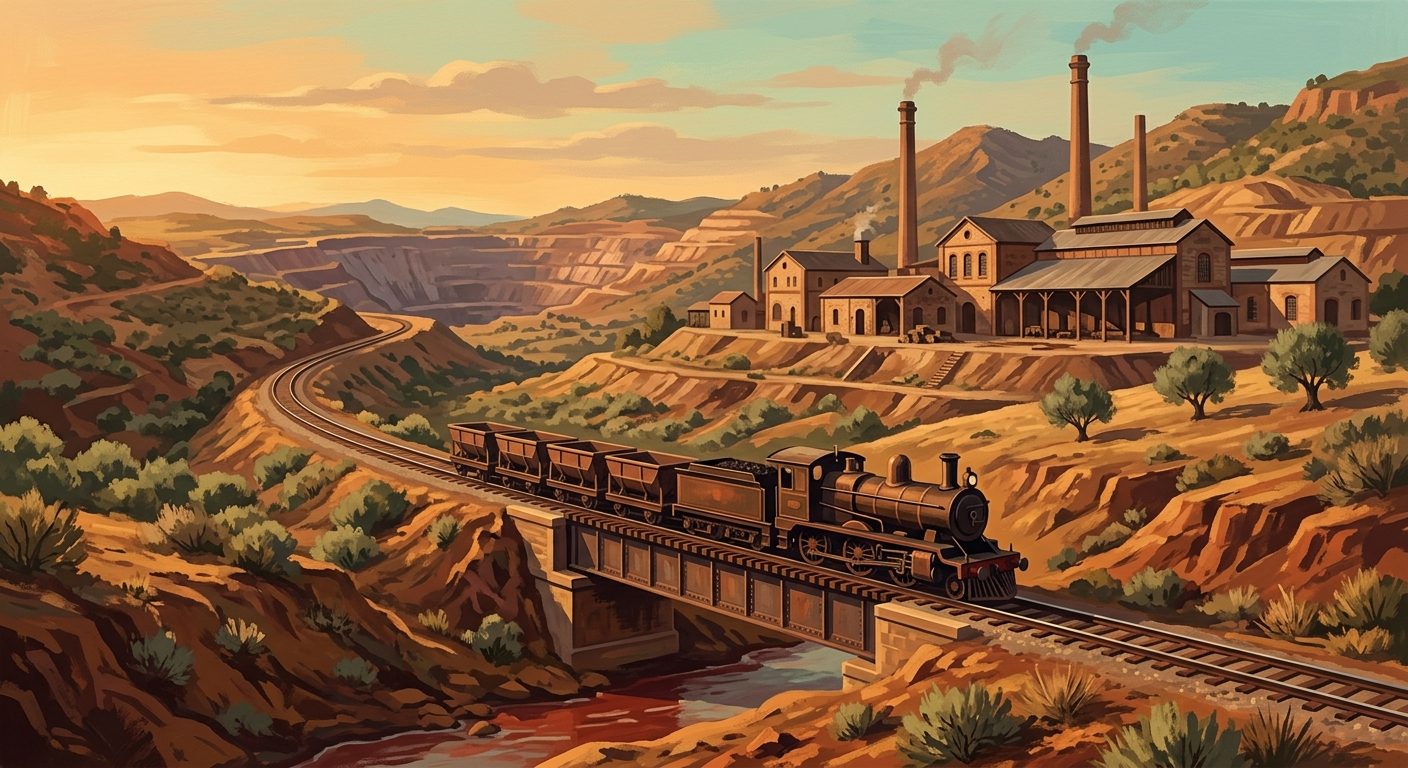
Industrial Heritage in Andalucía: Mines, Railways and the British
The nineteenth century brought an industrial boom to Andalucía, fuelled by British capital and ancient mineral wealth. Copper, iron and railways reshaped the landscape, leaving behind a profound legacy of Victorian architecture and vast open-pit mines.
6 min read
Tartessos and the Silver Trade
Ancient Greek historians wrote of a legendary kingdom in the far west ruled by a monarch of impossible age and wealth. Modern archaeology has stripped away the myth to reveal an indigenous Iberian society transformed by an insatiable Mediterranean demand for silver.
8 min read
Corduba and Roman Baetica
Discover the political and intellectual might of Corduba, the wealthy administrative capital of Roman Baetica and the birthplace of the philosopher Seneca.
7 min read
More guides
UNESCO World Heritage Sites in Andalucía
A curated guide to the cultural and natural sites in Andalucía recognised by UNESCO for their universal value. These landmarks offer a profound insight into the diverse civilisations of the region.
6 min read
The Best Beaches in Andalucía
From the Atlantic dunes of Huelva to the volcanic coves of Almería, the coastline of southern Spain offers an unparalleled variety of maritime landscapes.
6 min read
Phoenicians and Tartessians in Andalucía
Around three thousand years ago, eastern Mediterranean merchants arrived on the Iberian coast seeking silver and copper. Their arrival sparked a cultural collision that transformed local chiefdoms into the legendary civilisation of Tartessos.
6 min read
Roman Andalucía: Ruins and Archaeological Sites
Discover the monumental legacy of the Roman province of Baetica, from grand amphitheatres in the Guadalquivir valley to maritime cities on the Atlantic coast.
7 min read
Geological Wonders: Caves and Karst Landscapes of Andalucía
Discover the subterranean wonders and prehistoric secrets preserved within the limestone massifs and gypsum deposits of southern Spain.
6 min read
Castles and Fortresses of Andalucía
The fortresses of Andalucía are the stone guardians of a complex past, marking the ancient frontiers between empires and offering some of the most spectacular views in the southern peninsula.
6 min read
The Iberians in Andalucía: Warlords, Sculptors and the Dawn of Iron
Who were the sophisticated, iron-working peoples who controlled southern Spain before the Roman conquest? Their fortified hill towns and striking stone sculptures reveal a formidable culture caught between ancient local traditions and Mediterranean ambition.
6 min read
UNESCO Geoparks and Natural Wonders of Andalucía
Discover the geological heritage of Southern Spain through its UNESCO-designated geoparks and natural wonders. Explore the tectonic history and diverse ecosystems of Almería, Granada, and Cádiz.
6 min read
Cathedrals and Great Churches of Andalucía
A guide to the monumental religious architecture of Southern Spain, from the vast Gothic nave of Sevilla to the Renaissance masterworks of Jaén and Granada.
6 min read
Newsletter
More stories from Andalucía
Weekly notes, seasonal picks, and the next guides worth bookmarking.