
Feature · Granada
The Fall of Granada, 1492
On the second of January 1492, the keys to the Alhambra were handed over to Ferdinand and Isabella, bringing a close to almost eight centuries of Muslim rule in the Iberian Peninsula. The capitulation of Granada reshaped the political and religious landscape of Europe forever, ending a long war of attrition.
By Dan · Updated 24 June 2026 · 8 min read
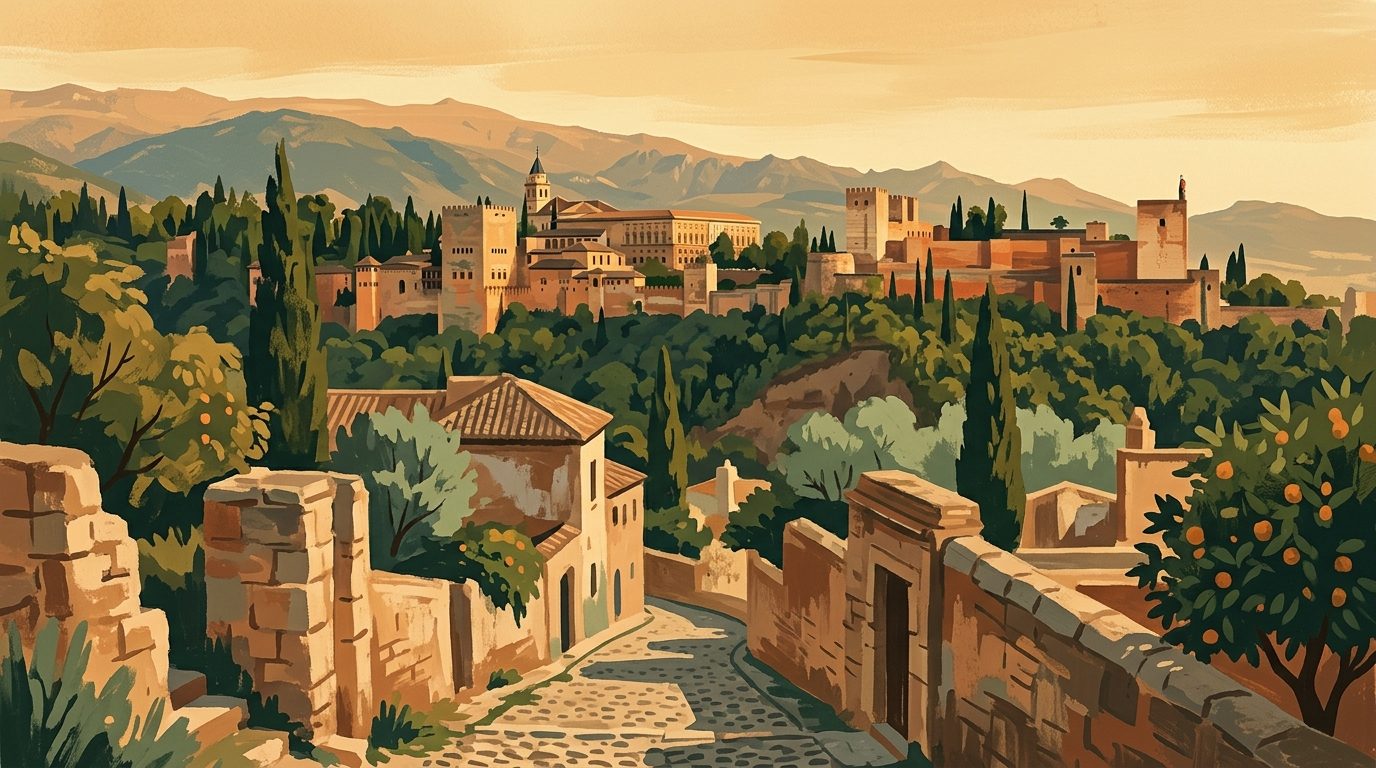
On the second of January 1492, the keys to the Alhambra were handed over to Ferdinand and Isabella, bringing a close to almost eight centuries of Muslim rule in the Iberian Peninsula. The capitulation of Granada reshaped the political and religious landscape of Europe forever, ending a long war of attrition.
On a cold January morning, Abu Abdallah Muhammad XII, known to the Christian world as Boabdil, rode down from the palatial fortress of the Alhambra for the last time. He carried with him the keys to the city. Waiting in the valley below were King Ferdinand II of Aragon and Queen Isabella I of Castile, dressed in their finest ceremonial armour. The handover was quiet and highly choreographed, designed to prevent a violent uprising from the starving population trapped inside the city walls. This formal exchange marked the conclusion of the Reconquista, a fractured period of territorial expansion by Christian kingdoms spanning the years 1085 to 1492.
The fall of Granada was not the result of a single decisive battle, but the climax of a gruelling ten-year military campaign. The Catholic Monarchs systematically isolated the Nasrid Kingdom of Granada, capturing its coastal ports, destroying its agricultural base, and exploiting fatal divisions within the royal family. The broader geopolitical stakes were immensely high. Following the Ottoman conquest of Constantinople decades earlier, Ferdinand and Isabella were determined to secure a monumental victory for Christendom. By the winter of 1491, the Andalucían capital was completely cut off from the outside world. Food supplies had run dry, and the promised military aid from the Mamluk Sultanate in Egypt never arrived. Surrender was the only remaining option, but the exact terms negotiated between Boabdil and his Christian counterparts offer a fascinating glimpse into the complex political reality of the late fifteenth century.
The Siege and the City of Santa Fe
The final push to take Granada required an unprecedented logistical effort from the Crown of Castile and Aragon. Rather than launching a direct infantry assault on the heavily fortified city walls, Ferdinand and Isabella established a permanent siege camp on the fertile plain just west of the capital. In the summer of 1491, a devastating fire swept through the canvas tents of the Christian encampment, nearly costing the Queen her life. In response, Isabella ordered that the camp be rebuilt not in canvas, but in stone and brick. This new military town was named Santa Fe, meaning Holy Faith.
Santa Fe was constructed in the shape of a cross, with four main gates facing the cardinal directions. Its permanence sent a clear psychological message to the defenders inside Granada. The besieging army was not going to pack up and leave when the winter rains arrived. From this fortified grid, the Catholic Monarchs controlled the flow of goods, starving the besieged population while keeping their own troops supplied through a highly organised network of mule trains stretching back into Christian territory.
The camp at Santa Fe also hosted another crucial historical event. It was here, amidst the siege of Granada, that Christopher Columbus secured his final audience with Isabella and Ferdinand to pitch his voyage across the Atlantic. The Capitulations of Santa Fe, the contract funding his journey, were signed in this very military camp just months after Granada fell.
Internal Strife in the Nasrid Dynasty
The Christian victory was significantly aided by a brutal civil war within the Emirate of Granada. The Nasrid royal family was deeply fractured. Boabdil had rebelled against his own father, Abu al-Hasan Ali, and later fought a bitter succession war against his uncle, Muhammad XIII, commonly known as El Zagal.
King Ferdinand played a masterful diplomatic game. He captured Boabdil early in the war and released him under the strict condition that he would rule Granada as a vassal of Castile. This arrangement deepened the internal Muslim conflict. While El Zagal fought fiercely against the Christian advance in the eastern provinces of Almería and Guadix, Boabdil remained focused on securing his own throne in the capital. By the time Boabdil eliminated his domestic rivals and secured the Alhambra, he found himself entirely surrounded by the armies of Aragon and Castile, with no remaining allies in the region.
The Treaty of Granada
Realising that further resistance would only lead to the sack of the city and the slaughter of its inhabitants, Boabdil opened secret negotiations in the autumn of 1491. The talks took place at night inside the Alhambra, brokered by his vizier, Abu al-Qasim al-Muli, and the Christian commander Gonzalo Fernández de Córdoba.
The resulting Treaty of Granada was signed on the twenty-fifth of November 1491. The terms were surprisingly lenient for a medieval conquest. The treaty guaranteed the Muslims of Granada the right to keep their religion, language, dress, and customs. They were allowed to retain their property, bear arms with some restrictions, and be judged by their own Islamic laws and magistrates. In return, Boabdil was to hand over the Alhambra and its fortifications. He was granted a small territory in the Alpujarras mountains to rule in exile.
History shows that these guarantees were deliberately broken. By 1499, the Archbishop of Toledo, Francisco Jiménez de Cisneros, arrived in Granada and initiated a severe campaign of forced conversions. He ordered the public burning of thousands of Arabic manuscripts, sparking a violent rebellion in the Albaicín quarter. The subsequent royal decrees forced the Muslim population to either convert to Christianity or face immediate expulsion. This gave rise to the Moriscos, nominally converted Christians of Moorish descent, whose persecution would shape the culture of Andalucía for another century.
Myth and Memory: The Sigh of the Moor
No account of the fall of Granada is complete without addressing its most famous legend. Tradition dictates that as Boabdil rode south toward his exile in the Alpujarras, he paused at a mountain pass to look back at the Alhambra one final time. As he wept at the sight of his lost kingdom, his mother, Aixa, is said to have scolded him, telling him to weep like a woman for what he could not defend like a man. The location of this alleged event is still known today as the Puerto del Suspiro del Moro.
Modern historians widely dismiss this story as a later Christian invention. The dramatic scene does not appear in any contemporary accounts of the surrender. Instead, it was popularised by sixteenth-century chroniclers aiming to romanticise the conquest and diminish Boabdil's character. In reality, Boabdil was a highly pragmatic ruler who chose the personal humiliation of surrender over the total annihilation of his people. He eventually left the Iberian Peninsula entirely, living out his final days in North Africa.
Where to see it today
The Alhambra and Generalife
The Alhambra itself, a UNESCO World Heritage site, is the most spectacular surviving artefact of this transition. Inside the Palacios Nazaríes, you can visit the Salón de los Embajadores, or Hall of the Ambassadors, inside the massive Torre de Comares. It was in this magnificent square room, under a complex wooden ceiling representing the seven heavens of Islamic cosmology, that the surrender of the city was likely debated and agreed upon. At the Puerta de la Justicia, the grand southern entrance to the fortress, you can see the original Islamic architectural details sitting alongside a statue of the Virgin Mary. This statue was added shortly after the conquest to physically mark the change in religious jurisdiction. Walking through the complex, you will also notice the striking contrast of the Palace of Charles V. Built by Ferdinand and Isabella's grandson, this massive Renaissance structure was deliberately dropped into the heart of the Nasrid palaces to cement Christian imperial dominance over the conquered landscape.
Capilla Real de Granada
The Catholic Monarchs chose to be buried in the city they considered their greatest conquest. The Royal Chapel of Granada, located adjacent to the main cathedral, houses the magnificent marble tombs of Ferdinand and Isabella. In the sacristy museum below, you can view deeply personal items related to the military campaign. These include Isabella's silver-gilt crown and sceptre, Ferdinand's ceremonial sword, and the faded banners flown by the Castilian army during the siege. The main altarpiece features a carved wooden panel by the sculptor Felipe Bigarny, which provides a detailed, almost journalistic depiction of Boabdil handing the keys of the city to the monarchs.
Santa Fe
The military encampment turned town still exists just a short drive west of Granada. While the modern town has grown around it, the original grid layout remains perfectly intact. Visitors can see the four monumental stone gates built by the Catholic Monarchs: the Puerta de Sevilla, Puerta de Jaén, Puerta de Granada, and Puerta de Loja. Small chapels were added to the tops of these gates in the seventeenth century, but the lower brick structures still bear the original royal coats of arms of Castile and Aragon, exactly as they did when Columbus walked through them.
If you visit
To fully understand the sequence of events, start your morning at the Capilla Real in the historic centre of Granada, where the physical artefacts of the conquest are preserved, before heading up the steep hill to the Alhambra in the afternoon. Tickets for the Alhambra must be booked several months in advance via the official Patronato de la Alhambra website (check the official release calendar on the operator's website before travelling), as access to the Palacios Nazaríes is strictly limited to a specific time slot. The mild weather of autumn or spring makes exploring the cobbled streets of the city much more comfortable than the intense heat of high summer. If you have a rental car, the short detour to Santa Fe offers a quiet, highly accessible look at the exact location where the final treaty was signed.
Last reviewed: 21 June 2026 · Editorial policy
Related guides
The British in Río Tinto: Copper, Colony and the Rio Tinto Company
In 1873, a British syndicate purchased the ancient copper mines of Huelva from a bankrupt Spanish government. The resulting Rio Tinto Company Limited transformed the landscape into a massive industrial enterprise, leaving behind a profound legacy of Victorian architecture, immense open-pit mines, and pioneering railway engineering in western Andalucía.
8 min read
The Spanish Inquisition in Andalucía: Orthodoxy and Paranoia
From its very first tribunal in Sevilla to the shadow it cast over centuries of daily life, the Spanish Inquisition demanded absolute religious conformity. Its legacy remains etched in the architecture, archives and even the culinary traditions of southern Spain.
7 min read
Late-Antique Andalucía: Crisis, Christianity, and the Vandals
The transformation of southern Spain from a classical Roman province to a Christianised landscape was marked by economic crises, religious upheaval, and the sudden arrival of Germanic tribes.
7 min read
Roman Hispania Baetica: Itálica, Baelo Claudia and the Olive Economy
How did a distant southern province become the economic engine of the Roman Empire and the birthplace of emperors? The answer lies in the fertile soils and sheltered harbours of Hispania Baetica.
7 min read
Iberian Cities and Oppida: The Fortified Hilltop Towns of Andalucía
The ancient Iberians transformed the landscape of southern Spain with massive fortified settlements known as oppida. These hilltop towns were the centres of a powerful aristocratic society built on agriculture, mining and Mediterranean trade.
7 min read
Industrial Heritage in Andalucía: Mines, Railways and the British
The nineteenth century brought an industrial boom to Andalucía, fuelled by British capital and ancient mineral wealth. Copper, iron and railways reshaped the landscape, leaving behind a profound legacy of Victorian architecture and vast open-pit mines.
6 min read
More from Granada
Nasrid Granada: The Last Islamic Kingdom of Iberia
Discover how the Nasrid dynasty forged a pragmatic mountain emirate that survived for over two centuries, creating the Alhambra and leaving a lasting architectural legacy.
8 min read
Lorca and the Repression in Granada
The assassination of Spain's most celebrated poet was just one part of a systematic campaign of terror. Today, the ravines of Víznar and Alfacar hold the stories of thousands whose voices were silenced.
7 min read
The Frontier of Granada: Life and War on the Edge of Al-Andalus
For over two centuries, the borderland separating the Christian Crown of Castile from the Nasrid Emirate of Granada was defined by watchful towers and sudden raids. Yet this military frontier was equally a zone of profound cultural exchange, where merchants, captives and diplomats negotiated daily survival in a divided land.
7 min read
The Morisco Revolt of the Alpujarras
The Morisco Revolt of 1568 transformed the mountainous terrain of the Alpujarras into the theatre of a brutal war. Driven to rebellion by laws erasing their culture, the descendants of Granada's Muslim population fought a desperate campaign against the Spanish Crown.
8 min read
Semana Santa in Granada: A Complete Visitor Guide
Semana Santa in Granada swaps broad avenues for narrow Moorish streets and steep hillsides. Watching an illuminated wooden float emerge from the grounds of the Alhambra or ascend into the caves of Sacromonte offers a profound emotional experience that feels intimately tied to the landscape itself.
8 min read
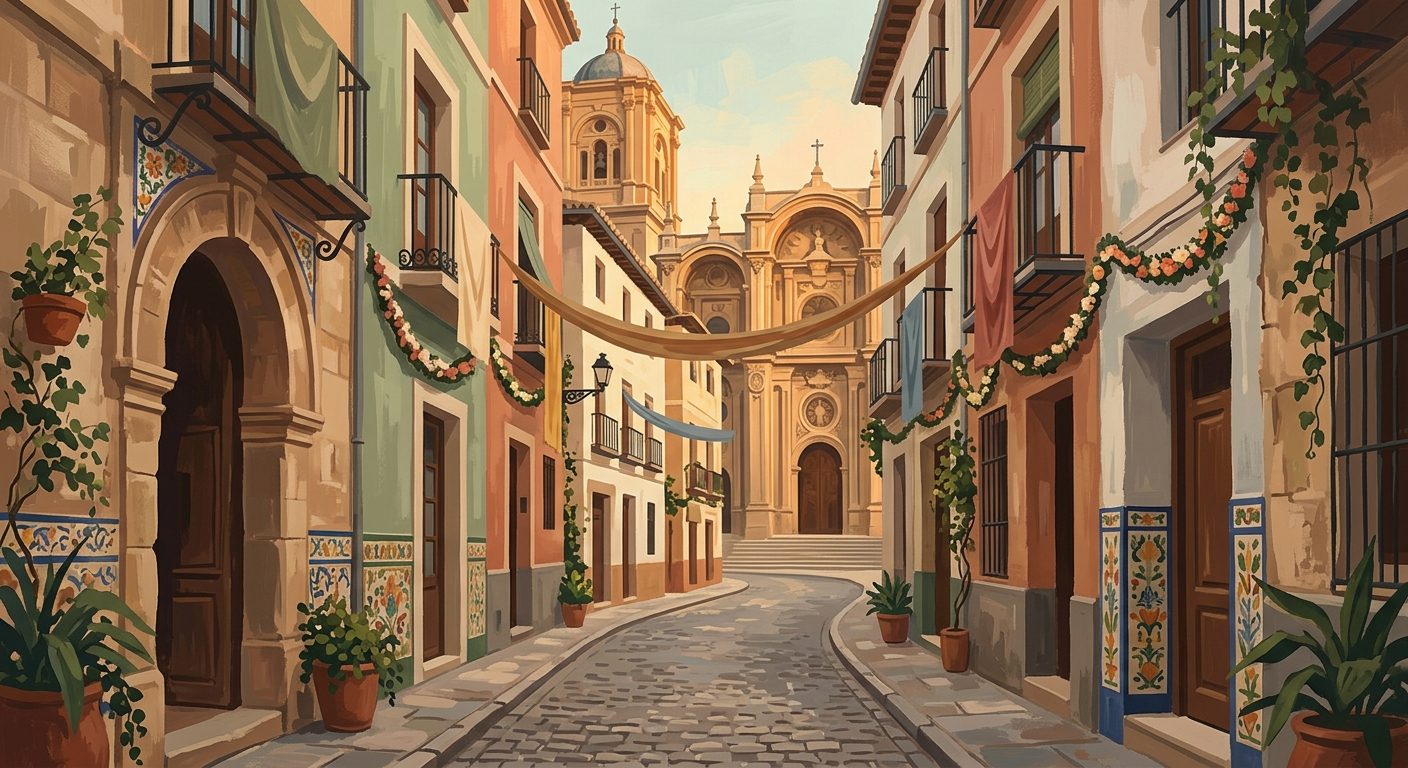
Corpus Christi in Granada: The Definitive Guide
In Granada, Corpus Christi is far more than a solemn religious observance. It is the city's largest annual festival, combining the scent of fresh rosemary crushed underfoot during the sacred Thursday procession with the unapologetic joy of the week-long public feria in Almanjáyar.
10 min read
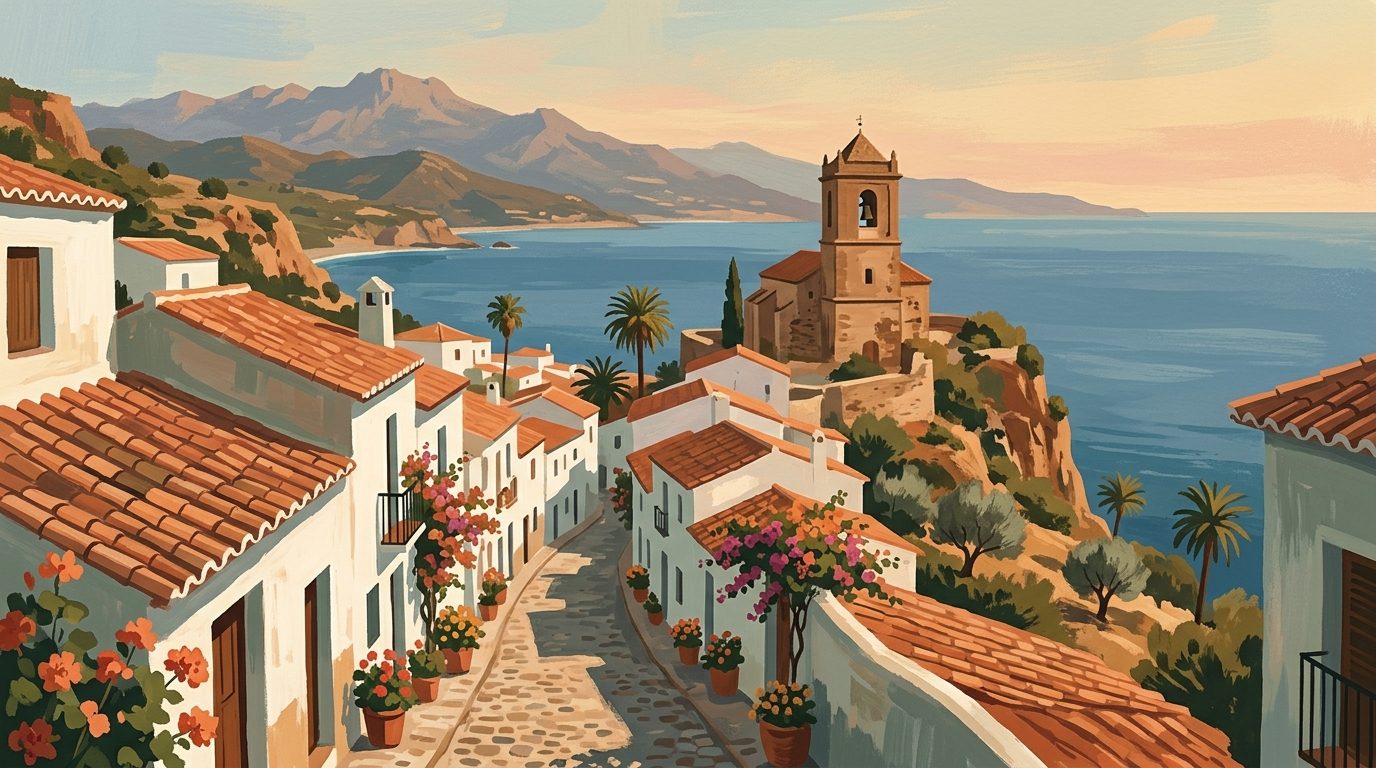
Costa Tropical: The Complete Guide to Granada's Subtropical Coast
Wedged between the foothills of the Sierra Nevada and the Mediterranean Sea, the Costa Tropical is defined by dramatic cliffs, sheltered pebble coves and a unique subtropical microclimate. It offers a quieter, more agricultural alternative to its heavily developed neighbours.
9 min read
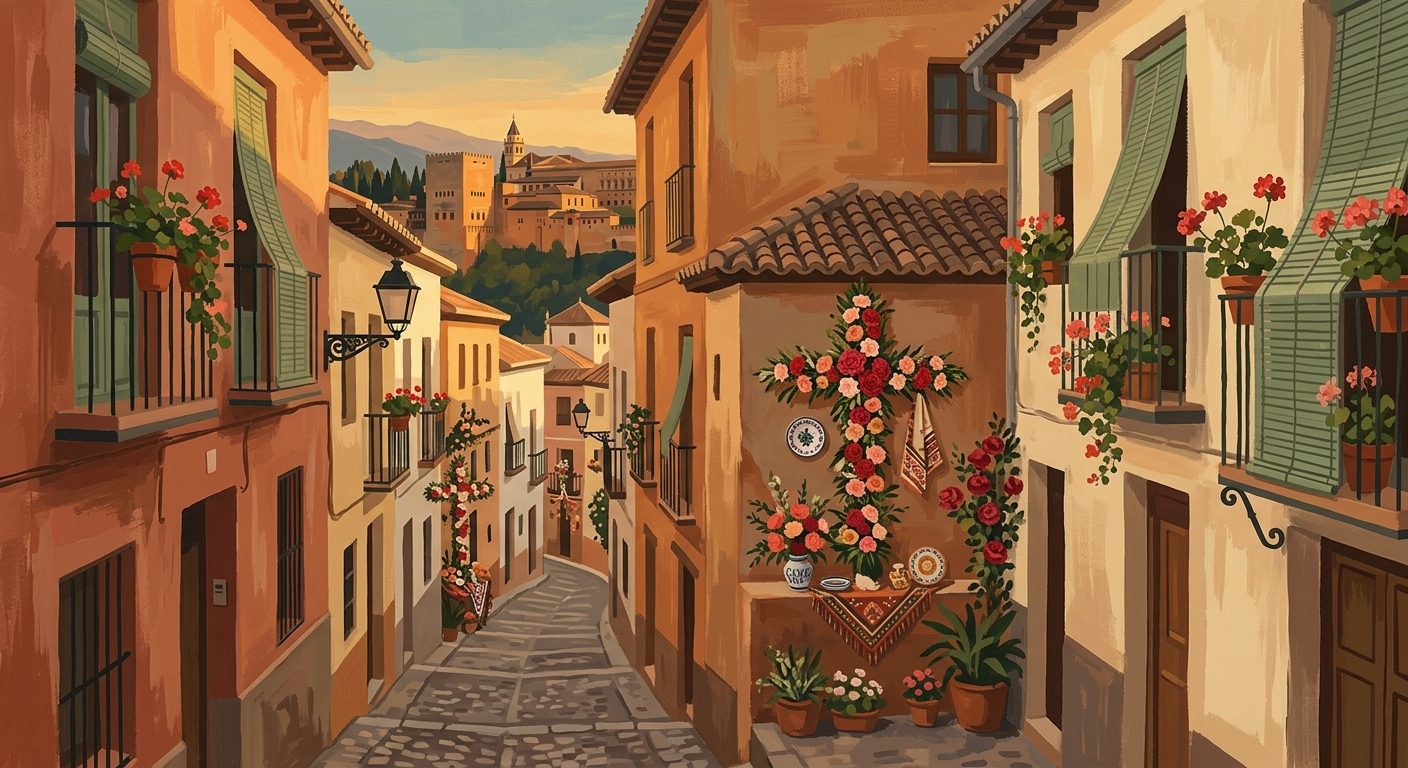
Cruces de Mayo in Granada: A Complete Guide
Discover how Granada transforms during the Cruces de Mayo festival. We detail where to find the most spectacular floral crosses, the local traditions to observe, and how to navigate the celebrations.
9 min read
The Resistance of the Plate: Why Granada Refuses to Sell Its Soul
In a world of monetised moments and rising margins, Granada holds fast to a radical social contract: the gift of a plate with every glass.
7 min read
Newsletter
More stories from Andalucía
Weekly notes, seasonal picks, and the next guides worth bookmarking.