
Feature
Foundation of the Sevilla Inquisition Tribunal
In 1478, a papal bull established the Spanish Inquisition. Sevilla became the testing ground for a systematic pursuit of heresy that would define an era.
By Dan · Updated 16 July 2026 · 7 min read
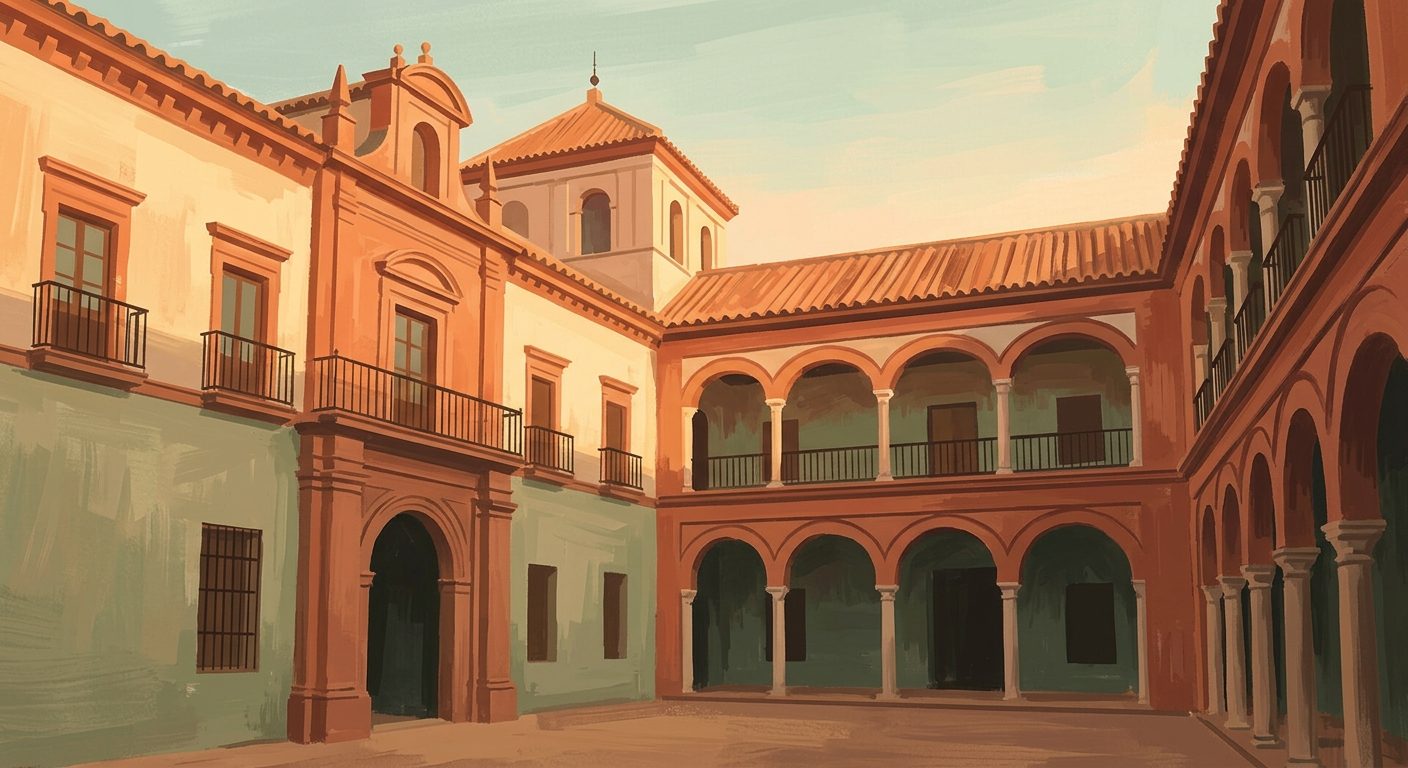
In 1478, a papal decree authorised the Catholic Monarchs to root out religious subversion. The prosperous, mercantile city of Sevilla would become the first testing ground for an institution that would permanently alter Spanish society.
In the autumn of 1480, two Dominican friars arrived in Sevilla bearing a mandate that would cast a long shadow over the city. Miguel de Morillo and Juan de San Martín carried royal commissions to establish a new ecclesiastical court. They set up their first operational base at the Convent of San Pablo and immediately issued an Edict of Grace. This document commanded the citizens of Sevilla to come forward and confess any heretical practices within thirty days. It was the physical manifestation of a decree signed two years earlier in Rome. During the broader era of the Spanish Inquisition (1478 to 1834), this newly formed tribunal would eventually expand across the entire Spanish empire, but its earliest mechanics of terror were refined right here in Andalucía.
The arrival of the inquisitors sparked immediate panic among the converso population. Wealthy merchants, civic administrators and scholars, many of whom were descended from Jews who had converted to Christianity decades earlier, suddenly found their lineage and private habits under deadly scrutiny. Thousands fled the city in the dead of night, seeking refuge in the estates of sympathetic nobles in the surrounding Andalucían countryside. The Duke of Medina Sidonia and the Marquis of Cádiz provided temporary sanctuary, prompting the inquisitors to issue severe warnings to the local aristocracy. The machinery of the newly founded tribunal had been engaged, and no sector of society was immune from its reach.
The Origins of the 1478 Papal Bull
The foundation of the tribunal was not a sudden act of religious zeal, but a calculated political and theological manoeuvre. In 1477, Queen Isabella I of Castile travelled to Sevilla to assert royal authority and resolve local aristocratic feuds. During her stay, she listened to the impassioned sermons of Alonso de Ojeda, the prior of the local Dominican convent. Ojeda warned the monarch that a dangerous element was operating within the city. He claimed that many conversos (Jews who had been baptised, often under duress during the violent pogroms of 1391) were secretly practising their ancestral faith behind closed doors.
The existence of "judaisers" threatened the religious unity that Isabella and her husband, King Ferdinand II of Aragon, saw as essential for the stability of their emerging state. Traditional medieval inquisitions had been under the direct control of the papacy. Ferdinand and Isabella, however, sought a different arrangement. They petitioned Pope Sixtus IV for the authority to appoint their own inquisitors. The pope initially hesitated, but political pressure and the monarchs' strategic control of territories in Italy forced his hand.
On the first of November 1478, Sixtus IV issued the papal bull Exigit sincerae devotionis affectus. This document granted the Catholic Monarchs the exclusive right to name and dismiss inquisitors across their realms. It effectively created a state-controlled apparatus for religious enforcement, fundamentally different from any previous ecclesiastical court.
The Move to Castillo de San Jorge
The sheer volume of denunciations in Sevilla quickly overwhelmed the initial facilities at the Convent of San Pablo. The inquisitors needed a secure fortress to hold suspects, conduct interrogations and protect their own personnel. They found their ideal headquarters across the Guadalquivir river in the district of Triana. The Castillo de San Jorge was an old Moorish fortification that had guarded the western approach to the pontoon bridge connecting Triana to Sevilla. It was repurposed in 1481 to serve as the permanent seat of the Inquisition in the city.
The fortress was transformed into a complex of secret prisons, interrogation chambers and administrative offices. Suspects were rowed across the river in secret, disappearing into the damp cells of the castle. The structure was notorious for its poor conditions. Due to its proximity to the river, the lower cells were frequently flooded during the winter months, and disease was rampant among the incarcerated. Despite these grim realities, the tribunal operated with bureaucratic precision. Every denunciation, testimony, financial confiscation and sentence was meticulously recorded by notaries. The archives of the Castillo de San Jorge soon became a vast repository of civilian secrets (many of these foundational Inquisition records are now preserved and catalogued by the Archivo Histórico Nacional).
The Rise of Tomás de Torquemada
While Morillo and San Martín initiated the terror in Sevilla, the institution lacked a unified legal framework across the different Spanish kingdoms. This changed in 1483 with the appointment of Tomás de Torquemada as Inquisitor General. Torquemada was a Dominican friar of austere habits and rigid ideological conviction. He was also a trusted advisor to the monarchs, which allowed him to bridge the gap between religious theory and state policy.
Torquemada recognised that the early tribunals in Sevilla and Córdoba were chaotic and overly reliant on local hearsay. He sought to standardise the prosecution of heresy. In 1484, he convened a general assembly of inquisitors in Sevilla to promulgate a comprehensive set of regulations known as the Instrucciones. These guidelines detailed every step of the inquisitorial process, from the initial Edict of Grace to the final sentencing.
Under Torquemada, the tribunal developed a reliance on networks of local informants known as familiares. These lay associates acted as the eyes and ears of the Inquisition, reporting suspicious behaviour in exchange for social prestige and tax exemptions. A neighbour refusing to light a fire on a Saturday, avoiding pork, or changing linen on a Friday could trigger a devastating investigation. Historians continue to debate the exact scale of the executions during Torquemada's tenure, but there is broad consensus that his bureaucratic reforms made the Spanish Inquisition an exceptionally durable institution.
The Theatre of the Auto de fe
The ultimate expression of the tribunal's authority was the auto de fe (act of faith). The first of these public spectacles took place in Sevilla on the sixth of February 1481. Six individuals, convicted of secretly practising Judaism, were burned at the stake.
The auto de fe was not primarily an execution, but a complex religious ritual designed to demonstrate the triumph of orthodox Catholicism and to reintegrate repentant sinners into the community. It was a day-long event involving elaborate processions, lengthy sermons and public readings of sentences. Those who confessed and reconciled with the Church were heavily fined, publicly humiliated and forced to wear a penitential garment known as a sambenito. Those who refused to confess, or who relapsed after a previous pardon, were handed over to the secular authorities for execution at the burning ground (the quemadero), which was located at the Prado de San Sebastián outside the city walls.
The display of sambenitos extended the punishment long after the trial. The garments of the condemned were hung in their local parish churches with their names and crimes clearly painted on the fabric. This ensured that the social stigma of heresy would haunt a family for generations.
Where to see it today
The physical legacy of the tribunal's foundation can still be traced in the city, particularly in the Triana neighbourhood.
Castillo de San Jorge
The original fortress of the Inquisition was largely demolished in the nineteenth century, and the Mercado de Triana was constructed over the site. However, extensive archaeological excavations in the early twenty-first century revealed the foundational layout of the castle. Today, beneath the everyday stalls of the market, you can visit the Castillo de San Jorge Interpretation Centre. The museum uses low lighting and sensory exhibits to evoke the oppressive atmosphere of the era. Visitors can walk along the preserved brick foundations of the guards' walkways, the notaries' offices and the infamous secret cells. Information panels detail the daily routines of the inquisitors and the names of specific citizens who were imprisoned here during the tribunal's early years. It is a sobering space that focuses heavily on the mechanics of intolerance and the loss of individual liberty.
Iglesia de Santa Ana
Located a short walk from the castle ruins, the Iglesia de Santa Ana is the oldest parish church in Triana. While it was not a direct administrative building of the Inquisition, it was the spiritual centre of the neighbourhood where the inquisitors operated. It was precisely in local parishes like Santa Ana where the sambenitos of condemned parishioners were hung from the walls to serve as a perpetual warning to the congregation. Observing the immense Gothic architecture of this church provides vital context for understanding the overwhelming authority of the religious institutions that governed everyday life in fifteenth-century Sevilla.
If you visit
The Castillo de San Jorge Interpretation Centre is located at the Plaza del Altozano end of the Triana bridge. Access is traditionally free, though the centre is subject to periodic closures for renovations (check current opening status and entry policies on the official Sevilla City Council tourism portal before travelling). This makes it an essential, albeit sombre, addition to any historical exploration of Sevilla. It is best to visit the ruins in the morning, combining the underground museum with a stroll through the ground-level Mercado de Triana above, where vendors continue a tradition of commerce that predates the Inquisition itself. The Iglesia de Santa Ana is just a five-minute walk south along the pedestrian streets of Triana. Opening hours for the church can be erratic and often depend on the schedule of daily mass (typically 09:00 to 13:30 and 18:30 to 21:00, though check the official parish website before travelling), so arriving in the late morning or early evening offers the best chance to view the interior. Spring and autumn are the ideal seasons to explore the district, as the intense summer heat makes walking between historical sites uncomfortable.
Last reviewed: 16 July 2026 · Editorial policy
Related guides
Ink and Olive Groves: A Literary Journey through Andalucía
Discover the literary heart of Southern Spain, from the tragic poetry of Lorca in Granada to Hemingway’s dramatic Ronda and the contemplative prose of Machado in Sevilla.
10 min read
The Auto-da-Fé in Andalucía: Spectacle and Judgement
The auto-da-fé was not merely a trial, but a highly choreographed spectacle of religious and political power. Across the great squares of Sevilla, Córdoba and Granada, these public acts of faith transformed the grim mechanics of judgement into grand urban theatre.
8 min read
Expulsion of the Jews and the Conversos
The Alhambra Decree of 1492 forced a devastating ultimatum upon the Jewish population of Andalucía: exile or conversion. For those who chose baptism, the decision marked the beginning of centuries of relentless inquisitorial surveillance.
7 min read
Historical Memory and Exhumations in Andalucía: Unearthing the Past
For decades, the earth of southern Spain held the silent victims of systematic repression. Today, meticulous forensic exhumations are restoring names and dignity to thousands who lay forgotten in unmarked mass graves.
7 min read
The Long Decline and Final Abolition of the Inquisition in Andalucía
The twilight of the Holy Office was a slow, bureaucratic fading rather than a sudden collapse. Enlightenment ideals and political upheaval finally dismantled a system that had overseen centuries of religious orthodoxy.
8 min read
The British in Río Tinto: Copper, Colony and the Rio Tinto Company
In 1873, a British syndicate purchased the ancient copper mines of Huelva from a bankrupt Spanish government. The resulting Rio Tinto Company Limited transformed the landscape into a massive industrial enterprise, leaving behind a profound legacy of Victorian architecture, immense open-pit mines, and pioneering railway engineering in western Andalucía.
8 min read
More guides
UNESCO World Heritage Sites in Andalucía
A curated guide to the cultural and natural sites in Andalucía recognised by UNESCO for their universal value. These landmarks offer a profound insight into the diverse civilisations of the region.
6 min read
The Best Beaches in Andalucía
From the Atlantic dunes of Huelva to the volcanic coves of Almería, the coastline of southern Spain offers an unparalleled variety of maritime landscapes.
6 min read
Phoenicians and Tartessians in Andalucía
Around three thousand years ago, eastern Mediterranean merchants arrived on the Iberian coast seeking silver and copper. Their arrival sparked a cultural collision that transformed local chiefdoms into the legendary civilisation of Tartessos.
6 min read
Roman Andalucía: Ruins and Archaeological Sites
Discover the monumental legacy of the Roman province of Baetica, from grand amphitheatres in the Guadalquivir valley to maritime cities on the Atlantic coast.
7 min read
Geological Wonders: Caves and Karst Landscapes of Andalucía
Discover the subterranean wonders and prehistoric secrets preserved within the limestone massifs and gypsum deposits of southern Spain.
6 min read
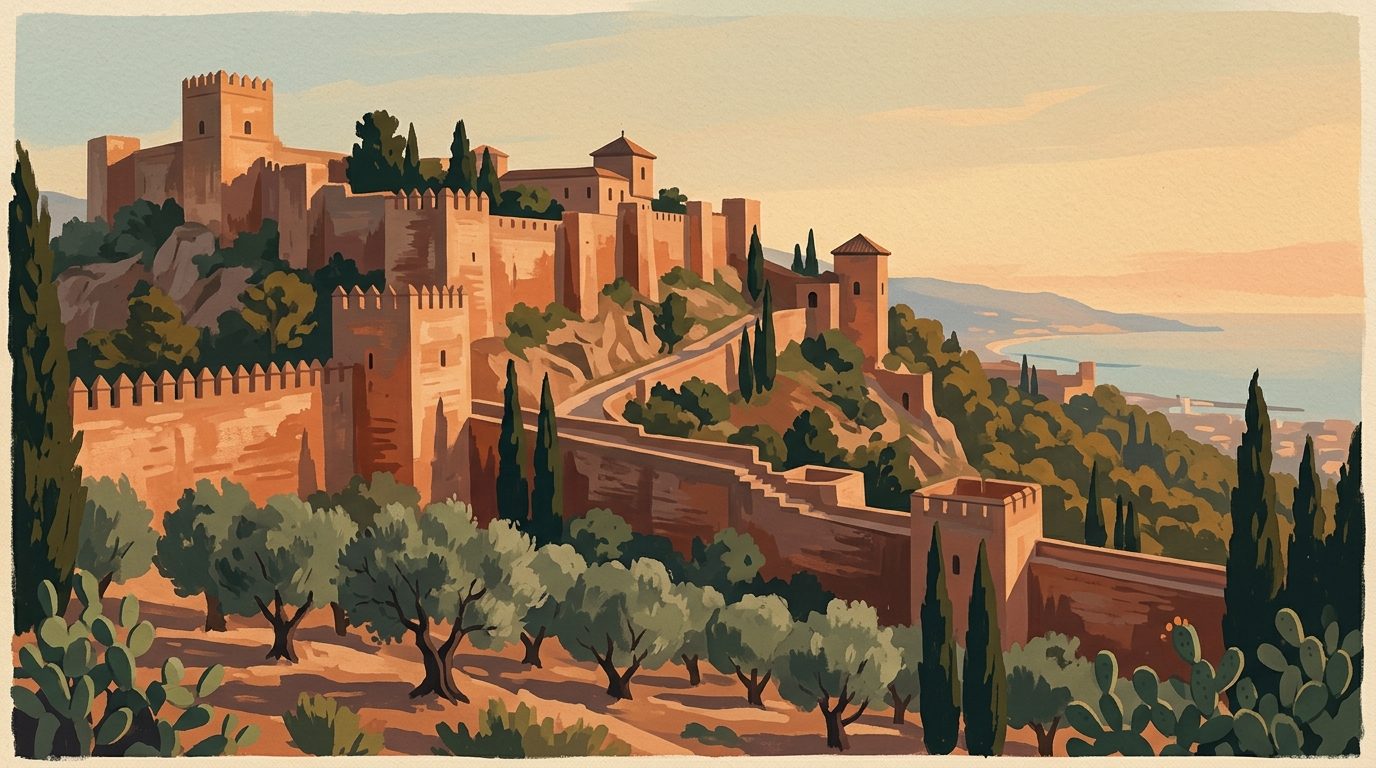
Castles and Fortresses of Andalucía
The fortresses of Andalucía are the stone guardians of a complex past, marking the ancient frontiers between empires and offering some of the most spectacular views in the southern peninsula.
6 min read
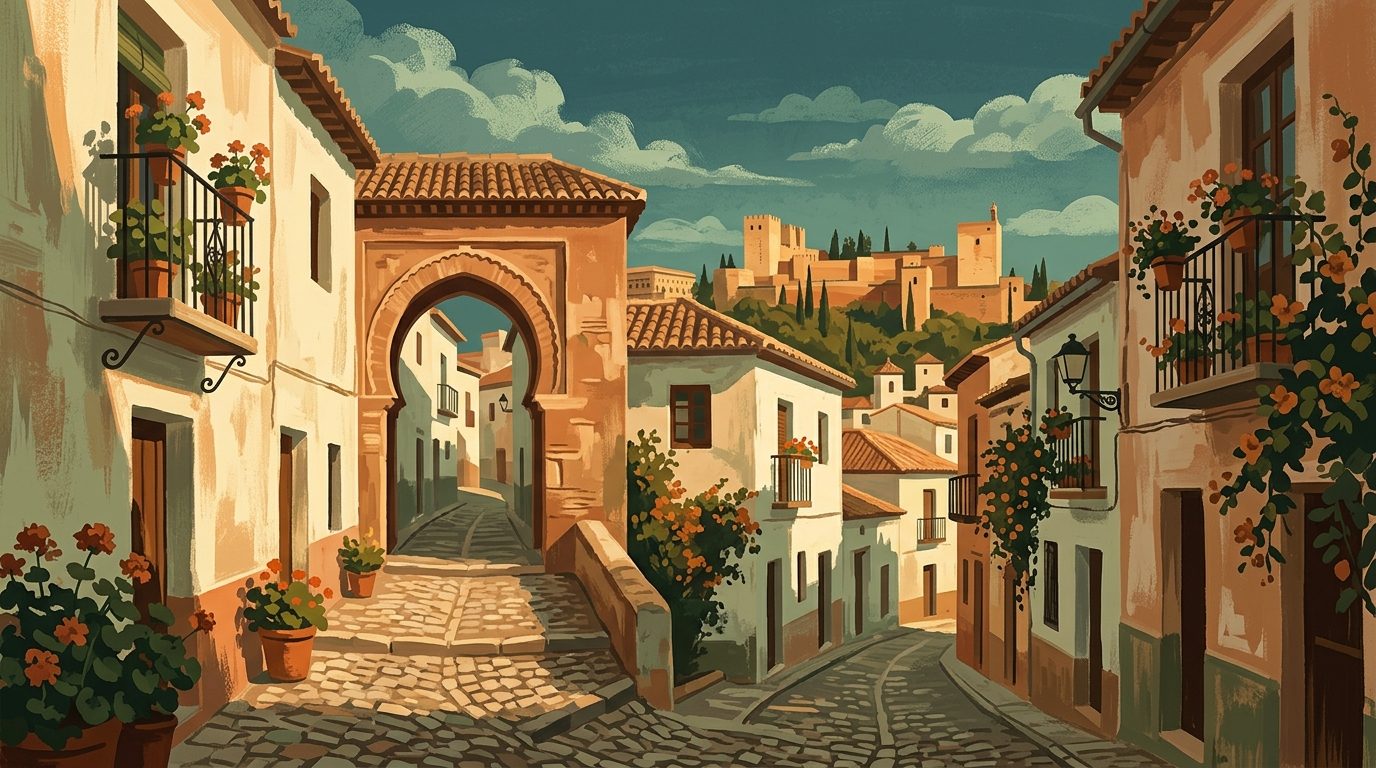
The Iberians in Andalucía: Warlords, Sculptors and the Dawn of Iron
Who were the sophisticated, iron-working peoples who controlled southern Spain before the Roman conquest? Their fortified hill towns and striking stone sculptures reveal a formidable culture caught between ancient local traditions and Mediterranean ambition.
6 min read
UNESCO Geoparks and Natural Wonders of Andalucía
Discover the geological heritage of Southern Spain through its UNESCO-designated geoparks and natural wonders. Explore the tectonic history and diverse ecosystems of Almería, Granada, and Cádiz.
6 min read
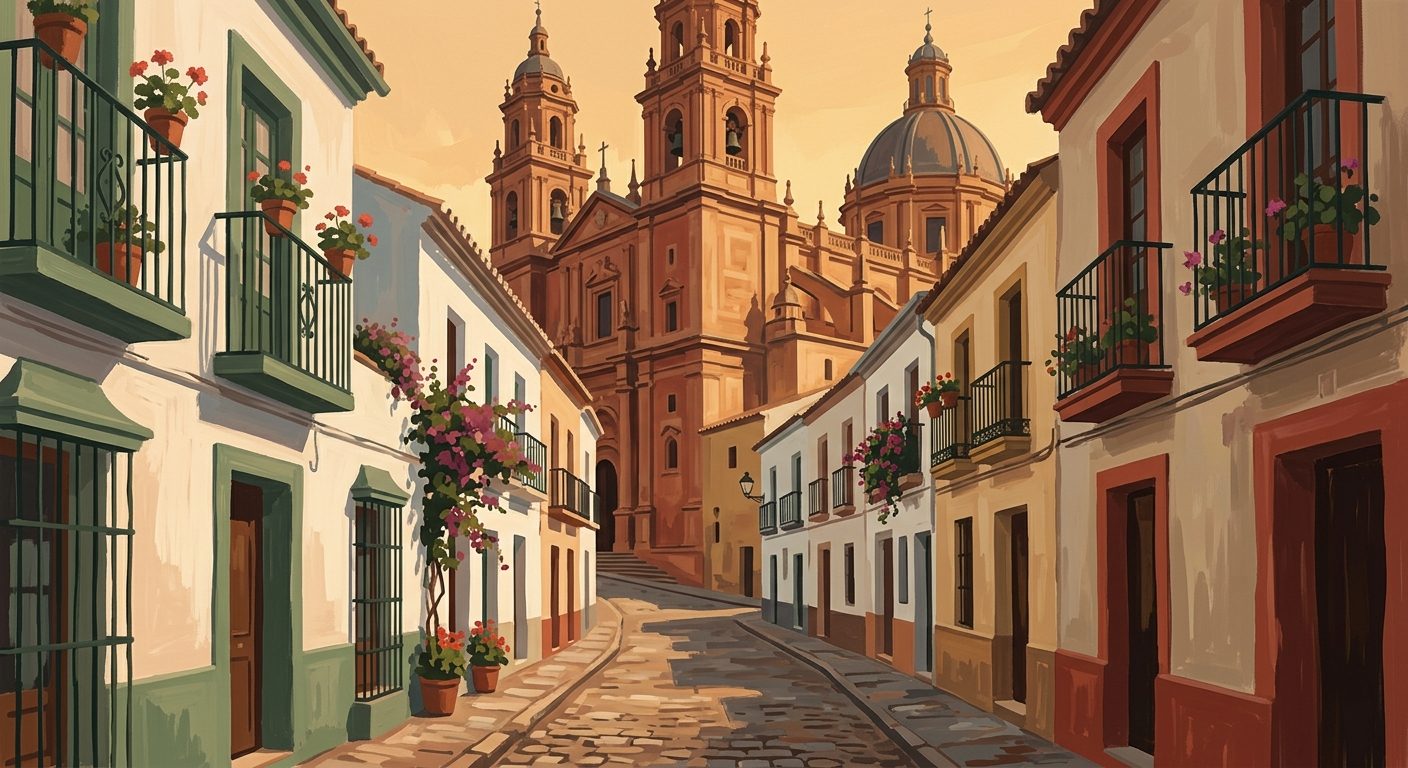
Cathedrals and Great Churches of Andalucía
A guide to the monumental religious architecture of Southern Spain, from the vast Gothic nave of Sevilla to the Renaissance masterworks of Jaén and Granada.
6 min read
Newsletter
More stories from Andalucía
Weekly notes, seasonal picks, and the next guides worth bookmarking.