
Feature
Baelo Claudia and the Garum Trade
On the windswept sands of the Cádiz coast, a complete Roman city was built entirely around the seasonal migration of bluefin tuna. This coastal settlement produced the empire's most prized condiment, shipping millions of amphorae to Rome.
By Dan · Updated 21 June 2026 · 8 min read
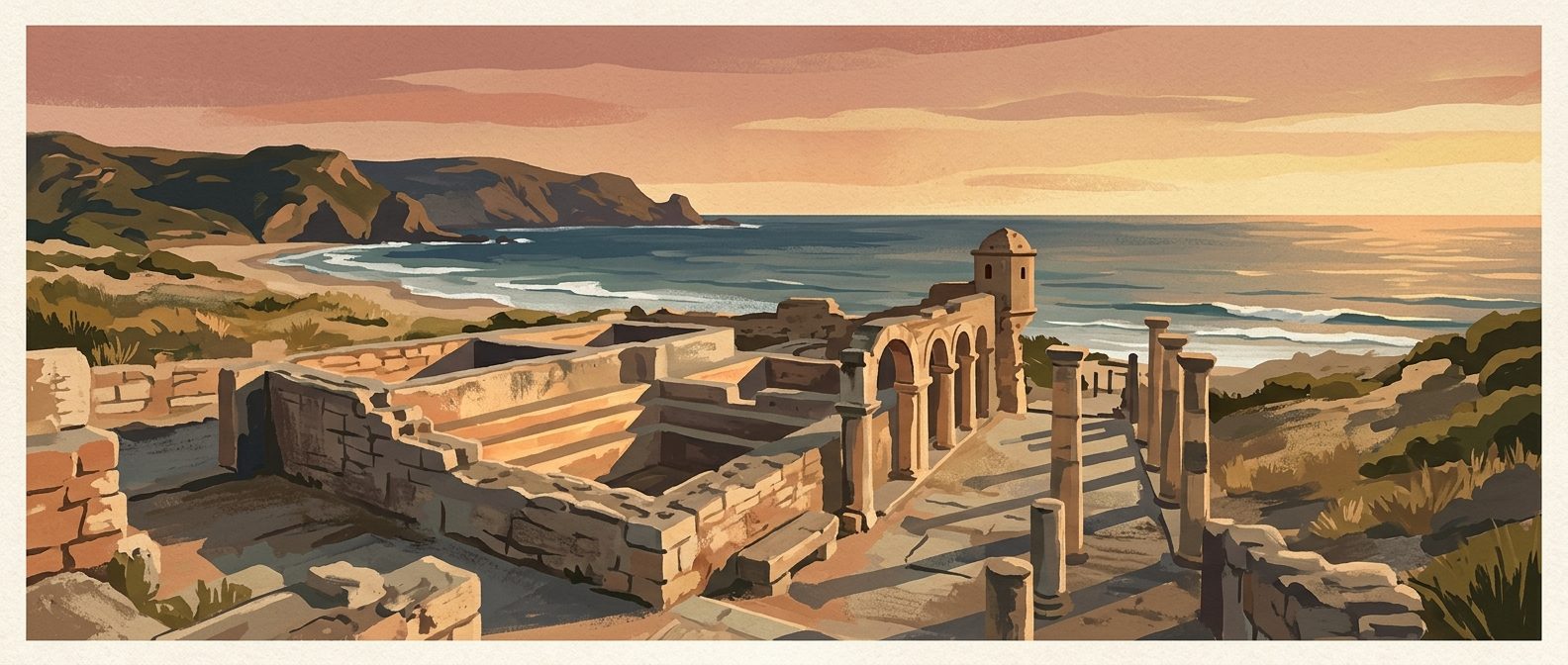
On the windswept sands of the Cádiz coast, a complete Roman city was built entirely around the seasonal migration of bluefin tuna. This coastal settlement produced the empire's most prized condiment, shipping millions of amphorae to Rome.
The Strait of Gibraltar channels the cold currents of the Atlantic Ocean into the Mediterranean Sea. Along with these waters come enormous shoals of bluefin tuna, migrating to spawn just as they have done for thousands of years. Today, the white sands of Bolonia beach are populated by windsurfers, kiteboarders and sunbathers seeking out the pristine coastal environment. Two millennia ago, this same stretch of coast was defined by the sharp, metallic stench of blood, salt and fermenting fish. This was Baelo Claudia, the industrial powerhouse of the Cádiz coastline and a vital supplier of preserved food to the imperial capital.
Situated within the broader era of Roman Hispania Baetica (218 BC to AD 409), Baelo Claudia was not established as a military outpost or a retreat for the political elite. It was a factory town built for a singular, highly profitable purpose. Its residents harvested marine life from the strait and processed it into garum, a pungent fish sauce that the Romans poured over almost every dish they consumed. The sheer scale of this industry transformed a modest fishing village into a wealthy municipality, complete with a grand forum, monumental temples and a sophisticated theatre. The surviving ruins offer a remarkably clear picture of how a single maritime commodity could dictate the fortunes, the architecture and the daily rhythms of an entire community.
The Rise of a Factory Town
The origins of a settlement at Bolonia date back to the late second century BC. Phoenician and Punic traders from North Africa had long recognised the value of the Fretum Gaditanum (the Strait of Gibraltar) for fishing. The coastal geography, featuring a wide, sheltered bay protected by rocky headlands, provided a natural harbour. Early Roman colonists adopted local netting techniques to trap the migrating tuna, but it was the rapidly increasing culinary demand from the city of Rome that turned Baelo from a modest harbour into a large-scale industrial operation.
The town reached its zenith in the middle of the first century AD under the rule of Emperor Claudius. Recognising its vital economic importance, Claudius granted the settlement the formal status of a Roman municipality. It was newly christened Baelo Claudia, and its free citizens were granted corresponding legal rights. This elevated status initiated a massive urban renewal project that completely redefined the landscape. The town was laid out in a classical Roman grid pattern, bisected by the two main thoroughfares: the cardo maximus and the decumanus maximus. It was surrounded by defensive walls, punctuated by watchtowers and formal arched gateways. The wealth required for this profound transformation came directly from the sea, and the town even began minting its own currency, featuring images of fish on the bronze coins to symbolise the source of its prosperity.
The Mechanics of Roman Fish Sauce
To understand Baelo Claudia, one must understand garum. Modern palates might balk at the concept, but for the Romans, this fermented liquid was an absolute necessity. It was an essential flavour enhancer, serving the same culinary purpose as soy sauce or oyster sauce in modern Asian cooking. Roman recipe books, such as those compiled by Apicius, list garum as a primary ingredient in nearly every savoury dish, from roasted meats to vegetable stews. Making garum, however, was a precise and incredibly malodorous process.
Workers layered the guts, gills, blood and heads of large fish, primarily tuna or mackerel, with alternating layers of sea salt in large, open-air vats. Small whole fish like sardines and anchovies were often thrown into the mix to fill the gaps. The high concentration of salt prevented the mixture from putrefying. Instead, it forced the internal enzymes of the fish to break down the flesh through controlled fermentation. The vats were left baking under the fierce Andalucían sun for weeks or even months. Workers would stir the pungent sludge periodically to ensure an even consistency. Once the fermentation was complete, a clear, amber liquid was skimmed off the top. This was the highest grade of garum.
In the Roman industrial mindset, nothing went to waste. A secondary, cloudier liquid, known as liquamen, was drawn off next, followed by muria, a salty brine used for curing meats. The foul-smelling, gritty sludge that remained at the very bottom of the vat, known as allec, was scraped out and sold as a cheap nutritional paste for slaves and the poorest citizens. The highest quality garum from Baelo Claudia fetched astronomical prices in the markets of Rome, generating immense profits for the local merchant class. To transport this liquid gold, Baelo Claudia developed a secondary industry in pottery, manufacturing millions of ceramic amphorae specifically designed with pointed bases to be stacked securely in the hulls of merchant ships.
Wealth, Architecture and Civic Pride
The physical layout of Baelo Claudia reflects a society where heavy industry and classical civic life were inextricably linked. The industrial district was positioned directly on the shoreline, allowing fishing boats to unload their heavy catches mere metres from the salting vats. The prevailing winds, the famous Levante and Poniente, helped to carry the worst of the industrial stench away from the residential quarters and administrative buildings located further uphill.
The monumental profits from the garum trade funded an impressive array of public buildings that rivalled those found in much larger provincial capitals. The forum, a paved rectangular plaza, served as the commercial and political centre of the town. It was flanked by a two-storey basilica where magistrates conducted legal proceedings, and a row of shops (tabernae) where local goods were traded. At the northern end of the forum stood the Capitolium, comprising three separate, raised temples dedicated to the primary Roman deities: Jupiter, Juno and Minerva. Unusually, a fourth temple stood nearby dedicated to the Egyptian goddess Isis. This inclusion highlights the highly cosmopolitan nature of a port town connected to maritime trade networks extending across the entire Mediterranean basin.
Fresh water was as crucial to the survival of Baelo Claudia as salt. The town required a constant, massive supply of water not only for its public baths and ornamental fountains but for cleaning the fish-processing factories themselves. Roman engineers constructed three separate aqueducts to channel water from the surrounding hills into the town. The Punta Paloma aqueduct was a particularly impressive feat of engineering, carrying water over several kilometres to ensure the salting vats could operate at full capacity during the peak tuna season.
Earthquakes and Eventual Decline
The prosperity of Baelo Claudia was closely tied to the stability of the Roman Empire and the predictability of the natural environment. In the late second century AD, a severe earthquake struck the Cádiz coast. Geological and archaeological evidence shows that parts of the town suffered extensive, catastrophic damage. Buildings collapsed, columns shattered, and the ground literally shifted beneath the paved stones of the forum.
While the resilient residents rebuilt their factories and homes, the town never fully regained its former glory. By the third century AD, the Roman Empire was experiencing severe economic instability and political crises. Trade routes became less secure, and frequent piracy in the Strait of Gibraltar disrupted the steady flow of transport vessels. Furthermore, changing sea levels and the gradual silting of the harbour made it increasingly difficult for large, deep-hulled merchant ships to dock. Baelo Claudia limped on for a few more centuries, inhabited by a significantly smaller population, before being completely abandoned by the sixth century. The shifting coastal sand dunes eventually buried the ruins entirely, inadvertently preserving the city from stone robbers and later urban development.
Where to see it today
The Conjunto Arqueológico de Baelo Claudia in Bolonia is widely considered one of the most comprehensive and well-preserved Roman sites in Spain. Because the town was abandoned and never built over by later medieval settlements, the entire Roman urban layout remains highly visible. The visitor experience begins at the modern museum building, which houses artefacts recovered during more than a century of careful excavations. Key objects to look for include marble statues recovered from the forum, sections of lead piping from the municipal water system, and a remarkable marble sundial. You will also see several intact amphorae, the shipping containers of the ancient world, some of which still bear the painted labels indicating their original fishy contents and the merchant who exported them.
Walking down into the archaeological site, the industrial zone is the most distinctive feature. The stone foundations of the fish-salting factory (the cetariae) are perfectly preserved next to the beach. You can stand right beside the deep, rectangular vats where the garum fermented. Their interiors are still coated in opus signinum, a highly waterproof Roman mortar made from crushed ceramics and lime. Moving inland along the original paved streets, the forum retains its original flagstones and the imposing bases of its monumental columns. A short walk uphill leads to the Roman theatre, which has been partially restored. It utilises the natural slope of the coastal terrain for its seating area, offering a spectacular view directly over the stage and out to the ocean beyond.
If you visit
Baelo Claudia is located directly on Bolonia beach, approximately twenty-two kilometres northwest of Tarifa. The archaeological site is entirely exposed to the elements, making spring and autumn the most comfortable seasons to explore the ruins. Summer visits are best planned for the early morning to avoid the intense midday heat and the severe traffic that builds up on the single road leading into the beach village. The museum and archaeological site are typically open from Tuesday to Sunday (closed on Mondays), but opening hours vary significantly by season, so checking the official Junta de Andalucía website before travel is essential. Entry is free for citizens of the European Union, with a nominal fee (currently €1.50) for other nationalities. Given the frequent and notoriously strong winds in this part of Andalucía, bringing a light windbreaker jacket is highly advisable even on bright, sunny days.
Last reviewed: 21 June 2026 · Editorial policy
Related guides
The Ghost in the Garden: Searching for the Al-Andalus Within
Eight centuries of Al-Andalus did not vanish in 1492; they simply moved indoors, into the kitchens, and onto the tip of the tongue.
7 min read
Exploring the Caliphate Capital: A Deep Dive into Córdoba
Discover the layers of the former Caliphate capital, from the mesmerising arches of the Mezquita to the hidden floral courtyards of the Judería.
8 min read
The Reconquista in Andalucía
The centuries-long Christian conquest of southern Iberia redefined the physical and cultural landscape of the peninsula. How did the military campaigns of the northern kingdoms dismantle the Islamic territories of Al-Andalus and forge the modern region of Andalucía?
7 min read
Corduba and Roman Baetica
Discover the political and intellectual might of Corduba, the wealthy administrative capital of Roman Baetica and the birthplace of the philosopher Seneca.
7 min read
Al-Andalus: Eight Centuries of Moorish Rule in Andalucía
For nearly eight hundred years, Islamic civilisation flourished on the Iberian Peninsula. How did a distant province of the Umayyad empire become a beacon of science, art, and poetry in medieval Europe?
8 min read
Cathedrals and Great Churches of Andalucía
A guide to the monumental religious architecture of Southern Spain, from the vast Gothic nave of Sevilla to the Renaissance masterworks of Jaén and Granada.
6 min read
More guides
UNESCO World Heritage Sites in Andalucía
A curated guide to the cultural and natural sites in Andalucía recognised by UNESCO for their universal value. These landmarks offer a profound insight into the diverse civilisations of the region.
6 min read
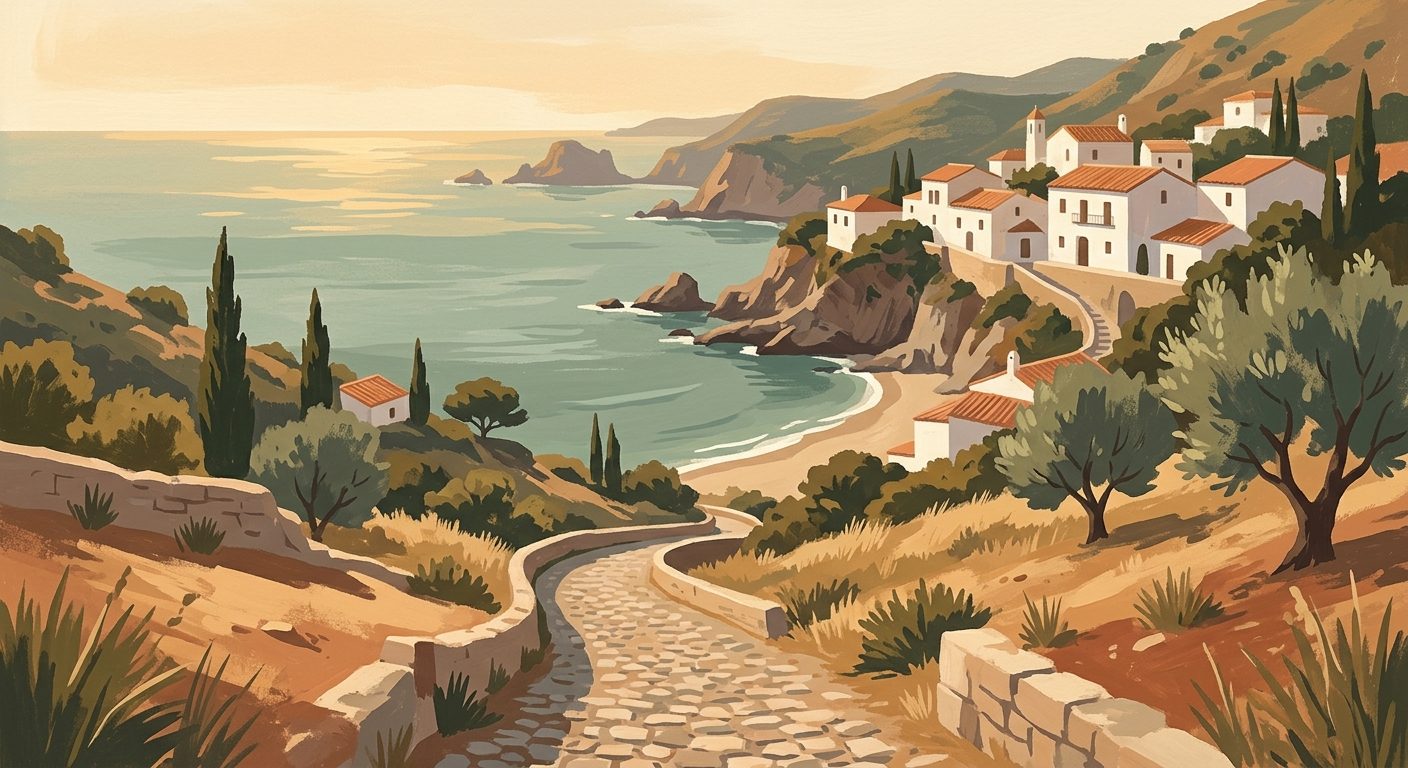
The Best Beaches in Andalucía
From the Atlantic dunes of Huelva to the volcanic coves of Almería, the coastline of southern Spain offers an unparalleled variety of maritime landscapes.
6 min read
Phoenicians and Tartessians in Andalucía
Around three thousand years ago, eastern Mediterranean merchants arrived on the Iberian coast seeking silver and copper. Their arrival sparked a cultural collision that transformed local chiefdoms into the legendary civilisation of Tartessos.
6 min read
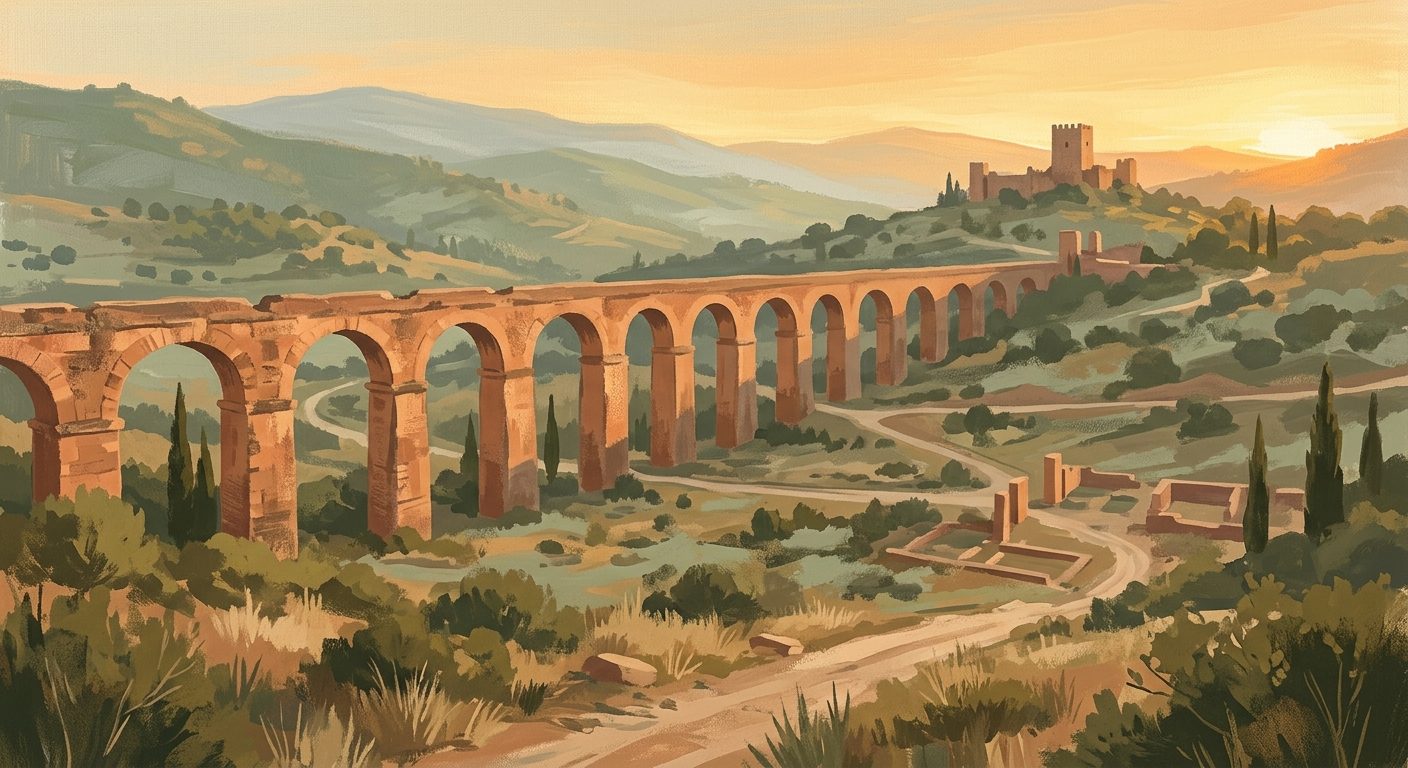
Roman Andalucía: Ruins and Archaeological Sites
Discover the monumental legacy of the Roman province of Baetica, from grand amphitheatres in the Guadalquivir valley to maritime cities on the Atlantic coast.
7 min read
Geological Wonders: Caves and Karst Landscapes of Andalucía
Discover the subterranean wonders and prehistoric secrets preserved within the limestone massifs and gypsum deposits of southern Spain.
6 min read
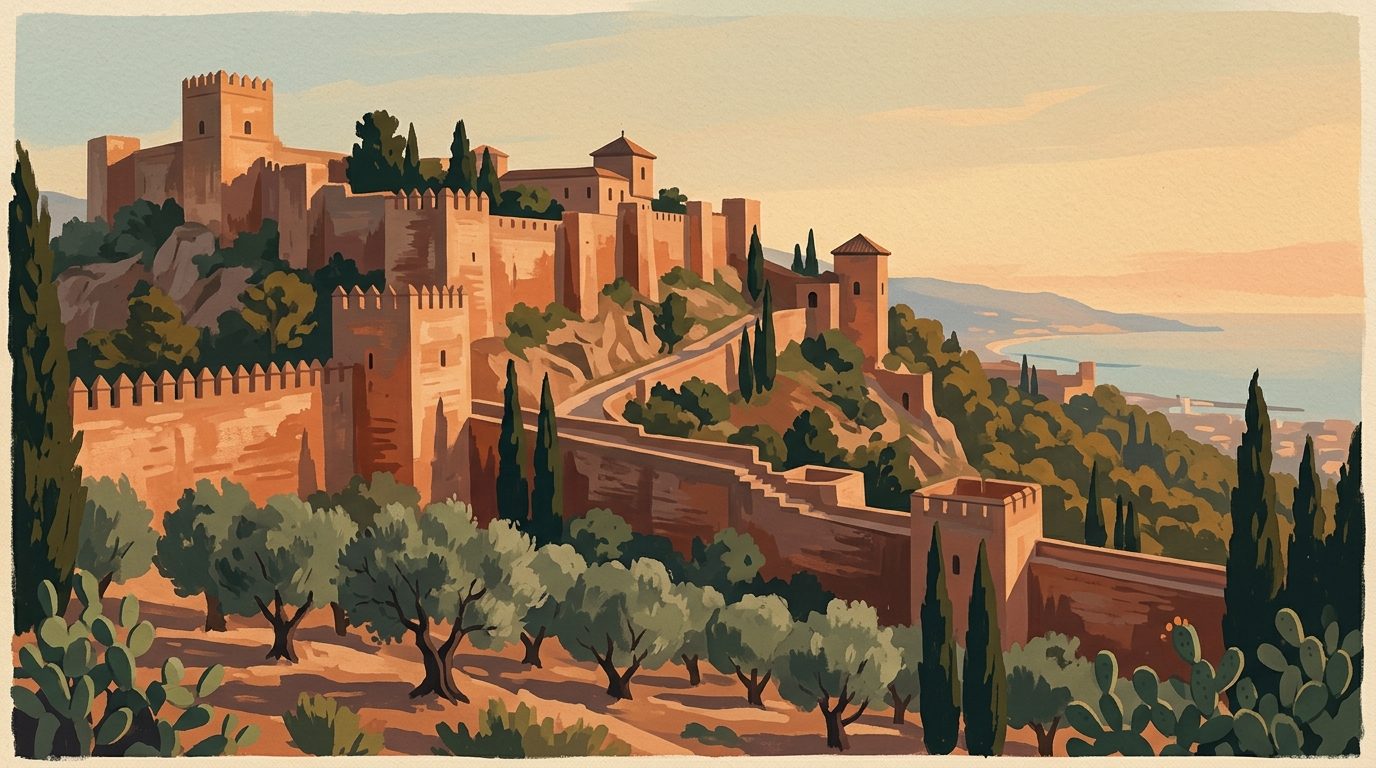
Castles and Fortresses of Andalucía
The fortresses of Andalucía are the stone guardians of a complex past, marking the ancient frontiers between empires and offering some of the most spectacular views in the southern peninsula.
6 min read
The Iberians in Andalucía: Warlords, Sculptors and the Dawn of Iron
Who were the sophisticated, iron-working peoples who controlled southern Spain before the Roman conquest? Their fortified hill towns and striking stone sculptures reveal a formidable culture caught between ancient local traditions and Mediterranean ambition.
6 min read
UNESCO Geoparks and Natural Wonders of Andalucía
Discover the geological heritage of Southern Spain through its UNESCO-designated geoparks and natural wonders. Explore the tectonic history and diverse ecosystems of Almería, Granada, and Cádiz.
6 min read
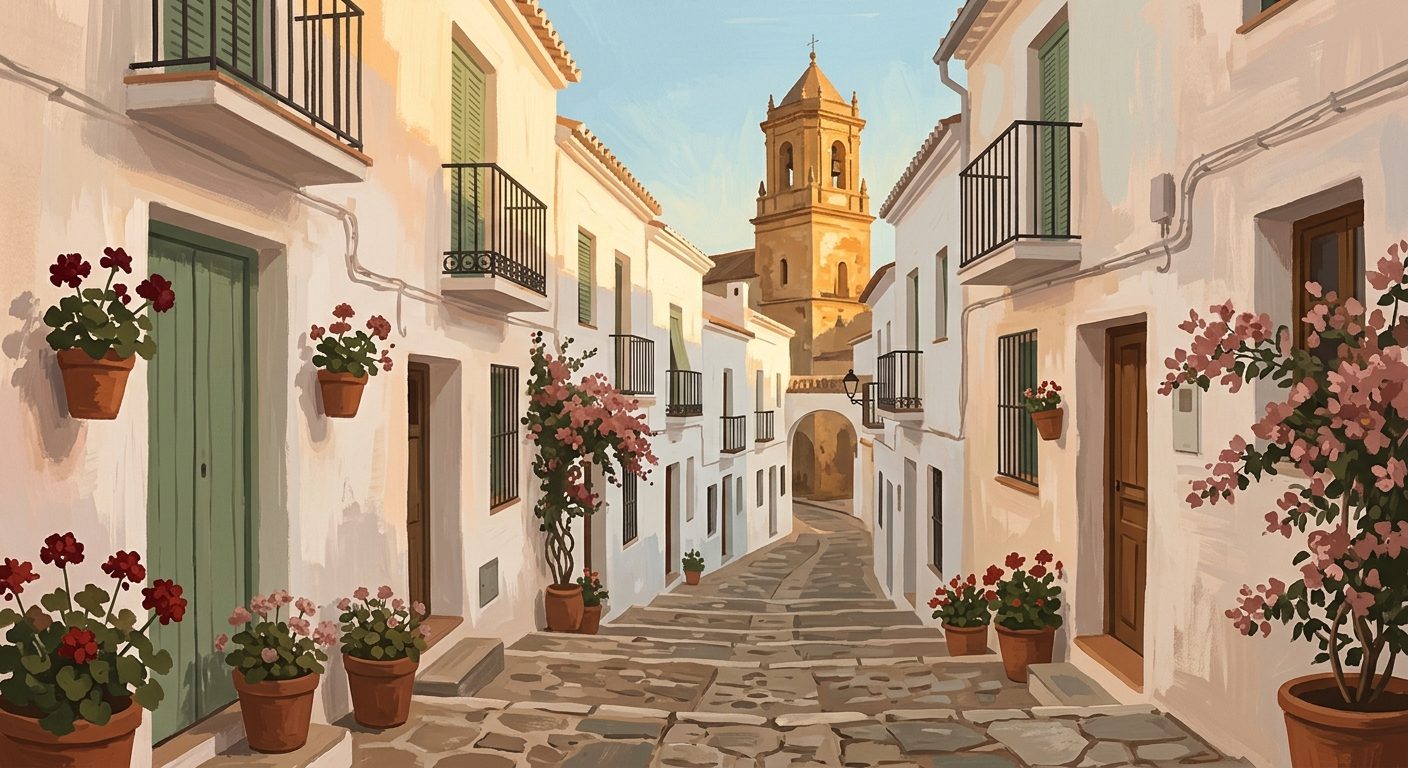
The White Villages of Andalucía: A Guide to the Pueblos Blancos
Discover the iconic white villages of Cádiz and Málaga, where lime-washed houses and narrow Moorish streets define the rugged mountain landscape of Andalucía.
6 min read
Newsletter
More stories from Andalucía
Weekly notes, seasonal picks, and the next guides worth bookmarking.