
Feature
Corduba and Roman Baetica
Discover the political and intellectual might of Corduba, the wealthy administrative capital of Roman Baetica and the birthplace of the philosopher Seneca.
By Dan · Updated 21 June 2026 · 7 min read
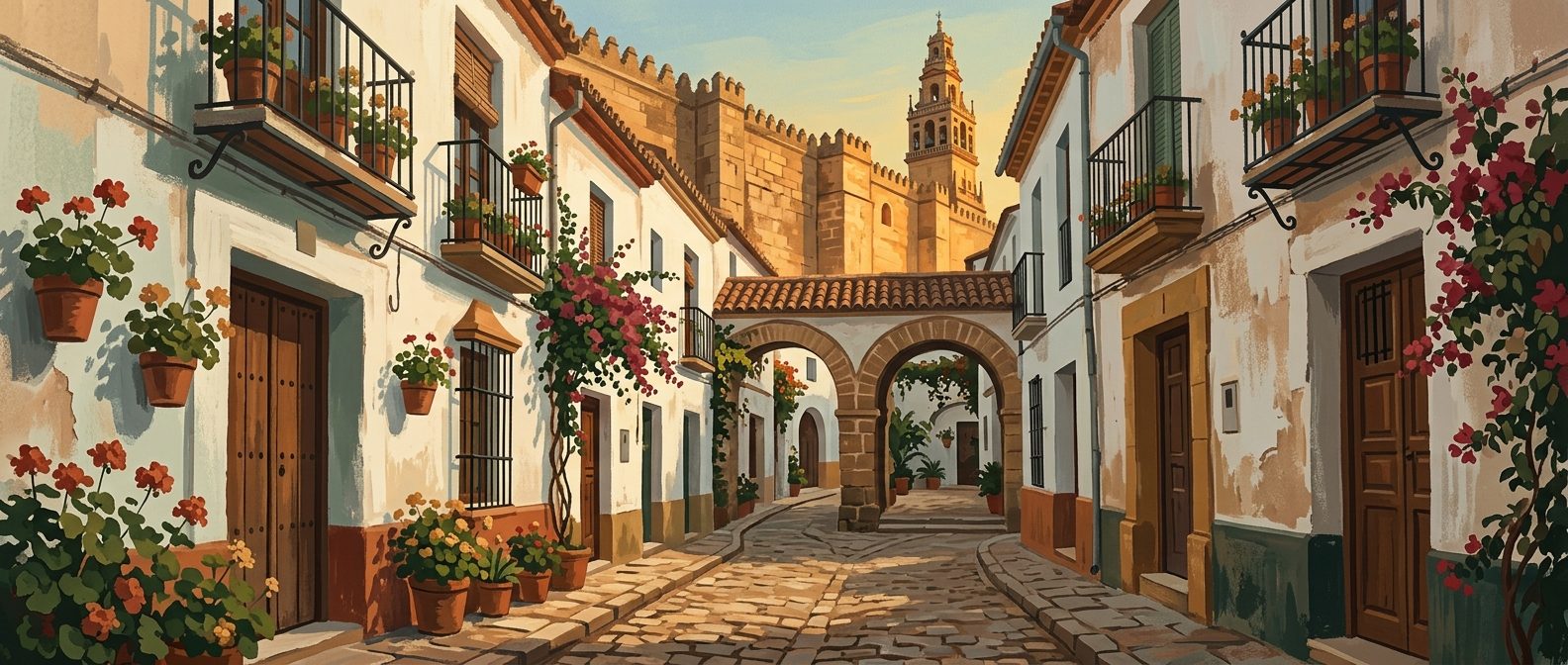
Before it became the seat of the Umayyad emirs, Corduba was the undisputed capital of Roman Baetica. It was a city of senators and philosophers, a provincial heavyweight that shaped the politics and literature of the early Roman Empire.
When Lucius Annaeus Seneca left his birthplace for Rome in the early first century AD, he was not a provincial outsider seeking a tenuous foothold in the imperial capital. He was a son of Corduba, a city whose elite were already deeply woven into the political and intellectual fabric of the empire. During the era of Roman Hispania Baetica (218 BC to AD 409), Corduba served as the administrative and financial command centre of southern Spain. It was the provincial capital, the residence of the proconsul, and the primary node for a massive export economy that fed Rome with olive oil, grain, and metals. The city produced wealth on a staggering scale, but it also produced ideas.
The Annaei family, which included Seneca the Younger, his father Seneca the Elder, and his nephew the poet Lucan, dominated Roman literary and philosophical life under the Julio-Claudian and Flavian emperors. Their ascent reflects the status of Corduba itself. This was a settlement that had evolved from a strategic military camp into Colonia Patricia, a patrician colony granted the highest civic honours by Augustus. Walking its ancient grid meant passing monumental temples, grand public baths, and an amphitheatre capable of seating tens of thousands. To understand the profound Romanisation of southern Spain, one must look to the city that governed it.
The Making of Colonia Patricia
The origins of Roman Corduba lie in conquest and consolidation. Around 152 BC, the Roman praetor Marcus Claudius Marcellus founded a permanent settlement on the right bank of the Baetis river, known today as the Guadalquivir. The site was chosen with strategic precision. It marked the highest navigable point of the river for large cargo vessels, making it a natural bottleneck for the lucrative trade routes flowing from the Sierra Morena down to the Atlantic. The river was much deeper and wider than it is today, allowing maritime vessels to dock directly at the city quays.
Initially a mixed settlement of Roman soldiers and local Iberians, Corduba grew rapidly. Its political loyalty, however, cost it dearly during the late republican civil wars. The city sided with Pompey the Great against Julius Caesar. Following Caesar's decisive victory at the Battle of Munda in 45 BC, he exacted a brutal revenge on Corduba, reportedly executing thousands of its leading citizens for their defiance. Yet the city rebounded with remarkable speed.
When Caesar's heir, Augustus, reorganised the empire, he bestowed upon Corduba the title of Colonia Patricia. This elevated status settled veteran soldiers in the city and firmly established it as the undisputed capital of the newly minted province of Baetica. The granting of colonial status meant its citizens enjoyed the same legal rights as those living in Italy, a powerful incentive for loyalty and civic development.
Governing Baetica
As the provincial capital, Corduba was the seat of the proconsul, the Roman governor appointed by the Senate to oversee Baetica. The province itself was remarkably peaceful. Unlike the heavily militarised northern frontiers of Hispania, Baetica required no standing legions. Its administration was entirely civilian, focused on law, taxation, and trade.
The city anchored the conventus Cordubensis, one of the four judicial districts of the province. Citizens and subjects from across the northern Guadalquivir valley travelled to Corduba to have their legal disputes settled by the governor. The city operated under a strict legal charter that dictated everything from the election of duumvirs (the two chief magistrates) to the rules for public sanitation. This steady influx of petitioners, merchants, and diplomats necessitated grand public infrastructure.
The local elite, eager to display their wealth and loyalty to Rome, engaged in intense euergetism (public patronage). They funded the construction of marble forums, porticoes, and statues through their private fortunes. The economic engine funding this civic pride was agriculture and mining. Corduba controlled the export of millions of amphorae filled with Andalucían olive oil, which were shipped directly to the port of Ostia. The wealth generated by this trade created a class of deeply entrenched local aristocrats who began to look beyond Baetica towards the Senate in Rome.
Seneca and the Intellectual Elite
It is impossible to separate the story of Roman Corduba from the Annaei family. The patriarch, Marcus Annaeus Seneca, known as Seneca the Elder, was a wealthy equestrian who moved to Rome and became a celebrated teacher of rhetoric. His son, Lucius Annaeus Seneca, achieved even greater historical prominence. Born in Corduba around 4 BC, Seneca the Younger became the foremost Stoic philosopher of his age, a prolific playwright, and eventually the tutor and chief advisor to the emperor Nero.
Seneca the Younger navigated the treacherous politics of the Julio-Claudian dynasty, accumulating massive personal wealth while writing treatises on the virtues of poverty and emotional detachment. His eventual forced suicide under Nero in AD 65 marked a tragic end, but his philosophical legacy endured. Seneca's writings, which emphasise reason, resilience, and civic duty, remain foundational texts of Western philosophy.
While Seneca spent his adult life in Rome, his provincial origins in Baetica were central to his identity. The Andalucían capital was a place where traditional Roman virtues of austerity and discipline were celebrated, frequently contrasting with the perceived decadence of the imperial court in Italy. The intellectual output of the family continued with Seneca's nephew, Lucan, whose epic poem Pharsalia chronicled the civil war between Caesar and Pompey. Together, these writers formed a "Corduban school" of literature, characterised by a brilliant, rhetorically intense style. Their prominence proves that by the first century AD, the cultural centre of gravity in the empire was beginning to shift from Italy towards the provinces.
The Imperial Cityscape
To reflect its status as the head of Baetica, Corduba was transformed into a monumental city that mimicked the architectural vocabulary of Rome itself. During the reign of Augustus and his successors, the urban grid was expanded. The city was supplied with fresh water by several monumental aqueducts, the most famous being the Aqua Augusta.
Archaeological excavations have revealed the sheer scale of Colonia Patricia. The city featured a massive theatre built into a natural slope. It was one of the largest in the entire Roman Empire, capable of seating roughly 15,000 spectators. An equally impressive amphitheatre, located just outside the western walls, hosted gladiatorial combat and wild beast hunts funded by local magistrates seeking political favour.
At the heart of the city were its forums. Corduba possessed at least two major public squares: a colonial forum for local administration and a provincial forum for regional governance. These spaces were lined with temples dedicated to the imperial cult, where the deified emperors were formally worshipped. This religious devotion was not merely spiritual. It was a highly orchestrated political system that bound the provincial elites to the emperor, ensuring their continued dominance over local affairs. Beyond the public buildings, wealthy citizens lived in sprawling urban villas decorated with intricate floor mosaics. Many of these mosaics featured geometric patterns or mythological scenes, reflecting the refined tastes of the provincial elite.
Where to see it today
The physical remains of Colonia Patricia are less immediately visible than the region's later Moorish architecture, but they are spectacular if you know where to look. The most prominent surviving structure is the Templo Romano on Calle Claudio Marcelo. Discovered during city hall expansions in the 1950s, this first-century AD temple formed part of the provincial forum. Several of its colossal fluted Corinthian columns have been re-erected, giving a clear sense of the monumental scale of Roman religious architecture in the city. The sheer size of the marble capitals, carved from high-quality stone, speaks to the immense financial power of the provincial capital.
The most comprehensive collection of Roman artefacts is housed in the Museo Arqueológico de Córdoba, located in the plaza de Jerónimo Páez. The museum building itself sits directly atop the remains of the Roman theatre, and visitors can walk through the excavated foundations in the basement levels. The galleries above contain exceptional pieces of the Roman era.
Key objects include the Aphrodite of Córdoba, an exquisite marble sculpture that demonstrates the high level of artistic patronage in the city. You will also find an extensive collection of funerary inscriptions, lead ingots stamped with imperial seals, and a striking statue of the god Mithras, which points to the diverse religious cults that operated in this cosmopolitan centre. Beyond the museum, you can also see the reconstructed Roman mausoleums situated near the Puerta Gallegos. These cylindrical tombs, dating from the first century AD, sat just outside the ancient city walls, conforming to the Roman law that forbade burials within the urban perimeter.
If you visit
The best place to begin an exploration of Roman Corduba is the Museo Arqueológico, which provides the necessary historical context and scale before you encounter the isolated ruins scattered throughout the modern streets. Spring and autumn are the ideal seasons for travelling to Córdoba, as the summer temperatures in the Guadalquivir valley frequently exceed forty degrees Celsius, making afternoon exploration deeply uncomfortable. The museum is generally open from Tuesday to Sunday. Entry is currently free for European Union citizens (with valid ID), though it is advisable to check the official website before travelling for seasonal hours and temporary exhibition fees. After viewing the collections, a short walk takes you to the Templo Romano, which is particularly evocative in the early evening when the massive columns are illuminated against the Andalucían sky.
Last reviewed: 21 June 2026 · Editorial policy
Related guides
The British in Río Tinto: Copper, Colony and the Rio Tinto Company
In 1873, a British syndicate purchased the ancient copper mines of Huelva from a bankrupt Spanish government. The resulting Rio Tinto Company Limited transformed the landscape into a massive industrial enterprise, leaving behind a profound legacy of Victorian architecture, immense open-pit mines, and pioneering railway engineering in western Andalucía.
8 min read
The Spanish Inquisition in Andalucía: Orthodoxy and Paranoia
From its very first tribunal in Sevilla to the shadow it cast over centuries of daily life, the Spanish Inquisition demanded absolute religious conformity. Its legacy remains etched in the architecture, archives and even the culinary traditions of southern Spain.
7 min read
Late-Antique Andalucía: Crisis, Christianity, and the Vandals
The transformation of southern Spain from a classical Roman province to a Christianised landscape was marked by economic crises, religious upheaval, and the sudden arrival of Germanic tribes.
7 min read
Iberian Cities and Oppida: The Fortified Hilltop Towns of Andalucía
The ancient Iberians transformed the landscape of southern Spain with massive fortified settlements known as oppida. These hilltop towns were the centres of a powerful aristocratic society built on agriculture, mining and Mediterranean trade.
7 min read
Industrial Heritage in Andalucía: Mines, Railways and the British
The nineteenth century brought an industrial boom to Andalucía, fuelled by British capital and ancient mineral wealth. Copper, iron and railways reshaped the landscape, leaving behind a profound legacy of Victorian architecture and vast open-pit mines.
6 min read
Tartessos and the Silver Trade
Ancient Greek historians wrote of a legendary kingdom in the far west ruled by a monarch of impossible age and wealth. Modern archaeology has stripped away the myth to reveal an indigenous Iberian society transformed by an insatiable Mediterranean demand for silver.
8 min read
More guides
UNESCO World Heritage Sites in Andalucía
A curated guide to the cultural and natural sites in Andalucía recognised by UNESCO for their universal value. These landmarks offer a profound insight into the diverse civilisations of the region.
6 min read
The Best Beaches in Andalucía
From the Atlantic dunes of Huelva to the volcanic coves of Almería, the coastline of southern Spain offers an unparalleled variety of maritime landscapes.
6 min read
Phoenicians and Tartessians in Andalucía
Around three thousand years ago, eastern Mediterranean merchants arrived on the Iberian coast seeking silver and copper. Their arrival sparked a cultural collision that transformed local chiefdoms into the legendary civilisation of Tartessos.
6 min read
Roman Andalucía: Ruins and Archaeological Sites
Discover the monumental legacy of the Roman province of Baetica, from grand amphitheatres in the Guadalquivir valley to maritime cities on the Atlantic coast.
7 min read
Geological Wonders: Caves and Karst Landscapes of Andalucía
Discover the subterranean wonders and prehistoric secrets preserved within the limestone massifs and gypsum deposits of southern Spain.
6 min read
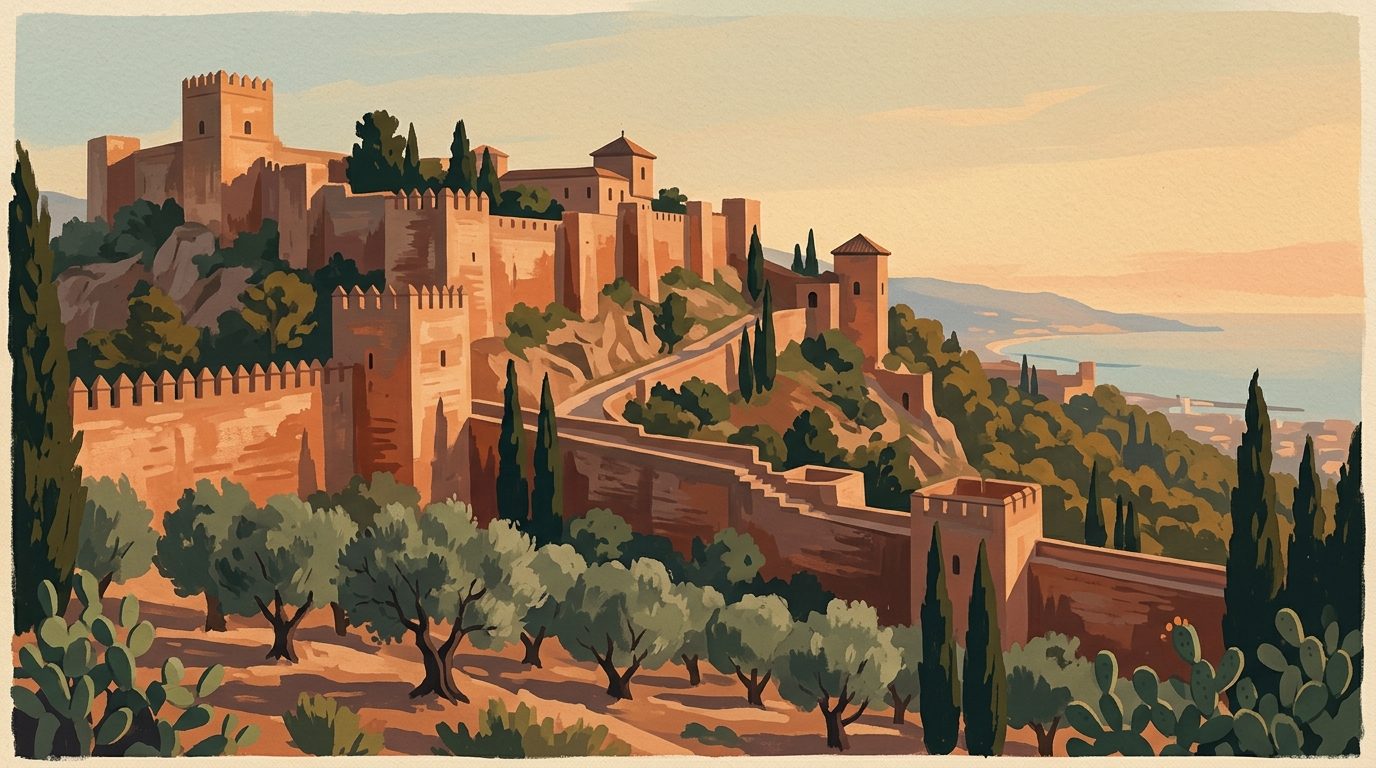
Castles and Fortresses of Andalucía
The fortresses of Andalucía are the stone guardians of a complex past, marking the ancient frontiers between empires and offering some of the most spectacular views in the southern peninsula.
6 min read
The Iberians in Andalucía: Warlords, Sculptors and the Dawn of Iron
Who were the sophisticated, iron-working peoples who controlled southern Spain before the Roman conquest? Their fortified hill towns and striking stone sculptures reveal a formidable culture caught between ancient local traditions and Mediterranean ambition.
6 min read
UNESCO Geoparks and Natural Wonders of Andalucía
Discover the geological heritage of Southern Spain through its UNESCO-designated geoparks and natural wonders. Explore the tectonic history and diverse ecosystems of Almería, Granada, and Cádiz.
6 min read
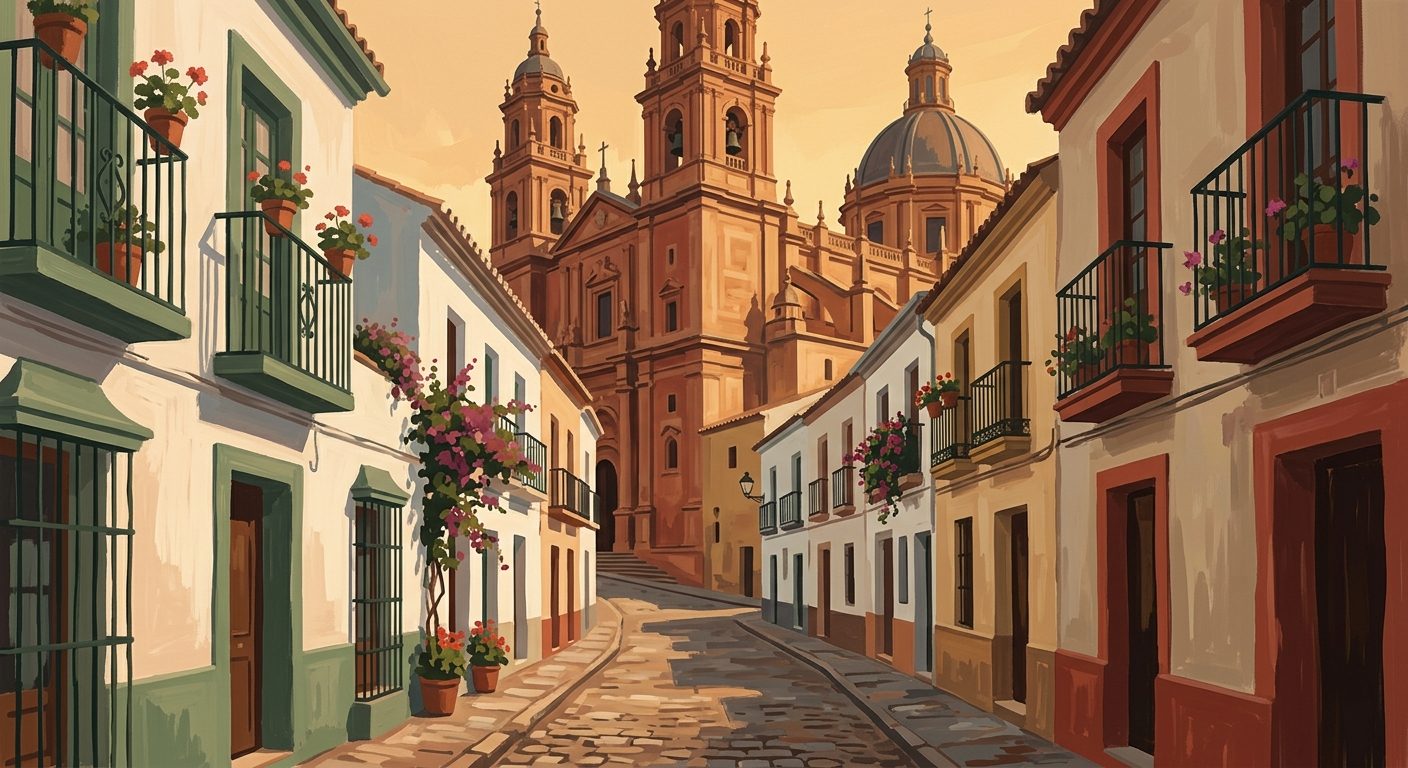
Cathedrals and Great Churches of Andalucía
A guide to the monumental religious architecture of Southern Spain, from the vast Gothic nave of Sevilla to the Renaissance masterworks of Jaén and Granada.
6 min read
Newsletter
More stories from Andalucía
Weekly notes, seasonal picks, and the next guides worth bookmarking.