
Feature
The Auto-da-Fé in Andalucía: Spectacle and Judgement
The auto-da-fé was not merely a trial, but a highly choreographed spectacle of religious and political power. Across the great squares of Sevilla, Córdoba and Granada, these public acts of faith transformed the grim mechanics of judgement into grand urban theatre.
By Dan · Updated 24 June 2026 · 8 min read
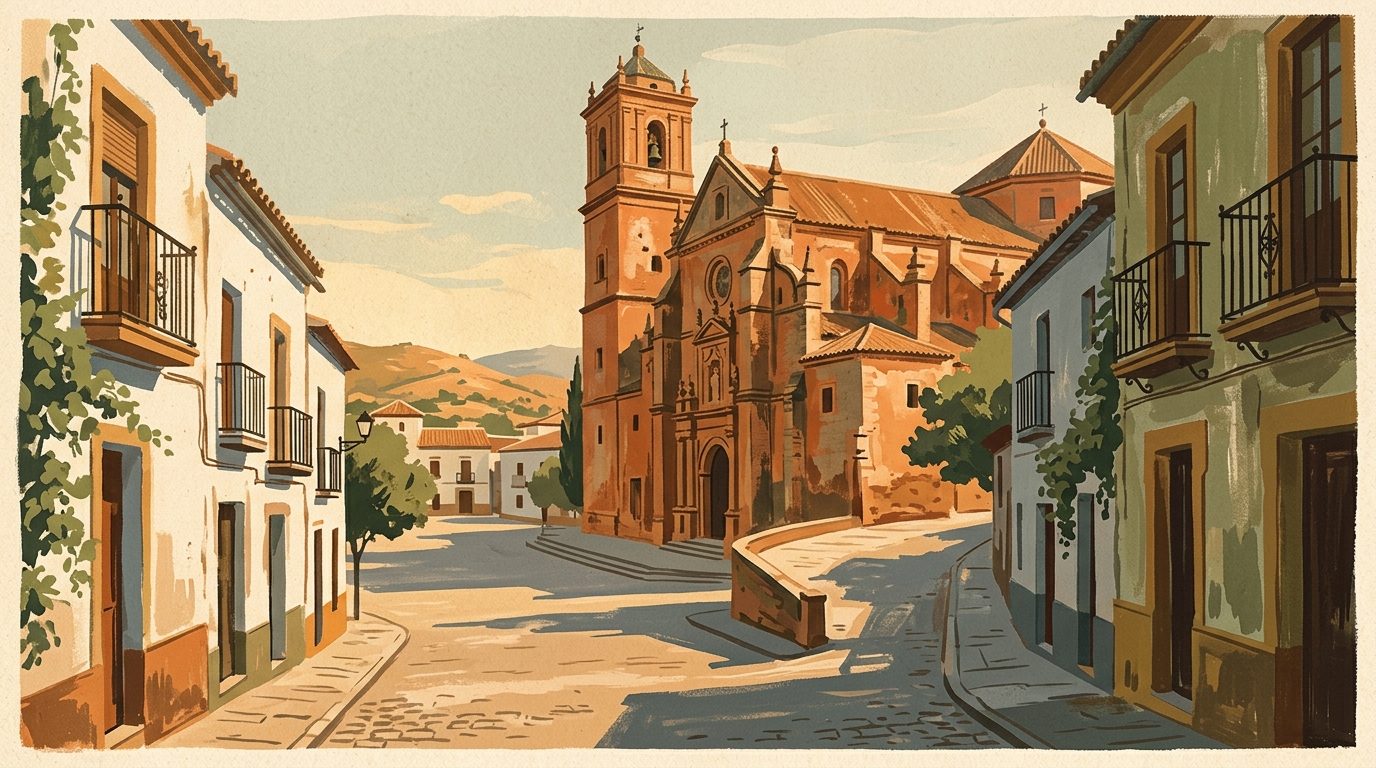
The auto-da-fé was not merely a trial, but a highly choreographed spectacle of religious and political power. Across the great squares of Sevilla, Córdoba and Granada, these public acts of faith transformed the grim mechanics of judgement into grand urban theatre.
Before dawn, the ringing of church bells would wake the citizens of the city. In the main square, immense wooden bleachers had been erected over several weeks, funded by the municipal council and designed to hold thousands of spectators. By sunrise, the narrow streets were filled with people angling for a view of the procession. During the long era of the Spanish Inquisition (1478 to 1834), the Holy Office required a physical stage to assert its ultimate authority over the souls of Andalucía. The auto-da-fé, which translates directly to act of faith, served as this stage.
The procession moved slowly. At the front came the secular and religious authorities, followed by the accused. The prisoners walked barefoot, carrying unlit wax candles and wearing the sanbenito, a coarse yellow sackcloth garment painted with specific symbols denoting their alleged crimes. A heavy scent of beeswax and incense hung in the air. For the accused, this walk was a public humiliation designed to strip away their social standing. For the crowd, it was a profound civic and religious event, combining the solemnity of a high mass with the atmosphere of a public holiday. The authorities designed every detail of the day to reinforce the boundaries of orthodox belief and to demonstrate the terrifying consequences of crossing them.
The Anatomy of a Public Ritual
Modern understanding often conflates the auto-da-fé with the execution of prisoners, but the two were distinct events. The auto-da-fé was primarily a ceremony of penance, reconciliation and the reading of sentences. Church doctrine strictly forbade clerics from shedding blood. Therefore, the inquisitors did not execute anyone in the public square. Instead, the ceremony was an elaborate ritual of reintegration for those who had confessed, and a formal expulsion from the Church for those who had not.
The visual language of the event was carefully calibrated. The sanbenito worn by the accused communicated their exact status to the illiterate crowd. Those who had committed minor offences wore plain yellow tunics. Those condemned to death who had confessed and repented wore tunics painted with flames pointing downwards. This indicated they would be granted the mercy of strangulation before their bodies were burned. The unrepentant wore garments painted with demons and upward-pointing flames, signifying they were to be burned alive. Many also wore a coroza, a tall conical paper hat that further mocked the wearer.
The ceremony could last from dawn until dusk. It featured lengthy sermons, the public swearing of oaths by city officials to protect the Catholic faith, and the exhaustive reading of each prisoner's crimes and sentence. Only when the religious ceremony concluded were the condemned officially relaxed, or handed over, to the secular authorities. The secular arm then marched the prisoners out of the city gates to the quemadero (the burning place) to carry out the executions.
Sevilla and the First Flames
The story of the Andalucían Inquisition begins in Sevilla. In 1480, the first inquisitors arrived in the city, establishing their headquarters in the Castillo de San Jorge, a formidable fortress on the Triana side of the Guadalquivir river. Their primary targets were conversos, citizens of Jewish descent who had converted to Christianity but were suspected of secretly practising their former faith.
In 1481, Sevilla hosted the first auto-da-fé recorded under the newly established Spanish Inquisition. Six people were condemned and subsequently burned at the stakes erected outside the city. As the decades passed, the rituals grew in scale and complexity. The Plaza de San Francisco, located in the civic heart of Sevilla, became the premier venue for these spectacles. The square offered ample space for the massive wooden amphitheatres required to seat the inquisitors, the nobility and the condemned.
The elite of Sevilla fiercely competed for the best vantage points. Wealthy families rented the balconies of the surrounding buildings for exorbitant sums. Watching an auto-da-fé was considered a demonstration of one's own religious purity and loyalty to the crown. The atmosphere in the Plaza de San Francisco was highly charged, combining religious dread with social posturing, as the aristocracy looked down upon the public shaming of their former neighbours and business rivals.
Terror and Rebellion in Córdoba
While Sevilla was the administrative centre of the Inquisition in Andalucía, Córdoba became the site of its most infamous abuses. The inquisitorial tribunal in Córdoba was headquartered in the Alcázar de los Reyes Cristianos. In 1499, Diego Rodríguez Lucero was appointed as the chief inquisitor of the city. Lucero initiated a reign of terror that remains a subject of intense historical study.
Lucero operated with extreme paranoia and ruthlessness. He began targeting not only ordinary conversos but also prominent members of the Córdoban nobility and clergy, accusing them of participating in vast, underground Jewish conspiracies. He claimed that secret synagogues operated within the city and extracted bizarre, detailed confessions through the extensive use of torture.
In 1504, Lucero orchestrated one of the largest and most devastating autos-da-fé in Andalucían history. Over a hundred people were condemned and burned. However, Lucero had overplayed his hand. His accusations against the local elite united the city against him. In 1506, the Marquis of Priego led an armed rebellion. The nobility and the common townspeople stormed the Alcázar de los Reyes Cristianos, demanding the release of the prisoners and the arrest of the inquisitor. Lucero fled the city on horseback. This violent uprising highlights a crucial historical reality: the Inquisition was not accepted passively. When its overreach threatened the social order, the people of Andalucía proved capable of forceful, organised resistance.
Granada and the Morisco Trials
Following the Christian conquest in 1492, Granada presented an entirely different demographic and theological challenge. The city had a massive population of Muslims who, over the subsequent decades, were forced to convert to Christianity, becoming known as Moriscos. In 1526, Emperor Charles V transferred an inquisitorial tribunal to Granada specifically to monitor this population.
The autos-da-fé in Granada, often held in the Plaza de Bib-Rambla, focused less on theological deviations and more on cultural policing. The Inquisition in Granada criminalised the daily lived experience of the Moriscos. Speaking Arabic, visiting traditional bathhouses, wearing Moorish clothing or playing traditional music were all treated as evidence of religious heresy. The public ceremonies here were tools of aggressive cultural assimilation.
The atmosphere in Granada was profoundly tense. The tribunal operated as an occupying force, extracting fines and property confiscations from a population that clung desperately to its ancestral identity. The constant pressure from the inquisitors eventually contributed to the devastating Morisco Rebellion of the Alpujarras in 1568, a bloody conflict that ended with the mass deportation of the Morisco population from the Kingdom of Granada.
Where to see it today
Plaza de San Francisco, Sevilla
Today, the Plaza de San Francisco remains the civic heart of Sevilla, dominated by the highly ornate plateresque facade of the Ayuntamiento (City Hall). While there are no monuments explicitly detailing the suffering of the victims, standing in the centre of the square provides a clear sense of the spatial dynamics of the auto-da-fé. Look up at the balconies surrounding the plaza, which were highly prized by the 16th-century nobility looking to demonstrate their orthodoxy. To understand the administrative side, cross the river to the Castillo de San Jorge in Triana. The subterranean ruins of the inquisitorial cells and guardrooms have been excavated and preserved beneath the Mercado de Triana.
Museo Casa de los Tiros, Granada
Located in the Realejo district, the Museo Casa de los Tiros is a 16th-century mansion built shortly after the Christian conquest. It provides essential context for the social order that the Inquisition sought to enforce in Granada. The highlight is the Cuadra Dorada, a room featuring a magnificent wooden ceiling carved with the portraits of Christian monarchs and heroes. The space serves as a striking physical manifestation of the new, aggressive Christian ideology that dominated Granada during the era of the Morisco trials.
Alcázar de los Reyes Cristianos, Córdoba
The Alcázar de los Reyes Cristianos served as the headquarters of the Inquisition in Córdoba for over three centuries. Visitors can walk through the heavily fortified courtyards and view the imposing Tower of the Inquisition, where prisoners were held during the tenure of Diego Rodríguez Lucero. The thick walls and defensive architecture reflect a tribunal that often felt besieged by the very city it was attempting to control.
If you visit
To best understand the physical reality of these events, begin your visit at the Castillo de San Jorge in Sevilla. The archaeological remains of the prison provide a stark, grounding contrast to the grand public spaces where the ceremonies concluded. While many municipal museums in Andalucía traditionally close on Mondays, major sites like the Alcázar in Córdoba and the Castillo de San Jorge have variable schedules. Opening hours for the Castillo de San Jorge, in particular, have been inconsistent in recent years (check on the operators' websites before travelling). Walking between the Castillo and the Plaza de San Francisco takes about twenty minutes and traces the exact route walked by the condemned, an experience best undertaken in the milder weather of spring or autumn.
Sources & Further Reading
- For a comprehensive academic overview of the Inquisition's mechanics and social impact, see Henry Kamen's The Spanish Inquisition: A Historical Revision.
- Official visitor information for the Castillo de San Jorge can be found via the Visit Sevilla portal.
- Details on the Alcázar de los Reyes Cristianos are available on the official Córdoba Tourism website.
Last reviewed: 21 June 2026 · Editorial policy
Related guides
Ink and Olive Groves: A Literary Journey through Andalucía
Discover the literary heart of Southern Spain, from the tragic poetry of Lorca in Granada to Hemingway’s dramatic Ronda and the contemplative prose of Machado in Sevilla.
10 min read
Expulsion of the Jews and the Conversos
The Alhambra Decree of 1492 forced a devastating ultimatum upon the Jewish population of Andalucía: exile or conversion. For those who chose baptism, the decision marked the beginning of centuries of relentless inquisitorial surveillance.
7 min read
Foundation of the Sevilla Inquisition Tribunal
In 1478, a papal bull established the Spanish Inquisition. Sevilla became the testing ground for a systematic pursuit of heresy that would define an era.
7 min read
Historical Memory and Exhumations in Andalucía: Unearthing the Past
For decades, the earth of southern Spain held the silent victims of systematic repression. Today, meticulous forensic exhumations are restoring names and dignity to thousands who lay forgotten in unmarked mass graves.
7 min read
The Long Decline and Final Abolition of the Inquisition in Andalucía
The twilight of the Holy Office was a slow, bureaucratic fading rather than a sudden collapse. Enlightenment ideals and political upheaval finally dismantled a system that had overseen centuries of religious orthodoxy.
8 min read
The British in Río Tinto: Copper, Colony and the Rio Tinto Company
In 1873, a British syndicate purchased the ancient copper mines of Huelva from a bankrupt Spanish government. The resulting Rio Tinto Company Limited transformed the landscape into a massive industrial enterprise, leaving behind a profound legacy of Victorian architecture, immense open-pit mines, and pioneering railway engineering in western Andalucía.
8 min read
More guides
UNESCO World Heritage Sites in Andalucía
A curated guide to the cultural and natural sites in Andalucía recognised by UNESCO for their universal value. These landmarks offer a profound insight into the diverse civilisations of the region.
6 min read
The Best Beaches in Andalucía
From the Atlantic dunes of Huelva to the volcanic coves of Almería, the coastline of southern Spain offers an unparalleled variety of maritime landscapes.
6 min read
Phoenicians and Tartessians in Andalucía
Around three thousand years ago, eastern Mediterranean merchants arrived on the Iberian coast seeking silver and copper. Their arrival sparked a cultural collision that transformed local chiefdoms into the legendary civilisation of Tartessos.
6 min read
Roman Andalucía: Ruins and Archaeological Sites
Discover the monumental legacy of the Roman province of Baetica, from grand amphitheatres in the Guadalquivir valley to maritime cities on the Atlantic coast.
7 min read
Geological Wonders: Caves and Karst Landscapes of Andalucía
Discover the subterranean wonders and prehistoric secrets preserved within the limestone massifs and gypsum deposits of southern Spain.
6 min read
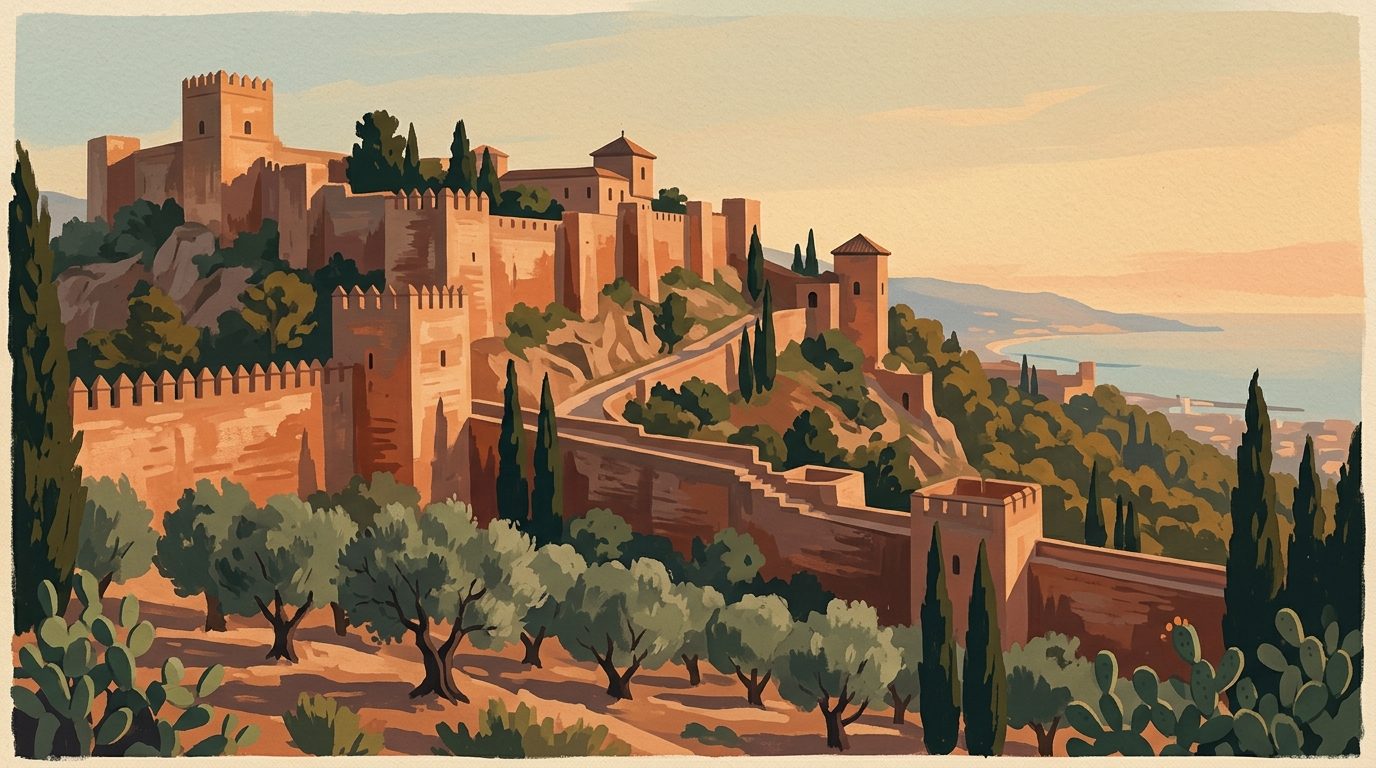
Castles and Fortresses of Andalucía
The fortresses of Andalucía are the stone guardians of a complex past, marking the ancient frontiers between empires and offering some of the most spectacular views in the southern peninsula.
6 min read
The Iberians in Andalucía: Warlords, Sculptors and the Dawn of Iron
Who were the sophisticated, iron-working peoples who controlled southern Spain before the Roman conquest? Their fortified hill towns and striking stone sculptures reveal a formidable culture caught between ancient local traditions and Mediterranean ambition.
6 min read
UNESCO Geoparks and Natural Wonders of Andalucía
Discover the geological heritage of Southern Spain through its UNESCO-designated geoparks and natural wonders. Explore the tectonic history and diverse ecosystems of Almería, Granada, and Cádiz.
6 min read
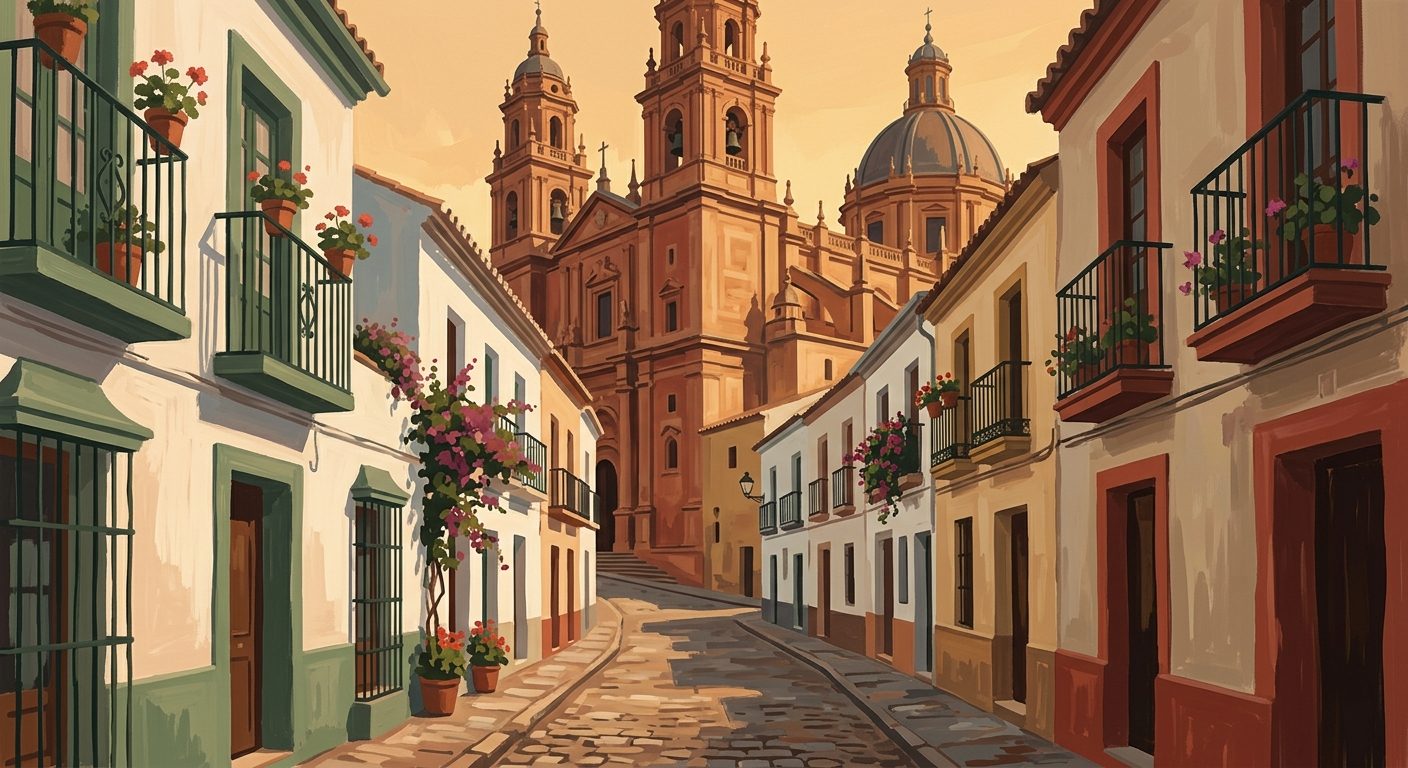
Cathedrals and Great Churches of Andalucía
A guide to the monumental religious architecture of Southern Spain, from the vast Gothic nave of Sevilla to the Renaissance masterworks of Jaén and Granada.
6 min read
Newsletter
More stories from Andalucía
Weekly notes, seasonal picks, and the next guides worth bookmarking.