
Things to do
Bikepacking in Andalucía: A Complete Guide to Two-Wheeled Adventures
Discover how to plan the ultimate bikepacking adventure in southern Spain. Our guide covers route planning, essential gear, weather windows, and tips for navigating wild terrain.
By Dan · Updated 16 July 2026 · 13 min read
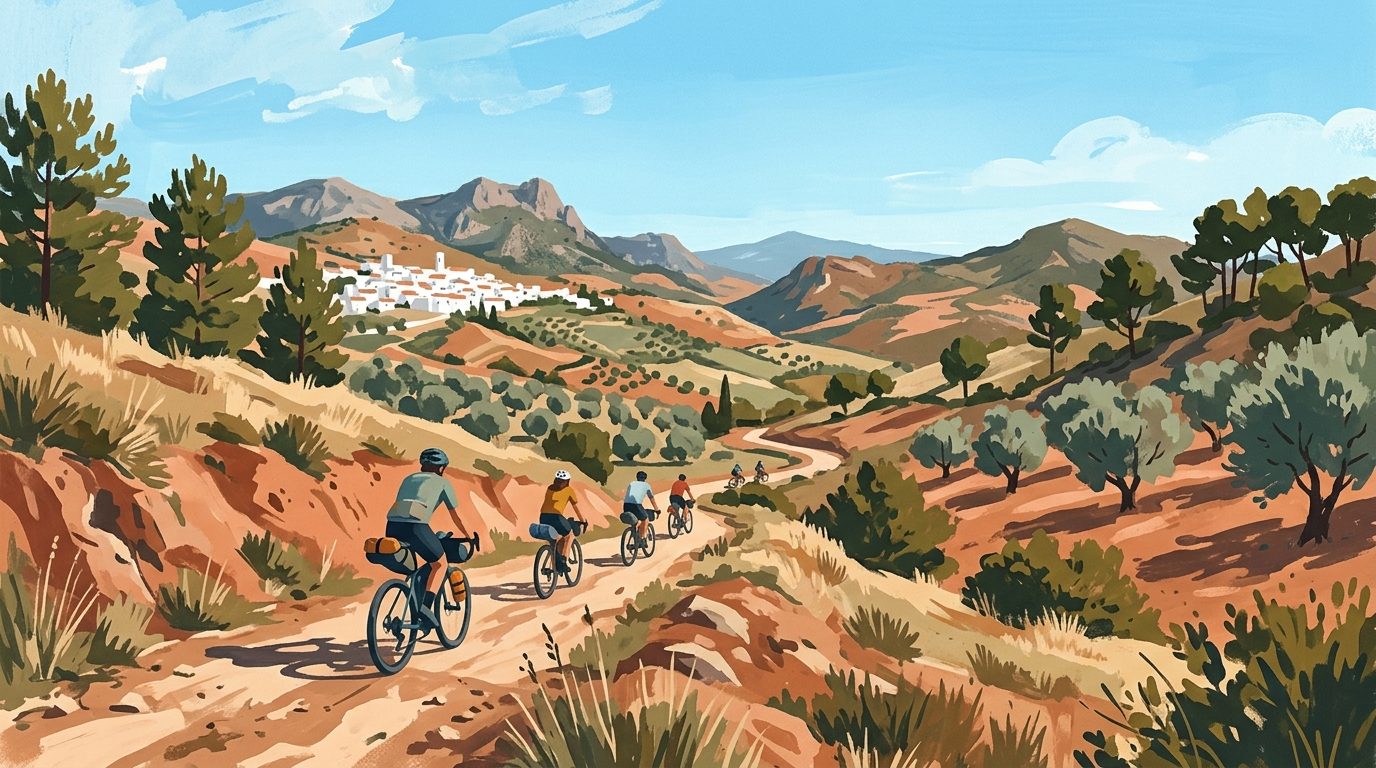
There is a specific sound that defines bikepacking in southern Spain: the rhythmic crunch of wide tyres rolling over dry white gravel, accompanied by the low hum of cicadas in the pine trees. Throw in the scent of wild rosemary baking in the afternoon sun, and you have the sensory backdrop for one of the most rewarding outdoor experiences in Europe.
Bikepacking (essentially backpacking with a bicycle, using frame bags instead of traditional panniers) has exploded in popularity over the last decade. While many riders flock to the Alps or the Scottish Highlands, Andalucía offers something entirely different. Away from the heavily populated coastal resorts lies a vast, empty interior of mountain ranges, olive groves, deep gorges, and high-altitude deserts. It is a spectacular environment for cyclists who want to get off the tarmac and explore under their own steam.
Here is everything you need to know to plan a bikepacking trip in Andalucía, from choosing the right trails and dealing with the Spanish climate, to navigating the local trains with your bicycle and figuring out where your next meal is coming from.
Why Choose Andalucía for Bikepacking?
The geography of southern Spain makes it an exceptional destination for off-road cycling. The region is crossed by an intricate network of caminos rurales (agricultural tracks connecting farms and villages) and vías pecuarias (ancient drovers' roads used for moving livestock). Because these tracks are mostly unpaved and see very little motorised traffic, they are perfect for gravel bikes and hardtail mountain bikes.
Another major draw is the sheer variety of the landscape. Within a few days of riding, you can transition from the snowy peaks of the Sierra Nevada down to the badlands of the Gorafe desert, and finally to the Mediterranean coastline. You will pass through white villages perched on hillsides, deep river valleys, and dense cork oak forests.
However, the terrain is demanding. Flat sections are rare, and the gradients can be punishing. You are trading easy miles for spectacular isolation and authentic local culture. Out here, tourism is an afterthought. You will share the trails with goatherds, local farmers, and perhaps the occasional wild boar.
When to Go: Weather and Climate
Timing is everything when planning a bikepacking trip here. The Andalucían summer is fiercely hot, with inland temperatures regularly exceeding 40 degrees Celsius between June and August. Bikepacking during these months is not just uncomfortable: it is genuinely dangerous due to the lack of shade and scarce water sources.
The optimal windows for bikepacking are spring and autumn. Mid-March through to late May is arguably the most beautiful time to ride. The winter rains have turned the countryside bright green, wildflowers are blooming everywhere, and daytime temperatures hover comfortably between 18 and 25 degrees. The rivers are also flowing, which makes finding water significantly easier.
Autumn (late September to November) is the second prime window. The landscape will be much drier and painted in dusty golds and browns, but the temperatures are ideal for strenuous physical effort. Winter riding is entirely possible in lower elevation areas, particularly near the coast or in provinces like Cádiz and Málaga, but you will need serious cold-weather gear if you plan to venture into the high sierras of Granada or Jaén, where snow is common.
Choosing Your Route: Top Bikepacking Trails
Whether you want a relaxed two-day ride between country hotels or a brutal, unsupported physical challenge, Andalucía has a route for you. Here are some of the most notable options for off-road touring.
The TransAndalus
If you want the ultimate challenge, the TransAndalus is exactly that. It is a 2,000-kilometre, continuously linked off-road route that circles the entire region, passing through all eight provinces. Created by a community of local mountain bikers, the route is completely free to download and uses rural tracks, forest roads, and singletrack.
You do not have to tackle the whole thing at once. Most riders pick a province or a specific section. The Cádiz section, running from the coastal winds of Tarifa up through the Alcornocales Natural Park to the cliff-top town of Ronda, is incredibly popular and offers a great mix of challenging climbs and stunning forest scenery. The Granada to Almería section is much tougher, crossing remote, arid landscapes where water management becomes your primary concern.
The route is designed for mountain bikes, though a highly capable gravel bike with wide tyres can handle most of it. Expect to push your bike on some of the steeper, looser ascents.
The Badlands Route (Gorafe to Cabo de Gata)
Made famous by the annual ultra-endurance gravel race, the Badlands route has become a bucket-list ride for serious bikepackers. Covering roughly 750 kilometres with a staggering 15,000 metres of elevation gain, it is not for the faint of heart.
The trail usually starts in Granada and takes riders through some of the most extreme environments in Europe. You will cross the high-altitude pine forests of the Sierra Nevada, drop into the alien, red-rock canyons of the Gorafe desert, traverse the Tabernas desert (Europe's only official desert and the filming location for classic spaghetti westerns), before finishing at the coastal natural park of Cabo de Gata.
If you choose to ride this independently outside of the official race, take it seriously. Villages are far apart, mobile phone reception is patchy, and the heat in the desert sections can be overwhelming even in spring. It is a beautiful, brutal journey.
Sierras de Cazorla, Segura y Las Villas
Located in the province of Jaén, this is Spain's largest protected natural area, and it feels a world away from the dry plains of the south. This area is heavily forested, mountainous, and relatively cool. It is also the source of the Guadalquivir, Andalucía's most important river.
The network of forestry tracks here is immense. You can easily link together a three or four-day loop starting from the town of Cazorla. The riding is characterised by long, steady climbs up fire roads, followed by sweeping descents through pine forests. It is an excellent area for wildlife enthusiasts: you are highly likely to spot red deer, fallow deer, and griffon vultures circling overhead.
Vía Verde de la Sierra
For beginners, families, or those looking for a gentle introduction to bikepacking without the punishing climbs, the Vía Verde de la Sierra is perfect. This 36-kilometre route follows a disused railway line between Olvera (in Cádiz province) and Puerto Serrano (in Seville province).
Because it is a former railway, the gradients are incredibly gentle. The route passes through 30 tunnels and crosses numerous viaducts, winding alongside riverbanks and through a major griffon vulture reserve at Zaframagón. You can pack your bags, cycle the route in a few hours, spend the night in a local hostal, and cycle back the next day. It is a fantastic, low-stress adventure.
The Right Gear: Bikes, Tyres and Packing
The terrain in southern Spain is abrasive. The rocks are sharp, the trails are dusty, and the climbs are steep. Your equipment needs to be chosen with durability in mind over pure weight savings.
The Ideal Bicycle
There is an ongoing debate in the bikepacking community about whether to use a gravel bike or a mountain bike. In Andalucía, both have their merits, but you need to be realistic about the terrain. A hardtail mountain bike with front suspension is the most comfortable and capable option for routes like the TransAndalus. It will handle the rocky descents and washed-out gullies with ease.
If you prefer a gravel bike, make sure it has clearance for wide tyres. Traditional road-style gearing will not work here. You need very low gears. A 1x drivetrain with a 40-tooth or 38-tooth chainring at the front, paired with a massive 10-52 cassette at the back, is highly recommended. When your bike is loaded with 15 kilograms of gear and water, and you hit a 15-percent gravel gradient in the midday sun, you will be grateful for a purely climbing gear.
Tyres and Puncture Protection
Do not attempt off-road riding in Spain with inner tubes. Tubeless tyres are an absolute necessity. The countryside is filled with goat-head thorns (locally known as pinchos) which will pierce a traditional inner tube within the first few miles.
Set your bike up tubeless with fresh sealant before you arrive. For gravel bikes, a minimum tyre width of 45mm is recommended, though 50mm or even 2.1-inch tyres are better. Choose a tyre with reinforced sidewalls (the sharp rocks in areas like the Sierra Nevada are notorious for slashing lightweight, supple tyres). Bring tyre plugs (like Dynaplugs) and a spare tube just in case of a catastrophic tear.
Packing and Bags
A standard bikepacking setup involves a large seat pack beneath your saddle, a custom frame bag sitting inside the main triangle of the bike, and a handlebar roll. This distributes the weight evenly and keeps the bike agile. Avoid traditional panniers on racks if you plan to ride singletrack or rough terrain, as the hardware tends to rattle loose and the bags can snag on narrow rocky sections.
Keep your heavy items (like water, tools, and electronics) in the frame bag to maintain a low centre of gravity. Put bulky, lightweight items like your sleeping bag and spare clothing in the seat pack and handlebar roll.
Clothing Strategies
Layering is the key to comfort. A typical spring day in the mountains might start at 5 degrees Celsius at dawn and hit 28 degrees by mid-afternoon. Merino wool base layers are excellent because they regulate temperature well and resist odours, which is crucial when you are wearing the same clothes for several days.
Pack a lightweight, packable windproof jacket for the long descents, and a high-quality synthetic or down insulated jacket for the evenings. Even if the days are hot, the temperature drops rapidly as soon as the sun goes down behind the mountains. Do not forget a solid pair of sunglasses to protect against UV rays and flying dust, and apply high-factor sunscreen generously.
Logistics: Sleeping, Eating and Water
The practicalities of living off your bike require some planning. Spain has specific cultural rhythms and strict environmental laws that you need to factor into your daily schedule.
Sleeping: Wild Camping vs Roofs
Wild camping in Spain is legally complicated. National laws are interpreted differently by each autonomous community, but the general rule in Andalucía is that pitching a tent in the wild (acampar) is prohibited outside of designated campsites. This is strictly enforced in protected areas like natural parks, where the Guardia Civil actively patrol and issue heavy fines.
However, bivouacking (pernoctar), which means sleeping under the stars without a structured tent, arriving at dusk and leaving at dawn, is sometimes tolerated if you are discreet, leave absolutely no trace, and are far from towns or beaches. Never light a fire. The risk of forest fires in southern Spain is extreme, and lighting a fire or even using a camping stove in dry areas can result in criminal charges.
For a stress-free trip, many bikepackers opt for a hybrid approach. There is an excellent network of affordable rural accommodation (hostales and pensiones) in almost every village. A basic room will typically cost between 35 and 60 euros a night, giving you a hot shower, a secure place to keep your bike, and a proper bed. There are also official campsites scattered throughout the rural areas which charge around 10 to 15 euros for a small pitch.
Food and Spanish Timings
You will not starve in Andalucía, but you might go hungry if you get the timings wrong. Village life revolves around specific meal times, and kitchens close in between.
A typical cyclist's day starts at a local bar between 8 AM and 10 AM for breakfast. Ask for a tostada con tomate y aceite (toast with crushed tomato and olive oil) and a café con leche. It provides excellent, cheap carbohydrates to start the day. Sometimes you can ask the bar owner to make you a bocadillo (a sturdy baguette sandwich with ham or cheese) to wrap in foil and take with you for the trail.
Lunch, the main meal of the day, is served between 1:30 PM and 3:30 PM. Look for the menú del día, a set three-course meal with a drink, typically priced between 12 and 20 euros. It is massive, filling, and perfect for refuelling. If you roll into a village at 4:30 PM expecting a hot meal, you will find the kitchens firmly closed until at least 8:00 PM or 9:00 PM. During that late afternoon window, you will have to rely on whatever snacks you can find in small grocery stores (which also often close for a siesta between 2 PM and 5 PM) or bags of crisps from a bar.
Carry plenty of high-energy snacks: nuts, dried figs, and bananas are easily bought in local markets.
The Water Strategy
Water management is the single most critical aspect of bikepacking in southern Spain. Do not assume you can filter water from streams. Many rivers marked on maps are ramblas: seasonal riverbeds that are completely dry for nine months of the year.
Instead, rely on village fountains. Almost every town plaza has a fountain, but always look for a sign that says agua potable (drinking water). If it says agua no potable, do not drink it. Apps like Mapy.cz are incredibly useful for navigating off-road in Spain and frequently have village water fountains marked on their maps.
Always carry more capacity than you think you need. A minimum of three litres per person is advised, and you should push that to four or five litres if you are tackling remote sections like the Badlands or riding on a particularly hot day.
Transporting Your Bike: Trains and Buses
Getting your bike to the start of the trail requires navigating Spanish public transport. Fortunately, it is relatively straightforward once you know the rules.
If you are flying in, Málaga, Seville, and Granada are the primary airports. From there, you have options:
Trains: The national rail network, Renfe, has specific rules depending on the type of train. On regional Media Distancia trains, you can take your bike fully assembled. However, spaces are strictly limited (often only three bikes per train), so you must select the bicycle add-on when buying your ticket online. Check the Renfe website for current bicycle supplement rates, which typically range from 3 to 5 euros (check on the operator's website before travelling). On high-speed AVE or Alvia trains, bikes are only allowed if the front wheel is removed and the entire bike is enclosed in a proper carrying bag with specific dimensions.
Buses: The main coach operator, Alsa, connects almost every town in the region. They are very accommodating to cyclists. You must pay a small supplement (check on the operator's website before travelling) when booking your ticket, and the bike must be wrapped. It does not need a hard case; removing the front wheel and wrapping the bike thoroughly in industrial cling film or a lightweight nylon slipcover is completely acceptable for storing it in the luggage hold beneath the bus.
Bike Rentals and Guided Options
If the logistics of flying with your own bike seem too daunting, renting locally is an excellent alternative. The cycling infrastructure has improved massively, and there are high-quality rental shops operating across the region.
For example, Cycle Sierra Nevada (based in Nerja and Granada) offers excellent carbon gravel bikes for rent. In the Serranía de Ronda, operators like Andalucía Bike Hire can set you up with sturdy hardtails perfect for exploring the western provinces. Expect to pay between 30 and 50 euros per day for a high-quality bike (check on the operator's website before travelling), often with discounts for weekly rentals.
If you want the experience of bikepacking without the stress of route finding or carrying heavy gear, several companies offer guided or supported trips. Companies like Cycling Country, based in Alhama de Granada, offer extensive local knowledge. They can arrange custom itineraries where you ride lightweight during the day, and they transport your main luggage to your rural hotel each afternoon. It is a brilliant way to experience the remote trails with a safety net.
Final Thoughts Before You Ride
Bikepacking through Andalucía is an exercise in contrasts. You will experience lung-busting climbs that make you question your life choices, followed immediately by descents through scenery so expansive it forces you to stop and take it all in. You will share trails with shepherds whose way of life has not changed in centuries, before dropping down to the coast for a cold cerveza and fresh seafood.
The key to a successful trip here is respect: respect for the unforgiving heat, respect for the steep gradients, and an appreciation for the slow, welcoming pace of rural Spanish life. Pack your bags carefully, double-check your water bottles, and get ready to discover a side of the south that most visitors never see. The gravel tracks are waiting.
Last reviewed: 16 July 2026 · Editorial policy
Related guides
Cycling in Jaén: From Infinite Olive Groves to Rugged Mountain Peaks
Discover why Jaén is Spain’s best-kept secret for cyclists, from the flat Vía Verde del Aceite to the technical trails of the Sierras de Cazorla.
6 min read
Cycling in Córdoba: The Best Routes and Practical Guide
From the flat trails of the Guadalquivir valley to the rugged peaks of the Sierras Subbéticas, Córdoba offers a diverse landscape for cyclists of all abilities.
6 min read
A Complete Guide to Cycling in Andalucía
Andalucía offers some of the most varied cycling terrain in Europe, ranging from the gruelling climbs of the Sierra Nevada to family-friendly paths along converted railway lines.
6 min read
A Guide to Rock Climbing in Andalucía: The Best Crags and Routes
With over 10,000 routes across the region, Andalucía is arguably Europe’s premier winter climbing destination for sport enthusiasts.
6 min read
Exploring the Heavens: A Practical Guide to Stargazing in Andalucía
Andalucía offers some of Europe’s clearest night skies, particularly within its expansive Starlight Reserves. This guide covers the best locations and practical tips for observing the Milky Way across the southern Spanish landscape.
6 min read
Motorcycle Touring in Andalucía: The Ultimate Rider's Guide
Forget the motorways; Andalucía’s true character is carved into its mountain passes, where immaculate asphalt drapes across deep ravines and high-altitude plateaus. This is a landscape built for motorcycles, offering thousands of kilometres of technical riding.
9 min read
More guides
The Definitive Guide to Feria de Abril in Sevilla
Discover the cultural nuances, strict dress codes, and insider advice for navigating Sevilla's exclusive spring fair like a seasoned local.
9 min read
Golf in Jaén Province: A Practical Guide to Courses, Clubs, and Holidays
Discover the reality of playing golf in Jaén. From the 9-hole course at La Garza to local societies and combining rounds with olive oil tourism.
12 min read
Golf in Córdoba Province: Courses, Holidays, and Shops
Discover practical tips, course details, and holiday planning advice for playing golf in Córdoba province, from the mountain fairways of Sierra Morena to the historic greens of Los Pedroches.
10 min read
The Ultimate Guide to Golf in Cádiz Province
Discover the finest golf courses, resorts, and practical tips for planning your next golf holiday in the province of Cádiz. From championship layouts to essential details on green fees and club hire, everything you need is covered.
11 min read
Golf in Sevilla Province: Courses, Holidays and Local Pro Shops
Swap the crowded coastal fairways for the refined courses of Sevilla province. Discover top layouts designed by golfing legends, local shops, and expert tips for your next trip.
10 min read
A Complete Guide to Golf in Málaga Province
From championship courses in Marbella to practical advice on club rentals and tee times, discover everything you need to know about playing golf in Málaga province.
11 min read
Golf in Granada Province: A Practical Guide to Courses, Holidays and Gear
Plan your perfect golfing trip with our practical guide to Granada's 18-hole courses. Discover green fees, club rental, and the best locations for a golf holiday.
12 min read
Hands-on Gastronomy: The Best Cooking Classes in Andalucía
Discover the art of Andalucían cuisine through hands-on workshops, from Triana's market-based schools to specialist Sherry cooking classes in Vejer.
6 min read
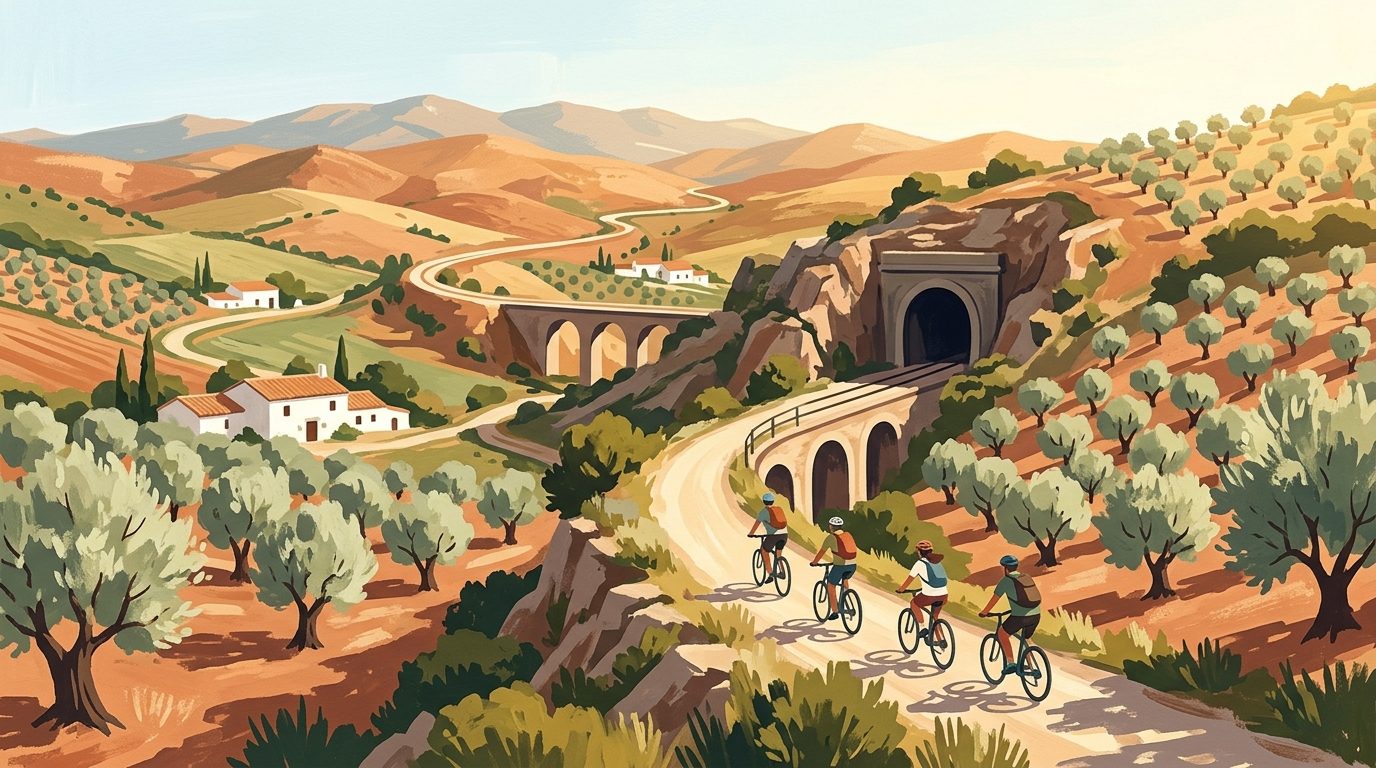
Cycling the Vías Verdes of Andalucía: A Complete Guide
Explore the disused railway lines of Andalucía. Discover the best Vías Verdes for cycling, from the tunnels of Cádiz to the olive groves of Jaén.
7 min read
Newsletter
More stories from Andalucía
Weekly notes, seasonal picks, and the next guides worth bookmarking.