
Things to do
Subterranean Andalucía: A Guide to Caving and Show Caves
Discover the underground wonders of Andalucía, from the record-breaking columns of Nerja to the sparkling gypsum crystals of Sorbas.
By Dan · Updated 16 July 2026 · 7 min read
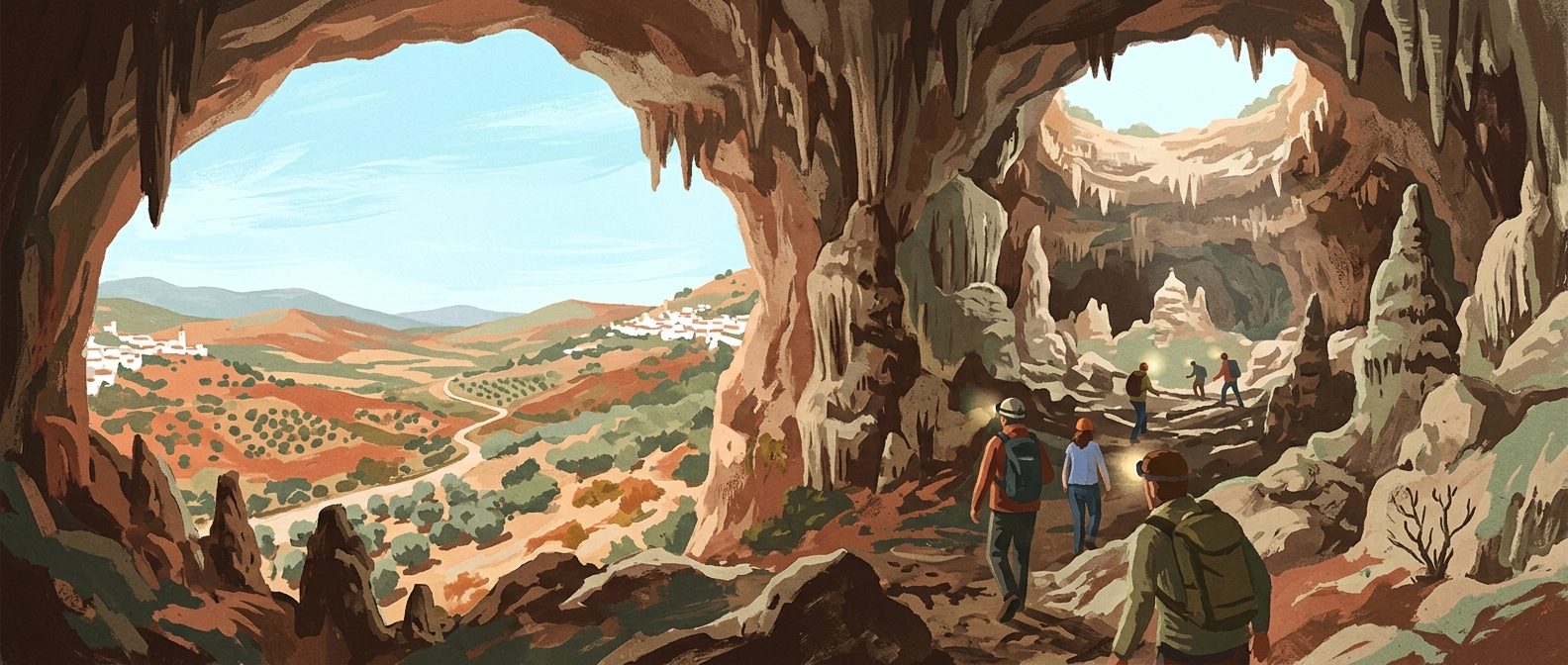
From the massive limestone cathedrals of Nerja to the rare gypsum crystals of Sorbas, Andalucía’s underground world offers a cool escape into the Earth's geological past. The region provides some of Europe’s most significant subterranean experiences.
Andalucía is a region defined by its rugged topography. While most visitors spend their time looking up at the peaks of the Sierra Nevada or across the rolling olive groves of Jaén, there is an equally compelling world right beneath your feet. The geology here is a playground for anyone interested in speleology or simply seeking a unique day out. The limestone mountain ranges that snake across the southern coast have been carved by water over millions of years, resulting in one of the highest concentrations of caves in Spain.
For the casual visitor, the "show caves" (cuevas turísticas) offer a chance to see spectacular formations, such as stalactites, stalagmites, and underground lakes, with the comfort of paved paths and professional lighting. For those seeking more of an adrenaline rush, the region’s karst landscapes, particularly in Almería and Málaga, provide opportunities for active caving. Here, you can pull on a jumpsuit and helmet to navigate through narrow squeezes and climb over crystalline structures. Because these caves maintain a constant temperature of around 15°C to 20°C year-round, they are the perfect activity for escaping the searing heat of a July afternoon or finding shelter on a rare rainy day in winter.
The Best Show Caves and Caving Spots in Andalucía
Cueva de Nerja (Málaga)
Located just outside the coastal town of Nerja, these caves are perhaps the most famous in Spain. Discovered in 1959 by a group of local youths looking for bats, the cavern system stretches for nearly five kilometres. The public gallery is massive, feeling more like an underground cathedral than a cave. It is home to the world’s largest natural column, a staggering structure 32 metres high and 13 metres across at its base.
The visit is well-organised with an audio guide that explains the formation of the cave and the discovery of Neolithic remains and Palaeolithic wall paintings (though the paintings themselves are often closed to the public to ensure their preservation). The walkway takes about 45 minutes to an hour. During the summer, the estate occasionally hosts a music and dance festival. While performances historically took place in the "Sala de Ballet" to take advantage of its natural acoustics, they are now held in the gardens outside to protect the cave's delicate geology.
Gruta de las Maravillas, Aracena (Huelva)
Located right in the centre of the town of Aracena, beneath the hill topped by the castle, the Gruta de las Maravillas (Grotto of Marvels) certainly lives up to its name. It was the first cave in Spain to open to the public in 1914. The experience here is defined by water. The cave features a series of stunning turquoise underground lakes that reflect the intricate formations above.
The circular route covers about 1,200 metres across two different levels. You will see several distinct chambers, such as the "Sala de los Garbanzos", named after the small, pulse-like formations on the walls, and the "Gran Lago". The humidity is high here, and the sheer variety of colours in the rock, from brilliant whites to deep ochres, is remarkable. It is essential to book tickets in advance, especially on weekends, as group sizes are strictly limited to protect the cave's microclimate.
Sorbas Gypsum Caves (Almería)
For a more active and rugged experience, the Karst en Yesos de Sorbas is the place to go. Unlike most caves which are formed in limestone, these are carved out of gypsum. This makes for a very different aesthetic; the walls sparkle with selenite crystals that catch the light of your headtorch. This is the largest gypsum karst system in the world.
The operator Cuevas de Sorbas offers several routes. The "Basic Route" is suitable for families and requires no special fitness, though you will be walking on uneven ground. The "Combined Route" involves more scrambling and crawling through narrower gaps, while the "Technical Route" is for those who want to spend several hours deep underground. You are provided with a helmet and lamp, and the guides are excellent at explaining how the water slowly dissolved the gypsum to create these shimmering tunnels.
Cueva de la Pileta, Benaoján (Málaga)
If you prefer an intimate, authentic experience, Cueva de la Pileta is incomparable. Located near Ronda, this cave is privately owned by the Bullón family, whose ancestor discovered it in 1905. There are no electric lights here; visitors are handed lanterns, and the tour is conducted in small groups by a family member.
The primary draw is the prehistoric art. The cave contains some of the most important Palaeolithic paintings in the Mediterranean, including a famous depiction of a large fish. Because there is no artificial lighting or paved walkways, you feel a direct connection to the people who used this space 20,000 years ago. The ground can be slippery and the stairs are steep, so sturdy footwear is a requirement. Advanced booking is essential, especially in peak season, via their website.
Cueva del Tesoro, Rincón de la Victoria (Málaga)
Situated just east of Málaga city, the Cueva del Tesoro (Treasure Cave) is one of only three known marine caves of its type in the world (formed by sea erosion but now accessible on land), and the only one of its kind in Europe. It was formed by the action of the Mediterranean Sea against the limestone cliffs before the sea level dropped, leaving the caverns high and dry. Later, freshwater filtrations added stalactites and stalagmites to the maritime-carved galleries.
The name comes from a legend that a 12th-century Almoravid treasure was hidden here. While the gold has never been found, the cave itself is a geological find. The walk through the galleries takes you past "The Well of the Virgin" and the "Chamber of Marcus Crassus". It is an easy, accessible visit that provides a fascinating contrast to the mountain caves further inland.
Cueva de los Murciélagos, Zuheros (Córdoba)
Located at the top of the Sierras Subbéticas, this cave sits at almost 1,000 metres above sea level. The "Cave of the Bats" is famous for its archaeological significance, having provided a wealth of information about the Neolithic period. The tour involves descending approximately 700 steps into the depths of the mountain, which may be challenging for those with limited mobility.
The cave is beautifully lit, highlighting the deep crevices and high ceilings. The views from the cave entrance looking out over the white village of Zuheros and the sea of olive trees are worth the climb alone. It is a fantastic spot for those interested in the transition from hunter-gatherer societies to early farming in the Iberian Peninsula.
Practical Information
Visiting caves in Andalucía is generally affordable, with entrance fees for show caves usually ranging between 12€ and 20€ for adults, though prices vary by season and tour type (these prices are correct for the 2026 season, but check the operator's website for specific date availability). Active caving tours in Sorbas start at around 20€ for basic routes and can go up to 60€ for technical excursions. Even in the height of summer, the temperature inside the caves remains constant (usually between 15°C and 20°C), so it is wise to bring a light jumper or jacket.
Footwear is the most important consideration. Even in the "show caves" with paved paths, the environment is damp and the floor can be incredibly slippery. Avoid flip-flops or sandals; trainers with a good grip or light hiking boots are the best choice. Most caves have strict rules regarding photography, often banning flashes or all photography entirely to protect the cave's ecology and art, so always check the signage before you start snapping. Most locations require or strongly recommend online booking in advance, as capacity is capped to maintain oxygen levels and humidity.
Local Tips
If you are visiting the Cueva de la Pileta, plan to spend an hour or two in the nearby village of Benaoján for lunch; the area is famous for its cured meats and traditional mountain stews. For the Nerja caves, try to book the earliest morning slot to avoid the large tour bus crowds that arrive after 11:00. If you are travelling with children, the Sorbas gypsum caves are particularly engaging because of the "hands-on" nature of the tour. Finally, always check the local weather if visiting a cave with an underground river, such as Cueva del Gato (near Benaoján), as heavy rains in the mountains can cause water levels to rise rapidly, making some areas inaccessible.
Last reviewed: 21 June 2026 · Editorial policy
Related guides
The Complete Caminito del Rey Guide: How to Walk Spain's Most Famous Gorge
Walking the precipitous boardwalks of the Caminito del Rey is a thrilling encounter with sheer limestone cliffs and fascinating engineering heritage. This guide details exactly how to secure tickets, navigate the linear route, and plan your logistics.
10 min read
Family Days Out in Andalucía: A Practical Guide
Finding ways to keep children entertained in Southern Spain is easy when you know where the locals go. From desert film sets to immersive wildlife parks, here is how to navigate the region with the whole family in tow.
7 min read
A Guide to the Best Via Ferrata Routes in Andalucía
Discover the best via ferrata routes in Andalucía, from the iconic cliffs of Ronda to the high-wire bridges of Comares and El Chorro.
6 min read
Cycling the Vías Verdes of Andalucía: A Complete Guide
Explore the disused railway lines of Andalucía. Discover the best Vías Verdes for cycling, from the tunnels of Cádiz to the olive groves of Jaén.
7 min read
Where to Stay: A Guide to Cave Accommodation in Andalucía
How to choose cave accommodation in Andalucía: Guadix, Sacromonte, the Altiplano and Cazorla, with named stays, access checks and official local links.
3 min read
The Ultimate Whale Watching Guide: Strait of Gibraltar
Fourteen kilometres of churning water separate Europe from Africa, creating a turbulent bottleneck that serves as one of the world's greatest pelagic highways. Here, in the Strait of Gibraltar, you can watch wild orcas hunt bluefin tuna and sperm whales dive into the abyss just miles from the Andalucían coast.
9 min read
More guides

The Definitive Guide to Feria de Abril in Sevilla
Discover the cultural nuances, strict dress codes, and insider advice for navigating Sevilla's exclusive spring fair like a seasoned local.
9 min read

Golf in Jaén Province: A Practical Guide to Courses, Clubs, and Holidays
Discover the reality of playing golf in Jaén. From the 9-hole course at La Garza to local societies and combining rounds with olive oil tourism.
12 min read

Golf in Córdoba Province: Courses, Holidays, and Shops
Discover practical tips, course details, and holiday planning advice for playing golf in Córdoba province, from the mountain fairways of Sierra Morena to the historic greens of Los Pedroches.
10 min read

The Ultimate Guide to Golf in Cádiz Province
Discover the finest golf courses, resorts, and practical tips for planning your next golf holiday in the province of Cádiz. From championship layouts to essential details on green fees and club hire, everything you need is covered.
11 min read

Golf in Sevilla Province: Courses, Holidays and Local Pro Shops
Swap the crowded coastal fairways for the refined courses of Sevilla province. Discover top layouts designed by golfing legends, local shops, and expert tips for your next trip.
10 min read

A Complete Guide to Golf in Málaga Province
From championship courses in Marbella to practical advice on club rentals and tee times, discover everything you need to know about playing golf in Málaga province.
11 min read

Golf in Granada Province: A Practical Guide to Courses, Holidays and Gear
Plan your perfect golfing trip with our practical guide to Granada's 18-hole courses. Discover green fees, club rental, and the best locations for a golf holiday.
12 min read
Bikepacking in Andalucía: A Complete Guide to Two-Wheeled Adventures
Discover how to plan the ultimate bikepacking adventure in southern Spain. Our guide covers route planning, essential gear, weather windows, and tips for navigating wild terrain.
13 min read

Hands-on Gastronomy: The Best Cooking Classes in Andalucía
Discover the art of Andalucían cuisine through hands-on workshops, from Triana's market-based schools to specialist Sherry cooking classes in Vejer.
6 min read
Newsletter
More stories from Andalucía
Weekly notes, seasonal picks, and the next guides worth bookmarking.