
Where to stay · Jaén
Where to Stay in Jaén: City, Renaissance or Cazorla
A candid decision guide to choosing your ideal base in Jaén province, from the steep Renaissance streets of Úbeda and Baeza to the remote trails of the Sierra de Cazorla.
By Andalucía 365 Editorial Team · 18 July 2026 · 8 min read
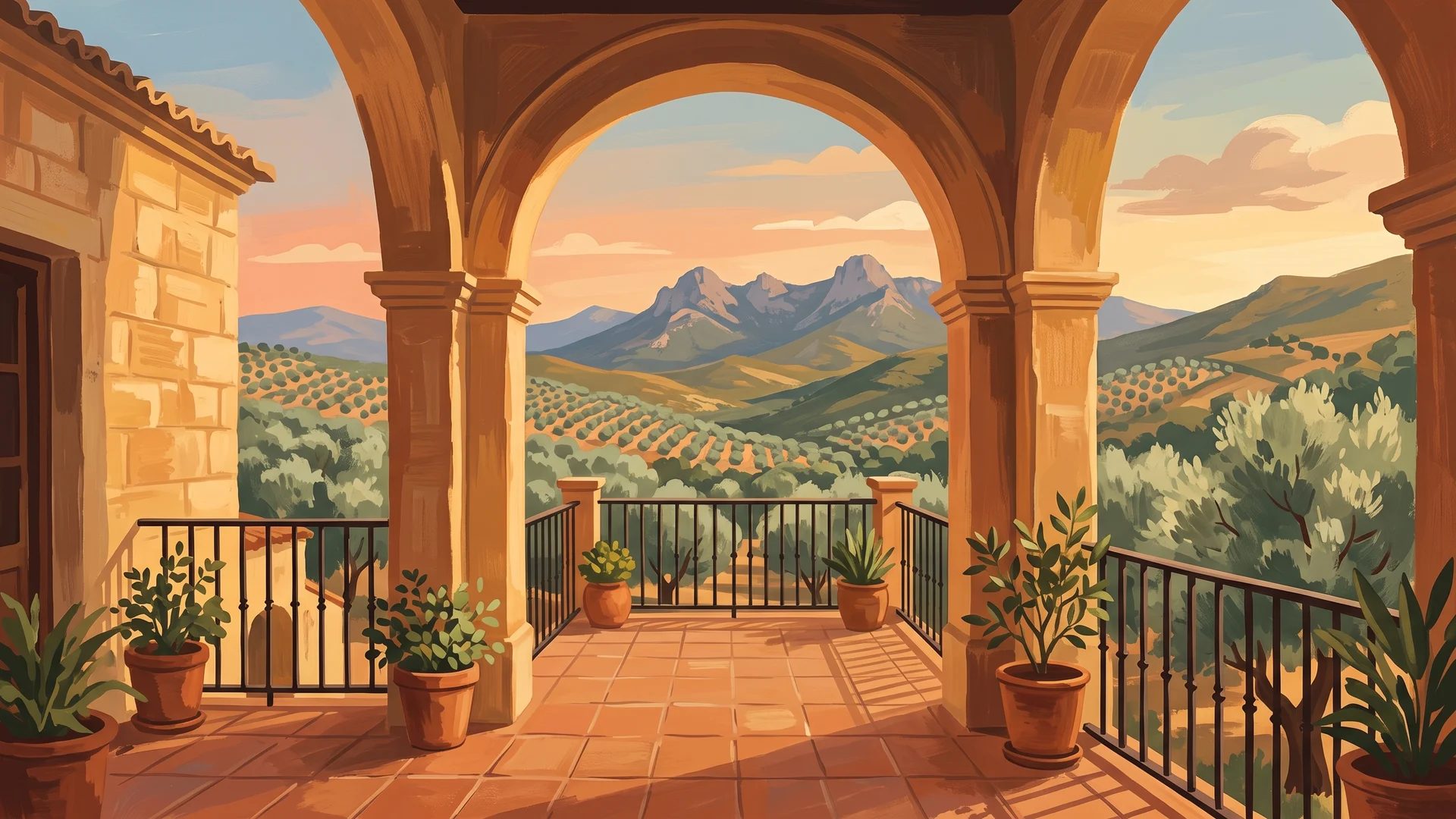
Choosing a base in Jaén dictates the rhythm of your entire trip. The province requires a decisive approach to transport and terrain. If you want high mountain trails, you need a rental car and a base in the Sierra de Cazorla. If you prefer to rely on trains and regional buses, the historic urban centres are your only practical options. Discover Andalucía's quiet frontier, where endless oceans of olive groves give way to masterfully carved Renaissance cities and some of the wildest mountain terrain in southern Spain. Making the right choice means understanding the topography, driving conditions and distances between major sites.
Jaén City: The Urban Anchor and Olive Capital
Often bypassed for its flashier neighbours, Jaén City rewards those who stop with some of the finest Renaissance architecture in Spain and a culinary scene anchored by the world's best olive oil. The provincial capital is the most practical entry point for visitors arriving by train from Madrid, Córdoba or Seville. It functions as a working administrative centre rather than a manicured resort town.
The topography here is uncompromising. The city is built on a sharp incline rising from modern commercial boulevards at the bottom of the valley up to the narrow medieval streets of the old quarter. Staying in the lower commercial district offers easy access to the train station and flat walking, but lacks historical atmosphere.
Conversely, staying in the old quarter puts you within walking distance of the monumental cathedral and traditional tapas bars. However, this requires navigating tight, one-way streets and enduring steep hills. Finding street parking in the historic centre is largely impossible, meaning you must rely on subterranean public car parks. Jaén city suits independent travellers wanting excellent public transport connections.
Úbeda and Baeza: The Renaissance Twins
Beyond the endless olive groves of Jaén lie Úbeda and Baeza, two cities that define the Spanish Renaissance with their golden sandstone and quiet nobility. Located a fifteen-minute drive from each other, they are the most popular cultural bases in the province. Choosing between them comes down to scale, evening atmosphere and your preferred style of accommodation.
Úbeda is the larger and more commercial of the two. It offers a broader selection of accommodation, ranging from grand sixteenth-century palace conversions to modern boutique hotels. The historic centre sits on a relatively flat plateau, making it easier to navigate on foot, though the ancient cobblestones require sturdy footwear. Evenings in Úbeda feel lively, with locals crowding into the tapas bars along Calle Real.
Baeza is smaller, more compact and noticeably quieter. It has a heavy, poetic atmosphere, anchored by its ancient university and cathedral. Accommodation here leans towards intimate, family-run guesthouses and restored townhouses. After sunset, the day-trippers depart, and Baeza descends into a profound silence.
Both towns severely restrict vehicle access in their historic cores to protect the masonry. Most visitors end up parking in designated zones outside the medieval walls and walking in with their luggage.
Cazorla and La Iruela: The Mountain Gateways
For those heading into the mountains, the towns of Cazorla and La Iruela sit on the western edge of the protected natural park. Discover Spain's largest protected wilderness, a landscape of limestone peaks, turquoise rivers, and high-altitude villages in the heart of Jaén. These settlements act as the frontier between the endless olive plains and the vertical limestone crags.
Cazorla is a substantial working town built directly into a narrow ravine. It functions as the primary logistical hub for the mountains, equipped with supermarkets, pharmacies, outdoor equipment shops and plenty of traditional bars. However, driving through Cazorla is notoriously difficult. The streets are exceptionally narrow, steep and dominated by confident local traffic. Finding public parking in the centre is nearly impossible during peak season.
Just a few kilometres up the winding mountain road sits La Iruela. It is essentially a balcony overlooking the vast olive plains, complete with a dramatic ruined castle clinging to a rock pinnacle. It is quieter than Cazorla and offers spectacular panoramic views, but the gradient is severe. Walking from a guesthouse to a restaurant in La Iruela often involves climbing steep, irregular stairs or ramps.
Deep Sierra and Arroyo Frío: The Wilderness Hub
If you want to wake up surrounded by dense pine forests and the sound of rushing water rather than olive trees, you must drive deep into the natural park. Arroyo Frío serves as the primary base for exploring the wild heart of the Sierras de Cazorla, Segura y Las Villas Natural Park. It provides a central point from which to launch excursions into the deep river valleys and high limestone peaks of Jaén’s wilderness.
Arroyo Frío is a linear settlement developed specifically for rural tourism along the Guadalquivir river valley. It completely lacks the historic architecture of Cazorla but makes up for it with highly practical amenities: immediate proximity to major trailheads, adventure sport operators, restaurants and large hotels with swimming pools. It is heavily geared towards domestic tourism and families seeking summer escapes.
Staying here requires accepting a long, winding, forty-five-minute drive on mountain roads just to reach the outside world. There are no quick trips to a major supermarket or a historic city from here. It is strictly for visitors who intend to spend their days hiking, canyoning, mountain biking or wildlife watching.
Rural Estates: The Sea of Olives
Scattered across the province are traditional cortijos and haciendas, large agricultural estates converted into rural accommodation. These properties offer total isolation among the geometrically perfect rows of olive trees that define the landscape. Many have thick whitewashed walls, shaded central courtyards and large swimming pools designed to combat the intense summer heat.
A rural stay requires absolute car dependence. You will need to drive for every meal unless the estate has an in-house restaurant, and navigating unlit agricultural tracks at night can be challenging. However, for slow travel, reading by a pool and understanding the sheer scale of the provincial agricultural industry, a cortijo is unmatched. Mornings here are defined by absolute quiet, broken only by the sound of birds and a distant tractor.
Best Base for Your Travel Style
Architecture and History
Úbeda is the definitive choice. Its concentration of sixteenth-century palaces and public squares provides enough historical depth to occupy several days of intensive exploration. Baeza is a close second, offering a more intimate architectural experience. Jaén city provides the grandest single monument in the province in the form of its towering cathedral.
Olive Culture and Gastronomy
For a deep dive into the olive oil industry, a rural cortijo or a base in Jaén city works best. Driving through Jaén means navigating a landscape defined by sixty-six million olive trees marching in perfect geometric lines to the horizon. This route decodes the complex, fiercely competitive world of Andalucían liquid gold, from traditional family presses to high-altitude mountain harvests. Jaén city has the highest concentration of modern tapas bars showcasing premium local oils, while rural bases put you next to working mills.
Nature and Hiking
Arroyo Frío puts you exactly where the hiking trails begin, eliminating long morning drives. If you prefer mountain access by day but a historic town by night, Cazorla is the logical compromise. Driving from Cazorla into the heart of the park takes at least forty-five minutes of continuous, demanding switchbacks.
Families and Couples
Arroyo Frío is highly practical for families during the summer, offering large pools and easy access to shaded, flat river walks. If you prefer the lowlands, a rural estate with extensive grounds is far easier for a family than navigating pushchairs through the steep, heavily cobbled streets of Jaén city or Úbeda. For couples seeking a quiet escape, Baeza offers a romantic atmosphere that clears out significantly after dusk.
Travellers Without a Car
Jaén city is the only major transport hub, offering direct train links to Madrid, Córdoba and Seville. A complete practical guide to navigating Andalucía using high-speed trains, regional bus networks, and car hire. Includes booking tips and rules for restricted driving zones. From Jaén, ALSA buses reach Úbeda and Baeza reliably. Visiting the Sierra de Cazorla without a vehicle restricts you entirely to the town of Cazorla itself.
Visitors with Mobility Needs
Jaén is a demanding province for wheelchair users or those with limited mobility. A practical accessibility guide to Andalucía, with city terrain notes, rail and airport assistance checks, hotel-room questions, adapted beaches and official source links. Úbeda is the most forgiving option. Its historic core sits on a flat plateau, and while cobblestones are present, the gradients are highly manageable compared to the severe slopes of Jaén city, Cazorla and La Iruela.
Practical Planning: Transport, Parking and Seasonality
Your choice of base should change depending on the month you travel. In July and August, the lowland cities of Jaén, Úbeda and Baeza routinely exceed 40 degrees Celsius. Exploring sun-baked stone streets in this heat is exhausting. During high summer, the mountain villages of the Sierra de Cazorla offer a crucial temperature drop, making them the only logical choice for outdoor activity.
Winter brings heavy frost to the high ground, and many mountain businesses close completely between January and March. October in Jaén is a month of natural drama, featuring the spectacular deer rut in Cazorla and the golden light of the Renaissance cities of Úbeda and Baeza. Spring and autumn are the optimal seasons for combining the cities and the mountains.
Parking is a persistent challenge across the province. Do not attempt to drive into the historic centres of Úbeda, Baeza or Cazorla using satellite navigation, which routinely directs drivers down medieval alleys ending in impassable staircases or solid walls. Park in the designated municipal zones on the outskirts and walk to your accommodation.
Route Pairings
The province is cleanly split between monumental architecture and profound wilderness, so the most satisfying itineraries combine two distinct bases. Discover the best day trips from Jaén, from the Renaissance splendours of Úbeda and Baeza to the rugged peaks of the Sierra de Cazorla and ancient Moorish fortresses.
A classic five-night trip involves two nights in a historic palace in Úbeda to absorb the Renaissance history, followed by three nights in Arroyo Frío or La Iruela to hike the river canyons. Alternatively, a week-long deep dive might pair three nights exploring the tapas scene and olive mills of Jaén city with four nights in a remote rural cortijo. This provides a complete view of a province defined equally by immense human ambition and raw geological force.
Last reviewed: 18 July 2026 · Editorial policy
Related guides
5 Days in Jaén: Renaissance Cities and Cazorla
A realistic five-day driving itinerary through Jaén province, balancing the monumental Renaissance architecture of Úbeda and Baeza with the rugged mountain wilderness of the Sierra de Cazorla.
11 min read
Hotels with Pet-Friendly Rooms in Jerez: Best Stays Near City Parks
Find the best pet-friendly accommodation in Jerez, from central boutique hotels to spacious stays near the city parks.
6 min read
5 Days in Almería: City, Desert and Cabo de Gata
A realistic five-day driving itinerary through Almería province, balancing the historic capital, the cinematic Tabernas badlands, and the protected volcanic shores of Cabo de Gata.
13 min read
Where to Stay in Huelva: Coast, Doñana or Sierra
A candid planning guide to choosing the right base in Huelva. Discover the trade-offs between the wild Atlantic coast, the Doñana wetlands and the northern mountains.
8 min read
Where to Stay in Almería: Choose the Right Base
A candid decision guide to Almería's dramatically different landscapes, comparing the urban capital, the volcanic isolation of Cabo de Gata, the coastal resorts of the Levante, and the extreme terrain of the Tabernas Desert.
8 min read
Golf in Jaén Province: A Practical Guide to Courses, Clubs, and Holidays
Discover the reality of playing golf in Jaén. From the 9-hole course at La Garza to local societies and combining rounds with olive oil tourism.
12 min read
Newsletter
More stories from Andalucía
Weekly notes, seasonal picks, and the next guides worth bookmarking.