
Feature
The Railways of Andalucía: Iron, Steam and Industrial Heritage
The arrival of the steam locomotive transformed the southern Spanish landscape, slicing through mountains and bridging wide rivers to connect agricultural plains with busy seaports.
By Dan · Updated 24 June 2026 · 8 min read
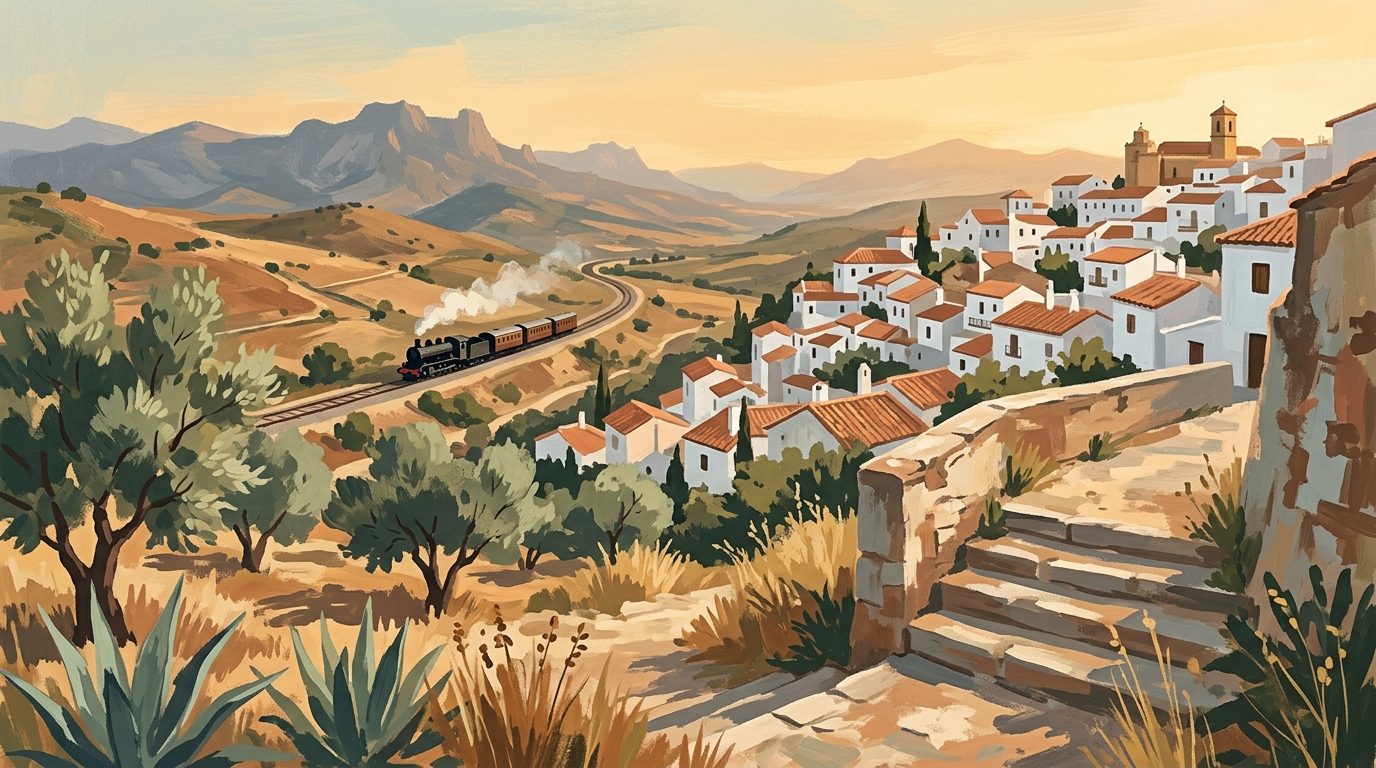
The arrival of the steam locomotive transformed the southern Spanish landscape, slicing through mountains and bridging wide rivers to connect agricultural plains with busy seaports. Financed heavily by foreign capital, these iron roads left behind a legacy of monumental stations and sprawling industrial architecture that still dominates city skylines today.
Jutting out into the blue waters of the Mediterranean, the massive iron structure of the Cargadero de Mineral in Almería looks more like an abandoned bridge to nowhere than a piece of railway infrastructure. Yet, this colossal loading pier represents the climax of a technological revolution that swept across southern Spain. During the era of Industrial Heritage in the 19th and 20th centuries, the introduction of the railway reshaped the economy, geography and architecture of Andalucía.
Before the steam engine, moving heavy goods across the rugged Andalucían terrain relied on slow, mule-drawn carts navigating poorly maintained dirt tracks. A journey between Sevilla and the coast, which once took several days by stagecoach, was reduced to a matter of hours. The railway promised unprecedented speed and volume, ending centuries of relative geographic isolation for inland towns. It was an undertaking that required staggering amounts of capital, much of it flowing in from British, French and Belgian investors eager to extract the region's agricultural wealth and mineral deposits.
As tracks were laid across the Guadalquivir valley and blasted through the Baetic mountains, new cathedrals of iron and glass rose in the major cities to receive the trains. These grand passenger stations and industrial shipping terminals stand today as the most visible remnants of an era when steam power first conquered the distances of southern Spain.
The Earliest Tracks from Jerez to the Coast
The first operational railway in Andalucía was driven entirely by the wine trade. In 1854, a short line opened connecting the sherry bodegas of Jerez de la Frontera with the seaport of El Puerto de Santa María. It was a purely commercial enterprise, built to bypass the unreliable cart paths and get barrels of sherry onto British ships faster. This modest track laid the groundwork for what would become the Sevilla to Cádiz line, a crucial artery linking the agricultural heart of the Guadalquivir valley with the Atlantic ocean.
It was not long before the vision expanded. The agricultural elite realised that a comprehensive rail network could replace the Guadalquivir river as the primary transport route for heavy goods. While the river was prone to silting and seasonal variations, the iron road offered year-round reliability. Completing the route to Sevilla required bridging rivers, draining marshlands and laying miles of track across the flat, sun-baked plains.
The completed route fundamentally altered how the region traded, allowing wheat, olive oil and wine to reach international markets with unprecedented efficiency. By the late 1870s, the various regional lines began to consolidate. Local entrepreneurs like Jorge Loring, an influential businessman from Málaga, worked alongside figures like the Marquis of Salamanca to form the Compañía de los Ferrocarriles Andaluces. Loring understood that controlling the transport network was the key to unlocking the region's wealth, and his company soon dominated the western railway map. The Sevilla to Cádiz line became the backbone of this network, carrying both heavy freight and passenger traffic between the regional capital and the sea.
Piercing the Mountains: The Almería to Linares Mineral Railway
While the western lines moved wine and wheat, the eastern railways of Andalucía were built for a much heavier cargo: metal. In the late 19th century, the province of Jaén, specifically the area around Linares, experienced a massive mining boom. Miners were extracting vast quantities of lead, iron and copper, but transporting the raw ore to the coast for export proved to be a logistical nightmare.
To solve this, the Compañía de los Caminos de Hierro del Sur de España was formed to construct a railway from Linares to the port of Almería. Building this route was a monumental feat of engineering. The tracks had to navigate the harsh, mountainous terrain of the Sierra Morena and the desert landscapes of Tabernas, requiring dozens of tunnels, deep cuttings and sharp gradients.
The human cost of this endeavour was immense. Navigating the severe inclines of the Baetic System meant that construction crews, often local farm workers recruited for dangerous manual labour, faced constant threats from rockfalls and extreme weather. The route required the construction of spectacular iron trestle bridges, such as the Guadahortuna viaduct, which remains a marvel of structural engineering. When the line finally opened, it represented a triumph of industrial will over an unforgiving landscape.
Opened in stages between 1895 and 1899, the Almería to Linares line transformed the eastern provinces. Ore trains ran day and night, bringing the mineral wealth of the interior down to the waiting cargo ships. The line was predominantly financed by French and British mining companies, who imported their own engineers and ironwork to construct the necessary infrastructure. The sheer volume of ore arriving at the coast soon outgrew the capacity of Almería's traditional port, forcing the railway company to devise a radical new loading system to keep up with the global demand for Andalucían metal.
The Iron Cathedrals of Andalucía
The railways required entirely new types of buildings to handle the influx of passengers and freight. In the major cities, railway stations became symbols of civic pride and modernity. The architecture shifted from traditional masonry to industrial iron and glass, allowing for vast, open train sheds that could accommodate the thick smoke and massive scale of steam locomotives.
In Sevilla, the Estación de Plaza de Armas, historically known as the Córdoba Station, was built in 1901 for the MZA company (Madrid to Zaragoza and Alicante). Designed by the Portuguese engineer José Santos Silva, the station featured a soaring iron canopy measuring 85 metres long and 20 metres high. Its facade was a striking blend of industrial engineering and Moorish Revival, or Neo-Mudejar, architecture. The building featured horseshoe arches, elaborate geometric brickwork and ornate tiled panels, acting as a stylistic nod to the city's past while fully embracing modern industrial materials.
Almería received a similarly impressive station in 1893. Often erroneously attributed to Gustave Eiffel, the Almería station was actually designed by Laurent Farge and built by the French company Fives-Lille. Its central pavilion is a masterpiece of iron framework and expansive glass windows, flanked by two elegant brick wings. The ceramic tiles, the grand clock face and the ornamental ironwork were shipped by sea from France and assembled on site like a giant mechanical puzzle. These stations were not merely transit hubs; they were the grand, modern gateways through which travellers first experienced the cities of Andalucía.
Where to see it today
The steam locomotives are gone, but the monumental infrastructure they required still dots the Andalucían landscape. Many of the most significant sites have been repurposed or preserved as industrial heritage monuments, allowing visitors to walk through the physical remnants of the railway boom.
In Sevilla, the Estación de Plaza de Armas ceased functioning as a railway station in 1990, coinciding with the reorganisation of the city's tracks for the 1992 Universal Exposition. Today, the building serves as a commercial shopping centre. Despite this modern repurposing, the magnificent iron train shed remains completely intact. Visitors can stand on what used to be the main platform, look up at the intricate iron lattice work of the roof, and appreciate the immense scale of the 1901 structure. The Neo-Mudejar facade on the exterior is perfectly preserved, showcasing the intricate brick detailing that characterised the MZA company's architectural style. It is easy to ignore the modern shopfronts and focus entirely on the exposed iron columns and the original ticket hall arches.
In Almería, the legacy of the Linares ore railway is preserved at the Cargadero de Mineral, widely known as the Cable Inglés. Designed by the Scottish engineer John Ernest Harrison and completed in 1904, this immense iron pier allowed trains to run directly out over the water and dump their heavy loads of ore straight into the holds of waiting ships. Following a meticulous restoration, the upper level of the Cable Inglés is now open as an elevated pedestrian walkway. You can walk along the original path of the ore trains, suspended high above the city and the sea, flanked by the massive riveted steel girders.
The historic Almería railway station still stands, its striking French-designed glass and iron facade dominating the plaza (note that modern passenger services now use the adjacent intermodal station). The exterior remains one of the finest examples of 19th-century railway architecture in Spain. Further inland, the Guadix railway station in the province of Granada still features its historic locomotive depot, a quiet reminder of the days when steam trains required constant maintenance and refuelling before tackling the steep inclines of the Almería line.
If you visit
For travellers tracing the industrial history of the region, Almería offers the most dramatic single site. The Cable Inglés is open to the public daily, and it is highly recommended to walk its length in the late afternoon when the setting sun illuminates the rusted ironwork against the Mediterranean sea. Access to the walkway is currently free, though visitor numbers are strictly controlled and advance booking via the official Almería tourism website is mandatory. The Estación de Plaza de Armas in Sevilla is open every day as a commercial venue, meaning you can view the historic iron canopy freely during normal shopping hours. Spring and autumn are the most comfortable seasons for exploring these open-air industrial monuments, as the summer heat in both Sevilla and Almería can make prolonged outdoor viewing uncomfortable. If you wish to see an operational historic station, the original 19th-century railway station in Jerez de la Frontera still handles daily passenger traffic, retaining its classical stone facade and period ironwork on the platforms. Modern train travel in Andalucía continues to use many of the routes first carved out by these early engineers, offering a fitting way to navigate between the historic sites. For further context, the Spanish Railway Foundation offers excellent archival resources documenting the region's rich industrial past.
Last reviewed: 21 June 2026 · Editorial policy
Related guides
The Ghost in the Garden: Searching for the Al-Andalus Within
Eight centuries of Al-Andalus did not vanish in 1492; they simply moved indoors, into the kitchens, and onto the tip of the tongue.
7 min read
The Mudéjar Legacy: Islamic Craftsmanship Under Christian Rule
The Mudéjar style is a striking visual paradox of medieval Spain. It represents the profound aesthetic triumph of a conquered people over their conquerors, creating a unique architectural fusion that defined the visual identity of post-Reconquista Andalucía.
7 min read
The Spanish Inquisition in Andalucía: Orthodoxy and Paranoia
From its very first tribunal in Sevilla to the shadow it cast over centuries of daily life, the Spanish Inquisition demanded absolute religious conformity. Its legacy remains etched in the architecture, archives and even the culinary traditions of southern Spain.
7 min read
The Reconquista in Andalucía
The centuries-long Christian conquest of southern Iberia redefined the physical and cultural landscape of the peninsula. How did the military campaigns of the northern kingdoms dismantle the Islamic territories of Al-Andalus and forge the modern region of Andalucía?
7 min read
Corduba and Roman Baetica
Discover the political and intellectual might of Corduba, the wealthy administrative capital of Roman Baetica and the birthplace of the philosopher Seneca.
7 min read
Al-Andalus: Eight Centuries of Moorish Rule in Andalucía
For nearly eight hundred years, Islamic civilisation flourished on the Iberian Peninsula. How did a distant province of the Umayyad empire become a beacon of science, art, and poetry in medieval Europe?
8 min read
More guides
UNESCO World Heritage Sites in Andalucía
A curated guide to the cultural and natural sites in Andalucía recognised by UNESCO for their universal value. These landmarks offer a profound insight into the diverse civilisations of the region.
6 min read
The Best Beaches in Andalucía
From the Atlantic dunes of Huelva to the volcanic coves of Almería, the coastline of southern Spain offers an unparalleled variety of maritime landscapes.
6 min read
Phoenicians and Tartessians in Andalucía
Around three thousand years ago, eastern Mediterranean merchants arrived on the Iberian coast seeking silver and copper. Their arrival sparked a cultural collision that transformed local chiefdoms into the legendary civilisation of Tartessos.
6 min read
Roman Andalucía: Ruins and Archaeological Sites
Discover the monumental legacy of the Roman province of Baetica, from grand amphitheatres in the Guadalquivir valley to maritime cities on the Atlantic coast.
7 min read
Geological Wonders: Caves and Karst Landscapes of Andalucía
Discover the subterranean wonders and prehistoric secrets preserved within the limestone massifs and gypsum deposits of southern Spain.
6 min read
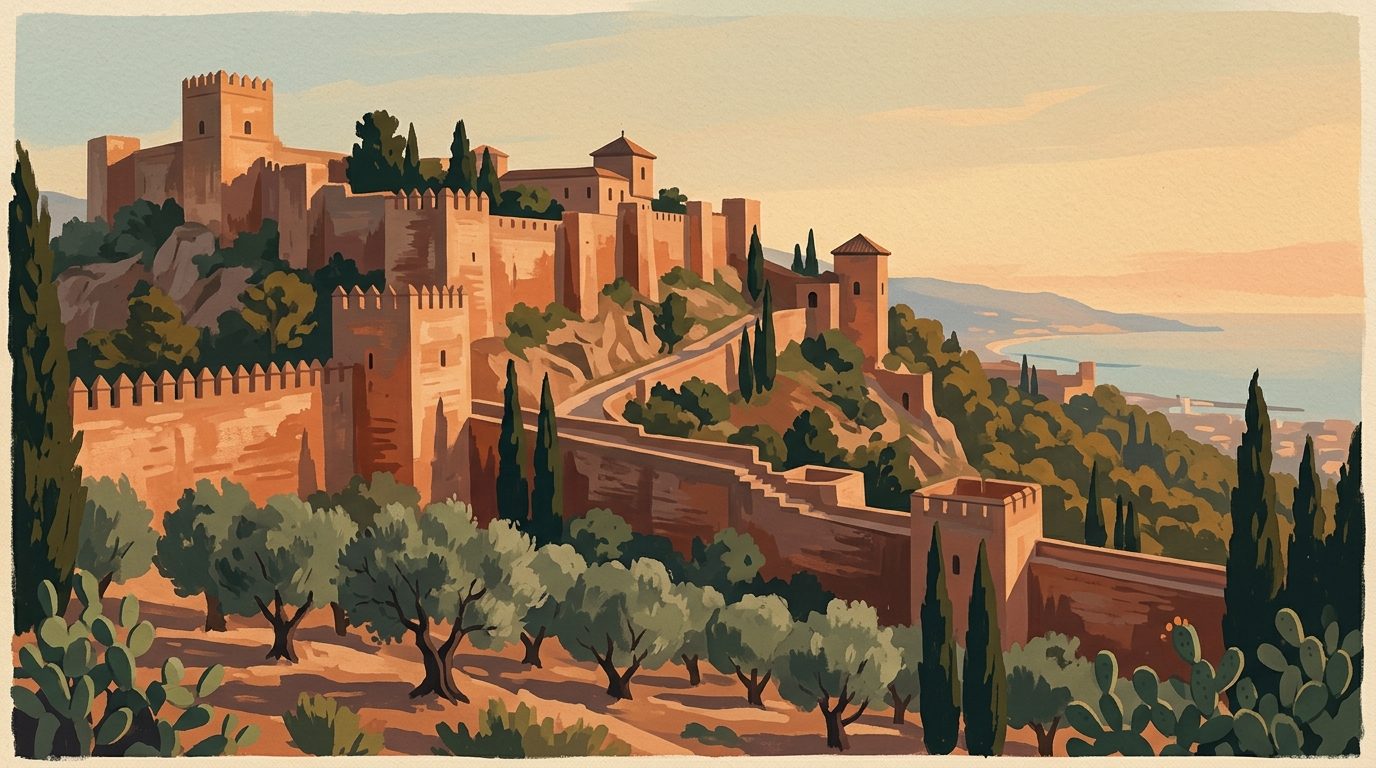
Castles and Fortresses of Andalucía
The fortresses of Andalucía are the stone guardians of a complex past, marking the ancient frontiers between empires and offering some of the most spectacular views in the southern peninsula.
6 min read
The Iberians in Andalucía: Warlords, Sculptors and the Dawn of Iron
Who were the sophisticated, iron-working peoples who controlled southern Spain before the Roman conquest? Their fortified hill towns and striking stone sculptures reveal a formidable culture caught between ancient local traditions and Mediterranean ambition.
6 min read
UNESCO Geoparks and Natural Wonders of Andalucía
Discover the geological heritage of Southern Spain through its UNESCO-designated geoparks and natural wonders. Explore the tectonic history and diverse ecosystems of Almería, Granada, and Cádiz.
6 min read
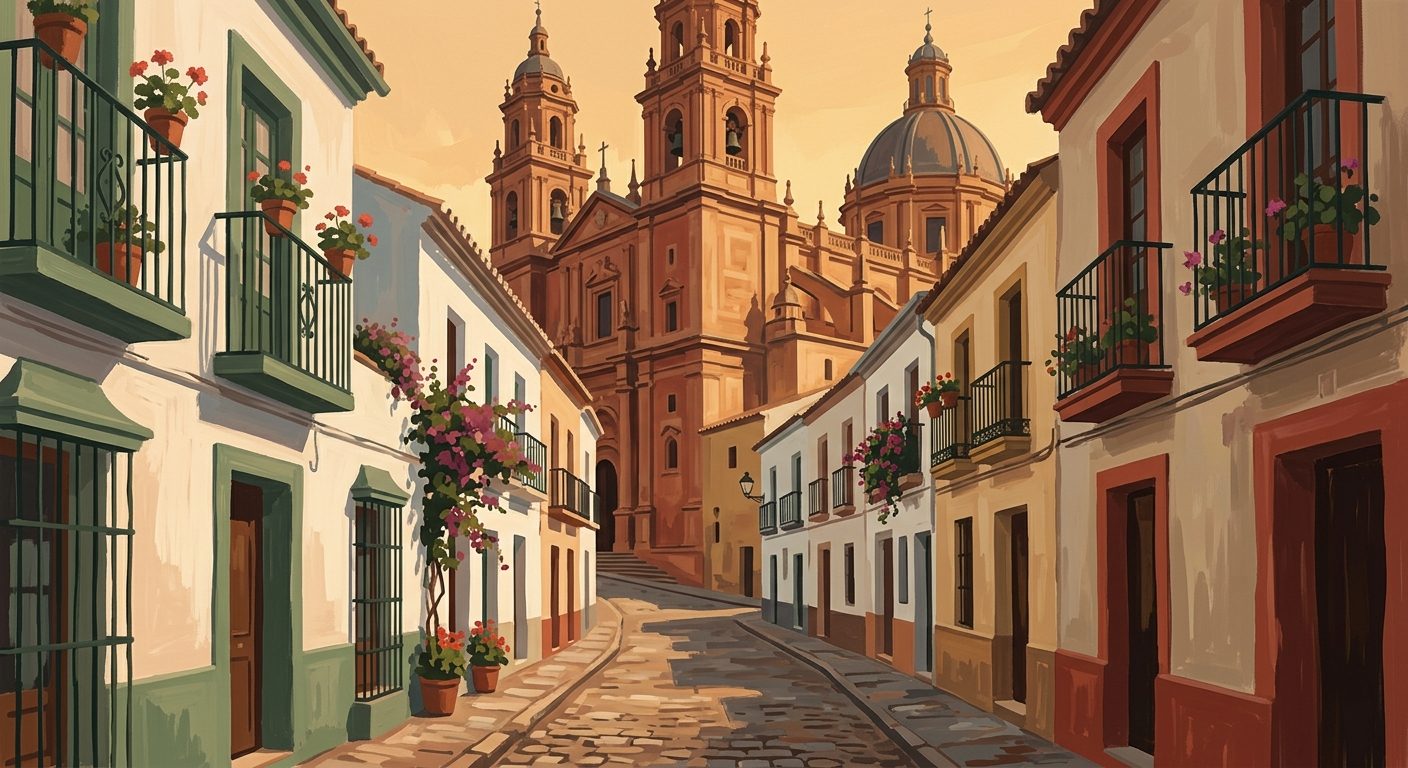
Cathedrals and Great Churches of Andalucía
A guide to the monumental religious architecture of Southern Spain, from the vast Gothic nave of Sevilla to the Renaissance masterworks of Jaén and Granada.
6 min read
Newsletter
More stories from Andalucía
Weekly notes, seasonal picks, and the next guides worth bookmarking.