
Feature
Phoenician Religion in the South: The Sanctuaries of Melqart and Astarte
At the extreme edge of the known world, Phoenician mariners raised monumental sanctuaries to Melqart and Astarte, transforming the coast of Andalucía.
By Dan · Updated 21 June 2026 · 7 min read
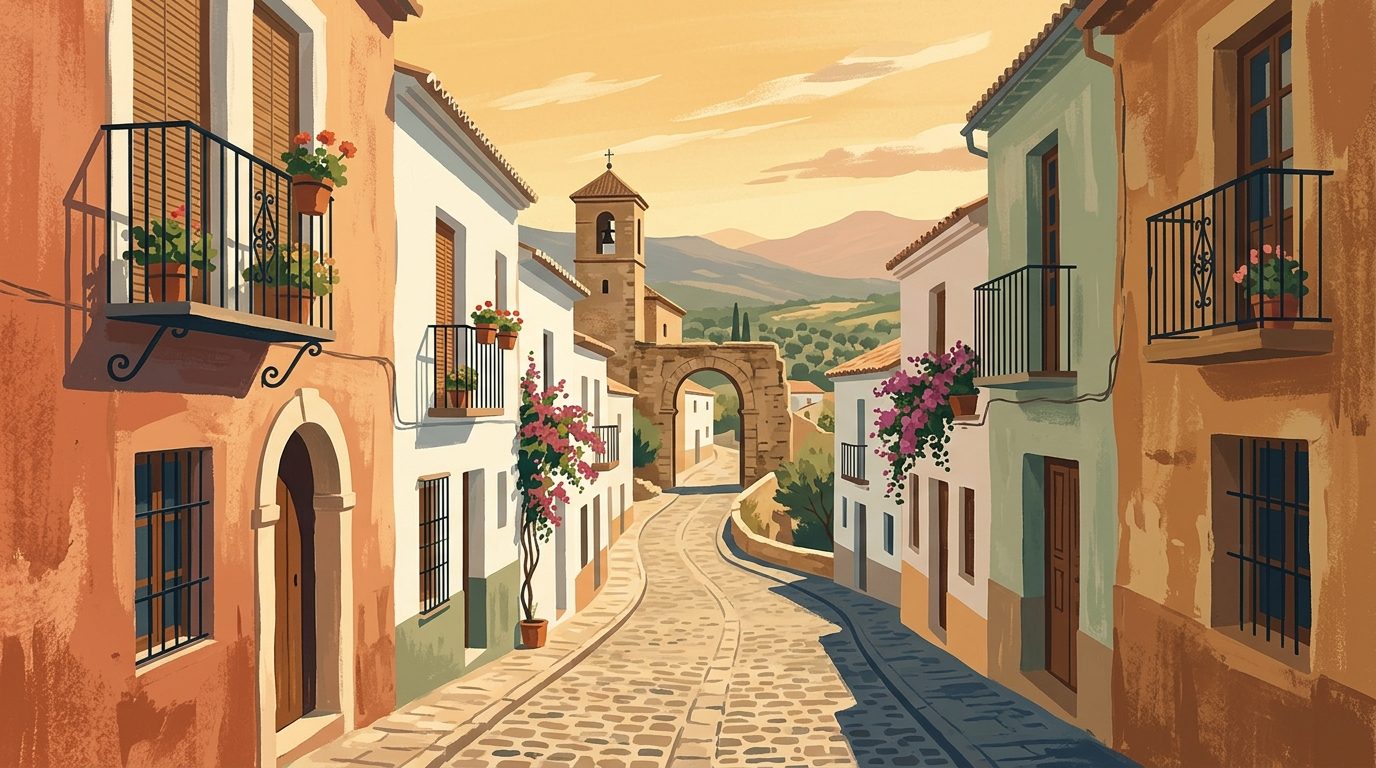
The mariners who sailed past the Pillars of Hercules did not trust their survival to the sea alone. At the extreme edge of the known world, they raised monumental sanctuaries to Melqart and Astarte, transforming the coast of Andalucía into a sacred landscape that guided both navigation and commerce.
Imagine the approach to the great sanctuary of Gadir in the eighth century BC. A Tyrian merchant ship, battered by the Atlantic swells, rounds the southern tip of the archipelago. Smoke rises from an eternal fire, visible miles out to sea, guiding the sailors to safe harbour. This was the domain of Melqart, the patron deity of Tyre. During the era of the Phoenicians and Tartessians (c. 1100 to 500 BC), religion and trade were inextricably linked. The gods did not merely offer spiritual solace. They acted as the ultimate guarantors of contracts, protectors of the market, and underwriters of the perilous voyages across the Mediterranean.
The sanctuaries built by these eastern seafarers in southern Iberia were financial clearing houses as much as places of worship. There were no colossal statues of the deity within the holiest chambers. Instead, visitors found unshaped stone pillars, bronze altars, and priests conducting rituals with strict, ancient protocols. This profound intersection of faith, wealth, and maritime survival laid the foundations for the first urban societies in western Europe.
The Divine Patrons of Commerce
The Phoenician pantheon was vast, but in the distant colonies of the west, two deities reigned supreme. These were Melqart and Astarte. Melqart, whose name translates as King of the City, was the tutelary god of Tyre. When Tyrian colonists struck out across the sea, they carried his cult with them. He was a god of expansion, civilisation, and the sea. The establishment of a temple to Melqart was the foundational act of a new colony, marking both the legal and religious claim to the territory.
Astarte was the Queen of Heaven. She represented fertility, sexuality, and war, but to the Phoenician sailors, her most crucial role was as the protector of navigation. Shrines to Astarte dotted the headlands and river mouths of the Andalucían coast. Mariners would offer terracotta figurines, incense, and a portion of their cargo to secure her favour before undertaking a dangerous voyage.
Together, these deities oversaw the complex economic machinery of Phoenician society. Temples functioned as treasuries, warehouses, and banks. Because the gods witnessed all oaths, breaking a trade agreement struck within the sanctuary precincts was not just illegal, it was a profound sacrilege. This religious guarantee allowed merchants from different cultures, such as the indigenous Tartessian elites and the incoming Phoenicians, to trade with absolute confidence.
The Great Temple of Gadir
The most famous religious site in the ancient west was the Temple of Melqart at Gadir (modern Cádiz). Located on the southernmost island of the archipelago, at the site known today as Sancti Petri, the sanctuary achieved a legendary status that endured for a millennium. Classical writers later assimilated Melqart with their own hero, renaming the site the Temple of Hercules Gaditanus. According to classical tradition, Tyrian explorers made three separate voyages to the Iberian coast, guided by an oracle, before finally successfully establishing the sanctuary on their third attempt.
Historians rely on accounts from Roman authors like Strabo, Philostratus, and Silius Italicus to reconstruct the temple, as very little of its physical structure survives. The precinct was approached through monumental bronze doors depicting the labours of Hercules. Inside, there was no anthropomorphic idol. The presence of the god was instead represented by two great pillars, said to be made of an alloy of gold and silver, inscribed with mysterious characters. The temple complex held vast stores of agricultural surplus, silver from the Iberian interior, and tin from the Atlantic coast, functioning essentially as the central bank of the western Mediterranean.
The rituals were strictly maintained according to Tyrian custom. The priests wore pure white linen, shaved their heads, and walked barefoot upon the sacred precincts. Swine were forbidden, and women were excluded from the inner sanctuary. An eternal fire burned on the altar. The temple was a place of pilgrimage and prophecy. Centuries after the Phoenician era, Hannibal journeyed here to offer vows before marching on Italy, and a young Julius Caesar is said to have wept before a statue of Alexander the Great within its colonnades.
Astarte and the Coastal Sanctuaries
While Gadir held the primary sanctuary to Melqart, worship of Astarte was more widely distributed along the coast and inland waterways. At the mouth of the Guadalhorce river, the Phoenician settlement of Cerro del Villar in Málaga provides a window into the everyday religious practices of these communities. Excavations here have uncovered evidence of domestic and public rituals, where the scent of imported frankincense and local aromatic herbs filled the air.
Archaeologists at Cerro del Villar and similar coastal sites have found countless terracotta figurines. Many depict a female deity holding her breasts or a lotus flower, iconography closely associated with Astarte. These objects were often mass-produced using moulds, making them accessible to ordinary sailors, artisans, and merchants who needed divine protection.
The influence of Astarte spread far up the Guadalquivir river. The famous Carambolo treasure, found near Sevilla, is now widely interpreted by archaeologists as the ceremonial regalia of a priest or sacred animals dedicated to a sanctuary of Astarte or Baal. (Note that while the original is held by the Archaeological Museum of Seville, this museum is currently undergoing extensive renovation; visitors should check for temporary exhibitions at the Seville Museum of Fine Arts or the City Hall before travelling). Furthermore, a remarkable bronze statuette known as the Astarte of Sevilla was discovered in the region. It bears the longest Phoenician inscription found in Spain, detailing how two brothers dedicated the figure to the goddess in gratitude for hearing their prayers, confirming the deep penetration of eastern religious practices into the Andalucían interior.
Rituals, Death, and the Afterlife
Phoenician religion was deeply concerned with the protection of the soul in the afterlife. The necropolises of Gadir and other settlements reveal a complex approach to death, heavily influenced by Egyptian funerary customs. The most spectacular manifestations of these beliefs are the anthropoid sarcophagi discovered in Cádiz. Carved from marble, these human-shaped coffins housed the elite members of society. The male figure, carved with an Egyptian-style wig and holding a pomegranate, contrasts with the softer, Hellenistic-influenced features of the female sarcophagus found nearly a century later.
Graves of the lesser nobility and commoners are equally revealing. The deceased were accompanied by amulets of protective deities, such as the dwarf god Bes or the falcon-headed Horus. Scarabs carved from steatite or jasper were placed over the heart to ensure safe passage into the underworld. Ostrich eggs, painted with red ochre and intricately carved, were frequently left in tombs as powerful symbols of rebirth and the eternal cycle of life.
The burial of grave goods indicates a strong belief that the dead required sustenance and protection. Small jugs of wine, plates that once held meat, and unguent jars filled with scented oils were carefully arranged around the body. Ritual banquets were held at the graveside, cementing the bond between the living community and their revered ancestors.
Where to see it today
The material legacy of Phoenician religion is fragmentary but deeply evocative. The absolute focal point for any visitor is the Museum of Cádiz (Museo de Cádiz). The ground floor houses the magnificent pair of Phoenician anthropoid sarcophagi, discovered respectively in 1887 and 1980. Standing before these marble figures offers a direct, visceral connection to the elite of ancient Gadir. The museum also displays exceptional religious artefacts, including a small, exquisite bronze statuette of Melqart, terracotta masks used in rituals, and an array of Egyptian-style amulets recovered from the city's ancient necropolis.
To understand the geographical reality of the Temple of Melqart, you must travel to the southern end of the Bay of Cádiz to view the islet of Sancti Petri. Although the Phoenician temple was lost to rising sea levels, quarrying, and centuries of subsequent construction, a defensive castle now stands on the rock where the eternal fire once burned. Viewing the islet from the mainland beach at sunset provides a powerful sense of the isolation and majesty of the original sanctuary.
In Málaga, the archaeological site of Cerro del Villar is located near the mouth of the Guadalhorce river. While the visible ruins are subtle, the Museum of Málaga (Museo de Málaga) contains vital context. The archaeology section features ceramics, amphorae, and ritual objects excavated from the site and other nearby Phoenician settlements, illustrating the daily religious life of the coastal trading outposts.
If you visit
The Museum of Cádiz is the essential starting point for understanding Phoenician religious artefacts in Andalucía. It is open year-round, but checking the official regional portal for current opening days is advisable, as Mondays are typically closed. For Sancti Petri, the best approach is to visit during the summer or early autumn months when local operators run short boat trips out to the islet. While the castle on the island is mostly early modern, the boat journey allows you to follow the exact route taken by Tyrian sailors thousands of years ago. The site of Cerro del Villar is best appreciated in the cooler months between October and April, followed by an afternoon at the Museum of Málaga to view the excavated materials and votive offerings in their proper historical context.
Last reviewed: 21 June 2026 · Editorial policy
Related guides
Gadir: Founding the Western Mediterranean
At the edge of the known world, Phoenician sailors established a fortified trading post on a small Atlantic archipelago. Known as Gadir, this settlement anchored a vast maritime network and laid the foundations for the oldest continuously inhabited city in Western Europe.
7 min read
Ink and Olive Groves: A Literary Journey through Andalucía
Discover the literary heart of Southern Spain, from the tragic poetry of Lorca in Granada to Hemingway’s dramatic Ronda and the contemplative prose of Machado in Sevilla.
10 min read
The Auto-da-Fé in Andalucía: Spectacle and Judgement
The auto-da-fé was not merely a trial, but a highly choreographed spectacle of religious and political power. Across the great squares of Sevilla, Córdoba and Granada, these public acts of faith transformed the grim mechanics of judgement into grand urban theatre.
8 min read
Expulsion of the Jews and the Conversos
The Alhambra Decree of 1492 forced a devastating ultimatum upon the Jewish population of Andalucía: exile or conversion. For those who chose baptism, the decision marked the beginning of centuries of relentless inquisitorial surveillance.
7 min read
Historical Memory and Exhumations in Andalucía: Unearthing the Past
For decades, the earth of southern Spain held the silent victims of systematic repression. Today, meticulous forensic exhumations are restoring names and dignity to thousands who lay forgotten in unmarked mass graves.
7 min read
The Long Decline and Final Abolition of the Inquisition in Andalucía
The twilight of the Holy Office was a slow, bureaucratic fading rather than a sudden collapse. Enlightenment ideals and political upheaval finally dismantled a system that had overseen centuries of religious orthodoxy.
8 min read
More guides
UNESCO World Heritage Sites in Andalucía
A curated guide to the cultural and natural sites in Andalucía recognised by UNESCO for their universal value. These landmarks offer a profound insight into the diverse civilisations of the region.
6 min read
The Best Beaches in Andalucía
From the Atlantic dunes of Huelva to the volcanic coves of Almería, the coastline of southern Spain offers an unparalleled variety of maritime landscapes.
6 min read
Phoenicians and Tartessians in Andalucía
Around three thousand years ago, eastern Mediterranean merchants arrived on the Iberian coast seeking silver and copper. Their arrival sparked a cultural collision that transformed local chiefdoms into the legendary civilisation of Tartessos.
6 min read
Roman Andalucía: Ruins and Archaeological Sites
Discover the monumental legacy of the Roman province of Baetica, from grand amphitheatres in the Guadalquivir valley to maritime cities on the Atlantic coast.
7 min read
Geological Wonders: Caves and Karst Landscapes of Andalucía
Discover the subterranean wonders and prehistoric secrets preserved within the limestone massifs and gypsum deposits of southern Spain.
6 min read
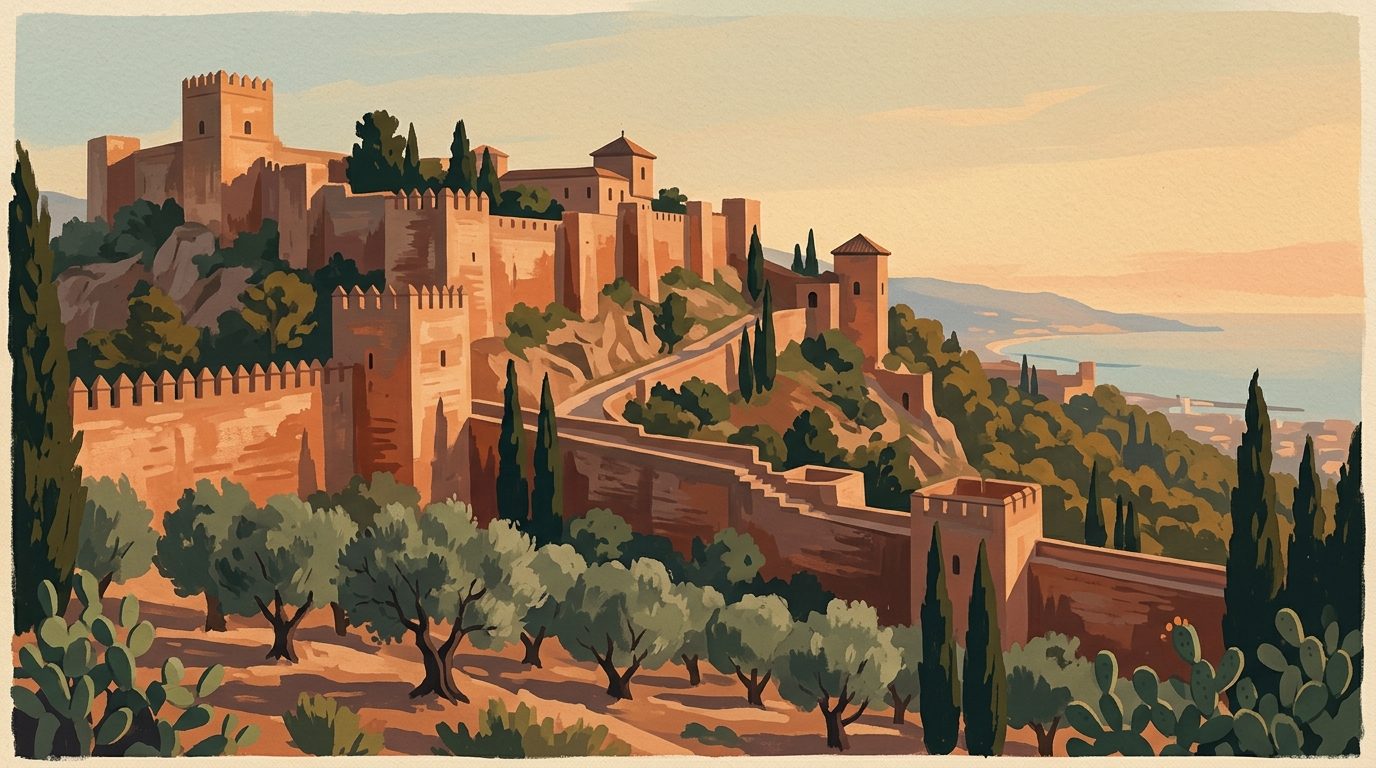
Castles and Fortresses of Andalucía
The fortresses of Andalucía are the stone guardians of a complex past, marking the ancient frontiers between empires and offering some of the most spectacular views in the southern peninsula.
6 min read
The Iberians in Andalucía: Warlords, Sculptors and the Dawn of Iron
Who were the sophisticated, iron-working peoples who controlled southern Spain before the Roman conquest? Their fortified hill towns and striking stone sculptures reveal a formidable culture caught between ancient local traditions and Mediterranean ambition.
6 min read
UNESCO Geoparks and Natural Wonders of Andalucía
Discover the geological heritage of Southern Spain through its UNESCO-designated geoparks and natural wonders. Explore the tectonic history and diverse ecosystems of Almería, Granada, and Cádiz.
6 min read
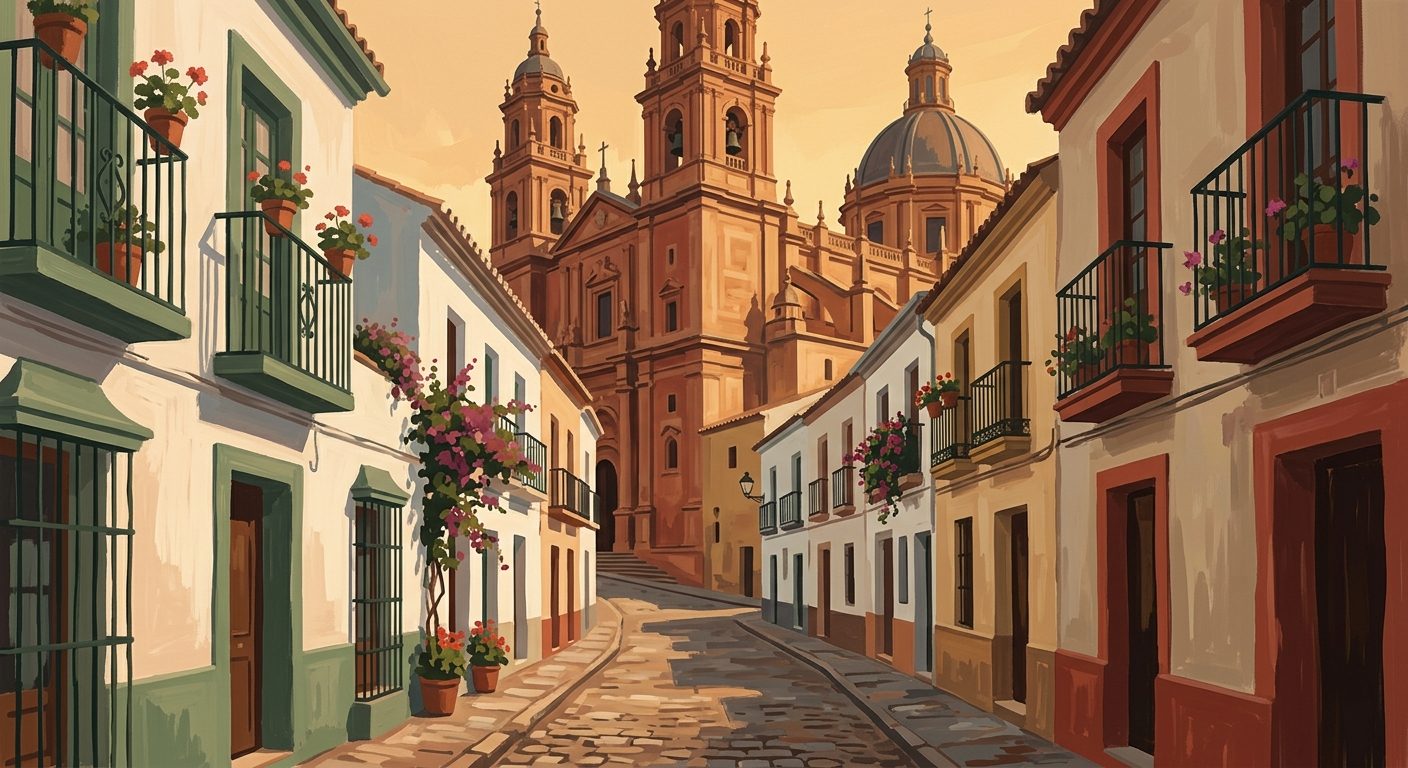
Cathedrals and Great Churches of Andalucía
A guide to the monumental religious architecture of Southern Spain, from the vast Gothic nave of Sevilla to the Renaissance masterworks of Jaén and Granada.
6 min read
Newsletter
More stories from Andalucía
Weekly notes, seasonal picks, and the next guides worth bookmarking.