
Feature · Granada
The Morisco Revolt of the Alpujarras
The Morisco Revolt of 1568 transformed the mountainous terrain of the Alpujarras into the theatre of a brutal war. Driven to rebellion by laws erasing their culture, the descendants of Granada's Muslim population fought a desperate campaign against the Spanish Crown.
By Dan · Updated 24 June 2026 · 8 min read
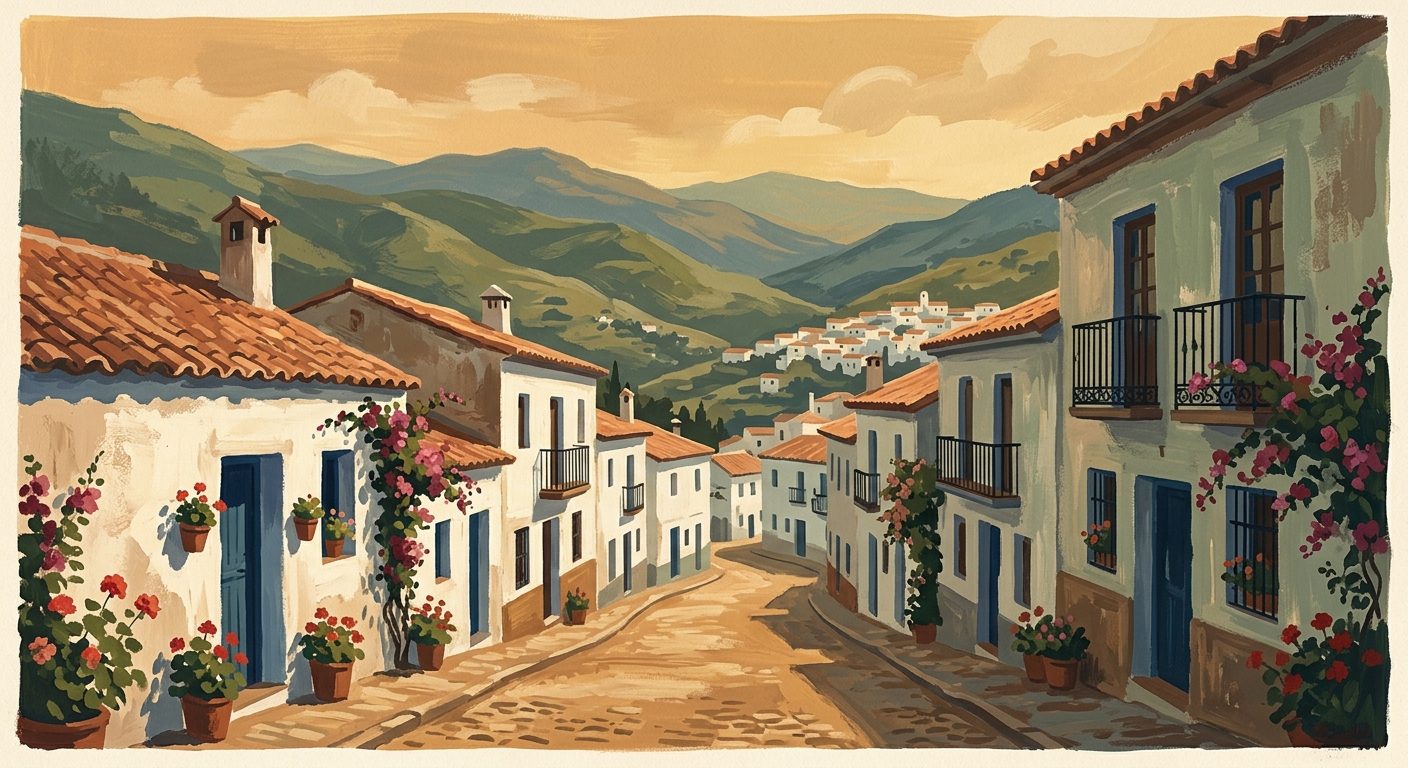
The Morisco Revolt of 1568 transformed the mountainous terrain of the Alpujarras into the theatre of a brutal war. Driven to rebellion by laws erasing their culture, the descendants of Granada's Muslim population fought a desperate and ultimately doomed campaign against the Spanish Crown.
On the first day of January 1568, the town criers of Granada gathered in the city squares to read an edict that would shatter the fragile peace of southern Spain. The decree, issued by King Philip II, ordered the complete eradication of Arabic language, Islamic dress and Moorish customs. The long advance of the Christian kingdoms known as the Reconquista from 1085 to 1492 had unified the peninsula under Catholic rule, but it left behind a large population of forcibly converted Muslims known as Moriscos. For over seventy years, the Crown had tolerated their distinct cultural identity in exchange for heavy taxes. Now, that tolerance was over.
The pragmatic sanction of 1567 gave the Morisco population three years to learn Castilian and abandon their ancestral names. Public baths were to be demolished. Traditional music and dances were outlawed. Women were forbidden from wearing the veil. Faced with the total erasure of their identity, the Morisco leaders of Granada began to plot a rebellion. They turned their eyes away from the heavily garrisoned city and towards the formidable mountain range to the south, the Alpujarras. These steep, isolated valleys on the southern flank of the Sierra Nevada would soon become the setting for one of the most brutal and desperate conflicts of the sixteenth century.
The Edict of 1567 and the Breaking Point
Following the fall of Granada in 1492, the terms of surrender had initially guaranteed religious freedom for the Muslim population. However, forced conversions initiated by Cardinal Cisneros in the early sixteenth century voided those treaties. The newly baptised converts became known as Moriscos. Despite their official Christian status, many continued to secretly practice Islam and maintained their traditional social structures. They lived in a parallel society, working as highly skilled farmers, silk weavers and artisans.
Throughout the mid-sixteenth century, tensions steadily mounted. The Catholic Church and the Inquisition grew increasingly suspicious of the Morisco community, doubting the sincerity of their faith. At the same time, the Spanish Empire was heavily engaged in wars across Europe and the Mediterranean. Ottoman fleets and Barbary corsairs frequently raided the Andalucían coast. Spanish authorities harboured deep fears that the Moriscos of Granada might act as a fifth column, allying with these external Islamic powers to stage a full-scale invasion of the Iberian Peninsula.
When the harsh new laws were published, the Morisco elite attempted to negotiate. They offered vast sums of money to suspend the edicts, a tactic that had successfully bought them time in previous decades. This time, Philip II and his advisor Pedro de Deza refused all compromise. There is genuine historical debate over the Crown's exact motives. Some historians argue that the King intentionally provoked the revolt to justify a final resolution to the Morisco problem, while others maintain that the Spanish court was simply acting out of acute strategic panic. Regardless of the motive, the royal inflexibility left the Moriscos with a stark choice between complete cultural annihilation and armed resistance.
The Eruption of Violence and the Monfíes
The revolt began on Christmas Eve in 1568. A group of rebels descended upon the Albaicín district of Granada to incite an urban uprising, but the city's Moriscos, terrified of the overwhelming presence of royal troops, kept their doors bolted. Realising the capital would not fall, the rebels retreated to the Alpujarras.
In these remote mountain villages, the uprising found its true momentum. The rebels proclaimed Fernando de Valor, a young nobleman of royal Umayyad descent, as their king. He embraced his heritage by taking the Arabic name Aben Humeya. Within weeks, the entire mountain region was in open revolt. The rebel forces were heavily bolstered by the 'monfíes', bands of Moorish outlaws who had already been living in the rugged highlands, evading Spanish authority.
The initial phase of the war was marked by horrific, unchecked violence. Morisco bands attacked symbols of the religious and secular authority that oppressed them. They burned churches, destroyed tax records and killed local priests and Old Christian settlers. The royal response was equally merciless. The Marquis of Mondéjar marched into the Alpujarras with a professional army, aiming to crush the rebellion swiftly. His troops engaged in widespread massacres, enslaving thousands of Morisco women and children. Despite Mondéjar's initial military successes, the difficult terrain and the brutal conduct of his soldiers only hardened the resolve of the remaining rebels. The war rapidly descended into a grinding guerrilla conflict.
A War of Attrition in the High Sierras
The Alpujarras proved to be a formidable natural fortress. Deep ravines, narrow mountain paths and steep agricultural terraces made it nearly impossible for traditional Spanish armies to manoeuvre effectively. The Morisco fighters, intimately familiar with every cave, goat track and water source, launched devastating ambushes before melting back into the landscape.
As the conflict dragged into its second year, the situation for the Spanish Crown grew desperate. Philip II, alarmed by the prolonged instability and the constant threat of Ottoman intervention, relieved Mondéjar of his command. In his place, the King appointed his own half-brother, Don John of Austria. Don John arrived in Granada with strict orders to end the rebellion through overwhelming force. He brought in battle-hardened regiments from Italy and the eastern coast of Spain.
Don John implemented a ruthless strategy. This was starkly demonstrated at the siege of Galera in early 1570, where royal forces massacred the entire population of the town after a prolonged and bloody assault. The destruction of Galera served as a brutal warning to other rebel strongholds across the region.
Internal divisions also began to fracture the Morisco leadership. Aben Humeya, who had become increasingly paranoid and tyrannical, was assassinated by his own commanders in late 1569. He was succeeded by his cousin, Aben Aboo, who attempted to continue the resistance. However, the sheer numerical superiority, artillery and systematic supply lines of Don John's forces gradually turned the tide. Town by town, cave by cave, the royal army systematically cleared the mountains. Starving and freezing during the harsh winters of the Sierra Nevada, the rebel numbers steadily dwindled. In March 1571, the revolt came to a decisive end when Aben Aboo was betrayed and murdered by his own men. His body was taken to Granada and publicly displayed, marking the official conclusion of the Alpujarras rebellion.
The Expulsion and the Demographic Shift
The defeat of the revolt brought catastrophic consequences for the Moriscos of the Kingdom of Granada. Philip II decreed that the entire Morisco population, regardless of whether they had participated in the uprising, must be removed from the region. The Crown aimed to completely sever their connection to the land and to disperse them among the Old Christian populations of central and northern Castile.
In the autumn of 1570, tens of thousands of Moriscos were rounded up and forced to march northwards under armed guard. The journey was devastating. Many died of exhaustion, disease and exposure along the dusty roads. Those who survived were resettled in unfamiliar towns and cities, carefully divided to prevent them from forming large, cohesive communities. Their ancestral lands, homes and businesses in Granada were confiscated by the Crown and later distributed to new settlers brought in from Galicia, Asturias and León.
This mass deportation devastated the economy of the Andalucían highlands. The intricate irrigation systems and terrace farming techniques that the Moriscos had perfected over centuries fell into disrepair. The prosperous silk industry, which had relied on the careful cultivation of mulberry trees by Morisco farmers, collapsed entirely.
The dispersion into Castile did not resolve the cultural and religious tensions within the Spanish Empire. The Moriscos remained an unassimilated and deeply resented minority. Decades later, between 1609 and 1614, King Philip III would issue the final edicts of expulsion, forcing nearly all Moriscos out of the Iberian Peninsula entirely, primarily driving them to North Africa.
Where to see it today
The physical legacy of the Morisco presence, and their ultimate defeat, remains clearly visible in the landscape of the Alpujarras. The villages of the Poqueira Gorge, including Pampaneira, Bubión and Capileira, retain their distinct North African architectural style. When Christian settlers arrived from northern Spain to repopulate the area, they found the terrain unsuited to their traditional building methods and adopted the existing Morisco techniques instead.
As you walk through these high mountain villages, you will pass beneath the traditional 'tinaos'. These are distinctive covered walkways that connect houses, bridging the narrow, winding streets to create shade and structural support. Look closely at the flat, waterproof roofs. They are made of 'launa', a local grey clay containing slate dust, and are topped with characteristic cylindrical chimneys. These structural elements are direct survivals of the Morisco era, preserving the aesthetic of sixteenth-century mountain life.
In the city of Granada, the Museo de la Alhambra holds a vital collection of artefacts that illuminate the daily lives of the Moriscos before the rebellion tore their society apart. Located on the ground floor of the Palace of Charles V, the museum displays a wealth of late Islamic and early Morisco material culture. Pay special attention to the domestic ceramics, which showcase the blending of traditional Mudéjar craftsmanship with incoming Renaissance influences. You can examine wooden architectural fragments and domestic items that once furnished Morisco homes. The museum also displays original coins and administrative documents from the sixteenth century, providing tangible evidence of the economic pressures and heavy taxation that eventually drove the mountain communities to revolt.
If you visit
To explore the steep terrain where the rebellion unfolded, the village of Bubión makes an excellent base. Near the village church, the Casa Museo Alpujarreña offers a precise look into traditional mountain life, preserving the layout, furniture and agricultural implements of a historic home from the centuries following the repopulation. The mountain roads of the Alpujarras are exceptionally winding and require careful driving, but they offer spectacular views of the steep, hand-built terraces that Morisco farmers once cultivated. Spring and autumn provide the best weather for walking the historic mule tracks that connect the gorge villages, as the summer heat can be intense. Down in the city, the Museo de la Alhambra is open daily (check seasonal Monday closures) and offers free entry for EU citizens with valid ID (check on the official website before travelling), making it an essential stop for historical context before you drive up into the high mountain valleys.
Further Reading
For more detailed historical context on the region and the era, consult the official Patronato de la Alhambra y Generalife. You can also explore the archives of the Andalucía Tourism Board for additional travel itineraries focusing on the Morisco legacy in the Alpujarras.
Last reviewed: 21 June 2026 · Editorial policy
Related guides
The Frontier of Granada: Life and War on the Edge of Al-Andalus
For over two centuries, the borderland separating the Christian Crown of Castile from the Nasrid Emirate of Granada was defined by watchful towers and sudden raids. Yet this military frontier was equally a zone of profound cultural exchange, where merchants, captives and diplomats negotiated daily survival in a divided land.
7 min read
Nasrid Granada: The Last Islamic Kingdom of Iberia
Discover how the Nasrid dynasty forged a pragmatic mountain emirate that survived for over two centuries, creating the Alhambra and leaving a lasting architectural legacy.
8 min read
Granada's Enduring Moorish Soul: Beyond the Alhambra
Discover Granada's profound Moorish legacy beyond the Alhambra, delving into the ancient Albaicín quarter, overlooked architecture, and the layered culture that defines the city.
5 min read
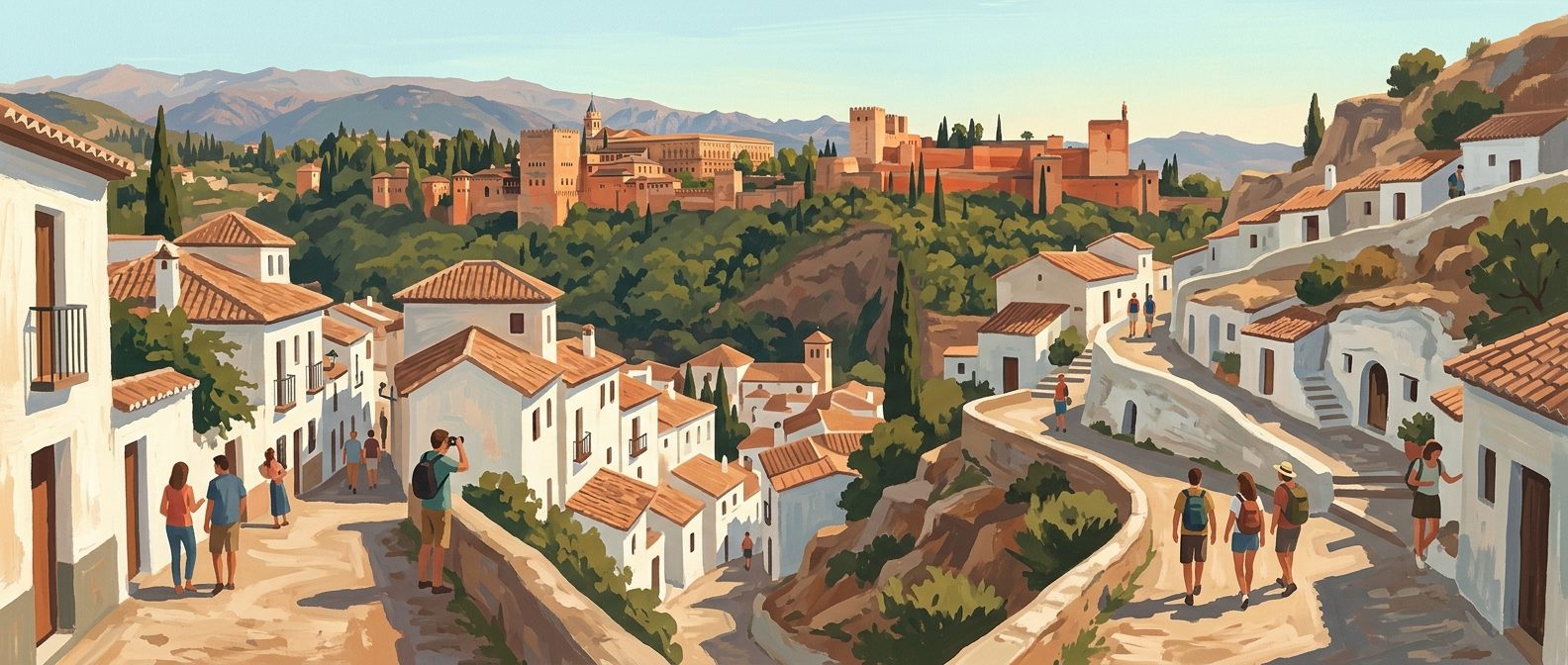
Unveiling Granada's Soul: A Journey Through the Albaicín and Sacromonte Quarters
Walk through Granada’s Albaicín and Sacromonte quarters with context on Moorish streets, cave houses, flamenco heritage, viewpoints and practical routes.
7 min read
The Granite and the Geranium: The Fragile Geometry of Córdoba’s May
For two weeks in May, Córdoba’s residents throw open the doors of their private courtyards, turning a city of stone into a living, breathing laboratory of botanical obsession.
6 min read
The Ghost in the Garden: Searching for the Al-Andalus Within
Eight centuries of Al-Andalus did not vanish in 1492; they simply moved indoors, into the kitchens, and onto the tip of the tongue.
7 min read
More from Granada
Lorca and the Repression in Granada
The assassination of Spain's most celebrated poet was just one part of a systematic campaign of terror. Today, the ravines of Víznar and Alfacar hold the stories of thousands whose voices were silenced.
7 min read
The Fall of Granada, 1492
On the second of January 1492, the keys to the Alhambra were handed over to Ferdinand and Isabella, bringing a close to almost eight centuries of Muslim rule in the Iberian Peninsula. The capitulation of Granada reshaped the political and religious landscape of Europe forever, ending a long war of attrition.
8 min read
Semana Santa in Granada: A Complete Visitor Guide
Semana Santa in Granada swaps broad avenues for narrow Moorish streets and steep hillsides. Watching an illuminated wooden float emerge from the grounds of the Alhambra or ascend into the caves of Sacromonte offers a profound emotional experience that feels intimately tied to the landscape itself.
8 min read
Corpus Christi in Granada: The Definitive Guide
In Granada, Corpus Christi is far more than a solemn religious observance. It is the city's largest annual festival, combining the scent of fresh rosemary crushed underfoot during the sacred Thursday procession with the unapologetic joy of the week-long public feria in Almanjáyar.
10 min read
Costa Tropical: The Complete Guide to Granada's Subtropical Coast
Wedged between the foothills of the Sierra Nevada and the Mediterranean Sea, the Costa Tropical is defined by dramatic cliffs, sheltered pebble coves and a unique subtropical microclimate. It offers a quieter, more agricultural alternative to its heavily developed neighbours.
9 min read
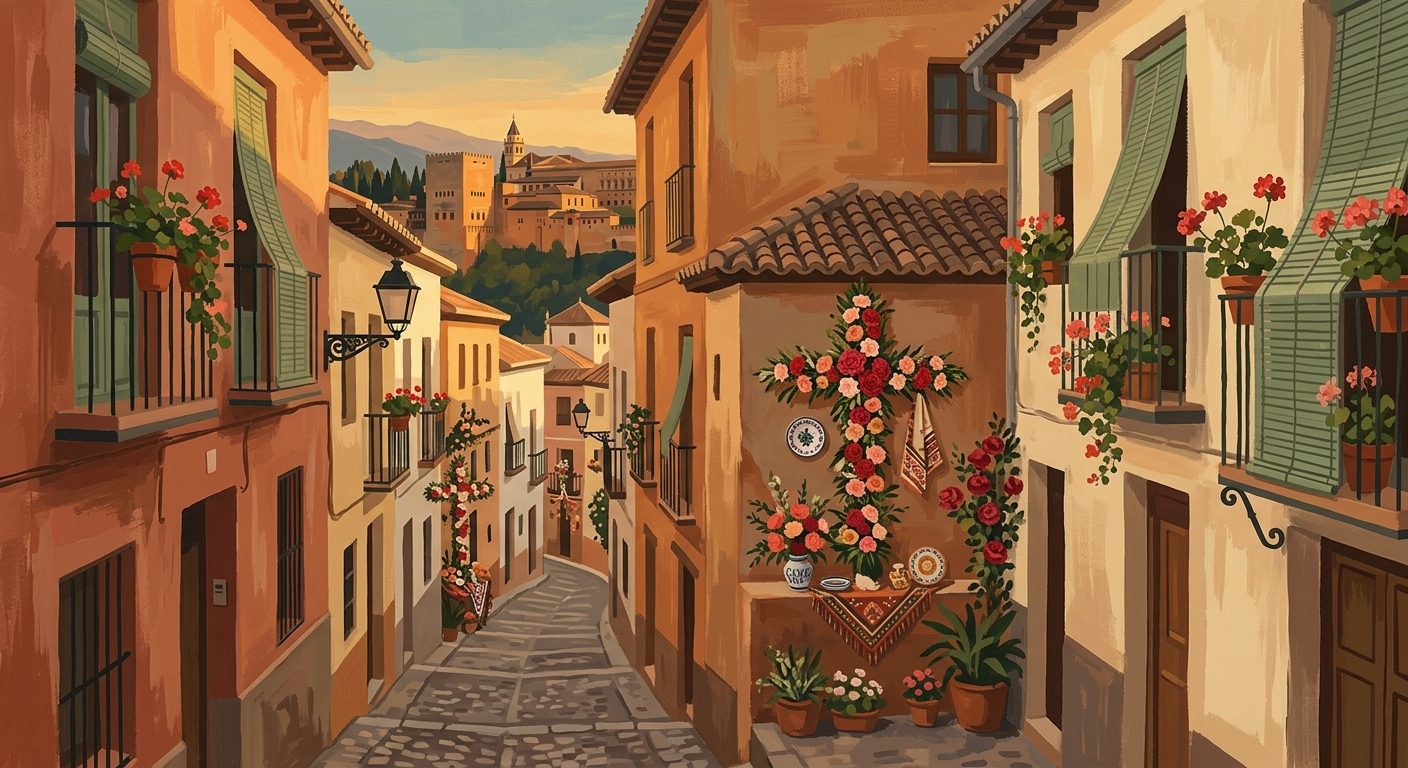
Cruces de Mayo in Granada: A Complete Guide
Discover how Granada transforms during the Cruces de Mayo festival. We detail where to find the most spectacular floral crosses, the local traditions to observe, and how to navigate the celebrations.
9 min read
The Resistance of the Plate: Why Granada Refuses to Sell Its Soul
In a world of monetised moments and rising margins, Granada holds fast to a radical social contract: the gift of a plate with every glass.
7 min read
Beyond the White Caves: The Unseen Struggle of Sacromonte
The whitewash on Curro’s fingers is thick as paste, a seasonal ritual of reclaiming a home from the damp appetite of the hillside.
7 min read
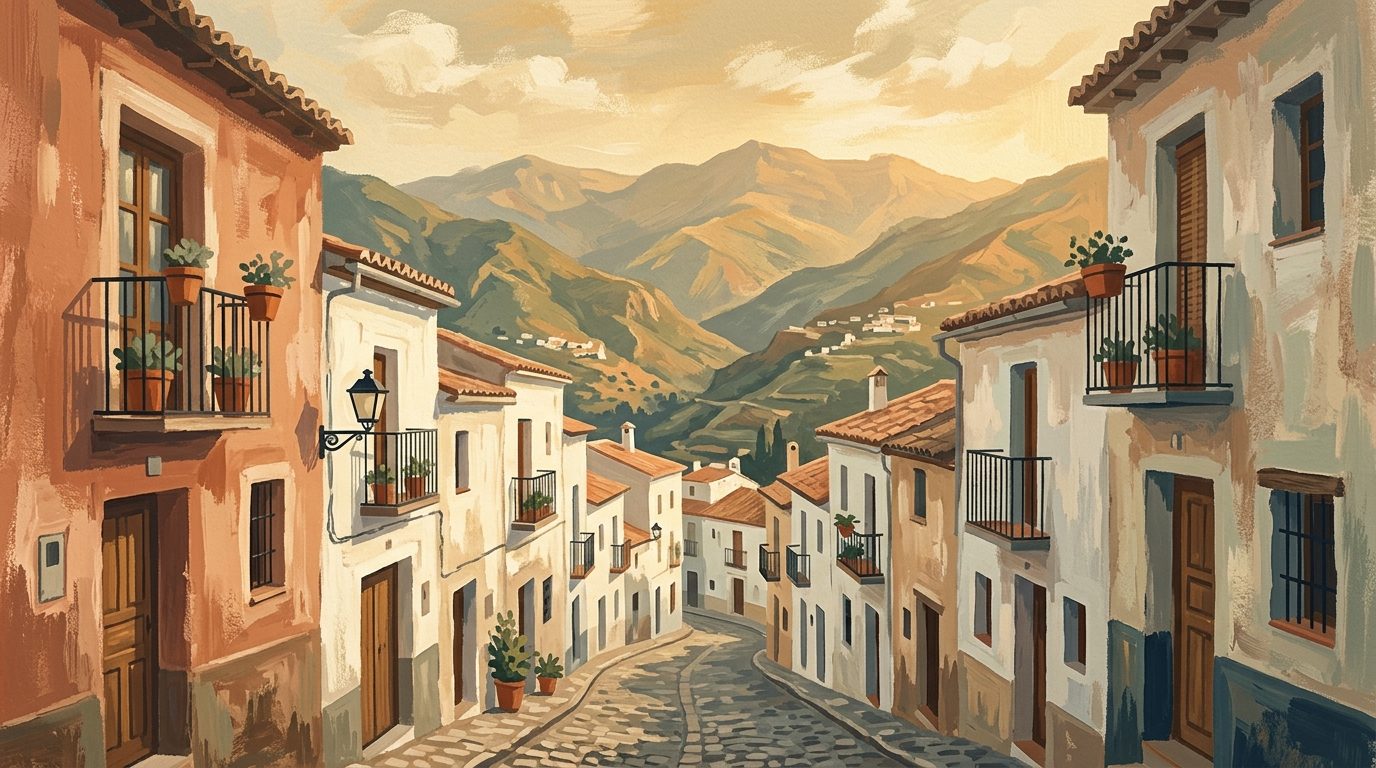
The High Defiance of the Alpujarras
In the shadows of the Sierra Nevada, the sound of water running through ancient stone channels is the heartbeat of a landscape that refused to die. While the rest of Spain’s interior surrenders to silence, these high-altitude villages are learning the language of return.
8 min read
Newsletter
More stories from Andalucía
Weekly notes, seasonal picks, and the next guides worth bookmarking.