
Place guide · Almería
Playa de los Muertos: Almería's Wild Coastal Masterpiece
Playa de los Muertos is a starkly beautiful stretch of white volcanic pebbles and turquoise water, offering some of the clearest swimming conditions in Andalucía.
By Dan · Updated 29 June 2026 · 7 min read
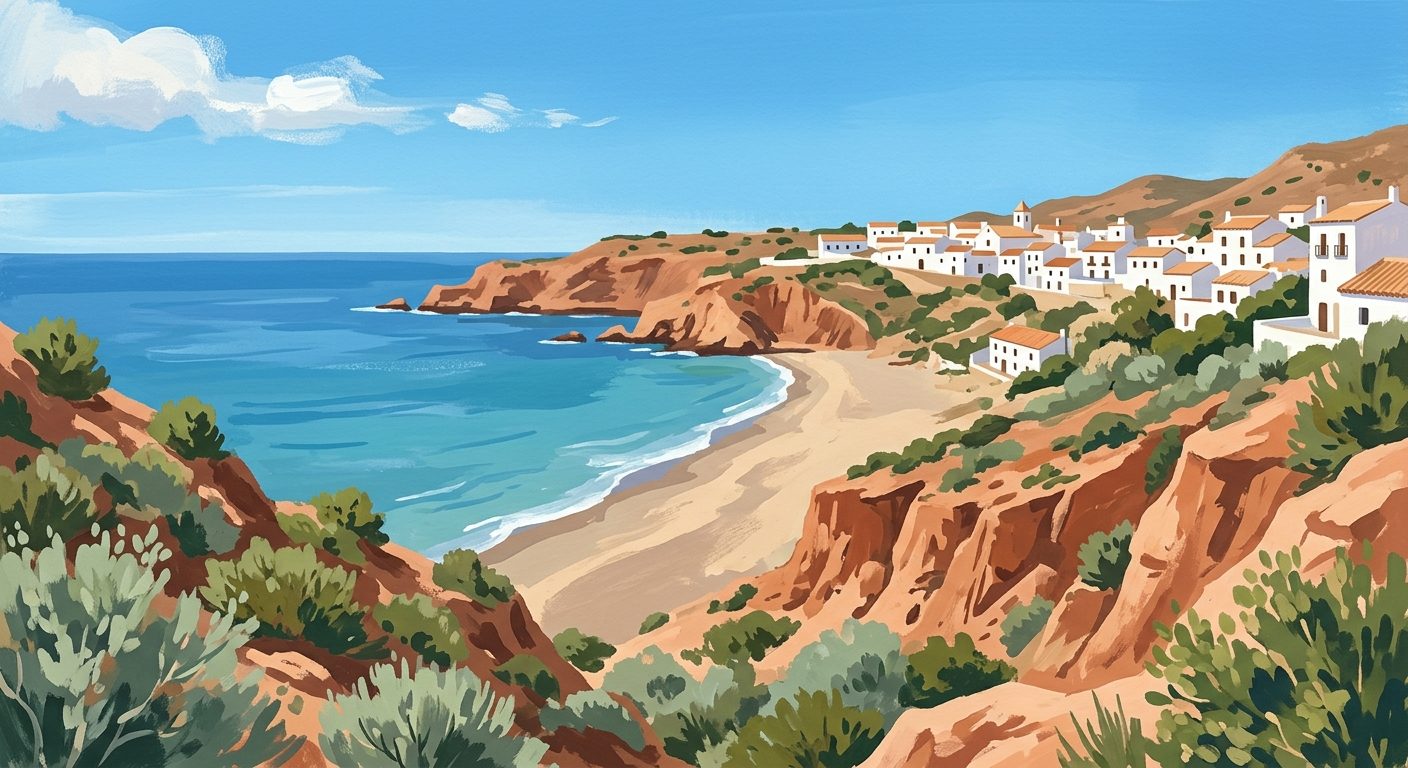
Playa de los Muertos is a striking expanse of white volcanic gravel and deep turquoise water that feels entirely disconnected from the modern world. It is frequently cited as the most beautiful beach in Andalucía, though its rugged nature demands a level of physical effort that keeps the casual crowds at bay.
Playa de los Muertos, or the Beach of the Dead, carries a name that suggests a dark history, yet the reality is one of the most visually arresting landscapes in the Cabo de Gata-Níjar Natural Park. The name originates from the maritime currents that historically washed the bodies of shipwrecked sailors onto this specific stretch of shore. Today, those same currents ensure that the water remains some of the clearest in the Mediterranean, providing visibility that is the envy of snorkellers across the province of Almería. This is not a manicured resort beach with soft, golden sand: it is a raw, tectonic meeting point where the volcanic mountains of the Sierra de Cabrera plunge directly into the sea.
What makes this beach distinctive is its scale and its isolation. Situated just south of the industrial port of Carboneras, it serves as a stark boundary between human industry and the protected wilderness of the natural park. The beach is over a kilometre long and possesses a linear perfection that looks almost artificial from the clifftops. There are no buildings, no power lines, and no permanent structures of any kind visible from the shoreline. For those willing to make the steep descent, the reward is a coastal experience that feels more like the Caribbean or the Greek Islands than the typical Spanish Costa. It is a place of intense light, sharp geological angles, and a deep, cobalt sea that changes character entirely depending on the wind.
The beach itself
The composition of Playa de los Muertos is one of its most celebrated features. Rather than traditional sand, the beach consists of tiny, polished white pebbles. These stones are small enough to be comfortable under a towel but large enough that they do not stick to your skin or blow into your eyes when the wind picks up. This gravel is the reason for the water clarity: there is no fine silt to be stirred up by the waves, leaving the sea transparent even on days with moderate swell. The beach is roughly 1,100 metres long and surprisingly wide, providing ample space even during the height of the summer season.
In terms of classification, the beach often qualifies for high water quality awards, though it frequently loses its Blue Flag status due to the lack of permanent services and accessibility. It is a multi-use space where everyone finds their corner. The central section tends to be favoured by families and day-trippers, while the far right end (towards the south, near the large rock formations) is a well-established naturist area. The atmosphere is generally respectful and quiet, as the effort required to reach the sand tends to filter out the louder, more equipment-heavy crowds. It is important to note that the sea floor drops away very rapidly here. Within two steps of the shoreline, the water is already over head height, which makes it less than ideal for small children or weak swimmers.
Getting there and parking
Reaching Playa de los Muertos requires some planning. If you are flying into the region, Almería Airport is the closest hub, located approximately 50 minutes away by car via the A-7 motorway and the N-341. From the nearby town of Carboneras, it is a short five-minute drive south on the AL-5106. The road winds up a steep hill to a large, designated parking area on the left-hand side. From mid-June through to the end of August, this car park is typically managed by the local municipality and carries a fee of approximately 5 euros for the day. It fills up remarkably quickly, often by 10:00 in the morning, so early arrival is essential to avoid being turned away.
Public transport is limited. There is a seasonal bus service from Carboneras that stops near the parking area, but it is infrequent. Once you have parked, the real work begins. There are three main paths down to the beach. The first, near the information point, is the steepest but the shortest, taking about 15 minutes. The second path, further south, is slightly more gradual but takes 20 to 25 minutes. The third path leads from the viewpoint (Mirador) and is more of a scramble. None of these paths are paved, and they all consist of loose gravel and steep inclines. Sturdy footwear is a requirement: attempting this descent in flip-flops is a common mistake that often ends in minor injuries.
Facilities and chiringuitos
It is vital to understand that Playa de los Muertos is a completely natural beach. There are no chiringuitos (beach bars), no public toilets, no showers, and no rubbish bins on the sand. You must carry in everything you need for the day and, more importantly, carry everything out. In the height of summer, a small wooden hut near the car park at the top of the cliff sometimes sells cold water and basic snacks, but you cannot rely on this being open. There is no sun-bed hire and no umbrellas for rent.
For those looking for a meal after their beach day, you will need to head back into Carboneras. The town offers excellent seafood options along its own promenade. Restaurante Mariano and Restaurante El Cabo are local favourites that serve fresh fish caught by the Carboneras fleet. From mid-June to mid-September, a lifeguard station is manned daily on the beach, but they have limited equipment due to the difficulty of accessing the site. If the red flag is flying, it must be taken seriously: the currents here are powerful and there is no easy way for emergency services to reach the water. For the most up-to-date information on seasonal parking and lifeguard schedules, check the official Andalucía tourism board.
Best time to visit
The timing of your visit can fundamentally change your experience of Playa de los Muertos. Late May, June, and September are the ideal months. During these periods, the water temperature is perfect for swimming, the sun is manageable, and the parking situation is far less stressful. July and August can be punishingly hot, and the lack of shade on the beach means you are entirely exposed to the sun. If you do visit in mid-summer, aim to arrive before 9:00 or after 17:00 to avoid the worst of the heat and the crowds.
Winter visits are equally stunning for photography and walking, as the Almerían climate remains mild. However, you must pay close attention to the wind forecast. This beach is notoriously dangerous during a "Levante" (an easterly wind). The Levante blows directly onto the shore, creating massive waves and a dangerous undertow that makes swimming impossible. Even on a sunny day, if the wind is coming from the east, the beach can be unpleasant due to the spray and the noise. Always check a local weather app for wind direction before making the drive: a "Poniente" (west wind) results in the calmest, flattest water conditions.
Combine with
Since the beach lacks facilities, pairing a morning at Playa de los Muertos with an afternoon elsewhere is a popular strategy. The town of Carboneras is the most logical choice. While it is an industrial town dominated by its large port and cement factory, the old centre and the beachfront area are charming and offer some of the best-value tapas in the province. You can visit the Castillo de San Andrés, a 16th-century fortress in the centre of town, which provides a cool escape from the afternoon sun.
Alternatively, a short drive further south leads you to the Mesa Roldán. This is a flat-topped volcanic mesa featuring an 18th-century watchtower and a lighthouse. The views from the top are spectacular, offering a panoramic perspective of the entire coastline and the Playa de los Muertos below. It was also a filming location for Game of Thrones, making it a popular stop for television fans. The drive between the beach and the mesa takes less than ten minutes and provides some of the best photo opportunities in the Cabo de Gata region.
Practical notes
Preparation is key for this beach. You must bring a significant amount of water, as the combination of the hike and the Almerían sun leads to rapid dehydration. A parasol is also highly recommended, though it can be difficult to secure in the pebbles if the wind picks up. Regarding accessibility, Playa de los Muertos is unfortunately not suitable for those with limited mobility, wheelchair users, or families with heavy prams. The paths are too steep and uneven for anything other than a sturdy backpack.
Dog rules are strict during the summer season (June to September), with pets generally prohibited on the sand. During the low season, rules are more relaxed, but it is always best to check the latest local bylaws in Carboneras. Finally, safety should be your primary concern. Because the beach is so deep so quickly, the shore break can be quite powerful. If you are snorkelling, stay close to the rocks at the northern or southern ends where the marine life is most concentrated, but always keep an eye on the sea state. This is a wild, beautiful, and sometimes unforgiving environment that requires respect.
Last reviewed: 21 June 2026 · Editorial policy
Related guides
Carboneras: An Authentic Maritime Gateway to Cabo de Gata
Carboneras offers an authentic look at Almería's fishing traditions and serves as a gateway to the spectacular Playa de los Muertos.
5 min read
A Guide to Roquetas de Mar: Beaches, Castles and Coastal Life
Discover Roquetas de Mar, an Almerian coastal town offering expansive blue-flag beaches, a 16th-century castle, and a spectacular natural reserve.
6 min read
Playa del Playazo: A Guide to Rodalquilar's Golden Coast
A sweeping valley of golden sand flanked by volcanic cliffs and the historic Castillo de San Ramón. This is one of the most accessible yet visually striking beaches in Almería.
7 min read
Playa de Agua Amarga: A Guide to Almería's Premier Coastal Village
Playa de Agua Amarga is a sophisticated coastal retreat in Almería, offering a perfect balance of fine golden sand, crystal-clear water, and excellent village chiringuitos.
7 min read
A Guide to Playa de Mónsul: The Volcanic Masterpiece of Cabo de Gata
Discover the volcanic beauty of Playa de Mónsul, an iconic Almerían beach famous for its dramatic lava formations and cinematic history.
7 min read
A Guide to Playa de Las Negras: Volcanic Shores in Almería
Playa de Las Negras is a unique volcanic beach in Almería, known for its dark pebbles, turquoise waters, and bohemian village atmosphere within the Cabo de Gata-Níjar Natural Park.
6 min read
More from Almería
A Local Guide to Playa de Mojácar: Sands, Spirits and Almerían Soul
Experience the diverse 17-kilometre coastline of Mojácar Playa, where volcanic sands meet clear waters and lively chiringuitos offer the perfect Almerían escape.
8 min read
Playa de los Genoveses: A Guide to the Wild Heart of Cabo de Gata
Experience the untouched beauty of Playa de los Genoveses, a vast volcanic bay in Almería where golden sands meet shallow turquoise waters in a protected natural park.
7 min read
Playa de Vera: Naturist and Family Beach Guide
Playa de Vera is a vast Almerían beach known for its pioneering naturist zones and wide, golden sands. It offers a unique combination of clothing-optional freedom and traditional family-friendly facilities.
7 min read
A Guide to Vélez-Rubio: Almería’s Baroque Masterpiece
Discover the grand Baroque architecture and deep archaeological heritage of Vélez-Rubio, the elegant market town serving Almería’s northern highlands.
6 min read
Vélez-Blanco: The Renaissance Stronghold of the Almería Highlands
Discover Vélez-Blanco, a high-altitude Almerían village featuring a 16th-century Renaissance castle and UNESCO-listed prehistoric cave art.
6 min read
Exploring the Gypsum Karst and Hanging Houses of Sorbas
Discover Sorbas, the Almerian town famous for its precarious hanging houses and Europe's most extensive network of gypsum caves.
6 min read
Almería City: The Gateway to Europe's Wild West
Discover the storied cinematic past of Almería City and explore the rugged Tabernas Desert film sets where Hollywood legends were born.
6 min read
A Guide to Mojácar: Exploring Almería’s Iconic Hilltop Village and Coast
Discover the contrasting charms of Mojácar, from the whitewashed alleys of its hilltop Moorish old town to the long, sun-drenched beaches of the Almerian coast.
6 min read
Exploring Vera: From Medieval Ruins to Europe’s Leading Naturist Shores
Vera offers a dual experience, combining a traditional Almerian town full of archaeological significance with one of Europe's most famous naturist beaches.
5 min read
Newsletter
More stories from Andalucía
Weekly notes, seasonal picks, and the next guides worth bookmarking.