
Place guide · Almería
Playa del Playazo: A Guide to Rodalquilar's Golden Coast
A sweeping valley of golden sand flanked by volcanic cliffs and the historic Castillo de San Ramón. This is one of the most accessible yet visually striking beaches in Almería.
By Dan · Updated 29 June 2026 · 7 min read
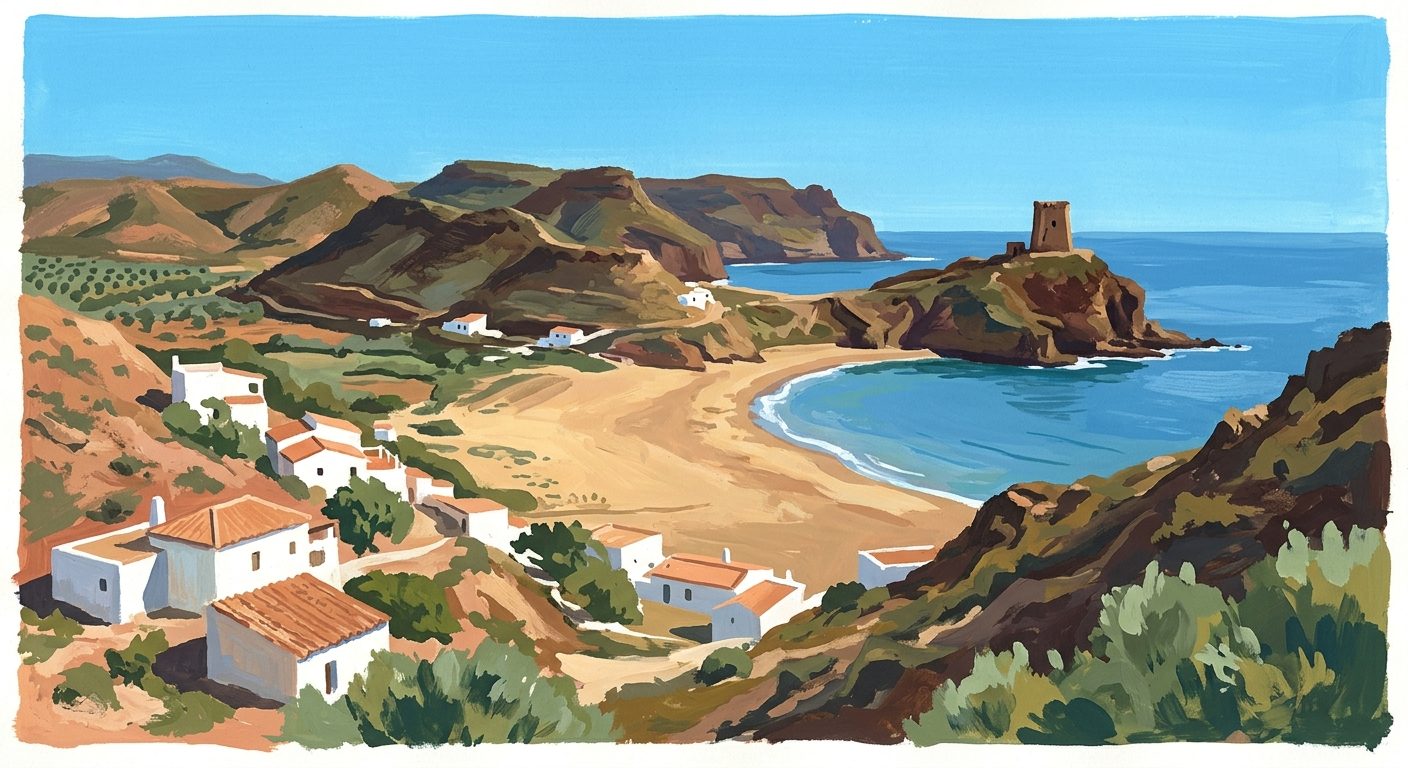
Playa del Playazo offers a spectacular meeting point between the volcanic mountains of the Sierra de Cabo de Gata and the Mediterranean Sea. Known for its golden sands and the imposing presence of an 18th-century fortress, it remains one of the most visually impressive corners of the Almerían coast.
The approach to Playa del Playazo is one of the most iconic drives in the Cabo de Gata-Níjar Natural Park. As you descend from the village of Rodalquilar, the road winds through a broad valley framed by arid, rust-coloured hills. The landscape here feels cinematic, a characteristic that has long drawn filmmakers to this specific part of Andalucía. Unlike the tiny, enclosed coves found elsewhere in the park, El Playazo opens up into a wide, welcoming bay that provides a sense of space even when the summer crowds arrive.
The beach is defined by its unique geological features. To the left, the Castillo de San Ramón sits atop a white, fossilised dune that has been carved by wind and salt into smooth, organic shapes. To the right, the bay is protected by rugged volcanic cliffs. This natural amphitheatre creates a microclimate where the water often remains calmer than at the more exposed beaches further south. It is a place where the desert truly meets the ocean, providing a stark beauty that is typical of the Almerían province.
The beach itself
The sand at Playa del Playazo is a significant draw for those who find the dark, shingly grit of other Almerían beaches uncomfortable. Here, the sand is fine-grained and distinctly golden, stretching for approximately 400 metres in length and around 30 metres in width. Because the slope into the water is very gradual, it is an excellent choice for families with young children or those who prefer to wade out slowly into the sea.
The water clarity is exceptional. The presence of Posidonia oceanica (seagrass) meadows just offshore helps to keep the water filtered and clear, making it a favourite spot for snorkellers who explore the rocky edges near the castle. While the beach does not carry a Blue Flag status, this is primarily due to its location within a highly protected natural park which limits the installation of permanent urban amenities. The water quality is consistently rated as excellent by local authorities and remains one of the cleanest areas for swimming in the region.
Naturism is a long-standing tradition in Cabo de Gata. While the central area of the beach is typically frequented by families and day-trippers in swimwear, the northern end, which is the area furthest from the main parking track and closer to the fossilised dunes, is often used by naturists. The atmosphere is respectful and relaxed, reflecting the bohemian spirit that has defined the Rodalquilar area for decades.
Getting there & parking
Reaching Playa del Playazo requires a car, as public transport options are virtually non-existent for this specific stretch of coastline. If you are travelling from Almería Airport, the drive takes approximately 50 minutes. You will follow the AL-3115 and then the ALP-826 towards Rodalquilar. Once you reach the village, look for the signposted turn-off for "El Playazo" which leads you down through the valley.
The final three kilometres consist of a narrow, paved road that eventually transitions into an unpaved track as you approach the beach dunes. In the peak months of July and August, this track can become quite dusty. Parking is provided in a large, flat dirt area behind the beach. While parking has historically been free of charge, visitors should check for new municipal 'eco-tax' signage or barriers introduced for the 2026 summer season. During the high season, unofficial attendants may occasionally operate to help direct cars into spaces.
The reality of parking is that if you arrive after 11:00 on a weekend in August, you will likely struggle to find a spot close to the sand. Early arrival is essential during the summer months. In the low season, from October through to May, you can usually park right at the edge of the dunes with no trouble at all. For those staying in the village of Rodalquilar, the beach is technically reachable on foot, but it is a hot, 40-minute walk with very little shade, so most visitors choose to drive.
Facilities & chiringuitos
Visitors should arrive with the mindset that Playa del Playazo is a wild beach. There are no permanent buildings on the sand. You will not find rows of sun-beds or umbrellas for hire here. Everything you need for the day must be carried in and carried out. This lack of commercialisation is exactly what preserves the character of the park, but it requires some forward planning.
During the height of summer, a small, temporary chiringuito known as La Playita often sets up near the parking area, offering cold drinks, ice creams, and basic snacks. However, its operation can be inconsistent depending on the year and the latest park regulations. It is far safer to pack a cool box with plenty of water and food. For a proper meal, you will need to head back into Rodalquilar or nearby Las Negras.
Showers and changing rooms are not available. There are usually chemical toilets provided near the parking area during the peak summer months (July and August), but these are removed once the season ends. Lifeguard services follow a similar schedule, with a small hut staffed during the busiest hours of the summer, but the beach is largely unsupervised for the rest of the year. The lack of facilities is the price one pays for the preservation of such a pristine natural environment.
Best time to visit
Timing is everything when visiting the Costa de Almería. The province is the driest region in Europe, and temperatures in July and August regularly soar above 35 degrees Celsius. If you visit during these months, the beach is at its busiest and the heat can be oppressive by midday. If you must visit in August, try to arrive at sunrise to enjoy the beach before the heat and crowds peak.
The most rewarding time to visit is during the shoulder seasons of May, June, September, and October. During these months, the Mediterranean is warm enough for swimming, the air temperature is comfortable, and the crowds are significantly thinner. May is particularly beautiful as the desert flora in the surrounding valley may still show some green before the summer sun turns the vegetation to straw. Winter visits are also pleasant for hiking, though the water may be too brisk for most swimmers.
One critical factor to check is the wind forecast (sites like Windguru (San José) or AEMET are reliable for this area). If a strong Levante (east wind) is blowing, Playa del Playazo can become unpleasant as the sand blows off the dunes and the water becomes choppy. On days with a Poniente (west wind), the water at El Playazo is typically as flat and clear as a swimming pool, making it the perfect time for snorkelling or paddle-boarding.
Combine with
A visit to El Playazo is best paired with an exploration of Rodalquilar. This former gold-mining village has a unique, slightly haunting atmosphere. Note that the gold mines (Minas de Rodalquilar) are ruins; safety barriers should be respected. You can wander through the ruins of the old processing plant, which looks like a modernist cathedral decaying in the sun. The village also hosts a botanical garden, the Jardín Botánico Albardinal, which showcases the unique plant life of the Almerían desert and the volcanic soil of the park.
If you want to see more of the coast, a short drive north takes you to the village of Las Negras. It is a more developed seaside town with a stony beach but a fantastic selection of seafront restaurants and bars. It provides a good contrast to the wildness of El Playazo, offering a place to enjoy a proper sit-down seafood lunch or a cold beer after a day on the sand. The drive between the two locations offers some of the most striking volcanic vistas in the province.
Practical notes
Preparation is key for a successful trip to this beach. Because there is no natural shade, a high-quality beach umbrella is non-negotiable. The sun reflects off the golden sand and the light-coloured cliffs, increasing the risk of sunburn even on cooler days. Ensure you have high-factor sun cream and plenty of hydration, especially if travelling with children.
In terms of accessibility, the parking area is flat and close to the beach, which allows those with limited mobility to see the sea easily. However, there are no wooden boardwalks leading onto the sand, so wheelchairs will struggle to reach the water's edge. The sand can also become incredibly hot, so sturdy sandals or flip-flops are necessary for walking from the car to the shore.
Regarding safety, the bay is generally very safe for swimming. There are few dangerous currents, but visitors should be cautious when swimming near the Castillo de San Ramón, as the rocky shelves underneath can be sharp and slippery. As for pets, official regulations in the Cabo de Gata-Níjar Natural Park prohibit dogs on the beach during the high season, though you will often see locals walking their dogs in the early morning or during the winter months. Always ensure you take all rubbish back to the bins located in the parking area to help maintain the ecological health of this protected zone.
Last reviewed: 21 June 2026 · Editorial policy
Related guides
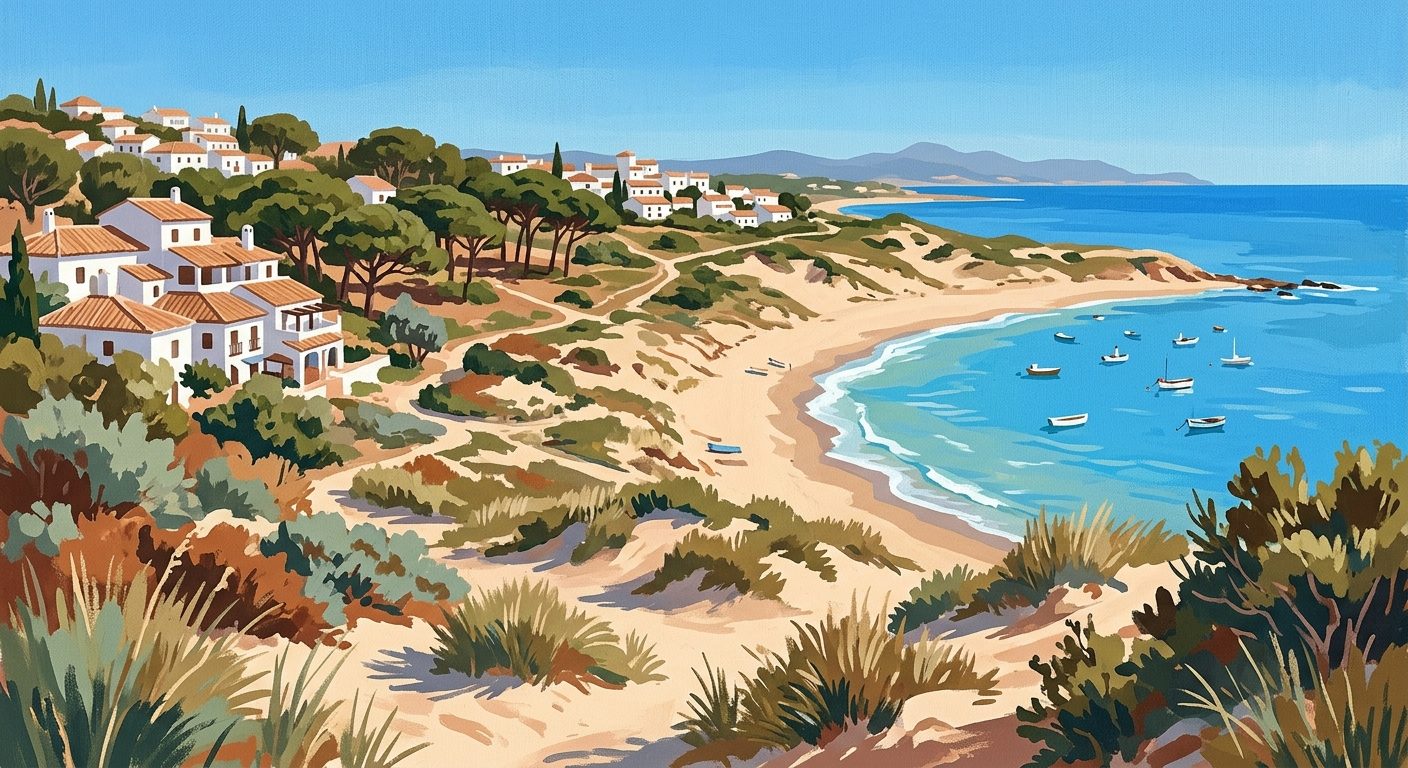
Playa de Cabopino: Dunes, Pines and Clear Waters near Marbella
A protected enclave of natural dunes and fine sand situated between Marbella and Fuengirola. This coastal stretch offers a rare glimpse of the original Mediterranean landscape.
7 min read
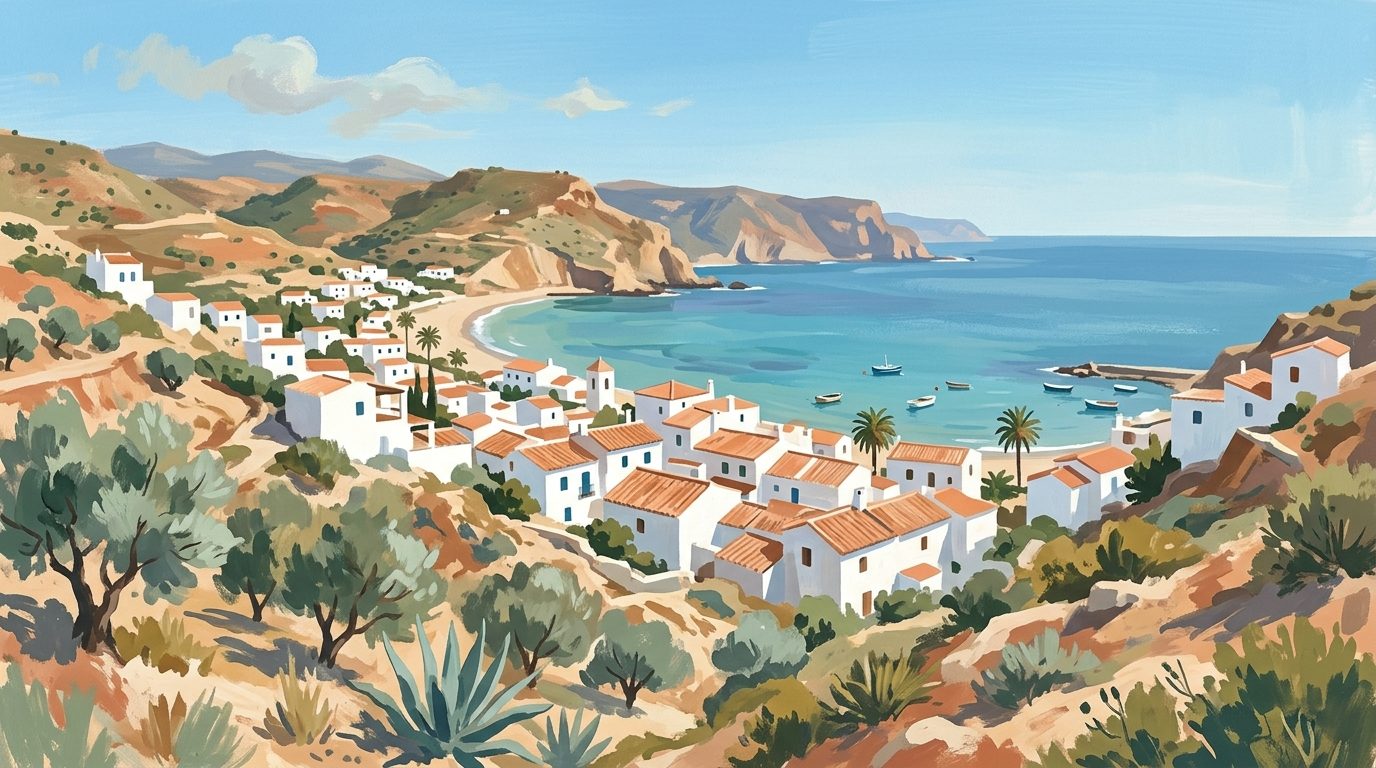
Playa de Agua Amarga: A Guide to Almería's Premier Coastal Village
Playa de Agua Amarga is a sophisticated coastal retreat in Almería, offering a perfect balance of fine golden sand, crystal-clear water, and excellent village chiringuitos.
7 min read
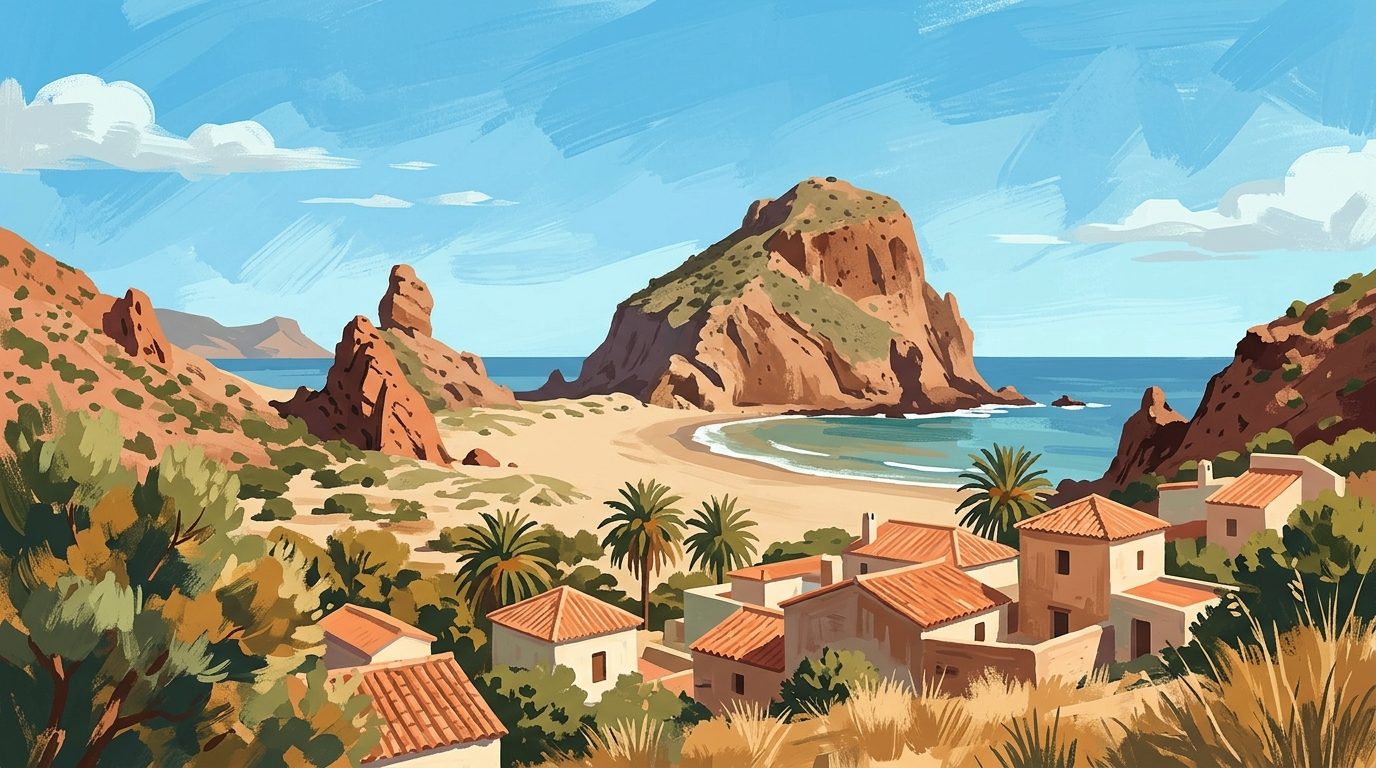
A Guide to Playa de Mónsul: The Volcanic Masterpiece of Cabo de Gata
Discover the volcanic beauty of Playa de Mónsul, an iconic Almerían beach famous for its dramatic lava formations and cinematic history.
7 min read
Playa de Vera: Naturist and Family Beach Guide
Playa de Vera is a vast Almerían beach known for its pioneering naturist zones and wide, golden sands. It offers a unique combination of clothing-optional freedom and traditional family-friendly facilities.
7 min read
Playa de los Muertos: Almería's Wild Coastal Masterpiece
Playa de los Muertos is a starkly beautiful stretch of white volcanic pebbles and turquoise water, offering some of the clearest swimming conditions in Andalucía.
7 min read
Playa de los Genoveses: A Guide to the Wild Heart of Cabo de Gata
Experience the untouched beauty of Playa de los Genoveses, a vast volcanic bay in Almería where golden sands meet shallow turquoise waters in a protected natural park.
7 min read
More from Almería
A Local Guide to Playa de Mojácar: Sands, Spirits and Almerían Soul
Experience the diverse 17-kilometre coastline of Mojácar Playa, where volcanic sands meet clear waters and lively chiringuitos offer the perfect Almerían escape.
8 min read
A Guide to Playa de Las Negras: Volcanic Shores in Almería
Playa de Las Negras is a unique volcanic beach in Almería, known for its dark pebbles, turquoise waters, and bohemian village atmosphere within the Cabo de Gata-Níjar Natural Park.
6 min read
A Guide to Roquetas de Mar: Beaches, Castles and Coastal Life
Discover Roquetas de Mar, an Almerian coastal town offering expansive blue-flag beaches, a 16th-century castle, and a spectacular natural reserve.
6 min read
A Guide to Vélez-Rubio: Almería’s Baroque Masterpiece
Discover the grand Baroque architecture and deep archaeological heritage of Vélez-Rubio, the elegant market town serving Almería’s northern highlands.
6 min read
Vélez-Blanco: The Renaissance Stronghold of the Almería Highlands
Discover Vélez-Blanco, a high-altitude Almerían village featuring a 16th-century Renaissance castle and UNESCO-listed prehistoric cave art.
6 min read
Exploring the Gypsum Karst and Hanging Houses of Sorbas
Discover Sorbas, the Almerian town famous for its precarious hanging houses and Europe's most extensive network of gypsum caves.
6 min read
Almería City: The Gateway to Europe's Wild West
Discover the storied cinematic past of Almería City and explore the rugged Tabernas Desert film sets where Hollywood legends were born.
6 min read
A Guide to Mojácar: Exploring Almería’s Iconic Hilltop Village and Coast
Discover the contrasting charms of Mojácar, from the whitewashed alleys of its hilltop Moorish old town to the long, sun-drenched beaches of the Almerian coast.
6 min read
Exploring Vera: From Medieval Ruins to Europe’s Leading Naturist Shores
Vera offers a dual experience, combining a traditional Almerian town full of archaeological significance with one of Europe's most famous naturist beaches.
5 min read
Newsletter
More stories from Andalucía
Weekly notes, seasonal picks, and the next guides worth bookmarking.