
Place guide · Almería
Playa de Vera: Naturist and Family Beach Guide
Playa de Vera is a vast Almerían beach known for its pioneering naturist zones and wide, golden sands. It offers a unique combination of clothing-optional freedom and traditional family-friendly facilities.
By Dan · Updated 12 May 2026 · 7 min read
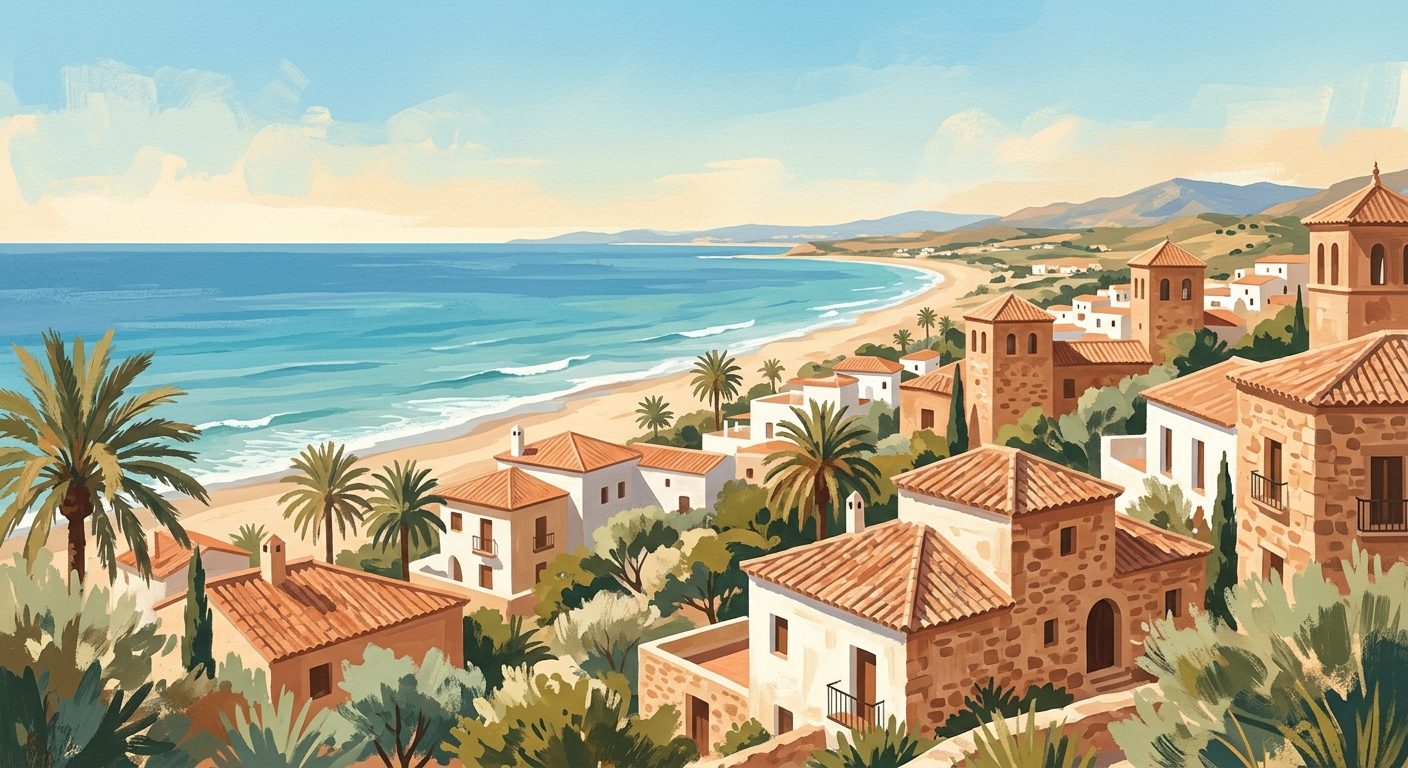
Playa de Vera stands as one of the most distinctive coastal stretches in Almería, famous for its expansive golden sands and its unique status as a global pioneer for naturism. This six kilometre shoreline offers a rare balance of traditional family holiday facilities and dedicated areas for those seeking total freedom in the sun.
Playa de Vera is not your typical Andalucían seaside destination. While many stretches of the Costa de Almería are defined by rocky coves or narrow strips of dark grit, Vera provides a massive, wide expanse of sediment that feels remarkably open. Located in the northern part of the Almerían coast, this area has developed a dual identity over the last four decades. On one hand, it is home to one of the most famous naturist colonies in Europe, complete with a dedicated hotel and urbanisations where clothing is entirely optional. On the other, the southern reaches of the beach are perfectly tailored for traditional family tourism, featuring wide promenades and children’s play areas.
The atmosphere here is one of tolerance and space. Even during the height of the summer season, the sheer scale of Playa de Vera means you can almost always find a spot to spread out your towel without feeling overlooked. The backdrop is a mix of modern low-rise apartments, salt marshes, and palm-lined avenues. It lacks the high-rise claustrophobia of older resorts further west, maintaining a sense of light and air that is characteristic of this semi-arid region. For the visitor, this means a reliable beach experience where the focus is firmly on the quality of the sand and the clarity of the Mediterranean waters.
The beach itself
The shoreline is generally divided into several named sections, though they all flow into one another. To the south, Las Marinas and Los Rebels offer a classic family environment. Here, the sand is a mixture of fine golden grains and small grey pebbles at the water’s edge. The slope into the sea is moderate, though it can get deep fairly quickly compared to some of the shallower bays in Cádiz. This section consistently receives the Blue Flag award (check the latest ADEAC listings for the current 2026 status), reflecting its high standards of cleanliness and the presence of essential services.
As you move north towards the area known as El Playazo, the beach widens significantly. This is the heart of the naturist zone. It is important to note that while naturism is legal on any Spanish beach, El Playazo is one of the few places where it is the social norm. The sand here is remarkably soft and deep, making it excellent for walking. The water clarity is usually exceptional, provided the Levante wind is not blowing hard. When the sea is calm, the turquoise hues of the Alborán Sea are striking against the pale sand. However, because this is an open stretch of coast, the water can become choppy with waves that attract local bodyboarders when the wind picks up from the east.
Getting there & parking
Playa de Vera is situated roughly seven kilometres from the inland town of Vera (for official visitor information, consult the Vera Tourism Board). If you are arriving from Almería Airport, the drive takes approximately 50 to 60 minutes via the A-7 motorway, exiting at junction 534 for Vera and Garrucha. For those travelling from the north, Murcia International Airport (Corvera) is about an hour and fifteen minutes away. The road infrastructure is modern and well signposted, making the beach very accessible for hire cars.
Parking is one of the major advantages of Vera compared to the cramped villages of the Cabo de Gata. Along the Paseo Marítimo in the Las Marinas area, there are hundreds of marked parking spaces. Even in July, you can usually find a spot within a short walk of the sand. In the naturist zone to the north, there are several large, unpaved parking lots located behind the beach bars. These are free to use and provide direct access to the dunes. If you prefer public transport, a regular bus service connects Vera town with the beach and the neighbouring resorts of Garrucha and Mojácar, running every 20 to 30 minutes during the peak summer months (check the official Baraza timetable for the latest frequency).
Facilities & chiringuitos
The chiringuito culture in Vera is well established, offering a mix of traditional seafood and more modern beach club experiences. In the southern family section, Chiringuito Lúa is a popular choice for those wanting fresh grilled sardines and paella with their feet in the sand. Further north, in the naturist area, Chiringuito El Playazo serves as a social hub for the local community, offering a relaxed environment where swimwear is optional for diners.
For a more upscale experience, Maraú Beach Club provides a large complex with swimming pools, loungers, and a more sophisticated menu. It is located near the Puerto Rey section and is a focal point for evening drinks and sunset views. In terms of basic facilities, the beach is well equipped. During the high season (from mid June to mid September), there are lifeguard stations every few hundred metres. Public toilets and showers are situated at the main entry points, and wooden walkways extend onto the sand to assist those with limited mobility or parents with prams.
Best time to visit
To experience Playa de Vera at its best, aim for June or September. During these months, the water temperature is ideal for swimming (reaching 24 degrees Celsius in September) and the intense heat of the Almerían desert landscape is more manageable. July and August are the busiest months, particularly when Spanish holidaymakers arrive from Madrid. While the beach is large enough to handle the crowds, the local restaurants can require advance booking.
Winter in Vera is exceptionally mild and sunny, making it a popular spot for northern Europeans escaping the cold. However, many of the seasonal chiringuitos close their doors from November through to March. If you visit in winter, you will have the beach almost entirely to yourself, but you should be prepared for the occasional strong wind. The Levante wind can be quite fierce here, blowing sand and creating larger waves, so it is always worth checking a wind forecast before planning a long day on the shore.
Combine with
A visit to Playa de Vera pairs perfectly with a trip to the nearby fishing village of Garrucha. Located just a few minutes south, Garrucha is famous for its red prawns (Gambas de Garrucha). The village has a working port and a long marble promenade that is ideal for an evening stroll after a day on the beach. Unlike the purpose-built resort of Vera Playa, Garrucha has the authentic feel of a functioning Spanish town.
Alternatively, drive ten minutes further south to the white-washed village of Mojácar Pueblo. Situated on a hilltop overlooking the coast, its labyrinth of narrow streets and floral balconies offers a sharp contrast to the flat, sandy expanse of Vera. It is one of the most photographed villages in Andalucía and provides excellent vantage points for looking back over the coastline you have just spent the day exploring.
Practical notes
When packing for Playa de Vera, remember that the sun in Almería is among the strongest in Spain. There is very little natural shade on this wide beach, so bringing a sturdy parasol is essential if you plan to stay for more than an hour. If you are heading to the naturist section, the etiquette is simple: respect the privacy of others and avoid taking photographs. It is a very mature, respectful environment where people of all ages feel comfortable.
Accessibility is generally high. The southern end of the beach has the best infrastructure for wheelchairs, with ramps and amphibious chairs available at certain Red Cross points during the summer. Regarding dogs, the rules are strict on the main Blue Flag sections during the high season, with pets generally prohibited from May to October. However, there is a designated dog-friendly beach further north near the mouth of the Río Antas. Finally, keep an eye on the flag system: green for safe, yellow for caution, and red for no swimming. The currents here are rarely dangerous, but the open sea can occasionally produce a strong undertow during stormy weather.
Last reviewed: 21 June 2026 · Editorial policy
Related guides
Playa del Playazo: A Guide to Rodalquilar's Golden Coast
A sweeping valley of golden sand flanked by volcanic cliffs and the historic Castillo de San Ramón. This is one of the most accessible yet visually striking beaches in Almería.
7 min read
Playa de Agua Amarga: A Guide to Almería's Premier Coastal Village
Playa de Agua Amarga is a sophisticated coastal retreat in Almería, offering a perfect balance of fine golden sand, crystal-clear water, and excellent village chiringuitos.
7 min read
Playa de los Genoveses: A Guide to the Wild Heart of Cabo de Gata
Experience the untouched beauty of Playa de los Genoveses, a vast volcanic bay in Almería where golden sands meet shallow turquoise waters in a protected natural park.
7 min read
A Local Guide to Playa de Mojácar: Sands, Spirits and Almerían Soul
Experience the diverse 17-kilometre coastline of Mojácar Playa, where volcanic sands meet clear waters and lively chiringuitos offer the perfect Almerían escape.
8 min read
Fuengirola: A Family Favourite on the Costa del Sol
Discover Fuengirola, the family-friendly heart of the Costa del Sol, where Roman ruins and a Moorish castle meet seven kilometres of sandy beaches and a world-class zoo.
6 min read
Torremolinos: The Original Spirit of the Costa del Sol
Explore Torremolinos, the pioneer of Andalucían tourism, where traditional fishing heritage meets a lively modern shoreline and inclusive nightlife.
5 min read
More from Almería
A Guide to Playa de Las Negras: Volcanic Shores in Almería
Playa de Las Negras is a unique volcanic beach in Almería, known for its dark pebbles, turquoise waters, and bohemian village atmosphere within the Cabo de Gata-Níjar Natural Park.
6 min read
Playa de los Muertos: Almería's Wild Coastal Masterpiece
Playa de los Muertos is a starkly beautiful stretch of white volcanic pebbles and turquoise water, offering some of the clearest swimming conditions in Andalucía.
7 min read
A Guide to Playa de Mónsul: The Volcanic Masterpiece of Cabo de Gata
Discover the volcanic beauty of Playa de Mónsul, an iconic Almerían beach famous for its dramatic lava formations and cinematic history.
7 min read
A Guide to Roquetas de Mar: Beaches, Castles and Coastal Life
Discover Roquetas de Mar, an Almerian coastal town offering expansive blue-flag beaches, a 16th-century castle, and a spectacular natural reserve.
6 min read
A Guide to Vélez-Rubio: Almería’s Baroque Masterpiece
Discover the grand Baroque architecture and deep archaeological heritage of Vélez-Rubio, the elegant market town serving Almería’s northern highlands.
6 min read
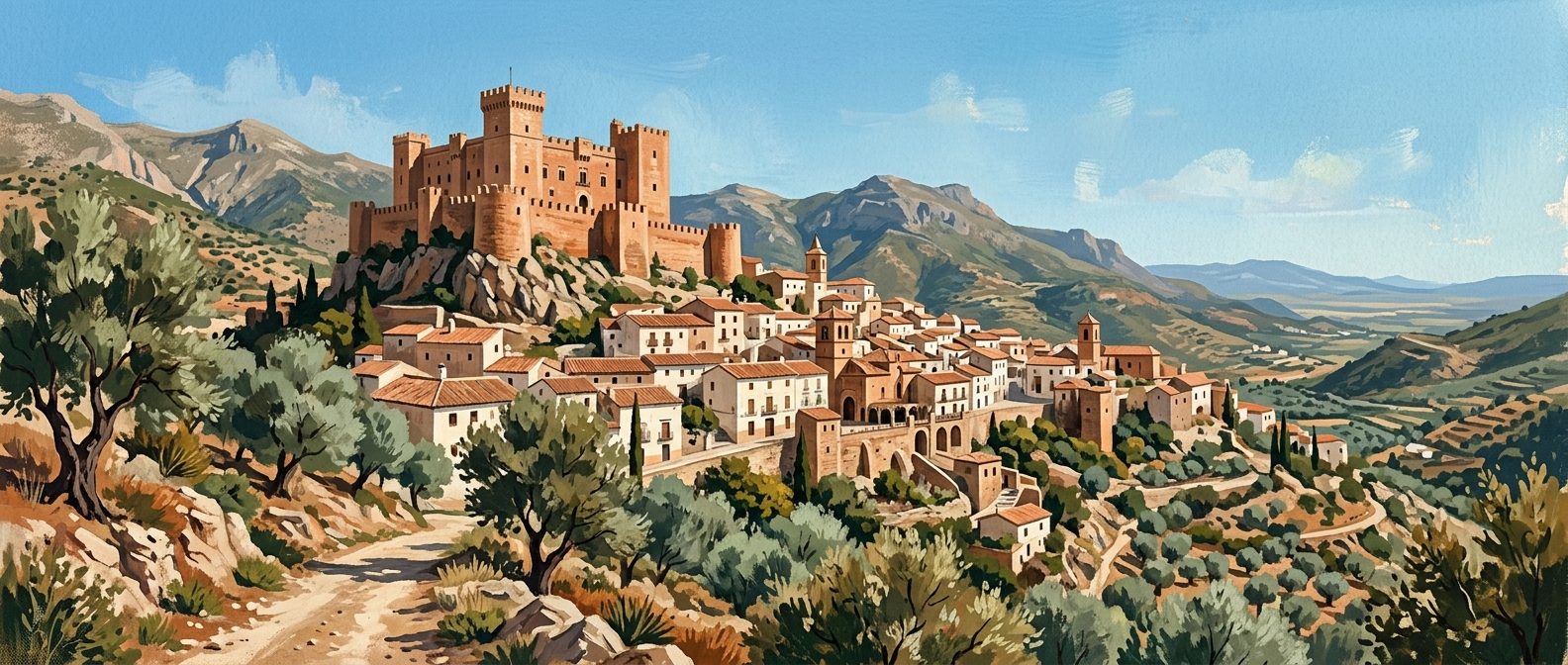
Vélez-Blanco: The Renaissance Stronghold of the Almería Highlands
Discover Vélez-Blanco, a high-altitude Almerían village featuring a 16th-century Renaissance castle and UNESCO-listed prehistoric cave art.
6 min read
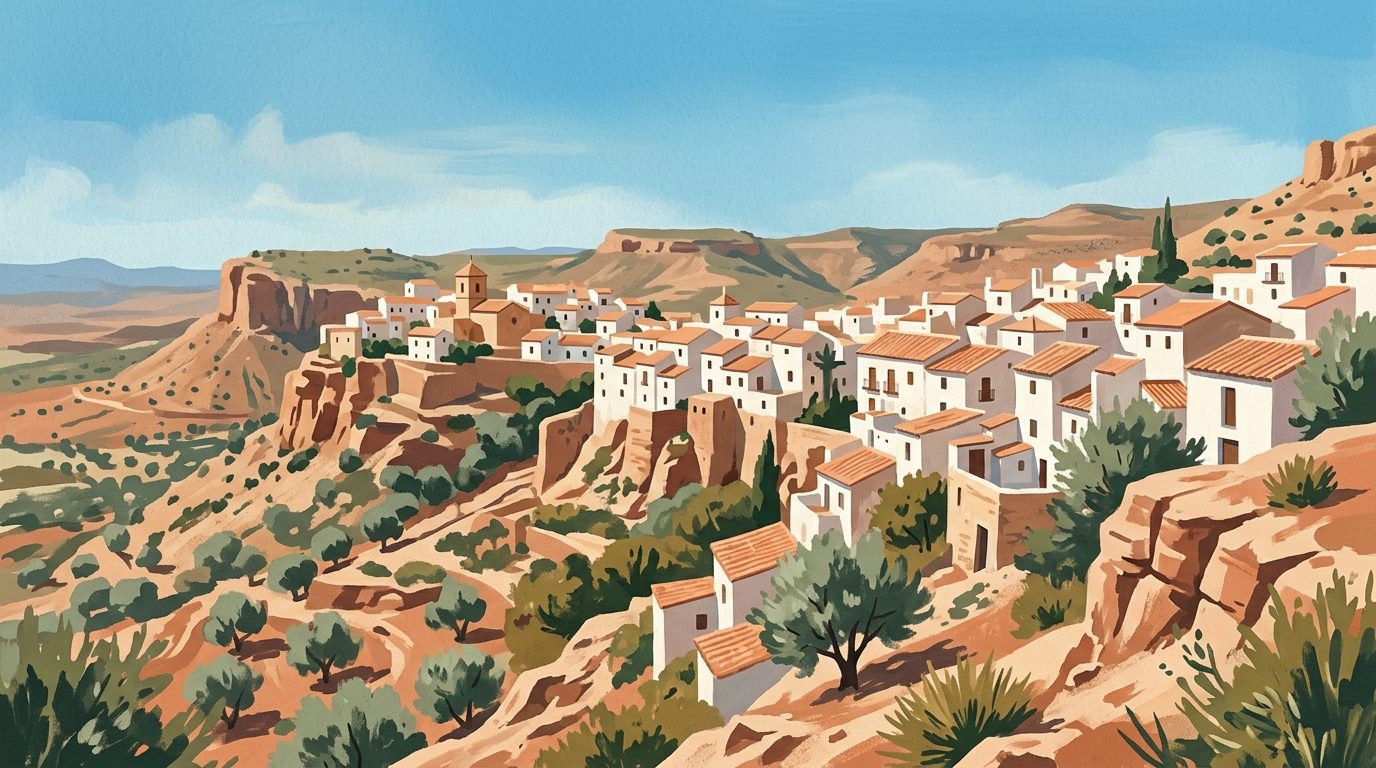
Exploring the Gypsum Karst and Hanging Houses of Sorbas
Discover Sorbas, the Almerian town famous for its precarious hanging houses and Europe's most extensive network of gypsum caves.
6 min read
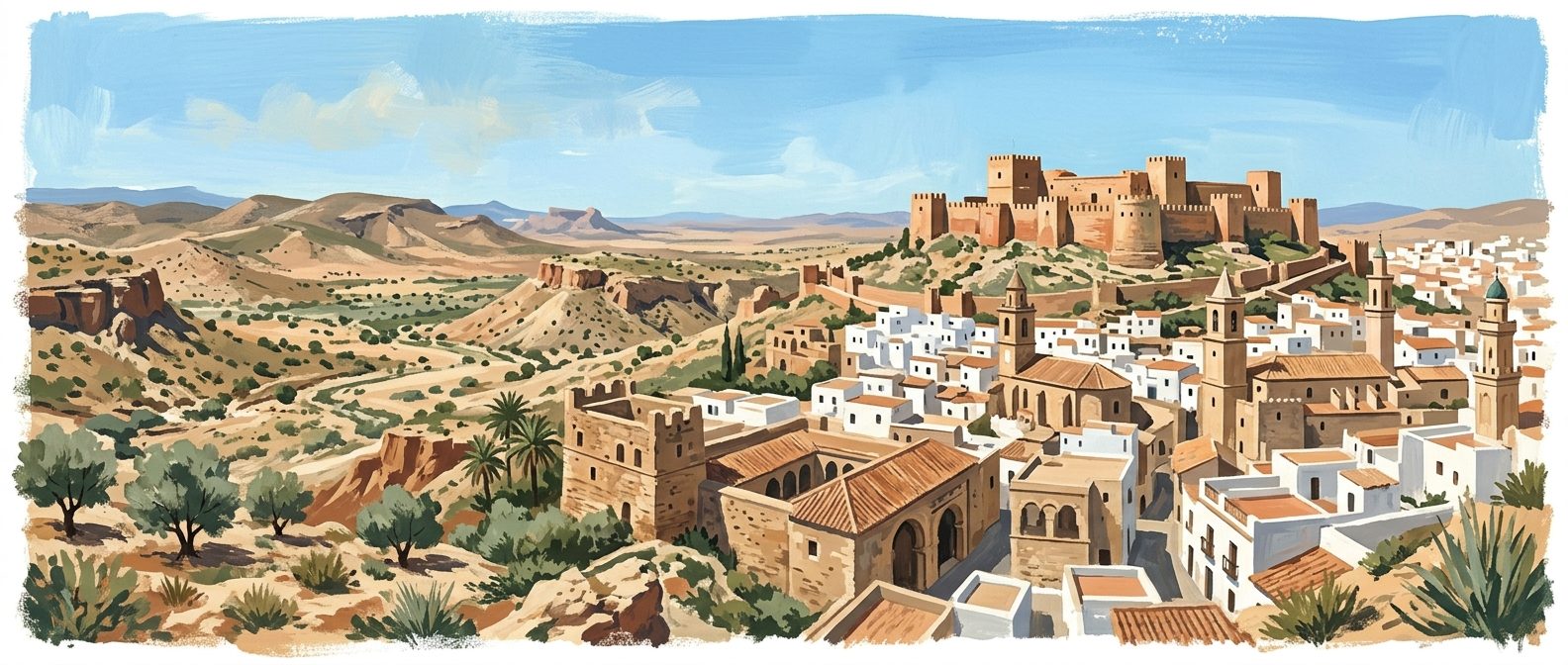
Almería City: The Gateway to Europe's Wild West
Discover the storied cinematic past of Almería City and explore the rugged Tabernas Desert film sets where Hollywood legends were born.
6 min read
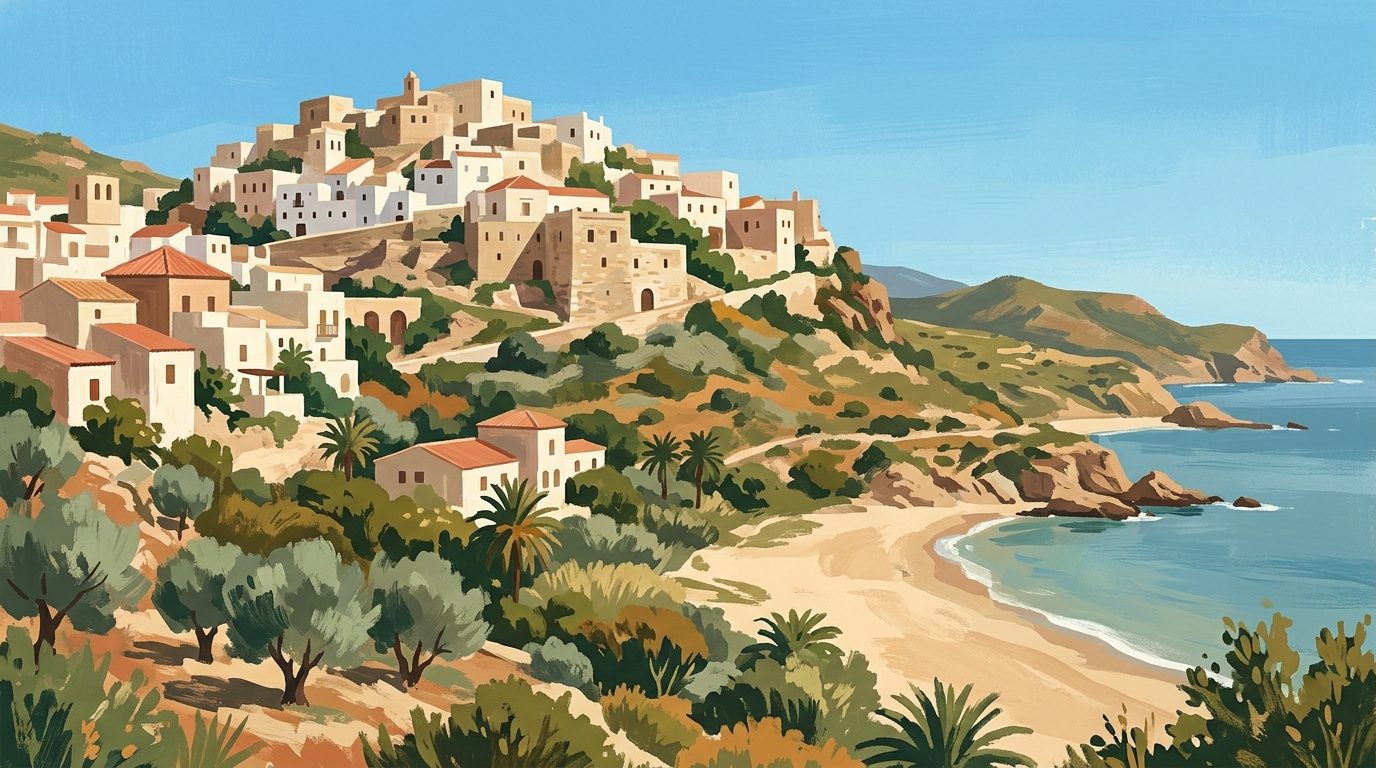
A Guide to Mojácar: Exploring Almería’s Iconic Hilltop Village and Coast
Discover the contrasting charms of Mojácar, from the whitewashed alleys of its hilltop Moorish old town to the long, sun-drenched beaches of the Almerian coast.
6 min read
Newsletter
More stories from Andalucía
Weekly notes, seasonal picks, and the next guides worth bookmarking.