
Feature · Granada
Nasrid Granada: The Last Islamic Kingdom of Iberia
Discover how the Nasrid dynasty forged a pragmatic mountain emirate that survived for over two centuries, creating the Alhambra and leaving a lasting architectural legacy.
By Dan · Updated 16 July 2026 · 8 min read
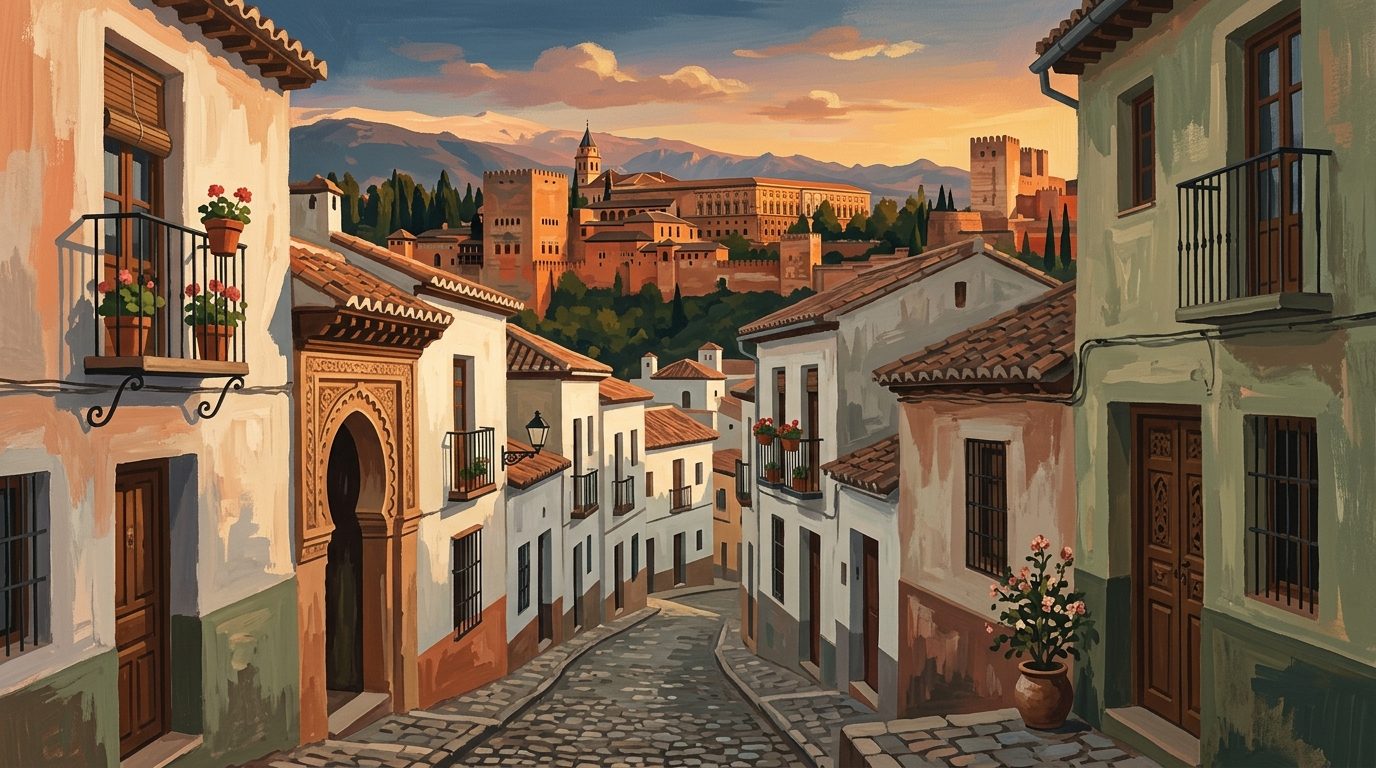
The Nasrid dynasty transformed a steep, dusty hill overlooking the Darro river into a seat of power that would endure for over two centuries. Through careful diplomacy and architectural ambition, they created a final redoubt for Islamic culture in Iberia.
In the spring of 1238, a seasoned military commander named Muhammad ibn Yusuf ibn Nasr rode into the territory of Granada. He had just lost his native Arjona to Christian forces and was searching for a highly defensible position to establish a new dominion. The wider era of Al-Andalus (711 to 1492) had entered a period of rapid territorial collapse following the defeat of the Almohad empire at the Battle of Las Navas de Tolosa. The great cities of Córdoba and Valencia had already fallen, and Sevilla was under severe threat. Yet, Muhammad I, known as Ibn al-Ahmar (the Red One), saw enormous strategic potential in the rugged terrain of the Sierra Nevada foothills.
He did not settle in the existing city on the Albaicín hill. Instead, he crossed the Darro river and ascended the steep Sabika ridge, where the ruins of an older, neglected fortress stood. There, he laid the foundations for a new royal citadel that would become known as the Alhambra, deriving from the Arabic phrase for "the red one" due to the colour of its rammed-earth walls. This act marked the birth of the Emirate of Granada, the final Islamic kingdom of Western Europe. By the time of its surrender, the Nasrid dynasty had spent 254 years defying the odds. They survived through a mixture of tributary diplomacy, geographical isolation and military pragmatism, simultaneously cultivating a court culture that would leave behind some of the most intricate palatine architecture in the world.
The Pragmatic Emirate
Under the Nasrids, Granada became a sprawling refuge. Muslims fleeing the Christian conquest of the Guadalquivir valley poured into the region, swelling the population. This influx brought significant challenges, but it also concentrated highly valuable skills in agriculture, silk weaving and administration within the borders of the emirate. To feed this booming population on mountainous terrain, the Nasrids vastly expanded the existing irrigation networks. They carved miles of acequias (water channels) into the hillsides, turning dry slopes into highly productive agricultural terraces capable of sustaining the capital.
However, survival required heavy political compromises. In 1246, Muhammad I signed the Pact of Jaén with King Ferdinand III of Castile. The treaty required Granada to pay a massive annual tribute in gold and, cruelly, to provide military support for Castilian campaigns against other Islamic cities. Muhammad I even sent troops to assist in the Christian siege of Sevilla in 1248, a decision that caused deep consternation among his contemporaries but secured his borders. This pragmatic submission bought Granada time. The emirate was protected by formidable natural barriers. The snow-capped Sierra Nevada mountains formed an impenetrable wall to the south and east, while a network of watchtowers and fortresses guarded the western approaches. The Nasrid rulers expertly played Christian monarchs off against rival North African dynasties, such as the Marinids, switching alliances whenever it suited their survival.
Building a Palatine City
The Alhambra was not built in a single campaign but evolved organically over generations. It functioned as a self-contained palatine city, complete with military garrisons, administrative offices, royal workshops, bathhouses and residential quarters. The architectural zenith of the complex was achieved during the fourteenth century under the reigns of Yusuf I and his son Muhammad V. Unlike the heavy stone castles of their Christian contemporaries, Nasrid architects built with humble materials: brick, rammed earth, wood and plaster. They disguised these simple structural elements beneath layers of dramatic ornamentation.
In the Palacio de Comares, constructed primarily under Yusuf I, the Hall of the Ambassadors served as the political centre of the kingdom. Here, the emir received foreign emissaries while seated in semi-darkness, backlit by a window overlooking the valley to assert his dominance. The wooden ceiling above the throne room is composed of more than eight thousand interlocking pieces, representing the seven heavens of the Islamic cosmos. Muhammad V later added the Palacio de los Leones, a private residential complex organised around a central courtyard. The Patio of the Lions is an architectural masterpiece of proportion, where slender marble columns support intricate muqarnas (stalactite vaulting) that seem to defy gravity, casting complex shadows that shift throughout the day.
Water was a central element of Nasrid design, utilised not just for irrigation but for its aesthetic and sensory qualities. Reflecting pools cooled the air and mirrored the architecture, creating an illusion of infinite space. The continuous sound of running fountains provided an acoustic barrier to the outside world, ensuring privacy for royal conversations. Furthermore, the walls themselves functioned as pages of a book. The Alhambra features what historians call "speaking architecture". Court poets such as Ibn al-Khatib and Ibn Zamrak composed specific verses to be carved into the stucco, describing the very rooms they adorned, praising the emir, and comparing the palaces to the gardens of paradise.
Life in the Nasrid Capital
Below the royal city, Granada was a densely populated, highly productive urban centre. The Albaicín district, sprawling across the hill opposite the Alhambra, housed artisans, merchants and refugees. The economy of the emirate relied heavily on the production of high-quality silk, which was traded across the Mediterranean by Genoese merchants who maintained a permanent commercial colony in the city. The Alcaicería, the walled silk market in the lower town, operated as a strictly regulated commercial zone where luxury goods were weighed, taxed and sold beneath locked gates at night.
Intellectual life flourished, despite the precarious political situation. In 1349, Yusuf I founded the Madraza Yusufiyya, the first formal university in Granada. Scholars gathered there to study law, medicine, mathematics and astronomy, supported by a vast library and state-sponsored stipends. The Nasrid court attracted intellectuals, musicians and physicians from across the Islamic world, maintaining strong cultural ties with Marinid Morocco and Mamluk Egypt.
Yet, this golden era was frequently interrupted by brutal internal dynastic struggles. The Nasrid succession was rarely smooth. Brothers, uncles and sons frequently deposed one another, often relying on the support of powerful aristocratic families. The legendary rivalry of the Abencerrajes family, whose members were reportedly massacred in the Alhambra, reflects the very real and deadly factionalism that plagued the court. These internal fractures constantly weakened the state, making it increasingly vulnerable to external pressure from a unifying Christian north.
The Fall of the Kingdom
By the late fifteenth century, the geopolitical landscape had fundamentally changed. The marriage of Isabella I of Castile and Ferdinand II of Aragon united the Christian kingdoms of Iberia, allowing them to focus their combined military resources on Granada. A gruelling decade-long war of attrition slowly dismantled the Nasrid defences. The Catholic Monarchs systematically captured key strongholds like Ronda, Málaga and Baza. In 1491, they laid siege to the capital itself, building a permanent military encampment named Santa Fe on the plains outside the city to demonstrate their resolve.
Cut off from resupply and facing starvation, the last Nasrid ruler, Muhammad XII, known to the Christians as Boabdil, negotiated the surrender of the city. The Capitulations of Granada initially promised religious freedom and property rights for the Muslim population, though these terms would be broken within a decade. Boabdil handed over the keys to the Alhambra on the second of January 1492, bringing a definitive end to independent Islamic rule in the Iberian Peninsula. According to romantic legend, Boabdil paused at a mountain pass to look back at the city one last time and wept, a location still known today as the Moor's Last Sigh.
Where to see it today
The physical legacy of the Nasrid dynasty remains remarkably well preserved, allowing modern travellers to step directly into the world of fourteenth-century Granada.
The Alhambra and Generalife
The palatine city remains the most complete surviving example of Western Islamic architecture. The Nasrid Palaces, including the Mexuar, the Comares Palace and the Palace of the Lions, retain much of their original fourteenth-century stucco, carved wood and zellige tilework. Just above the Alhambra sits the Generalife, the summer estate and agricultural retreat of the Nasrid emirs, featuring original terraced gardens and gravity-fed water channels that have flowed continuously for seven centuries.
The Albaicín
The layout of this hillside neighbourhood preserves the dense urban fabric of the Nasrid era. The narrow, winding streets, the defensive walls, and the surviving minarets of former mosques, such as the one now attached to the Church of San José, offer a tangible sense of the medieval city. The Bañuelo, an eleventh-century Zirid bathhouse, remained in heavy use during the Nasrid period and is highly preserved.
Madraza Yusufiyya
Located near the modern cathedral, the original fourteenth-century prayer room of Yusuf I's university survives behind a Baroque facade. The space features a spectacular octagonal dome and a deeply carved stucco mihrab, showcasing the same decorative techniques found in the Alhambra.
Corral del Carbón
Built in the fourteenth century as an Alhóndiga (a merchant inn and warehouse), this is the only completely preserved building of its type in the Iberian Peninsula. The monumental entrance arch retains its intricate Nasrid brickwork and serves as a reminder of the vital trade networks that funded the kingdom.
If you visit
To explore Nasrid Granada properly, you must secure tickets to the Alhambra well in advance, as access to the Nasrid Palaces is strictly timed and frequently sells out months ahead. Spring and autumn are the most comfortable seasons to explore the steep streets of the Albaicín and the extensive gardens of the Generalife, avoiding the intense heat of the Andalucían summer. Start your visit in the lower city at the Corral del Carbón, which is generally free to enter (check on the operator's website before travelling), before walking up the Cuesta de Gomérez to the Alhambra woods. The Madraza is typically open daily, though visitors should check the University of Granada (ugr.es) website for temporary closures related to academic events.
Last reviewed: 21 June 2026 · Editorial policy
Related guides
The Morisco Revolt of the Alpujarras
The Morisco Revolt of 1568 transformed the mountainous terrain of the Alpujarras into the theatre of a brutal war. Driven to rebellion by laws erasing their culture, the descendants of Granada's Muslim population fought a desperate campaign against the Spanish Crown.
8 min read
The Frontier of Granada: Life and War on the Edge of Al-Andalus
For over two centuries, the borderland separating the Christian Crown of Castile from the Nasrid Emirate of Granada was defined by watchful towers and sudden raids. Yet this military frontier was equally a zone of profound cultural exchange, where merchants, captives and diplomats negotiated daily survival in a divided land.
7 min read
Granada's Enduring Moorish Soul: Beyond the Alhambra
Discover Granada's profound Moorish legacy beyond the Alhambra, delving into the ancient Albaicín quarter, overlooked architecture, and the layered culture that defines the city.
5 min read
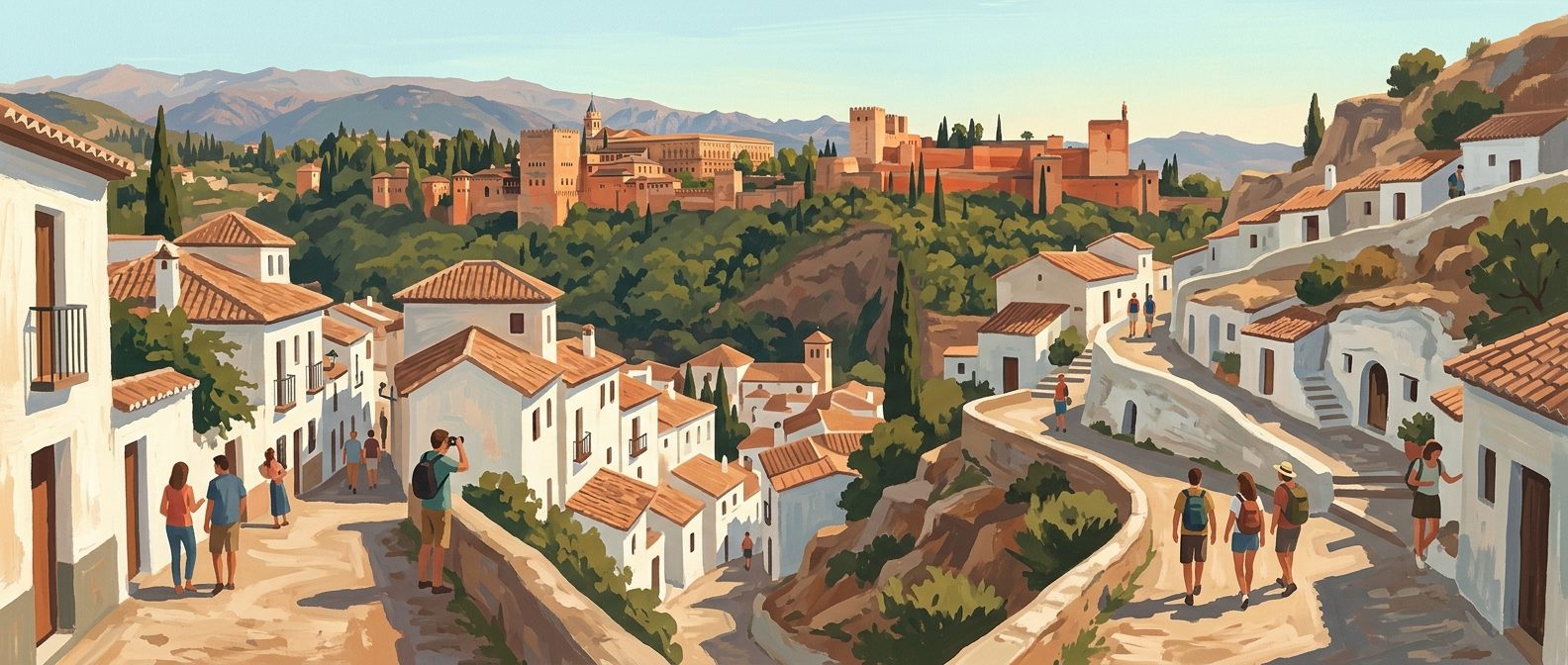
Unveiling Granada's Soul: A Journey Through the Albaicín and Sacromonte Quarters
Walk through Granada’s Albaicín and Sacromonte quarters with context on Moorish streets, cave houses, flamenco heritage, viewpoints and practical routes.
7 min read
The Granite and the Geranium: The Fragile Geometry of Córdoba’s May
For two weeks in May, Córdoba’s residents throw open the doors of their private courtyards, turning a city of stone into a living, breathing laboratory of botanical obsession.
6 min read
The Ghost in the Garden: Searching for the Al-Andalus Within
Eight centuries of Al-Andalus did not vanish in 1492; they simply moved indoors, into the kitchens, and onto the tip of the tongue.
7 min read
More from Granada
Lorca and the Repression in Granada
The assassination of Spain's most celebrated poet was just one part of a systematic campaign of terror. Today, the ravines of Víznar and Alfacar hold the stories of thousands whose voices were silenced.
7 min read
The Fall of Granada, 1492
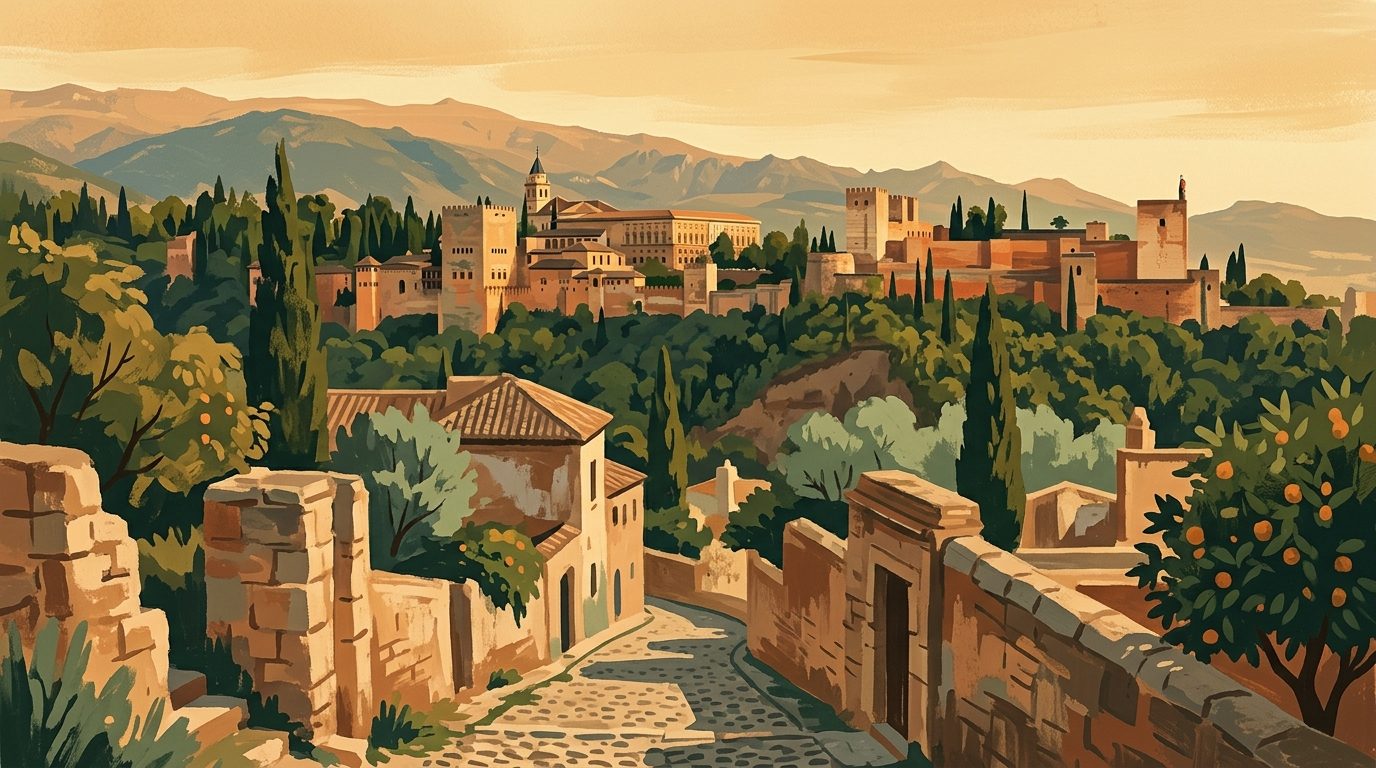
On the second of January 1492, the keys to the Alhambra were handed over to Ferdinand and Isabella, bringing a close to almost eight centuries of Muslim rule in the Iberian Peninsula. The capitulation of Granada reshaped the political and religious landscape of Europe forever, ending a long war of attrition.
8 min read
Semana Santa in Granada: A Complete Visitor Guide
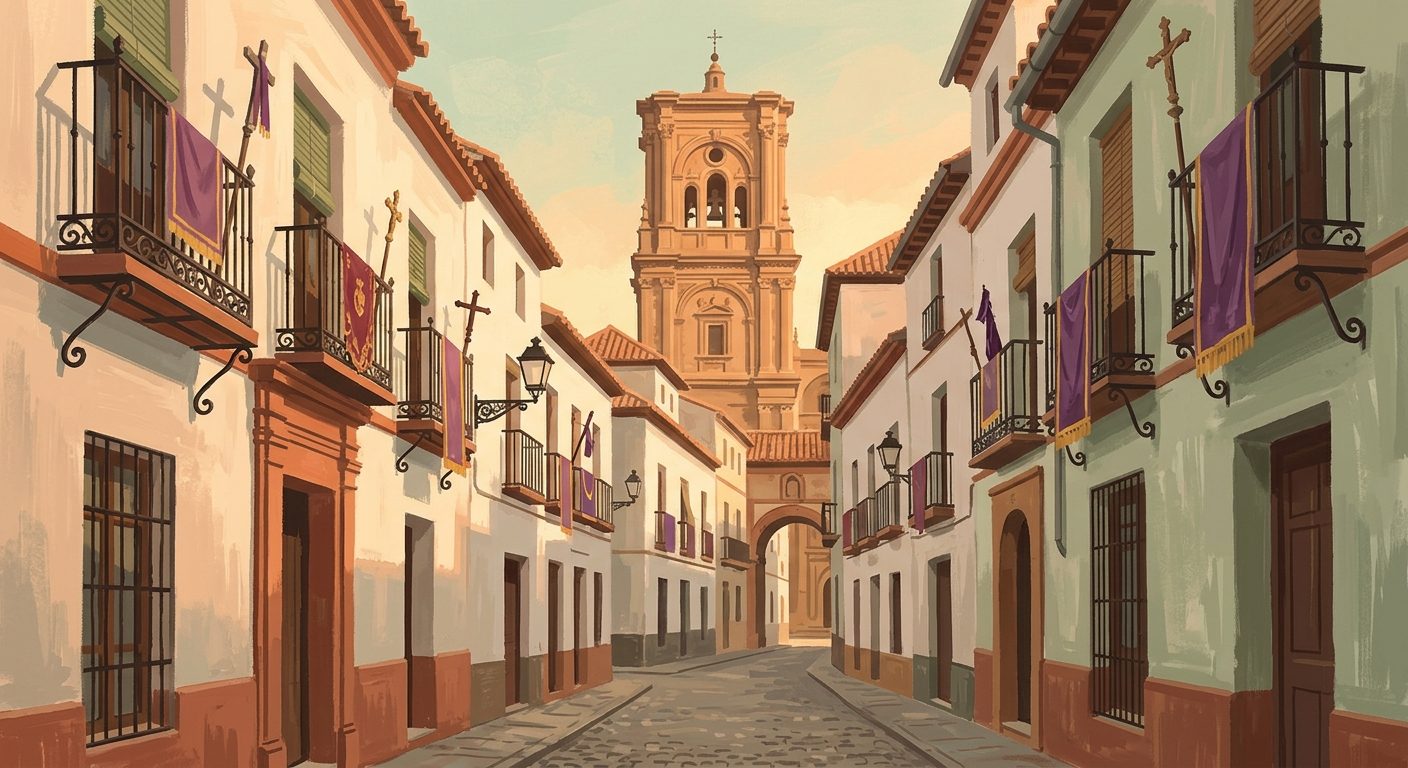
Semana Santa in Granada swaps broad avenues for narrow Moorish streets and steep hillsides. Watching an illuminated wooden float emerge from the grounds of the Alhambra or ascend into the caves of Sacromonte offers a profound emotional experience that feels intimately tied to the landscape itself.
8 min read
Corpus Christi in Granada: The Definitive Guide
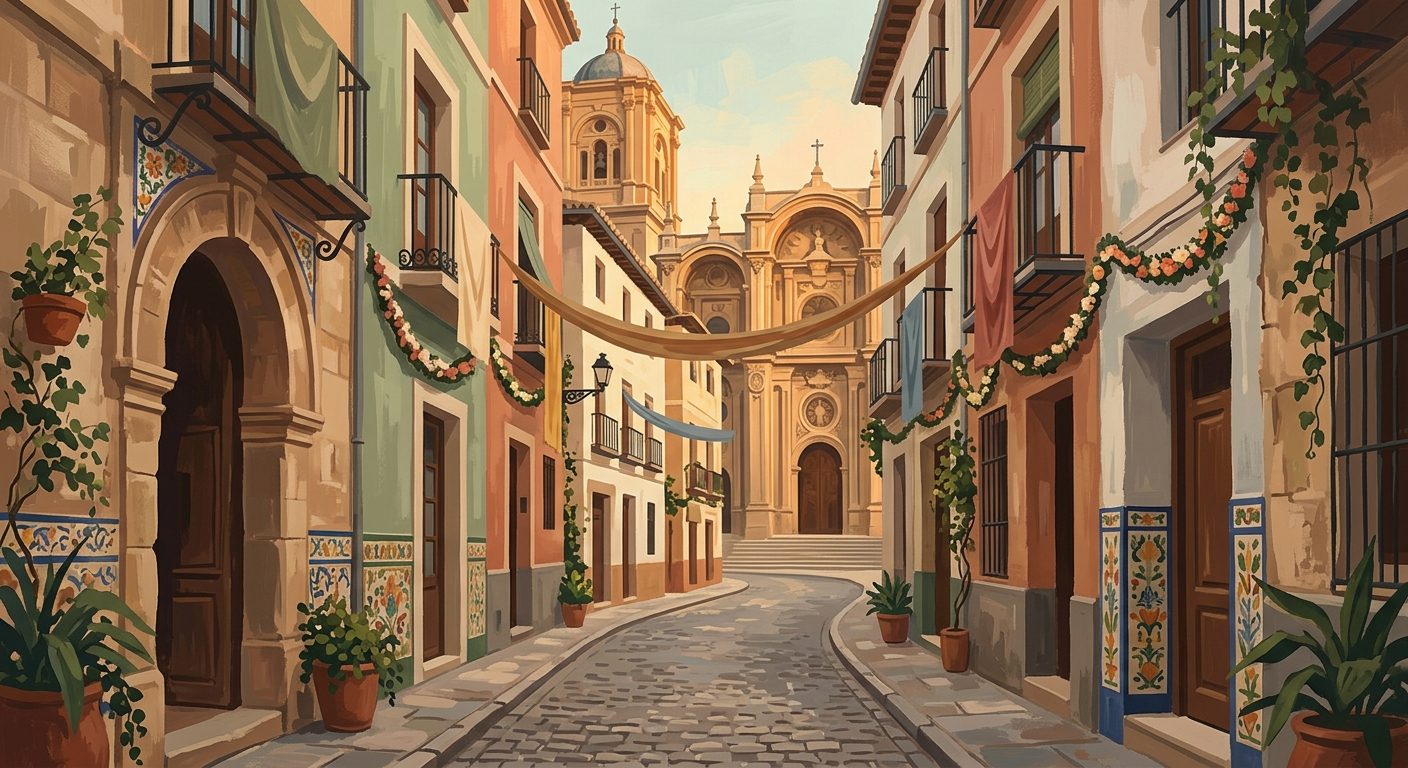
In Granada, Corpus Christi is far more than a solemn religious observance. It is the city's largest annual festival, combining the scent of fresh rosemary crushed underfoot during the sacred Thursday procession with the unapologetic joy of the week-long public feria in Almanjáyar.
10 min read
Costa Tropical: The Complete Guide to Granada's Subtropical Coast
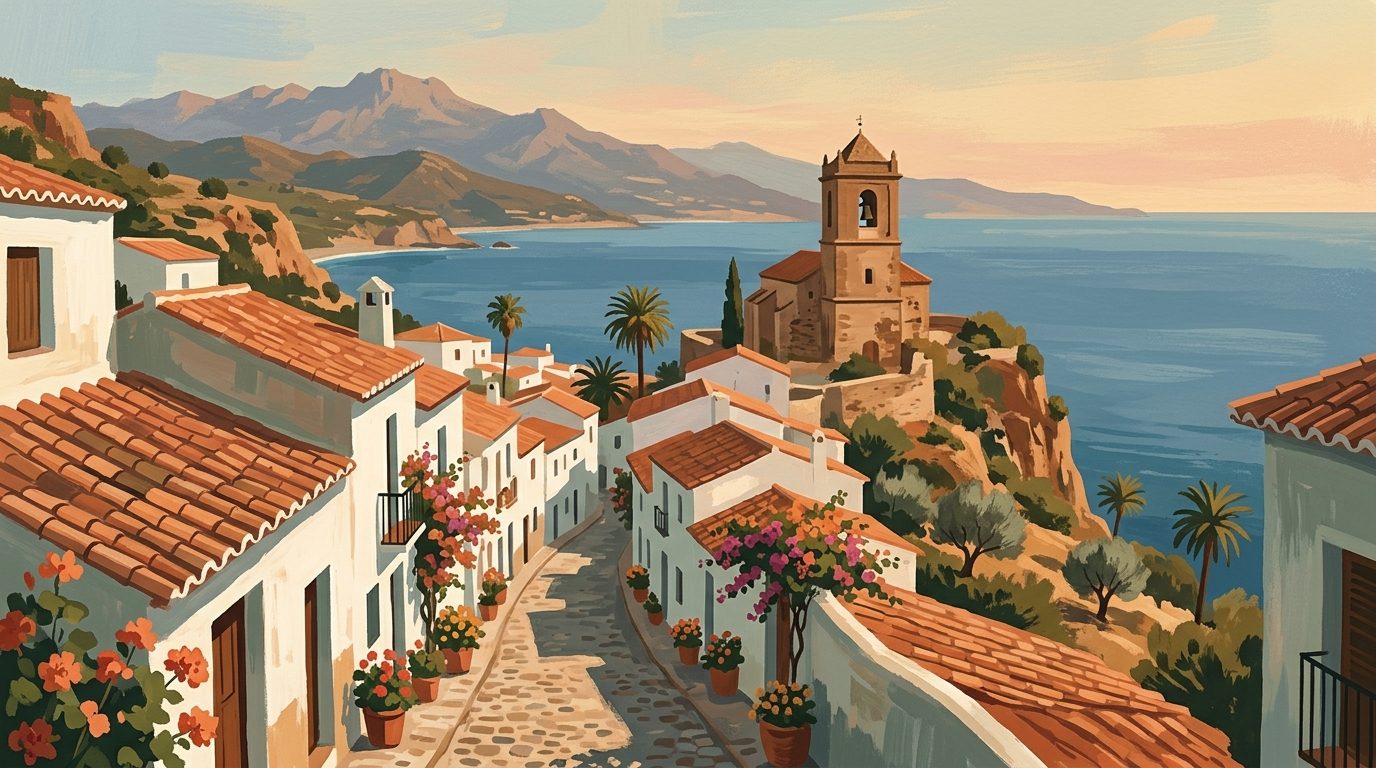
Wedged between the foothills of the Sierra Nevada and the Mediterranean Sea, the Costa Tropical is defined by dramatic cliffs, sheltered pebble coves and a unique subtropical microclimate. It offers a quieter, more agricultural alternative to its heavily developed neighbours.
9 min read
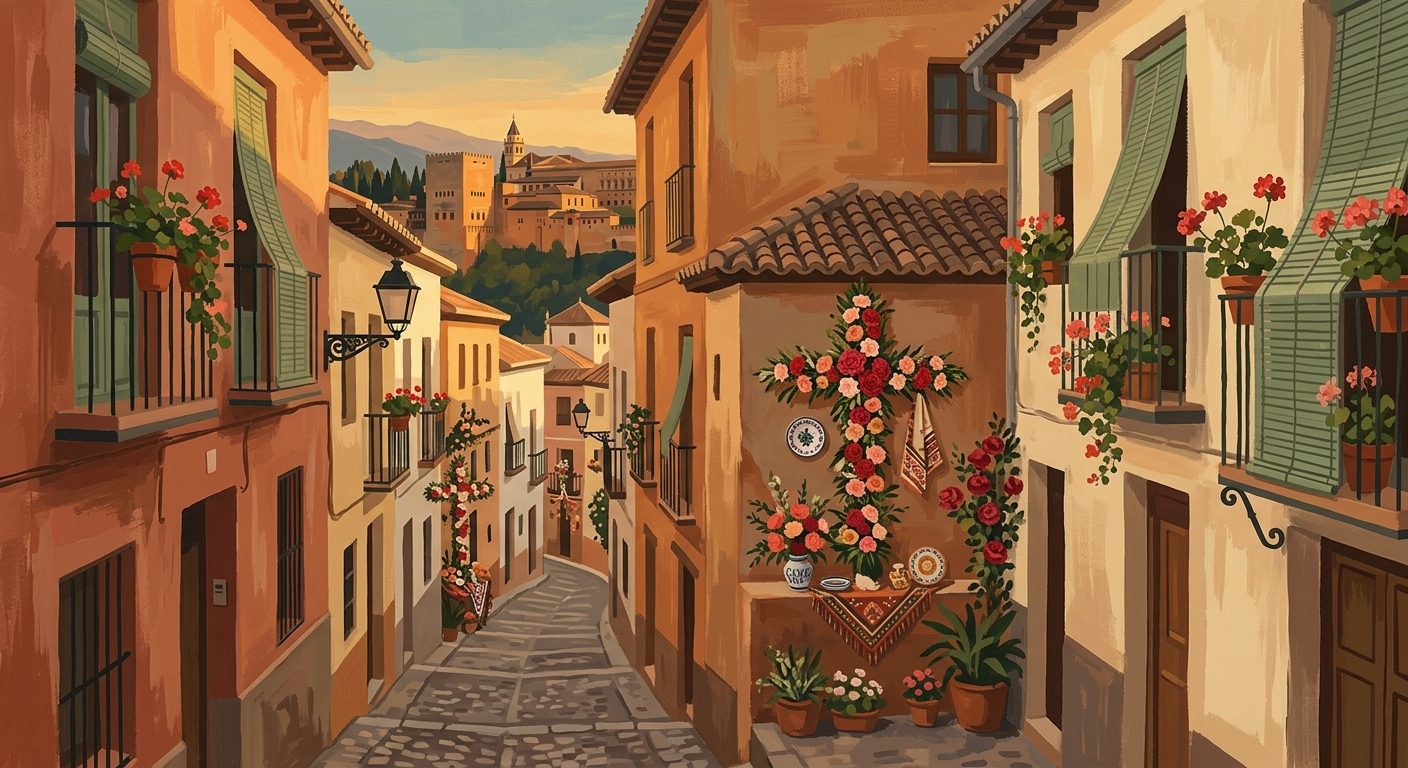
Cruces de Mayo in Granada: A Complete Guide
Discover how Granada transforms during the Cruces de Mayo festival. We detail where to find the most spectacular floral crosses, the local traditions to observe, and how to navigate the celebrations.
9 min read
The Resistance of the Plate: Why Granada Refuses to Sell Its Soul
In a world of monetised moments and rising margins, Granada holds fast to a radical social contract: the gift of a plate with every glass.
7 min read
Beyond the White Caves: The Unseen Struggle of Sacromonte
The whitewash on Curro’s fingers is thick as paste, a seasonal ritual of reclaiming a home from the damp appetite of the hillside.
7 min read
The High Defiance of the Alpujarras
In the shadows of the Sierra Nevada, the sound of water running through ancient stone channels is the heartbeat of a landscape that refused to die. While the rest of Spain’s interior surrenders to silence, these high-altitude villages are learning the language of return.
8 min read
Newsletter
More stories from Andalucía
Weekly notes, seasonal picks, and the next guides worth bookmarking.