
Feature
The Fall of Sevilla: The Siege of 1248 and the Mudéjar City
In November 1248, Fernando III of Castile captured the greatest Almohad capital in the Iberian Peninsula. The gruelling fifteen-month siege permanently altered the cultural and architectural landscape of southern Spain.
By Dan · Updated 24 June 2026 · 7 min read
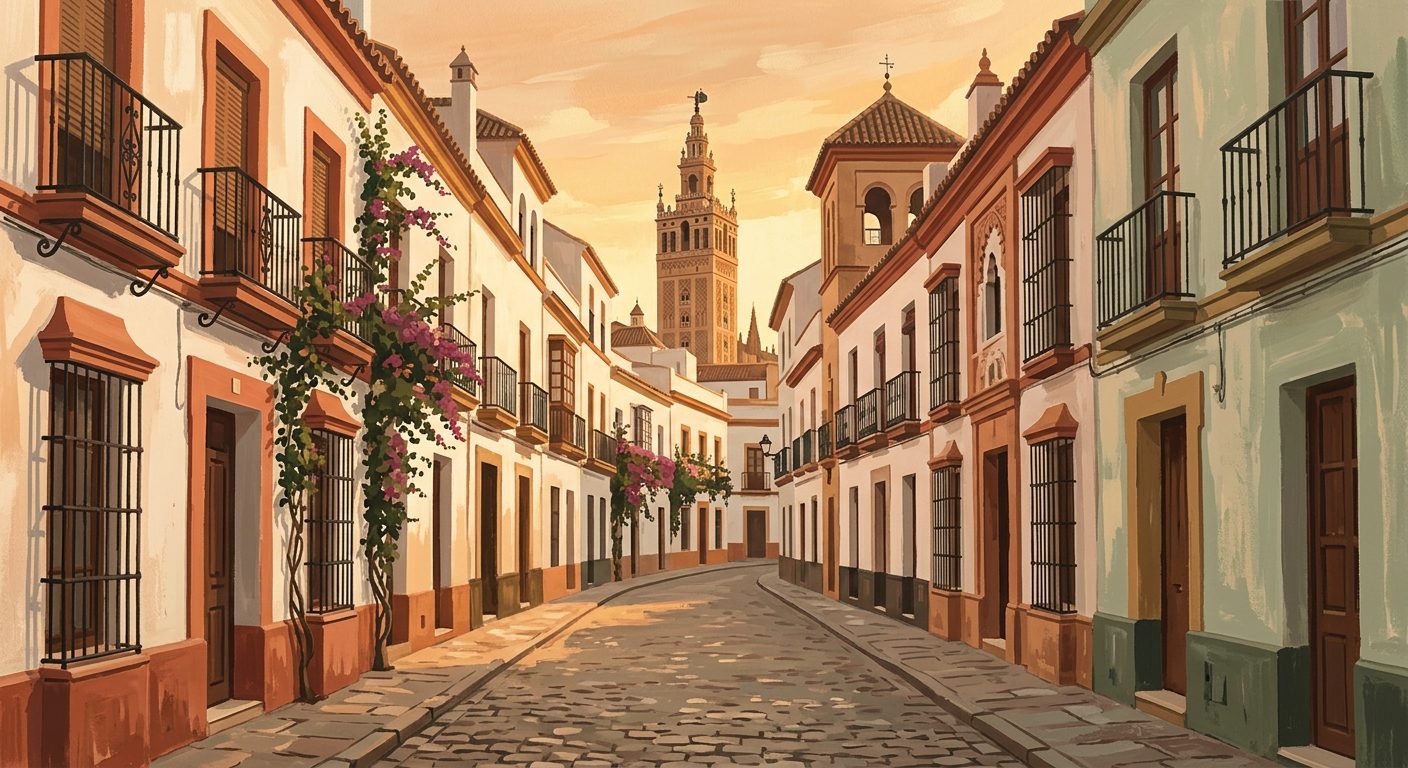
In November 1248, King Fernando III of Castile received the keys to Sevilla following a gruelling fifteen-month siege. The capture of this great Almohad capital fundamentally reshaped the demographics and architecture of southern Spain.
On a crucial day in early May 1248, two large galleys of the Castilian navy caught a strong wind on the Guadalquivir River. Commanded by Admiral Ramón de Bonifaz, they drove their reinforced prows directly into the heavy iron chains and pontoon boats that connected Sevilla to the fortified suburb of Triana. The bridge shattered. For the defenders of the city, this was a devastating and fatal blow. They could no longer bring in provisions from the fertile Aljarafe region or safely receive reinforcements from North Africa.
During the long and fragmented era of the Reconquista (1085 to 1492), the fall of Sevilla stood as a crowning military achievement for the Christian kingdoms of the north. King Fernando III had already taken Córdoba a decade earlier, but Sevilla was a different prospect altogether. It was heavily fortified, fiercely defended, and intimately connected to the Atlantic Ocean. Breaking the bridge of boats was the decisive stroke that tightened an unbreakable blockade around the starving city. It forced an entire population to terms, leading to one of the most comprehensive demographic replacements of the medieval period.
The Ring of Iron: Encirclement and Blockade
The campaign to capture the city began long before the Castilian army set up its immediate siege camps. Fernando III employed a strategy of systematic isolation. By the summer of 1247, his forces had captured the vital surrounding towns, including Alcalá de Guadaíra, Carmona, and Lora del Río. These strongholds had previously provided Sevilla with grain, olive oil, and military support. With the hinterland subdued, Fernando established his main camp to the south of the city. This sprawling temporary settlement, known as the Real de la Montería, became a staging ground for the final assault and effectively a small city in its own right.
Sevilla was defended by robust Almohad walls, parts of which had been expanded and reinforced just decades earlier. The Torre del Oro, a defensive watchtower built in 1220, anchored the city defences along the riverbank. Direct assault was considered suicidal against such formidable fortifications. Instead, Fernando opted to starve the inhabitants into submission. However, a complete blockade required control of the Guadalquivir River. As long as ships could sail up from the Atlantic or cross from the Triana side, the city could hold out indefinitely.
The Castilian Fleet
To solve this logistical problem, Fernando commissioned the creation of a dedicated navy on the Cantabrian coast in the north of Spain. Under the command of Ramón de Bonifaz, a fleet of heavily armed ships sailed down the Atlantic coast of Portugal and entered the Guadalquivir estuary. Their arrival marked a rare and decisive instance of naval power in medieval Iberian warfare.
The famous bridge of boats, known as the Puente de Barcas, was the lifeline of the Almohad capital. It consisted of heavy wooden vessels lashed together and secured by thick iron chains spanning the river. By ramming and breaking this barrier in May 1248, Bonifaz severed Sevilla from Triana. The Castilian forces quickly occupied the Triana bank, completing the encirclement.
Inside the walls, the situation deteriorated rapidly throughout the sweltering summer of 1248. Famine set in, and the supply of fresh water became severely restricted. Contemporary chronicles, though written largely by the victors, suggest a desperate atmosphere within the Almohad capital. The local leader, Abu al-Hasan Ali ibn al-Jadd (known to the Castilians as Axataf), attempted to negotiate. He offered tribute, partial surrender, and even the division of the city with a defensive wall built between the Christian and Muslim populations. Fernando III refused all compromises. The Castilian king demanded the complete capitulation and immediate evacuation of Sevilla.
Capitulation and the Repartimiento
On 23 November 1248, Axataf formally surrendered the city keys to Fernando III. The terms of surrender allowed the Muslim inhabitants safe conduct to gather their movable belongings and leave. A mass exodus followed. Tens of thousands of Almohad citizens departed by land toward the Emirate of Granada or by sea to North Africa. The great metropolis was emptied of the people who had built its magnificent mosques, palaces, and markets.
King Fernando III made his triumphant entry into the abandoned city on 22 December 1248. The immediate challenge facing the Castilian crown was repopulating a massive urban centre. This process was managed through the Repartimiento, a complex and highly bureaucratic system of property distribution. Royal administrators surveyed the empty houses, shops, and agricultural estates, allocating them to Christian nobles, military orders, the Church, and ordinary settlers recruited from Castile, León, and Aragon.
The Division of Spoils
The Libro del Repartimiento, the original of which is preserved in the Cathedral of Sevilla's Biblioteca Colombina (read more on the cathedral's official website), survives today as a detailed administrative ledger of this enormous transfer of wealth. It outlines a strict social hierarchy. Large estates were granted to high-ranking nobles who had provided troops and funding for the siege. Smaller dwellings went to commoners based on their precise contribution to the war effort. The city was physically and spiritually transformed to serve its new population. The great Almohad mosque was immediately consecrated as a Christian cathedral, and the city was divided into new administrative parishes centred around repurposed Islamic buildings.
The Birth of Mudéjar Sevilla
While the Muslim population of the city itself was expelled, the architectural and cultural legacy of Al-Andalus could not simply be erased. Furthermore, the incoming Christian settlers often lacked the specific agricultural and engineering skills required to maintain the complex irrigation systems or construct buildings suited to the intense Andalucían climate. As a result, many Muslims remained in the surrounding countryside as agricultural labourers, and skilled craftsmen were soon permitted to work within the region.
These craftsmen, known as Mudéjares (Muslims living under Christian rule), possessed highly prized skills in decorative brickwork, intricate carpentry, and ceramic tiling. Over the following century, the Christian rulers of Sevilla began to actively commission architecture that blended traditional Gothic structures with Islamic decorative techniques. This hybrid aesthetic became known as the Mudéjar style.
Rather than tearing down the sprawling Almohad palaces along the river, the Castilian kings occupied them and gradually modified them. The zenith of this cultural synthesis occurred under King Pedro I in the 1360s, more than a century after the conquest. He employed Mudéjar artisans from Sevilla, Toledo, and Granada to build a spectacular new palace within the Alcázar compound.
The fall of Sevilla therefore set up a profound historical contradiction. The conquest resulted in a stark religious and demographic replacement, yet the victorious Christian society eagerly adopted the visual language of the vanquished. This architectural inheritance ensures that the aesthetic spirit of the Almohad capital survives in the fabric of the modern city.
Where to see it today
Real Alcázar de Sevilla
The Royal Alcázar is the premier site to understand the transition from Almohad to Christian rule. The complex contains visible layers of both eras. The Patio del Yeso is one of the few surviving Almohad structures from the time of the 1248 siege, featuring delicate, intersecting stucco arches that predate the Castilian conquest. Nearby, the Palacio de Don Pedro stands as the ultimate expression of the Mudéjar style. Built in 1364 by Pedro I, its intricate wooden ceilings, horseshoe arches, and geometric tilework look entirely Islamic but were commissioned by a Christian king using Mudéjar artisans. As you walk between the courtyards, you are tracing the exact physical spaces where the transfer of royal power took place.
Iglesia de San Marcos
Following the conquest, the city was divided into new Christian parishes, and churches were erected over former mosques. The Iglesia de San Marcos is an excellent example of how the city was adapted by its new inhabitants. Built in the fourteenth century in the Mudéjar style, it retains a distinct Gothic layout but utilises brick construction and Islamic decorative motifs. The church tower is particularly striking. It was built upon the base of an original Almohad minaret, retaining the square profile and twin window styles characteristic of the era before the 1248 siege.
If you visit
The Real Alcázar is one of the most visited monuments in Spain, making it essential to secure tickets online via the official website (alcazarsevilla.org) several weeks in advance. Spring and autumn offer the most comfortable weather for exploring the extensive gardens and courtyards, as summer temperatures in the city are famously oppressive. Dedicate at least a full morning to the Alcázar to properly appreciate the blend of Almohad foundations and Mudéjar additions. Afterwards, take a walk north towards the Macarena district to see the Iglesia de San Marcos and the surviving sections of the Almohad city walls that Fernando III once besieged.
Last reviewed: 21 June 2026 · Editorial policy
Related guides
The Ghost in the Garden: Searching for the Al-Andalus Within
Eight centuries of Al-Andalus did not vanish in 1492; they simply moved indoors, into the kitchens, and onto the tip of the tongue.
7 min read
The Mudéjar Legacy: Islamic Craftsmanship Under Christian Rule
The Mudéjar style is a striking visual paradox of medieval Spain. It represents the profound aesthetic triumph of a conquered people over their conquerors, creating a unique architectural fusion that defined the visual identity of post-Reconquista Andalucía.
7 min read
The Spanish Inquisition in Andalucía: Orthodoxy and Paranoia
From its very first tribunal in Sevilla to the shadow it cast over centuries of daily life, the Spanish Inquisition demanded absolute religious conformity. Its legacy remains etched in the architecture, archives and even the culinary traditions of southern Spain.
7 min read
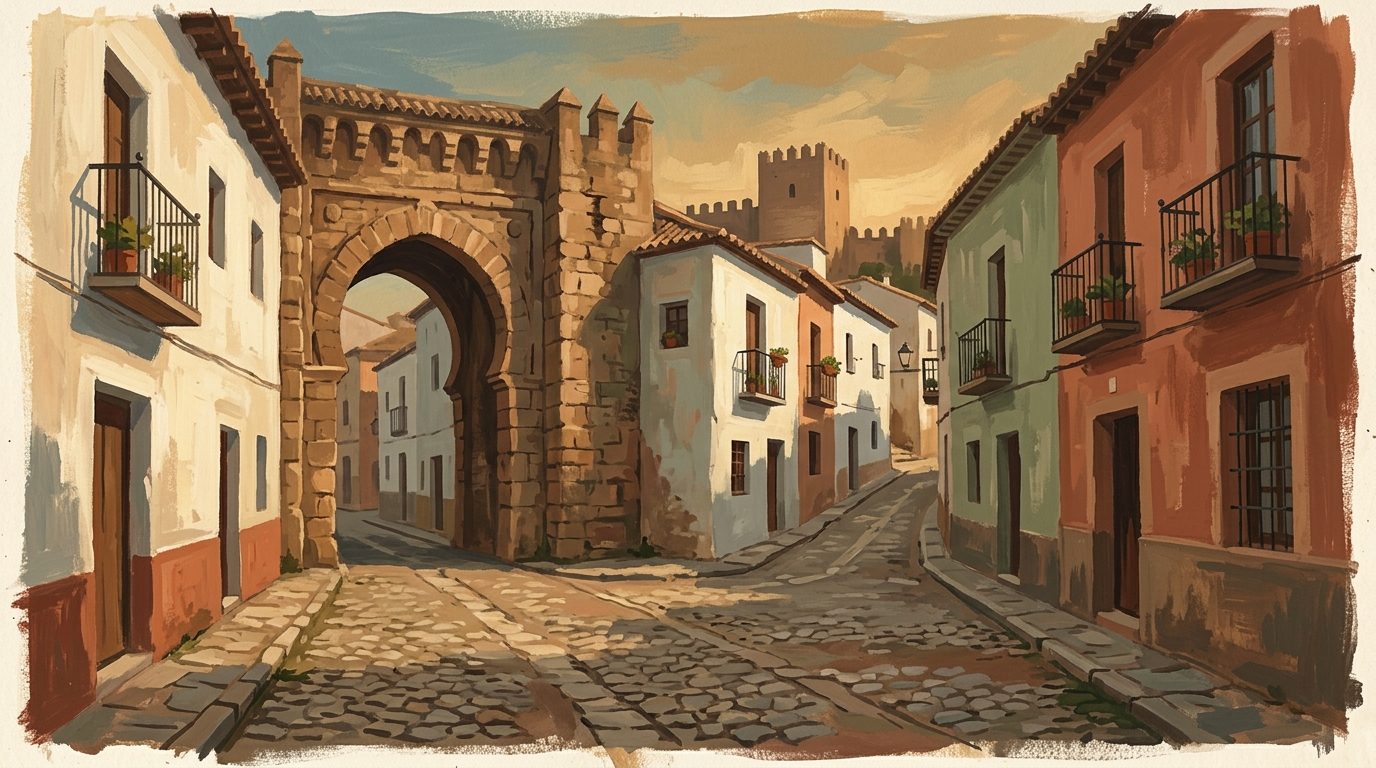
The Reconquista in Andalucía
The centuries-long Christian conquest of southern Iberia redefined the physical and cultural landscape of the peninsula. How did the military campaigns of the northern kingdoms dismantle the Islamic territories of Al-Andalus and forge the modern region of Andalucía?
7 min read
Corduba and Roman Baetica
Discover the political and intellectual might of Corduba, the wealthy administrative capital of Roman Baetica and the birthplace of the philosopher Seneca.
7 min read
Al-Andalus: Eight Centuries of Moorish Rule in Andalucía
For nearly eight hundred years, Islamic civilisation flourished on the Iberian Peninsula. How did a distant province of the Umayyad empire become a beacon of science, art, and poetry in medieval Europe?
8 min read
More guides
UNESCO World Heritage Sites in Andalucía
A curated guide to the cultural and natural sites in Andalucía recognised by UNESCO for their universal value. These landmarks offer a profound insight into the diverse civilisations of the region.
6 min read
The Best Beaches in Andalucía
From the Atlantic dunes of Huelva to the volcanic coves of Almería, the coastline of southern Spain offers an unparalleled variety of maritime landscapes.
6 min read
Phoenicians and Tartessians in Andalucía
Around three thousand years ago, eastern Mediterranean merchants arrived on the Iberian coast seeking silver and copper. Their arrival sparked a cultural collision that transformed local chiefdoms into the legendary civilisation of Tartessos.
6 min read
Roman Andalucía: Ruins and Archaeological Sites
Discover the monumental legacy of the Roman province of Baetica, from grand amphitheatres in the Guadalquivir valley to maritime cities on the Atlantic coast.
7 min read

Geological Wonders: Caves and Karst Landscapes of Andalucía
Discover the subterranean wonders and prehistoric secrets preserved within the limestone massifs and gypsum deposits of southern Spain.
6 min read
Castles and Fortresses of Andalucía
The fortresses of Andalucía are the stone guardians of a complex past, marking the ancient frontiers between empires and offering some of the most spectacular views in the southern peninsula.
6 min read
The Iberians in Andalucía: Warlords, Sculptors and the Dawn of Iron
Who were the sophisticated, iron-working peoples who controlled southern Spain before the Roman conquest? Their fortified hill towns and striking stone sculptures reveal a formidable culture caught between ancient local traditions and Mediterranean ambition.
6 min read
UNESCO Geoparks and Natural Wonders of Andalucía
Discover the geological heritage of Southern Spain through its UNESCO-designated geoparks and natural wonders. Explore the tectonic history and diverse ecosystems of Almería, Granada, and Cádiz.
6 min read
Cathedrals and Great Churches of Andalucía
A guide to the monumental religious architecture of Southern Spain, from the vast Gothic nave of Sevilla to the Renaissance masterworks of Jaén and Granada.
6 min read
Newsletter
More stories from Andalucía
Weekly notes, seasonal picks, and the next guides worth bookmarking.