
Feature · Córdoba
The Fall of Córdoba, 1236
In 1236, a daring winter raid by Castilian frontiersmen escalated into a full siege of the former Umayyad capital. The subsequent surrender of Córdoba marked a decisive turning point in the medieval history of the Iberian Peninsula.
By Dan · Updated 24 June 2026 · 8 min read
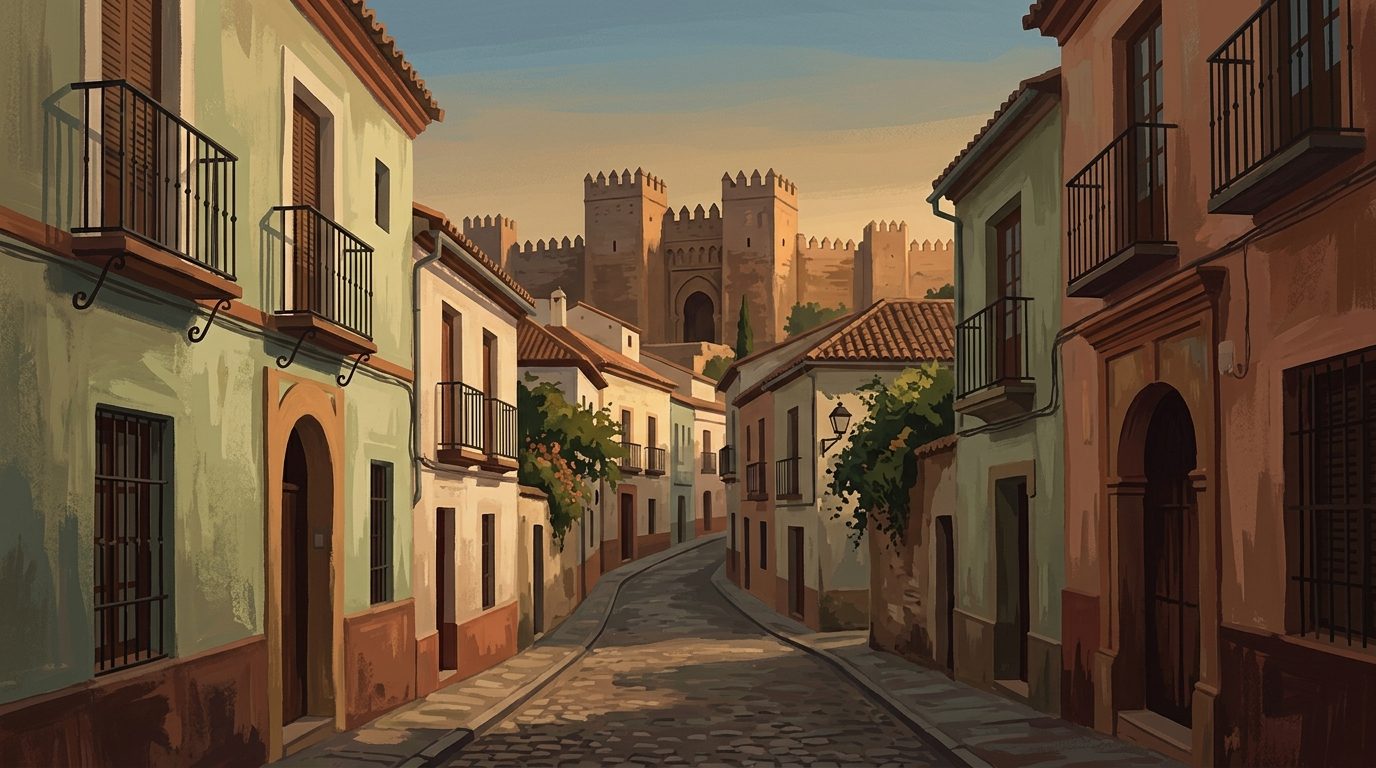
In the early months of 1236, a daring winter raid by border frontiersmen escalated into a full siege of the former Umayyad capital. When King Fernando III of Castile entered Córdoba that summer, the immediate consecration of the Great Mosque as a Christian cathedral signalled a permanent shift in the power balance of the Iberian Peninsula.
On a stormy night in late December 1235, a small band of Christian frontiersmen scaled the eastern walls of Córdoba. They were not a royal army, but opportunists acting on intelligence from captured Muslim scouts. Finding the watchtowers poorly guarded in the torrential rain, they used ladders to breach the ramparts and seized the suburb of the Axaquía. What began as an unauthorised border raid would end, six months later, with the fall of the city that had once been the greatest metropolis in western Europe. This event was a decisive turning point in the wider era of the Reconquista from 1085 to 1492, accelerating the Christian advance into the Guadalquivir valley.
King Fernando III of Castile was residing in León when news reached him of the unexpected foothold in Córdoba. Realising the strategic magnitude of the moment, he understood that holding the Axaquía was the key to taking the entire city. Travelling south with a vanguard of only a few hundred cavalrymen, he rode through the bitter winter weather and arrived outside the city walls in February 1236. The Christian forces were initially too few to take the heavily fortified medina by assault, and the Muslim defenders inside were too demoralised and fragmented to drive the attackers out. A protracted standoff began. The capture of Córdoba was not won through a singular field battle, but rather through a grinding blockade, political paralysis among the regional Muslim rulers, and the sheer persistence of the Castilian monarchy.
The Collapse of Almohad Power
To understand how Córdoba fell so suddenly, one must look at the fractured political landscape of early thirteenth-century Andalucía. Following the crushing defeat of the Almohad Caliphate at the Battle of Las Navas de Tolosa in 1212, central authority in Al-Andalus had steadily disintegrated. A prolonged period of famine, economic decline, and civil war followed. By the 1230s, the region was divided among competing warlords and local leaders.
The most prominent of these figures was Ibn Hud, an ambitious military commander who had successfully expelled the last Almohad governors from most of Andalucía. Ibn Hud claimed to rule on behalf of the Abbasid caliphs of Baghdad, adopting their black banners to lend legitimacy to his rule. However, his control over his territories was highly unstable. He faced constant rebellions, particularly from a rising rival named Muhammad ibn al-Ahmar, who would soon found the Nasrid dynasty in Granada.
When the Castilian frontiersmen breached the walls of the Axaquía suburb, the Muslim defenders of Córdoba immediately sent desperate pleas to Ibn Hud for relief. Ibn Hud gathered a large army and marched towards the city, encamping roughly thirty miles away. However, his focus was split. He feared that committing his forces to a pitched battle against Fernando III would leave his own territories vulnerable to an attack from Ibn al-Ahmar. Paralysed by this strategic dilemma, Ibn Hud chose self-preservation. He abandoned Córdoba to its fate and retreated south. When the defenders in the medina saw the relief army turn away, their morale collapsed entirely.
The Siege and Surrender
Through the spring of 1236, Fernando III maintained a tight blockade around the medina of Córdoba. Despite the retreat of Ibn Hud, the siege was severely testing for the Castilians. The weather remained unusually harsh, and the besiegers suffered from cold, disease, and a desperate shortage of provisions. Yet Fernando III refused to withdraw. He sent his queen, Beatriz of Swabia, back to the northern kingdoms to summon the bishops, nobles, and military orders, demanding they send reinforcements and grain.
Slowly, the Christian camp swelled. The military orders of Santiago, Calatrava, and Alcántara arrived with fresh knights. As the blockade dragged into the extreme heat of the Andalucían summer, the situation inside the medina grew untenable. Starvation set in, and the city elders realised that no rescue was coming.
On 29 June 1236, the feast day of Saint Peter and Saint Paul, the defenders formally capitulated. The terms of surrender were strict but standard for the period. The Muslim inhabitants were guaranteed their lives and the freedom to leave unmolested, but they had to abandon their homes, their property, and their city. The mass exodus of the Muslim population fundamentally changed the demographic character of Córdoba overnight. Those who left took only what they could carry, migrating south towards Granada or crossing the strait to North Africa. A city that had been the intellectual and political heart of Islamic Iberia for five centuries was emptied of its native inhabitants.
The Purification of the Great Mosque
The most symbolic act of the conquest occurred immediately upon the entry of Fernando III into the city. The king proceeded directly to the Great Mosque of Córdoba, the architectural masterpiece of the Umayyad emirs and caliphs. He ordered the building to be purified and consecrated as a cathedral dedicated to Santa María.
This consecration was a profound ideological statement. The Great Mosque was not merely a large building; it was the ultimate symbol of Islamic supremacy in the peninsula. Its conversion into a cathedral signified the absolute triumph of the Castilian monarchy. The ritual purification involved washing the walls and floors with holy water, removing Islamic furnishings, and erecting a temporary Christian altar within the vast forest of columns and horseshoe arches.
The historical chronicles, such as the Estoria de España, record a highly symbolic act of restitution that took place following the consecration. In 997, the fearsome military dictator Almanzor had sacked the Christian pilgrimage centre of Santiago de Compostela. Almanzor had famously forced Christian captives to carry the bells of the basilica all the way to Córdoba, where they were melted down and suspended as lamps in the Great Mosque. Following the conquest in 1236, Fernando III ordered the process reversed. The lamps were taken down, and Muslim captives were forced to carry the metal on their shoulders back to the shrine of Saint James in Galicia.
While historians continue to debate the exact logistical details of this return journey, the symbolic resonance is undisputed. The return of the bells provided a providential closure to two and a half centuries of conflict, framing Fernando III as the divine restorer of Christian dominance.
Rebuilding a Castilian Stronghold
The departure of the Muslim population left Córdoba severely depopulated. Fernando III initiated a massive project of repopulation, known as the repartimiento. The royal administration compiled detailed registers to manage the division of property. Every house, workshop, mill, and olive grove was catalogued and granted to the new settlers. The greatest estates went to the high nobility and the bishops, while ordinary foot soldiers received smaller dwellings and plots of land within the city walls.
The city was reorganised into fourteen new parishes, each centred around a new church built in a distinct architectural style that would later be known as Fernandine Gothic. These churches were often constructed over the sites of smaller neighbourhood mosques, using stone quarried from ruined Islamic palaces. The physical fabric of the city began to reflect its new cultural and religious identity, although the grand street plan and the monumental architecture of the Islamic period largely remained in place.
The capture of Córdoba also had immediate strategic consequences. It provided Castile with an impregnable forward base in the heart of the Guadalquivir valley. From this stronghold, Fernando III would organise subsequent campaigns that eventually led to the conquest of Jaén in 1246 and Sevilla in 1248. The fall of the Umayyad capital was the first major domino to topple in the rapid collapse of Islamic rule in western Andalucía.
Where to see it today
The narrative of the 1236 conquest is permanently etched into the architecture of modern Córdoba. The most profound evidence is found in the Mezquita-Catedral de Córdoba. When exploring this immense structure, visitors can see the exact physical synthesis of the conquest. Look for the Capilla de Villaviciosa, located under a spectacular ribbed skylight. This area served as the first major Christian chapel following the consecration by Fernando III, long before the massive sixteenth-century Renaissance cathedral nave was inserted into the centre of the building. The juxtaposition of the Islamic arches and the early Christian interventions perfectly encapsulates the transition of power.
Across the Roman Bridge stands the Castillo de la Calahorra. Originally an Islamic defensive tower guarding the southern approach to the city, it was heavily reinforced after the Christian conquest to protect the newly won capital from counterattacks. Today, it houses the Museo Vivo de Al-Andalus. The fortress itself is a tangible reminder of the military frontier. Its thick walls and strategic position illustrate exactly why Fernando III viewed the capture of Córdoba as vital to securing his hold on the region.
To understand the immediate aftermath of the conquest, one should also walk the routes of the Fernandine churches. Structures like the Iglesia de Santa Marina and the Iglesia de San Lorenzo, with its magnificent rose window, exhibit a fascinating blend of Romanesque and Gothic styles. Complete with fortress-like facades, these buildings were designed not just for worship, but as defensive strongholds for the newly arrived Christian settlers in a largely hostile territory.
If you visit
For a traveller planning to explore this transitional history, the Mezquita-Catedral should be the primary starting point. The complex opens early, and visiting right at the opening time from Monday to Saturday (noting that Sunday mornings are reserved for religious services) offers a quieter experience before the large tour groups arrive. Autumn and spring are the most comfortable seasons to walk the streets of the old medina and the Axaquía, tracing the route of the 1236 siege, as the summer months in Córdoba bring punishing heat that makes afternoon exploration difficult. It is highly advisable to purchase tickets well in advance through the Mezquita-Catedral's official website to secure your entry time, leaving the rest of your day free to explore the surrounding Fernandine churches and the medieval fortress across the river. For broader travel planning, it is also helpful to consult the Patronato Provincial de Turismo de Córdoba.
Last reviewed: 21 June 2026 · Editorial policy
Related guides
July 1936 in Andalucía: The Coup and the Fall of Sevilla
On 18 July 1936, General Gonzalo Queipo de Llano used bluff, intimidation, and brutal swiftness to seize Sevilla. His actions ignited a conflict that rapidly tore the region apart.
8 min read
Unveiling Granada's Soul: A Journey Through the Albaicín and Sacromonte Quarters
Walk through Granada’s Albaicín and Sacromonte quarters with context on Moorish streets, cave houses, flamenco heritage, viewpoints and practical routes.
7 min read

The Granite and the Geranium: The Fragile Geometry of Córdoba’s May
For two weeks in May, Córdoba’s residents throw open the doors of their private courtyards, turning a city of stone into a living, breathing laboratory of botanical obsession.
6 min read

A Guide to the Patios de Córdoba
While other Andalucían festivals celebrate grand public spectacles, the Patios de Córdoba invite you into the most intimate of domestic spaces: the floral courtyards of private family homes.
10 min read

The Caliphate of Córdoba
In 929, Abd al-Rahman III declared himself Caliph, breaking religious ties with the Middle East and launching an era of unparalleled architectural and intellectual achievement.
8 min read

The Floral Courtyards of Córdoba: A Guide to the Patios and Palacio de Viana
Discover the flower-filled courtyards of Córdoba, from the twelve aristocratic patios of the Palacio de Viana to the UNESCO-listed private homes that open their doors during the May Patio Festival.
6 min read
More from Córdoba

Semana Santa in Córdoba: The Definitive Guide
During Semana Santa in Córdoba, the air smells of orange blossom and incense as penitential floats pass beneath the candy-striped arches of the Mezquita.
8 min read

A Guide to the Cruces de Mayo Festival in Córdoba
Discover how Córdoba transforms its historic plazas into flower-draped street parties to celebrate the Cruces de Mayo festival.
8 min read
Newsletter
More stories from Andalucía
Weekly notes, seasonal picks, and the next guides worth bookmarking.