
Feature
Late-Antique Andalucía: Crisis, Christianity, and the Vandals
The transformation of southern Spain from a classical Roman province to a Christianised landscape was marked by economic crises, religious upheaval, and the sudden arrival of Germanic tribes.
By Dan · Updated 24 June 2026 · 7 min read
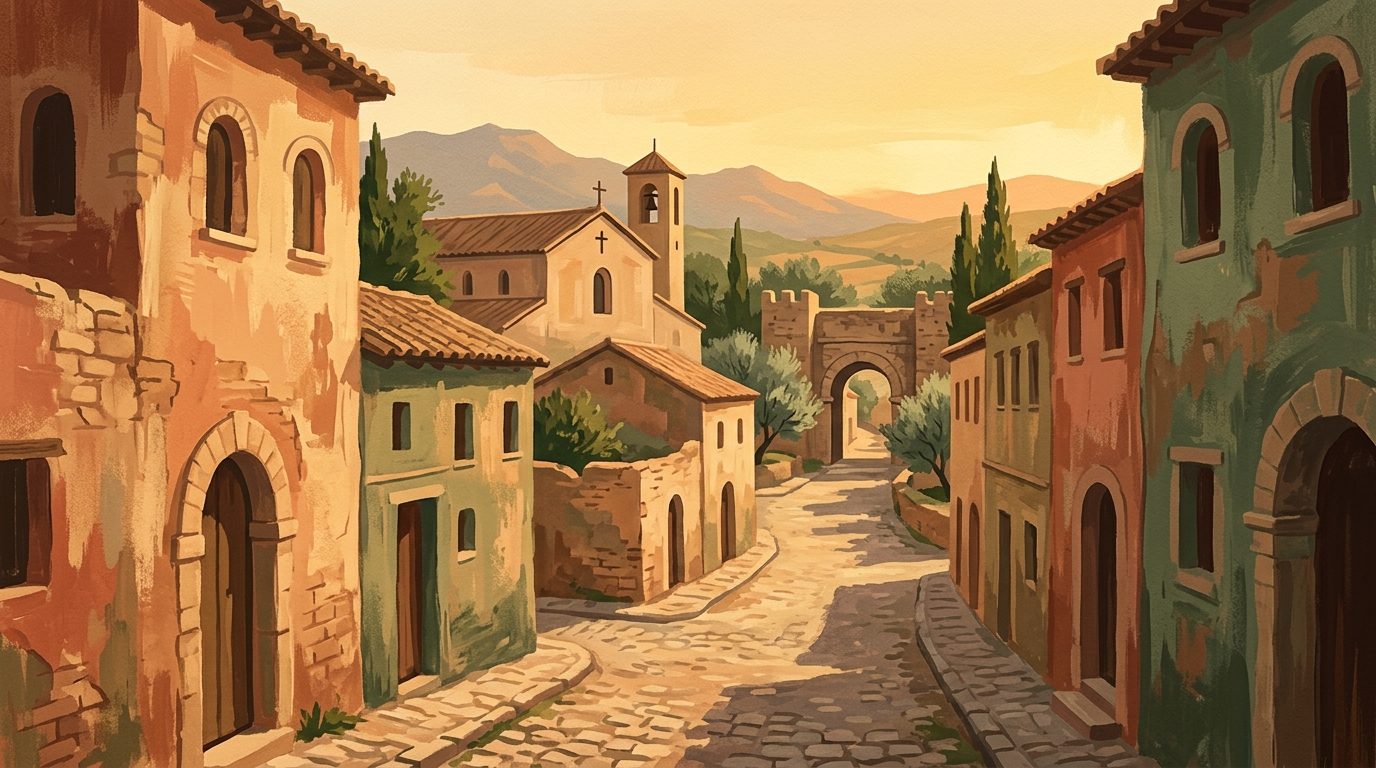
The transformation of southern Spain from a classical Roman province to a Christianised landscape was marked by economic crises, religious upheaval, and the sudden arrival of Germanic tribes.
In the early years of the fourth century, a group of nineteen bishops and twenty-six presbyters gathered in the provincial town of Iliberis, located near modern Granada. They met to issue strict new rules for a rapidly growing religious community. Their decrees, known today as the canons of the Council of Elvira, provide a remarkably vivid snapshot of a society in profound transition. The bishops worried about Christians sacrificing to the old gods, marrying outside the faith, and attending gladiatorial games. This gathering occurred during the twilight of Roman Hispania Baetica (218 BC to AD 409), an era when the classical certainties of the Mediterranean world were steadily unravelling.
The classical cities of southern Spain, once defined by their marble forums and imperial temples, were entering a complex new phase. Historians call this period late antiquity. It was a time defined not by a sudden collapse, but by a slow, profound transformation. Elite families abandoned municipal politics to build fortified country estates. The Christian cross began to replace the symbols of the imperial cult. Eventually, the arrival of armed Germanic confederations would shatter the political unity of the Roman West. The centuries between the high empire and the Islamic conquest are often overlooked, yet they laid the physical and cultural groundwork for the Middle Ages in Andalucía.
The Strain of the Third Century
The third century brought severe inflation, plague, and civil war to the Roman Empire. While the distant province of Baetica escaped the worst of the military disasters that plagued the northern frontiers, it did not escape the economic fallout. The traditional municipal system, which had driven the prosperity of Andalucían cities for centuries, began to break down. Local aristocrats, burdened by crushing tax liabilities imposed by the central government, retreated from civic life. The famous export economy of Baetica, which had previously shipped millions of clay amphorae filled with olive oil to Rome and the military frontiers, faced severe disruptions.
Instead of funding public baths and amphitheatres in the towns, wealthy families invested their resources into massive rural estates. Archaeological surveys across the Guadalquivir valley reveal a boom in monumental villa construction during the late third and fourth centuries. These villas operated as largely self-sufficient agricultural centres, complete with highly decorated residential quarters, extensive olive oil presses, and even their own private baths. The focus of economic and social power shifted from the urban grid to the countryside. Elite landowners effectively became local warlords or patrons, offering protection to rural labourers in exchange for their service. This process of ruralisation laid the social foundations for the feudal systems of the Middle Ages.
The Triumph of the Cross
As civic institutions weakened, the Christian church expanded its influence. The Council of Elvira provides hard evidence of a community attempting to separate itself from pagan culture, going so far as to forbid the placement of pictures in churches to prevent idolatry. A few decades later, the Emperor Constantine legalised the religion in AD 313, and Christianity moved from the margins to the centre of power. The most prominent Andalucían figure of this era was Hosius, the Bishop of Córdoba. Hosius served as a key theological advisor to Constantine, travelling across the empire and eventually presiding over the momentous Council of Nicaea in AD 325.
The physical fabric of Andalucían cities slowly evolved to reflect this spiritual revolution. Civic leaders no longer spent their wealth on pagan temples. They simply allowed the old shrines to fall into disrepair, frequently repurposing their marble columns and carved masonry for new construction. Early Christian worship took place in modest house churches, but by the fifth century, purpose-built basilicas began to appear inside and just outside the ancient city walls. Burials, which classical Roman law required to be placed strictly outside the city limits, gradually encroached upon abandoned urban spaces. Christians intensely desired to be interred near the relics of local martyrs, fundamentally altering the sanitary and spatial organisation of the ancient city.
The Vandal Shock
The political stability of the region finally shattered in the early fifth century. In AD 409, a mixed coalition of Germanic and steppe peoples crossed the Pyrenees into the Iberian Peninsula. They were fleeing pressure from the Huns and exploiting a vicious Roman civil war. Among them were the Vandals, who were divided into two distinct groups known as the Hasding and the Siling. The Siling Vandals drew the wealthy southern province of Baetica as their settlement zone in a forced treaty with the weakened Roman administration.
Their hold on Andalucía was brief but exceptionally violent. Within a few years, the Roman government hired the Visigoths, another Germanic group acting as imperial mercenaries, to march into Spain and exterminate the Siling Vandals. The Gothic campaign was devastatingly effective. The surviving Silings fled northward to join their Hasding cousins. However, the Hasding Vandals soon marched south, defeating an allied Roman and Gothic army. They systematically seized the major ports of the Andalucían coast, preparing for their next strategic move.
Under their formidable king, Genseric, the Vandals realised that the true wealth of the Mediterranean lay in North Africa, which served as the primary grain supply for the Roman West. In AD 429, Genseric gathered his entire people, along with the remnants of the Alan cavalry, and crossed the Strait of Gibraltar from the shores of Cádiz and Tarifa. They left southern Spain behind forever. A popular, though historically contested, etymology suggests that the Arabic name for the region, Al-Andalus, derives from a theoretical term like Vandalusia or the land of the Vandals. Most modern linguists and historians approach this theory with extreme caution. They point out the complete lack of documentary evidence for such a Latin term and propose alternative origins rooted in Gothic land distribution or indigenous Iberian linguistics.
Where to see it today
The material remains of late antiquity are less conspicuous than the grand amphitheatres of the high Roman era, but they are equally fascinating. Finding them requires looking for the subtle transition points between classical and medieval architecture.
The Basílica de Vega del Mar in Marbella is one of the most significant Paleochristian sites in the region. Discovered in a eucalyptus grove near the beach, this ruined church dates primarily to the sixth century, though it sits over earlier late antique foundations. The most striking feature of the site is its large, cruciform baptismal font. Early Christians practised baptism by total immersion, and this deep, cross-shaped basin was designed specifically for adult converts. The basilica is surrounded by an extensive necropolis, illustrating perfectly how late antique cemeteries clustered around sacred buildings rather than following the strict roadside alignments of pagan Rome.
Further inland, the archaeological site of Cerro del Germo sits on a steep hill near Espiel in the province of Córdoba. This complex dates to the sixth century and includes a Visigothic-era basilica and a related monastic or aristocratic compound. While strictly belonging to the period following the Vandal departure, it perfectly demonstrates the late antique trend of establishing religious and administrative centres in remote, defensible rural locations rather than on the vulnerable plains. The surviving stonework shows classical techniques adapting to the economic realities of a post-Roman world, with heavy reliance on recycled Roman stone.
To view the art and daily objects of this transitional period, the Museo Arqueológico de Córdoba offers an excellent collection. Visitors should look for early Christian sarcophagi, which feature traditional Roman carving techniques applied to biblical narratives such as Jonah and the whale or Daniel in the lions' den. The Museo de Málaga also houses significant late Roman and early Christian artefacts, including imported red slip pottery from North Africa. This specific type of pottery proves that Andalucía remained deeply connected to Mediterranean trade networks long after the formal end of Roman political control.
If you visit
When planning a visit to these late antique sites, it is best to combine them with broader regional tours. The Basílica de Vega del Mar in Marbella is generally open on set mornings (historically Tuesday, Thursday, and Saturday), but schedules are strictly managed by the local municipality and can change seasonally or for maintenance. Visitors are strongly advised to confirm current access times with the Marbella Tourism Office before departing (check on the operator's website before travelling). It is situated outdoors near the coast, making spring or autumn the most comfortable times to explore the ruins. Cerro del Germo is much more remote and requires a steep hike up a rugged path in the Sierra Morena, so sturdy footwear and plenty of drinking water are essential. The archaeological museums in Córdoba and Málaga are open year-round (usually closed on Mondays), but it is always recommended to check their official websites for current hours. They offer the vital historical context needed to interpret the sparse architectural ruins of this deeply transformative era.
Last reviewed: 21 June 2026 · Editorial policy
Related guides
The British in Río Tinto: Copper, Colony and the Rio Tinto Company
In 1873, a British syndicate purchased the ancient copper mines of Huelva from a bankrupt Spanish government. The resulting Rio Tinto Company Limited transformed the landscape into a massive industrial enterprise, leaving behind a profound legacy of Victorian architecture, immense open-pit mines, and pioneering railway engineering in western Andalucía.
8 min read
The Spanish Inquisition in Andalucía: Orthodoxy and Paranoia
From its very first tribunal in Sevilla to the shadow it cast over centuries of daily life, the Spanish Inquisition demanded absolute religious conformity. Its legacy remains etched in the architecture, archives and even the culinary traditions of southern Spain.
7 min read
Iberian Cities and Oppida: The Fortified Hilltop Towns of Andalucía
The ancient Iberians transformed the landscape of southern Spain with massive fortified settlements known as oppida. These hilltop towns were the centres of a powerful aristocratic society built on agriculture, mining and Mediterranean trade.
7 min read
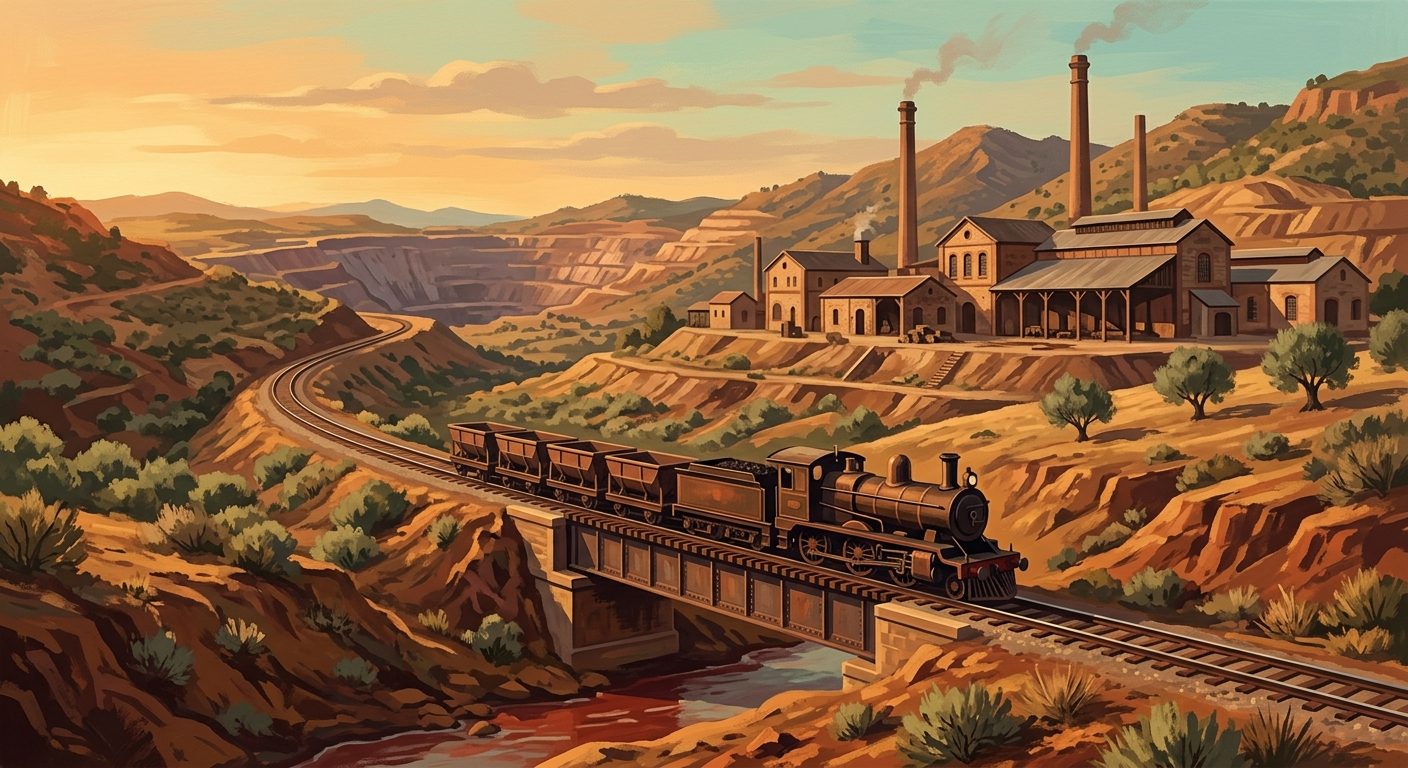
Industrial Heritage in Andalucía: Mines, Railways and the British
The nineteenth century brought an industrial boom to Andalucía, fuelled by British capital and ancient mineral wealth. Copper, iron and railways reshaped the landscape, leaving behind a profound legacy of Victorian architecture and vast open-pit mines.
6 min read
Tartessos and the Silver Trade
Ancient Greek historians wrote of a legendary kingdom in the far west ruled by a monarch of impossible age and wealth. Modern archaeology has stripped away the myth to reveal an indigenous Iberian society transformed by an insatiable Mediterranean demand for silver.
8 min read
Corduba and Roman Baetica
Discover the political and intellectual might of Corduba, the wealthy administrative capital of Roman Baetica and the birthplace of the philosopher Seneca.
7 min read
More guides
UNESCO World Heritage Sites in Andalucía
A curated guide to the cultural and natural sites in Andalucía recognised by UNESCO for their universal value. These landmarks offer a profound insight into the diverse civilisations of the region.
6 min read
The Best Beaches in Andalucía
From the Atlantic dunes of Huelva to the volcanic coves of Almería, the coastline of southern Spain offers an unparalleled variety of maritime landscapes.
6 min read
Phoenicians and Tartessians in Andalucía
Around three thousand years ago, eastern Mediterranean merchants arrived on the Iberian coast seeking silver and copper. Their arrival sparked a cultural collision that transformed local chiefdoms into the legendary civilisation of Tartessos.
6 min read
Roman Andalucía: Ruins and Archaeological Sites
Discover the monumental legacy of the Roman province of Baetica, from grand amphitheatres in the Guadalquivir valley to maritime cities on the Atlantic coast.
7 min read
Geological Wonders: Caves and Karst Landscapes of Andalucía
Discover the subterranean wonders and prehistoric secrets preserved within the limestone massifs and gypsum deposits of southern Spain.
6 min read
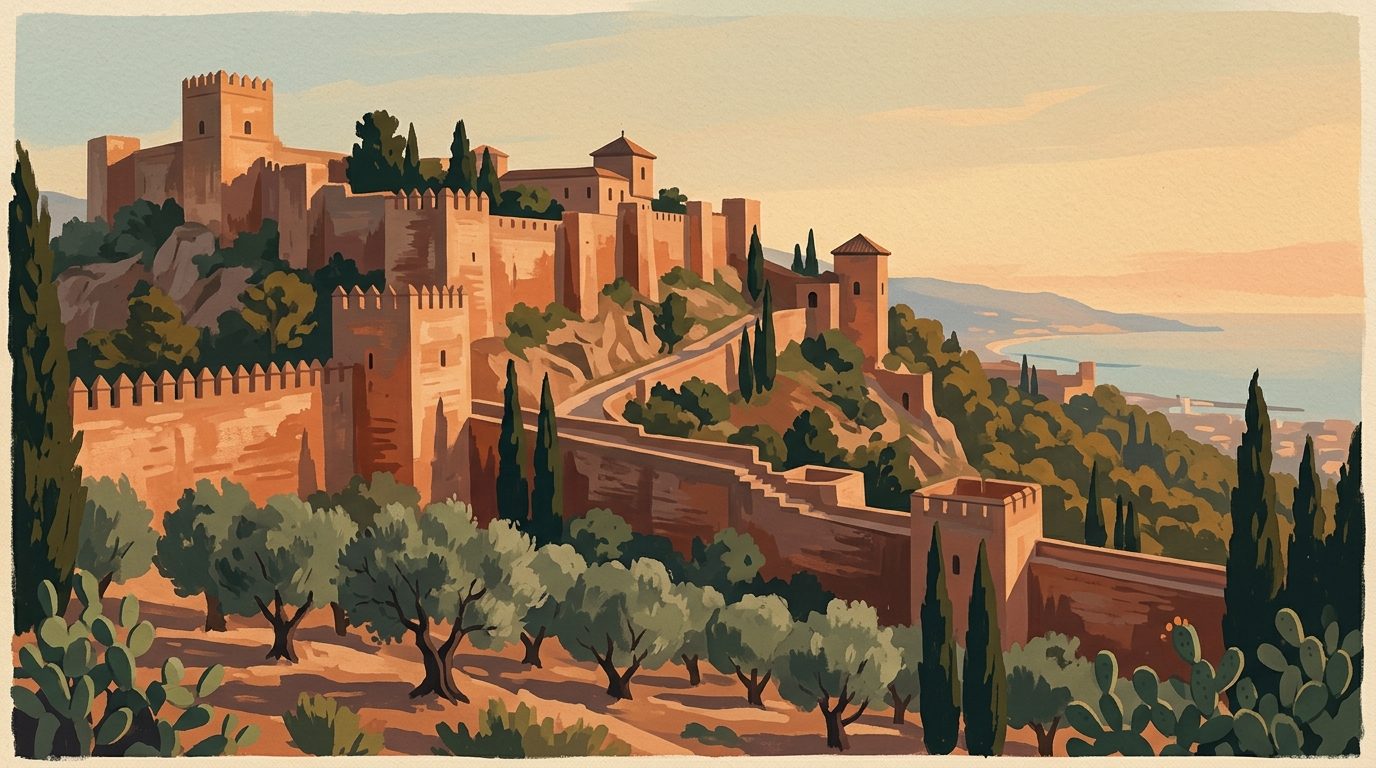
Castles and Fortresses of Andalucía
The fortresses of Andalucía are the stone guardians of a complex past, marking the ancient frontiers between empires and offering some of the most spectacular views in the southern peninsula.
6 min read
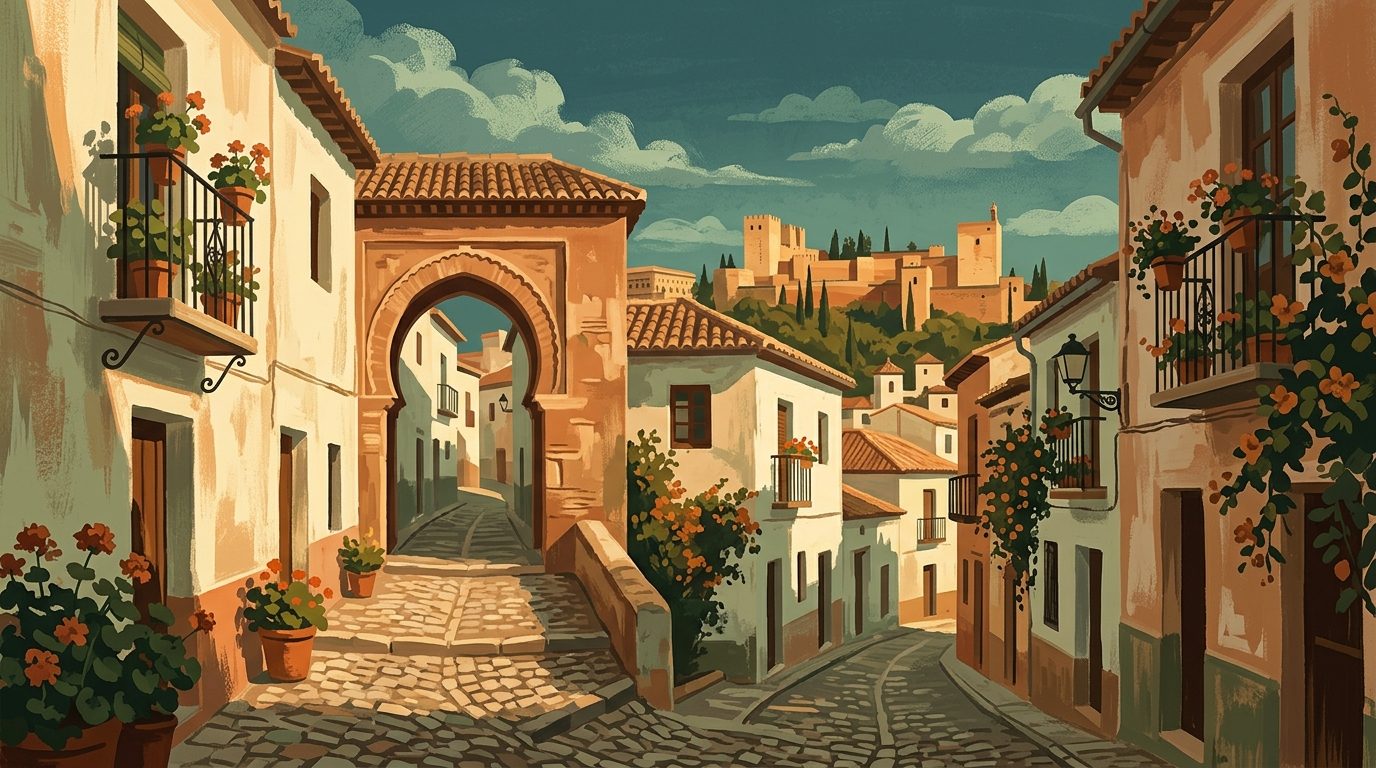
The Iberians in Andalucía: Warlords, Sculptors and the Dawn of Iron
Who were the sophisticated, iron-working peoples who controlled southern Spain before the Roman conquest? Their fortified hill towns and striking stone sculptures reveal a formidable culture caught between ancient local traditions and Mediterranean ambition.
6 min read
UNESCO Geoparks and Natural Wonders of Andalucía
Discover the geological heritage of Southern Spain through its UNESCO-designated geoparks and natural wonders. Explore the tectonic history and diverse ecosystems of Almería, Granada, and Cádiz.
6 min read
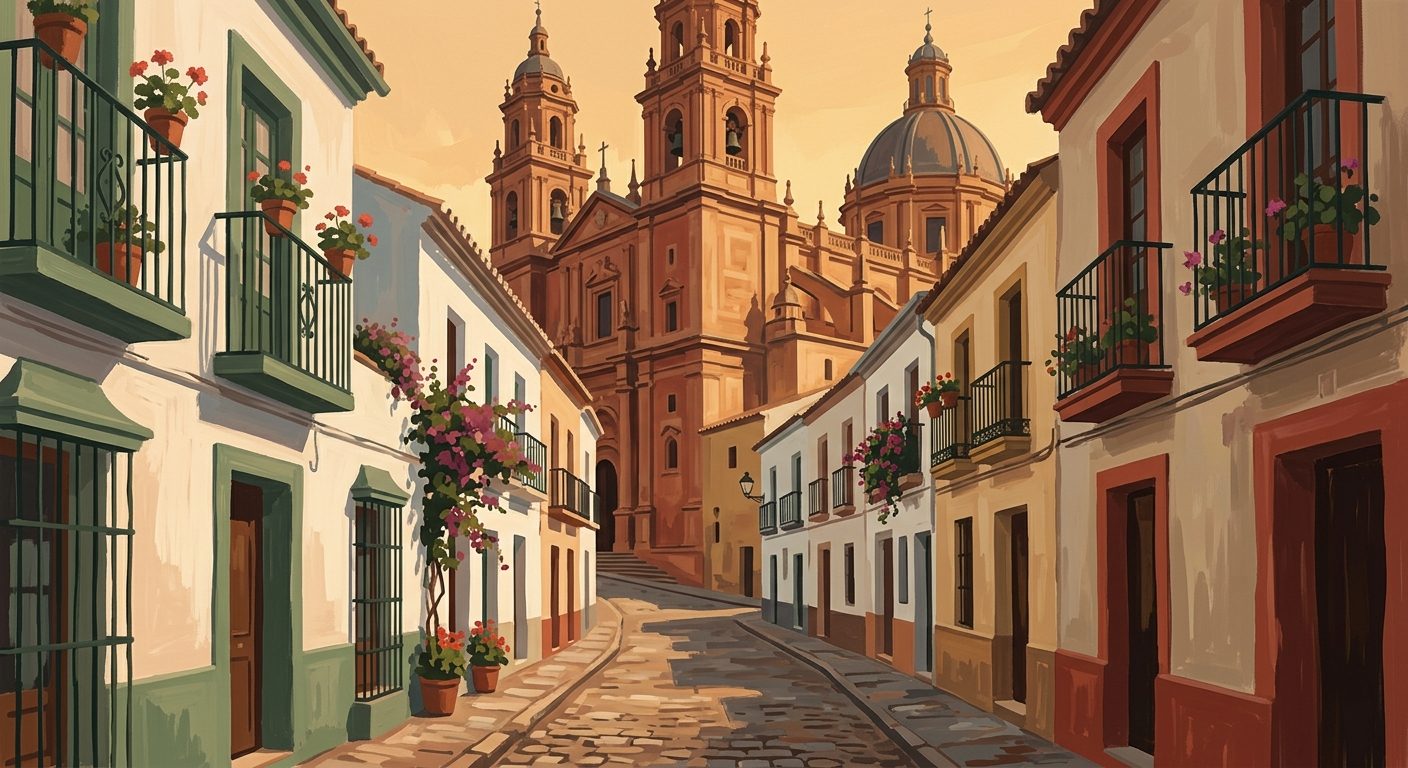
Cathedrals and Great Churches of Andalucía
A guide to the monumental religious architecture of Southern Spain, from the vast Gothic nave of Sevilla to the Renaissance masterworks of Jaén and Granada.
6 min read
Newsletter
More stories from Andalucía
Weekly notes, seasonal picks, and the next guides worth bookmarking.