
Feature · Jaén
Olive Oil and Industrial Modernisation in Jaén
Discover how 19th-century steam power, hydraulic presses and the rise of agrarian cooperatives transformed the olive groves of Jaén into a modern industrial powerhouse.
By Dan · Updated 24 June 2026 · 7 min read
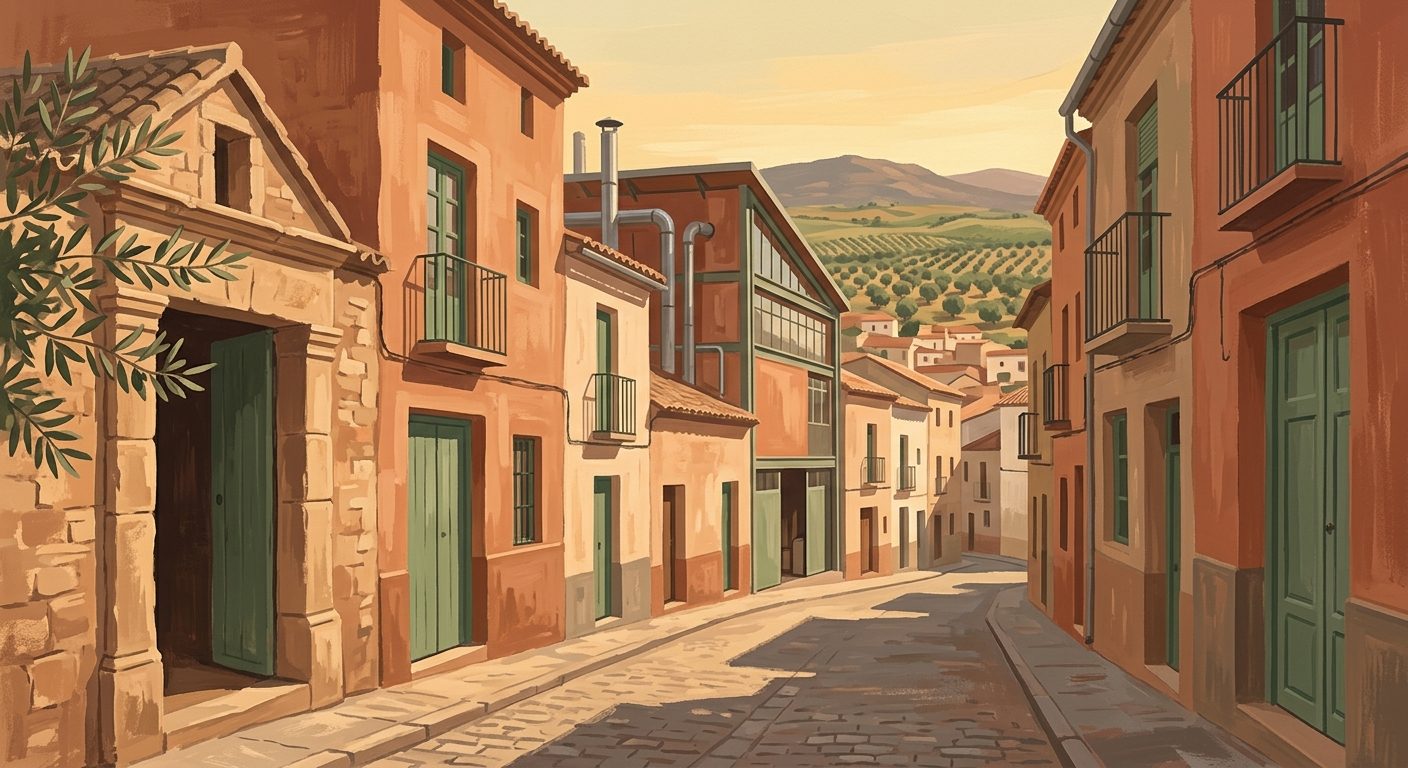
Driving through the province of Jaén today reveals an almost infinite expanse of olive trees aligned over rolling hills. Yet this vast monoculture is a surprisingly modern creation, born from the industrial mechanisation and social cooperative movements of the last two centuries.
To stand on the high Renaissance walls of Úbeda or Baeza is to look out over a silver-green ocean. According to regional agricultural data, there are over 66 million olive trees in the province of Jaén alone, making it the highest concentration of olive cultivation on the planet. Set within the broader era of Andalucían industrial heritage in the 19th and 20th centuries, the transformation of this landscape from a mixed agricultural region to an industrialised monoculture reshaped the local economy, the architecture and the social fabric of the territory.
Before the mid 19th century, the fields of northern Andalucía were a patchwork of cereal crops, vineyards and olive groves. The production of olive oil was a slow, manual and heavily localised process. But a combination of agricultural crises, sweeping technological advancements and profound social unrest triggered a complete reinvention of the Andalucían olive industry. The arrival of steam power, the introduction of hydraulic presses and the eventual rise of the agrarian cooperative movement turned a rudimentary agrarian practice into a highly mechanised industry. This modernisation not only changed how the oil was extracted but fundamentally altered who controlled the wealth generated by the land.
The Age of the Almazara and Early Mechanisation
For hundreds of years, the process of extracting olive oil had barely changed. Olives were harvested by hand and brought to an almazara, a word derived from the Arabic term for the place of pressing. The fruit was crushed into a paste by large conical stones known as empiedros, which were pulled in a circular motion by mules or oxen. This paste was then spread onto circular esparto grass mats called capachos. These mats were stacked into a tall column and pressed heavily to squeeze out the liquid, which was a mixture of oil and vegetable water. Finally, the liquid was left to settle in decantation pools so the lighter oil could float to the surface and be skimmed off.
The pressing itself relied on the viga de husillo, a massive wooden beam press that utilised the principles of leverage and counterweights. These wooden presses required enormous physical labour to operate, and the slow processing time meant that olives often sat in the mill for days or weeks before they could be pressed. As the olives waited, they began to ferment, raising the acidity of the final product and creating the heavy, pungent flavour profile that characterised older styles of oil.
The first wave of industrial modernisation arrived in the late 19th century. The phylloxera plague had begun to devastate the vineyards of southern Europe, prompting many Andalucían landowners to uproot their dead vines and plant olive trees instead. With a sudden increase in the volume of olives harvested, the old wooden presses could no longer cope. The solution was found in cast iron and steam.
Foundries across Spain began manufacturing hydraulic metal presses. Steam engines replaced animal labour to power the crushing stones. These new hydraulic presses could exert immense pressure evenly and efficiently, reducing the time required to extract the oil and significantly increasing the yield. The architecture of the almazara changed to accommodate these new machines. The traditional low-ceilinged rural mills gave way to grand, high-vaulted industrial halls built from exposed brick and iron, featuring tall chimneys to vent the steam boilers.
Social Upheaval and the Cooperative Movement
While the landowners invested in metal presses and steam engines, the social reality for the workers in the olive groves remained stark. The agricultural economy of Jaén was dominated by the latifundio system, where massive estates were owned by a few aristocratic or bourgeois families, often absentee landlords who lived in Madrid or Sevilla. The physical work of the harvest was performed by jornaleros, landless day labourers who were hired only for the few months of the picking season.
The stark divide between the wealth of the estate owners and the extreme poverty of the jornaleros made the olive-growing regions of Andalucía a focal point for social tension. Throughout the late 19th and early 20th centuries, agrarian strikes, protests and political radicalisation swept through the province. Workers demanded better wages, fairer land distribution and improved living conditions.
In response to the immense power held by the large estate owners and the private mill operators, smallholding farmers began to organise. A private mill owner would typically charge a smallholder an exorbitant fee to press their olives, or buy the fruit at a dictated low price, keeping the lucrative oil profits for themselves. To bypass these intermediaries, groups of small farmers began forming the first agricultural cooperatives in the 1910s and 1920s.
By pooling their limited capital, these cooperatives could afford to purchase their own hydraulic presses and build shared processing facilities. The cooperative model meant that members delivered their harvest to a jointly owned almazara, where the olives were weighed and processed together. Once the oil was sold on the market, the profits were distributed among the members proportionally based on the weight and yield of the fruit they had contributed. Despite the brutal interruptions of the Spanish Civil War and the subsequent hardships of the early Francoist period, the cooperative model survived and expanded. By the second half of the 20th century, cooperatives had become the dominant economic force in the Andalucían olive industry.
The Technological Leap: Centrifugation and Quality Control
The final phase of the olive oil industrial revolution occurred in the late 20th century, completely rendering the old presses obsolete. Even with hydraulic pressure, the use of esparto grass mats remained a fundamental flaw in the pursuit of high-quality oil. The mats were notoriously difficult to clean, and the residue from previous pressings would quickly oxidise and taint the fresh oil with rancid flavours.
In the 1970s and 1980s, the industry adopted continuous centrifugation systems. Instead of pressing the olive paste through mats, the modern system pumps the crushed paste into a rapidly spinning horizontal centrifuge. The immense centrifugal force separates the solid waste, the vegetable water and the pure oil based on their different densities. This continuous, sealed system prevents the oil from being exposed to light or air, halting oxidation in its tracks.
This technological leap shifted the focus of the entire industry. For a century, the goal of modernisation had been to extract the maximum volume of oil as quickly as possible. With the advent of clean, stainless steel centrifugation and temperature-controlled processing, the focus shifted toward producing flawless Extra Virgin Olive Oil. The industrial almazaras of today resemble pharmaceutical laboratories more than traditional agricultural mills, prioritising hygiene, speed and low-temperature extraction.
Where to see it today
The Museo de la Cultura del Olivo is located in the Hacienda La Laguna (Puente del Obispo), a few miles south of Baeza. This sprawling 19th-century estate was once one of the most advanced agricultural complexes in Spain. Visitors can explore the magnificent Cathedral of Oil, a vast pressing room dating to 1848 that retains its original vaulted ceilings. The museum holds a superb collection of early industrial machinery, allowing you to trace the exact evolution of the technology. You can inspect the immense wooden viga de husillo beam presses, the transition to animal-powered conical stones and the heavy cast-iron hydraulic presses that defined the first industrial leap.
In the nearby Renaissance city of Úbeda, the Centro de Interpretación Olivar y Aceite (official website) provides a distinct but complementary experience. Located in the Casa de la Tercia, a historic building that once served as an agricultural storehouse, this centre focuses heavily on the modern reality of the industry. The exhibits detail the contemporary cooperative business model, the agronomy of the modern olive grove and the strict technological standards required to produce premium olive oil today. The centre also includes a professional tasting room where visitors can learn the sensory analysis techniques used to grade Extra Virgin oil.
If you visit
The province of Jaén is best explored by car, as the major estates and cooperative mills are spread across the rural landscape between towns. The olive harvest season runs from late October through to January. Visiting during these months allows you to witness the intense mechanical activity of the modern harvest and smell the sharp, grassy scent of crushed olives that fills the air around every rural town. Both the museum in Baeza and the interpretation centre in Úbeda are open year-round, though it is highly recommended to book guided tasting sessions at the Úbeda centre in advance, particularly during the busy autumn harvest period.
Last reviewed: 21 June 2026 · Editorial policy
Related guides
A Tale of Two Cities: The Golden Stone of Úbeda and Baeza
Beyond the endless olive groves of Jaén lie Úbeda and Baeza, two cities that define the Spanish Renaissance with their golden sandstone and quiet nobility.
7 min read
Exploring the Olive Oil Culture of Jaén City
Discover the global capital of olive oil in Jaén City, where you can explore historic mills, enjoy professional tastings, and experience luxury oleotherapy treatments.
5 min read
Jaén in November: The Rhythm of the Olive Harvest
Experience the peak of the olive harvest in Jaén this November, from tasting electric-green fresh oils to exploring the quiet Renaissance streets of Úbeda and Baeza.
7 min read
The Resurrection of the Chalk: How Sherry Escaped the Dusty Sideboard
For decades, the wines of Marco de Jerez were relegated to the back of the liquor cabinet; today, a new generation of winemakers is digging into the white earth to prove Sherry is the world's most misunderstood terroir wine.
7 min read
The Ghost in the Garden: Searching for the Al-Andalus Within
Eight centuries of Al-Andalus did not vanish in 1492; they simply moved indoors, into the kitchens, and onto the tip of the tongue.
7 min read
Corpus Christi in Granada: The Definitive Guide
In Granada, Corpus Christi is far more than a solemn religious observance. It is the city's largest annual festival, combining the scent of fresh rosemary crushed underfoot during the sacred Thursday procession with the unapologetic joy of the week-long public feria in Almanjáyar.
10 min read
More from Jaén
Ghost of the Rockrose: The Long Walk Back for the Iberian Lynx
A ghost in the rockrose, the Iberian lynx has returned from a historical precipice to reclaim the granite slopes of Jaén.
7 min read
The Weight of the Green Gold: A Season of Siege in the Groves of Jaén
In the hills of Jaén, the air in November carries the scent of crushed leaves and the industrial thrum of sixty-six million trees being shaken into submission.
8 min read
Newsletter
More stories from Andalucía
Weekly notes, seasonal picks, and the next guides worth bookmarking.