
Seasonal guide · Málaga
Málaga in February: Almond Blossom and Winter Sun
February in Málaga province offers a quiet transition, where the scent of almond blossom fills the air and the city streets remain peaceful before the spring rush.
By Dan · Updated 7 June 2026 · 7 min read
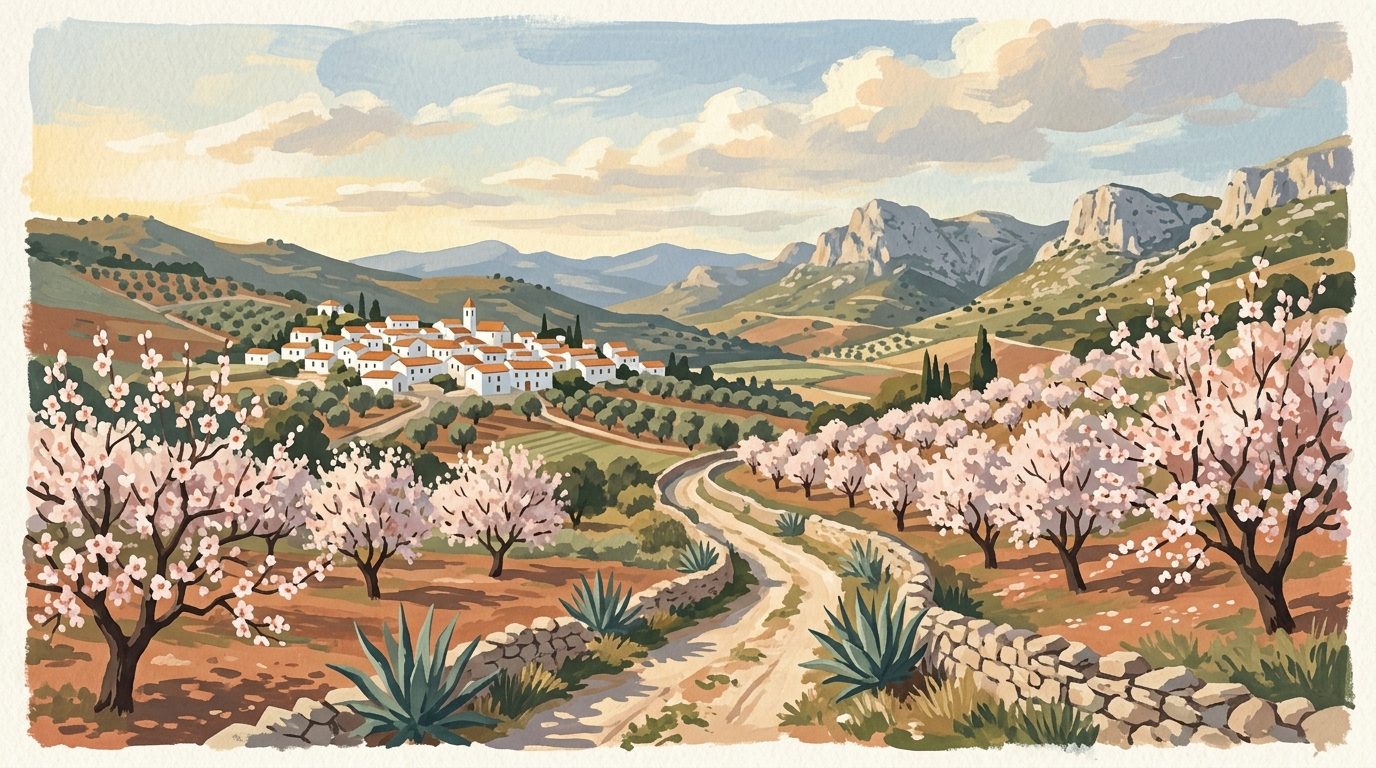
February in Málaga province offers a quiet transition, where the scent of almond blossom fills the air and the city streets remain peaceful before the spring rush. It is a month for walkers and culture seekers who prefer mild afternoons to the scorching heat of summer.
While northern Europe remains gripped by the depths of winter, Málaga province begins to stir with the first signs of an early spring. February is a subtle month, often overlooked by those seeking guaranteed beach weather, yet it provides some of the most comfortable conditions for exploring the diverse landscapes of the Costa del Sol and its mountainous interior. The province sheds its mid-winter slumber, marked most notably by the pink and white flowering of thousands of almond trees that decorate the hillsides of the Axarquía and the Guadalhorce Valley.
This is a time of clarity. The air is crisp, the visibility across the Alboran Sea often extends to the Moroccan coastline, and the intense summer haze is months away. For the resident, it is a period of calm before the frantic preparations for Semana Santa (Holy Week). For the visitor, it offers the rare opportunity to experience some of Spain’s most popular sites, such as the Caminito del Rey or the Alcazaba, without the pressure of crowds or the necessity of booking months in advance.
Weather: A Tale of Two Altitudes
In February, the weather in Málaga province depends entirely on your elevation. Along the coastline, from Estepona to Nerja, daytime temperatures typically hover around 17°C to 18°C. On sunny days, which are frequent, it can feel significantly warmer, reaching 20°C in sheltered spots. However, as soon as the sun drops behind the mountains, the temperature falls sharply to around 8°C or 9°C. The Mediterranean Sea remains far too cold for swimming, averaging about 15°C, though you will frequently see locals and northern Europeans alike enjoying the sun on the sand in light clothing.
Move inland towards the northern reaches of the province, such as Antequera or Ronda, and the conditions change. These areas sit on a high plateau and experience a more continental climate. Daytime highs may only reach 12°C, and night-time frosts are common. Rainfall in February is unpredictable; you might experience a week of unbroken blue skies or three days of heavy, Atlantic-driven rain known as the borrasca. On average, the province sees about five days of rain throughout the month. If you are visiting the Sierra de las Nieves, the province’s national park, do not be surprised to see a dusting of snow on the peaks of Torrecilla, even while people are eating ice cream on the promenade in Marbella.
What to wear is a matter of strategic layering. A light T-shirt or shirt is often sufficient for midday sun, but a medium-weight jacket or woollen sweater is essential for the evenings. If you plan to visit the white villages (pueblos blancos) in the mountains, bring a windproof coat and sturdy walking shoes, as the stone streets can be slippery when damp.
Events and Festivals
The headline event of the month is Carnaval. While Cádiz is famous for its massive celebrations, the province of Málaga holds its own spirited versions. In Málaga city, the Carnaval de Málaga usually takes place over the week leading up to Shrove Tuesday. It is a period of street performances, satirical singing groups known as murgas, and elaborate parades. The finale is the Entierro de la Sardina (Burial of the Sardine), a quirky tradition where a giant cardboard fish is paraded to the beach of La Malagueta and burnt to signify the end of the festivities and the beginning of Lent.
In the Axarquía region, the Carnaval de Vélez-Málaga is particularly well-regarded. It is smaller and more intimate than the city version, featuring local troupes and a focus on traditional costumes. Dates for these events shift annually based on the lunar calendar. For 2027 and beyond, it is wise to check the Málaga Tourism board and local ayuntamiento (town hall) websites in early February for specific schedules.
Nature provides its own festival during this month: the Almendro en Flor (Almond Blossom). Many villages, particularly Guaro and Almogía, celebrate this natural phenomenon. Guaro often hosts specific walking routes and craft markets to coincide with the peak of the blossom, which usually occurs in the first two weeks of February. It is a spectacular sight, as entire valleys turn a soft shade of pink, resembling a light dusting of snow.
Finally, the month concludes with Día de Andalucía (Andalucía Day) on the 28th of February. This is a public holiday celebrating the region’s autonomy. You will see green and white flags hanging from balconies, and many towns host communal breakfasts of mollete (a soft local bread) drizzled with olive oil and sugar, accompanied by performances of the regional anthem.
What to Do
February is arguably the best month for active tourism. The Caminito del Rey, the once-treacherous walkway pinned to the walls of the El Chorro gorge, is far more enjoyable in the cool winter air than in the 40°C heat of August. Tickets, which are usually sold out weeks in advance in summer, are often available for mid-week dates with only a few days' notice. The surrounding lake district of Ardales is equally beautiful this time of year, with the pine forests providing a fresh, resinous scent.
Culture lovers should focus on Málaga city. While Pablo Picasso was actually born in October, February is a popular time for thematic lectures and special seasonal events in the lead-up to spring. The Museo Picasso Málaga and the Museo Casa Natal (his birthplace) are much quieter now, allowing for a contemplative viewing of his work. The city’s botanical garden, Jardín Botánico Histórico La Concepción, is also a highlight in February. While many plants are dormant, the prehistoric-looking wisteria is beginning to prepare its display, and the evergreen tropical species provide a lush escape from the more arid parts of the province.
For those who enjoy hiking, the Gran Senda de Málaga (The Great Málaga Path) offers sections that are perfect for February. The stages passing through the Axarquía allow you to walk through the heart of the almond blossom. The route between Sayalonga and Cómpeta is particularly rewarding, offering views of the Mediterranean and the snow-capped Sierra Nevada in the neighbouring province of Granada.
Who Should Visit?
- Hikers: The mild temperatures are ideal for long-distance walking without the risk of heatstroke.
- Budget Travellers: Accommodation prices are at their lowest point of the year, with many four-star hotels offering rates comparable to budget hostels in the summer.
- Culture Seekers: Enjoy the museums of Málaga city and the monuments of Antequera without the crowds.
- Photographers: The winter light is softer and the almond blossoms provide stunning natural subjects.
- Birdwatchers: February marks the start of the spring migration for many species crossing the Strait of Gibraltar.
It is not the ideal month for those who want a traditional beach holiday or nightlife. Many beach bars (chiringuitos) remain open, but the coastal resorts are much quieter, and the evening scene is more subdued than the high season.
Practical Notes
Crowd levels in February are minimal. You can walk into most restaurants without a reservation, and the historic centres of Ronda and Antequera feel like genuine living towns rather than tourist hubs. However, be aware that some smaller hotels or seasonal shops in coastal resorts like Nerja or Marbella may take their annual break during this month.
Prices for car rentals are exceptionally low in February, often costing a fraction of the July rate. This makes it an excellent time to hire a car and explore the interior mountain roads. Booking advice remains simple: for major attractions like the Caminito del Rey, still book a week ahead, but for almost everything else, spontaneity is possible. If you are staying in an Airbnb or a traditional village house, ensure it has heating; many older Spanish buildings are designed to stay cool and can feel quite damp and chilly in the winter months.
Monthly Verdict
Málaga in February is a season for the senses rather than the sun-lounger. It is a month defined by the delicate fragrance of almond blossom, the sharp mountain air, and the quiet dignity of the region's historic cities. While the nights require a coat, the days offer a gentle warmth that makes exploration a pleasure. For those who value space, peace, and the beauty of a landscape in transition, it is perhaps the most rewarding time to visit the province.
Last reviewed: 21 June 2026 · Editorial policy
Related guides
Málaga in November: A Guide to the Season of Calm and Light
Experience the calm of Málaga in November, from the traditional chestnut festivals in the mountains to the spectacular Christmas light switch-on in the city.
6 min read
Málaga in December: Winter Light and Festive Traditions
Málaga transforms into a city of light and social warmth during December, offering a mild escape from the harsh northern European winter.
7 min read
Málaga in April: Spring Festivals, Orange Blossom, and the First Glimpse of Summer
April in Málaga brings lively spring festivals, occasional Semana Santa processions, and the first warm days perfect for beach lunches and mountain hiking.
7 min read
Málaga in March: Spring Arrivals and Coastal Calm
March in Málaga offers a serene transition as the province awakens with orange blossom scents, early spring sunshine, and the anticipation of Easter traditions.
6 min read
Málaga in May: The Sweet Spot of the Andalucían Calendar
May is the month when the Costa del Sol truly wakes up, offering a balance of warm sunshine and the tail end of the spring bloom. It is the ideal window for those who want to explore the mountains and the Mediterranean without the oppressive heat of July.
6 min read
Andalucía in April
April brings the intoxicating scent of orange blossom and the dramatic spectacle of Semana Santa to Andalucía, offering the perfect balance of warm weather and cultural depth.
7 min read
More from Málaga
Málaga in October
October in Málaga represents the transition from the scorching summer heat to a mellow, golden clarity. It is a period where the Mediterranean remains warm enough for swimming, yet the inland mountains become crisp and accessible for exploration.
7 min read
Málaga in January: Quiet Shores and Crisp Mountain Air
Discover Málaga in January, a month of crisp blue skies, 17°C coastal afternoons, and the quietest streets of the year.
6 min read
Málaga in September: A Mellow Transition
Málaga in September offers a gentle transition with warm seas, harvest festivals in the Axarquía, and a softening of the summer heat.
6 min read
Málaga in July
Experience the height of the Mediterranean summer in Málaga, where 38°C heat is balanced by maritime festivals, roasted sardines on the beach, and a lively night culture.
6 min read
Málaga in June: Sunshine, Sardines and San Juan
June in Málaga offers the perfect blend of long, sun-soaked days and the first warm swimming temperatures of the year. From the bonfires of San Juan to the sardine spits on the beach, it is the quintessential month for a Mediterranean escape.
7 min read
Málaga in August: Feria Season and Peak Summer Heat
August in Málaga is defined by the high-energy celebrations of the city fair and the intense heat of the terral wind. It is a month for late nights, sea swims, and embracing the slow pace of peak summer.
6 min read
Newsletter
More stories from Andalucía
Weekly notes, seasonal picks, and the next guides worth bookmarking.