
Seasonal guide · Almería
Almería in July: A Guide to Spain's Volcanic Summer Coast
Discover the rugged beauty of Almería in July, where volcanic beaches and desert landscapes meet the clearest waters in the Mediterranean.
By Dan · Updated 16 July 2026 · 7 min read
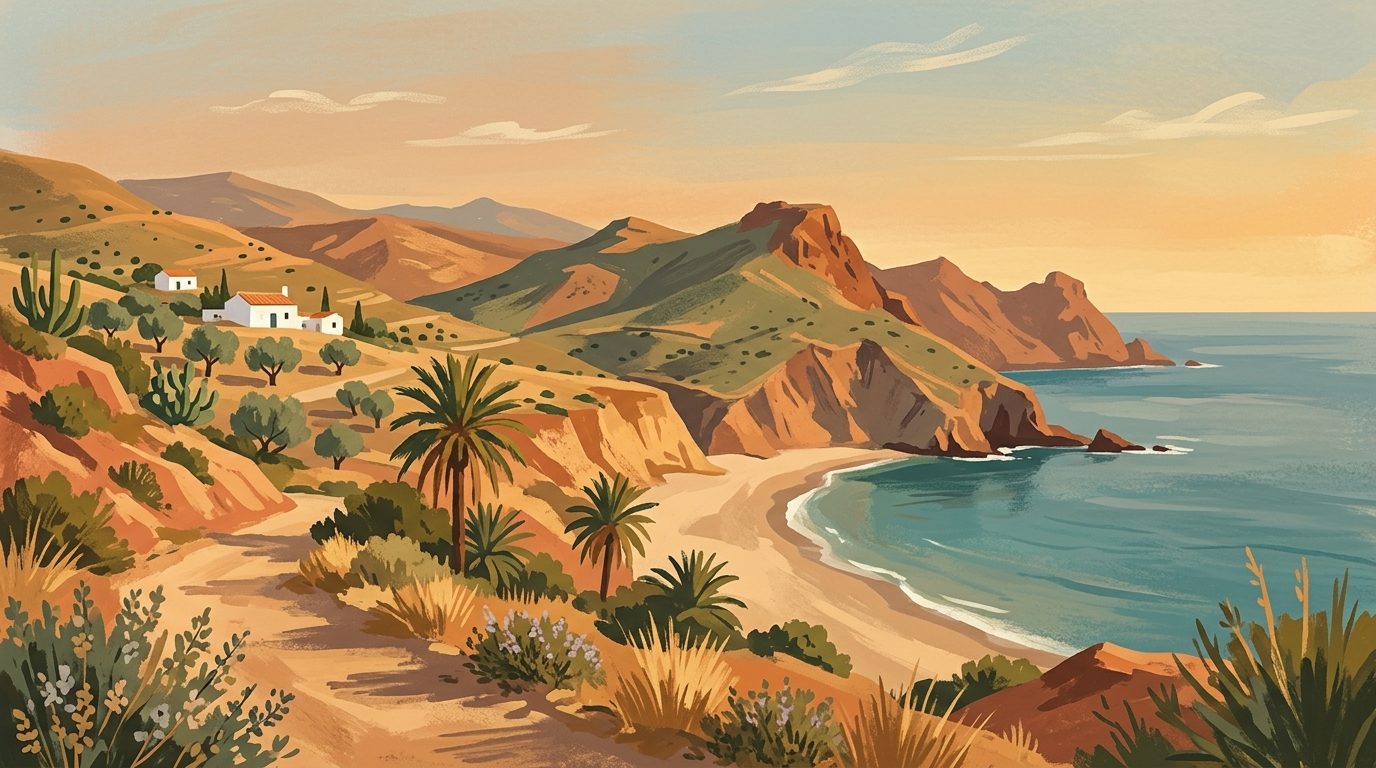
Almería in July is a study in elemental forces: the scent of salt spray on scorched volcanic rock and the feeling of a dry desert breeze cooling the skin after a dip in the Mediterranean.
While the rest of Europe descends upon the concrete-lined shores of the Costa del Sol or the crowded coves of the Costa Brava, Almería remains a distinct choice for the discerning traveller. In July, this province, the driest region in Europe, transforms into a sun-baked landscape that feels more North African than Iberian. The character of the month is defined by the intensity of the light and the refreshing clarity of the water within the Cabo de Gata-Níjar Natural Park.
July is when the province truly comes alive, though it maintains a slower tempo than its neighbours to the west. The atmosphere is one of rugged independence. You will not find high-rise hotel blocks or manicured resort lawns here. Instead, July in Almería is about white-washed fishing villages, dusty tracks leading to empty coves, and the persistent hum of cicadas in the olive groves. It is a time for those who enjoy the heat and the stark beauty of a landscape that provides no shade but offers the cleanest swimming conditions in the Mediterranean.
Weather and Conditions
The weather in Almería during July is consistently hot and exceptionally dry. Rainfall is almost non-existent; you can expect virtually guaranteed sunshine. However, the experience of this heat varies significantly depending on your proximity to the coast.
In the coastal areas, such as the city of Almería, San José, and Mojácar, daytime temperatures typically hover between 29°C and 32°C. The Mediterranean acts as a thermal regulator, and the frequent "Levante" (easterly) and "Poniente" (westerly) winds provide a much-needed breeze. Night-time temperatures on the coast rarely drop below 22°C, making air conditioning or high-quality fans essential for comfortable sleep.
Inland, the story is different. The Desierto de Tabernas and the Sierra Alhamilla see temperatures regularly exceeding 40°C by mid-afternoon. If you plan to visit the inland western-style film sets or the Sorbas caves, these activities must be confined to the early morning. Sea temperatures are at their most inviting in July, averaging around 24°C, which is perfect for extended periods of snorkelling without the need for a wetsuit.
What to wear: Lightweight linen and cotton are the only practical choices. High-protection SPF is non-negotiable, as the Almerian sun is notoriously fierce. A wide-brimmed hat is essential if you plan to walk to any of the more remote beaches in the Cabo de Gata, as there is zero natural shade provided by trees.
Events & Festivals
July is a significant month for cultural life in Almería, with several events that highlight the province's artistic and maritime traditions.
Festival de Flamenco y Danza de Almería
Taking place throughout much of July (check the Almería Ayuntamiento website for specific 2026 dates and venues), this festival is one of the most important in the region. Performances are held in various locations across Almería city, including the Plaza de la Catedral and the Alcazaba. It features world-class performers of both traditional flamenco and contemporary dance. The evening starts late, often after 10:00 pm, when the air has cooled sufficiently for the performers and the audience.
Virgen del Carmen (16th July)
As the patron saint of fishermen, the Virgen del Carmen is celebrated with fervour in every coastal village. In places like Roquetas de Mar, Carboneras, and the Barrio de Pescadores in Almería city, the statue of the Virgin is carried from the church to the harbour and placed on a boat. A flotilla of fishing vessels follows her out to sea, decorated with flowers and flags, accompanied by the sounding of sirens. It is a moving spectacle that concludes with fireworks and communal feasting on the beach.
Clásicos en el Parque (Mid to late July)
In the old gold-mining village of Rodalquilar, set in the heart of the Cabo de Gata, this chamber music festival offers a sophisticated alternative to the beach parties. The concerts take place in the open air, often against the backdrop of the abandoned mines or the botanical gardens. The acoustic quality of the volcanic valley provides a unique setting for classical music under the stars.
What to Do in Almería in July
The primary draw in July is the Cabo de Gata-Níjar Natural Park. This protected area of volcanic cliffs and hidden bays is best explored by water or early morning hikes. Playa de los Genoveses and Playa de Mónsul are the most famous beaches, known for their cinematic dunes and crystal-clear water. In July, access by private car is restricted to protect the environment, but a reliable shuttle bus typically runs from the town of San José every 30 minutes (check the Consorcio de Transporte website for the 2026 summer timetable).
For those interested in marine life, the coves around Isleta del Moro and Las Negras offer exceptional snorkelling. The Posidonia oceanica (seagrass) meadows here are some of the best-preserved in Spain, supporting a vast array of fish. Kayak tours are a popular July activity, allowing visitors to reach sea caves and coves that are inaccessible by foot, such as the Cueva del Tabaco.
Mojácar provides a different pace. The hilltop village (Mojácar Pueblo) is a labyrinth of steep, white-washed streets that stay relatively cool. In the evenings, the focus shifts to Mojácar Playa, where the beach bars, or chiringuitos, offer a lively scene without the aggressive commercialism found in larger Spanish resorts. It is the best place in the province for those who want a mix of sun-drenched days and social nights.
If the heat becomes too much, the Sorbas Caves (Cuevas de Sorbas) provide a natural escape. These gypsum crystal caves maintain a constant temperature of around 18°C. Guided tours range from easy walks to technical climbs, providing a fascinating look at the geological history of the region while escaping the afternoon sun.
Who Should Visit?
- Beach-goers: Those who prefer rugged, natural beaches over serviced sunbeds and umbrellas will find their paradise here.
- Snorkellers and Divers: The clarity of the water in July is world-class, with visibility often exceeding 20 metres.
- Photographers: The stark light, volcanic shapes, and the contrast of the blue sea against the ochre desert are spectacular in the summer months.
- Road Trippers: The coastal roads between Carboneras and San José offer some of the most dramatic driving views in Andalucía.
- Stargazers: The lack of light pollution in the desert and the natural park makes July nights perfect for observing the Milky Way.
July is not ideal for serious hikers or mountain bikers, as the daytime heat is too dangerous for strenuous physical exertion away from the water. It is also not suited for those who require the extensive infrastructure of theme parks and international shopping malls.
Practical Notes
Crowds: While July is high season, Almería never feels as overwhelmed as the Costa del Sol. The majority of visitors are Spanish families from Madrid or Granada. The most popular beaches (like Playa de los Muertos) will be busy, but you can always find a quiet spot if you are willing to walk for 20 minutes from the main car parks.
Prices: Accommodation prices peak in July. Expect to pay a premium for hotels in San José or Agua Amarga. However, dining out remains surprisingly affordable compared to other Mediterranean destinations. Many bars in Almería city still follow the tradition of serving a free tapa with every drink purchase, even in the height of summer.
Booking Advice: Ideally, you should book at least three to four months in advance; for those looking now in June, availability in the Natural Park will be extremely limited. Many of the best boutique guesthouses are small and have high return rates from regular summer visitors. If you are looking for a last-minute trip, Almería city often has better availability and serves as a great base for day trips into the park.
Monthly Verdict
Almería in July is an intense, sun-drenched experience that rewards those who appreciate raw natural beauty and a slower, more authentic pace of life. It is the perfect month for water-based exploration and evening cultural festivals. While the heat is significant, the combination of sea breezes and the most transparent waters in Andalucía makes it a compelling alternative to more developed coastal destinations.
Last reviewed: 16 July 2026 · Editorial policy
Related guides
Almería in September: The Season of Clarity and Warm Seas
September in Almería offers the year's warmest sea temperatures, crystal-clear water for snorkelling, and a welcome return to tranquillity as the summer crowds depart.
6 min read
Almería in May: Desert Blooms and Pre-Summer Solitude
Experience Almería in May, where the Tabernas desert blooms and the Cabo de Gata coastline offers quiet beaches and perfect hiking weather before the summer heat.
6 min read
Almería in August: Desert Heat and Coastal Cool
August in Almería is defined by the stark beauty of the desert and the refreshing sanctuary of the Mediterranean coast. It is a month for slow movements, late nights, and embracing the true spirit of the Spanish summer.
6 min read
Andalucía in July: Navigating the Peak of the Southern Summer
July brings the peak of the Andalucían summer, where life moves slowly under a relentless sun and the coastlines offer the only true respite. It is a month defined by late-night socialising and intense inland heat.
7 min read
Málaga in August: Feria Season and Peak Summer Heat
August in Málaga is defined by the high-energy celebrations of the city fair and the intense heat of the terral wind. It is a month for late nights, sea swims, and embracing the slow pace of peak summer.
6 min read
Andalucía in August: Navigating the Peak of the Southern Summer
August brings the height of the Andalucían summer, where life shifts to the coastline and the evenings become the primary time for socialising. While inland cities bake under a relentless sun, the beaches offer a social and lively escape for those seeking the ultimate summer holiday.
7 min read
More from Almería
Almería in October: Desert Hikes and Coastal Solitude
October in Almería brings a soft, golden light and a gentle 23°C warmth, making it the perfect month for desert hiking, birdwatching, and enjoying the secluded beaches of Cabo de Gata.
6 min read
Almería in June: Coastal Clarity and Desert Life
Experience the Mediterranean at its most transparent and the Tabernas desert before the peak summer heat takes hold.
6 min read
Almería in January: Desert Solitude and Winter Sun
January in Almería offers the sunniest winter skies in Europe, with crisp desert air, empty volcanic beaches, and the lowest prices of the year.
7 min read
Almería in December: Winter Sunshine and Desert Light
Almería in December offers the mildest winter in mainland Europe, featuring sharp desert light, quiet volcanic beaches, and unique local Christmas traditions.
7 min read
Almería in November: Silence and Sunlight in Europe's Desert
November in Almería is a period of profound stillness, where the intense summer light softens into a golden clarity over the volcanic cliffs of Cabo de Gata.
6 min read
Almería in March: Wildflowers, Desert Trails, and Quiet Coasts
Experience a rare window where the Tabernas desert blooms and the Cabo de Gata coast is peaceful. March offers Almería at its most temperate, affordable, and green.
6 min read
Almería in April: Wildflowers, Volcanic Shores, and Desert Spring
April in Almería offers a brief window where the arid landscapes turn surprisingly green and the Mediterranean remains quiet enough for solitary exploration.
7 min read
Almería in February: A Prelude to Spring in Europe’s Only Desert
February transforms Almería into a landscape of white almond blossoms and early wildflowers, offering the mildest winter climate in mainland Europe.
6 min read
Newsletter
More stories from Andalucía
Weekly notes, seasonal picks, and the next guides worth bookmarking.