
Seasonal guide · Almería
Almería in March: Wildflowers, Desert Trails, and Quiet Coasts
Experience a rare window where the Tabernas desert blooms and the Cabo de Gata coast is peaceful. March offers Almería at its most temperate, affordable, and green.
By Dan · Updated 22 June 2026 · 6 min read
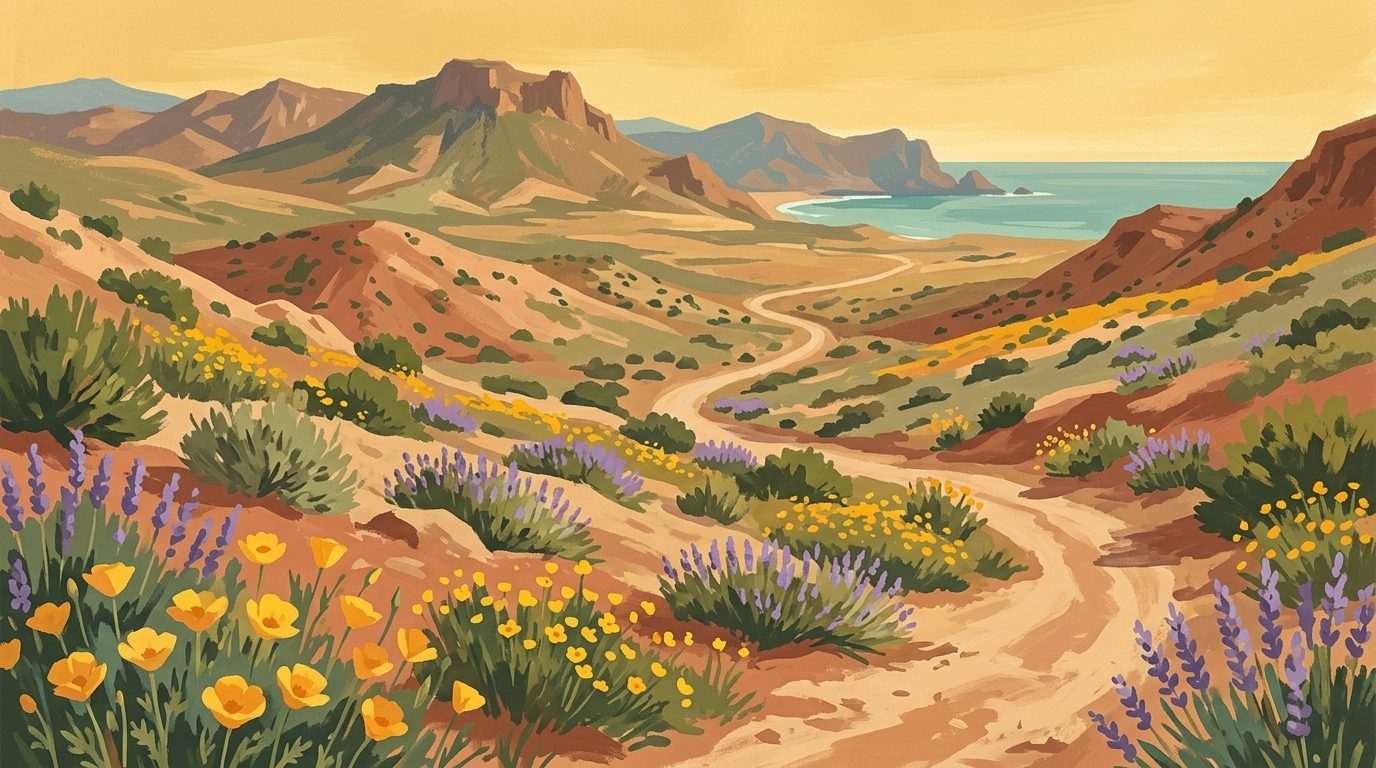
March in Almería is a fleeting window where the driest province in Europe turns green, offering a rare chance to explore the desert and coast in mild temperatures. It is the month for those who value solitude, temperate sunshine, and the dramatic landscapes of the Cabo de Gata before the summer heat arrives.
Introduction: What to Expect
March in Almería is a season of quiet transformation. While much of northern Europe and even northern Spain remains under the influence of late winter, Almería begins its ascent into spring with an intensity found nowhere else on the continent. This is the sunniest and driest corner of the Iberian Peninsula, and in March, the province feels like a well-kept secret. The landscape, typically defined by its arid, cinematic beauty, undergoes a brief but spectacular change. The volcanic hills of the Cabo de Gata-Níjar Natural Park are carpeted in hardy wildflowers and thin grasses, a sight that disappears by late May.
The overall character of the month is one of tranquillity and preparation. Coastal resorts like Mojácar and Roquetas de Mar are waking up from their winter slumber, but they remain free from the summer crowds. In Almería city, the atmosphere is authentic and local, revolving around the preparations for the Easter period. The light during this month is particularly clear, making it a favoured time for photographers and hikers who wish to capture the sharp edges of the Tabernas desert or the crystalline waters of the Mediterranean without the haze of high-summer humidity. You will find that the province is affordable, accessible, and remarkably peaceful.
Weather
The weather in Almería during March is generally stable, though it varies significantly depending on your proximity to the sea or the mountains. On the coast and in Almería city, daytime temperatures typically hover between 18°C and 21°C. When the sun is out, it feels considerably warmer, often reaching the low 20s, allowing for comfortable lunches on outdoor terraces. However, once the sun sets, the temperature can drop quickly to around 9°C or 10°C. Sea temperatures remain a chilly 15°C, so while the beaches are beautiful for walking, swimming is reserved for the very brave.
Inland, the conditions shift. The Tabernas desert, Europe’s only true desert, experiences wide temperature swings. You might start a morning hike in 8°C and find yourself in 22°C heat by midday. Rainfall is extremely low, averaging only about 20mm for the entire month, though occasional heavy showers can occur. If you venture into the mountains of the Alpujarra Almeriense or the Sierra de los Filabres, expect much cooler conditions. It is not uncommon to see snow on the highest peaks of the Sierra Nevada (which Almería shares with Granada) while people are sunbathing on the beaches of San José.
What to wear: Layers are the only practical solution. You will need a light jacket or fleece for the mornings and evenings, but t-shirts are usually sufficient for the middle of the day. If you plan to hike the coastal paths, bring a windproof layer, as the Levante (easterly) wind can be sharp.
Events & Festivals
The most significant event in March is often Semana Santa (Holy Week). Because the dates for Easter vary each year, Semana Santa frequently begins in late March (for those planning ahead, Semana Santa in 2027 runs from 21st to 28th March). Unlike the grand, theatrical displays in Sevilla or Málaga, the Almería city celebrations are more modest but deeply moving. You can witness various procesiones (processions) where hermandades (brotherhoods) carry large pasos (religious floats) through the narrow streets of the old town. The sound of the drums and trumpets echoing off the walls of the Alcazaba creates a solemn atmosphere that feels tied to centuries of tradition.
In the smaller inland towns, you might find local romerías (pilgrimages) or small food festivals. In early March, look for local gastronomy events or traditional markets in towns like Huércal-Overa, though dates for spring festivals vary annually. For a comprehensive calendar of events, check the official Andalucía tourism guide to Almería. Additionally, the Día de Andalucía (Andalucía Day) on 28th February often has its celebrations bleed into the start of March, with communal breakfasts of pan con aceite (bread with olive oil) and traditional music in village squares across the province.
What to Do
Hiking the Cabo de Gata
March is arguably the finest month for walking in the Cabo de Gata-Níjar Natural Park. The route from San José to the beaches of Mónsul and Genoveses is spectacular. In summer, this walk is punishingly hot and dusty; in March, the paths are lined with sea lavender and yellow gorse. The absence of cars (which are restricted from late June to early September) means you have the volcanic cliffs and secluded coves largely to yourself. The birdlife is also at its peak, with flamingos and other migratory species stopping at the Salinas de Cabo de Gata (salt flats) on their journey north.
The Tabernas Desert
The desert is Almería’s most famous landscape, having served as the backdrop for countless Spaghetti Westerns. In March, the temperature is perfect for exploring the ramblas (dry riverbeds). You can visit the film sets such as Oasys MiniHollywood or Fort Bravo, which are far more pleasant to navigate without the scorching summer sun. For a more authentic experience, hire a local guide for a 4x4 tour or a guided hike to see the unique geological formations and the small desert flora that only blooms after the rare spring rains.
Almería City Culture
The city of Almería is home to the Alcazaba, a massive Moorish fortress that is the second largest in Spain after the Alhambra. Climbing the ramparts in March is a joy because the gardens are in flower and the sun is gentle. Afterwards, explore the Refugios de la Guerra Civil (Civil War shelters), an underground network of tunnels that provides a sobering look at the city's modern history. Note that advanced booking via the official Almería town hall website is highly recommended, as group sizes are limited. March is also a great time for a tapas crawl in the city centre; Almería is one of the few places left in Andalucía where a free tapa is still served with every drink ordered.
Who Should Visit
- Hikers and Nature Lovers: The mild temperatures and blooming desert make this the peak season for outdoor enthusiasts.
- Budget Travellers: Accommodation prices are at their lowest point of the year, often 40 to 60% cheaper than in August.
- Culture Seekers: Those interested in the authentic traditions of Semana Santa without the overwhelming crowds of the larger cities.
- Photographers: The clarity of the spring light and the greening of the desert landscape provide exceptional opportunities.
Not ideal for: Beach-goers who want to swim in the sea or those looking for a high-octane party atmosphere, as many beach bars (chiringuitos) remain closed until April.
Practical Notes
Crowds: Outside of the Easter weekend, Almería in March is incredibly quiet. You will find plenty of space in restaurants and no queues for major sites. This is a time when you can experience the province as the locals do.
Prices: Expect very low rates for car rentals and hotels. A car is essential in Almería, as public transport to the most beautiful parts of the Cabo de Gata and the desert is infrequent. Booking a car in advance for March is usually inexpensive.
Booking Advice: If your visit coincides with Semana Santa, book your Almería city accommodation at least two months in advance, as hotels do fill up for the main procession nights. For the rest of the month, you can often find great last-minute deals.
Monthly Verdict
March is the connoisseur’s month for Almería. It offers the chance to see a softer side of this rugged province, where the desert turns green and the coastal paths are silent. While the sea is too cold for a swim, the combination of low prices, empty trails, and mild sunshine makes it an unbeatable time for anyone who wants to explore the natural and historical depth of south-eastern Spain without the intensity of the summer heat.
Last reviewed: 14 July 2026 · Editorial policy
Related guides
Almería in February: A Prelude to Spring in Europe’s Only Desert
February transforms Almería into a landscape of white almond blossoms and early wildflowers, offering the mildest winter climate in mainland Europe.
6 min read
Almería in January: Desert Solitude and Winter Sun
January in Almería offers the sunniest winter skies in Europe, with crisp desert air, empty volcanic beaches, and the lowest prices of the year.
7 min read
Andalucía in March: A Guide to the Scent of Spring
March is a month of transition where the scent of orange blossom fills the air and the first warmth of spring touches the southern Spanish landscape.
6 min read
Almería in October: Desert Hikes and Coastal Solitude
October in Almería brings a soft, golden light and a gentle 23°C warmth, making it the perfect month for desert hiking, birdwatching, and enjoying the secluded beaches of Cabo de Gata.
6 min read
Exploring Tabernas: The Cinematic Badlands of Almería
Discover the rugged beauty of the Tabernas Desert, Europe's only true desert and the historic filming location for legendary spaghetti westerns.
6 min read
Beyond the Silver Screen: Exploring the Rugged Wilds of the Tabernas Desert
Discover the parched badlands and cinematic history of the Tabernas Desert, Europe's only true desert, where rugged hiking trails meet the ghosts of the Spaghetti Western era.
6 min read
More from Almería
Almería in August: Desert Heat and Coastal Cool
August in Almería is defined by the stark beauty of the desert and the refreshing sanctuary of the Mediterranean coast. It is a month for slow movements, late nights, and embracing the true spirit of the Spanish summer.
6 min read
Almería in June: Coastal Clarity and Desert Life
Experience the Mediterranean at its most transparent and the Tabernas desert before the peak summer heat takes hold.
6 min read
Almería in December: Winter Sunshine and Desert Light
Almería in December offers the mildest winter in mainland Europe, featuring sharp desert light, quiet volcanic beaches, and unique local Christmas traditions.
7 min read
Almería in November: Silence and Sunlight in Europe's Desert
November in Almería is a period of profound stillness, where the intense summer light softens into a golden clarity over the volcanic cliffs of Cabo de Gata.
6 min read
Almería in April: Wildflowers, Volcanic Shores, and Desert Spring
April in Almería offers a brief window where the arid landscapes turn surprisingly green and the Mediterranean remains quiet enough for solitary exploration.
7 min read
Almería in May: Desert Blooms and Pre-Summer Solitude
Experience Almería in May, where the Tabernas desert blooms and the Cabo de Gata coastline offers quiet beaches and perfect hiking weather before the summer heat.
6 min read
Almería in September: The Season of Clarity and Warm Seas
September in Almería offers the year's warmest sea temperatures, crystal-clear water for snorkelling, and a welcome return to tranquillity as the summer crowds depart.
6 min read
Almería in July: A Guide to Spain's Volcanic Summer Coast
Discover the rugged beauty of Almería in July, where volcanic beaches and desert landscapes meet the clearest waters in the Mediterranean.
7 min read
Newsletter
More stories from Andalucía
Weekly notes, seasonal picks, and the next guides worth bookmarking.