
Feature
The Taifa Kingdoms: Fractured Courts and Cultural Glory
After the collapse of the Caliphate of Córdoba in 1031, Islamic Spain fractured into dozens of competing city-states. What these Taifa kingdoms lacked in military might, they made up for in extraordinary cultural and architectural patronage.
By Dan · Updated 21 June 2026 · 8 min read
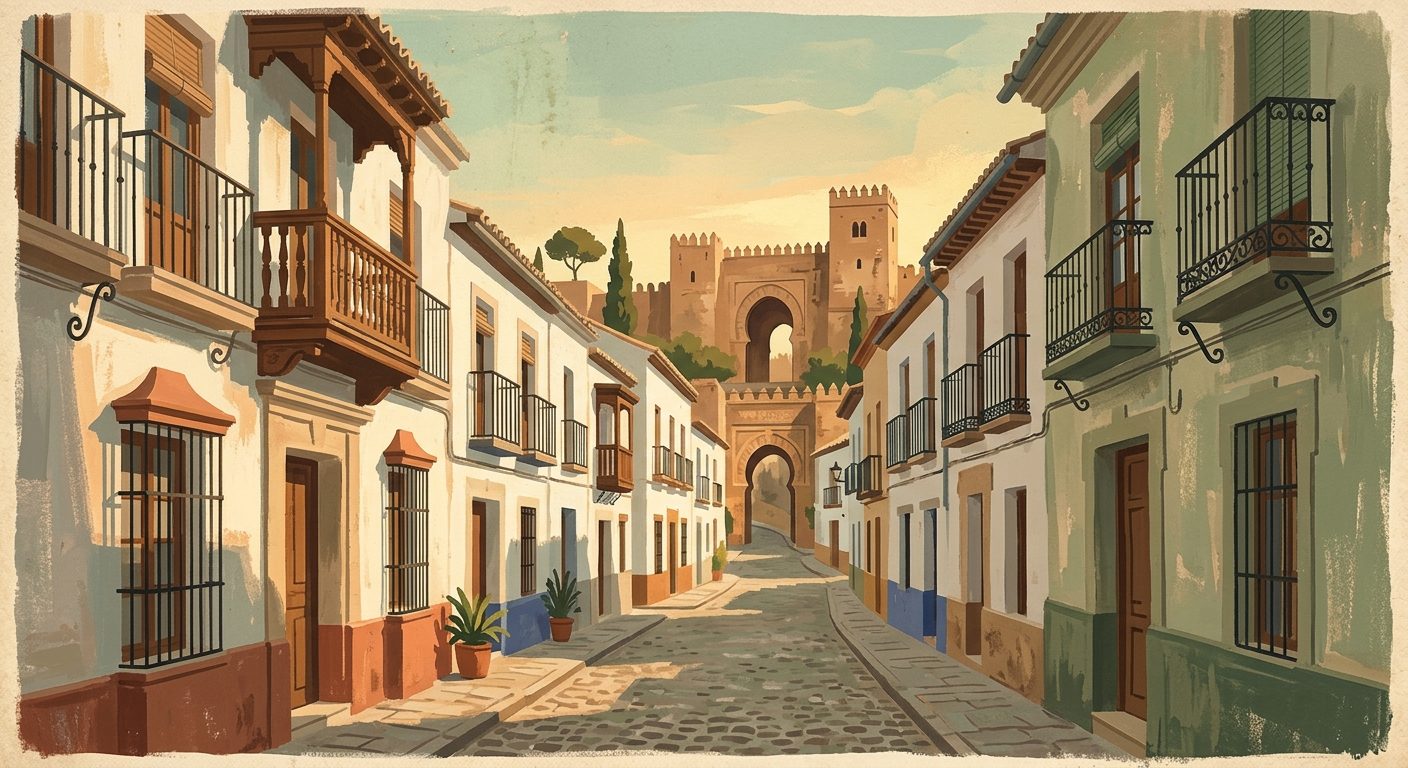
After the collapse of the Caliphate of Córdoba in 1031, Islamic Spain fractured into dozens of competing city-states. What these Taifa kingdoms lacked in military might, they made up for in extraordinary cultural and architectural patronage.
In the year 1031, the once mighty Umayyad Caliphate of Córdoba was officially dissolved. The ruling council, exhausted by decades of civil war, abolished the caliphal title. The unified state of Al-Andalus, which spanned the period from 711 to 1492, was dead. In its place arose a fractured landscape of independent principalities known as the taifas, derived from the Arabic word ta'ifa meaning faction or party. Power was no longer centralised in a single metropolis. Instead, local governors, ambitious generals, and wealthy aristocratic families seized control of their respective cities and declared themselves sovereign. The map of the Iberian Peninsula became a mosaic of small, intensely competitive courts.
Yet, this political fragmentation did not lead to a dark age. Paradoxically, the division sparked an unprecedented cultural renaissance. Unable to prove their superiority through overwhelming military strength, the new rulers engaged in fierce cultural warfare. They sought to outshine one another by building magnificent palaces, hosting lavish courts, and patronising the greatest scholars, poets, and scientists of the age. From Sevilla to Zaragoza, these rival kings created miniature versions of the lost Córdoban glory, turning the eleventh century into a golden age of intellectual and artistic achievement across the region.
The Anatomy of Fragmentation
The sudden power vacuum left by the Umayyads revealed the deep social and ethnic fault lines that had always existed within the society. The new Taifa kingdoms broadly coalesced around three distinct groups. The first were the Andalucíans, consisting of Arabs who claimed noble lineage from the original Syrian and Yemeni conquerors, alongside native Iberian converts. They established powerful states in cities like Sevilla, Zaragoza, and Córdoba itself.
The second group were the Berbers. These were mostly North African tribal factions that had been brought across the Strait of Gibraltar as mercenaries by the later Umayyad rulers. When the central authority collapsed, they carved out formidable territories in the south, most notably the Zirid dynasty in Granada and the Hammudid dynasty in Málaga.
The third and perhaps most unusual group were the Saqaliba. These were former slaves, often of Eastern European origin, who had been purchased, educated, and elevated to high military and administrative ranks within the Caliphal court. When the state shattered, these powerful generals and administrators seized control of the eastern coast, establishing taifas in Almería, Valencia, and Denia.
Borders were constantly shifting. The eleventh century was defined by a ruthless game of political absorption, where smaller states were frequently swallowed by their more powerful neighbours. By the middle of the century, a handful of major powers had emerged, with the Abbadid dynasty of Sevilla becoming the dominant force in western Andalucía.
The Poet Kings and Cultural Warfare
To understand the Taifa era, one must look to Sevilla and its most famous ruler, Al-Mutamid. He was the quintessential Taifa king: a brilliant poet, a passionate lover, and a fatalistic politician. Under his rule, the court of Sevilla became a magnet for intellectuals across the Islamic world. Poetry was not merely a leisure activity; it was the ultimate currency of power and diplomacy. A well-crafted verse could secure a political alliance, destroy a rival's reputation, or elevate a commoner to the role of vizier.
The cultural output of this era was staggering. While the kings composed verses, they also funded serious academic pursuits. Treatises on astronomy, medicine, and agronomy were produced at a prolific rate. In Toledo and Sevilla, scholars like Ibn Bassal advanced the science of botany and agriculture, cataloguing plant species and revolutionising irrigation techniques. Historians continue to debate whether this intense focus on high culture blinded the Taifa rulers to the very real military threats surrounding them, or if their sophisticated courts were a calculated diplomatic strategy designed to project an aura of power they did not possess in actual soldiers.
The Architecture of Illusion
The physical legacy of the Taifa kingdoms tells a story of ambition constrained by economics. The Caliphate of Córdoba had built for eternity, utilising massive stone ashlar blocks and imported marble. The new Taifa kings lacked the deep treasuries of a unified empire, yet they desperately needed to project imperial majesty. Their solution was to build for immediate visual impact.
They pioneered the extensive use of cheaper materials, relying on brick, timber, and heavily carved stucco known as yeseria. To mask the humbler materials, craftsmen developed astonishingly complex designs. This era saw the introduction of intersecting polylobate arches (arches with multiple curves). These elaborate screens were often entirely non-structural, serving only to confuse the eye and create an atmosphere of delicate, almost weightless luxury. While the structures themselves were fragile, this specific architectural vocabulary laid the direct groundwork for the later, world-famous triumphs of Nasrid art.
The Extortion of the Parias
The cultural brilliance of the south stood in stark contrast to the shifting geopolitical realities of the broader peninsula. To the north, the Christian kingdoms of León, Castile, Navarre, and Aragon were slowly consolidating their power. Recognising the military weakness of the divided Taifas, the northern kings, most notably Alfonso VI of León and Castile, began running a highly effective protection racket.
They demanded parias, heavy annual tributes paid in gold coinage. In exchange, the Christian kingdoms promised military protection, frequently offering their armies to help one Taifa king attack another. This system initiated a massive transfer of wealth from south to north. The gold minted in the Andalucían courts was slowly drained away, funding the construction of austere Romanesque cathedrals and heavily fortified castles across the northern frontiers.
The Fall of Toledo and the Almoravid Arrival
The fragile balance of the tribute system shattered in 1085. Alfonso VI, tired of merely extracting gold, marched his forces south and conquered Toledo, one of the largest and most prestigious of the Taifa capitals. The fall of Toledo sent a wave of panic across the remaining Andalucían courts.
Realising they could no longer buy off the northern kingdoms, Al-Mutamid of Sevilla led a desperate coalition of Taifa rulers to seek outside help. They appealed to the Almoravids, a strict, ascetic Berber empire that had recently conquered much of North Africa. When warned that inviting this fundamentalist army into the peninsula was dangerous, Al-Mutamid reportedly declared that he would rather be a camel driver in Morocco than a swineherd in Castile.
The Almoravids crossed the Strait of Gibraltar and decisively defeated Alfonso VI at the Battle of Sagrajas in 1086. However, the saviours quickly turned into conquerors. The Almoravid leaders were deeply disgusted by what they viewed as the religious laxity, illegal taxation, and decadent luxury of the Taifa kings. By 1090, they began systematically deposing the very rulers who had invited them, dissolving the independent courts and annexing the territories into their vast North African empire. The first great Taifa period had come to a dramatic close.
Where to see it today
Tracing the physical remains of the Taifa period requires a keen eye, as their fragile architecture was often built over by later dynasties. However, several vital sites allow the modern traveller to step back into this fractured era.
Alcazaba de Málaga
This fortress-palace is the best surviving example of eleventh-century military and residential Taifa architecture in Andalucía. Built primarily by the Hammudid dynasty, its lower defensive walls show the transition from rougher stone to sophisticated brickwork. In the upper palatial enclosures, specifically around the Cuartos de Granada, you can find the remains of early polylobate arches and delicate stucco fragments that demonstrate the ambition of these regional kings to emulate caliphal grandeur. (Check the official Málaga City Council tourism portal at visita.malaga.eu for tickets and current entry requirements).
Aljafería (Zaragoza)
While located in Aragon, far to the north of modern Andalucía, the Aljafería is the absolute pinnacle of surviving Taifa palatial architecture. Built by the Banu Hud dynasty, it is an essential reference point for understanding the era. The courtyard features the most intricate, interlacing arches of the eleventh century, and the small, octagonal oratory remains completely intact, showing the exact decorative techniques that would later influence the south. (Advance tickets and entry guidelines are available on the Cortes de Aragón website).
Madinat al-Zahra
The ruined caliphal city located just outside Córdoba is crucial for understanding the Taifa mindset. Following the collapse of the caliphate, this magnificent stone city was systematically looted. The Taifa kings actively mined the ruins for beautifully carved marble capitals, columns, and bases to incorporate into their own cheaper brick palaces, desperate to claim a physical connection to the glorious past.
Archaeological Museums
The domestic life of the Taifa courts is best observed through their surviving artefacts. Both the Museum of Málaga and the Archaeological Museum of Sevilla hold excellent collections of eleventh-century ceramics. Look specifically for pieces decorated with the cuerda seca (dry cord) technique, a method of separating coloured glazes that reached its zenith during this period, producing stunningly colourful domestic pottery.
If you visit
The ideal starting point for exploring this era is the Alcazaba de Málaga. The fortress is generally open daily (check the official Málaga City Council tourism portal at visita.malaga.eu for seasonal variations and holiday closures), though the winter and spring months offer the most comfortable climate for exploring the steep, terraced enclosures. Arrive early in the morning to experience the courtyards before the crowds gather. As you walk up through the defensive gates, pay close attention to the archways. You will notice the distinct transition from heavy structural stone at the defensive base to the lighter, purely decorative brick and plaster arches in the residential quarters at the summit. The site involves a significant amount of uphill walking on uneven cobblestones, so sturdy footwear is essential for a comfortable visit.
Resources and Citations
- For official visitor information regarding the Alcazaba, refer to the Málaga City Council tourism portal.
- For details and ticketing for the Aljafería in Zaragoza, consult the Cortes de Aragón.
- To explore further historical resources on the heritage of Al-Andalus, visit the Junta de Andalucía's cultural archives and the Patronato de la Alhambra y Generalife.
Last reviewed: 21 June 2026 · Editorial policy
Related guides
The Ghost in the Garden: Searching for the Al-Andalus Within
Eight centuries of Al-Andalus did not vanish in 1492; they simply moved indoors, into the kitchens, and onto the tip of the tongue.
7 min read
The Mudéjar Legacy: Islamic Craftsmanship Under Christian Rule
The Mudéjar style is a striking visual paradox of medieval Spain. It represents the profound aesthetic triumph of a conquered people over their conquerors, creating a unique architectural fusion that defined the visual identity of post-Reconquista Andalucía.
7 min read

The Spanish Inquisition in Andalucía: Orthodoxy and Paranoia
From its very first tribunal in Sevilla to the shadow it cast over centuries of daily life, the Spanish Inquisition demanded absolute religious conformity. Its legacy remains etched in the architecture, archives and even the culinary traditions of southern Spain.
7 min read
The Reconquista in Andalucía
The centuries-long Christian conquest of southern Iberia redefined the physical and cultural landscape of the peninsula. How did the military campaigns of the northern kingdoms dismantle the Islamic territories of Al-Andalus and forge the modern region of Andalucía?
7 min read
Corduba and Roman Baetica
Discover the political and intellectual might of Corduba, the wealthy administrative capital of Roman Baetica and the birthplace of the philosopher Seneca.
7 min read

Al-Andalus: Eight Centuries of Moorish Rule in Andalucía
For nearly eight hundred years, Islamic civilisation flourished on the Iberian Peninsula. How did a distant province of the Umayyad empire become a beacon of science, art, and poetry in medieval Europe?
8 min read
More guides

UNESCO World Heritage Sites in Andalucía
A curated guide to the cultural and natural sites in Andalucía recognised by UNESCO for their universal value. These landmarks offer a profound insight into the diverse civilisations of the region.
6 min read
The Best Beaches in Andalucía
From the Atlantic dunes of Huelva to the volcanic coves of Almería, the coastline of southern Spain offers an unparalleled variety of maritime landscapes.
6 min read
Phoenicians and Tartessians in Andalucía
Around three thousand years ago, eastern Mediterranean merchants arrived on the Iberian coast seeking silver and copper. Their arrival sparked a cultural collision that transformed local chiefdoms into the legendary civilisation of Tartessos.
6 min read
Roman Andalucía: Ruins and Archaeological Sites
Discover the monumental legacy of the Roman province of Baetica, from grand amphitheatres in the Guadalquivir valley to maritime cities on the Atlantic coast.
7 min read

Geological Wonders: Caves and Karst Landscapes of Andalucía
Discover the subterranean wonders and prehistoric secrets preserved within the limestone massifs and gypsum deposits of southern Spain.
6 min read
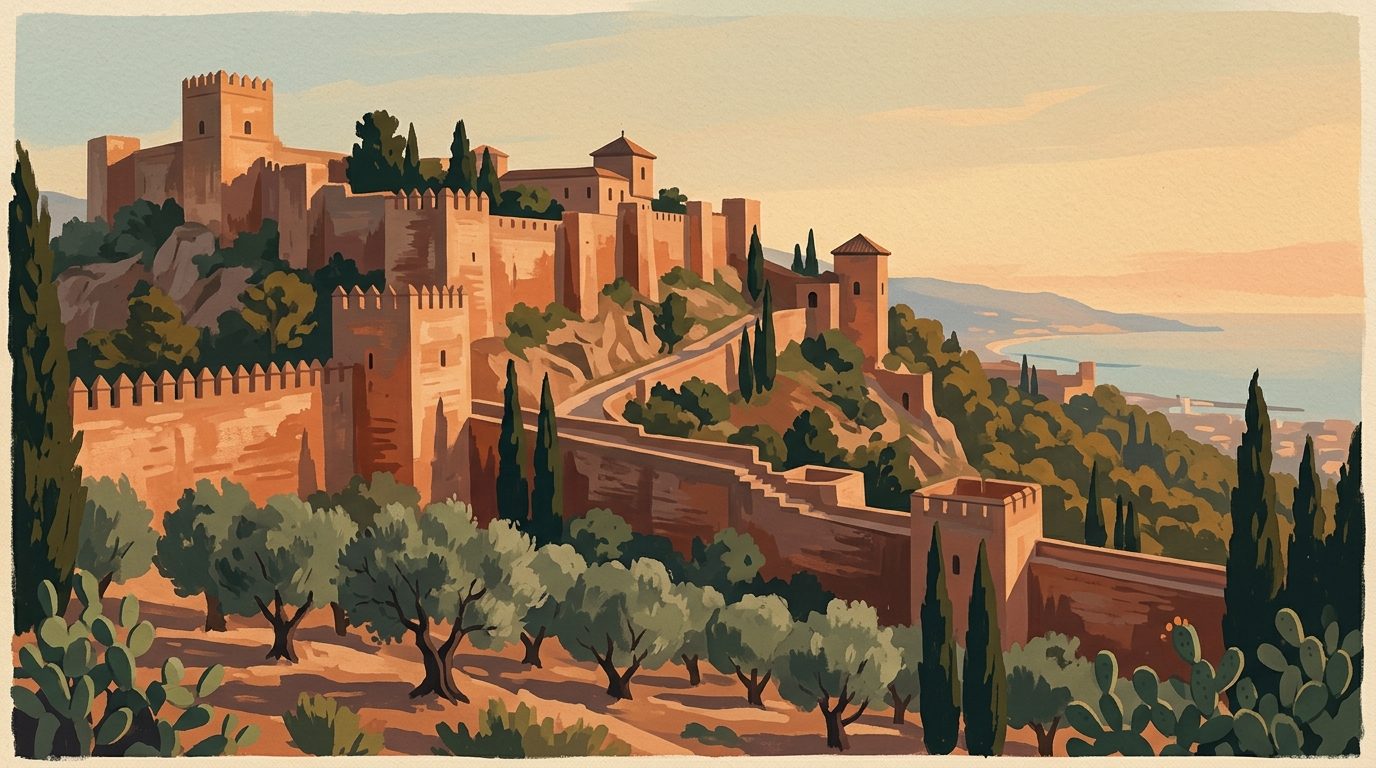
Castles and Fortresses of Andalucía
The fortresses of Andalucía are the stone guardians of a complex past, marking the ancient frontiers between empires and offering some of the most spectacular views in the southern peninsula.
6 min read
The Iberians in Andalucía: Warlords, Sculptors and the Dawn of Iron
Who were the sophisticated, iron-working peoples who controlled southern Spain before the Roman conquest? Their fortified hill towns and striking stone sculptures reveal a formidable culture caught between ancient local traditions and Mediterranean ambition.
6 min read

UNESCO Geoparks and Natural Wonders of Andalucía
Discover the geological heritage of Southern Spain through its UNESCO-designated geoparks and natural wonders. Explore the tectonic history and diverse ecosystems of Almería, Granada, and Cádiz.
6 min read

Cathedrals and Great Churches of Andalucía
A guide to the monumental religious architecture of Southern Spain, from the vast Gothic nave of Sevilla to the Renaissance masterworks of Jaén and Granada.
6 min read
Newsletter
More stories from Andalucía
Weekly notes, seasonal picks, and the next guides worth bookmarking.