Attractions in Andalucía
The Alhambra, the Mezquita, flamenco tablaos, natural parks and prehistoric caves — every must-see across southern Spain.
60 attractions in All Andalucía
Alameda de Hércules
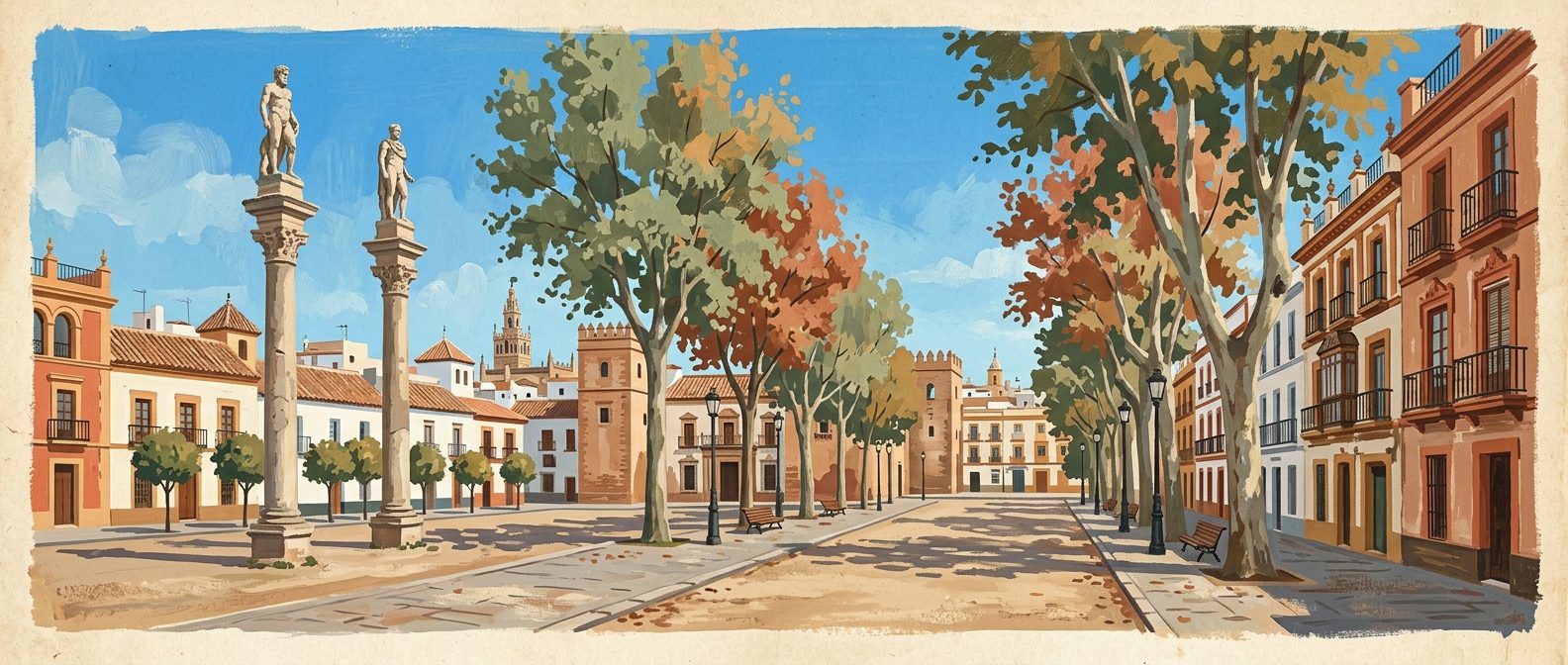
## Introduction The Alameda de Hércules is a vast, tree-lined plaza situated in the northern part of Seville’s historic centre. Established in 1574, it holds the distinction of being one of the oldest public gardens in Europe. Originally a swampy area prone to flooding from the Guadalquivir River, it was transformed into an aristocratic promenade by the Count of Barajas. Throughout the 20th century, the area gained a reputation as a neglected red-light district, but a significant redevelopment in 2008 reinvented it as Seville’s premier bohemian hub. Today, it offers a stark contrast to the narrow, winding alleys of the Santa Cruz quarter. It suits visitors who want to experience local Sevillian life away from the heavy tourist traffic of the Cathedral, particularly those who enjoy outdoor dining, alternative culture, and wide-open spaces for children to play. ## What to See & Do ### The Roman Columns and Historical Statues The most striking features of the plaza are the two pairs of towering columns that bookend the space. At the southern end stand two authentic Roman shafts, salvaged from a temple on nearby Calle Mármoles. In 1574, these were topped with statues of Hercules (the mythical founder of Seville) and Julius Caesar (who rebuilt the city). These monuments served to link the city’s 16th-century present with its Roman past. At the northern end, you will find a second pair of columns added in the 18th century, topped with lions holding the shields of Spain and Seville. These markers define the boundaries of the promenade and provide a sense of scale to the massive pedestrianised area. ### Terrace Culture and Gastronomy The Alameda is essentially an outdoor living room for the city. Unlike the more traditional bars around the El Arenal district, the establishments here offer a diverse culinary landscape. You can find everything from traditional Andalucian breakfasts of *tostada con tomate* to contemporary vegetarian tapas, Mexican street food, and Italian gelato. The plaza is particularly famous for its terrace culture; tables spill out from the bars onto the pedestrian paving. It is an ideal spot to sit with a *caña* of Cruzcampo or a glass of manzanilla sherry and observe the city’s diverse population, from young families and artists to the city’s thriving LGBTQ+ community. ### Casa de las Sirenas and Public Art Overlooking the promenade is the Casa de las Sirenas, a restored 19th-century French-style mansion. Once a private residence, it now serves as a municipal community centre and often hosts art exhibitions, workshops, and local neighbourhood meetings. Its ornate architecture provides a glimpse into the late-1800s grandeur of the area. As you walk the length of the plaza, look out for the low-lying fountains and floor-level water jets. These are a favourite for local children during the hot summer months. The square also features a bronze statue of the famous flamenco singer Manolo Caracol, a nod to the deep-rooted musical heritage of the surrounding San Gil and Feria neighbourhoods. ## Practical Information ### Getting There The Alameda de Hércules is located in the northern half of the Casco Antiguo. It is a 15-to-20-minute walk from the Seville City Hall (Ayuntamiento) or the Mushroom-shaped Metropol Parasol. If you are arriving by bus, lines 13 and 14 stop at the nearby Amor de Dios and Calatrava stops. For those staying outside the centre, the C1, C2, C3, and C4 circular lines stop at Resolana, near the Macarena Arch, which is a five-minute walk from the northern end of the Alameda. Driving into this area is not recommended due to narrow streets and restricted access zones (ACIRE), but there is a public underground car park at Calle Amor de Dios. ### Opening Times & Tickets As a public square, the Alameda de Hércules is open 24 hours a day, 365 days a year, and there is no admission fee. Most cafes open around 08:30 for breakfast, while tapas bars typically serve lunch from 13:30 to 16:00 and dinner from 20:30 until late. Many of the cocktail bars and clubs along the strip remain open until 03:00 or 04:00, particularly on weekends. ### How Long to Spend A quick walk from one end to the other takes about 10 minutes, but to experience the Alameda properly, you should allow at least two to three hours. This gives you enough time to explore the columns, view the Casa de las Sirenas, and enjoy a relaxed meal or several drinks on a terrace. It is also an excellent base for a longer half-day exploration that includes the nearby Basilica de la Macarena and the Mercado de Feria. ### Best Time to Visit The atmosphere changes significantly depending on when you visit. Sunday afternoons are particularly special, as the square fills with local families and dog walkers, creating a relaxed, communal feel. For a more energetic experience, Friday and Saturday nights are when the nightlife peaks. If you prefer a quiet visit, weekday mornings are peaceful. Seasonally, spring and autumn are ideal; in the height of summer, the plaza can be exceptionally hot during the day, so wait until after the sun sets when the stone cools down and the evening breeze kicks in. ## Tips for Your Visit Wear comfortable shoes, as the plaza is paved with a mix of stone and gravel. If you are visiting with children, the central section has several well-maintained playgrounds. For a more authentic local experience, combine your visit with a walk down the adjacent Calle Feria, home to one of the city’s oldest markets and a famous Thursday morning antiques market (*El Jueves*). While the area is generally safe, remain aware of your belongings in crowded terrace settings, as you would in any major city.

Alameda del Tajo
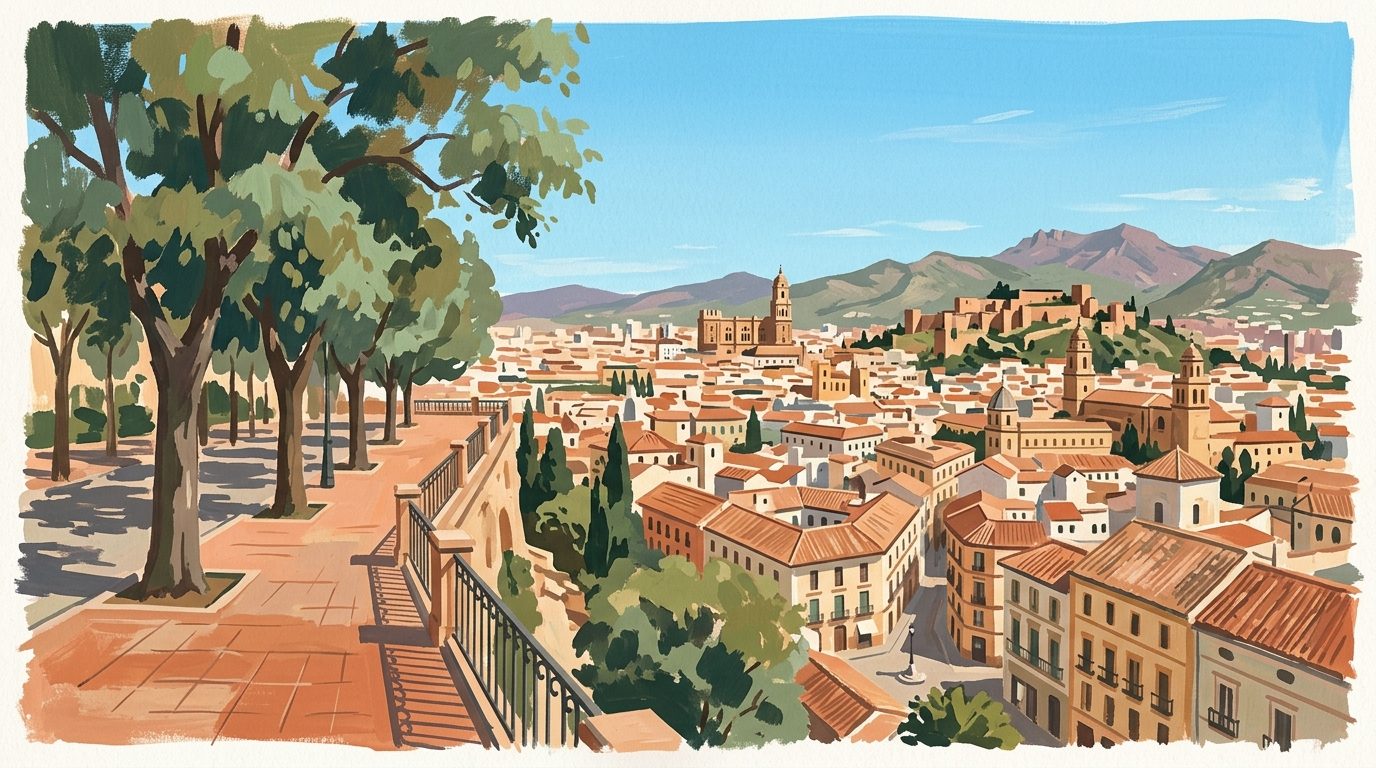
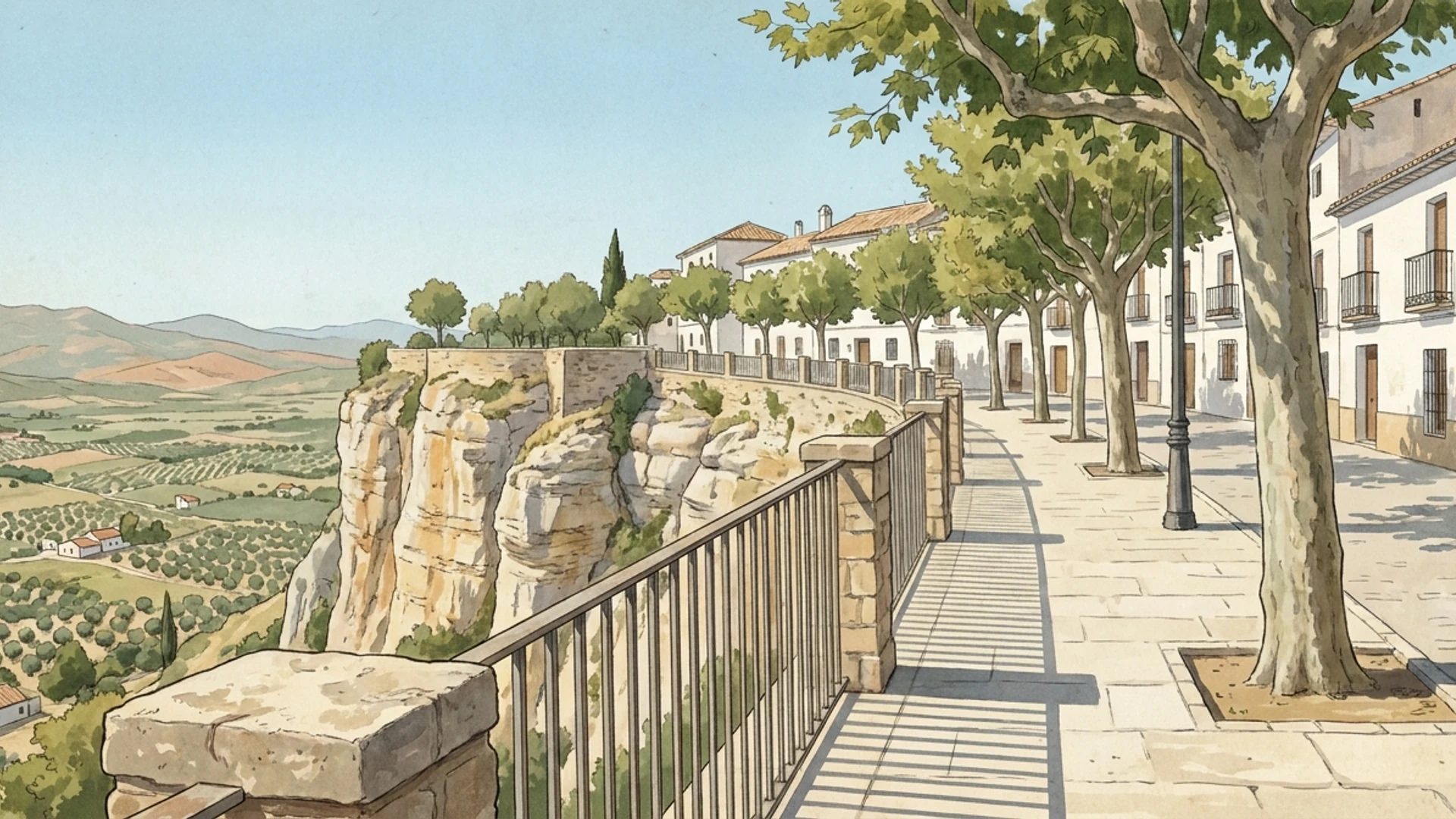
The Alameda del Tajo is a nineteenth-century public park located in the heart of Ronda, serving as one of the most significant green spaces in the city. Originally developed in the early 1800s, it provides a dramatic contrast to the dense, stone-heavy architecture of the old town. This attraction is perfectly suited for visitors who appreciate landscape architecture and botanical diversity, as well as those seeking a momentary pause from sightseeing. Because it is positioned directly on the edge of the limestone cliffs that define the town, it offers a safe and accessible way to experience the sheer verticality of the landscape. It is particularly popular with families who need space for children to move freely and photographers looking for the panoramic views of the Guadalevín river valley and the distant mountain ranges. The park is organised into five distinct parallel avenues, but the primary highlight is the main promenade that leads directly to the cliff edge. As you walk through, look out for the diverse botanical collection which includes Himalayan cedars and ancient pine trees that provide substantial shade. The most famous feature is the series of balconies that project out over the precipice. These viewpoints, sometimes colloquially referred to by locals as balcones del coño due to the involuntary exclamation visitors make when looking down, offer an unobstructed look at the three hundred foot drop to the valley floor below. From here, you can observe the agricultural patches of the Vega de Ronda and the rugged peaks of the Sierra de Grazalema in the distance, providing a clear perspective of Ronda's strategic high-ground position. Beyond the central viewpoints, the Paseo de los Ingleses is an essential path that skirts the edge of the cliffs, leading from the park towards the historic Reina Victoria Hotel. This walkway allows for a more contemplative experience away from the busier central plazas. Within the park itself, the statues and the Teatro Vicente Espinel add a cultural dimension to the greenery. The small duck pond and the stone fountains offer a cooling effect during the warmer months, making it a pleasant spot to observe local life as residents often use the park for their evening strolls. It is also an excellent vantage point for bird watching, as swifts and kestrels are frequently seen darting through the thermals rising from the gorge. Located on Calle Virgen de la Paz, the Alameda del Tajo is situated directly next to the historic bullring and is easily reachable on foot from any central location in Ronda. The park is a public space with no entrance fee, making it one of the most accessible attractions in the city. It is generally open twenty-four hours a day, though the best lighting for photography is during daylight hours. Most visitors find that forty-five minutes to an hour is sufficient to walk the length of the avenues and spend time at the various miradores. If you are staying in the city, it is a convenient landmark to return to several times throughout your trip to see the light change across the valley. To experience the park at its finest, aim to arrive shortly before sunset. The golden hour light illuminates the limestone cliffs and the distant mountains in a way that is truly spectacular. During the height of summer, the park remains several degrees cooler than the surrounding streets thanks to its mature tree canopy and the breeze coming off the plateau. Check the official website for current opening times and prices if there are any seasonal events or closures planned. Ensure you bring a camera with a wide-angle lens to capture the scale of the Serranía de Ronda panorama.

Alcazaba
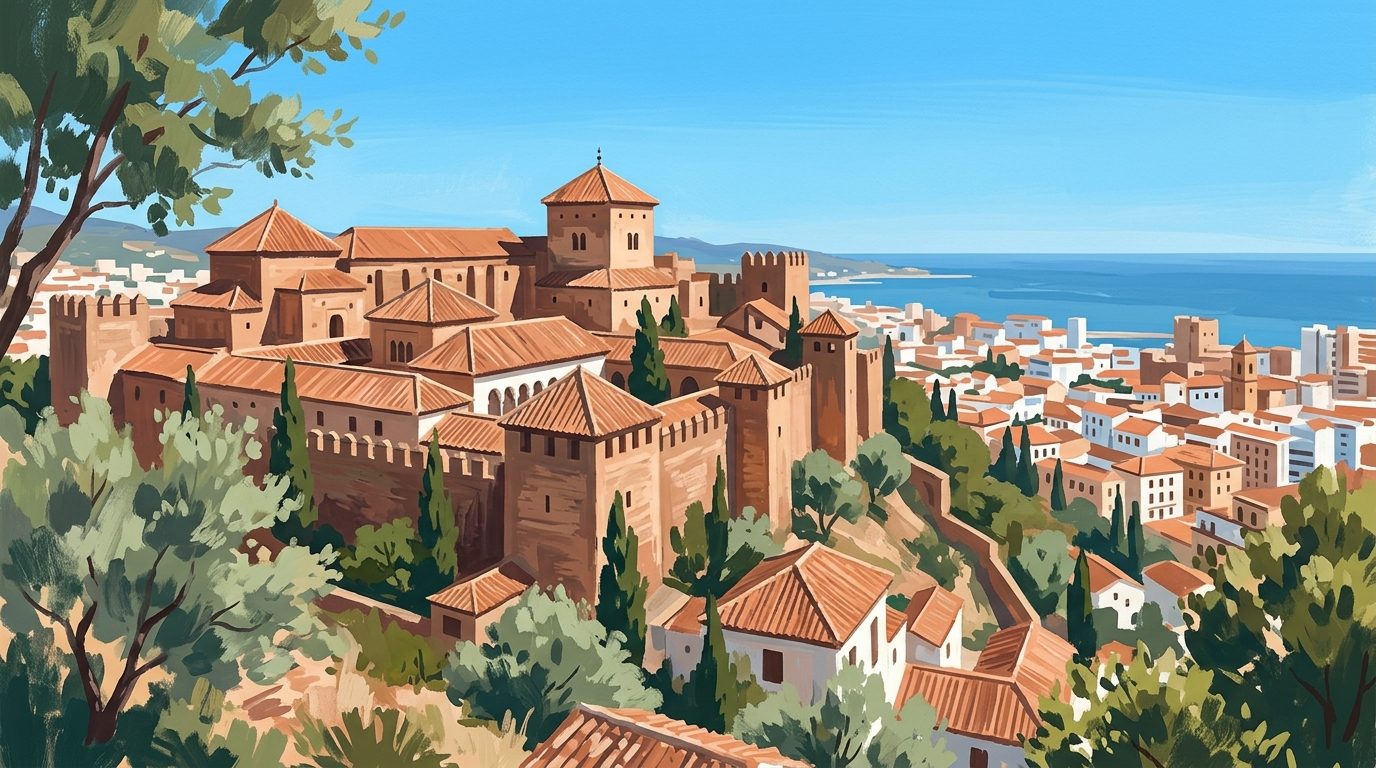
The Alcazaba of Málaga is a palatial fortification dating primarily from the 11th-century Hammudid dynasty. It stands as one of the best-preserved Moorish citadels in Spain, serving as a powerful reminder of the city’s Islamic past. Perched on a hillside overlooking the Mediterranean Sea and the port, it combines military architecture with the refined beauty of Nasrid-style palace gardens. This site suits anyone interested in medieval history, architecture, or urban photography. It offers a quieter alternative to the Alhambra in Granada while providing a similar architectural language of horseshoe arches, cooling water features, and intricate brickwork. History enthusiasts will appreciate the strategic layering of the site, which incorporates Roman materials into its Moorish walls, reflecting the diverse cultural shifts that have shaped Málaga over two millennia. As you ascend through the fortification, you pass through a series of defensive gates designed to trap and confuse invaders. The Puerta de la Bóveda and the Puerta de las Columnas are particularly impressive, with the latter reusing Roman marble columns for its construction. Once inside the inner enclosure, the environment shifts from austere military stone to the delicate aesthetics of the Taifal and Nasrid palaces. The Plaza de Armas provides a panoramic view of the coastline and the bullring, while the residential area features traditional courtyards. Look for the Patio de los Surtidores, where a central channel of water leads the eye toward a triple-arched portico. The craftsmanship in the carved plasterwork and the geometric tile patterns in these quarters demonstrates the sophistication of the ruling elite who lived here during the Middle Ages. Higher up the complex, the Cuartos de Granada house a small archaeological museum where you can see ceramics and pottery discovered on-site. The views from the ramparts are exceptional, offering a clear line of sight over the Roman Theatre located at the foot of the hill. Exploring the various terraced gardens is a highlight in itself, as the smell of jasmine and orange blossom fills the air during spring. Take time to sit by the small pools and fountains that were designed not just for beauty but to provide a natural cooling system against the heat of southern Spain. The main entrance is located on Calle Alcazabilla, right next to the Roman Theatre in the city centre. You can purchase tickets at the automated machines or the ticket office at the entrance, and there is a combined ticket available if you also plan to visit Gibralfaro Castle. Check the official website for current opening times and prices. Most visitors find that two hours is sufficient to explore the site at a leisurely pace, though you might want longer if you are a keen photographer. There is a lift accessible from Calle Guillén Sotelo behind the City Hall, which is useful for those who wish to avoid the steep initial climb, though some parts of the upper fortification still require navigating uneven stone steps. Visit early in the morning or late in the afternoon to avoid the midday sun and the largest crowds. Sunday afternoons often offer free entry, though this can make the pathways quite congested. Wear sturdy walking shoes as the original stone paths can be slippery and irregular. Carrying a bottle of water is essential, particularly in the summer months, as the climb involves a fair amount of physical exertion in exposed areas with little shade.

Alcazaba Citadell
The Alcazaba of Guadix is an eleventh-century Moorish fortress that stands over the red-earthed city in the foothills of the Sierra Nevada. It serves as a significant reminder of the strategic importance this region held during the Zirid and Nasrid dynasties. Unlike the heavily restored monuments found in Granada city, this citadel offers a more rugged and authentic experience for those interested in military architecture and medieval history. It is particularly suited to travellers who enjoy exploring sites away from the typical tourist trails and those who appreciate panoramic views over unique geological landscapes. The structure was built primarily using rammed earth, giving it a distinctive reddish hue that blends into the surrounding clay hills. Upon entering the site, your attention is immediately drawn to the massive square towers and the defensive curtain walls that define the perimeter. The main keep, known as the Torre del Homenaje, is the most prominent feature and offers a vantage point that was once vital for surveying the approaches from the mountains. Visitors should take time to walk along the ramparts to observe the ancient construction techniques used by the Almohad builders. The contrast between the weathered original walls and the later brickwork additions tells a story of centuries of siege and reinforcement. Look for the remnants of the interior living quarters and the ancient cisterns that were designed to sustain the garrison during prolonged conflicts. One of the most rewarding experiences at the citadel is looking out from the battlements towards the famous Barrio de las Cuevas. From this height, you can clearly see the white chimneys of the troglodyte dwellings emerging from the earth, providing a visual connection between the military stronghold and the domestic life of the town below. The play of light on the Sierra Nevada peaks in the distance provides a dramatic backdrop that changes character throughout the day. It is worth spending time in the lower enclosure to appreciate the sheer scale of the foundations and the way the fortress dominates the local skyline from every angle. The citadel is located on Calle la Muralla and is easily reached on foot from the Guadix Cathedral or the main town square. If you are driving from Granada, the journey takes roughly forty-five minutes via the A-92 motorway. You should allow at least an hour to explore the grounds and climb the towers at a comfortable pace. Check the official website for current opening times and prices, as these can vary depending on the season and ongoing restoration projects. Tickets are typically purchased at the entrance, and the site is generally much quieter than other major Andalucían monuments, allowing for a peaceful visit. To avoid the intense heat of the northern Granada plateau, aim to visit in the early morning or late afternoon. The reddish clay of the fortress walls looks particularly striking during the hour before sunset. Wear sturdy footwear as the paths and stone steps can be uneven and steep in places. It is also sensible to carry water, as there are few facilities once you are inside the defensive walls. Combining this visit with a tour of the nearby cave museum offers a complete perspective on the heritage of the area.

Alcazaba de Antequera
The Alcazaba of Antequera is a formidable Moorish fortress that dominates the skyline of this historic inland city in the province of Málaga. Built primarily during the fourteenth century on the foundations of a Roman settlement, it served as a vital defensive bastion for the Nasrid Kingdom of Granada. This site is particularly well-suited to travellers who have an interest in military architecture and those who enjoy seeing the physical layers of Spanish history. As a key strategic point often called the heart of Andalucía, it offers a window into the transition between Islamic and Christian rule. Visitors will find a well-preserved complex of walls, towers, and courtyards that provide a sense of the scale of medieval warfare and the importance of controlling the surrounding fertile plains. One of the most significant features is the Torre del Homenaje, or the Keep, which stands as one of the largest towers from the Moorish period in the region. Atop this tower sits an eighteenth-century bell tower, added later to signal the irrigation shifts in the valley. From this vantage point, you can look out across to the Peña de los Enamorados, a distinctive limestone mountain shaped like a human face. Another architectural highlight is the Torre Blanca, which demonstrates impressive masonry and features elegant vaulted ceilings inside. While exploring the ramparts, you should look for the ancient cisterns designed to sustain the garrison during prolonged sieges. The remains of the mosque and later dwellings within the perimeter show how the space evolved over several centuries of occupation. Before entering the main gates, you pass through the Arco de los Gigantes, a monumental archway built in 1585. This structure is fascinating because it incorporates Roman statues and inscriptions found in the vicinity, serving as an early outdoor museum. Inside the fortress, the Patio de Armas has been landscaped into gardens that offer a tranquil environment compared to the stark stone walls. Exploring these grounds allows you to see the foundations of the original Roman structures that predate the Islamic fortress. Using the provided audio guide is beneficial here, as it explains the military tactics used during the final siege in 1410 and helps bring the silent ruins to life with historical context. The Alcazaba is situated at the highest point of the town in Plaza de los Escribanos, immediately adjacent to the Royal Collegiate Church of Santa María la Mayor. Accessing the site usually involves a walk up through the narrow streets of the old quarter, which can be quite steep. It is advisable to purchase a combined ticket that includes entry to both the fortress and the Collegiate Church for a more comprehensive experience of Antequera’s heritage. You should plan to spend approximately two hours to see everything without rushing. Check the official website for current opening times and prices, as the site sometimes operates on a reduced schedule during public holidays or the winter months. Visiting during the early morning or late afternoon is recommended to avoid the strongest sun, as the stone battlements offer little shade. The late afternoon light is particularly effective for photography, casting long shadows across the valley and highlighting the peaks of the El Torcal mountain range in the distance. Wear comfortable, closed-toe shoes to navigate the uneven stone steps and gravel paths safely. If you are looking for a quieter experience, midweek visits are generally less crowded than weekends when more day-trippers arrive from the coast.

Alcázar de Jerez de la Frontera
The Alcázar de Jerez de la Frontera stands as one of the few examples of Almohad architecture remaining in the Iberian Peninsula. Originally constructed in the eleventh and twelfth centuries, this monumental complex served as a defensive fortress and a seat of power for the city’s various rulers. It is an essential stop for visitors who appreciate the layered history of Andalucía, where Islamic foundations support later Christian additions. Those interested in military fortifications and medieval urban planning will find the site particularly rewarding. Unlike the larger palace complexes in Seville or Granada, the Jerez fortress offers a more intimate and manageable encounter with the past, making it an excellent choice for families or travellers who prefer exploring at a steadier pace without the overwhelming crowds often found elsewhere. The most significant feature within the walls is the only surviving mosque of the eighteen that once served the city. Converted into a chapel following the Christian conquest, it retains its original mihrab and a beautiful ribbed dome that showcases the sophistication of Almohad design. Moving outside, the defensive structures are equally impressive, particularly the Octagonal Tower. This defensive bastion provides a vantage point over the surrounding countryside and the city’s rooftops. Walking along the ramparts, you can observe the massive tapia walls, a mixture of earth and lime that has withstood centuries of conflict. The contrast between the austere military architecture and the delicate interior spaces illustrates the dual role of the Alcázar as both a protective shield and a private residence for the ruling elite. Deep within the complex, the well-preserved Arabic baths offer a glimpse into the daily rituals of the Moorish inhabitants. The cold, warm, and hot rooms are clearly defined, featuring star-shaped skylights that once allowed steam to escape while illuminating the marble floors. Nearby, the Baroque-style Palacio de Villavicencio provides a stark architectural contrast. Built on the site of the former Islamic palace during the seventeenth century, it now houses a permanent exhibition regarding the city’s history. One of the unique experiences within this palace is the camera obscura, located in the highest tower, which projects live, moving images of Jerez onto a white screen, providing a different perspective on the urban layout. Located on Calle Alameda Vieja, the Alcázar is easily accessible on foot from the city centre, situated just a short walk from the cathedral and several major sherry bodegas. For those arriving from outside the city, the train and bus stations are roughly twenty minutes away on foot, though local buses stop nearby. A standard visit usually takes between ninety minutes and two hours, depending on how long you spend in the gardens and the palace galleries. Check the official website for current opening times and prices, as these can vary between the summer and winter seasons. It is worth noting that the camera obscura operates on a separate schedule with timed entries, so enquire at the ticket office upon arrival to secure a slot. To enjoy the grounds comfortably, visit during the cooler morning hours or late afternoon, especially during the height of summer when the stone surfaces retain significant heat. Spring is particularly pleasant as the orange trees and jasmine in the gardens are in bloom, adding fragrance to the experience. Wear sturdy walking shoes as the stone paths and staircases can be uneven. For the clearest views from the ramparts, aim for a day with low wind and high visibility to see as far as the surrounding vineyards.
Alcázar de la Puerta de Sevilla
## Introduction The Alcázar de la Puerta de Sevilla stands as a formidable sentinel at the main entrance to Carmona’s historic quarter. Located just 30 kilometres from Seville, this fortress is a concentrated lesson in Andalucian history, having been continuously fortified for over two thousand years. Its foundations were laid by the Carthaginians, expanded by the Romans, and significantly reshaped by the Almohad Caliphate before falling to Christian forces in the 13th century. This attraction suits visitors who appreciate military architecture and those who want to understand the strategic importance of "The Vega" (the fertile plain) surrounding the town. Unlike the more famous royal palace in Seville, this Alcázar feels raw and functional, offering some of the most expansive views in the province. It is an essential stop for anyone exploring the White Villages of the Campiña or looking for a substantial day trip from the provincial capital. ## What to See & Do ### The Gateway and Defensive Architecture The Puerta de Sevilla itself is the primary architectural highlight. You enter through a complex system of gates designed to trap and confuse invaders. Look closely at the stonework: the lower sections feature massive, precisely cut Roman blocks, while the upper sections show the distinctive horseshoe arches and brickwork of the Moorish era. The "Puerta Doble" (Double Gate) is particularly impressive, demonstrating how the Almohads reinforced the Roman structure to create a defensive bottleneck. This gate has served as the primary thoroughfare into the upper city for millennia, and standing within its shadows provides a tangible sense of the town’s permanence. ### Climbing the Towers To truly appreciate the fortress, you must ascend its towers. The *Torre del Homenaje* (Keep) is the taller of the two accessible towers and offers a 360-degree view that stretches across the Seville plain to the Sierra Morena. On a clear day, you can see the outline of Seville’s Giralda on the horizon. The smaller *Torre del Oro* (Gold Tower) provides a better perspective of the town’s rooftops and the intricate layout of the fortress itself. The climb is via narrow stone stairs, but the vantage point is arguably the best in the province for understanding the geographical layout of central Andalucía. ### The Patio de los Aljibes Inside the walls lies the Patio de los Aljibes, or the Courtyard of the Cisterns. Water was the most critical resource during a siege, and the Moorish governors excavated deep reservoirs into the rock to collect rainwater. Today, the courtyard is a quiet space that houses the tourist information office and a small interpretative centre. Look out for the archaeological remains that have been left exposed, showing the various floor levels from the Roman period through to the Middle Ages. The scale of the subterranean storage reveals just how much manpower and resources were dedicated to making this stronghold self-sufficient. ### The Salón de los Presos Often overlooked, the "Prisoners’ Hall" is a stark reminder of the fortress's later use as a gaol. This vaulted space within the fortifications retains an atmospheric, somewhat sombre quality. While much of the Alcázar is open to the elements, this interior space offers a chance to examine the thickness of the defensive walls from the inside. It provides a contrast to the airy heights of the towers and helps visitors visualise the daily lives of the soldiers and captives who inhabited these stone rooms over the centuries. ## Practical Information ### Getting There Carmona is easily accessible from Seville via the A-4 motorway; the drive takes approximately 30 to 40 minutes. If you are using public transport, the M-124 bus departs regularly from Seville's Plaza de Armas bus station, arriving at the base of the old town in about 45 minutes. Once you arrive in Carmona, the Alcázar is located at the lower end of the historic centre. Parking can be difficult within the narrow streets of the old town; it is usually better to park in the modern part of Carmona (near Paseo del Estatuto) and walk the short distance to the gate. ### Opening Times & Tickets The Alcázar is typically open from Monday to Saturday, 10:00 to 18:00, and Sundays from 10:00 to 15:00. However, these hours can fluctuate during local holidays or extreme summer heat. Entrance is inexpensive, generally around €2 for adults, with reduced rates for children and seniors. On Thursdays, entry is often free for EU citizens after 14:00. For the most accurate schedule, check the official Carmona tourism website before your visit. ### How Long to Spend Plan to spend between 45 minutes and an hour inside the Alcázar. This allows enough time to explore the courtyard, read the historical panels, and climb both towers at a leisurely pace. If you are an avid photographer, you may want slightly longer to capture the light over the Vega. Since the site is relatively compact, it is easily combined with a visit to the nearby Roman Necropolis or the Church of Santa María. ### Best Time to Visit The best time of year is during spring (March to May) or autumn (October to November) when the temperatures are mild enough for climbing the towers. In summer, try to visit as soon as the gates open at 10:00 to avoid the midday heat, as the stone fortifications can become very hot. In terms of light, late afternoon provides the best conditions for seeing the surrounding plains change colour, though be mindful of the earlier closing time on Sundays. ## Tips for Your Visit Wear sturdy, flat shoes; the stone steps leading up the towers are worn and can be slippery, and the courtyard floor is uneven. If you plan on visiting other sites in Carmona, ask at the ticket desk about a combined entry ticket, which often includes the Roman Necropolis. Lastly, pick up a free map from the tourist office located inside the courtyard before you start your walk through the rest of the old town.

Alcázar de los Reyes Cristianos
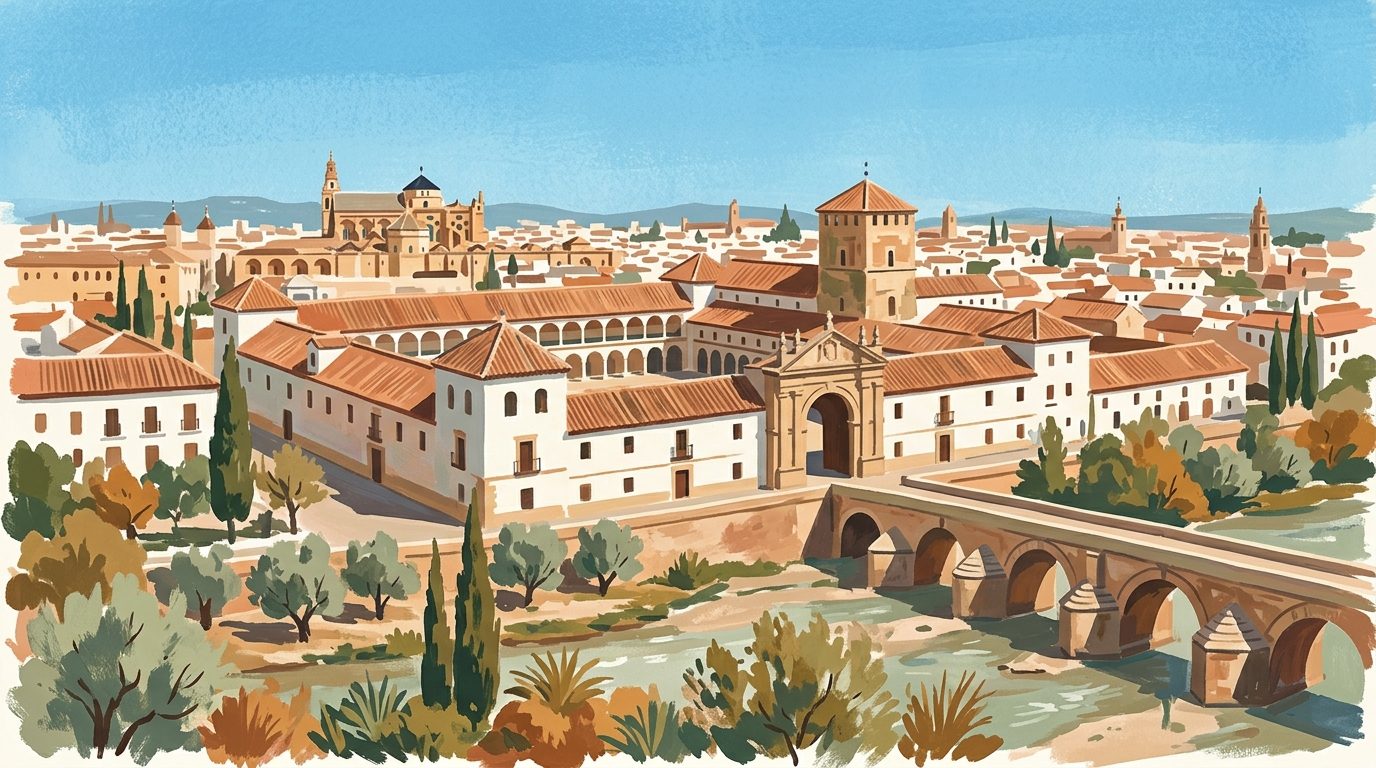
The Alcázar de los Reyes Cristianos stands as a formidable fortress and palace on the banks of the Guadalquivir River in Córdoba. It served as a primary residence for the Catholic Monarchs, Isabella and Ferdinand, for nearly a decade while they planned the final stages of the Reconquista. Its history is layered, having been built upon the remains of Roman and Visigothic structures before becoming a Moorish palace and later the headquarters of the Spanish Inquisition. It suits visitors fascinated by the transition between Islamic and Christian rule and those who enjoy exploring historical narratives through architecture. This site offers a more intimate and defensive atmosphere compared to the grand scale of the nearby Mosque-Cathedral. The architectural layout reflects its military origins through solid stone walls and four distinct towers. You should climb the Tower of the Lions to reach the ramparts, which offer expansive views across the river and the old city. Within the palace walls, the Hall of Mosaics contains a remarkable collection of Roman floor mosaics discovered beneath the Plaza de la Corredera, showcasing intricate mythological scenes. Below this hall, the Royal Baths are an impressive feature, built in the Mudéjar style with star-shaped skylights that filter soft light into the cool, vaulted rooms. These baths provide a quiet space to reflect on the private lives of the royalty who once resided here. Beyond the stone structures, the extensive gardens represent the most notable element of the estate. These tiered terraces are arranged around large rectangular pools and narrow water channels that create a tranquil atmosphere. Statues of the Catholic Monarchs, including one depicting their meeting with Christopher Columbus, are placed among the cypress, orange, and lemon trees. Walking through these gardens allows you to appreciate the sophisticated irrigation systems inherited from the Moorish era. The balance of aromatic plants and symmetrical water features makes the outdoor space a central part of the experience rather than a mere backdrop. The entrance is located on Calle Caballerizas Reales, making it easy to reach on foot from the Roman Bridge or the Judería. You should check the official website for current opening times and prices, as these change according to the season. It is advisable to book tickets in advance to secure a specific entry slot, particularly during the busy spring and autumn months. Most visitors find that ninety minutes to two hours is sufficient to see the Roman mosaics, climb the towers, and walk through the entirety of the garden terraces. To escape the peak temperatures and the largest tour groups, aim to arrive for the first entry slot of the day. The early morning light is especially flattering for the garden views and the stone textures of the towers. Wear sensible shoes with plenty of grip, as the narrow staircases within the towers can be slippery and steep. If your visit falls in the height of summer, prioritise the gardens early before the sun becomes too intense.
Alcázar del Rey Don Pedro
Sitting at the highest point of Carmona, the Alcázar del Rey Don Pedro—also known as the Alcázar de Arriba (Upper Fortress)—is a site that defines the skyline of this ancient town. Originally a Roman fortification, it was expanded by the Almohads before being transformed into a sumptuous palatial residence by King Pedro I of Castile in the 14th century. Pedro, often called "The Cruel" or "The Just", used the same skilled Mudejar craftsmen here as he did for his famous palace in Seville. While an earthquake in 1504 left much of the structure in ruins, the site remains a powerful architectural statement. It is ideally suited for visitors who prefer historic sites with a sense of weathered authenticity and those who seek the most expansive views in the province of Seville. ## What to See & Do ### The Fortifications and Mudejar Gate The primary architectural draw is the sheer scale of the defensive walls and the remaining Mudejar elements. You enter through the Puerta de Marchena, a gate that showcases the characteristic horseshoe arches and brickwork typical of the era. As you walk along the perimeter, you can see the distinct layers of construction: the massive, tightly fitted stones of the Roman foundation, the smaller masonry of the Moorish period, and the later Christian additions. The ruins of the royal apartments, though fragmented, still allow you to trace the layout of the palace where Pedro I spent significant time. Look closely at the surviving stonework for the intricate geometric patterns that link this site directly to the craftsmanship of the Seville Alcázar. ### The Plaza de Armas and the Interior Courtyard Inside the walls, the Plaza de Armas provides a sense of the scale of the garrison that once protected the town. Much of the interior was repurposed in the 1970s to house the Parador de Carmona, a state-run luxury hotel. While part of the site is restricted to guests, visitors can still explore the public areas that showcase how modern Spanish architecture has integrated with the medieval ruins. The central courtyard of the Parador, built in the Mudejar style with a cooling fountain and elegant arches, reflects the aesthetic King Pedro would have enjoyed. Walking through these spaces offers a contrast between the rugged, ruined exterior walls and the refined, tranquil atmosphere of the inner palace grounds. ### The Panoramic Views of the Vega The Alcázar’s position at the summit of the hill provides what is arguably the best vantage point in Andalucía. From the northern and eastern walls, the ground drops away sharply to the Vega de Carmona, a vast, fertile plain that stretches toward the horizon. On a clear day, you can see for miles across the patchwork of olive groves and wheat fields. This view explains exactly why the Romans and Moors chose this spot; it was impossible for an enemy to approach Carmona undetected. For photographers, the "Balcony of the Vega" offers a perspective of the Andalucian landscape that is difficult to match elsewhere, especially during the golden hour when the light hits the ancient stone. ## Practical Information ### Getting There Carmona is approximately 35 kilometres east of Seville. If you are driving, take the A-4 motorway and exit at Carmona. Follow signs for the "Parador" or "Alcázar de Arriba," which will lead you through the winding streets of the old town to the highest point. Parking is available in a dedicated lot near the entrance of the Parador, though it can fill up quickly on weekends. Alternatively, a regular bus service runs from Seville’s Plaza de Armas bus station; the journey takes roughly 40 minutes. From the Carmona bus stop, it is a 15-minute uphill walk through the historic centre to reach the Alcázar. ### Opening Times & Tickets Access to the ruined portions of the Alcázar and the external walls is generally open to the public during daylight hours. However, specific sections may have restricted access depending on ongoing preservation work. Because the Parador occupies a significant portion of the site, you can visit the public café and terrace without a ticket. For the most up-to-date information on guided tours of the archaeological remains or specific gate opening times, check the official Carmona tourism website. ### How Long to Spend Plan to spend between 45 minutes and an hour exploring the ruins and taking in the views. If you decide to stop for a coffee or a meal at the Parador to enjoy the interior architecture and the terrace, extend your visit to two hours. The site is compact enough to be combined with a wider walking tour of Carmona’s other major sites, such as the Roman Necropolis and the Puerta de Sevilla. ### Best Time to Visit The best time to visit is during the spring (April to June) or autumn (September to October) to avoid the intense heat of the Sevillian plain, which can make the exposed walls of the Alcázar uncomfortable at midday. Late afternoon is particularly recommended; the sunset over the Vega is spectacular, and the stone of the fortress glows a deep ochre in the fading light. Weekdays are significantly quieter than weekends, when the town attracts many day-trippers from Seville. ## Tips for Your Visit Wear sturdy, flat shoes; the ground around the ruins and the cobbled streets leading up to the Alcázar are uneven and can be slippery when wet. If you are not staying at the Parador, you are still welcome to enter the bar or restaurant area for a drink. This is the best way to see the beautifully restored interior courtyard and gain access to the terrace overlooking the swimming pool and the plains below. Finally, combine your visit with the Puerta de Sevilla at the lower end of town to see the two bookends of Carmona’s defensive history.

Antequera. Arco de los Gigantes
The Arco de los Gigantes, or Arch of the Giants, serves as a monumental gateway to the upper reaches of Antequera, specifically leading towards the Alcazaba and the Collegiate Church of Santa María la Mayor. Constructed in 1585, this late Renaissance structure is far more than a simple entry point; it is an open-air museum that signifies the city's pride in its Roman ancestry. It was designed by Francisco de Azurriola and sponsored by the local council to showcase the archaeological wealth of the region. History enthusiasts and those interested in classical architecture will find it particularly rewarding, as it incorporates ancient inscriptions and sculptures recovered from surrounding Roman settlements. It marks the transition from the medieval lower town to the noble religious and military heart of the city, making it an essential stop for anyone wanting to understand the layers of civilisation that have shaped this part of Málaga. When standing before the arch, take a moment to examine the two-metre-thick walls and the sheer scale of the construction. The most striking features are the Roman stones embedded directly into the masonry. These blocks come from various Roman towns such as Singilia Barba, Nescania, and Iluro, and they carry Latin inscriptions that were intentionally placed there to celebrate the imperial past. High above the central opening, you can see the coat of arms of the city, which includes a jar of lilies and the castle and lion of the Spanish crown. Historically, a large statue of Hercules stood atop the structure, though it has long since disappeared. You should also look for the relief depicting a vase of lilies, a symbol synonymous with Antequera's historical identity. The arch acts as a frame for the view of the church behind it, providing an excellent vantage point for photographs. Beyond the physical carvings, the experience of walking through the arch offers a perspective on the strategic layout of the city. As you pass through, the elevation provides a sweeping view over the white-washed rooftops of Antequera and towards the distinctive limestone formation known as the Peña de los Enamorados. This rock, which resembles a sleeping giant's profile, creates a dramatic backdrop that connects the man-made history of the arch with the natural landscape of the region. Many visitors spend time tracing the weathered letters of the Roman inscriptions, some of which remain remarkably legible despite centuries of exposure to the elements. Located at the Plaza de los Escribanos, the arch is easily reached on foot if you are already in the historical centre, though the walk involves a steady uphill climb. For those arriving by car, there is some parking available nearby, though spaces are limited during peak periods. The arch itself is an outdoor monument and can be viewed at any time without a ticket, making it a flexible addition to your itinerary. To fully appreciate the site and the adjacent monuments, allow approximately thirty minutes, though this can be extended if you plan to visit the Alcazaba immediately after. Check the official website for current opening times and prices for the nearby fortress and church. The best time to visit is during the late afternoon when the sun hits the sandstone and creates a warm glow on the Roman inscriptions. This timing also allows for better light when looking out towards the Peña de los Enamorados. Wear comfortable walking shoes, as the surrounding streets are paved with traditional cobbles. It is advisable to visit on a weekday to avoid the larger weekend crowds that gather near the viewpoints.

Archaeological Museum of Ubeda
The Archaeological Museum of Úbeda occupies a significant place in the cultural landscape of this Renaissance city, housed within a fourteenth-century Mudéjar dwelling. This building is a rare example of domestic architecture from that period, featuring a traditional central courtyard and wooden galleries that provide a quiet backdrop for exploring the deep history of the Jaén province. It appeals to visitors who wish to understand the foundations of the region, stretching back long before the sixteenth-century palaces were constructed. The collection bridges the gap between the various civilisations that have settled in this fertile part of Upper Andalusia, offering a chronological journey from the Neolithic period through to the Middle Ages. Inside the galleries, the focus moves from prehistoric tools to the sophisticated craftsmanship of the Bronze Age, specifically representing the Argaric culture that flourished in the southeast of the peninsula. Look for the burial urns and metalwork that demonstrate the complex social structures of these early inhabitants. As you transition into the Roman era, the museum displays impressive funerary stelae and household items that reflect the daily lives of people living in the Roman villae that once dotted the surrounding countryside. One of the most striking aspects of the visit is how the architectural elements of the house itself, such as its horseshoe arches and carved beams, complement the historical artefacts on display. The Islamic section highlights the significant influence of Al-Andalus on the urban development of Úbeda. Here, you will find beautifully preserved ceramics, oil lamps, and decorative plasterwork that illustrate the aesthetic preferences of the period. The transition into the Christian era is marked by religious iconography and architectural fragments from local churches and public buildings. This layer of history provides essential context for the later Renaissance transformation that defines the modern city. The intimate scale of the museum allows for a close examination of these objects, making it easy to appreciate the fine details of medieval pottery and stonework. You will find the museum at Calle Cervantes 6, situated within the historic quarter and just a short walk from the prominent Plaza de Vázquez de Molina. Most visitors find that forty-five minutes to an hour is sufficient time to explore the rooms and the courtyard thoroughly. The museum generally opens from Tuesday to Sunday, though it closes on Monday and follows shorter hours on Sunday afternoons. Admission is typically free for citizens of the European Union, while other visitors pay a very small entry fee. Check the official website for current opening times and prices before your arrival, especially as holiday schedules can vary throughout the year. The best time to visit is during the cooler morning hours, as the natural light in the central courtyard creates a peaceful atmosphere for viewing the exhibits. Because the museum is located in a residential street rather than a major thoroughfare, it remains a tranquil spot even on busier weekends. Wearing comfortable shoes is advisable for navigating the cobbled streets of the old town leading to the entrance, and photography without flash is usually permitted for personal use.

Baeza Cathedral
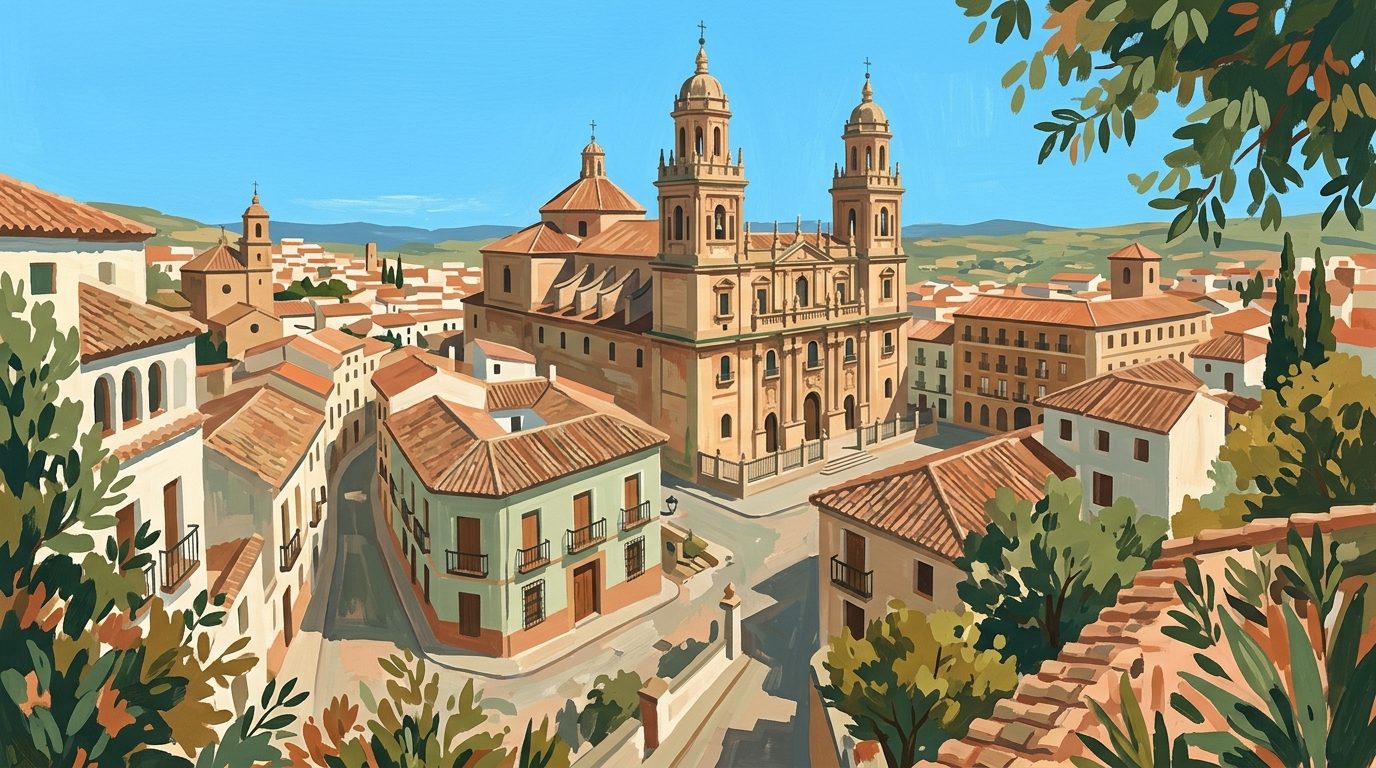
The Cathedral of the Nativity of Our Lady stands as a cornerstone of the Spanish Renaissance in the heart of the province of Jaén. Recognised as a UNESCO World Heritage site alongside its neighbour Úbeda, this building represents a pivotal shift from Gothic traditions to the harmonious proportions of the sixteenth century. It sits on the foundations of an ancient mosque and an earlier thirteenth-century church, making it a site of deep historical layers. This attraction appeals most to those who appreciate refined architecture, religious history, and the quiet dignity of monumental spaces. Its importance lies largely in the work of Andrés de Vandelvira, whose vision transformed the structure into one of the most influential examples of Renaissance cathedral design in the country. When entering the cathedral, the first thing to note is the impressive interior space, where slender columns support intricate vaulting that suggests a sense of weightlessness. The main altar is dominated by an expansive Baroque altarpiece, gilded and carved with meticulous detail, which contrasts sharply with the more restrained classical lines of the nave. Look for the pulpit, which is a masterwork of ironwork, and the many side chapels that house significant religious art. One of the most striking features is the exterior facade of the north door, which retains Gothic elements that hint at the building’s earlier incarnation. The golden light that filters through the high windows often illuminates the stone in a way that highlights the precision of the masonry. Beyond the main nave, the cathedral cloister offers a different perspective on the evolution of the site. These walkways feature pointed Gothic arches and provide access to several small chapels and the cathedral museum. Inside the museum, the silver processional monstrance is the undisputed centrepiece, a work of extraordinary craftsmanship that is still used during local festivals. The quiet atmosphere of the cloister provides a moment of reflection away from the main square. Visitors should also pay attention to the intricate choir stalls and the organ, which represent the high level of artistic patronage that the city enjoyed during its golden age. Finding the cathedral is straightforward as it sits at the highest point of the town in the Plaza de Santa María. For those arriving by car, it is best to park on the outskirts of the historic centre and walk through the narrow streets to avoid the restricted traffic zones. You should allow at least an hour to explore the interior and the museum fully. Check the official website for current opening times and prices, as these can vary between the summer and winter seasons or during local religious celebrations. Tickets can usually be purchased at the entrance, and an audio guide is often provided to give further historical context to your visit. Early morning or late afternoon visits are ideal, as the low sun creates long shadows across the plaza and brings out the warm tones of the sandstone. Try to visit on a weekday to avoid the larger crowds that occasionally arrive on weekends. Since the interior can remain quite cool even in the height of summer, bringing a light layer is advisable. Remember that this remains an active place of worship, so modest dress is expected and photography should be conducted discreetly without the use of flash.

Baluarte de la Candelaria, Cadiz
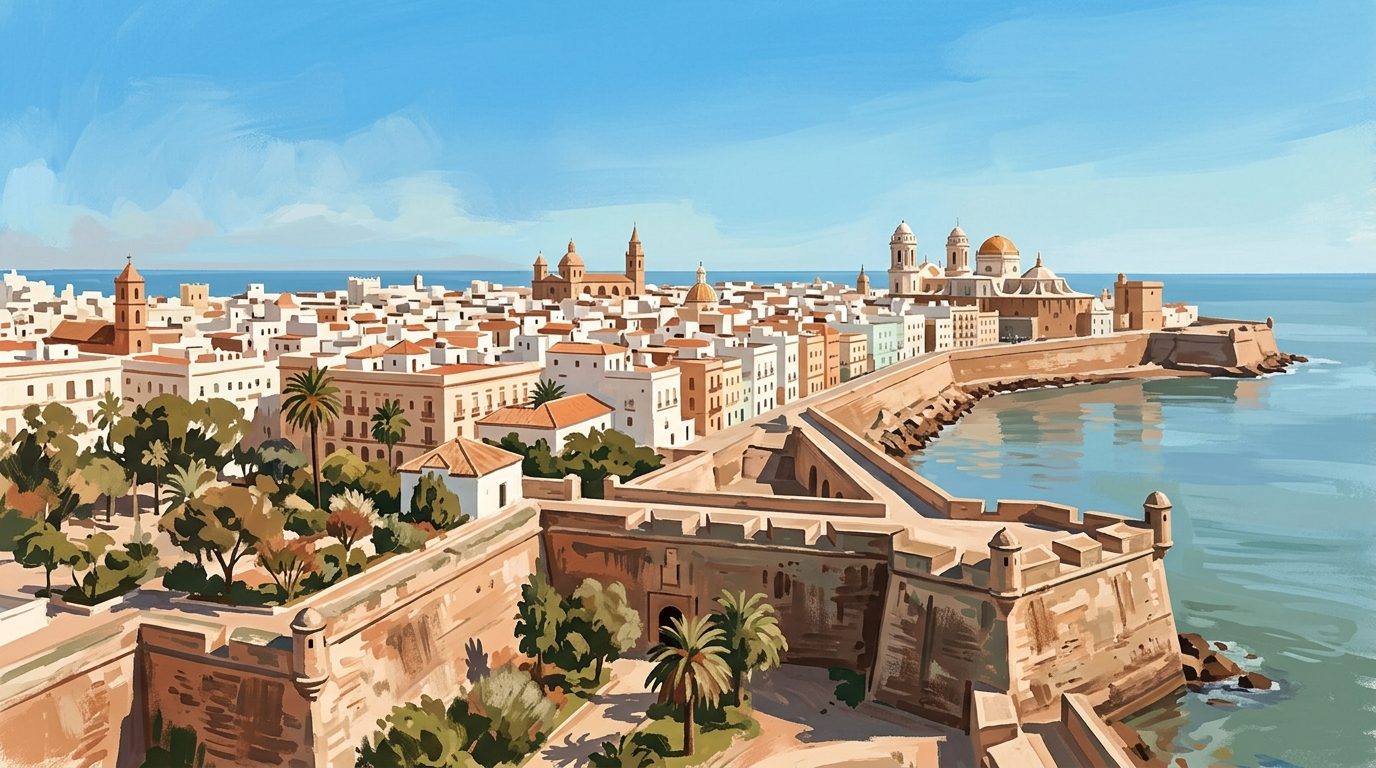
The Baluarte de la Candelaria is a prominent sea-facing fortress located on the northwestern tip of Cádiz, originally built in the late seventeenth century. It served as a critical defensive bastion, protecting the entrance to the port and the city’s bay from maritime threats. Today, it has transitioned from a military stronghold into a permanent cultural space, making it an ideal destination for history enthusiasts and those who appreciate architecture with a coastal backdrop. It suits visitors who enjoy walking along the city’s historic perimeter walls and those looking for a quiet spot to observe the Atlantic Ocean away from the more crowded tourist areas. Constructed under the direction of Governor Diego de los Salcedo, the fortification is notable for its sturdy, sloping stone walls designed to deflect cannon fire. As you explore the site, you should pay attention to its distinctive pointed shape, which juts out towards the sea like the prow of a ship. This strategic design allowed for a wide field of fire across the water. The central courtyard is now used for open-air concerts and exhibitions, providing a spacious area surrounded by the thick defensive masonry. Look out for the various ramps and platforms where cannons were once positioned, offering a glimpse into the military engineering of the period. The contrast between the weathered limestone and the bright blue of the Atlantic provides a clear sense of the city’s maritime history. Beyond the defensive walls, the interior of the bastion contains vaulted rooms that formerly served as barracks and storage for gunpowder. These spaces frequently host temporary art exhibitions, providing a cool retreat from the Andalusian sun. One of the most rewarding experiences at the Baluarte de la Candelaria is walking along the upper battlements. From this vantage point, you can enjoy expansive views of the Bay of Cádiz and watch the local fishing boats navigating the water. It is an excellent place to understand the city’s historic vulnerability and its reliance on sea defences for survival. The bastion is located at the end of the Alameda de Apodaca, a beautifully landscaped promenade. It is easily accessible on foot if you are exploring the old town or by using the local bus network that circles the historic centre. Admission to the fortress is generally free, though specific events or exhibitions might require a ticket. You should check the official website for current opening times and prices, especially during the summer months when evening concerts are common. A typical visit lasts around forty-five minutes to an hour, though you may wish to stay longer if there is an active exhibition or performance scheduled during your stay. Late afternoon is the most favourable time to visit, as the setting sun illuminates the stone walls and the surrounding sea. This timing also avoids the peak midday heat. Since the site is exposed to the elements, it can become quite windy, so bringing a light jacket is advisable even in warmer months. To make the most of your trip, combine your visit with a walk through the nearby Genovés Park for a full afternoon of coastal scenery and local heritage.

Located in the heart of Jaén's historic quarter, the Cultural Centre of Villardompardo Palace houses one of the most significant archaeological discoveries in Spain. At its core are the eleventh-century Arab Baths, which are among the largest and best-preserved in Europe. This site is a layered testament to the city's history, where a Renaissance palace was built directly over the Islamic bathhouse, effectively preserving it for centuries. It appeals to history enthusiasts, architecture students, and anyone interested in the sophisticated urban planning of Al-Andalus. The complex also incorporates two museums, making it a comprehensive cultural hub for those wanting to understand the local heritage of the Jaén province beyond its famous olive groves. The star attraction is undoubtedly the Hamman, which spans four hundred and fifty square metres. As you walk through the cold, warm, and hot rooms, look upwards to see the star-shaped skylights cut into the vaulted ceilings. These were designed to provide natural light and ventilation while creating a celestial atmosphere for bathers. The preservation of the horseshoe arches and the original flooring is remarkable, offering a clear sense of the spatial layout used during the Almoravid period. Above the baths, the Renaissance palace itself is a fine example of sixteenth-century architecture, featuring a central courtyard with elegant galleries. The transition from the subterranean Islamic structure to the airy aristocratic residence provides a physical timeline of the shifting powers that shaped the Iberian Peninsula. Beyond the masonry of the baths and palace, the building houses the Museum of Arts and Popular Customs and the International Museum of Naïve Art. The former provides an insight into the traditional rural life of the region, displaying tools, ceramics, and textiles that illustrate the daily routines of Jaén's ancestors. The Naïve Art collection is particularly noteworthy as it is the first of its kind in Spain, featuring works by self-taught artists from across the globe. This gallery offers a colourful contrast to the somber stone of the historic architecture. Do not miss the opportunity to visit the rooftop terrace, which provides panoramic views over the rooftops of the old city towards the cathedral and the surrounding mountains. Reaching the centre involves a walk through the narrow, winding streets of the old San Juan neighbourhood, so comfortable footwear is essential. While the city is accessible by train and bus from elsewhere in Andalucía, the immediate area around the palace is largely pedestrianised. Most visitors find that ninety minutes to two hours is sufficient to explore the baths and both museums. Admission is often free for citizens of the European Union, but you should carry identification to confirm this. Check the official website for current opening times and prices, as these can vary during local holidays and seasonal shifts. The centre typically closes on Mondays, which is standard for many public monuments in Spain. To avoid the heat and the busiest periods, aim to arrive when the doors open in the morning or during the late afternoon. The lighting in the Arab Baths is particularly atmospheric when the sun is lower in the sky, casting sharp beams through the roof vents. Before leaving, take a moment in the central courtyard of the palace to appreciate the acoustic qualities of the space, which often hosts concerts and cultural events during the summer months. These performances provide a rare opportunity to experience the building as a living space rather than just a museum.

Baños Árabes Yacimiento Arqueológico
The Arab Baths in Ronda, located near the Old Bridge at the foot of the city walls, are among the best-preserved Islamic thermal complexes in the Iberian Peninsula. Constructed during the late thirteenth and early fourteenth centuries during the Marinid period, this site offers a profound look into the social and ritual purification practices of Al-Andalus. It is an ideal destination for history enthusiasts and architecture lovers who want to understand the urban fabric of medieval Ronda. Unlike many other baths that were repurposed or destroyed after the Reconquista, these remained largely intact because they were buried by flooding from the nearby Guadalevín River, preserving their structure for centuries until their excavation in the twentieth century. The site provides a rare opportunity to see a complete water management system that functioned at the edge of the medina. Visitors should pay close attention to the three main chambers, which follow the traditional Roman layout of cold, warm, and hot rooms. The central warm room is the most impressive, featuring horseshoe arches supported by brick and stone columns that create a sense of rhythmic symmetry. Look up at the barrel-vaulted ceilings to see the star-shaped skylights, which were designed not only to provide natural illumination but also to allow steam to escape and regulate the temperature. The hydraulic system is equally fascinating, particularly the well and the large water wheel, known as a noria, which was powered by a donkey to draw water from the river. The brickwork throughout the site remains remarkably crisp, demonstrating the sophisticated engineering skills of the builders who managed heat distribution through a subterranean hypocaust system. The boiler room, located at the end of the circuit, provides a glimpse into the functional side of the baths, where wood was burned to heat the water and the floors. A small interpretation centre on-site offers a short video presentation that helps reconstruct how the space would have looked and functioned in its prime, which is helpful for visualising the original marble finishes and colourful decorations. Walking through the outdoor garden area allows for a different perspective on the defensive walls of the city and the Puente Viejo. The quiet atmosphere of the San Miguel quarter adds to the experience, making it feel removed from the more crowded tourist spots near the New Bridge. Reaching the site requires a walk down from the main town centre towards the San Miguel neighbourhood. The descent is steep, so comfortable footwear is essential for the return journey uphill. You should plan to spend about forty-five minutes to an hour exploring the ruins and the visitor centre. Entry tickets are inexpensive and can usually be purchased at the small kiosk at the entrance, though those holding a Ronda Pass may find admission included. It is wise to check the official website for current opening times and prices, as these can vary between the summer and winter seasons. The site is generally open every day, though it may close early on Sunday afternoons. The best time to visit is during the morning to avoid the heat of the afternoon and the larger tour groups that often arrive midday. Bringing a bottle of water is recommended, as there are few facilities once you descend into the valley. If you are a photographer, the morning light filtering through the star-shaped vents in the ceiling creates a striking atmosphere inside the chambers. Combining this visit with a walk along the river path provides a comprehensive view of Ronda's historic fortifications.

Baños del Alcázar Califal
The Baños del Alcázar Califal, or Caliphal Baths, represent the most significant remains of the civil architecture of the Umayyad Caliphate in Córdoba. Situated near the Alcázar de los Reyes Cristianos, these tenth-century hammams were an integral part of the royal palace complex. They served as essential spaces for hygiene, social interaction, and political discourse among the caliphate's elite. This site is particularly suited for history enthusiasts and those who wish to understand the sophisticated urban life of Al-Andalus beyond the grand scale of the Mosque-Cathedral. It provides a quiet, subterranean look at the private lives of the caliphs, focusing on the refined engineering and cultural rituals of the Islamic Golden Age. The site is divided into several chambers that follow the traditional Roman bath layout adapted for Islamic use. You begin in the changing room before moving through the cold, warm, and hot rooms. Look closely at the ceiling to see the star-shaped skylights, known as lucernas, which provided both ventilation and a soft, dappled light that would have reflected off the marble floors and tiled walls. The horseshoe arches supported by reused Roman and Visigothic columns are architectural highlights, demonstrating how the Caliphate integrated previous cultures into their own aesthetic. In the hot room, or caldarium, you can observe the remains of the hypocaust system, the underfloor heating mechanism that circulated steam to maintain the high temperatures required for the bath. Beyond the medieval structures, the museum includes later additions from the Almohad and Almoravid periods, showing how the baths were extended and modified over the centuries. A particularly interesting feature is the reception hall, which would have been decorated with intricate stucco work and served as a place for the caliph to receive guests in a relaxed environment. The interpretation centre at the entrance provides a short audiovisual presentation that reconstructs the baths in their prime, helping visitors visualise the original marble cladding and the complex water delivery systems that are now stripped back to their bare stone foundations. The baths are located on the Plaza Campo Santo de los Mártires, directly across from the entrance to the Alcázar de los Reyes Cristianos and a short walk from the Mezquita. This central location makes them easy to include in a walking tour of the historic quarter. You should allow approximately forty-five minutes to an hour for a thorough visit. Tickets are reasonably priced and can often be purchased at the door, though you should check the official website for current opening times and prices as these vary between the summer and winter seasons. The site is generally open Tuesday through Sunday, closing on Mondays. To avoid the largest crowds, try to visit during the mid-morning or late afternoon, as the site is relatively small and can feel cramped when large tour groups arrive simultaneously. Because the baths are located underground, they offer a cool retreat from the intense heat of a Córdoba summer afternoon. Wear sensible shoes as the floors are uneven in places, and be sure to watch your head in some of the lower arched doorways.

Barco de chanquete La Dorada
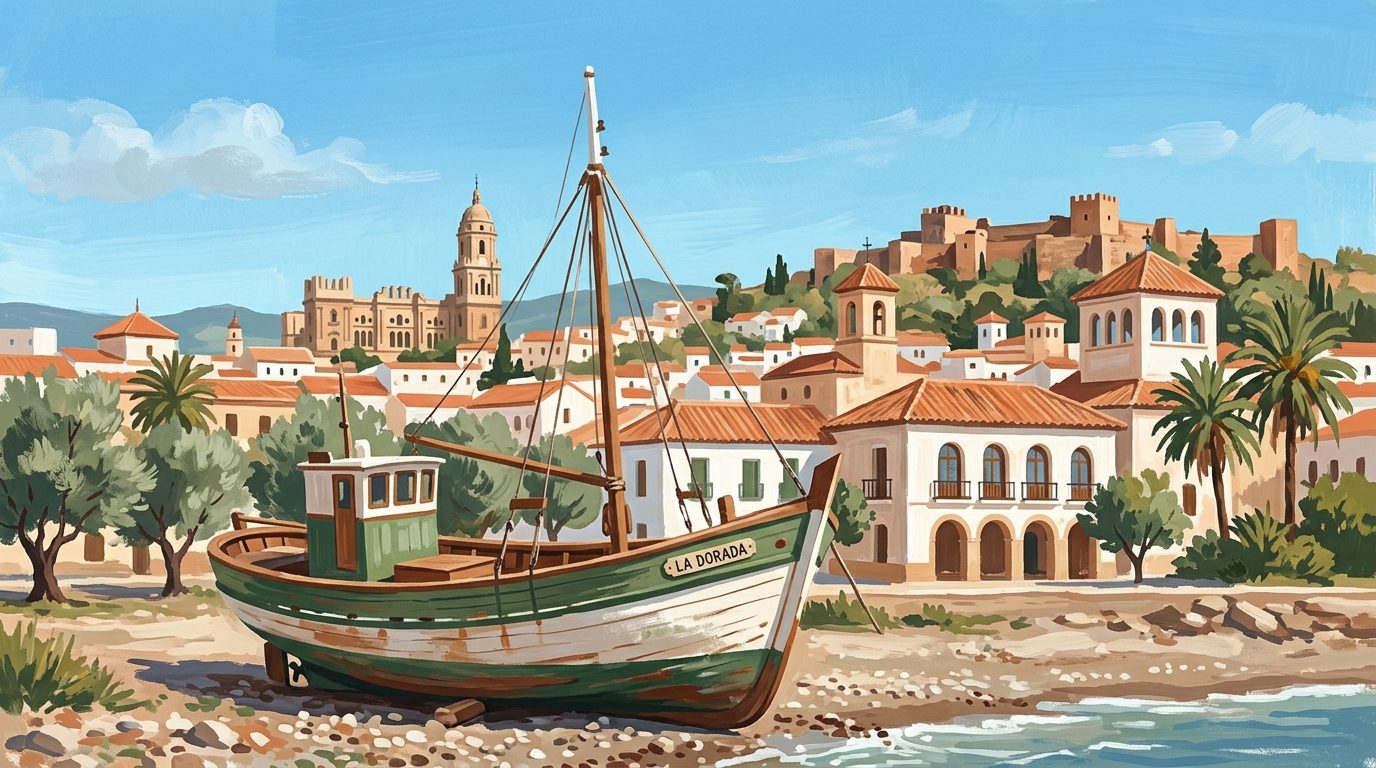
The Barco de Chanquete, known as La Dorada, serves as a poignant monument to a defining moment in Spanish popular culture. Located in the Parque Verano Azul in Nerja, this is a full-scale replica of the fishing boat featured in the legendary 1980s television series Verano Azul. For Spanish visitors, the vessel is a site of deep nostalgia, representing the childhood summers of an entire generation. International travellers will find it an intriguing cultural landmark that highlights how a single television programme transformed this once-quiet fishing village into a major destination. This attraction particularly suits those interested in social history or television heritage, as well as families looking for an easy stop during a walk through the town. It stands as a permanent tribute to the character Chanquete and the actor Antonio Ferrandis. While visitors are unable to board the vessel, the exterior provides plenty of detail to admire from the ground. The boat is a faithful reconstruction of a traditional Mediterranean fishing craft, painted in the distinctive blue and white colours seen on screen. Observe the intricate rigging, the wooden masts, and the way the hull is positioned on its stone pedestal to simulate its presence on the water. Surrounding the boat, the park contains a series of commemorative plaques, each dedicated to a different character or child from the series. These plaques are arranged along the paths and provide a scavenger-hunt style activity for those familiar with the cast. The craftsmanship of the boat itself reflects the maritime traditions of the Axarquia coastline, offering a physical link to the local industry that preceded the tourism era. Beyond the ship itself, the wider park offers several related points of interest. Information panels are situated nearby, detailing the filming process and the massive impact the show had on Nerja’s development during the early 1980s. Each of the streets bordering the park is named after a character from the programme, which reinforces the sense of place. It is worth taking a slow circuit of the entire vessel to see the different angles of the rigging and the name La Dorada painted on the prow. The site also functions as a communal space where local residents gather, providing a glimpse into daily life in Nerja away from the immediate seafront hotels. Finding the attraction is straightforward as it sits on the western edge of the town centre. From the Balcón de Europa, it is a pleasant fifteen-minute walk through the residential streets of Nerja. For those driving into the town, a large underground public car park is situated directly beneath the Parque Verano Azul, providing immediate access to the site. Because the boat is located within a public park, there are no admission fees and no tickets are required for entry. The park remains open twenty-four hours a day, allowing for flexible planning. Most people find that thirty minutes is sufficient to view the boat and read the nearby information boards before moving on to the beach or the town centre. To avoid the strongest heat of the day, plan your visit for the early morning or the golden hour of the late afternoon when the light hits the white paint of the boat most effectively. For the most authentic experience, try to watch an episode or listen to the whistle-heavy theme music of the show before your arrival. Since the park is close to the mouth of the Rio Chillar and El Playazo beach, it makes an excellent starting point for a longer coastal walk.

Basilica Minor of St Ildefonse
The Basilica Minor of Saint Ildefonse stands as the second most important religious building in Jaén, surpassed only by the city cathedral. This fortress-like Gothic structure dates back to the late thirteenth century and is deeply significant to the local population because it houses the patron saint of the city, Our Lady of the Chapel. According to local legend, a miraculous descent of the Virgin occurred here in 1430, an event that remains central to the spiritual identity of the provincial capital. This site is particularly suited for travellers interested in religious history, Gothic architecture, and the specific cultural traditions of inland Andalucía. It offers a quieter, more intimate atmosphere than the grand cathedral, allowing for a reflective experience amidst centuries of devotion and local heritage. The exterior of the church is a blend of styles reflecting its long construction history. Its most striking feature is the Neoclassical facade designed by Ventura Rodríguez, which contrasts with the earlier Gothic and Renaissance elements of the structure. Once inside, the spacious interior reveals a single wide nave covered by impressive ribbed vaults. The main altarpiece is a significant example of Baroque design, featuring intricate carvings and gilded details that command immediate attention from the entrance. You should also look for the Chapel of Our Lady of the Chapel, where the image of the patron saint is kept and venerated. The walls are adorned with various paintings and sculptures, and the building notably contains the tomb of the renowned architect Andrés de Vandelvira, who designed the Jaén Cathedral. One of the most profound experiences within the basilica is visiting the small treasury which houses various liturgical objects and historical documents. Pay close attention to the intricate metalwork and textiles used in religious processions throughout the year. The lateral portals are also worth a close inspection; the Gothic portal of San Ildefonso and the Renaissance portal of the Virgin provide a visual timeline of the building's architectural evolution. If you have the opportunity, observe the way light enters through the stained glass windows during different times of the day, as it creates a shifting atmosphere of colour and shadow across the stone floor. The basilica is located in the heart of Jaén on the Plaza de San Ildefonso, easily reachable on foot from the cathedral or the central market area. Most visitors find that forty-five minutes to an hour is sufficient to appreciate the interior and the various side chapels. Entry is generally free, though donations for the upkeep of the building are welcomed. Opening times often follow the schedule of daily services, typically opening in the morning and again in the late afternoon after a midday break. You should check the official website for current opening times and prices for any specific tours or access to the treasury. To experience the basilica at its most evocative, visit during the early evening when the local community gathers for mass. The eleventh of June is a particularly significant date, marking the festivities of Our Lady of the Chapel, though the area will be very crowded during this period. Dress modestly as this is an active place of worship. Remember to maintain silence and refrain from taking photographs during religious services to respect the local congregation.

Bodegas Cruz Conde
Located in Montilla, within the province of Córdoba, Bodegas Cruz Conde is an essential stop for anyone interested in the Montilla-Moriles wine region. Founded in 1902 by Rafael Cruz Conde, this winery represents over a century of viticultural tradition in southern Spain. It is particularly well-suited for enthusiasts of fortified wines and spirits who want to understand the unique crianza system used in this part of Andalucía. Unlike many industrial operations, this bodega maintains an air of historical gravity, making it a compelling destination for those who appreciate architecture, local heritage, and the slow maturation process of fine Pedro Ximénez grapes. One of the most striking features of the complex is its subterranean cellar, often referred to as the El Sótano. Walking through these cool, darkened aisles, you will notice rows upon rows of American oak barrels stacked in the traditional solera and criaderas system. Pay close attention to the scale of the arches and the way the temperature drops naturally, providing the perfect microclimate for the wine to age. The bodega is also famous for its production of brandy and aniseed liqueurs, so keep an eye out for the historic distilling equipment. The architecture itself reflects a blend of industrial utility and classic Andalusian aesthetics, with whitewashed walls and heavy wooden beams that have seen generations of winemakers pass through. Beyond the rows of wine barrels, visitors should seek out the dedicated space for their famous vermouth and high-quality brandies. The tasting experience is where the history truly comes to life, allowing you to sample the range from dry Finos to the incredibly rich, dark, and sweet Pedro Ximénez. Tasting the wine in the very environment where it has matured for decades adds a layer of depth that a standard restaurant setting cannot provide. Ensure you take a moment to look at the vintage labels and bottling machinery on display, which offer a window into how the brand and its techniques have evolved since the early twentieth century. Reaching the winery is straightforward if you are based in Córdoba, as Montilla is roughly a forty-minute drive south via the A-45 motorway. Public transport options include regular bus services from Córdoba bus station, though a car provides more flexibility for exploring the surrounding countryside. Visitors should allow approximately ninety minutes for a full guided tour and tasting. It is essential to book your visit in advance through their website or by telephone, as they often host private events or professional tours. Check the official website for current opening times and prices, as these can vary depending on the season and the type of tasting package you choose. The most atmospheric time to visit is during the autumn months when the heat of the Andalusian summer has faded but the local harvest spirit is still in the air. Wear a light jacket or jumper even in summer, as the underground cellars remain significantly cooler than the outdoors. To make the most of your trip, consider pairing your visit with a lunch in Montilla town centre to try local dishes that complement the wines you have just sampled.

Bullring of the Royal Cavalry of Ronda
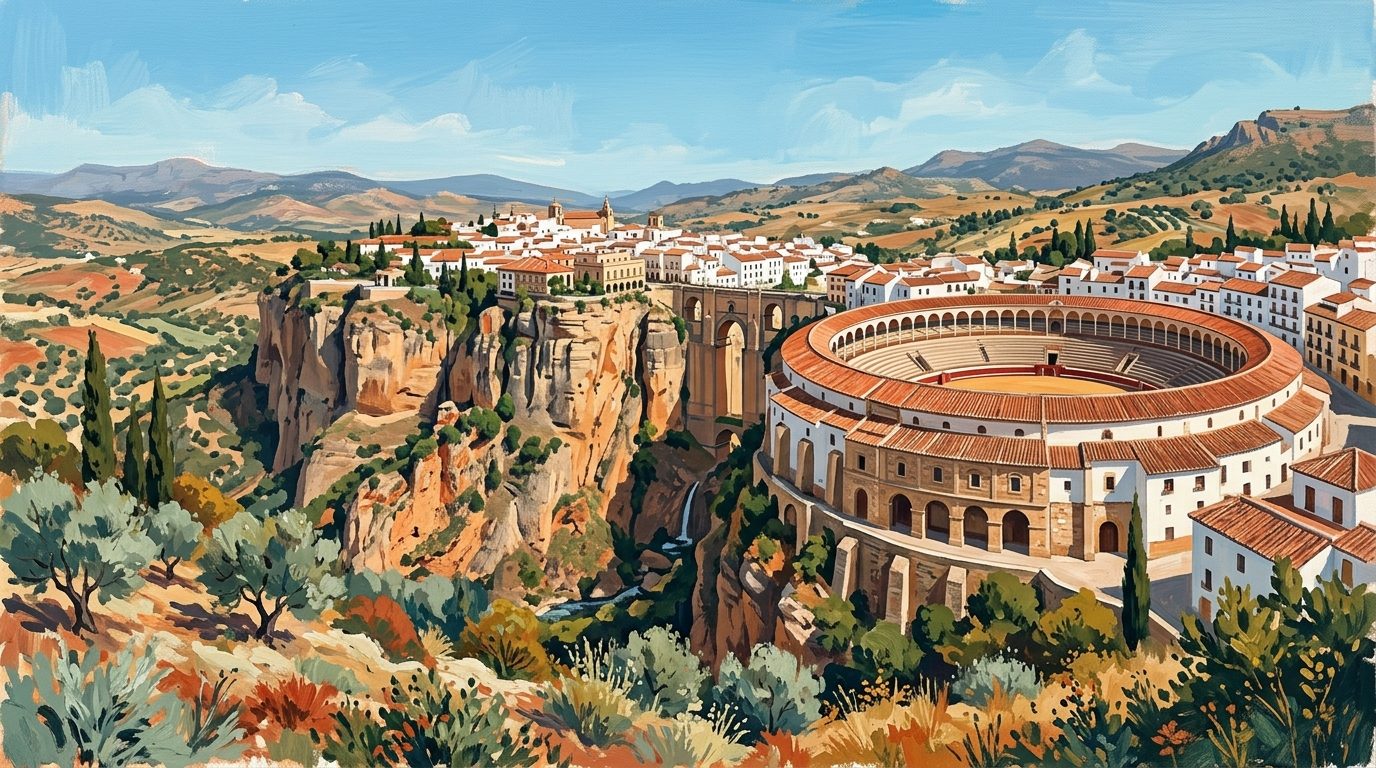
The Plaza de Toros de Ronda is one of the oldest and most architecturally significant bullrings in Spain, standing as a testament to the town's deep-rooted equestrian and bullfighting traditions. Built in 1785 by the Royal Cavalry of Ronda, this arena is crafted entirely from stone and holds a special place in Spanish history as the birthplace of the modern style of bullfighting. It is particularly well-suited to history enthusiasts and those interested in traditional Spanish culture, offering a window into the evolution of local customs. Even for those who choose not to watch a live event, the building itself is a masterpiece of Neoclassical design that reflects the prestige of the noble cavalry order that commissioned it. Walking through its gates allows you to appreciate the weight of several centuries of heritage within a town famous for its dramatic cliffside location. The most striking feature of the arena is its elegant double-tiered arcade, supported by one hundred and thirty-six Tuscan columns that form sixty-eight distinct arches. Unlike many other bullrings, the spectator galleries are covered by a roof, providing a sense of grandeur and intimacy. While exploring, you should pay close attention to the Royal Box, which was designed for the Spanish monarchy and features intricate stone carvings. Beneath the seating area, the site houses the Taurine Museum, which contains an extensive collection of historical artefacts, including ornate suits of lights, original posters, and equipment used by legendary matadors from the Romero and Ordóñez dynasties. The museum provides the necessary context to understand how the rules of the sport were codified here in the eighteenth century, transitioning from a mounted activity to the foot-based performance seen today. Beyond the main arena and the museum, visitors can explore the stables and the tack room, which offer a glimpse into the daily life of the horses and riders of the Royal Cavalry. The saddlery collection is particularly impressive, displaying leatherwork and equipment that have remained largely unchanged in design for generations. Another essential part of the visit is the collection of antique firearms and the gallery dedicated to the history of the institution itself. This section explains the noble order's role in training the local aristocracy for military service and equestrian excellence. Do not miss the opportunity to stand in the centre of the yellow sand arena to experience the acoustics and the sheer scale of the stone tiers rising around you. The bullring is located on Calle Virgen de la Paz, just a short walk from the famous Puente Nuevo bridge in the centre of Ronda. It is easily accessible on foot from anywhere in the old town or the newer commercial district. The site is generally open every day of the week, though it may close early or entirely during special events or the annual Pedro Romero Fair in September. Most visitors find that ninety minutes to two hours is sufficient to explore the arena, the museum, and the peripheral galleries at a relaxed pace. Tickets can be purchased at the entrance or through the official website, and an audio guide is recommended to provide more detailed historical background. Check the official website for current opening times and prices to ensure your visit aligns with the latest schedule. To avoid the busiest crowds and the heat of the midday sun, aim to arrive as soon as the gates open in the morning. The light during the early hours is also ideal for capturing the texture of the stone and the contrast of the yellow sand. Wear comfortable shoes, as the ground inside the arena and the surrounding paths can be uneven. If you are visiting during the height of summer, the shaded galleries provide a welcome relief while you study the museum exhibits.

Caballerizas Reales
The Royal Stables of Córdoba represent the birthplace of the Pure Spanish Horse, also known as the Andalusian horse. Established by King Philip II in 1570 on a site formerly occupied by the Caliphate's stables, this monument is a cornerstone of Spanish equestrian history. It is situated adjacent to the Alcázar de los Reyes Cristianos and served as the royal stud where the breed was meticulously refined for the Spanish crown. This attraction appeals to history enthusiasts, architecture lovers, and anyone with an interest in equestrian culture. The building itself is a masterpiece of functional architecture, designed to reflect the prestige of the monarchy through the nobility of its animals. It offers a unique connection to the heritage of a city where horse breeding was once central to imperial power. The central courtyard provides an immediate sense of the scale and grandeur of the facility. You should pay particular attention to the Main Stable, which features a vaulted ceiling supported by sturdy sandstone columns. This area remains the heart of the complex and maintains an atmosphere of quiet dignity. The architecture reflects the transition from the Renaissance to the Baroque style, with a clear focus on symmetry and durability. Beyond the stables, the riding school and the arena are central to the experience. Visitors can observe the horses in their stalls or being prepared for training sessions. The intricate ironwork and the historical layout have been preserved carefully, allowing you to see how the space functioned centuries ago as a premier breeding and training facility. A highlight of many visits is the equestrian performance titled Passion and Spirit of the Andalusian Horse. This show combines traditional dressage and flamenco to demonstrate the agility and intelligence of the breed. It is worth checking the schedule in advance to align your visit with one of these evening performances. Watching the riders in traditional costume executing complex movements provides a living link to the historical training methods developed on these very grounds. Even if you do not attend a show, walking through the collection of historical carriages offers a fascinating look at how these animals were integral to social and political life in previous centuries. Located at Calle Caballerizas Reales 1, the stables are easily reached on foot from the Mosque-Cathedral or the Jewish Quarter. Most visitors spend between forty-five minutes and an hour exploring the grounds, though this increases if you attend a performance. Tickets can be purchased at the entrance or via the official website, which you should consult for the most accurate opening times and pricing structures. The complex usually opens in the morning for general visits and reopens later for evening shows. It is a central part of any tour of the San Basilio or Alcázar area, making it a convenient stop during a day spent in the historic centre of Córdoba. To avoid the most intense heat and the largest crowds, try to visit during the morning or late afternoon. If you plan to see the horse show, booking your seat in advance is recommended, especially during the spring festivals when the city is particularly busy. Wear comfortable walking shoes as the stone floors can be uneven. Photography is generally allowed in the outdoor areas and the main stables, but ensure you follow any specific instructions regarding flash during training sessions to avoid startling the horses.

Cadiz Museum
The Museum of Cádiz sits on the elegant Plaza de Mina and serves as the definitive repository for the city's three thousand years of history. This institution is an essential stop for any visitor wishing to grasp the depth of the Phoenician and Roman heritage that underpins this ancient Atlantic port. It is housed in a nineteenth-century neoclassical building on the site of a former Franciscan orchard. The collection is divided into three distinct sections: archaeology on the ground floor, fine arts on the first, and ethnography on the top floor. It suits curious travellers who appreciate a quiet, intellectual retreat from the salt-sprayed streets and those who want to see the physical evidence of Gadir and Gades. The undisputed stars of the archaeological section are the two Phoenician anthropoid sarcophagi, dating back to the fifth century BC. Carved from white marble, these remarkable tombs represent a man and a woman and show a clear Egyptian influence, signifying the wealth and global connections of ancient Cádiz. Moving into the Roman era, look for the colossal statues recovered from the ruins of Baelo Claudia, including a striking depiction of the Emperor Trajan. The intricate mosaics and delicate glassware on display provide a vivid sense of the domestic lives of the Romans who once called this peninsula home. The transition from the Punic era to the Roman period is documented with clarity, showing the evolution of the city's seafaring identity. On the first floor, the Fine Arts gallery contains one of the most important collections of Baroque painting in Andalucía. The primary draw is the series of saints and monks by Francisco de Zurbarán, originally painted for the Charterhouse in Jerez de la Frontera. His mastery of light and the heavy textures of white robes is exceptional. You will also find works by Murillo and Rubens, alongside nineteenth-century Spanish landscapes. For a change of pace, the top floor houses the Tia Norica puppets, which are traditional string puppets used in local satirical theatre since the eighteenth century, offering a glimpse into the unique folk culture of the city. You can find the museum easily on foot within the old town, as Plaza de Mina is a short walk from the port and the cathedral. The museum usually opens from Tuesday to Sunday, remaining closed on Mondays and public holidays. Entrance is free for citizens of the European Union, while others are required to pay a modest fee. Check the official website for current opening times and prices to avoid disappointment. A thorough visit takes approximately two to three hours, though art enthusiasts may wish to linger longer in the Zurbarán gallery. It is a well-organised space that rarely feels overcrowded. The best time to visit is during the early afternoon when the Andalucían sun is at its peak, providing a cool sanctuary away from the heat. Start your tour on the ground floor to follow the chronological history of the city, and ensure you leave time for the puppet collection, which provides a lighter contrast to the solemnity of the archaeological finds. Photography is generally allowed without flash, making it easier to record the impressive details of the sarcophagi.

Carmen de los Mártires
Situated on the crest of Mauror Hill, Carmen de los Mártires stands as one of the most expansive and historically significant gardens in Granada. This public estate offers a tranquil alternative to the often crowded Alhambra complex located just a short walk away. Its name reflects a sombre past, marking the site where Christian captives were held in underground dungeons during the Nasrid era. Today, it presents a sophisticated blend of various landscaping traditions, making it an ideal destination for those who appreciate horticulture, history, or simply a quiet spot to reflect. Whether you are a photography enthusiast looking for panoramic views over the city and the Sierra Nevada or a family seeking a spacious area for a slow afternoon stroll, this garden provides a serene sanctuary away from the city centre. The estate is remarkable for its eclectic variety of gardens, each possessing a distinct character. You should begin your exploration in the French garden, which features symmetrical parterres and elegant statuary, leading to the Nasrid patio where water channels and tilework pay homage to Granada's Moorish heritage. Perhaps the most striking feature is the large ornamental lake, which contains a miniature castle and a small island accessible by a bridge. This area is often frequented by peacocks, whose displays add a touch of regality to the surroundings. Be sure to look for the Grotto, a man-made cavern that adds an air of romantic mystery to the landscape. The various levels of the garden are connected by winding paths and stone staircases, each offering different perspectives of the meticulously maintained flora and the architectural elements of the main nineteenth-century mansion. In the lower section of the estate lies the English garden, characterised by more informal planting and a collection of ancient lime and cedar trees. This area provides deep shade even during the hottest months, offering a respite from the Andalucían sun. History enthusiasts will note the connection to Saint John of the Cross, who served as prior here and is said to have planted a cedar tree that still stands in some form today. The terrace viewpoints are equally essential, providing some of the finest vistas in the city. From these stone balconies, you can see across the rooftops of the Realejo district towards the sprawling Vega de Granada and the distant mountains, making it a perfect spot for capturing the scale of the region. Reaching the carmen is straightforward, though it involves a steep climb if you choose to walk from the city centre. A more convenient option is to take the C30 or C32 Alhambra bus from Plaza Isabel la Católica, which drops passengers very close to the entrance. Entry to the gardens is free, which is rare for an attraction of this calibre in Granada. You should check the official website for current opening times, as these vary significantly between the summer and winter seasons and the gates often close for a break in the middle of the day. A thorough visit usually takes between ninety minutes and two hours, allowing enough time to explore the different garden rooms and enjoy the viewpoints without rushing. The best time to visit is during the late afternoon in spring or autumn, when the light is softer and the temperature is comfortable for walking. During the summer, aim to arrive as soon as the gates open in the morning to beat the heat. Wear sensible walking shoes as some paths are surfaced with traditional Granada pebbles which can be uneven. Bring water with you, as there are limited facilities inside the grounds. It is worth remembering that the main house itself is generally closed to the public, so focus your energy on the diverse outdoor spaces.
Casa de Pilatos
## Introduction The Casa de Pilatos is arguably the finest example of a private civil palace in Seville, serving as the permanent residence of the Dukes of Medinaceli. Constructed between the 15th and 16th centuries, it represents a pivotal moment in Spanish architectural history where the late Gothic and Mudejar styles collided with the burgeoning aesthetics of the Italian Renaissance. While the Real Alcázar often draws the largest crowds, Casa de Pilatos offers a more intimate, lived-in perspective on aristocratic life. It is an essential stop for visitors who appreciate intricate craftsmanship, particularly the interplay of Islamic geometry and Classical sculpture. Whether you are an architecture enthusiast or simply seeking a quiet retreat from the midday heat, this palace provides a profound insight into the wealth and cultural ambitions of the Andalusian nobility. ## What to See & Do ### The Main Courtyard (Patio Principal) The heart of the palace is the central courtyard, a masterclass in Mudejar design. Your eyes will immediately be drawn to the intricate stuccowork and the rows of Gothic-Renaissance arches supported by slender marble columns. In the centre sits a 16th-century Genoese fountain, but the real highlights are the twenty-four busts of Roman emperors and historical figures situated in the niches around the perimeter. These were part of a vast archaeological collection brought from Italy by the 1st Duke of Alcalá. Look closely at the walls to see some of the most impressive *cuerda seca* tiling in the world; there are over 150 different designs of *azulejos*, creating a kaleidoscope of geometric patterns that have remained virtually unchanged for five centuries. ### The Upper Floor (Planta Alta) While the ground floor served as the "summer palace," designed to stay cool, the upper floor was the winter residence. Access to these rooms is strictly via guided tours, which take place at set intervals. Here, the atmosphere shifts from the airy Mudejar style to a more formal, palatial environment. You will find richly decorated ceilings, including the spectacular 16th-century ceiling by Francisco Pacheco in the Room of the Large Windows. The rooms are furnished with family heirlooms, tapestries, and an impressive collection of paintings, including works attributed to Goya and Luca Giordano. The view from the upper galleries provides an excellent vantage point for photographing the courtyard below. ### The Gardens: Jardín Chico and Jardín Grande The palace grounds are split into two distinct gardens. The *Jardín Chico* (Small Garden) features a series of ponds and is framed by arched galleries, offering a secluded, shaded space to admire the architectural transition from Gothic to Renaissance. The *Jardín Grande* (Large Garden), though still modest in scale compared to royal estates, is a peaceful expanse of box hedges, orange trees, and bougainvillea. Keep an eye out for the archaeological fragments integrated into the garden walls and the Loggia, which was designed to house the Duke’s classical sculptures. It is a rare example of a 16th-century Italianate garden surviving in the centre of a modern Spanish city. ### The Chapel of the Flagellation This is the oldest part of the palace and a significant example of the Isabelline Gothic style. The chapel is relatively small but contains a fascinating blend of religious influences. At its centre is a column, which tradition (though not historical fact) suggests is a replica of the one where Christ was flogged—giving the palace its name. Note the contrast between the Christian Gothic vaulting and the Mudejar tiling on the lower walls. This room perfectly encapsulates the complex, multi-layered religious and cultural history of Seville during the Reconquista and the early colonial era. ## Practical Information ### Getting There Casa de Pilatos is located in the Plaza de Pilatos, on the eastern edge of the Alfalfa district. It is roughly a 10 to 12-minute walk from the Cathedral or the Giralda. Due to the narrow, winding streets of the old town, driving is not recommended as there is no on-site parking and local street parking is restricted to residents. If you are using public transport, several bus lines (including the C3, C4, 01, and 21) stop at Puerta de Carmona, which is a five-minute walk from the palace entrance. ### Opening Times & Tickets The palace is typically open daily from 09:00 to 18:00. There are two types of tickets: one for the ground floor and gardens only, and a combined ticket that includes the guided tour of the upper floor. It is worth noting that the upper floor can only be visited with a guide, and slots can fill up quickly. EU citizens can often access the ground floor for free on Monday afternoons, but queues are frequent during these times. Check the official website for current opening times and prices. ### How Long to Spend To properly see the ground floor, gardens, and the upper floor (if you choose the guided tour), allow at least 90 minutes to two hours. The guided tour of the upper rooms usually lasts about 30 to 45 minutes, leaving you the rest of the time to explore the courtyard and gardens at your own pace with the provided audio guide. ### Best Time to Visit The best time to visit is shortly after opening at 09:00 to enjoy the courtyard in the soft morning light before the larger tour groups arrive. If you are visiting in spring, the gardens are particularly fragrant when the orange blossoms (*azahar*) are in bloom. Avoid the Monday afternoon free entry period if you prefer a quiet, contemplative atmosphere, as the palace becomes considerably more crowded. ## Tips for Your Visit If you intend to visit the upper floor, book your tickets online in advance to secure a specific time slot for the guided tour; otherwise, you may face a long wait. Make sure to use the audio guide, as there is limited signage throughout the palace, and the historical context of the Medinaceli family adds significant value to the visit. Finally, the palace is a popular filming location—fans of *Lawrence of Arabia* or *Kingdom of Heaven* may recognise several rooms and the main courtyard.

Casa del Inca Garcilaso
The Casa del Inca Garcilaso is a significant historical residence located in the town of Montilla, approximately forty kilometres south of Cordoba. This sixteenth-century manor house was the home of Gomez Suarez de Figueroa, better known as Inca Garcilaso de la Vega, for thirty years of his life. As the son of a Spanish conquistador and an Inca princess, he is celebrated as the first mestizo author in the Americas to be published in Europe. This site is particularly well-suited for those interested in the complex intersection of Spanish and Indigenous American history, as well as literature enthusiasts who wish to walk through the rooms where one of the most important chronicles of the conquest was written. The house serves as a bridge between two worlds, offering a quiet, scholarly atmosphere that reflects the intellectual pursuits of its most famous resident. Inside the building, visitors will find a beautifully preserved example of Renaissance civil architecture. The central courtyard is the heart of the house, featuring traditional columns and a sense of serenity that characterises many aristocratic dwellings of the period. One of the most important areas to explore is the library, which contains an extensive collection of works related to the life and era of the Inca Garcilaso, including research into his literary output such as The Florida of the Inca and Royal Commentaries of the Incas. You should also pay close attention to the wine cellar, or bodega, which is a common feature in Montilla houses. Here, the barrels and the cool, shadowed space offer a glimpse into the agricultural traditions that have sustained this region for centuries, long before the house became a museum. Beyond the main rooms, the museum displays a variety of artefacts that illustrate daily life during the sixteenth and seventeenth centuries. The study is especially evocative, as it is designed to recreate the environment in which Garcilaso de la Vega translated the Dialogues of Love and drafted his historical accounts. The walls are adorned with portraits and maps that trace his journey from Cuzco to the Iberian Peninsula. It is worth spending time in the upper rooms to see the temporary exhibitions that often focus on the linguistic connections between Spain and Peru. The integration of the local tourist office within the building makes it an excellent starting point for understanding the wider heritage of Montilla. To reach the Casa del Inca Garcilaso, you can take a bus or train from Cordoba city centre to Montilla, which is a journey of around forty-five minutes. Once in the town, the house is situated on Calle Capitan Alonso de Vargas, a short walk from the central plaza. Most visitors find that ninety minutes is sufficient to see the exhibits and appreciate the architecture. Check the official website for current opening times and prices, as the house sometimes closes during the early afternoon for the traditional siesta. The entrance fee is generally modest, making it an accessible addition to a day trip through the Cordoban countryside. The best time to visit Montilla is during the spring or autumn months when the temperatures are mild enough for exploring the town on foot. To make the most of your trip, consider pairing your visit with a tour of a nearby Montilla-Moriles winery to understand the full context of the region’s culture. It is wise to arrive early in the morning to enjoy the quietest conditions before any small groups arrive and to avoid the strongest heat of the day.

Casa natal de Joaquín Sabina
The ancestral home of Joaquín Sabina stands as a significant cultural landmark in the heart of Úbeda, a city celebrated for its Renaissance architecture. Sabina is perhaps Spain’s most influential living singer-songwriter, known for his gravelly voice and poignant, literary lyrics that capture the essence of Spanish life and urban melancholy. For admirers of his work, this building is a point of pilgrimage, marking the humble beginnings of a man who would go on to define the sound of modern Spanish folk and rock. It appeals particularly to those with an interest in contemporary Spanish culture and music history, offering a tangible connection to the artist’s roots before he moved to Madrid and achieved international acclaim. Located on the historic Plaza Primero de Mayo, the exterior of the house reflects the traditional Ubetense style, blending seamlessly with the surrounding historic structures. Visitors should look for the commemorative plaque on the wall, which serves as a quiet acknowledgement of the house’s famous former resident. Inside, the space often hosts temporary exhibitions or intimate displays related to the singer’s career and his connection to his hometown. The interior retains an atmosphere of mid-twentieth-century provincial life, providing a backdrop for understanding the environment that shaped his early poetic sensibilities. Look closely at the architectural details of the square itself, as the views from the doorstep influenced many of the metaphors found in his early compositions. To fully appreciate the site, one should consider the house as the starting point of a broader cultural trail through Úbeda. Local fans and the associated cultural organisations often arrange events here, particularly during the annual festival dedicated to his music. The surrounding streets are filled with references to his songs, and several nearby taverns celebrate his legacy with memorabilia and curated playlists. This area is where the artist’s family lived and worked, and walking these cobblestone paths helps visitors grasp the contrast between his quiet upbringing in Jaén and the boisterous, cosmopolitan life he later depicted in his most famous albums. The house is situated at number twenty-two Plaza Primero de Mayo, which is easily accessible on foot from any part of Úbeda’s historic centre. Most visitors spend about forty-five minutes at the site, though this may vary depending on whether a specific exhibition is currently running within the building. It is advisable to check the official website for current opening times and prices, as access to the interior can be restricted to specific periods or special cultural events. Since it is located in a sensitive historic zone, parking is extremely limited, so arriving on foot after leaving your vehicle in one of the larger car parks on the outskirts of the old town is the most practical approach. Visiting in the late afternoon allows you to enjoy the changing light on the stone facade before heading to a local bar for a glass of local wine, much like the artist himself might have done in his youth. The best time to visit is during the Sabina por Aquí festival in September, when the city comes alive with tribute concerts and literary talks. Ensure you wear comfortable walking shoes, as the surrounding streets are paved with uneven stones that demand sturdy footwear for a comfortable experience.

Castillo de Gibralfaro
Perched on a high hill overlooking the city and the Mediterranean, the Castillo de Gibralfaro is a fourteenth-century fortress built by Yusuf I of the Kingdom of Granada. It was designed primarily to protect the Alcazaba below and eventually became one of the most impenetrable strongholds on the Iberian Peninsula. It is an essential stop for history enthusiasts and anyone who appreciates expansive panoramic views of the coastline. The site suits active travellers who do not mind a steep climb and those interested in military architecture or the Islamic heritage of the Costa del Sol. It provides a sense of scale and perspective to Málaga that you simply cannot get from the city streets below. This fortress stood as a witness to the final stages of the Catholic Reconquest and remains a symbol of the city's strategic importance. The primary reason to visit is the extensive circuit of defensive walls. You can walk the entire perimeter of the ramparts, which offer three-hundred-and-sixty-degree views of the bullring, the port, and the cathedral. Look out for the Main Tower, known as the Torre Blanca, which contains a small museum detailing the history of the castle through military uniforms, navigation maps, and period weapons. The architecture reflects its function as a permanent garrison, with zig-zagging walls designed to prevent attackers from gaining ground easily. You will also see the deep Airón Well, which was carved directly into the rock to supply water to the soldiers during long sieges. The internal courtyards are now planted with fragrant pines and eucalyptus trees, providing a brief respite from the sun while you explore the outer fortifications. Do not miss the interpretation centre located in the former gunpowder store. It houses an informative model of the castle and historical artefacts that explain how life functioned within these walls during the Reconquista and beyond. Walking along the high sections of the wall gives you a clear view of the Coracha, the double-walled corridor that historically linked the castle to the lower palace. Watching the sunset from the western ramparts is a memorable experience as the city lights begin to glow and the harbour reflects the changing colours of the sky. It is a peaceful spot to contemplate the layers of history that have shaped this Mediterranean port. Reaching the castle involves a strenuous thirty-minute walk up a steep path from the city centre, starting near the Plaza de la Aduana. If you prefer to save your energy for the ramparts themselves, take the number thirty-five bus from the Alameda Principal or use the tourist bus service. Tickets can be purchased at the entrance, and there is a combined ticket available for those who also plan to visit the Alcazaba. Check the official website for current opening times and prices. You should allow at least ninety minutes to explore the grounds and walk the full circuit of the walls properly without feeling rushed. The best time to visit is early in the morning or late in the afternoon to avoid the midday heat, as there is very little shade on the exposed ramparts. Wear sturdy shoes because the stone paths and stairs can be uneven and slippery in places. Carry a bottle of water with you, although there is a small kiosk near the entrance for basic refreshments. Visiting on a clear day ensures you can see as far as the Rif Mountains across the sea.

Catedral de Cádiz
The Cathedral of the Holy Cross over the Sea, commonly known as the New Cathedral, stands as a striking landmark on the Cádiz skyline with its distinctive golden-tiled dome reflecting the Atlantic sun. Constructed over a period of one hundred and sixteen years starting in 1722, it represents the city’s golden age when trade with the Americas moved from Seville to the coast. This building is a fascinating architectural hybrid, shifting from the ornate Baroque style of its foundations to the Neoclassical restraint of its upper reaches. It suits travellers who appreciate grand historical architecture and those interested in how maritime wealth shaped the urban landscape of southern Spain. It is an essential stop for anyone wishing to understand the scale of Spanish colonial influence and the sheer resilience of a city built on the edge of the ocean. Once inside, the sheer scale of the limestone and marble interior becomes apparent, with massive Corinthian columns supporting a soaring vaulted ceiling. You should look for the high altar, which features a neoclassical design by Manuel Machuca, and the impressive choir stalls carved from mahogany and cedar. Beneath the main altar lies the circular crypt, a sombre and atmospheric space built from local oyster stone. The acoustics here are remarkable, and the proximity to the sea is palpable as the foundations sit below the waterline. This crypt is also the final resting place of celebrated locals, including the composer Manuel de Falla and the poet José María Pemán. The interplay of light filtering through the high windows creates a serene atmosphere that contrasts sharply with the bright glare of the coastal city outside. A climb up the Levante Tower is a necessary addition to your visit. Unlike many cathedrals with steep stairs, this tower uses a series of ramps, making the ascent somewhat easier while offering glimpses of the city’s rooftop gardens and drying laundry through small windows. From the top, you are rewarded with a panoramic view of the Atlantic Ocean, the port, and the tightly packed white buildings of the old town. Back at ground level, the cathedral museum, located in the adjacent Casa de las Contaduría, houses a collection of liturgical gold and silverwork, processional monstrances, and religious paintings that illustrate the immense wealth of the diocese during the eighteenth century. The cathedral is located in the heart of the historic centre on Plaza de la Catedral and is easily reached on foot from any part of the old town. If you are arriving from the modern part of the city, the number one bus stops nearby at Plaza de San Juan de Dios. You should allow at least ninety minutes to explore the main nave, the crypt, the tower, and the museum properly. Tickets are usually sold as a combined pass covering all these areas. It is advisable to check the official website for current opening times and prices, as these can vary during religious festivals or for conservation work. Entry usually includes an informative audio guide, which provides context for the architectural transitions you will notice throughout the building. To avoid the largest crowds, try to arrive shortly after the doors open in the morning or during the late afternoon. The light on the golden dome is beautiful at sunset when viewed from the nearby Campo del Sur promenade. Remember that this is an active place of worship, so shoulders and knees should be covered. Taking a bottle of water is wise if you plan to climb the tower to stay hydrated during the ascent.

Catedral de Granada
The Cathedral of Granada serves as a monumental symbol of the transition from the medieval era to the early modern period in Spain. Construction began in the early sixteenth century on the site of the city's main mosque, following the conquest of Granada by the Catholic Monarchs. While initially intended as a Gothic structure, the design shifted under the influence of the Renaissance, resulting in one of the most significant ecclesiastical buildings in Europe. It is an essential stop for visitors who appreciate grand architecture and those interested in the religious history of the Iberian Peninsula. The building represents the triumph of the new order over the old, standing as a testament to the cultural shift that defined the Spanish Golden Age. When you step inside, the first thing that strikes you is the sheer sense of light and space, achieved through the use of white stone and high vaulted ceilings. The Capilla Mayor is the centrepiece of the interior, designed by Diego de Siloé with a circular floor plan that was revolutionary for its time. Look up to admire the stained glass windows that bathe the sanctuary in colour, and note the massive Corinthian columns that support the structure. The proportions are intentionally vast, meant to inspire awe and reflection. Take your time to walk around the ambulatory to see the various side chapels, each containing distinct religious artworks and intricate carvings that demonstrate the wealth and artistic ambition of the Spanish Empire. The main facade of the cathedral, designed by the local artist and architect Alonso Cano, is a masterpiece of Spanish Baroque design. It overlooks the Plaza de las Pasiegas and provides a stark contrast to the surrounding narrow streets. Inside, do not miss the grand organs and the choir stalls, which are examples of exceptional craftsmanship. Many visitors also take the opportunity to visit the adjacent Royal Chapel, which houses the tombs of Isabella and Ferdinand, although this requires a separate ticket. The cathedral museum displays a collection of liturgical objects and paintings that offer further insight into the religious life of the city over the centuries. Located in the heart of the city centre, the cathedral is easily reached on foot from most central accommodation or via local bus routes that stop at the nearby Gran Vía de Colón. Access is through the main doors facing the plaza. You should plan to spend at least an hour exploring the interior, though ninety minutes allows for a more relaxed pace with the provided audioguide. Tickets can be purchased at the entrance or booked online in advance to avoid queues during the peak season. Check the official website for current opening times and prices, as these can vary for religious holidays and special services. To see the interior at its most atmospheric, try to visit during the morning when the sunlight streams through the high windows. Wear comfortable shoes as the stone floors are uneven in places, and remember to dress respectfully for a place of worship. The audioguide is highly recommended as it explains the complex architectural history and the significance of the various artworks that might otherwise be overlooked in such a large and impressive space.

The Cathedral of San Salvador stands as a monumental landmark in the heart of Jerez de la Frontera, representing a fascinating transition between architectural eras. Originally a collegiate church, it only attained cathedral status in 1980, yet its scale and complexity reflect the historical wealth of this wine-producing city. The structure occupies a site where the city’s Great Mosque once stood, and today it offers a compelling study of Gothic, Baroque, and Neoclassical styles merged into one cohesive structure. It is an ideal destination for those who appreciate ecclesiastical architecture and anyone interested in the religious evolution of southern Spain. The building serves as a testament to the city’s prosperity during the seventeenth and eighteenth centuries, making it a central pillar of any cultural itinerary through the province of Cádiz. When approaching the exterior, pay close attention to the flying buttresses, which are quite distinctive because they were constructed during the Baroque period rather than the Gothic era. This unusual architectural choice gives the cathedral a unique profile. Inside, the five naves create a sense of immense space, with the central nave rising significantly higher than those on the sides. Look up to admire the stone dome, which is a masterpiece of late eighteenth-century design, decorated with intricate sculptural details. Another significant feature is the separate bell tower, standing apart from the main building. It was built over the remains of an ancient Almohad minaret, and its lower sections still reveal traces of its Moorish origins, while the top is capped with a decorative ceramic roof. Beyond the architectural grandeur of the main sanctuary, the Cathedral Museum houses several significant cultural treasures. The most famous piece in the collection is Francisco de Zurbarán’s painting, The Virgin Child, which is a rare and delicate depiction of Mary as a young girl. The museum also contains a collection of ornate liturgical silverware and historical vestments that reflect the cathedral’s former status as a wealthy collegiate church. For those willing to climb the stairs, the ascent of the bell tower provides a panoramic perspective of the surrounding city. From this height, you can clearly see the rooftops of the nearby Alcázar and the various sherry bodegas that define the local landscape. The cathedral is located on Plaza de la Encarnación, just a short walk from the Moorish Alcázar, making it easy to visit both sites in a single morning. Entry usually requires a ticket, which often includes an informative audio guide that explains the history of the various chapels and artworks in detail. While the cathedral is open throughout the week, it is important to remember that it remains an active place of worship, so access may be restricted during mass or special religious ceremonies. You should plan to spend at least an hour exploring the interior and the museum, though another thirty minutes is recommended if you intend to climb the tower and take in the views. To ensure a comfortable experience, try to arrive shortly after opening when the light filtering through the windows is at its most evocative and the crowds are thinner. Wearing comfortable shoes is essential if you plan to navigate the stone floors and the tower stairs. As with all religious buildings in Andalucía, modest dress is expected to show respect for the environment. Check the official website for current opening times and prices to avoid any disappointment before you arrive at the gates.

Catedral de la Encarnación de Guadix
The Cathedral of Guadix stands as a monumental fusion of Gothic, Renaissance, and Baroque styles, reflecting the long religious and architectural history of the region. Built upon the site of a former mosque, it serves as a central landmark for any visitor exploring the province of Granada. It appeals particularly to architecture enthusiasts and those interested in the post-Reconquista transformation of the Iberian Peninsula. Its construction spanned three centuries, resulting in a fascinating visual evolution from its sturdy, grounded foundations to its more decorative and ornate upper sections. This is a site for the curious traveller who appreciates quiet grandeur and historical depth rather than the high-volume crowds often found in the neighbouring city of Granada. Inside, the cathedral reveals an impressive collection of artistic treasures that require close inspection. The choir stalls are particularly noteworthy, featuring intricate carvings that demonstrate the exceptional skill of eighteenth-century craftsmen. Look up to admire the complex vaulting and the subtle play of light through the stained glass windows. One of the most significant features is the high-quality copy of Michelangelo’s Pietà, which sits in its own chapel and provides a moment of sombre reflection. The main altar serves as another focal point, showcasing a transition from the structured Renaissance aesthetic to the more theatrical flourishes of the Baroque era. Pay attention to the exterior as well, where the warm red sandstone façades provide a striking contrast against the clear sky. For a different perspective, the cathedral museum contains a rich collection of religious art, paintings, and silverwork that illustrates the wealth of the diocese through the centuries. Walking through the sacristy offers a chance to see more intimate details of the building's daily operation. A significant part of the experience involves climbing the bell tower. From this elevated vantage point, you can look out across the terracotta roofs of the town and see the distinctive cave dwellings that make this area famous, set against the dramatic backdrop of the Sierra Nevada mountains. This view provides a geographical context that helps you understand how the cathedral anchors the entire valley. The cathedral is located in the heart of the old town on Plaza de la Catedral, making it easy to reach on foot from most local accommodation or parking areas. You should allow at least ninety minutes for a thorough visit, especially if you plan to include the museum and the tower climb. Tickets are generally purchased at the entrance and usually include an informative audio guide to explain the various chapels and artworks. While the building remains an active place of worship, it is open to tourists during the day, though visitors should check the official website for current opening times and prices as these can vary seasonally or during religious services. To appreciate the interior light at its best, visit during the morning when the sun highlights the details of the central nave. It is wise to wear comfortable shoes with good grip if you intend to climb the tower, as the stairs are narrow and steep. Since the thick stone walls keep the interior cool even during the peak of summer, carrying a light layer is often helpful for your comfort. Visiting Guadix during the autumn or spring ensures milder temperatures for exploring the surrounding historic quarter once you have finished your tour of the cathedral.

Cathedral Encarnación de Almería
The Cathedral of Almería stands as a unique example of a cathedral-fortress, built in the mid-sixteenth century to protect the city from pirate raids and the local Moorish uprisings. Unlike many Andalucian cathedrals that focus purely on ornamentation, this structure prioritised defence, featuring thick walls, battlements, and flat roofs designed to accommodate artillery. It matters because it illustrates the historical tension between the Christian population and the constant threat of North African corsairs during the Renaissance. It is an ideal destination for history enthusiasts who appreciate military architecture and those interested in how religious buildings adapted to practical security needs. Visitors will find a building that looks more like a castle from the outside than a house of worship, providing a stark contrast to the more delicate Gothic cathedrals found in northern Spain. As you approach the main facade, take note of the Renaissance portals designed by Juan de Orea, which introduce a touch of elegance to the otherwise austere exterior. Once inside, the transition from the rugged defensive shell to the refined interior is striking. The high ribbed vaults and the choir stalls are significant features to observe. The choir stalls are particularly noteworthy for their walnut carvings, showcasing detailed craftsmanship from the late sixteenth century. Look up to see the lantern above the crossing, which allows light to flood into the central space. Another key highlight is the Sun of Portocarrero, a sculpted sun on the exterior eastern wall that has become an unofficial symbol of Almería. This stone relief is easily missed if you do not walk around the perimeter of the building towards the Calle del Cubo. Do not overlook the cloisters, which were built in a neoclassical style and offer a serene space for reflection. The cathedral museum houses a collection of religious art, including silverware and paintings that provide context to the ecclesiastical history of the region. The chapels lining the sides of the nave contain various altarpieces, with the Chapel of San Indalecio being particularly significant as it holds the remains of the city patron. Spending time in the ambulatory allows you to appreciate the scale of the pillars and the defensive thickness of the walls, which serve as a constant reminder of the cathedral’s dual purpose as a sanctuary and a stronghold against naval invaders. The cathedral is situated in the heart of Almería's old quarter, making it easily accessible on foot from other major sites like the Alcazaba. It is located at Plaza de la Catedral, a spacious square lined with palm trees. You should check the official website for current opening times and prices, as these can vary during religious festivals or local holidays. Generally, a visit takes between one and two hours to fully explore the interior, the museum, and the surrounding exterior walls. Tickets usually include an audio guide, which provides valuable historical context about the specific defensive features and artistic works found throughout the building. Visiting in the morning is recommended to avoid the strongest heat of the day and to see the interior under the best natural lighting conditions. Since this is an active place of worship, ensure you dress respectfully by covering your shoulders and knees. Photography is typically allowed, but using a flash is often restricted to protect the artwork. The palm-lined plaza outside provides a perfect spot to observe the fortress-like towers once your tour is complete.

Centre Pompidou Málaga
The Centre Pompidou Málaga serves as the first international branch of the renowned Parisian institution, situated within the glass-and-steel structure known as El Cubo at the corner of the city's harbour. It represents Málaga's transformation into a major European cultural hub and offers a curated selection of modern and contemporary art from the twentieth and twenty-first centuries. The gallery is particularly well-suited to those who enjoy diverse artistic movements, from cubism and surrealism to digital installations and photography. It provides a more intimate and manageable experience than its French counterpart, making it an excellent choice for art enthusiasts who prefer a thematic journey rather than an overwhelming marathon through vast corridors. The permanent collection is frequently reconfigured but usually follows specific themes such as the body, the city, or the portrait. Visitors should keep an eye out for works by masters like Francis Bacon, Frida Kahlo, and Marc Chagall, alongside pieces by contemporary creators who challenge traditional perspectives. The underground gallery space is surprisingly spacious and uses light effectively to highlight the textures and colours of the canvases and sculptures. One of the most striking aspects is the collection of Spanish avant-garde works, which bridges the gap between local history and international modernism. The curated paths encourage you to look at how different artists have interpreted similar human experiences across different decades and continents. Beyond the permanent exhibitions, the centre hosts temporary shows that often focus on specific artists or niche movements. There is also a dedicated space for children and families which provides interactive workshops and exhibits designed to introduce younger visitors to the concepts of modern art through play and tactile engagement. The gift shop is worth a stop for its selection of design books and artistic souvenirs that are difficult to find elsewhere in the region. Before you leave, take a moment to stand directly beneath the multicoloured glass cube on the surface level, as the shifting sunlight creates a kaleidoscope of colour on the floors below. You can find the gallery at the Muelle Uno waterfront development, a short and pleasant walk from the historic centre and the cathedral. The entrance is located beneath the large glass cube which acts as a landmark for the entire port area. Most visitors find that two to three hours is sufficient time to explore both the permanent and temporary collections at a leisurely pace. You should check the official website for current opening times and prices, as these can change seasonally, though the gallery generally remains open throughout the day without a midday closure. Tickets can be purchased at the entrance or online in advance to avoid queues during peak holiday periods. The best time to visit is during the early morning or late afternoon when the harbour is less crowded and the light hitting the cube is at its most dramatic. Since the gallery is located underground, it serves as a perfect retreat from the intense midday heat of the Andalucian sun. Consider combining your visit with a walk along the palm-lined promenade of El Palmeral de las Sorpresas for a full afternoon of culture and seaside views.

Centro de Interpretación Olivar y Aceite
Located in the heart of Úbeda, the Centro de Interpretación Olivar y Aceite serves as the premier educational hub for everything related to olive oil in the province of Jaén. This centre is housed in the Casa de la Tercia, a historic building that provides a fitting backdrop for exploring the heritage of the region. It is an essential stop for food enthusiasts, families, and anyone curious about the agricultural backbone of Andalucía. Rather than a dry museum, it offers a contemporary look at how the olive industry shapes the landscape and economy. Visitors will find it provides a deep context for the vast olive groves they see while driving through the surrounding countryside. The exhibition space is divided into several zones that guide you through the lifecycle of the olive. You will begin by learning about the different varieties grown in the area, such as Picual and Royal, and the traditional methods of cultivation that have remained largely unchanged for centuries. One of the most engaging sections focuses on the evolution of extraction technology, moving from ancient stone presses to the sophisticated modern machinery used today. Look out for the collection of vintage tools and the detailed diagrams explaining the cold-pressing process. The centre also places a strong emphasis on the health benefits of extra virgin olive oil, explaining the chemical properties that make it a cornerstone of the Mediterranean diet. A significant part of the experience is the opportunity to participate in a guided tasting session. These workshops are designed to teach you how to identify the complex aromas and flavours of high-quality oils, ranging from tomato vine and green grass to almond and artichoke. Engaging your senses in this way transforms your understanding of oil from a simple cooking ingredient into a gourmet product with a complexity similar to fine wine. The centre also hosts various gastronomic events and cooking demonstrations throughout the year, focusing on how to use different oil varieties to enhance specific dishes and local recipes. The centre is located on Corredera de San Fernando in the historic centre of Úbeda, making it easy to reach on foot if you are already exploring the city’s Renaissance architecture. For those driving, there are public car parks within a ten-minute walk of the entrance. It is generally open from Tuesday to Sunday, though it closes for a few hours during the traditional afternoon siesta. You should check the official website for current opening times and prices, especially if you wish to book a specific tasting workshop or guided tour in advance. Most visitors find that ninety minutes to two hours is sufficient to explore the exhibits and browse the well-stocked shop. The autumn and winter months are particularly rewarding times to visit, as this coincides with the olive harvest when the region is at its most active. If you plan to buy bottles to take home, the shop can often arrange international shipping. The centre is also an excellent retreat from the intense midday heat of the Jaén summer. Wear comfortable shoes as the building has multiple levels to navigate during your visit.

Centro histórico - Baeza
Baeza, along with its neighbor Úbeda, is a UNESCO World Heritage site representing some of the finest Renaissance architecture in Spain. The historic centre is a compact area where the golden stone of the 16th century remains remarkably preserved. It appeals most to those who appreciate quiet, atmospheric streets and academic history, as Baeza was once home to a major university. This isn't a place for those seeking loud entertainment, but rather for visitors who enjoy tracing the evolution of civil and religious power through architecture. The layout is largely unchanged since the Middle Ages, though its buildings reflect the wealth and humanist ideals of the Spanish Renaissance. It offers a meditative pace of life that feels quite different from the coastal resorts or the larger provincial capitals. The focal point of any visit is the Plaza de Santa Maria, where the cathedral stands as a masterpiece of the architect Andrés de Vandelvira. Its interior combines Gothic foundations with a sophisticated Renaissance design. Just outside, the Fuente de Santa Maria is an elaborate stone fountain shaped like a triumphal arch, which once served as a primary water source for the city. Nearby, the Palacio de Jabalquinto is impossible to miss due to its flamboyant Isabelline Gothic facade, decorated with intricate stone carvings and coats of arms. It now serves as part of the International University of Andalusia, continuing the city's long educational legacy. You should also take time to walk the Paseo de las Murallas, a path following the old city walls that provides wide views over the extensive olive groves of the Guadalquivir valley. The Plaza del Pópulo, also known as the Plaza de los Leones, serves as a grand entrance to the historic core. Here you will find the Casa del Pópulo, which houses the tourist office, and the Old Meat Market. In the centre sits the fountain of the lions, which is believed to incorporate Roman sculptures brought from the nearby ruins of Cástulo. Another essential stop is the old university building, where the classroom of the celebrated poet Antonio Machado is still preserved. Walking through these quiet cloisters allows you to imagine the scholarly life that defined the city for centuries. Reaching Baeza is simplest by car or bus from Jaén or Granada, as the nearest train station, Linares-Baeza, is about fifteen kilometres away and requires a short taxi or bus ride to reach the centre. Most of the historic area is pedestrianised, making it ideal for exploring on foot. You should allow at least four to five hours to see the main sites, though staying overnight allows you to experience the town when the day-trippers have left. While the streets themselves are always open, specific monuments like the cathedral and the university have set hours. Check the official website for current opening times and prices, as these often change during festive periods or the summer months. Spring and autumn offer the most comfortable temperatures for walking, as the Jaén summers can be intensely hot. If you visit in winter, the crisp air often comes with clear blue skies, though evenings are cold. Try to arrive early in the morning to capture the soft light on the sandstone buildings. Wear comfortable shoes for the uneven cobblestones and consider visiting the tourist office in Plaza del Pópulo first to collect a map of the local walking route.

Cerro San Cristobal
Cerro San Cristobal is a prominent hill that rises above the city of Almeria, offering the most comprehensive panoramic views of the urban landscape, the Mediterranean Sea, and the sprawling Alcazaba fortress. Historically, it served as a vital defensive outpost, forming part of the city's complex medieval fortifications. Today, the summit is dominated by the monumental statue of the Sacred Heart of Jesus, which stands as a local landmark visible from across the city. This site particularly suits visitors who enjoy photography, history, and a touch of physical activity, as it provides a unique perspective on the intersection of Almeria's Islamic past and its Christian heritage. While the climb can be steep, the reward is a sense of scale and orientation that is difficult to find elsewhere in the city centre. It is an essential stop for those wanting to understand the layout of Almeria's historic quarters. The most striking feature upon reaching the summit is the marble statue of the Sacred Heart of Jesus, erected in the mid-twentieth century on a massive stone pedestal. Surrounding this monument are the remnants of the ancient walls that once connected the hill to the nearby Alcazaba. These fortifications include seven towers, four of which date back to the eleventh-century Islamic period, while the remaining three were constructed later by the Templars after the city was taken by Christian forces. Walking along these stony remains allows you to see the contrast in masonry and design between the different eras of Almeria's defensive history. Below the summit, the hill offers a clear view of the Pescaderia and La Chanca neighbourhoods, characterised by their cubic, whitewashed houses that cling to the rugged slopes, providing a stark architectural contrast to the modern city developments further east. One of the most rewarding experiences here is observing the Alcazaba from this elevated vantage point. While visiting the fortress itself is necessary, seeing its three distinct walled enclosures laid out from across the ravine provides a much clearer understanding of its sheer size and strategic importance. It is also worth looking for the various viewpoints, or miradores, which offer different angles of the Almeria Cathedral and the port area. On clear days, the sight of the ferry ships entering and leaving the harbour against the backdrop of the Alboran Sea is quite captivating. The rugged, arid landscape of the surrounding hills also serves as a reminder of the unique desert-like environment of this province. Accessing Cerro San Cristobal can be done on foot or by car. If you choose to walk, the route typically begins near the Calle Antonio Vico, ascending through narrow streets and stairways that can be quite demanding in the heat. For those driving, there is a winding road that leads almost to the base of the statue, with limited parking available at the top. The site is an open public space, so there are no entrance fees or rigid opening times, making it a flexible addition to your itinerary. Most visitors find that forty-five minutes to an hour is sufficient to take in the views and explore the immediate ruins. Check the official website for current opening times and prices if there are special guided tours scheduled during your visit. The best time to visit is undoubtedly during the late afternoon or early evening. The setting sun casts a warm light over the Alcazaba and the city, making it the ideal moment for photography. However, ensure you arrive well before dusk if you are walking, as the paths can be poorly lit at night. Wear comfortable footwear with good grip, as the stony ground and steps can be uneven. Always carry water, as there are few facilities at the summit.

Church of San Pablo
The Church of San Pablo stands as one of the most significant religious landmarks in the UNESCO-listed city of Úbeda. Located in the historic Plaza Primero de Mayo, formerly the main marketplace of the city, this church predates much of the Renaissance architecture for which the town is famous. Its origins stretch back to the thirteenth century, following the Christian conquest of the area, and it serves as a fascinating chronological record of Spanish architectural evolution. This site is particularly suited to travellers who appreciate historical layers, as it successfully blends late Romanesque foundations with significant Gothic and Renaissance additions. It offers a quieter, more austere contrast to the grander palaces nearby, providing a deeper understanding of the medieval roots that underpin this Andalusian city. When approaching the exterior, your attention is immediately drawn to the north doorway, known as the Door of the Carpenters. This portal is a rare example of late Romanesque design in southern Spain, featuring semicircular arches and simple ornamentation that reflect the architectural transition of the period. Once inside, the central nave reveals a soaring space where the Gothic influence becomes clear. The various side chapels represent the patronage of local noble families over several centuries. The Chapel of the Vago is particularly noteworthy for its intricate plateresque carving, showcasing the transition into the Renaissance style. You should also look for the fountain outside the church, the Fuente de San Pablo, which was built in the sixteenth century to serve the local community and adds to the character of the surrounding square. The high altar is another essential feature, framed by an impressive apse that demonstrates the structural ambition of the medieval builders. The tower of San Pablo is equally distinctive, having served as a defensive structure before being integrated into the church architecture. It provides a stern, solid silhouette against the sky, topped with a Renaissance-style belfry. Visitors should take a moment to observe the exterior apse from the street side, as its robust masonry and buttresses provide a clear sense of the building’s original fourteenth-century scale. The interplay between the solid stone walls and the delicate ironwork within the interior creates a solemn yet welcoming environment. Finding the church is straightforward, as it occupies a central position in the upper part of Úbeda, a short walk from the famous Sacra Capilla del Salvador. It is situated on the Plaza Primero de Mayo, which is easily accessible on foot from any part of the historical centre. Regarding access, you should check the official website for current opening times and prices, as these can vary depending on the season and liturgical schedule. Generally, a visit of forty-five minutes to an hour is sufficient to appreciate both the exterior details and the interior chapels. It is often included on local heritage passes, which can offer better value if you intend to visit multiple monuments across the city. To make the most of your visit, aim for the mid-morning when the light enters the church and illuminates the stone carvings. The square itself is a wonderful place to rest after your tour, offering several traditional cafes where you can observe local life. Wear comfortable shoes, as the cobbled streets surrounding the church can be uneven. If your visit coincides with Holy Week, the plaza becomes a focal point for processions, offering a very different and highly emotive experience of the site.
Church of Santa Maria
## Introduction The Priory Church of Santa María de la Asunción is the architectural centrepiece of Carmona. Often referred to by locals as the "Cathedral of Carmona" due to its monumental scale, this 15th-century building stands on the site of the town’s former Almohad mosque. It is one of the most significant examples of Late Gothic architecture in Andalucía, though its long construction period—stretching from 1424 to 1518—means you will also find distinct Renaissance and Baroque additions throughout the interior. For the visitor, the church provides a clear window into the religious and social evolution of Carmona. It suits those with a keen interest in ecclesiastical history, Spanish Gothic design, and the layered heritage of the region, where Christian structures were frequently superimposed onto Islamic foundations. Whether you are visiting Carmona as a day trip from Seville or staying in the town, this is an essential stop for understanding the area’s importance during the Reconquista and the subsequent colonial era. ## What to See & Do ### The Patio de los Naranjos Before entering the main building, you pass through the Patio de los Naranjos (Orange Tree Courtyard). This space is a direct remnant of the Almohad mosque that once occupied the site. While much of the original structure was cleared to make way for the Gothic church, the courtyard retains its horseshoe arches and its original role as the mosque's ablutions area. Look closely at the pillars supporting the gallery; one of them features a 6th-century Visigothic calendar carved into the stone. This provides tangible evidence that the site has been a place of worship for well over a thousand years, predating the Islamic period. It is a quiet, shaded space that offers a physical bridge between the town's Roman, Visigothic, and Moorish past. ### The Retablo Mayor The interior’s most striking feature is the enormous Retablo Mayor (Main Altarpiece). Carved between 1559 and 1563, this Renaissance masterpiece is the work of several prominent artists, including Jorge Fernández Alemán and Alejo Fernández. The altarpiece is divided into three tiers, depicting scenes from the life of the Virgin Mary and the Passion of Christ. The craftsmanship is extraordinarily detailed, featuring gilded wood and intricate sculptures that draw the eye upwards toward the vaulted Gothic ceiling. Take a moment to sit in the nave to appreciate the sheer scale of the work; it was designed to overwhelm the viewer and serve as a visual Catechism for the town's population during the 16th century. ### Gothic Vaulting and Side Chapels As you walk through the three naves, pay attention to the transition in architectural styles. The vaults are classic Late Gothic, with ribbed ceilings that create a sense of height and lightness despite the heavy stone walls. Many of the side chapels were added later and showcase the wealth of Carmona’s noble families during the Baroque era. Of particular note is the Chapel of San Teodomiro, which contains the remains of the town’s patron saint. The silverwork and religious iconography in these smaller spaces offer a contrast to the austerity of the Gothic pillars and demonstrate how the church continued to evolve as a repository for local art and devotion. ### The Parish Museum and Sacristy Located within the church complex, the museum houses a significant collection of liturgical objects, goldsmithing, and historical paintings. One of the highlights is a series of canvases attributed to the circle of Zurbarán, a master of the Spanish Golden Age. You will also see impressive processional monstrances used during the Corpus Christi festivals and a collection of vestments embroidered with gold thread. The sacristy itself is a fine example of 18th-century design, featuring beautiful woodwork and cupboards that still house the church’s ceremonial records and treasures. It provides a more intimate look at the daily administration and wealth of the parish over the centuries. ## Practical Information ### Getting There Carmona is approximately 35 kilometres east of Seville. If you are driving, take the A-4 motorway; the journey takes roughly 30 minutes. Be aware that the streets in the old town (Casco Antiguo) are extremely narrow and many are one-way. It is highly recommended to park outside the city walls, near the Puerta de Sevilla, and walk the remaining ten minutes to the church. For those using public transport, the M-124 bus runs regularly from Seville’s Plaza de Armas or Prado de San Sebastián bus stations. The walk from the Carmona bus stop to the Church of Santa María involves a slight uphill climb through the historic centre. ### Opening Times & Tickets The church generally opens in the morning and reopens in the late afternoon following the traditional afternoon break. It is often closed to tourists during midday hours and during Sunday services. Entry usually requires a small fee which often includes an audio guide. Check the official website for current opening times and prices before your visit, as these can change based on religious holidays or local festivals. ### How Long to Spend An hour is sufficient to see the courtyard, the main nave, the chapels, and the museum. If you are a student of architecture or art history, you may want to allow 90 minutes to examine the details of the Retablo Mayor and the Visigothic calendar more closely. ### Best Time to Visit The best time to visit is during the morning when the light filters through the high windows, illuminating the Gothic vaulting. Spring and autumn offer the most comfortable temperatures for walking through Carmona. If you visit in the summer, try to arrive as soon as the doors open to avoid the afternoon heat, as the stone interior provides a natural and welcome cooling effect. Avoid visiting during scheduled Mass times unless you intend to participate in the service, as sightseeing is restricted during these periods. ## Tips for Your Visit As this is an active place of worship, ensure you dress respectfully, covering shoulders and knees. Photography is generally permitted but without the use of a flash. If you are planning a full day in Carmona, consider purchasing a combined ticket if available, which sometimes includes entry to other local monuments like the Alcázar de la Puerta de Sevilla. Finally, keep your eyes peeled for the storks that often nest on the church's upper ledges and nearby towers; they are a classic sight in the Andalucían sky.

Claustros de Santo Domingo
The Claustros de Santo Domingo in Jerez de la Frontera represent a significant example of Gothic architecture in Andalusia. This former Dominican convent, founded in the thirteenth century following the Christian reconquest of the city, serves as a serene cultural hub today. It appeals to those with an interest in ecclesiastical history and architectural evolution, as well as anyone seeking a quiet retreat from the sun-drenched streets. The complex has been meticulously restored to showcase its transition from a religious sanctuary to a versatile space for exhibitions and concerts. Visitors will appreciate the historical weight of a site that has survived centuries of change, making it an essential stop for those exploring the heritage of the province of Cádiz. The primary architectural draw is the grand cloister itself, which dates back to the fourteenth and fifteenth centuries. You should look closely at the intricate vaulting and the elegant pointed arches that define the Gothic style here. As you walk through the galleries, pay attention to the interplay of light and shadow across the stone floors, which highlights the craftsmanship of the medieval masons. The lower cloister retains a sense of solemnity, while the upper gallery offers a different perspective on the central courtyard. Look out for the various funerary chapels and the subtle decorative elements that reflect the wealth and patronage of the families who supported the Dominican order. Mudéjar influences are also present, reminding visitors of the cultural overlap that defines much of southern Spain. Beyond the structural elements, the cloister frequently hosts temporary art exhibitions and cultural events that breathe new life into the historic stone walls. If you visit during an exhibition, take the time to see how contemporary installations contrast with the ancient surroundings. The acoustics in the galleries are exceptional, making it a favoured venue for classical music recitals. Even when no specific event is taking place, the sheer scale of the refectory and the various meeting rooms provides a deep sense of the communal life once led by the friars. It is a place where the history of Jerez feels tangible, particularly in the quiet corners where the original stone carvings remain remarkably preserved. The cloisters are situated on the Alameda Cristina at the edge of the historic centre, making them easy to find on foot from the cathedral or the Alcázar. If you are arriving by car, there are several underground car parks nearby, such as the one at Plaza del Mamelón. Opening times can vary depending on the season and scheduled cultural events, so it is wise to check the official website for current opening times and prices before your visit. Generally, an hour is sufficient to see the main galleries and appreciate the architecture, though you may wish to stay longer if there is an exhibition of interest. Tickets are typically inexpensive, often with discounts available for students and seniors. To experience the cloisters at their most atmospheric, aim to visit in the morning when the light is softest and the galleries are at their quietest. During the summer months, the thick stone walls provide a natural and welcome cooling effect. Check the local cultural calendar for evening concerts, as seeing the space illuminated at night offers a completely different experience. Photography is usually permitted, but remember to be respectful if a private event is being prepared.

Clock Tower
The Clock Tower, or Torre del Reloj, stands as a prominent medieval landmark in the heart of Úbeda. Originally part of the city's defensive wall, this fourteenth-century tower now serves as a bridge between the old town and the newer administrative centre. It is an essential stop for history enthusiasts and those interested in the evolution of military architecture into civic symbols. While the city is famous for its Renaissance splendour, this structure offers a glimpse into a slightly older, more utilitarian past. It suits visitors who enjoy climbing historic monuments for panoramic views and those who appreciate the layering of different architectural periods in a single site. When looking at the tower from Plaza de Andalucía, you will notice its distinctive two-stage construction. The lower square section retains its robust medieval character, while the upper octagonal level, added in the sixteenth century, showcases the city's transition into the Renaissance style. Take a moment to observe the imperial coat of arms of Charles V and the image of Our Lady of Los Remedios carved into the stone. The clock itself has been a focal point for the townspeople for centuries. Inside, the climb up the narrow staircase reveals the inner workings of the building, eventually leading to the top where the bells are housed. The transition from the defensive base to the decorative belfry is a highlight for anyone interested in structural history. One of the most rewarding experiences at the Clock Tower is reaching the upper gallery. From this vantage point, you are granted a unique perspective over the rooftops of Úbeda, looking out towards the Sierra de Mágina mountains. It is particularly striking to see how the narrow, winding streets of the old quarter contrast with the broader avenues of the modern town. The view also provides an excellent orientation point for spotting other major monuments, such as the Hospital de Santiago and the Sacred Chapel of El Salvador. This is the place to truly understand the layout of the city and its relationship with the surrounding olive groves that stretch toward the horizon. Located at the corner of Plaza de Andalucía, the tower is easily accessible on foot from anywhere in the historic centre. There is no dedicated parking at the site, so visitors should use the public car parks on the outskirts of the old town and enjoy a short walk through the pedestrianised streets. Access to the interior and the climb to the top is typically managed via guided tours or specific entry times. You should allow roughly forty-five minutes for a thorough visit, including the ascent. Check the official website for current opening times and prices, as these can vary depending on the season and local holidays. To experience the best lighting for photography, visit in the late afternoon when the sun hits the stone facade, bringing out the warm golden tones of the masonry. Be aware that the staircase is steep and confined, so wear comfortable shoes and carry water if you are visiting during the summer months. Because the tower overlooks a lively square, it is worth lingering at a nearby cafe afterwards to watch the local life unfold beneath this historic sentinel.

Córdoba Synagogue
Located in the historic Jewish Quarter of Córdoba, this building is a unique survivor of the city's medieval past. Completed in 1315, it stands as one of the few authentic synagogues remaining in Spain from the period before the expulsion of the Jewish population in 1492. It is an essential stop for anyone interested in the Sephardic heritage of Andalucía or the intricate Mudéjar architecture that defines so much of the region. Though small in scale, the site offers a profound sense of history and provides a quiet space for reflection away from the larger crowds found at the nearby Mosque-Cathedral. Upon entering through the small courtyard, visitors find themselves in a square prayer hall that showcases exceptional examples of Mudéjar plasterwork. The walls are decorated with intricate geometric and floral patterns, known as yesería, which reflect the artistic exchange between Jewish and Muslim cultures during the Middle Ages. You should pay close attention to the Hebrew inscriptions that adorn the upper parts of the walls, featuring excerpts from the Psalms. On the eastern wall, there is a small niche where the Torah scrolls were once kept, still clearly visible despite the centuries of change. The upper level contains the women's gallery, which overlooks the main hall through arched windows, offering a glimpse into the traditional layout of the space. One of the most fascinating aspects of the building is its layers of history. After its use as a place of Jewish worship ended, it served as a hospital, a chapel for the shoemakers' guild, and even a nursery school. These changes in function helped preserve the core structure until its rediscovery in the nineteenth century. Look for the remnants of Christian paintings that were added during its time as a chapel, which provide a visual record of how the building was adapted over time. The intimate atmosphere of the interior makes it easy to appreciate the craftsmanship of the fourteenth-century builders who used brick and stone to create such a lasting monument. Finding the synagogue is straightforward as it is situated on Calle Judíos, a short walk from the Puerta de Almodóvar and the Zoco Municipal. It is centrally located within the pedestrianised streets of the old city, making it a natural addition to a walking tour of the area. Check the official website for current opening times and prices, though entry is often free for citizens of the European Union. Most visitors find that twenty to thirty minutes is sufficient to see the interior and read the informative panels provided on-site. The site is generally closed on Mondays, so plan your itinerary accordingly to ensure you do not miss it. To enjoy a more peaceful experience, try to arrive shortly after the doors open in the morning or during the mid-afternoon lull when many people are at lunch. Combining a visit here with the Casa de Sefarad directly across the street will provide a deeper context for the Jewish history of Córdoba. Wear comfortable walking shoes as the surrounding streets are paved with traditional cobbles that can be uneven, and keep a map handy as the narrow lanes of the Judería can be confusing for first-time visitors.

The Cueva Museo Centro de Interpretación Cuevas de Guadix serves as an essential introduction to the unique troglodyte culture that defines this corner of Granada province. This interpretation centre is housed within an original cave dwelling, providing an authentic setting to learn about the history and architecture of subterranean living. It appeals to travellers who want to move beyond the surface of a destination and understand the social evolution of a community that has lived in the earth for centuries. Guadix is home to one of the largest cave complexes in Europe, and this museum explains how these dwellings transition from simple excavations into comfortable, permanent homes. Inside the museum, visitors find a series of interconnected rooms that demonstrate the traditional layout of a cave house. You should pay close attention to the ingenious ways natural light is invited into the front rooms and how the thickness of the clay walls maintains a constant temperature between eighteen and twenty degrees Celsius year-round. The exhibition includes a collection of historical household items, agricultural tools, and traditional crafts that reflect the rural life of the Accitane people. One of the most striking features is the kitchen, where a large open hearth sits beneath a chimney that pierces the hillside to reach the open air above. The experience extends beyond the domestic rooms into an understanding of the local industry, such as pottery and esparto grass weaving. Visitors can explore the stable areas where livestock were once kept, highlighting how the caves served as multifunctional spaces for both people and animals. The museum also provides context on the religious history of the cave district, particularly the influence of Father Poveda. After exploring the interior, it is worth walking to the nearby viewpoints to observe the white chimneys and doorways that emerge from the ochre earth, creating a landscape that looks unlike anywhere else in the region. Located in the Plaza del Padre Poveda, the museum is reached by a steep but rewarding walk from the Guadix cathedral or a short drive to the designated parking areas in the cave district. You should allow approximately one hour to fully appreciate the exhibits and the atmosphere of the dwelling. Ticket prices are modest, and visitors should check the official website for current opening times and prices, as these can vary between the summer and winter seasons. The museum is conveniently situated near the Ermita de la Virgen de Gracia, making it easy to combine these visits into a single morning or afternoon stroll. Visiting during the heat of a summer afternoon is particularly revealing, as the natural cooling effect of the cave provides immediate relief from the Andalucían sun. To get the most from your trip, wear sturdy footwear suitable for the uneven terrain and hills of the Barrio de las Cuevas. Bringing a bottle of water is recommended for the walk up from the lower town.

El Tajo de Ronda
El Tajo is the dramatic limestone gorge that cleaves the city of Ronda in two. Carved by the Guadalevín River over millions of years, it is the defining geological feature of the town and provides the foundation for its most famous landmarks. It matters because it historically served as a formidable defensive barrier and now offers some of the most recognisable landscapes in southern Spain. This site suits photographers, history enthusiasts, and nature lovers who appreciate rugged landscapes and the intersection of human engineering with natural wonder. It is a place for those who do not mind walking on uneven surfaces and are comfortable with heights. The primary focal point of the gorge is the Puente Nuevo, the eighteenth-century bridge that spans the deep chasm. Look for the small windows in the central arch of the bridge, which once served as a prison and later a tavern. To appreciate the scale of the cliffs, walk to the Alameda del Tajo gardens where balconies project over the edge, offering views of the river nearly one hundred metres below. The contrast between the whitewashed buildings of the old Moorish quarter and the newer mercantile district is most apparent from the various lookout points. Keep an eye out for the kestrels and swifts that nest in the vertical rock faces, soaring through the updrafts created by the gorge. For a different perspective, descend the Camino de los Molinos trail that winds down to the base of the cliffs. This path leads to the remains of old flour mills and offers the classic view of the Puente Nuevo towering above. Alternatively, visit the Casa del Rey Moro to access the Water Mine, a fourteenth-century military engineering feat. You can climb down nearly three hundred steps carved into the rock to reach the riverbed. This underground passage was used to supply water to the city during sieges and provides an intimate, if strenuous, encounter with the geology of the gorge from the inside out. Ronda is well-connected by road and rail, with direct trains from Algeciras and easy bus links from Marbella or Seville. The gorge itself is an open natural feature and can be viewed for free from many public terraces at any hour. However, specific sites like the Water Mine or the bridge museum require paid entry. Check the official website for current opening times and prices for these specific attractions. A thorough exploration of the various viewpoints and the hike to the bottom typically takes between two and four hours, depending on your pace and how many photographs you stop to take. Visit during the early morning or late afternoon to experience the most evocative lighting and to avoid the day-trip crowds that arrive by midday. The sunset over the gorge is particularly striking as the limestone takes on a golden hue. Wear sturdy walking shoes with good grip, as the cobblestones and mountain paths can be slippery. If you plan to hike to the bottom, carry water and avoid the midday sun during the summer months when the heat in the canyon can be intense.

Espadaña Puerta del Castillo
The Espadaña Puerta del Castillo stands as a significant landmark within the historic hilltop precinct of Aracena. This belfry, associated with the Castle-Church of Nuestra Señora del Mayor Dolor, represents the architectural convergence of defensive military structures and religious devotion. It matters because it is one of the most photographed spots in the Sierra de Aracena, offering a dramatic silhouette against the sky. It suits visitors who appreciate Almohad-influenced Mudéjar architecture and those who enjoy exploring the higher elevations of a town to understand its strategic past. Walking up to this point provides a sense of the Reconquista history that shaped the region, making it ideal for history enthusiasts and photographers looking for the perfect vantage point over the white-washed rooftops of the town below. When you approach the structure, the most striking feature is the intricate brickwork that defines its Mudéjar style. Look closely at the sebka decoration, which consists of a pattern of overlapping lozenges or diamond shapes that were common in Islamic architecture and later adopted by Christian builders. This specific belfry is detached from the main body of the church, acting as a standalone gateway and bell tower. You should pay attention to the transition between the solid stone base and the more ornamental brick sections above. The bells themselves are still used for local liturgical purposes, and seeing them framed by the blue Andalucían sky is a highlight. The textures of the aged lime mortar and the weathered clay bricks tell a story of centuries of exposure to the mountain air. Beyond the brickwork, the panoramic views from the base of the Espadaña are exceptional. From this height, you can trace the layout of the medieval town and see the modern expansion of Aracena stretching into the valley. If you visit during the late afternoon, the setting sun casts a warm glow over the red-tiled roofs, creating a peaceful atmosphere. It is also worth observing the relationship between the belfry and the nearby castle walls, as it illustrates how the town's religious identity was built upon its former military fortifications. The quietness of the hilltop provides a necessary contrast to the busier streets near the entrance to the Grotto of Marvels down in the valley. To reach the Espadaña Puerta del Castillo, you must climb the winding paths that lead up from the Plaza Alta in the historic centre of Aracena. The walk is steep but paved, and most visitors can reach the summit in about fifteen minutes from the town square. Access to the exterior of the tower and the surrounding church grounds is generally free, though there may be small fees if you wish to enter the interior of the Priory Church. You should plan to spend roughly forty-five minutes to an hour exploring the hilltop area, including the belfry and the adjacent castle ruins. Check the official website for current opening times and prices if you intend to join a guided tour of the castle fortifications. The best time to visit is during the early morning or late afternoon to avoid the midday heat, especially as the climb involves little shade. Sturdy walking shoes are recommended because the stone paths can be uneven and slippery in wet weather. If you are visiting in autumn, the surrounding chestnut forests of the Sierra de Aracena turn a deep gold, making the views from the tower particularly beautiful. Bring water with you, as facilities at the very top of the hill are limited compared to those in the town centre.

Fuente de los Peces
The Fuente de los Peces, or Fountain of the Fish, stands as a central artistic landmark within the Parque de Nicolás Salmerón in Almería. Designed by the renowned local artist Jesús de Perceval in 1947, this fountain is more than a simple water feature; it represents the Indaliano movement which sought to revitalise the cultural life of the city after the Spanish Civil War. It appeals to those who appreciate public sculpture and local history, offering a quiet moment of reflection for families and solo travellers alike. The fountain serves as a bridge between the historic city centre and the maritime activities of the port, making it a natural stopping point for anyone exploring the coastal side of the provincial capital. When you approach the fountain, take a close look at the central figures which depict children playing with large, fantastical fish. Perceval used stone from the nearby quarries of San Miguel, giving the work a distinct connection to the local landscape. The composition is dynamic, with the figures appearing to interact with the water as it flows from the mouths of the fish. You should notice the mythological undertones in the design, which blend traditional Mediterranean themes with a modern, slightly surrealist touch characteristic of the Indaliano style. The way the water cascades over the rounded forms of the sculptures creates a soothing sound that masks the nearby traffic, providing a serene environment in the heart of the city. Beyond the fountain itself, the experience of visiting includes the surrounding greenery of the park, which is the oldest in Almería. Large ficus trees provide a thick canopy of shade that frames the fountain, creating a cool microclimate even during the height of summer. Walking along the manicured paths toward the fountain allows you to see how it anchors the mid-section of the park. It is worth spending time observing the details of the carvings from different angles, as the changing position of the sun reveals new textures in the stone and different reflections in the water basin. This area is particularly pleasant for a slow stroll away from the more commercial streets. Accessing the Fuente de los Peces is straightforward as it is located on the edge of the city centre, parallel to the harbour. Since it is situated within a public park, there is no entrance fee and it is accessible at any time of day or night. For those arriving by public transport, several local bus lines stop along the Avenida de Federico García Lorca and the Paseo de Almería, both of which are a short walk away. You can easily incorporate a visit into a two-hour stroll through the park and the neighbouring port area. Check the official website for current opening times and prices of nearby museums if you plan to combine your visit with other cultural sites. The best time to visit is during the late afternoon when the golden hour light hits the stone, or in the evening when the fountain is often illuminated. This creates a different atmosphere compared to the bright midday sun. Wear comfortable walking shoes as the park paths are long, and consider bringing a bottle of water, although there are several cafes nearby where you can sit and enjoy the view of the Mediterranean across the road.

Iglesia de El Salvador
Located in the UNESCO World Heritage town of Baeza, the Iglesia de El Salvador stands as a significant example of the transition from Gothic to Renaissance architecture. This parish church was built upon the site of an earlier mosque, a common architectural lineage in this region of Spain. It serves as a quieter alternative to the town's famous cathedral, offering an intimate look at local religious life and mediaeval craftsmanship. Travellers who enjoy ecclesiastical history and those seeking a peaceful spot away from the main tourist squares will find this church particularly rewarding. It represents the everyday spiritual heart of the upper town, reflecting centuries of devotion and architectural evolution within its sturdy stone walls. The most striking feature of the exterior is the thirteenth-century Romanesque-Gothic portal, which remains one of the few surviving examples of its kind in the province. As you enter, the three-aisle layout reveals a series of pointed arches supported by solid circular pillars, demonstrating the robust construction methods of the late Middle Ages. Look up to admire the Mudéjar-influenced timber ceilings, known as alfarjes, which provide a warm contrast to the cool grey stone. The main altarpiece is a notable work of Baroque art, though it maintains a sense of restraint that harmonises with the older Gothic structure. Pay close attention to the side chapels, which house various religious figures used during the city's famous Holy Week processions, including the revered Christ of the Drops of Blood. The church also contains a beautiful silver monstrance and several intricate colonial-era paintings that speak to Spain's historical connections with the Americas. One of the most atmospheric areas is the small courtyard, which retains the feel of a traditional Andalusian cloister. The sense of age is palpable in the worn stone floors and the way light filters through the high, narrow windows. It is worth taking a moment to sit in the pews to appreciate the acoustics, which are often filled with the sound of local bells or the low murmur of residents coming in for private prayer, providing a genuine sense of the living history of Baeza. Finding the Iglesia de El Salvador is straightforward as it sits on Calle Iglesia, just a short walk from the central Plaza de la Constitución. Most visitors arrive on foot while exploring the compact historic centre of Baeza. Opening times can be somewhat irregular compared to the larger cathedral, often restricted to the hours surrounding morning and evening mass. It is generally advisable to visit between 10:00 and 13:00 or after 18:00. Admission is usually free, though a small donation for the upkeep of the building is appreciated. You should plan to spend about thirty to forty-five minutes here to properly see the interior and the various chapels without rushing. The best time to visit is during the late afternoon when the sun hits the stone facade, bringing out the golden hues of the local quarry stone. To ensure you can enter, check the official website for current opening times and prices, or look for the schedule posted on the church door. Please remember that this is an active place of worship, so dress modestly and remain quiet if a service is in progress. Combine your visit with a walk through the nearby narrow lanes to see the historic mansions that characterise this part of the city.

Iglesia de la Magdalena
The Iglesia de la Magdalena is the oldest parish church in Jaén, located in the historic heart of the city's oldest quarter. It stands on the site of a former mosque, which was itself built over a Roman temple and pool, making it a site of immense historical layering. This attraction suits visitors who appreciate quiet, atmospheric locations away from the main tourist trail and those interested in the physical transition between Islamic and Christian Spain. It offers a tangible connection to the early origins of the city, representing centuries of religious and social evolution through its fabric. While the cathedral often takes centre stage in Jaén, this church provides a more intimate and ancient perspective on the spiritual heritage of the region. The standout feature of the exterior is the bell tower, which still retains the proportions and structural elements of the original Almohad minaret. You should look closely at the masonry to see the transition from Islamic architecture to later Christian additions. Inside, the church reveals a striking blend of styles including a Gothic portal and a Renaissance high altar. One of the most unique aspects of the site is the courtyard, which formerly served as the ablutions area for the mosque. Here, you can see the remains of the Roman pool and the famous Raudal de la Magdalena, a spring that has provided water to the city for millennia. This courtyard offers a serene space to contemplate the deep history of the foundations beneath your feet. Pay particular attention to the Roman inscriptions embedded in the walls, which serve as a reminder of the importance of this site during the imperial era. The interior is relatively austere compared to the grander monuments of the city, yet it possesses a solemnity that reflects its great age. Visitors should take a moment to learn about the legend of the lizard of Jaén, a creature said to have once inhabited the nearby spring. While the story is folklore, its association with the church and its waters remains a key part of the cultural identity of the neighborhood. The quietude of the nave allows for a slow appreciation of the religious art and the architectural shift from pointed Gothic arches to more classical forms. To reach the church, you will need to walk through the winding, uphill streets of the old San Juan and Magdalena quarters. It is not easily accessible by car, so wearing comfortable shoes is essential for the climb. The church does not have consistent daily opening hours as it remains an active place of worship, so it is often best to visit during scheduled mass times or early in the morning. Check the official website for current opening times and prices, though entry is often free or requires only a small donation. Allow roughly forty-five minutes to an hour to explore the building and the courtyard properly without rushing. The best time to visit is during the spring or autumn when the walk up the hill is more pleasant and the light in the courtyard is particularly soft. Arriving in the late afternoon allows you to see the golden light hitting the Mudejar tower. It is a good idea to combine this visit with a walk to the nearby Saint Catherine’s Castle for panoramic views. Respectful dress is required as this is a functioning church.

Iglesia de San Bartolomé
The Iglesia de San Bartolomé is one of the oldest parish churches in Jaén, located in the historic heart of the city. It serves as a quiet witness to the layered history of the provincial capital, having been built over a former mosque after the Reconquest in the thirteenth century. This site is particularly suited to history enthusiasts and those who appreciate religious architecture that reflects the transition from medieval to Renaissance styles. While smaller than the city grand cathedral, it offers a more intimate look at local devotions and the architectural evolution of Jaén. Visitors seeking a connection to the city medieval past will find this church a compelling stop on their itinerary through the narrow streets of the old quarter. The exterior facade is deceptively simple, yet it holds a Mudéjar influence that speaks to the Moorish heritage of the region. Upon entering, the main altarpiece is the primary focus, a detailed work of art that captures the religious intensity of the sixteenth century. Look closely at the delicate craftsmanship of the wooden ceiling, which remains one of the finest examples of coffered art in the city. The church also houses the Cristo de la Expiración, a deeply revered image that plays a central role in the local Holy Week processions. The balance between the sturdy stone walls and the intricate religious iconography provides a clear sense of the artistic priorities during the late Gothic and early Renaissance periods in Andalucía. Beyond the main nave, the baptismal font is a significant historical piece, often cited for its age and the continuity it represents for the local community. The small side chapels offer a chance to see various periods of decorative styles, ranging from austere to more ornate Baroque additions. Pay attention to the subtle play of light through the high windows, which illuminates the interior in a way that highlights the textures of the stone and wood. It is a place where the details matter more than grand scale, so taking time to observe the carvings on the pillars and the quiet corners of the transept is highly rewarding. The church is located in Plaza de San Bartolomé, a short walk from the more famous Jaén Cathedral and the Arab Baths. Because it is situated within the pedestrian-friendly old town, the best way to reach it is on foot, navigating the winding alleys that define this part of the city. As this is an active place of worship, opening hours often coincide with morning and evening mass times, typically closing during the afternoon siesta period. There is generally no entry fee, though donations are welcomed for the upkeep of the building. A visit usually takes around thirty to forty-five minutes, making it an easy addition to a morning walking tour. Check the official website for current opening times and prices. The best time to visit is during the early morning when the surrounding square is quiet and the light inside the church is soft. To make the most of your visit, combine it with a trip to the nearby Villardompardo Palace to see how the religious and civil history of Jaén intertwine. Remember to dress respectfully, covering shoulders and knees, as the church remains a dedicated space for prayer and reflection for the local congregation.

Iglesia de San Miguel
The Iglesia de San Miguel stands as one of the most important religious buildings in Jerez de la Frontera, representing a transition of styles from late Gothic to Baroque. It occupies a central position in the historic San Miguel district, an area synonymous with the city’s flamenco heritage and aristocratic past. This site is particularly suited to travellers who appreciate intricate ecclesiastical architecture and those who wish to understand the spiritual heart of one of Andalusia’s most storied neighbourhoods. Its construction spanned several centuries, resulting in a complex structure that serves as a visual record of the city’s evolution from the fifteenth century onwards. Visitors will find a space that feels deeply connected to the local community while offering world-class artistic treasures. Upon approaching the church, the west facade immediately captures your attention with its elaborate Baroque portal, though the overall structure retains its strong Gothic roots. Inside, the primary focus is the monumental main altarpiece, often considered a masterpiece of Spanish sculpture. This work was begun by Juan Martínez Montañés and completed by José de Arce, showcasing a sophisticated blend of Mannerist and Baroque influences. You should take time to examine the detailed carvings and the expressive figures that populate the tiers of the retablo. The interior is divided into three naves, where the soaring pillars transition into complex rib-vaulted ceilings. These architectural details create a sense of verticality and light that is typical of the late Gothic style found across the region. Beyond the main altar, the various side chapels offer a more intimate look at the religious devotion of Jerez’s noble families. The Chapel of the Socorro is a notable example, containing significant artworks and providing a quiet space for reflection. The church also features a distinctive bell tower, which dominates the local skyline with its blue and white ceramic tiles, a classic Andalusian decorative touch. As you walk through the aisles, notice the intricate metalwork on the screens and the delicate stone carvings on the doorways. These smaller details often tell the stories of the craftsmen and patrons who funded the church’s long and varied construction history. Located in the Plaza de San Miguel, the church is easily reached on foot from the central market or the Alcázar. While it remains an active place of worship, it is generally open to visitors during specific morning and afternoon windows. You should check the official website for current opening times and prices, as these can vary depending on the liturgical calendar. Most people find that forty-five minutes to an hour provides sufficient time to appreciate both the grand scale of the interior and the finer details of the altarpiece. Tickets are usually purchased at the entrance, and the revenue contributes to the ongoing preservation of this historical monument. To experience the church at its most atmospheric, plan your visit for the morning when the light filters through the high windows, illuminating the stone columns. It is wise to avoid arriving during scheduled mass times unless you intend to join the service, as tourist visits are restricted then. For a complete experience, combine your visit with a walk through the surrounding streets of the San Miguel quarter, which offers some of the most authentic atmosphere in the city, especially during the local festivals when the parish becomes the focus of civic life.

Iglesia de Santiago
The Iglesia de Santiago in Guadix is a masterpiece of Mudéjar and Renaissance architecture, standing as one of the most significant monuments in this historic city in the province of Granada. Built in the sixteenth century on the site of a former mosque, it features a striking exterior that transitions from Gothic elements to a refined Plateresque portal. It appeals most to those interested in the fusion of Islamic and Christian artistic traditions, as well as admirers of elaborate carpentry and religious history. It serves as a quieter alternative to the city's cathedral, offering a more intimate look at the evolution of local ecclesiastical design during the transition from the Middle Ages to the modern era. The most immediate draw is the north portal, attributed to the school of Diego de Siloé. This doorway is a fine example of the Spanish Renaissance, decorated with intricate stone carvings that demonstrate the prosperity of the region at the time. Inside, the church reveals a spectacular Mudéjar coffered ceiling, known as an artesonado. This woodwork is an exceptional display of geometric precision, with interlacing patterns that reflect the enduring influence of Moorish craftsmen long after the Reconquista. The single-nave layout leads to a series of side chapels and a high altar that houses significant religious iconography. You should pay close attention to the delicate balance between the heavy masonry walls and the lightness of the timber roof. Adjacent to the main structure is the slender bell tower, which dominates the surrounding skyline of Guadix. It is built in the Mudéjar style using traditional brickwork, with decorative bands that catch the light at different times of day. Inside the church, the sense of peace is palpable, making it an ideal spot for reflection away from the main tourist paths. The baptismal font and various liturgical pieces held within the sacristy provide further insight into the religious life of the local community over the centuries. Watching the way the natural light filters through the high windows onto the dark wood of the ceiling is a particularly memorable experience. Located in the Plaza de Santiago, the church is easily reached on foot from the centre of Guadix or the cathedral district. Parking in the narrow streets nearby can be challenging, so it is better to leave your vehicle in one of the larger car parks on the edge of the historic quarter and walk through the atmospheric alleys. You should allow roughly forty-five minutes to an hour to appreciate both the exterior carvings and the interior woodwork. While the church is often open for services, it is best to visit during designated tourist hours. Check the official website for current opening times and prices, as these can vary throughout the year. Early morning or late afternoon provides the best light for photographing the intricate Plateresque facade without the harsh glare of the midday sun. Since this remains an active place of worship, visitors should dress respectfully and remain quiet during their exploration. Combining a visit here with a walk to the nearby Alcazaba or the cave dwellings of the Barrio de las Cuevas makes for a comprehensive afternoon in Guadix. Wear comfortable shoes, as the approach involves navigating some uneven cobblestones and gentle inclines.

Iglesia del Carmen
The Iglesia del Carmen in Antequera is one of the most significant religious buildings in the province of Málaga, representing a peak of Andalusian Baroque architecture. Originally part of a Carmelite convent, this sixteenth-century church stands on a rocky outcrop overlooking the river, offering a sense of historical weight that appeals to art historians and casual travellers alike. It is particularly suited to those who appreciate intricate craftsmanship and the theatricality of Spanish religious art. While the exterior appears relatively sober, the interior contains some of the most extraordinary woodcarvings in the region. Visitors come here to witness the transition from the Renaissance to the exuberant Baroque style, making it a foundational stop for anyone exploring the cultural heritage of inland Andalusia. The focal point of the interior is the monumental main altarpiece, a masterwork created by Antonio Primo in the eighteenth century. This colossal structure is carved entirely from pine and remains unpainted, which allows the intricate detail of the figures and botanical motifs to stand out through the play of light and shadow. You should spend time examining the central niche, which houses the image of the Virgen del Carmen. Beyond the altarpiece, the church features three distinct chapels on each side of the nave. Look up to appreciate the Mudéjar armoury ceiling, a remnant of the earlier construction phases that contrasts sharply with the later Baroque additions. The fusion of these styles provides a visual timeline of the building's evolution and demonstrates the skill of the local artisans who worked on the site over several centuries. The side chapels contain equally impressive works, including the Chapel of the Soledad, which is decorated with elaborate plasterwork typical of the Antequera school. Another notable feature is the pulpit, an intricate piece of red marble and jasper that showcases the mineral wealth of the surrounding Sierra de la Torcal. As you walk through the nave, notice the various oil paintings depicting scenes from the life of Saint Elias and other Carmelite figures. The sheer scale of the decorative elements creates an immersive atmosphere that feels more like an art gallery than a simple parish church. It is worth pausing at the back of the church to take in the symmetrical balance of the architecture before you leave. To reach the Iglesia del Carmen, head towards the upper part of Antequera near the river. If you are arriving by car, it is best to park in the lower town and walk up the hill, as the streets surrounding Plaza del Carmen are narrow and steep. The church is a short walk from other major sites like the Alcazaba. Check the official website for current opening times and prices, as these can vary depending on the season and local religious festivities. A typical visit lasts about forty-five minutes to an hour, allowing enough time to study the altarpiece and the various side chapels without rushing. Small entrance fees are common for heritage sites in the city, usually helping with the ongoing conservation of the woodwork. The best time to visit is during the morning when the sunlight filters through the high windows, illuminating the natural wood of the altarpiece. Visiting on a weekday is generally quieter, allowing for a more contemplative experience away from the weekend crowds. Since the church is located on a hill, wear comfortable walking shoes and carry water, especially during the summer months. Photography is often permitted without flash, but always verify current rules at the entrance to respect the sanctity of the space.
Isla Mágica
## Introduction Isla Mágica is Seville’s premier theme park, located on the Isla de la Cartuja, the site of the 1992 Universal Exposition. Unlike many generic amusement parks, Isla Mágica is themed around the 16th-century Age of Discovery, reflecting Seville’s historical role as the gateway to the New World. The park is divided into several themed areas, including "Sevilla, Puerto de Indias," "Amazonia," and "La Guarida de los Piratas," each offering a mix of historical storytelling and modern thrills. It is particularly well-suited for families with children of all ages, though it also caters to adrenaline seekers with several high-intensity rides. Because it is situated within the city limits, it provides an accessible day out for those staying in Seville who want a break from traditional sightseeing. During the height of the Andalucían summer, its extensive water attractions and the adjoining Agua Mágica water park make it a popular retreat for locals looking to escape the inland heat. ## What to See & Do ### High-Octane Thrills For those seeking an adrenaline rush, the park’s standout attraction is *Jaguar*, an inverted rollercoaster located in the Amazonia section. It features five inversions and a spiral finish, reaching speeds of up to 85 kilometres per hour. Another significant draw is *El Desafío*, a 68-metre drop tower that dominates the skyline. It offers several different ride modes, ranging from a gentle panoramic ascent to a sudden freefall, providing expansive views of the Seville city centre and the Guadalquivir river before the drop. These rides often have the longest queues, so heading to them early or during the mid-afternoon siesta hours is a sensible strategy. ### Water Rides and Cooling Off Given Seville’s reputation as one of Europe’s hottest cities, the water attractions at Isla Mágica are central to the experience. *Anaconda* is a classic log flume with three drops of varying heights set within dense vegetation. For a more communal soaking, *Iguazú* mimics a South American waterfall with a steep drop that creates a substantial wave, drenching both riders and onlookers on the footbridge. *Los Rápidos* offers a more family-friendly experience, navigating a circular raft through a winding river course. If you want to remain dry, it is advisable to wear a poncho, though the sun usually dries clothes within thirty minutes. ### Shows and Historical Reenactments The park places a heavy emphasis on live entertainment, with scheduled performances throughout the day that bring the Age of Discovery to life. In the *La Guarida de los Piratas* (Pirates' Den), you can watch stunt shows involving acrobatic sword fights and pyrotechnics. The park’s central lake is the stage for the evening finale, a multimedia spectacle involving water screens, lasers, and fireworks. These shows provide a necessary seated break and are generally high-quality, though the dialogue is primarily in Spanish. Check the daily programme upon entry to plan your movement between the different stages. ### Agua Mágica Often referred to as "the beach of Seville," Agua Mágica is a dedicated water park located within the grounds of Isla Mágica (requiring a separate or combined ticket). It features a large wave pool with real sand, a variety of slides including the "FreeFall" and "MultiPista," and a long "Lazy River" for a more relaxed pace. It is an ideal addition during the summer months but note that it has a capped capacity to prevent overcrowding. If you intend to visit both parks in one day, it is best to spend the hottest part of the afternoon here before returning to the main dry attractions in the evening. ## Practical Information ### Getting There Isla Mágica is located on the Isla de la Cartuja, across the river from the historic centre. It is easily accessible by public transport; the C1 and C2 circular bus lines stop right outside the entrance. If you are staying in the Alameda de Hércules area, it is a 15–20 minute walk across the Puente de la Barqueta. For those driving, there is a large paid car park on-site, though spaces fill up quickly during weekends and Spanish bank holidays. Taxis and ride-sharing apps are also a reliable way to reach the gate from the city centre for a modest fare. ### Opening Times & Tickets The park operates on a seasonal basis, typically opening in April and closing in early November after the Halloween season. During the peak summer months, the park often stays open until midnight, which is the most comfortable time to visit. Ticket prices vary depending on whether you choose a full-day, afternoon, or evening-only pass. Combined tickets for Isla Mágica and Agua Mágica are usually the best value for families. Check the official website for current opening times and prices, as these are subject to seasonal changes and special events. ### How Long to Spend To experience both the theme park and the water park, a full day is required. If you are only interested in the main rides and a couple of shows, six to seven hours should suffice. Many locals prefer the evening ticket, which grants entry from late afternoon until midnight, allowing you to avoid the midday sun and enjoy the park when the temperatures drop and the lighting displays come to life. ### Best Time to Visit Spring (April to June) and Autumn (September to October) offer the most pleasant weather for walking between the themed zones. If visiting in July or August, be prepared for temperatures frequently exceeding 35°C. To avoid the heaviest crowds, try to visit on a weekday; Saturdays can be particularly busy with local families and school groups. The Halloween season in late October is another popular time, featuring special decorations and themed horror mazes. ## Tips for Your Visit Seville’s sun is intense; bring high-factor sunscreen and a hat, even if you plan on being in the water. While there are numerous kiosks selling food and drink, they can be expensive; however, the park has strict rules regarding bringing in outside food, so be prepared for bag checks at the entrance. Consider purchasing a "Pase Correcaminos" (fast pass) if you are visiting on a busy weekend to bypass the longest queues for the major coasters. Lastly, rent a locker near the entrance to store dry clothes if you plan on doing the water rides first.

Jabalquinto Palace
Located in the UNESCO World Heritage town of Baeza, Jabalquinto Palace is one of the most significant examples of Isabelline Gothic architecture in Spain. Built in the late 15th century for Juan Alfonso de Benavides, a relative of King Ferdinand the Catholic, it serves as a testament to the transition from the Middle Ages to the Renaissance. Today, it houses the International University of Andalusia. This attraction suits travellers who appreciate intricate stonework and the quiet dignity of academic settings. It is a fundamental stop for anyone exploring the Renaissance legacy of the Jaén province, offering a look at the wealth and stylistic fusion that defined the era of the Catholic Monarchs. The facade is the primary draw and warrants a long, careful look. It is decorated in the Isabelline style, characterised by a dense arrangement of decorative elements including pine cones, diamonds, and heraldic shields. Notice the eight elaborate pinnacles that rise up the front, creating a sense of verticality that contrasts with the horizontal tiers of the building. The windows are framed by delicate, late-Gothic tracery and mudéjar influences, reflecting the cultural diversity of 15th-century Andalusia. Above the main door, you will see the coat of arms of the Benavides family, held by two wild men, a common motif in secular Gothic architecture meant to symbolise strength and the taming of nature. Once inside, the transition from Gothic to Renaissance becomes clear. The central courtyard, or patio, dates from a later period, likely the 16th century. It is a serene space defined by two levels of semi-circular arches supported by slender marble columns. The staircase is another masterpiece not to be overlooked. It is a monumental Baroque addition from the 18th century, featuring a profusion of carved stone foliage, fruit, and architectural flourishes. This grand staircase leads to the upper floors and demonstrates how the palace evolved over several centuries, incorporating new artistic movements while maintaining its structural integrity throughout the years. You can find the palace at the Plaza de Santa Cruz, with the main entrance near Calle Conde Romanones in the centre of Baeza. It is easily reached on foot from other major landmarks such as the Cathedral. Because the building is an active university site, access is generally restricted to the courtyard and the staircase, which can be seen in about thirty to forty-five minutes. Admission is usually free, though visitors are expected to be respectful of the students and staff working nearby. Check the official website for current opening times and prices, as access can change during university holidays or for special academic events. The best time to visit is during the late morning when the sun illuminates the intricate details of the facade. Since the palace is centrally located, it is wise to pair your visit with the Church of Santa Cruz, which sits directly opposite. Wear comfortable shoes for the cobblestone streets and remember that the palace may be closed on weekends, so a mid-week visit during the academic term is usually the most reliable option.

Juan Pablo II Park
Juan Pablo II Park serves as the principal green lung for the modern northern expansion of Jaén. Located in the Expansión Norte district, often referred to as the Bulevar, this expansive urban park offers a refreshing contrast to the steep, narrow streets of the city’s old quarter. It is a vital social hub where residents gather to enjoy the Mediterranean climate away from the dense stone architecture of the cathedral district. The park is particularly suited to families seeking open spaces, fitness enthusiasts, or travellers wanting to experience the daily rhythm of life in Jaén beyond the primary tourist trail. Its design integrates contemporary landscaping with functional recreational zones, making it an essential stop for anyone wanting to see the modern face of this Andalusian provincial capital. The park is defined by its long, linear layout which encourages leisurely strolls along wide, paved avenues lined with diverse Mediterranean flora. One of the central features is the large ornamental lake, which provides a cooling influence during the intense heat of the Jaén summer. Visitors should look out for the various sculptures and monuments integrated into the landscape, including the tribute to the park's namesake. The water features are a recurring theme throughout the space, with several fountains providing a soothing soundtrack to your walk. For those travelling with children, the park contains several well-maintained play areas that are among the best in the city. The architectural integration of the park into the surrounding residential blocks shows a thoughtful approach to urban planning, providing clear sightlines and a sense of openness. Beyond the main lake, the park offers several secluded corners where aromatic plants such as rosemary and lavender scent the air. The amphitheatre area often serves as a venue for local events and small concerts during the summer months, reflecting the park's role as a cultural venue. Fitness seekers will appreciate the dedicated exercise circuits and the smooth paths which are popular with local runners and cyclists. It is also an excellent spot for birdwatching within the city limits, as the trees and water attract various local species. The transition of light at sunset across the mountains in the distance provides a beautiful backdrop to the park’s northern end. Reaching the park from the historic centre is straightforward via a twenty-minute walk down the Avenida de Madrid or a short journey on the local bus network. There is also ample street parking in the surrounding Bulevar neighbourhood if you are arriving by car. The park is free to enter and remains open throughout the day and into the late evening. While you can see the main features in forty-five minutes, many visitors choose to spend two hours here to properly relax. Check the official website for current opening times and prices, although access to the grounds is typically unrestricted. The best time to visit is during the late afternoon or early evening when the temperature drops and the park fills with local families. Bringing a bottle of water is advisable, although there are several kiosks and cafes nearby for refreshments. Wear comfortable walking shoes to navigate the full length of the park. To capture the best photographs, head to the lake area just as the sun begins to set.
La Giralda
## Introduction La Giralda is the defining silhouette of Seville’s skyline and one of the most significant examples of Almohad architecture in the world. Originally constructed as the minaret for the Great Mosque of Seville in the late 12th century, it was later repurposed as the bell tower for the city’s vast Gothic cathedral following the Christian Reconquest. Standing at 104 metres, its design served as the prototype for many other minarets across the Islamic world, including the Koutoubia in Marrakesh. For visitors, La Giralda is more than just a viewpoint; it is a physical record of the city’s complex religious and architectural history. It attracts those with an interest in medieval engineering, Islamic art, and Renaissance additions. While the climb is steady, the absence of stairs makes it accessible for most, offering a unique perspective on the scale of the cathedral below and the sprawl of the historic centre. ## What to See & Do ### The Almohad Brickwork and Sebka As you approach the tower from the Plaza Virgen de los Reyes, observe the intricate brickwork of the facade. The tower is famous for its "sebka" patterns—overlapping diamond-shaped motifs that create a lace-like effect on the brick. This style is a hallmark of Almohad design. The lower two-thirds of the tower retain their original 12th-century Moorish form, constructed from stone blocks from older Roman buildings and local brick. Look closely at the windows; many are framed by horseshoe and poly-lobed arches, often supported by recycled Roman or Visigothic columns. This layering of cultures is a central theme of the site’s history. ### The Ascent via Ramps Unlike most medieval towers that use narrow spiral staircases, the interior of La Giralda consists of a series of 34 wide, gently sloping ramps. These were designed specifically so that the Muezzin could ascend the tower on horseback to deliver the call to prayer five times a day. Today, these ramps provide a less claustrophobic climb for visitors than a traditional staircase. As you ascend, look into the small vaulted chambers off the ramps; these now house modest exhibits on the tower’s construction and historical restoration projects, providing a welcome excuse to pause and catch your breath. ### The Belfry and El Giraldillo The top third of the tower is a Renaissance addition, designed by architect Hernán Ruiz II in the 16th century to house the cathedral’s bells. This section features 24 bells, each named and still functional, which ring out across the city throughout the day. Crowning the very top is "El Giraldillo," a massive bronze statue representing the Triumph of Faith. This statue acts as a weather vane (or *giralda* in Spanish, from which the tower takes its name). A replica of this statue stands at the Puerta del Príncipe entrance to the cathedral, allowing you to see the scale and detail of the figure up close before you climb. ### The Panoramic Views The primary draw for many is the viewing gallery at the belfry level. From here, you have an unparalleled 360-degree view of Seville. To the south, you can look directly down into the lush gardens of the Real Alcázar. To the west, the roof of the cathedral reveals its complex system of flying buttresses, pinnacles, and the massive dome. On a clear day, you can see beyond the historic Casco Antiguo to the modern skyscrapers of the Cartuja and the rolling hills of Aljarafe in the distance. It is the best vantage point for understanding the sheer scale of the cathedral, which remains the largest Gothic church in the world. ## Practical Information ### Getting There La Giralda is located in the heart of Seville’s pedestrianised centre. The T1 tram stops at Archivo de Indias, just a two-minute walk from the cathedral entrance. If you are using the Metro, the nearest station is Puerta Jerez (Line 1), which is approximately five minutes away on foot. Parking in the immediate vicinity is almost impossible and expensive; visitors driving into the city should use the subterranean car parks at Paseo de Colón or Jardines de Murillo and walk the remaining distance. ### Opening Times & Tickets Access to La Giralda is included in the general admission ticket for Seville Cathedral. It is not possible to buy a ticket for the tower alone. Tickets should be booked in advance via the official cathedral website to secure a specific entry time and avoid long queues. Check the official website for current opening times and prices, as hours can change to accommodate liturgical services or special events. ### How Long to Spend Plan for approximately 45 to 60 minutes for the tower portion of your visit. This allows 15 to 20 minutes for the ascent, time to admire the views and the bells at the top, and 15 minutes to descend. This is usually part of a broader two-to-three-hour visit to the cathedral and the Giralda’s orange tree courtyard (Patio de los Naranjos). ### Best Time to Visit To avoid the most significant crowds and the intense Andalucían heat, aim for the earliest possible morning slot or the final entry of the day. Late afternoon light is particularly rewarding for photography, as the sun illuminates the Giralda’s brickwork in a deep ochre hue. If you visit during the height of summer, avoid the midday period, as the ramps can become very warm despite the thick stone walls. ## Tips for Your Visit Wear comfortable, flat shoes with good grip, as the brick ramps can be smooth and slippery in places. There are no toilets or water fountains once you begin the ascent, so use the facilities in the Patio de los Naranjos beforehand. If you have binoculars, bring them to inspect the intricate carvings on the upper Renaissance levels and the gargoyles on the cathedral roof. Space at the top is limited, so be prepared to move around other visitors when taking photographs.

Malaga Museum
The Malaga Museum occupies the imposing neoclassical Palacio de la Aduana, situated between the park and the hillside of the Alcazaba. This institution serves as the provincial headquarters for both fine arts and archaeology, making it the largest museum in Andalusia. It is an essential stop for anyone wanting to understand the deep historical layers of the city, from its Phoenician foundations to its nineteenth-century artistic flowering. The space suits visitors who appreciate a quiet, well-curated environment where the architecture of the building is as much a part of the experience as the exhibits themselves. It offers a comprehensive overview of the region's cultural heritage under one roof. On the second floor, the archaeological section displays an impressive array of artefacts discovered across the province. Look out for the Phoenician marble sarcophagi, which are remarkably well-preserved and highlight the city's ancient maritime connections. The Roman era is represented by intricate mosaics and statues found at nearby sites like Cartama. Moving to the first floor, the fine arts collection focuses heavily on nineteenth-century Spanish painting. Key works include the dramatic historical scenes of Jose Moreno Carbonero and the luminous landscapes of Enrique Simonet. The collection of Antonio Munoz Degrain is particularly noteworthy for its bold use of colour and imaginative subjects, representing a peak in local artistic production. Do not miss the section dedicated to the Loringian Museum, which recreates the private collection of a prominent nineteenth-century Malaga family. This includes the Lex Flavia Malacitana, a series of bronze plates containing the Roman laws of the city. The top floor of the museum provides a different perspective, housing the storage areas where visitors can see how objects are organised and preserved. The Islamic collection also deserves attention, featuring delicate ceramics and architectural fragments recovered from the neighbouring Alcazaba fortress, illustrating the importance of the city during the period of Al-Andalus. The museum is located at Plaza de la Aduana, easily reached on foot from the cathedral or the Roman Theatre. It typically opens from Tuesday to Sunday, though it is usually closed on Mondays and certain public holidays. Entry is free for citizens of the European Union, while others pay a small nominal fee. You should set aside at least two or three hours to explore both the art and archaeology sections thoroughly. Check the official website for current opening times and prices before your visit, as these can vary during the summer months or during local festival periods. To avoid the largest crowds, try to arrive shortly after the doors open in the morning. The building features a spacious central courtyard with palm trees, which offers a cool retreat during the warmer parts of the day. Take advantage of the free lockers near the entrance to store bags, as security staff are strict about large items in the galleries. The upper terrace provides excellent views over the city rooftops and the nearby fortress walls.

Málaga Park
Málaga Park, often referred to as the Paseo del Parque, is an expansive botanical garden that stretches alongside the city’s primary thoroughfare. Created at the end of the nineteenth century on land reclaimed from the Mediterranean Sea, it serves as a green corridor linking the historic centre with the modern port area. This space is particularly suited to travellers who appreciate a quiet interlude between sightseeing or families looking for a safe, shaded area for children to play. It holds significant importance as one of Europe’s most diverse collections of tropical and subtropical flora, offering a unique microclimate that is noticeably cooler than the surrounding streets. Rather than a formal botanic garden, it functions as a public thoroughfare where exotic plants are woven into the daily life of the city. The primary highlights of the park are the immense botanical specimens brought back from across five continents. Visitors should look for the towering Canary Island palms and the dragon trees that line the main paths. Amongst the dense greenery, several ornate fountains provide focal points for a stroll, including the Nymph of the Shell and the Fountain of Neptune. Numerous statues and busts dedicated to Málaga’s cultural figures are scattered throughout the grounds, such as the monument to the poet Salvador Rueda. The park’s layout consists of three parallel walkways, with the central path being the widest and most formal. Pay attention to the intricate pebble mosaics beneath your feet, which are a traditional feature of southern Spanish landscaping. Beyond the plant life, the park contains the Eduardo Ocón auditorium, an open-air venue that frequently hosts concerts and cultural festivals throughout the year. One of the most pleasant experiences is sitting on the various benches decorated with colourful Sevillian tiles, each telling a story or depicting scenes from Spanish life. Towards the eastern end, you will find dedicated play areas for children and quiet corners where locals gather to read or play chess. Looking upwards through the palm fronds, you can catch glimpses of the Alcazaba fortress and the Cathedral, providing a striking contrast between the natural canopy and the historic stone architecture of the city. Reaching the park is straightforward as it sits directly between the Plaza de la Marina and the Plaza del General Torrijos. Most city buses stop along the northern edge of the park, and it is a five-minute walk from the main pedestrian shopping street, Calle Larios. As a public park, it is free to enter and remains open twenty-four hours a day, allowing for evening strolls under the wrought-iron streetlamps. There is no requirement for tickets or pre-booking. Most visitors find that ninety minutes to two hours is sufficient to walk the length of the garden and admire the botanical variety, though it is a place that invites a slower pace. The best time to visit is during the height of summer, as the dense canopy provides a natural air conditioning effect when temperatures in the city centre become oppressive. Early mornings are particularly peaceful before the city fully wakes up, while sunset offers beautiful light filtering through the trees. For a seamless experience, combine your visit with a walk towards Muelle Uno at the port. Ensure you wear comfortable walking shoes, as the ground can be uneven in places due to tree roots.

Mirador aracena
The Mirador de Aracena, situated at the highest point of the town near the mediaeval castle, offers a comprehensive perspective of the Sierra de Aracena y Picos de Aroche. It serves as an essential orientation point for anyone visiting this corner of Huelva, providing a visual summary of the region's white-washed architecture and dense holm oak forests. This spot is particularly suited to photographers, historians, and those who enjoy a gentle climb to appreciate the relationship between the town and its rugged natural surroundings. It is a place for quiet reflection where the scale of the northern Huelva landscape becomes immediately apparent to the observer. From this vantage point, the primary focus is the sweeping view across the terracotta rooftops of the town below, punctuated by the distinctive bell towers of local churches. To the north and west, the landscape transforms into a sea of green, dominated by the cork oaks and chestnut trees that define the local economy and gastronomy. Visitors should look for the remains of the thirteenth-century castle walls and the adjacent Priory Church of Nuestra Señora del Mayor Dolor, which stands as a sentinel over the valley. The contrast between the weathered stone of these ancient structures and the bright white facades of the domestic dwellings provides a clear visual history of the area's defensive and religious past. Beyond the immediate town views, the viewpoint allows you to trace the contours of the mountain range stretching towards the Portuguese border. It is worth timing your visit to observe the play of light across the dehesa, the traditional Mediterranean pastureland where Iberian pigs roam. If you look closely towards the horizon, you can identify the narrow, winding paths that connect Aracena to neighbouring villages like Los Marines or Linares de la Sierra. This experience offers a sense of the isolation and beauty that characterises this part of Andalucía, far removed from the more frequented coastal resorts of the south. To reach the viewpoint, you can follow the well-marked pedestrian path that climbs from the Plaza Alta. The walk takes approximately fifteen minutes from the town centre, though it requires a reasonable level of fitness due to the incline. Access to the general viewpoint areas is typically free, though entering the interior of the castle fortifications or the church may require a small fee or have specific visiting hours. Check the official website for current opening times and prices if you plan to enter the historic buildings. Most visitors find that forty-five minutes to an hour is sufficient to take in the views and explore the immediate vicinity of the hilltop. Late afternoon is arguably the best time to visit, as the setting sun casts a warm glow over the town and lengthens the shadows across the mountains. Wear sturdy walking shoes with good grip, as the stone paths can be slippery, especially after autumn rain. It is also wise to carry a light layer of clothing, as the wind often picks up at this elevation even during the summer months. To avoid the midday heat, aim for an early morning ascent when the air is crisp and the visibility is often at its clearest.

Mirador de la Magdalena
The Mirador de la Magdalena offers one of the most distinctive views in the province of Granada, overlooking the unique troglodyte quarter of Guadix. This vantage point provides a clear perspective on how the local population has adapted to the arid landscape by carving homes directly into the soft clay hills. It is an essential stop for anyone wanting to understand the scale of the cave district, as it reveals a horizon dotted with hundreds of whitewashed chimneys rising from the earth. This spot is particularly suited to photographers and those interested in human geography, as it illustrates the seamless integration of domestic life within a striking geological environment. Looking out from the viewpoint, the immediate highlight is the contrast between the terracotta-coloured peaks and the stark white façades of the cave dwellings. You will see the sprawling Barrio de las Cuevas stretching out below, where the undulating terrain creates a labyrinth of paths and subterranean homes. In the distance, the massive silhouette of Guadix Cathedral rises above the traditional rooftops of the lower town, providing a dramatic counterpoint to the humble cave entrances. Keep an eye out for the specific textures of the badlands, where erosion has carved deep gullies and sharp ridges into the landscape, a process that continues to shape this corner of Andalucía. Beyond the architectural interest, the viewpoint serves as an excellent spot to appreciate the expanse of the Hoya de Guadix. The surrounding mountains often provide a snow-capped backdrop in the winter months, framing the red earth. It is worth spending time observing the daily life of the neighbourhood below, where residents can be seen maintaining their unique homes. The nearby Ermita de la Magdalena, a simple chapel that gives the lookout its name, adds historical gravity to the site and serves as a quiet place for reflection away from the busier tourist areas. Reaching the Mirador de la Magdalena involves a steady climb through the winding streets of the cave district. It is accessible on foot from the centre of Guadix, though the final ascent is somewhat steep and requires sturdy footwear. As it is a public viewpoint, there are no entrance fees or formal opening hours, allowing you to visit at your convenience. Most visitors find that thirty to forty-five minutes is sufficient to take in the views. If you prefer not to walk, local taxis can drop you close to the summit. The most rewarding time to visit is during the late afternoon as the sun begins to dip. The low light accentuates the deep ridges of the badlands and turns the clay a rich red. Because the area offers little shade, bring water and a hat during the summer. To enhance your visit, stop at the cave museum first to understand the dwellings before viewing them from above.

Mirador de Ronda
The Mirador de Ronda refers to the series of lookout points offering sweeping views over the Tajo de Ronda gorge and the surrounding Serranía mountains. It is the defining landmark of this ancient plateau city, providing a dramatic perspective on the 120-metre deep chasm that splits the town in two. This site appeals to anyone from keen photographers and nature lovers to history enthusiasts who want to understand the strategic importance of Ronda's location. It is a place for contemplation, offering a sense of the sheer scale of the Andalucían landscape. Whether you are standing on the edge of the Alameda del Tajo or looking up from the valley floor, the site captures the rugged spirit of the region. The most prominent feature is the view of the Puente Nuevo, the eighteenth-century bridge that spans the abyss. From the viewpoints along the cliffs, you can observe the Guadalevín River cutting through the limestone rock far below. Look for the small balconies that overhang the drop, known locally as balcones del coño for the exclamation visitors often make when looking down. Beyond the immediate architecture of the town, the vista opens out across the Hoya del Tajo, a fertile plain dotted with olive groves and vineyards, framed by the peaks of the Sierra de Grazalema in the distance. The geological formations of the gorge itself are remarkable, showing centuries of water erosion that have created the vertical walls the city rests upon. For a different perspective, follow the path leading down from the town into the valley. Walking the Camino de los Molinos allows you to see the bridge from its base, where the scale of the masonry becomes truly overwhelming. You will pass the ruins of old flour mills that once used the river's power. It is also worth visiting the nearby Plaza de Toros, one of the oldest in Spain, which sits just behind the main cliff-side promenade. Standing at the railing as the sun begins to shift reveals different textures in the rock and the changing colours of the distant mountains. Most of the lookout points are public spaces and do not require a ticket or have specific opening hours. If you are arriving by car, park in one of the underground car parks near the town centre, such as the one beneath Plaza del Socorro, as the narrow streets of the old quarter are difficult to navigate. If you are travelling from Málaga or Seville, trains and buses run regularly to Ronda station, which is a ten-minute walk from the gorge. Allow at least two hours to walk the length of the cliffs and explore the various vantage points. Check the official website for current opening times and prices for specific monuments nearby like the bullring or the Casa del Rey Moro. Late afternoon provides the most dramatic light as the sun sets behind the mountains, casting long shadows across the valley. To avoid the largest crowds, try to arrive before the day-trip buses from the coast appear at mid-morning. Wear shoes with good grip if you plan to walk the lower trails, as the paths can be dusty and uneven. Bring a light jacket even in summer, as the wind off the mountains can be surprisingly cool.