Attractions in Andalucía
The Alhambra, the Mezquita, flamenco tablaos, natural parks and prehistoric caves — every must-see across southern Spain.
59 attractions in All Andalucía

Mirador de San Nicolás
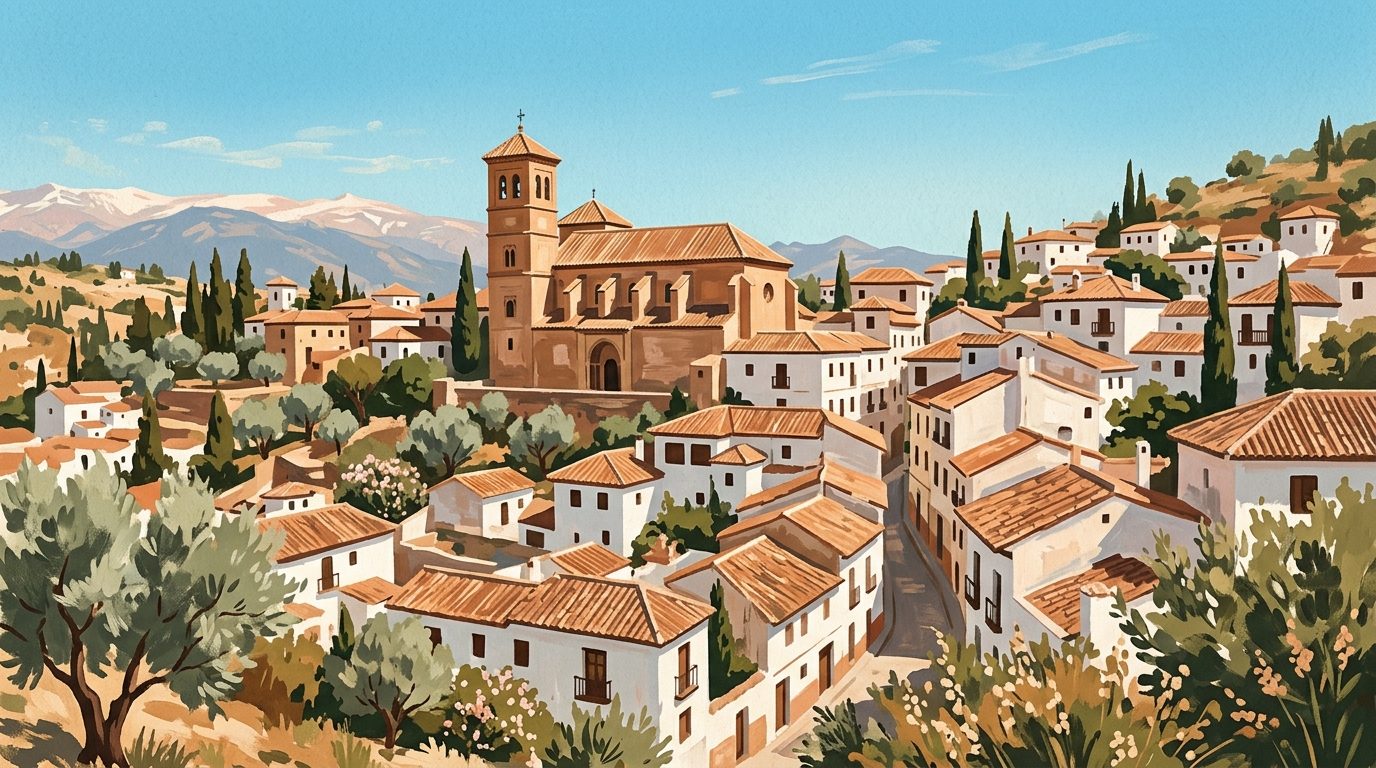
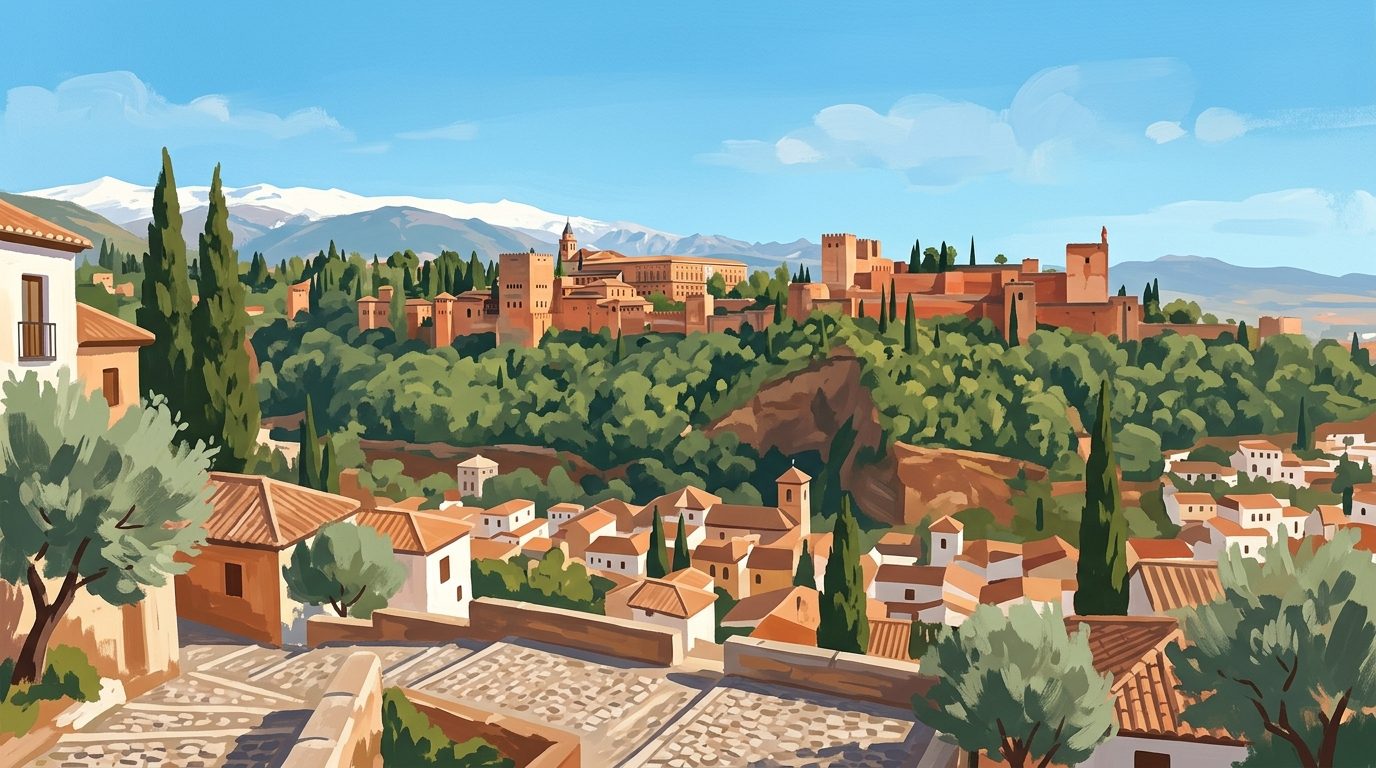
The Mirador de San Nicolás is the most famous viewpoint in Granada, situated at the heart of the historic Albaicín district. It offers a panoramic vista of the Alhambra palace complex set against the dramatic backdrop of the Sierra Nevada mountains. This location matters because it provides the quintessential image of the city, capturing the intersection of Moorish architecture and Andalusian landscape. It is a destination for every type of traveller, from photographers and romantic couples to families and those seeking to understand the geographical relationship between the medieval fortress and the old city. While it is often crowded, the atmosphere is an essential part of the Granada experience, reflecting the enduring appeal of the heritage within this ancient quarter. The primary draw is the unobstructed view across the Darro Valley to the red walls of the Alhambra. From this vantage point, you can clearly distinguish the various components of the palace, including the Alcazaba fortress, the Nasrid Palaces, and the Generalife gardens. Behind the terrace sits the Church of San Nicolás, a sixteenth-century building constructed over a former mosque, which gives the square its name. Look out for the local flamenco performers and musicians who frequently gather here, providing a live soundtrack to the scenery. Nearby, the Great Mosque of Granada offers a peaceful garden with similar views but a more contemplative atmosphere. The contrast between the terracotta roofs of the Albaicín and the imposing stone of the palace is particularly striking from this height. Beyond simply looking at the Alhambra, take a moment to explore the surrounding cobbled streets of the Albaicín. Just below the main terrace, you will find several small restaurants and carmens, which are traditional Granada houses with walled gardens. These often have private terraces where you can enjoy a meal with the same view away from the main crowd. Visiting the neighbouring Church of San Nicolás is also worthwhile if the doors are open, as it represents the transition from Islamic to Christian Granada. Do not miss the chance to observe the changing colours of the Sierra Nevada peaks, which remain snow-capped for much of the year, providing a stark white contrast to the warm tones of the fortress. Reaching the viewpoint involves a steep climb from the city centre, which can be done on foot via the Paseo de los Tristes or through the winding alleys of the Albaicín. If you prefer not to walk, the C31 or C32 minibuses run frequently from Plaza Nueva and stop very close to the square. Access to the viewpoint itself is free and it remains open at all hours, though the surrounding shops and the church follow their own schedules. You should allow at least thirty to forty-five minutes to soak in the view and explore the immediate area, though many people linger longer to enjoy the music. Check the official website for current opening times and prices if you plan to visit the interior of the church or the mosque gardens. Sunset is the most popular time to visit when the light turns the Alhambra walls a deep crimson. However, to avoid the largest crowds, consider arriving early in the morning when the air is crisp and the light is soft. Wear comfortable shoes with good grip, as the cobblestones in the Albaicín can be slippery and uneven. Keep a close watch on your belongings in the square and carry a bottle of water during the warmer months to stay hydrated during the ascent.

Mirador del Bendito
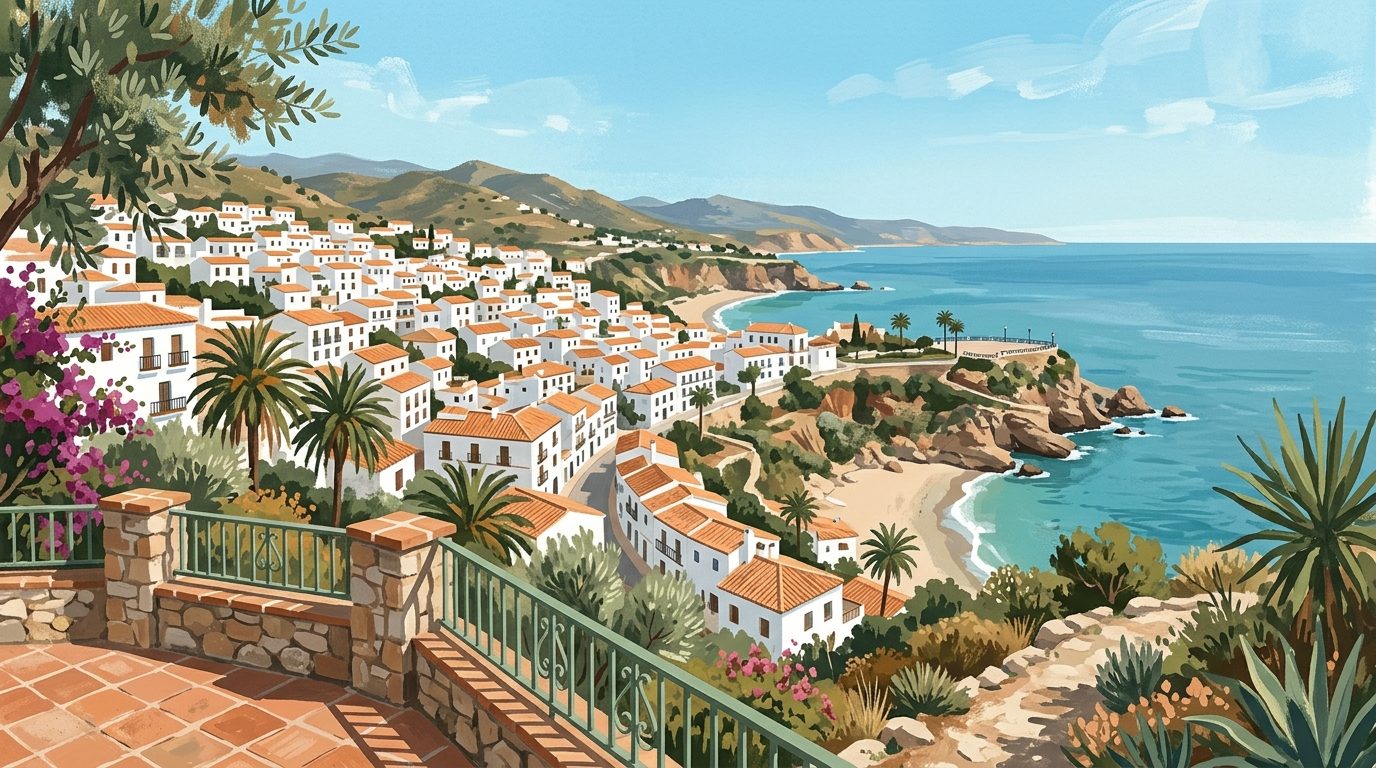
Mirador del Bendito is a quiet observation point located at the eastern end of the old town in Nerja. While many visitors flock to the famous Balcón de Europa, this particular viewpoint offers a more tranquil perspective of the rugged coastline. It sits atop a cliff overlooking the small cove of Playa de Carabeillo and the larger, more popular Playa de Burriana. This spot is perfectly suited for those who appreciate coastal scenery without the intense crowds often found in the town centre. It serves as a natural balcony where the Mediterranean meets the dramatic cliffs of the Axarquía region. Whether you are a photographer looking for the perfect light or a walker seeking a moment of stillness during a promenade through the white-washed streets, this lookout provides an authentic sense of the town seaside character. The primary draw of the Mirador del Bendito is its panoramic view of the coastline stretching towards the east. From this vantage point, you can see the azure waters of the Mediterranean crashing against the dark rocks and the golden sands of Burriana beach below. Look out for the traditional fishing boats that sometimes bob in the distance and the steep, winding steps that lead down towards the shore. The design of the viewpoint itself is modest and fitting for the local architecture, featuring a simple tiled area with benches that invite you to sit and watch the horizon. The surrounding gardens are often well-maintained, providing a splash of greenery and floral scent that mixes with the salty sea air. It is a place where the scale of the Sierra Almijara mountains meeting the sea becomes truly apparent. Walking along Calle Carabeo to reach the lookout is an experience in itself. This narrow street is one of the oldest in Nerja and remains remarkably well-preserved with its traditional houses and iron-wrought balconies. As you approach the viewpoint, the transition from the enclosed village atmosphere to the wide-open sea view is striking. Once at the mirador, take a moment to observe the different shades of blue in the water, which change depending on the depth and the seabed. It is an excellent spot for birdwatching, as seagulls and other coastal birds often soar at eye level near the cliff edge. The atmosphere here is particularly evocative during the blue hour just after the sun has set. Located at the end of Calle Hernando de Carabeo, the viewpoint is easily accessible on foot from the centre of Nerja. It is roughly a ten-minute walk from the Balcón de Europa, making it a simple addition to any walking tour of the town. Access to the Mirador del Bendito is entirely free of charge and the site remains open twenty-four hours a day, as it is a public space. You should expect to spend between fifteen and thirty minutes here, though many choose to stay longer to enjoy the breeze. While there are no facilities on the viewpoint itself, numerous cafes and shops are located just a short walk back along the street in the direction of the town hall. The best time to visit is during the early morning when the air is cool and the light is soft, or late in the evening to avoid the heat of the afternoon sun. If you plan to walk down the paths to the beaches below, ensure you are wearing sturdy footwear as the terrain can be steep and uneven. Bring a bottle of water, as there is very little shade at the viewpoint during the middle of the day.

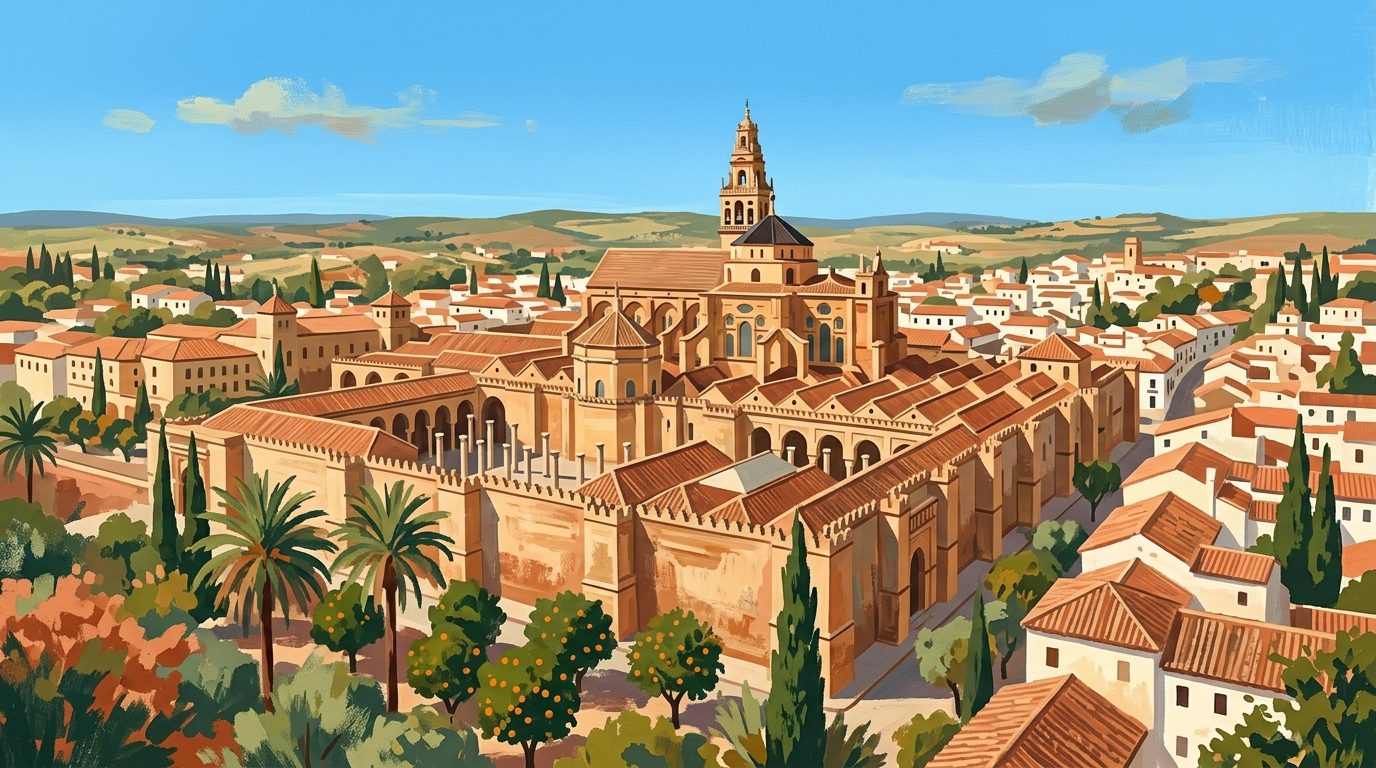
The Mosque-Cathedral of Córdoba represents one of the most significant architectural hybrids in the world, tracing the religious and political shifts of Spain through the centuries. Originally a Visigothic church, it was transformed into a grand mosque during the Umayyad Caliphate before being converted into a Christian cathedral after the Reconquista. This site is essential for anyone interested in history, religious art, or the complex cultural legacy of Al-Andalus. It suits travellers who appreciate the physical layering of different eras, where Islamic horse-shoe arches meet Renaissance choir stalls. Its scale and aesthetic complexity make it a priority for those who want to understand the unique historical identity of Andalucía and the overlapping faiths that have shaped its landscape. The most striking feature upon entering is the vast prayer hall, defined by an endless forest of double-tiered arches. These columns, made of jasper, onyx, marble, and granite, were often recycled from Roman and Visigothic ruins. Look specifically for the Mihrab, the prayer niche that faces south rather than towards Mecca, which is decorated with exquisite Byzantine mosaics gifted by the Emperor of Constantinople. The intricate gold and glass work here creates a luminous focal point that contrasts with the surrounding shadows. Above the central space, the Christian cathedral nave rises sharply from the middle of the mosque. The transition from the Islamic geometric precision to the ornate Baroque and Renaissance details of the High Altar provides a visual history of the city evolving faith and power structures. Step outside the main building into the Patio de los Naranjos, or Court of the Oranges. This tranquil courtyard, filled with rows of orange trees and fountains, served as the traditional space for ritual ablutions before prayer. It remains a peaceful place to reflect before or after entering the monument. You should also consider climbing the Bell Tower, which was originally the minaret of the mosque. From the top, you gain a panoramic view across the city, the Roman Bridge, and the winding streets of the Jewish Quarter. Inside the cathedral section, the mahogany choir stalls are a masterpiece of eighteenth-century woodcarving that deserve close inspection for their detailed biblical scenes. The monument is located in the heart of the historic centre, easily reached on foot from most central accommodation. If arriving by train, local buses and taxis run frequently from the station to the vicinity of the Mezquita. You should allow at least two hours for a thorough visit, though those with a keen interest in art history may wish for longer. Tickets can be purchased online in advance, which is highly recommended to ensure entry during busy periods. Check the official website for current opening times and prices, as these can vary for religious holidays and special evening tours. Entrance to the bell tower requires a separate ticket and has specific time slots. To experience the building at its most atmospheric, arrive early in the morning when the light first filters through the high windows. If you prefer a quieter atmosphere, the first hour of opening often sees fewer crowds. Dress respectfully, as this remains an active place of worship. Avoid the midday heat of summer by planning your visit for the cooler morning hours, and remember that photography is permitted but tripods are generally restricted.

Museo Casa Natal de Picasso
The Museo Casa Natal de Picasso is situated on the northern corner of Plaza de la Merced, occupying the very house where Pablo Picasso was born in 1881. This institution serves as a poignant gateway for understanding the formative years of the twentieth century's most influential artist. While the larger Museo Picasso Málaga nearby focuses on his major works, this site offers a more intimate glimpse into his early childhood and family life. It appeals to art historians and casual tourists alike who wish to connect with the man behind the Cubist movement. Visitors can walk through the rooms where the Picasso family lived, gaining a sense of the domestic environment that shaped his initial creative impulses and his lifelong connection to his Andalusian roots. Inside the museum, the nineteenth-century atmosphere is carefully preserved through a collection of personal belongings and period furniture. One of the most significant areas is the main salon, which reflects the bourgeois social standing of his father, José Ruiz Blasco, who was himself a painter and art teacher. You should look for the christening gown Picasso wore and various photographs that document the family’s daily life in Málaga. The museum also houses an impressive collection of graphic works, including lithographs and linocuts produced between 1930 and 1960. These pieces demonstrate his mastery of printmaking and show the evolution of his style long after he left his childhood home. The ceramic collection is equally noteworthy, featuring sketches and clay works that highlight his versatility as a craftsman. Beyond the domestic quarters, the museum manages a research library and a dedicated space for temporary exhibitions. These rotating displays often explore specific themes related to Picasso’s contemporaries or the historical context of his era. Make sure to visit the ground floor gallery, which often presents modern interpretations of Picasso's legacy. Another highlight is the collection of illustrated books, featuring rare editions that the artist collaborated on with famous poets and writers. This aspect of the museum reveals his intellectual depth and his involvement in the broader European avant-garde movement, providing a comprehensive view of his career beyond just painting. Reaching the museum is straightforward as it is located in the heart of Málaga’s historic centre, within walking distance of the cathedral and the Roman Theatre. Several local bus lines stop nearby at Plaza de la Merced, and the city’s central train station is a short taxi ride away. Most visitors find that one hour is sufficient to explore the galleries at a comfortable pace. You should check the official website for current opening times and prices, though it is worth noting that the museum typically opens daily except for major holidays. Tickets can be purchased at the door or online, with combined entry options often available for those wishing to see the temporary exhibition space located nearby. To avoid the largest crowds, try to visit during the mid-week or early in the morning when the museum first opens. The Plaza de la Merced itself is an excellent spot to sit and reflect on your visit, and you will find a bronze statue of Picasso on a bench outside where many people stop for a photograph. Remember that photography inside the galleries may be restricted, so pay attention to the signs in each room to ensure you follow the local regulations.

The Museo Cuevas del Sacromonte is an ethnographic museum located on the hillside of the Sacromonte district, offering an insight into the unique troglodyte lifestyle that has defined this part of Granada for centuries. This centre focuses on the history, culture, and natural environment of the Darro Valley, specifically examining the lives of the Roma community who carved these dwellings into the soft rock. It is a destination for those who want to understand the city beyond the Alhambra walls, appealing to visitors interested in social history, traditional craftsmanship, and the relationship between humans and their landscape. By preserving eleven original caves, the museum provides a tangible connection to a way of life that flourished in the face of geographic and social challenges. Visitors should look out for the meticulously recreated cave interiors which demonstrate how different spaces were used for living, working, and sheltering livestock. One cave serves as a traditional kitchen and bedroom, showing the ingenuity of using the earth's natural insulation to keep temperatures stable year-round. Another cave focuses on the forge, highlighting the importance of metalwork in the local economy, while others display tools for basketry and pottery. Beyond the caves themselves, the museum offers some of the most striking views of the Alhambra across the valley. The orientation of the site allows you to see the fortress from a perspective that reveals its strategic position and its relationship with the surrounding hills. The interpretation centre also explores the natural history of the Darro Valley, detailing the plants and wildlife that inhabit this semi-arid terrain. It is worth paying attention to the displays on traditional agriculture and the water management systems that were essential for survival on these steep slopes. The cultural heritage of the area is further explored through its connection to flamenco, explaining how the environment of the caves influenced the development of the Zambra, a style of dance and music particular to the Sacromonte district. This context adds depth to any performances you might see later in the evening in the village below. Reaching the museum involves a climb, as it sits at the top of the Barranco de los Negros. You can walk up through the narrow streets of the Albaicin and Sacromonte or take the C34 bus which drops passengers nearby at the Camino del Sacromonte. Access is generally via the Verea de Enmedio, a path that offers wonderful scenery but requires sturdy footwear and a moderate level of fitness. Most visitors spend between an hour and ninety minutes exploring the site. Check the official website for current opening times and prices, as these can vary between the summer and winter seasons. It is a relatively quiet spot compared to the city centre, making it a peaceful retreat for an afternoon of exploration. Late afternoon is the best time to visit, as the light begins to soften over the Darro Valley and the red walls of the Alhambra across the way. Because the museum is largely outdoors and involves climbing stone steps, it is advisable to bring water and wear a hat during the warmer months. Combining a visit here with a walk back down through the Albaicin as the sun sets provides a comprehensive experience of the historic upper districts of Granada.

Museo de Almería
The Museo de Almería stands as a testament to the complex archaeological history of southeast Spain, housed within a striking contemporary building that has won numerous architectural awards. It is primarily dedicated to the prehistoric cultures that shaped this arid landscape, specifically the Copper Age settlement of Los Millares and the Bronze Age society of El Argar. This site is particularly suited for those who enjoy structured storytelling, as the museum uses a conceptual approach rather than a simple chronological display. Families and scholars alike will find the interactive elements and large-scale reconstructions helpful in understanding how early humans managed resources in one of Europe’s driest regions. It is an essential stop for anyone wanting to grasp the historical context of the Almería province before exploring its outdoor archaeological sites. The museum is designed around a central stratigraphy column that rises through the floors, symbolising the layers of time. The first floor focuses on Los Millares, featuring a vast array of grave goods and tools that reveal a sophisticated social hierarchy and a command of copper metallurgy. Look out for the idiosyncratic oculados or eye-idols, which are small stone cylinders carved with haunting, owl-like eyes. Moving up to the second floor, the focus shifts to the Argaric culture. Here, the displays show a transition to more specialised craftsmanship and the distinctive practice of burying the deceased in large ceramic jars beneath the floors of their houses. The clarity of the displays allows you to see the evolution of pottery forms and the increasing complexity of social organisation as you ascend. Beyond prehistory, the third floor transitions into the Roman and Islamic periods of Almería’s history. A notable highlight is the marble statue of the god Priapus, found in a Roman villa near the coast, which remains one of the museum’s most famous individual pieces. The Islamic section provides context for the city’s founding as Al-Mariyya, showcasing intricate funeral steles and daily objects that reflect the era when Almería was a major Mediterranean port. The building itself, with its clever use of natural light and open spaces, enhances the experience, making the transition between different historical eras feel seamless. Do not miss the temporary exhibition space on the ground floor, which often hosts high-quality contemporary art or regional history deep-dives. You will find the museum on Carretera de Ronda, at the intersection with Calle Hermanos Pinzón, within walking distance of the central train and bus station. For those arriving by car, there is some street parking in the surrounding neighbourhoods, though public transport remains the simplest option. European Union citizens usually enjoy free entry upon presenting a valid identity card or passport, while a small fee applies to other international visitors. Most people find that two to three hours is sufficient to engage with the permanent collections thoroughly. Opening hours generally follow the standard Andalucían pattern of being closed on Mondays and having shorter hours on Sundays. Check the official website for current opening times and prices. To make the most of your visit, aim to arrive on a weekday morning when the galleries are quietest and the light filtering through the atrium is at its best. Since the museum provides the archaeological backbone for the region, it is wise to visit here before heading out to the actual site of Los Millares or the Alcazaba fortress. Wear comfortable shoes as there is plenty of walking across the different levels, and keep in mind that the climate control inside offers a welcome respite from the intense Almerían sun during the summer months.

Museo de Jaén
The Museo de Jaén is one of the most significant cultural institutions in Andalucía, situated in the provincial capital. It occupies a striking building that combines a nineteenth-century facade with contemporary extensions. This museum is essential for anyone interested in the complex history of the Iberian Peninsula, as it houses an exceptional collection of archaeology and fine arts. It particularly suits travellers who want to move beyond the usual tourist trail and understand the deep roots of the region, from its prehistoric origins through to the Middle Ages. It offers a quiet, contemplative atmosphere that provides a thoughtful perspective on the development of local society over several millennia. The primary reason to visit is the archaeology section, which contains one of the most important collections of Iberian art in existence. You should look for the sculptures from Cerrillo Blanco in Porcuna, which date back to the fifth century BC. These stone carvings depict warriors, mythological beasts, and funeral rites with extraordinary detail and emotional depth. They represent a sophisticated civilisation that flourished long before the Roman conquest. Another significant highlight is the Roman section, featuring intricate mosaics and funerary monuments discovered across the province. These pieces reveal how Roman culture integrated with local traditions, creating a unique Romano-Iberian aesthetic that defined the territory for centuries. Upstairs, the fine arts section offers a journey through Spanish painting from the fourteenth century to the present day. While the religious works and Baroque canvases are impressive, pay close attention to the nineteenth and twentieth-century galleries. These rooms feature works by local artists such as Manuel Ángeles Ortiz, providing a window into the artistic development of the province. The museum also hosts temporary exhibitions that often bridge the gap between ancient history and modern creative expressions. Taking the time to examine the traditional ceramics and local crafts on display provides a broader context for the daily life of people in Jaén throughout history. The museum is located on Paseo de la Estación, a main artery of the city within easy walking distance of the train station and the central park. Entry is free for citizens of the European Union, while other visitors pay a nominal fee, making it an accessible stop for all budgets. It is usually open from Tuesday to Sunday, though it closes on Mondays and during certain public holidays. Check the official website for current opening times and prices. Most visitors find that two to three hours is sufficient to explore both the archaeology and fine arts collections without feeling rushed. Arriving early in the morning when the museum opens allows you to enjoy the Iberian sculptures in near solitude. Since the museum is centrally located, it is an ideal activity before visiting the cathedral or the hilltop castle. Be aware that the galleries are extensive, so wearing comfortable shoes is sensible. Photography is generally permitted without flash, but check for updated signage in specific rooms to ensure compliance with local rules.

Museo de la Ciudad de Antequera (MVCA)
The Museo de la Ciudad de Antequera, housed in the grand Palacio de Nájera, acts as a primary chronicle of a town that has sat at the crossroads of Andalucía for millennia. This institution provides a sophisticated look at the cultural evolution of the region, making it an essential stop for history enthusiasts and those curious about the deep roots of southern Spain. It successfully bridges the gap between the prehistoric significance of the nearby Dolmens and the artistic heights of the Baroque era. The museum is particularly appealing for visitors who appreciate seeing high-quality archaeological finds presented within the elegant surroundings of an eighteenth-century noble residence, offering a clear sense of how the identity of the city has been shaped by successive civilisations. The most celebrated item in the museum is the Efebo de Antequera, a first-century Roman bronze of a beautiful youth that is widely regarded as one of the most important archaeological discoveries in the country. Found on a nearby farm in the mid-twentieth century, the statue stands as a testament to the sophistication of the Roman town of Anticaria. Beyond this single masterpiece, the Roman galleries are filled with expressive sculptures and detailed mosaics, such as the large mosaic of Oceanus. Visitors should look for the inscriptions and funerary markers that provide a human scale to the ancient world, particularly those detailing the lives of freed slaves who became significant figures in local society. The upper levels of the palace transition into the artistic wealth of the sixteenth to the nineteenth centuries. This section features an extensive collection of silverware and religious art, highlighting the historical importance of the city as a centre for silver smithing and ecclesiastical power. The museum also showcases the work of local painter Cristóbal Toral, known for his intriguing use of luggage and suitcases as central themes in his paintings. The building itself is a highlight of the visit; climbing the tower of the palace offers a panoramic perspective of the town, allowing you to see the relationship between the historic centre and the limestone landscape that surrounds it. Finding the museum is straightforward as it sits on Plaza del Coso Viejo, a prominent square within easy walking distance of the central shopping streets and the Alcazaba. If you are driving into Antequera, it is best to use the underground car park at Plaza de Castilla or nearby street parking, as the immediate vicinity of the museum consists of narrow pedestrian-friendly lanes. Plan to spend around two hours exploring the various floors. Check the official website for current opening times and prices, and keep in mind that many museums in the region close on Monday. Tickets are typically purchased at the entrance, and the facility is well-equipped with modern amenities for visitors. To enjoy the galleries at a more leisurely pace, try to visit on a weekday morning or during the late afternoon. The museum is an excellent retreat when the sun is at its strongest, as the thick walls of the palace keep the interior galleries naturally cool. After finishing your tour, take a moment to sit in the courtyard or the surrounding plaza to appreciate the exterior architecture of the Palacio de Nájera, which is considered one of the finest examples of civil architecture in the province of Málaga.
Museo de la Ciudad de Carmona
## Introduction The Museo de la Ciudad de Carmona is located within the Palacio del Marqués de las Torres, a grand 16th-century noble residence that underwent significant Baroque remodelling in the 1700s. While many visitors head straight for Carmona’s Roman Necropolis on the edge of town, this museum provides the essential historical framework for understanding why this hilltop settlement has remained occupied for over 5,000 years. It serves as a chronological record of the town’s evolution, from the Chalcolithic period through to the present day. For the visitor, it offers a manageable and deeply informative overview of Tartessian, Roman, and Moorish influences that shaped the Andalucian landscape. It is particularly suited to those who prefer seeing archaeological finds in their local context rather than in a large, detached provincial museum. ## What to See & Do ### The Palace Architecture and Patios Before examining the glass cases, take time to appreciate the building itself. The Palacio del Marqués de las Torres is a prime example of Carmonense civil architecture. The transition from the 16th to the 18th century is visible in the masonry and the layout. The heart of the museum is its central courtyard, or *patio*, featuring traditional semi-circular arches supported by marble columns. This space provides a cool, shaded respite and displays several larger stone artefacts. The staircase, covered by a detailed Mudéjar-style ceiling, leads to the upper floors where the narrative of the city continues. The building effectively mirrors the layers of history found in the objects it houses. ### The Tartessian and Orientalising Collection Carmona was a significant centre for the Tartessian civilisation, and the museum holds some of the most important finds from this era. Look specifically for the "Saltillo" collection, which includes intricately decorated ceramics and bronzes that demonstrate the influence of Phoenician traders on local craftsmanship. The displays explain how Carmona functioned as a strategic stronghold overlooking the fertile Vega (plain). The transition from the Bronze Age to the Iron Age is clearly mapped out here, showing how the settlement evolved from a collection of huts into a fortified urban centre long before the Romans arrived. ### Roman Carmo and the Olive Oil Trade The Roman section is particularly strong, as Carmona (then known as *Carmo*) was one of the few cities in Hispania permitted to coin its own currency. You will find impressive mosaics, including one depicting Medusa, and a variety of Roman funerary urns that provide a direct link to the nearby Necropolis. Beyond the art, the museum highlights the practicalities of Roman life, specifically the production of olive oil. The displays explain the technical processes used in the ancient mills and how the city became a vital cog in the Roman Empire’s agricultural economy, shipping amphorae of oil across the Mediterranean. ### The Evolution of the Modern City The final sections of the museum move through the Middle Ages, the Reconquista, and into the modern era. This provides a rare look at how a medieval fortress town adapted to become a centre of Baroque religious and civil architecture. There are models and maps showing the changes in the city walls and the development of the various parish churches that still dominate the skyline. This section is invaluable for visitors planning to walk the old town afterwards, as it helps identify the different architectural periods of the manor houses and convents found in the surrounding streets. ## Practical Information ### Getting There Carmona is approximately 35 kilometres east of Seville. If you are driving, take the A-4 motorway and use the Carmona exits. Parking within the historic centre is extremely difficult due to narrow, one-way streets. It is advisable to park at the Paseo de la Estatua or near the Puerta de Sevilla and walk up into the old town. For those using public transport, the M-124 bus runs regularly from Seville’s Plaza de Armas bus station, taking about 45 to 60 minutes. From the Carmona bus stop, it is a 10-minute uphill walk to the museum, which is situated near the Town Hall and the Church of El Salvador. ### Opening Times & Tickets The museum generally opens Tuesday to Sunday. In the winter months, it typically operates from 10:00 to 14:00 and 15:30 to 18:30. During the summer (July and August), it often operates on a reduced morning-only schedule to avoid the afternoon heat, usually 10:00 to 14:00. The museum is usually closed on Mondays. General admission is approximately €3, with discounts for students and seniors. Check the official website or the Carmona Tourism office for current opening times and prices before your visit. ### How Long to Spend Allow between 60 and 90 minutes to see the museum comfortably. The layout is logical and follows a set path through time, so it does not require a significant time investment to see everything. If you are a dedicated history enthusiast, you may want two hours to read the detailed information panels, which are generally available in both Spanish and English. ### Best Time to Visit The best time to visit is on a weekday morning when the museum is quietest. Spring and autumn are the ideal seasons, as the walk through the old town to reach the museum is more pleasant. If visiting in summer, aim for the 10:00 opening to finish your visit before the midday temperatures peak. ## Tips for Your Visit Wear comfortable walking shoes; the streets surrounding the museum are paved with traditional river stones and can be uneven. Combine your visit with the Roman Necropolis, located about 15 minutes away on foot; the museum provides the social history that makes the tombs more meaningful. Accessibility is somewhat limited for those with mobility issues, as some of the upper galleries in the palace are reached via stairs, though the ground floor and patio are accessible.

Museo de la Guitarra Almeria
The Antonio de Torres Spanish Guitar Museum in Almería is a sophisticated tribute to the man often called the father of the modern guitar. This museum occupies a contemporary building in the heart of the old city and serves as both a memorial to Torres and a comprehensive educational centre. It is an essential stop for music enthusiasts and those curious about the artisan traditions of Andalucía. Visitors will discover why Almería is considered the spiritual home of the instrument, as the museum explains how Torres revolutionised guitar design in the nineteenth century. It is a well-paced attraction that appeals to families, historians, and professional musicians alike, providing a quiet space to appreciate the craftsmanship behind one of the world's most popular instruments. The primary draw is the collection of instruments, particularly those linked to Antonio de Torres himself. Visitors can examine the intricate details of his designs, which increased the body size and changed the internal bracing to create a richer and more resonant sound. Interactive displays explain the various stages of guitar construction, from selecting the specific types of wood to the final polishing process. One room features a series of historical guitars that trace the lineage from early baroque versions to the familiar six-string setup used today. Keep an eye out for the workshop recreation, which provides a tactile sense of the environment where these instruments were crafted, complete with authentic tools and templates used by luthiers throughout the centuries. The museum also explores the guitar's role across various musical genres, including flamenco, classical, and jazz. There are dedicated listening stations where you can hear the distinct tonal qualities of different models played by masters. A highlight for many is the soundproof room where visitors can actually pick up a guitar and play, regardless of their skill level. This hands-on element makes the technical history feel much more tangible and engaging. Additionally, the top floor often hosts temporary exhibitions or small recitals that take advantage of the building’s excellent acoustics and intimate atmosphere. The museum is situated in the historic centre of Almería, just behind the cathedral on Ronda del Beato Diego Ventaja. It is an easy walk from most central landmarks and the main shopping avenues. It generally opens from Tuesday to Sunday, though it usually closes for a few hours in the afternoon following the traditional local schedule. Check the official website for current opening times and prices. A thorough visit usually takes between sixty and ninety minutes, making it a perfect addition to a morning stroll through the old quarter. Admission is typically very affordable, and the museum is fully accessible for those with mobility issues. Visit on a weekday morning to enjoy the galleries without the crowds. Combining this museum with a tour of the nearby cathedral or the Alcazaba provides a well-rounded experience of the city's heritage. If you are a guitarist, the soundproof room is a highlight, so do not be shy about testing the instruments. Check the local cultural listings as the museum occasionally hosts intimate evening performances which are highly recommended for the atmosphere.

Museo Garnelo
The Museo Garnelo, located in the town of Montilla within the province of Córdoba, is dedicated to the life and work of José Santiago Garnelo y Alda. Born in the mid-nineteenth century, Garnelo became one of the most respected academic painters of his era, serving as a deputy director at the Prado Museum and a teacher to the young Pablo Picasso. This museum is an essential stop for visitors who appreciate fine art and want to understand the transition between classical academicism and the early stages of modern Spanish painting. It is housed in the Casa de las Aguas, a restored neoclassical mansion that provides a sophisticated backdrop for his expansive body of work. Art enthusiasts will find a comprehensive collection that reflects the technical mastery and intellectual depth of an artist who was celebrated across Europe during his lifetime. The collection is spread across several rooms, showcasing Garnelo’s versatility in various genres including historical scenes, religious compositions, and intimate portraits. One of the most significant pieces is Lourdes, a large-scale work that demonstrates his ability to handle complex lighting and crowd dynamics. You should also look for his preparatory sketches and smaller studies, which offer a glimpse into his creative process and his meticulous attention to anatomical detail. His mastery of the human form is particularly evident in his mythological and historical paintings, such as the dramatic depictions of classical figures. The museum does an excellent job of categorising his output, allowing you to follow his development from a gifted student at the San Fernando Royal Academy to a seasoned master of international renown. Beyond the individual canvases, the museum experience is enhanced by the setting of the Casa de las Aguas. This building also houses the Manuel Ruiz Luque Library, which contains an extraordinary collection of rare books and manuscripts. In the Garnelo galleries, pay close attention to the portraits of his family members and the Spanish aristocracy, where his brushwork often becomes more relaxed and expressive compared to his formal commissions. The interplay of light in his landscape studies also reveals a more personal side of his artistry. Taking the time to explore these quieter corners of the museum helps to round out the portrait of a man who was deeply integrated into the cultural and intellectual life of Spain at the turn of the century. Reaching Montilla is straightforward from Córdoba, with the journey taking roughly forty minutes by car or an hour by local bus services. The museum is situated on the Plaza de la Cultura in the heart of the town. You should allow approximately ninety minutes to two hours to view the collection comfortably and explore the building. The museum generally operates with morning and late afternoon sessions, often closing during the middle of the day in accordance with local customs. Admission fees are modest, but it is advisable to check the official website for current opening times and prices before your visit to ensure the galleries are not closed for private events or seasonal changes. The most pleasant time to visit Montilla is during the spring or autumn when the temperatures are mild enough to enjoy a walk through the town. To make the most of your trip, consider pairing a morning at the museum with an afternoon visit to one of the local Montilla-Moriles wineries. Photography is generally restricted in certain areas, so always look for signage or ask the staff before taking pictures of the artworks.

Museo Histórico Local de Montilla
The Local Historical Museum of Montilla, situated in the heart of the Campiña Sur cordobesa, serves as a gateway to the region’s long and layered past. Housed within the former granary of the Dukes of Medinaceli, this museum provides an essential context for anyone interested in the transition from prehistoric settlements to the Roman period and eventually the mediaeval lordship of the area. It is particularly suited for curious travellers who want to look beyond the town’s famous wine heritage and understand the archaeological foundations that shaped its identity. The collection is thoughtfully arranged to guide you through the various civilisations that have left their mark on these fertile lands, offering a quiet and scholarly retreat from the sun-drenched streets outside. One of the most significant sections of the museum focuses on the Roman era, which defines much of the local archaeological record. You should pay close attention to the impressive collection of funerary steles and the remarkable ceramic pieces recovered from nearby excavations. The Roman oil lamps and everyday household items provide a tangible connection to the lives of people who lived here two millennia ago. Another standout is the Iberian collection, featuring votive offerings and stone sculptures that demonstrate the artistic and religious sophistication of the pre-Roman inhabitants. The display cases are curated to highlight the evolution of local craftsmanship, from basic flint tools found in Palaeolithic sites to the refined pottery of later eras. Beyond the ancient artefacts, the museum explores the mediaeval and modern history of Montilla through its association with the powerful house of Aguilar and later the Marquises of Priego. The displays include architectural fragments and heraldic shields that once decorated the town's grandest buildings. You will also find an intriguing selection of objects related to the traditional industries of the region, which help bridge the gap between the archaeological past and the agricultural present. Look for the early agricultural implements that offer a glimpse into the labour-intensive history of local viticulture and olive oil production before the industrial age changed the landscape forever. Reaching the museum is straightforward as it is located on Calle Rita Pérez, just a short walk from the central Plaza de la Rosa. If you are arriving by car from Córdoba or Málaga, there is public parking available within walking distance, though the narrow streets of the old town are best explored on foot. Visitors should plan to spend around an hour to ninety minutes exploring the exhibits at a steady pace. Regarding access, you should check the official website for current opening times and prices, as these can vary depending on the season or local holidays. Generally, the museum follows a typical Andalucian schedule with a midday break for lunch. To make the most of your visit, aim to arrive shortly after the museum opens in the morning when the galleries are quietest and the light is softest. Combine your trip with a walk to the nearby ruins of the Castle of Montilla to see where many of the displayed artefacts were originally found. Wearing comfortable shoes is advisable as the historical centre features uneven pavements. Remember that photography without flash is usually permitted, which is helpful for capturing the intricate details of the Roman inscriptions.

The Palace of Time, located within the Atalaya Museums complex in Jerez de la Frontera, is one of the most prestigious horological museums in Europe. It houses a vast collection of masterpieces dating from the seventeenth to the nineteenth centuries, making it an essential stop for history enthusiasts and fans of mechanical engineering. This attraction is far from a static repository of silent objects; it is a living exhibition where hundreds of timepieces are maintained in perfect working order. The setting adds to the appeal, as the museum is housed in a nineteenth-century neoclassical palace surrounded by landscaped gardens. It suits visitors who appreciate the intersection of scientific precision and decorative art, offering a quiet and contemplative atmosphere away from the busier tourist circuits. The collection consists of approximately three hundred clocks, primarily of French and English origin, which showcase the evolution of timekeeping technology and artistic styles. Visitors should look for the intricate mantel clocks from the Louis XV and Louis XVI periods, often decorated with gilded bronze, marble, and delicate porcelain. A standout feature is the way the museum engages the senses; the rooms are filled with the soft ticking and rhythmic chiming of the various mechanisms. Keep an eye out for the skeleton clocks, which reveal their complex inner workings through glass panels, and the tall grandfather clocks that demonstrate the height of eighteenth-century craftsmanship. The museum also employs holographic technology and multimedia displays to explain the scientific principles behind the movements, helping to interpret the history for a modern audience. Beyond the clocks themselves, the Atalaya complex offers a broader cultural experience. The palace is situated within the Atalaya Gardens, which are recognised for their botanical variety and provide a serene space for a walk. These grounds are also home to the Mystery of Jerez, an audiovisual space dedicated to the history of wine production in the region. Do not miss the chance to be in the main galleries when the hour strikes, as witnessing the synchronised chiming of scores of antique clocks is a rare and evocative experience. The craftsmanship on display extends to the furniture and paintings within the palace, which provide a rich context for the era in which these timepieces were created. The museum is located on Calle Cervantes, a short walk from the Royal Andalusian School of Equestrian Art, making it easy to combine these two major Jerez attractions in a single morning. It is roughly a twenty-minute walk from the central railway station or a short taxi ride from the Plaza del Arenal. Visitors should typically allow ninety minutes to two hours to fully appreciate the collection and the gardens. Opening hours are generally focused on weekday mornings, though they can be limited, so planning ahead is necessary. Check the official website for current opening times and prices, as these can vary seasonally or during local festivals. To experience the museum at its best, arrive shortly before the hour to ensure you are inside the main galleries when the clocks begin their collective chime. The atmosphere is quietest during the middle of the week, allowing for a more intimate look at the intricate dials and engravings. Since the museum is primarily indoors and climate-controlled to protect the delicate mechanisms, it provides an excellent escape from the midday heat. Photography is usually permitted, but check local signs regarding the use of flash near the more sensitive exhibits.

Museo Picasso Málaga
Located within the historic Palacio de Buenavista, the Museo Picasso Málaga stands as a profound tribute to the city’s most famous son. Established in 2003, it fulfilled Pablo Picasso's own wish that his work be represented in the place of his birth. The museum occupies a converted sixteenth-century palace that seamlessly blends Renaissance architecture with modern gallery spaces. It is an essential stop for anyone wanting to understand the immense breadth of Picasso’s creative output, spanning nearly eight decades of his life. While seasoned art historians will find plenty to analyse, the collection is accessible enough for casual visitors who wish to explore how a child prodigy from the south of Spain transformed into the most influential figure in modern art history. The permanent collection comprises over two hundred works donated or loaned by members of the Picasso family. Rather than focusing solely on his most famous masterpieces found in Paris or Madrid, this museum offers an intimate look at his personal artistic evolution. You should pay close attention to his early academic studies, which reveal a technical mastery often overshadowed by his later experimental styles. The exhibition rooms guide you through his various phases, including his explorations of Cubism, his classical period, and his deeply moving late portraits. Of particular interest are the sculptures and ceramics on display, which showcase his playful nature and his ability to find creative potential in unconventional materials. The layout is designed to be chronological, allowing you to trace the shifting themes of his life, from domestic intimacy to the broader tragedies of the twentieth century. Beyond the canvases and sketches, the museum offers several unique architectural experiences. Do not overlook the basement level, where excavations during the palace's renovation revealed significant archaeological remains. Here, you can view Phoenician walls, Roman structures, and elements of an Islamic palace, providing a physical timeline of Málaga’s long history beneath the modern gallery floors. The central courtyard of the Palacio de Buenavista is another highlight, offering a tranquil space to reflect on the art. The museum also hosts high-quality temporary exhibitions that often place Picasso’s work in conversation with other major artists or specific movements, so it is worth checking the schedule before your arrival to see what additional displays are available. You can find the museum on Calle San Agustín, a short walk from the Cathedral in the historic centre of Málaga. The city is well-connected by train and bus, and the museum is easily reached on foot from most central locations. It is open every day of the week, though hours can vary slightly depending on the season. To avoid disappointment and long queues, it is highly recommended to book your tickets in advance through the official website, where you can choose a specific entry time. Most visitors find that ninety minutes to two hours is sufficient to appreciate both the permanent collection and the temporary exhibitions at a comfortable pace. Check the official website for current opening times and prices to ensure you have the most up-to-date information for your trip. To enjoy a quieter experience, try to schedule your visit for early morning immediately after opening or during the late afternoon when the largest tour groups have departed. Taking advantage of the included audio guide is highly beneficial, as it provides valuable context to the works on display. If you have a deeper interest in the artist, consider purchasing a combined ticket that includes the Museo Casa Natal, located nearby in Plaza de la Merced, where Picasso spent his early childhood.

Museum of the village of Nerja
The Museo de Nerja, situated in the heart of the town, serves as an essential companion to the famous Nerja Caves. It offers a comprehensive chronological journey through the history of the Axarquía region, from the Palaeolithic era to the tourism boom of the 1960s. This museum is particularly suited to those who want to understand the cultural and archaeological context of the area beyond its beaches. It appeals to history enthusiasts and families who have visited the caves and wish to see the artefacts discovered there. By placing the town’s development within a wider Mediterranean framework, the museum provides a deeper appreciation for how this former fishing village evolved into a major international destination. The collection is organised across several floors, featuring interactive displays and significant archaeological finds. A primary highlight is Pepita, the well-preserved skeleton of a young woman dating back nearly 10,000 years, which offers a poignant glimpse into prehistoric life in the caves. Visitors should also look for the Roman ceramics and Moorish coins that document the various civilisations that settled along this coastline. The museum uses modern technology, including touch screens and audiovisual presentations, to explain the geological formation of the landscape and the importance of the local sugar industry in the nineteenth century. Look out for the detailed models of the village as it appeared in centuries past, which help to visualise the urban transformation that occurred before the arrival of modern tourism. Beyond the permanent archaeological exhibits, the museum often hosts temporary art exhibitions and cultural events in its lower gallery. One specific experience to look for is the section dedicated to the filming of the popular Spanish television series Verano Azul, which brought Nerja into the national spotlight during the 1980s. This nostalgic display connects the town’s ancient roots with its contemporary identity. The rooftop area also provides a different perspective of the surrounding square and the mountains in the distance, offering a quiet space to reflect on the historical timeline presented throughout the building. The museum is located at Plaza de España, right next to the Balcón de Europa, making it easy to find on foot from the town centre. It is open throughout the year, though hours may vary between the summer and winter seasons. Visitors can purchase a joint ticket that includes both the Nerja Caves and the museum, which is often more economical than buying them separately. You should allow approximately one to two hours to explore the exhibits thoroughly. Check the official website for current opening times and prices, especially as evening hours can change during local festivals or the peak summer months. To avoid the busiest crowds, it is best to visit the museum in the morning or during the mid-afternoon siesta period when many people are at the beach. If you are visiting the Nerja Caves first, keep your ticket as it may provide discounted entry here. Wear comfortable shoes as there is a fair amount of walking between floors, although the building is fully accessible with lifts for those who need them.

Nasrid Palaces
The Nasrid Palaces represent the pinnacle of Islamic architecture in Europe and serve as the historic heart of the Alhambra complex in Granada. Built as the residence for the sultans of the Nasrid Dynasty, the final Muslim rulers of Spain, these structures are a testament to the sophisticated craftsmanship and political power of the fourteenth century. The site is divided into three main areas: the Mexuar, the Comares Palace, and the Palace of the Lions. It suits visitors who appreciate intricate art, historical narratives, and the intersection of different cultural influences. Rather than grand, imposing facades, the palaces focus on interior harmony, using light, water, and geometry to create a sense of paradise on earth. It is a place for slow observation, where the details of the plasterwork and the sound of running water tell the story of a lost kingdom. When walking through the palaces, your attention should be drawn to the interplay between architecture and nature. The Court of the Myrtles acts as a transition into the Comares Palace, where the massive reflection pool creates a sense of stillness and doubles the visual height of the surrounding arches. Inside the Hall of Ambassadors, look upwards to the incredible cedar wood ceiling, which contains over eight thousand pieces arranged to represent the seven heavens of the Islamic universe. The transition to the Palace of the Lions brings a shift in atmosphere, focusing on a central fountain supported by twelve marble lions. This courtyard is famous for its forest of slender columns and the intricate muqarnas, or honeycomb vaulting, found in the adjacent rooms. These three-dimensional stalactite decorations are carved with such precision that they seem to defy the weight of the stone above. The Hall of the Abencerrajes is particularly striking for its star-shaped dome, which catches the afternoon light to highlight the complex geometry of the ceiling. Move through to the Hall of the Two Sisters to see one of the best-preserved examples of Nasrid tilework and plaster carving. The Lindaraja Lookout provides a framed view of the gardens, illustrating how the architects used windows as living paintings. Do not overlook the smaller details, such as the epigraphic inscriptions in the walls that repeat the Nasrid motto, "There is no victor but God." This constant repetition of calligraphy serves as both decoration and a continuous religious reminder throughout the royal apartments. The palaces are located within the Alhambra complex on the Sabika hill. You can reach the site on foot from Plaza Nueva by walking up the Cuesta de Gomérez or by taking the C30 or C32 red minibuses from the city centre. Advance booking is mandatory, as tickets are often sold out weeks or even months ahead. Your ticket will have a specific half-hour time slot printed on it; this is the only time you are permitted to enter the Nasrid Palaces. If you miss this window, you will be denied entry. Plan to spend at least one hour inside the palaces themselves, though the entire Alhambra site requires roughly three to four hours. Check the official website for current opening times and prices. To avoid the largest crowds, try to book the earliest morning slot or an evening visit when the artificial lighting emphasises the textures of the stone carvings. Wear comfortable shoes as the floors are uneven and you will be walking significant distances across the whole complex. It is also wise to carry a water bottle, especially during the summer months when Granada experiences intense heat. Arriving at the main Alhambra gates at least forty-five minutes before your palace entry time ensures you have enough time to walk to the palace entrance.
Palacio de las Dueñas
## Introduction Palacio de las Dueñas is one of Seville’s most significant aristocratic residences, serving as the city home of the House of Alba since the 17th century. Built between the 15th and 16th centuries, the palace is a masterclass in the evolution of Andalusian architecture, blending Gothic-Mudejar elements with Renaissance refinements. Unlike the city’s larger monuments, Dueñas offers a remarkably intimate experience. Until 2016, it remained entirely private; today, visitors can walk through rooms that still feel lived-in, filled with the personal collections, family photographs, and eccentricities of the late 18th Duchess of Alba. It is an essential stop for those interested in the intersection of Spanish nobility, art history, and the quiet, walled-garden tradition of Seville. It particularly suits visitors who prefer a slower, more contemplative pace than the often-crowded Real Alcázar. ## What to See & Do ### The Main Courtyard and Mudejar Architecture The heart of the palace is the Patio de las Dueñas, a space defined by its intricate Mudejar plasterwork and horseshoe arches. The architecture here reflects the Moorish influence that persisted long after the Reconquista, featuring detailed geometric tiling (azulejos) and a central fountain. As you walk the perimeter, look up at the fine Renaissance galleries. The courtyard is not merely an architectural relic; it serves as a cooling lung for the entire building. The contrast between the terracotta-coloured walls, the green palms, and the intricate stone carvings provides a clear example of the "Sevillian style" that local noble families favoured for centuries. ### The Private Collections and Salons Moving through the interior rooms, you encounter an extensive array of art and historical artefacts. The collection is eclectic, ranging from 17th-century tapestries and Spanish masters like José de Ribera to archaeological finds and bronze sculptures. One of the most engaging aspects is the display of the late Duchess’s personal interests. You will find posters for the Seville Fair, bullfighting memorabilia, and furniture that has been in the family for generations. The "Sala de la Gitana" features a notable bronze sculpture by Mariano Benlliure, and the chapel showcases the family's deep-rooted religious traditions. This is a rare opportunity to see how Spanish grandees integrated priceless art into their daily lives. ### The Gardens and the Machado Connection The gardens and courtyards are famous for their lemon and orange trees, ancient bougainvillea, and the scent of jasmine. These spaces provided the childhood backdrop for the renowned Spanish poet Antonio Machado, who was born in the palace in 1875 while his father served as the estate’s administrator. His famous verse describing "a clear orchard where the lemon tree ripens" refers directly to these grounds. Visitors should take time to explore the Patio del Aceite and the small, secluded corners that offer respite from the city's heat. The landscaping is quintessentially Mediterranean, prioritising shade, water features, and evergreen foliage. ## Practical Information ### Getting There Palacio de las Dueñas is located in the northern part of Seville’s historic centre, a short walk from the Metropol Parasol (Las Setas). - **On Foot:** It is roughly a 10-minute walk from the commercial centre (Plaza del Duque) or 15 minutes from the Cathedral. - **Bus:** Lines 1, 10, 11, 12, 15, 16, 20, 24, 27, and 32 all stop nearby at Plaza Ponce de León or Santa Catalina. - **Parking:** Driving is not recommended as the surrounding streets are extremely narrow. The nearest public car park is Parking Escuelas Pías. ### Opening Times & Tickets The palace is typically open daily from 10:00. Closing times vary by season—usually 18:00 in winter and 20:00 in summer. The ticket office closes 45 minutes before the palace. There is often a free entry window on Monday afternoons from 16:00, though capacity is limited and queues form early. Check the official website for current opening times and prices. ### How Long to Spend An honest recommendation is between 90 minutes and two hours. This allows enough time to view the interior rooms thoroughly and spend a quiet 20 minutes in the gardens without rushing. If you use the audio guide, you may want to allow for the full two hours. ### Best Time to Visit The best time of year is during the spring (March and April) when the orange blossoms are in bloom and the temperature is mild. To avoid the largest crowds, aim to arrive as the gates open at 10:00 or during the mid-afternoon siesta hours when many tour groups are at lunch. Weekdays are significantly quieter than weekends. ## Tips for Your Visit Purchase your tickets online in advance to bypass the physical queue, which can be slow during peak season. The audio guide is highly recommended here, as it provides essential context on the House of Alba and identifies specific artworks that lack detailed signage. If you are visiting in summer, the palace interior is naturally cool, making it an excellent refuge during the hottest part of the day. Photographs are permitted but flash and tripods are prohibited.

Palacio de Viana
Located in the Santa Marina district, the Palacio de Viana is a sprawling manor house that serves as a living museum of Cordoban domestic architecture. Spanning five centuries, the estate evolved from a modest medieval dwelling into a grand noble residence, eventually earning its reputation as the museum of courtyards. It is an essential stop for visitors who want to understand the private side of the city's history, moving beyond the public monuments to explore how the local aristocracy lived and entertained. Garden enthusiasts and history students will find the site particularly rewarding, as it illustrates the development of the traditional Andalucian patio from a functional utility space into an elaborate sensory retreat. The true heart of the palace lies in its twelve distinct courtyards and its extensive garden, each offering a different atmosphere and architectural style. The Patio de Recibo welcomes visitors with its impressive Renaissance colonnade, designed to impress guests upon their arrival. As you move through the complex, look for the Patio de los Naranjos, which retains the feel of a medieval garden with its citrus trees and the sound of running water. The Patio de la Madama is more intimate, featuring a central statue surrounded by a ring of cypress trees. Each space is carefully planted to ensure there is interest throughout the seasons, with a mix of aromatic herbs, climbing roses, and traditional flowering pots that define the aesthetic of the city. Beyond the outdoor spaces, the interior of the palace contains a significant collection of art and historical artefacts. The guided tour of the upper floor reveals how the Viana family lived, showcasing Cordoban leatherwork, Flemish tapestries, and an extensive library. The ground floor rooms are equally impressive, housing collections of firearms, porcelain, and traditional furniture. Do not miss the Courtyard of the Columns, which was added in the twentieth century and serves as a grand space for events. The transition between the domestic interior and the lush greenery of the courtyards provides a constant contrast that keeps the experience engaging throughout the visit. You can find the palace at Plaza de Don Gome in the northern part of the historic centre. It is easily reachable on foot from the Mosque-Cathedral, though it takes about twenty minutes to walk through the winding streets. You should allow at least ninety minutes to two hours to see both the patios and the house interior properly. There are two types of tickets available: one for the courtyards only and a combined ticket that includes a guided tour of the palace rooms. Check the official website for current opening times and prices, as these can vary between the summer and winter seasons. While the palace is beautiful year-round, visiting in May during the Cordoban Courtyards Festival is particularly special, though this is also the busiest period. To avoid the largest crowds, try to arrive when the gates first open in the morning. If you visit during the summer months, the shaded courtyards provide a natural respite from the heat. Wear comfortable walking shoes, as the stone floors and uneven paving in some older sections require careful footing.

Palacio del Virrey Laserna
The Palacio del Virrey Laserna is an extraordinary example of a Spanish aristocratic residence located in the heart of Jerez de la Frontera. This grand house has remained in the hands of the same family since the thirteenth century, offering a rare continuity of heritage that spans over seven hundred years. It was once the home of the Count of the Andes and General José de la Serna, the last Viceroy of Peru. It appeals specifically to visitors who appreciate history, genealogy, and the domestic lives of the Spanish nobility. Unlike museums that feel clinical or abandoned, this palace retains the atmosphere of a lived-in family home, filled with personal effects and a sense of enduring legacy. Stepping inside the palace reveals an impressive collection of furniture, porcelain, and artworks that reflect the changing tastes of several centuries. The neoclassical architecture serves as a backdrop to an array of seventeenth and eighteenth-century pieces, including delicate French tapestries and Flemish paintings. One of the most significant aspects of the interior is the collection of family portraits that line the walls, providing a visual history of the lineage that has maintained the property. Keep a sharp eye out for the elaborate chandeliers and the intricate tile work that decorates many of the lower levels, showcasing the traditional craftsmanship of the region during its most prosperous eras. Beyond the formal reception rooms, the palace contains a remarkable library filled with antique volumes that highlight the intellectual pursuits of the family over generations. The dining room remains set as if for a formal gala, demonstrating the etiquette and social rituals of the Spanish upper class. The central courtyard and gardens offer a peaceful retreat from the heat of the city, featuring traditional fountain designs and lush vegetation. These spaces provide a glimpse into the private leisure of the residents, far removed from the public eye of the surrounding streets and the heat of the Andalusian afternoon. Finding the palace is straightforward, as it is situated on Calle Pozuelo, just a short walk from the Jerez Alcázar and the Cathedral. Access to the interior is strictly by guided tour, which allows for a deeper understanding of the anecdotes and historical context behind the various rooms. Tours typically last about forty-five minutes to an hour. You should check the official website for current opening times and prices, as these can vary depending on the season and family events. Most visitors find that an hour is sufficient to see the highlights, though those with a keen interest in art may wish to linger longer during the tour to examine the finer details. To enjoy the most pleasant weather, visit Jerez during the spring or early autumn, particularly during the Horse Fair or the autumn harvest festivals when the city is in high spirits. Photography is often restricted in certain private areas, so it is wise to clarify the rules with your guide upon arrival. Combining a visit here with the nearby Alcázar provides a comprehensive overview of the architectural evolution of Jerez from the Moorish period through to the nineteenth century.

Parque Arias Montano
Parque Arias Montano serves as a central green lung for the town of Aracena, providing a shaded retreat that reflects the natural beauty of the Sierra de Aracena and Picos de Aroche Natural Park. Named after the sixteenth-century humanist and theologian Benito Arias Montano, who had close ties to this region, the park acts as a social hub for locals and a restful stop for travellers. It is particularly suited to those who want to experience the slower pace of life in Huelva's highlands or families looking for a safe space for children to play. The park combines landscaped gardens with the ruggedness of the surrounding mountains, offering a glimpse into the local flora and the town's historical connection to the land. One of the most striking features of the park is its rich collection of trees, including species typical of the dehesa landscape such as cork oaks and holm oaks. As you walk through the shaded paths, you will encounter various monuments and sculptures that pay tribute to historical figures and local traditions. The sound of running water is a constant companion here, with several traditional fountains providing a sense of coolness even during the warmer summer months. It is important to look out for the statue of Arias Montano himself, which stands as a reminder of the intellectual heritage of the area. The integration of regional stone in the low walls and benches gives the space a cohesive, natural feel that matches the architecture of the surrounding village. Beyond the central paths, the park offers several quiet corners for reading or enjoying a coffee from one of the nearby establishments. The children's playground is a popular spot for local families, making it an excellent place to observe the daily rhythms of Aracena life. If you walk towards the edges of the park, you can catch glimpses of the white-washed houses that climb the hillside towards the medieval castle. The park often serves as a venue for local festivals and markets, so visitors might find themselves encountering craft fairs or open-air concerts depending on the time of year. It provides a necessary contrast to the subterranean experience of the nearby Gruta de las Maravillas. Finding the park is straightforward as it is located on the Avenida de Andalucía, within easy walking distance of the town centre and the famous cave entrance. Entry to Parque Arias Montano is free of charge, and it remains open throughout the day, usually from early morning until late in the evening. Most visitors find that an hour is sufficient to stroll through the grounds and take in the main sights, though you might stay longer if you decide to stop for refreshments. Since it is a public space, you do not need to book ahead, but it is wise to check the official website for current opening times and prices regarding any specific seasonal events or changes to access during local holidays. The best time to visit is during the spring or autumn when the temperatures are mild and the foliage is at its most colourful. In the height of summer, the deep shade of the mature trees provides a welcome escape from the midday sun. I recommend wearing comfortable walking shoes as some of the paths are surfaced with traditional cobbles or gravel. For a complete morning out, combine your visit with a trip to the castle or the local ham museum to understand the full cultural context of the Sierra.

Parque de las Almadrabillas
Situated at the southern end of the Rambla where the city meets the sea, Parque de las Almadrabillas serves as a vital link between the maritime heritage of Almería and its modern urban life. The park occupies land once dedicated to the industrial storage and transport of iron ore, and its name pays homage to the traditional tuna fishing nets that were once common in these waters. It is an ideal destination for visitors who appreciate industrial architecture, local history, or simply a tranquil space to walk by the Mediterranean. The layout caters to families, photography enthusiasts, and history students alike, offering a spacious green lung that transitions from the dense city centre to the expansive horizon of the Alborán Sea. The most striking feature within the park is the Cable Inglés, a colossal iron pier that remains a landmark of early twentieth-century engineering. This former mineral loading dock was designed to transport ore from the Alquife mines directly onto waiting ships, and its intricate lattice of rusted iron creates a dramatic silhouette against the sky. Recently restored, the structure now features a wooden walkway on its upper level, providing an elevated vantage point over the harbour. Nearby, you should also look for the moving Monument to the Victims of Mauthausen. This memorial consists of 142 stone columns, each representing a resident of Almería who died in the Nazi concentration camps, creating a sombre and reflective atmosphere amongst the surrounding palm trees. Further into the park, you will encounter various sculptures and installations that celebrate the relationship between Almería and the sea. One notable sight is the Almería Whale, a skeletal structure that commemorates a large rorqual whale that stranded on the local coast years ago. The park also includes an artificial pond and well-maintained paths that lead towards the marina and the lighthouse. Walking through the grounds allows you to observe the daily rhythms of the port, with ferries departing for North Africa and local fishing boats returning with their catch. It is a place where the utilitarian history of the city is preserved alongside contemporary leisure spaces, making it a multifaceted stop on any Almería itinerary. Accessing the park is very simple on foot, as it sits at the end of the main Avenida de Federico García Lorca. For those staying in the historic centre, it is less than a fifteen-minute stroll from the cathedral. If you are travelling by car, there is a large public car park located directly beneath the nearby seafront promenade. The park itself is an open public space with no entry fee and is accessible twenty-four hours a day. However, access to the upper walkway of the Cable Inglés is managed separately and usually requires a reservation. Check the official website for current opening times and prices for the pier. A visit of around one hour is typically sufficient to see the main monuments and enjoy the coastal views. To experience the park at its best, plan your visit for the late afternoon or early evening. The setting sun highlights the red tones of the ironwork and provides a more comfortable temperature for walking than the midday heat. Bringing a bottle of water is advisable, as the open layout means many areas are exposed to the sun. If you intend to walk along the Cable Inglés, try to time your visit for sunset to capture the best light over the port and the city skyline. Wear comfortable walking shoes, as the park covers a significant area and connects directly to the long promenade that runs along the city's beaches.

Parque de las Ciencias
Located just outside Granada's historic centre, the Parque de las Ciencias is one of Spain’s most significant interactive science museums. It spans seventy thousand square metres, offering a modern counterpoint to the city’s traditional architecture. This facility appeals to curious minds of all ages, though it is particularly well-suited for families travelling with children who might need a break from traditional art galleries. It serves as a regional hub for scientific education, combining permanent exhibitions with rotating international displays. Whether you are interested in human anatomy, space exploration, or environmental conservation, the site provides a comprehensive look at the wonders of the natural and technological world in an accessible, engaging format. The BioDomo is perhaps the most striking feature of the complex, acting as an immersive window into the planet’s biodiversity. This enclosed ecosystem recreates tropical rainforests and marine habitats, allowing you to walk through areas where lemurs, sloths, and exotic birds live in proximity. Beyond the biological world, the Journey into the Human Body pavilion provides a detailed look at life and health through interactive models and historical medical instruments. You should also look for the Foucault Pendulum in the entrance hall, which offers a constant, silent demonstration of the rotation of the Earth. The architecture itself is noteworthy, with the Macroscopio building housing several thematic halls that explore everything from the origins of the universe to the intricacies of physics. Make sure to visit the Planetarium, where a high-definition projection system transports you across the night sky, though it is wise to book your session immediately upon arrival. Outside, the Observation Tower rises fifty metres above the ground, offering some of the best panoramic views of the Sierra Nevada mountains and the city skyline. The outdoor botanical walks and the butterfly house provide a quieter pace, showcasing Mediterranean flora and the life cycle of numerous species. For those with children, the dedicated exploration rooms allow for hands-on experiments that make complex concepts like gravity and light refraction easy to grasp through play and interaction. Reaching the park is straightforward as it is situated within walking distance of the city centre or a short ride on the city's bus network. Lines five, eleven, and twenty-one stop close to the entrance on Avenida de la Ciencia. The museum is generally open from Tuesday to Saturday with shorter hours on Sundays and public holidays, though it typically remains closed on Mondays. Check the official website for current opening times and prices to plan your day accurately. A full visit requires at least four to five hours to see the main pavilions without rushing, though science enthusiasts could easily spend an entire day here. To avoid the largest crowds, try to arrive when the doors open in the morning or visit on a weekday. Wearing comfortable walking shoes is essential given the size of the grounds. If you plan to eat on-site, the cafeteria offers standard fare, but there are also designated picnic areas for your own supplies. Always confirm the schedules for the bird of prey demonstrations and planetarium shows at the information desk upon entry.
Parque de María Luisa
## Introduction Parque de María Luisa serves as Seville’s principal green lung and its most celebrated public space. Once part of the private gardens of the Palace of San Telmo, the land was donated to the city by Infanta María Luisa Fernanda in 1893. It underwent a total transformation under the direction of French landscape architect Jean-Claude Nicolas Forestier and architect Aníbal González for the 1929 Ibero-American Exposition. The result is a masterclass in Mediterranean park design, combining formal French landscape principles with traditional Moorish and Andalusian aesthetics. It is a location that appeals to everyone: families seeking space for children to run, history enthusiasts interested in 20th-century architecture, and those looking for a cool, shaded retreat from the fierce Sevillian sun. ## What to See & Do ### Plaza de España At the park's north-eastern edge lies the Plaza de España, an architectural ensemble that remains one of Spain’s most photographed landmarks. Designed by Aníbal González, this semi-circular brick palace features a blend of Renaissance Revival and Regionalist styles. A shallow canal follows the curve of the building, crossed by four ornate bridges representing the ancient kingdoms of Spain. The most distinctive feature is the series of 48 tiled alcoves, each dedicated to a Spanish province. These benches, decorated with intricate *azulejos* (painted tiles), depict historical scenes and maps. It is worth taking the time to walk the entire perimeter to appreciate the craftsmanship of the ceramic work, which reflects the industrial pride of Seville’s Triana district. ### Plaza de América At the southern end of the park, the Plaza de América offers a more formal, symmetrical environment. Known locally as the 'Plaza de las Palomas' (Pigeon Square) due to the hundreds of white pigeons that congregate here, it is flanked by three distinct buildings constructed for the 1929 Expo. The Mudejar Pavilion houses the Museum of Arts and Traditions, while the Renaissance-style building opposite contains the Archaeological Museum. The central space features rose gardens, fountains, and meticulously manicured hedges. The contrast between the terracotta brickwork and the deep green of the surrounding palms provides a striking visual record of Seville’s architectural identity at the turn of the century. ### The Monuments and Secret Corners Away from the grand plazas, the park is a maze of shaded avenues and themed rotundas known as *glorietas*. Do not miss the Glorieta de Bécquer, a monument dedicated to the Romantic poet Gustavo Adolfo Bécquer. It features a large white marble sculpture of three women representing 'love passed', 'love possessed', and 'love lost' around a towering cypress tree. Another highlight is the Monte Gurugú, a small man-made hill with a waterfall that offers a slight elevation for views across the canopy. The Isleta de los Patos (Duck Island) provides a quiet spot where a small pavilion sits in the centre of a pond, surrounded by swans and ducks, echoing the Romantic garden style popular in the 19th century. ### Botanical Discovery The park functions as an unofficial botanical garden, housing a vast array of Mediterranean and exotic species. Forestier prioritised shade and scent, planting thousands of bitter orange trees, palms, Mediterranean pines, and jacarandas. During late March and April, the scent of orange blossom (azahar) is pervasive. Visitors should look for the enormous Ombu trees, with their massive, gnarled roots, and the towering Washingtonia palms. The integration of water—through narrow rills, ceramic fountains, and larger ponds—creates a microclimate that can be several degrees cooler than the surrounding city streets, making it a sanctuary during the summer months. ## Practical Information ### Getting There Parque de María Luisa is centrally located and easily accessible on foot from the Santa Cruz quarter or the Cathedral area. If you are arriving from further away, several transport options are available: * **Tram:** Line T1 stops at Prado de San Sebastián, which is a five-minute walk from the park entrance. * **Metro:** Line 1 also stops at Prado de San Sebastián. * **Bus:** Lines 01, 30, 31, 34, 37, and C1/C2 serve the perimeter of the park. * **Cycling:** Seville’s public bike-share scheme, Sevici, has several stations near the park entrances, including Plaza de España and Avenida de la Borbolla. * **Parking:** On-street parking is extremely difficult. The nearest underground car park is APK2 Avenida de Roma or the car park at Plaza de España. ### Opening Times & Tickets Entry to the park is free. It typically opens daily at 08:00. Closing times vary by season: usually 22:00 in winter and 00:00 in summer. The museums within Plaza de América (Museum of Arts and Traditions and the Archaeological Museum) have their own specific opening hours and entry fees. Check the official website for current opening times and prices, especially as the Archaeological Museum has been undergoing extensive renovations. ### How Long to Spend To see the Plaza de España and walk through the main avenues to Plaza de América, allow at least two hours. If you intend to visit one of the museums, take a boat row on the canal, or stop for a drink at one of the park’s kiosks, a half-day (three to four hours) is more appropriate. It is a place designed for a slow pace, rather than a quick tick-box exercise. ### Best Time to Visit The best time of day is early morning, before the tour groups arrive at Plaza de España, or late afternoon when the low sun illuminates the brickwork and tiles. In terms of seasons, spring is incomparable due to the blooming jasmine and orange blossom. Avoid the middle of the day in July and August; even with the shade, the humidity and heat can be oppressive. Note that the park is often closed for safety reasons during periods of high winds. ## Tips for Your Visit * **Rent a Surrey Bike:** For families or groups, these four-wheeled pedal cycles are available for hire near the park entrances and provide a fun way to cover the large area. * **Hydration:** While there are fountains, they are not always operational. Carry water, though you can buy cold drinks at the small kiosks (chiringuitos) scattered throughout the park. * **Photography:** For the best photos of Plaza de España without the crowds, arrive before 09:30. * **Bird Feed:** If you have children, you can buy small packets of birdseed from vendors in Plaza de América to feed the famous white pigeons.

Parque Genovés
Parque Genovés is the largest and most significant green space within the historic centre of Cádiz. Established in the late eighteenth century and significantly expanded in the nineteenth, it provides a structured botanical garden that contrasts sharply with the narrow, windy streets of the old city. It is particularly well-suited to those seeking a quiet retreat from the afternoon heat, botanical enthusiasts, and families with children. The park represents the romantic garden style typical of the late 1800s, offering a peaceful atmosphere overlooking the Atlantic Ocean. Its historical importance lies in its role as a botanical collection, featuring species brought back from the Americas, which reflects the maritime heritage of the city. Visitors can enjoy a leisurely walk through carefully manicured paths while experiencing a different side of the local landscape. The defining feature of the park is its impressive collection of shaped cypress trees, which line the central promenade and provide a distinctive architectural quality to the greenery. These trees are meticulously pruned into symmetrical forms that create long, shaded vistas. Another significant highlight is the waterfall and grotto area known as La Cascada. This artificial lake and rock formation allow visitors to walk behind a curtain of falling water or climb to the top for views across the park towards the sea. Keep an eye out for the many rare botanical specimens, including the massive dragon trees and various species of palms that have flourished in the mild coastal climate. The garden also features several statues and monuments dedicated to local figures, adding a layer of cultural history to the botanical surroundings. Beyond the main paths, look for the various aviaries that house a variety of bird species, adding a soundscape of birdsong to the garden. The children's play area is well-maintained and provides a safe space for younger visitors to burn off energy under the shade of mature trees. Walking along the perimeter wall offers glimpses of the Santa Catalina fortress and the sea, especially pleasant during the golden hour before sunset. Taking a seat on one of the ceramic-tiled benches allows for a slower appreciation of the park’s geometry and the diverse textures of its foliage and flowers. Located at the northwestern tip of the old town on Avenida Doctor Gómez Ulla, the park is easily accessible on foot from major landmarks like the Cathedral or the Falla Theatre. Entry to the park is free, making it an accessible option for all travellers. It typically opens early in the morning and remains open until late in the evening, though specific hours can vary depending on the season. You should allow at least an hour to wander the main circuits, though those who wish to read or enjoy the grotto might stay longer. Check the official website for current opening times and prices to confirm access during your stay. The ideal time to visit is during the late afternoon when the sun begins to dip, as the light filtering through the cypress trees is particularly beautiful. During the height of summer, the park offers a cooler microclimate than the surrounding stone streets. Wear comfortable walking shoes, as the paths are primarily gravel and stone. It is worth combining a visit here with a walk along the nearby Santa Bárbara promenade for panoramic ocean views immediately after leaving the park.

Parque González Hontoria
Parque González Hontoria is the primary public park in Jerez de la Frontera, serving as a fundamental social and cultural hub for the city. Named after a former mayor, it occupies a significant area north of the city centre and acts as the official grounds for the Feria del Caballo, the Horse Fair, which is one of the most prestigious events in the Andalucian calendar. This attraction is ideal for travellers who appreciate the intersection of public gardening and regional tradition. It offers a spacious environment for families, joggers, and those seeking a quiet walk. While it is a functional park throughout the year, its identity is inseparable from the equestrian heritage of the region, making it a site of interest for anyone wanting to understand the local identity. The architecture within the park reflects a refined late nineteenth-century aesthetic, featuring several permanent structures that offer historical character. One of the most prominent features is the Paseo de las Palmeras, a grand avenue flanked by towering palm trees that gives the park an air of elegance. Throughout the site, visitors should look for the intricate ironwork on the pergolas and the various pavilions that provide shelter from the sun. The park is landscaped with a combination of wooded zones and more formal arrangements, featuring a range of Mediterranean flora. The ground is often covered in the traditional yellow albero sand, which is synonymous with the bullrings and fairgrounds of the south, providing a distinct texture and colour to the landscape even outside of the festival season. Away from the wide avenues, the park contains a dedicated rose garden, known as the Rosaleda, which provides a more intimate and fragrant experience during the spring months. This section is often quieter and allows for a moment of reflection among well-tended flowerbeds. It is also worth observing the permanent infrastructure designed for the city's major festivities, such as the systematic layout of the rows of lanterns. These elements remain year-round and hint at the scale of the celebrations held here. For horse enthusiasts, the proximity to the city's equestrian heart is evident in the broad paths designed to accommodate carriages and riders, reflecting a lifestyle that has defined Jerez for centuries. Reaching Parque González Hontoria is simple, as it is located within a comfortable walking distance from other major sights, such as the Royal Andalusian School of Equestrian Art. For those travelling from further away, local bus routes serve the surrounding area, and there is generally street parking available nearby, except during the week of the fair. The park is accessible daily from morning until evening, and entry is entirely free. A visit typically lasts around an hour, though those wishing to linger in the gardens or use the space for exercise may stay longer. Check the official website for current opening times and prices if any temporary exhibitions or ticketed events are taking place. Visiting in late spring or early autumn is recommended to avoid the intense heat of the mid-summer months. If you wish to see the park in its most famous state, the week of the Horse Fair in May is the time to go, though be prepared for large crowds and a very different atmosphere. For a regular visit, wear sensible footwear suitable for sandy paths and bring a bottle of water, as there are limited facilities inside the grounds on quiet days.

Parque Nicolás Salmerón
Parque Nicolás Salmerón serves as Almería’s primary green lung, extending linearly between the city’s residential heart and the active commercial port. This historic strip of greenery is the oldest park in Almería, named after the local philosopher and politician who served as President of the First Spanish Republic. It provides an essential buffer against the Mediterranean sun, making it an ideal destination for those seeking a quiet stroll away from the heat of the urban stone. The park is particularly suited to travellers who appreciate botanical history, as it contains some of the most impressive centenarian trees in the region. It also appeals to families who need open space for children and anyone looking for a scenic pedestrian route that connects the western entrance of the city to the central docks and the historic Cable Inglés monument. The park is divided into two distinct sections known as the Parque Viejo and the Parque Nuevo. The older part, closest to the port entrance, is characterised by its traditional nineteenth-century design featuring grand fountains and formal stone benches. Visitors should look for the Fountain of the Fish, a well-known landmark designed by Jesús de Perceval, which stands as a symbol of the city’s maritime heritage. Throughout this section, the most striking features are the enormous Australian banyan trees, or Ficus macrophylla, whose massive trunks and sprawling aerial roots create a prehistoric atmosphere. These trees offer a dense canopy that keeps the area significantly cooler than the surrounding streets. As you walk, you will encounter various monuments dedicated to local figures, providing a quiet narrative of the city's intellectual and political past. In the newer section of the park, the layout becomes more open with larger paved areas and modern landscaping. This part is particularly enjoyable for its proximity to the water, allowing for views of the cruise ships and ferries that link Almería to North Africa. One of the best experiences here is simply sitting on the mosaic-tiled benches and observing the daily rhythm of the locals who use the park for socialising and exercise. The park also provides an excellent vantage point for looking up towards the Alcazaba fortress, offering a perspective on how the medieval fortifications dominate the skyline above the modern city. Located along the Carretera de Málaga, the park is easily accessible on foot from the city centre, the Almería Cathedral, or the central market. There is no entrance fee, as it is a public space open twenty-four hours a day, making it a very flexible addition to any itinerary. Most visitors spend between one and two hours here, perhaps combining a walk through the park with a visit to the nearby port area or the English Cable iron pier. For those using public transport, several local bus lines stop along the park’s northern edge, providing easy access from further out in the city. The best time to visit is during the late afternoon when the low sun filters through the ficus leaves, creating a soft light ideal for photography. In the height of summer, it is a practical refuge during the hottest hours of the day because of its deep shade. Wear comfortable walking shoes, as the park is quite long, and consider bringing a bottle of water, although there are several small kiosks nearby for refreshments.

Parque Verano Azul
Parque Verano Azul is a pleasant public park in Nerja that serves as a living tribute to one of Spain’s most beloved television series from the early 1980s. While international visitors might not initially recognise the cultural significance of the show, the park is a central part of the town’s identity and offers a quiet retreat from the more crowded coastal areas. It is particularly well-suited for families with children, fans of classic television, and anyone looking for a relaxed stroll through landscaped gardens. Located on the western side of the town near the mouth of the Chillar river, the park provides a spacious environment where locals and tourists alike can enjoy the Mediterranean air while reflecting on the nostalgic connection between the town and the screen. The most prominent feature of the park is undoubtedly La Dorada, a full-scale replica of the fishing boat belonging to Chanquete, the show’s central character. This striking blue and white vessel sits atop a brick pedestal and serves as the park’s focal point, offering an excellent opportunity for photography. As you walk through the various paths, you will notice that the streets within the park are named after the main characters of the series, such as Tito, Bea, and Pancho. There are also stone plaques and memorials dedicated to the cast and crew, providing context for those interested in the history of the production. Beyond the television memorabilia, the park contains well-maintained flower beds, palm trees, and a large children’s play area that makes it a practical destination for those travelling with younger children who need space to run around. In addition to the main monuments, the park offers several quiet corners with benches where you can sit and take in the views of the Sierra de Almijara mountains rising behind the town. The layout is quite open, making it a popular spot for outdoor exercise or a leisurely afternoon walk. If you follow the paths towards the southern end, you are only a short distance from the pebble shores of Playa el Chucho and the start of the larger Playa Playazo. This makes the park a sensible starting point for a coastal walk before heading back towards the town centre or the Balcón de Europa lookout point. Accessing the park is straightforward as it is situated on Calle Antonio Ferrandis Chanquete, just a ten-minute walk from the town centre. For those arriving by car, there is a large public car park located directly adjacent to the gardens, which is one of the most convenient places to park in Nerja. As a public municipal space, entry is free of charge and the park remains open throughout the day and evening. Most visitors find that forty-five minutes to an hour is sufficient time to see the boat and walk the length of the grounds, though families may wish to stay longer to make use of the playground facilities. To avoid the strongest sun, it is best to visit during the late afternoon or early evening when the light softens over the mountains. The park provides a useful shortcut if you are walking from the western hotels towards the historic centre. For the best experience, bring some water and a camera, and check the official website for current opening times and prices, although as a public space it generally remains accessible and free to enter throughout the year.

Paseo de la Constitución
The Paseo de la Constitución serves as the primary social artery of Baeza, a city celebrated for its exceptional Renaissance architecture. This elongated plaza, lined with elegant arcades and historic buildings, provides a transition between the monumental old town and the newer districts. It is essentially the living room of the city where local life unfolds at a leisurely pace throughout the day. Visitors who appreciate urban planning, history, and people-watching will find it an indispensable stop. It matters because it anchors the daily rhythm of the town, offering a human-scaled contrast to the solemnity of the cathedral and university nearby. Whether you are a solo traveller seeking a quiet bench or a family looking for a central spot to regroup, this square offers a sense of place that is uniquely Andalusian yet distinctively Castilian in its architectural rigour. The architectural ensemble surrounding the square is its most striking feature. On the southern side, the sixteenth-century Alhóndiga, a former corn exchange, stands with its impressive triple-arched gallery. Adjacent to it is the Pósito, an old granary that now serves administrative purposes. Notice the consistency of the stone facades and the way the light reflects off the golden sandstone during the late afternoon. The central promenade is shaded by tall trees and contains a notable marble fountain brought here from the nearby Roman ruins of Cástulo. Look closely at the carved details on the surrounding balconies, many of which date back several centuries. The porticoes provide sheltered walkways that house traditional shops and cafes, allowing you to walk the length of the space while protected from the elements. A visit is incomplete without observing the traditional evening stroll, known as the paseo. This is when generations of locals meet to talk and walk together. To experience this fully, secure a table at one of the terrace cafes under the arches. It is the perfect opportunity to sample local snacks featuring the world-renowned olive oil from the surrounding province of Jaén. Keep an eye out for the monument dedicated to the poet Antonio Machado, who lived and taught in Baeza for several years and often frequented this area. His presence is still felt in the town, and the plaza is a frequent setting for cultural events and open-air markets that occasionally occupy the central space. Reaching the Paseo de la Constitución is straightforward as it is the central point of Baeza and easy to find from any direction. If you are arriving by car, there is underground parking available nearby, though walking is the preferred way to explore this compact town. There is no entrance fee to visit the square as it is a public thoroughfare, and it remains open twenty-four hours a day. Most visitors spend between forty-five minutes and an hour here, though this can easily extend if you choose to dine or explore the local shops. Check the official website for current opening times and prices for any specific buildings or guided tours that might start from this location. The best time to visit is during the early evening when the temperature drops and the lighting illuminates the stone facades. To make the most of your visit, wear comfortable shoes for the slightly uneven paving stones. Try to time your arrival for a Tuesday morning if you wish to see the local market in action. Always carry a light layer, as the elevation of Baeza means evenings can be significantly cooler than in the valley below.

Paseo de las Murallas de Baeza
The Paseo de las Murallas is a scenic walkway tracing the old defensive walls of Baeza, a UNESCO World Heritage city in Jaén. It offers some of the most expansive views over the Guadalquivir valley and the endless sea of olives that defines this province. It matters because it connects the city's Renaissance grandeur with its frontier history, where the kingdom of Castile met the Moorish territories. This walk suits slow-paced travellers, history enthusiasts, and photographers who want to see beyond the stone facades of the town centre and appreciate the surrounding natural landscape. It provides a quiet alternative to the dense architectural sites like the Cathedral and Santa María Square, allowing for a broader understanding of why this location was chosen for such an important settlement. As you walk along the northern and eastern edges of the old quarter, you will encounter the remaining towers and gates that once fortified the city. One of the most significant structures is the Puerta de Úbeda, which includes a museum documenting the history of the walls and the military architecture of the era. Look out for the varying masonry styles that reveal different periods of construction and repair, from the Almohad period to the Christian reconquest. The path leads you past the ancient university building and the Antonio Machado classroom, grounding your walk in the literary heritage of the town. The primary draw, however, is the perspective of the Cazorla and Segura mountain ranges rising in the distance, which are often topped with snow during the winter months. Do not miss the section near the San Francisco ruins, where the path opens up significantly. Here, the contrast between the rigid Renaissance grid of the city and the rolling hills of the olive groves is most apparent. Many locals use this route for their evening stroll, particularly as the sun begins to set. It is a wonderful spot to witness the changing colours of the Jaén countryside, where the silver-green leaves of the olive trees turn a deep, dusky hue. It is also worth looking for the small interpretive plaques that explain the strategic importance of the various watchtowers and how they communicated with neighbouring towns such as Úbeda in times of conflict. The Paseo de las Murallas is an outdoor, public space and is free to access at any time of day or night. It is easily reached on foot from the Plaza del Pópulo or the Cathedral, as Baeza is a compact city best explored without a car. Most visitors spend between forty-five minutes and an hour completing the loop or focusing on the most scenic stretches. If you wish to enter the Puerta de Úbeda museum, check the official website for current opening times and prices, as these can vary seasonally. Parking in the town centre can be difficult, so it is better to leave your vehicle in the designated lots on the outskirts and walk into the historic core. Late afternoon is the ideal time to visit, especially during the autumn or spring when the light is softer and the temperature is comfortable for walking. In the peak of summer, it is wise to wait until dusk to avoid the intense heat of the Jaén sun. Wear comfortable walking shoes, as some sections of the path feature uneven paving stones. Bringing a pair of binoculars will help you appreciate the distant mountain peaks and the layout of the olive estates far below the ramparts.

Playa de La Caleta
Playa de La Caleta is the most historic and smallest beach in Cádiz, situated at the western tip of the old city. It is framed by two ancient fortresses and sits directly in front of the traditional Barrio de la Viña. This beach is deeply woven into the local identity, serving as the setting for countless carnival songs and even international films. It appeals to history enthusiasts who want to see the seafaring roots of the city, families who appreciate the calm, shallow waters protected by the bay, and photographers looking for the most iconic coastal views in Andalucía. Unlike the long, modern stretches of sand further south, La Caleta offers a sense of intimacy and connection to the maritime past of the oldest continuously inhabited city in Western Europe. The most striking feature of the beach is the Balneario de Nuestra Señora de la Palma, a grand white building with elegant turrets that serves as an architectural icon of the city. To the north lies the Castillo de Santa Catalina, a seventeenth-century star-shaped fortress that now hosts art exhibitions and provides a sturdy backdrop to the northern curve of the bay. On the opposite side, the Castillo de San Sebastián sits at the end of a long stone causeway reaching out into the Atlantic. You should look out for the small fishing boats, known locally as barquillas, which bob in the central part of the water. These boats are not just for show; they represent the living fishing culture of the Viña neighbourhood. The rocks surrounding the beach are also significant, as many are named by locals and have their own distinct identities within Gaditano folklore. Walking along the Paseo Fernando Quiñones, the raised stone path leading to the San Sebastián fortress, provides a unique perspective of the city skyline and the ocean. It is a favourite spot for a breezy stroll where you can watch waves crash against the stone defences. Back on the sand, take the time to observe the local rituals, such as the groups of residents who gather daily to socialise and play cards. For a different view, explore the giant ficus trees located just behind the beach on the Avenida Duque de Nájera. These massive trees were brought from the Americas centuries ago and offer a cooling canopy of shade after a day spent in the sunshine. Reaching Playa de La Caleta is straightforward on foot if you are staying within the historic centre of Cádiz, as it is a short walk from the Cathedral or the Central Market. If you are arriving from the newer part of the city or the railway station, the number 2 or 7 bus will drop you nearby at the Duque de Nájera stop. There is no entrance fee for the beach, as it is a public space open throughout the day and night. The fortresses often have their own specific visiting hours; check the official website for current opening times and prices for any exhibitions within the castles. Plan to spend at least three hours here to properly explore the castles and enjoy the water, though many visitors stay for the entire afternoon. The most celebrated time to be at La Caleta is during sunset, as the sun drops directly into the sea between the two castles. It is arguably the most famous sunset in Spain, so arrive early to secure a spot on the sand or the seawall. During the summer months, the beach can become quite crowded with local families, so a morning visit is better if you prefer a quieter environment. Bring sturdy footwear if you intend to walk the causeway, as the ground can be uneven and wet.

Playa la Malagueta
Playa la Malagueta is the most famous city beach in Málaga, situated just a short stroll from the historic centre and the modern port. For visitors to the city, it provides an immediate escape to the Mediterranean without the need for a car or public transport. The beach stretches for over a kilometre and is characterised by its dark volcanic sand and calm waters, protected by the harbour walls. It suits almost every type of traveller, from families with young children who appreciate the shallow shoreline and play areas to solo travellers looking for a convenient spot to sunbathe between visiting museums. Its urban location means it acts as the city's communal front garden, where locals and tourists mingle along the wide promenade and under the shade of palm trees. The most recognisable landmark on the beach is the large Malagueta sculpture, made of sculpted sand-coloured concrete, which serves as a popular spot for photographs. Beyond the iconic signage, the beach is lined with traditional chiringuitos, or beach bars, which are the heart of the local culinary scene. Here, you can watch chefs prepare espetos de sardinas, which are fresh sardines skewered on bamboo sticks and roasted over open wood fires in small boats filled with sand. The scent of wood smoke and grilled fish is a constant presence here. The promenade itself, the Paseo Marítimo Pablo Ruiz Picasso, is wide and well-maintained, offering plenty of space for walkers, runners, and cyclists to enjoy the sea breeze. You will also find various fitness areas and children's playgrounds interspersed along the sandy stretch. To experience the beach like a local, aim for a late lunch at one of the chiringuitos, such as El Cachalote or one of the smaller family-run establishments. Eating espetos with a cold glass of tinto de verano while your feet are almost in the sand is a quintessential Málaga experience. If you prefer a more active visit, many of the beach stations offer sunbed and umbrella rentals, which provide a comfortable base for a full day of swimming. For those interested in the maritime history of the area, the view of the large lighthouse, La Farola, at the western end of the beach offers a sense of the city's long connection to the sea. The nearby Muelle Uno development also provides a sophisticated space for shopping and dining right by the water. Reaching Playa la Malagueta is straightforward, as it is located about a ten-minute walk from the Plaza de la Marina or the Cathedral. If you are staying further away, several local bus lines, including the 3, 11, and 34, stop along the main road behind the beach. Access to the beach is free and it remains open to the public twenty-four hours a day. While there are no tickets required for the beach itself, you should expect to pay for sunbed rentals or parking if you choose to drive, though parking can be difficult to find during the summer months. Most visitors find that two to four hours is sufficient for a relaxed visit, although many choose to stay for the entire afternoon to enjoy the sunset. The best time to visit is during the late spring or early autumn when the temperatures are warm but the crowds are manageable. During the height of summer, it is wise to arrive before eleven in the morning to secure a good spot. To make the most of your visit, bring plenty of water and high-factor sun protection, as the Andalusian sun is intense even on breezy days. Check the official website for current opening times and prices regarding beach services and equipment hire.
Plaza de España
## Introduction The Plaza de España is arguably Seville’s most recognisable landmark, constructed as the centrepiece for the 1929 Ibero-American Exposition. Designed by the Sevillian architect Aníbal González, it serves as an extraordinary example of the Regionalism style, which blends elements of Renaissance Revival with Neo-Mudéjar details. The vast semi-circular brick complex, flanked by two 74-metre towers, was designed to face the Guadalquivir River as a symbolic embrace of Spain’s former American colonies. The site appeals to a broad range of visitors: architecture enthusiasts will appreciate the intricate brickwork and ceramics, film fans will recognise it as a backdrop for *Star Wars* and *Lawrence of Arabia*, and families will enjoy the open space and rowing boats. It is a public monument that manages to feel both imposing and welcoming, offering a profound sense of Spain’s regional identities through its decorative scheme. ## What to See & Do ### The Provincial Alcoves The most distinctive feature of the plaza is the series of 48 tiled alcoves lining the base of the main building. Each alcove represents a Spanish province, arranged alphabetically. These "benches" are decorated with intricate *azulejos*—painted ceramic tiles—depicting a map and a significant historical scene from that specific region. It is a long-standing tradition for Spanish visitors to find their home province and pose for a photograph. The craftmanship is exceptional; the tiles were produced in the nearby Triana district, Seville’s historic ceramics quarter. Between the alcoves, you will find small stone shelving units which were originally intended to hold books and brochures about each region, acting as a precursor to the modern tourist office. ### The Canal and Four Bridges A 500-metre-long moat follows the curve of the building, crossed by four highly decorated bridges. These bridges represent the four ancient kingdoms of Spain: Castile, León, Aragon, and Navarre. The ceramic balustrades, featuring vibrant blue and white patterns, provide a sharp contrast against the red brick and marble of the main structure. Visitors can rent small rowing boats to navigate the canal, which offers a unique perspective of the architecture from water level. While the boat trip is a popular activity, simply walking across the bridges allows you to appreciate the scale of the plaza and the central fountain, designed by Vicente Traver, which often creates a cooling mist in the breeze. ### The Gallery and Military Museum The main building features a wide, shaded gallery that runs the entire length of the semi-circle. Walking through this corridor offers a necessary escape from the sun and a chance to admire the coffered ceilings and the rhythmic sequence of arches. In the central section of the building, you will find the Museo Histórico Militar (Military Museum). Entry is free, and the collection includes historical maps, models of fortifications, and antique weaponry. Even if you have little interest in military history, the museum allows you to see the interior of the building, including grand staircases and tiled ceilings that are otherwise closed to the public as government offices. ## Practical Information ### Getting There Located within the Parque de María Luisa, the plaza is a straightforward 15-minute walk from the Cathedral or the Alcázar. For those using public transport, the 'Prado de San Sebastián' station is the nearest hub, served by the Metro (Line 1) and the T1 Tram. Several bus lines, including the C1, C2, and 34, stop at the nearby Avenida de Portugal. Driving is discouraged due to strict traffic regulations and limited parking in the historic centre, though there is a large underground car park at Avenida de Roma, roughly ten minutes away on foot. ### Opening Times & Tickets The Plaza de España is a public space and is free to enter. Access is generally available from 08:00 to 22:00 in the winter and until midnight during the summer months. The Military Museum typically opens Monday to Friday from 09:00 to 14:00, and Saturday from 10:00 to 14:00. However, the plaza is occasionally closed or restricted for official government events, concerts, or filming. Check the official Seville city council website or local tourism office for current opening times and potential closures. ### How Long to Spend To walk the full curve of the provincial alcoves, cross the bridges, and take photographs, you should allow at least 90 minutes. If you intend to visit the Military Museum or take a boat trip on the canal, a stay of two to three hours is more realistic. Many visitors choose to combine a visit here with a longer stroll through the shaded avenues of the adjacent María Luisa Park. ### Best Time to Visit To avoid the largest crowds and the most intense heat, arrive before 10:00. Alternatively, the hour before sunset—often called the golden hour—provides the best light for photography as the setting sun hits the red brickwork and towers. During the peak summer months of July and August, midday temperatures in the plaza can be punishing due to the lack of shade in the central area; an early morning or late evening visit is much more comfortable. ## Tips for Your Visit Wear comfortable, flat shoes, as the plaza is paved with a mixture of brick and stone that can be uneven. There are very few places to buy refreshments within the plaza itself, so carry a bottle of water, especially in summer. If you find the main square too crowded, head to the upper balcony of the central building for a panoramic view over the entire complex. Be wary of individuals offering "free" sprigs of rosemary or accordion players; while usually harmless, they expect a tip in return.

Plaza de la Constitución
Plaza de la Constitución serves as the civic heart of Guadix, a city famous for its cave dwellings and Renaissance architecture. This sixteenth-century square is a refined example of a Castilian-style plaza mayor, characterised by its uniform porticoes and elegant proportions. It matters because it represents the urban transformation of the city following the Reconquista, moving the social centre away from the Moorish alcazaba towards a more formalised public space. It suits visitors who appreciate architectural history and those who enjoy observing the rhythm of daily life in a traditional Andalucian town. It is the ideal starting point for exploring the wider monumental district, offering a sense of order and grandeur that contrasts with the labyrinthine streets of the nearby cave quarters. The most striking feature of the square is its harmonious series of arcades, supported by slender columns and semicircular arches that provide shade and shelter around the perimeter. Above these arches, two levels of balconies with traditional ironwork overlook the central space. One of the principal buildings integrated into the square is the Ayuntamiento, or City Hall, which features a distinctive clock tower and a facade that blends seamlessly with the surrounding structures. Look closely at the coat of arms and the decorative stone carvings that denote its administrative importance. The square also houses the local tourist information office, situated within the arcades, where you can find detailed maps of the nearby cathedral and the ancient cave districts. The balance between the ochre-toned stone and the open sky creates a bright, airy atmosphere typical of the region's grander civic spaces. While the architecture is the primary draw, the square is best experienced by lingering at one of the terrace cafes under the arches. Sampling local tapas or a coffee while watching the townspeople go about their business provides an authentic glimpse into the social fabric of Guadix. It is also the gateway to the Cathedral of Guadix, whose massive presence looms just beyond the square's south-eastern corner. Walking through the narrow passage connecting the plaza to the cathedral plaza reveals a dramatic shift in scale and architectural style. Do not miss the opportunity to see the square lit up at night, when the golden stone glows and the atmosphere becomes particularly peaceful. Guadix is easily reached from Granada by car via the A-92 motorway in around fifty minutes, or by regional train and bus services which run several times a day. Once in the city, the Plaza de la Constitución is centrally located and best reached on foot, as parking in the immediate vicinity can be difficult. The square is a public space and is free to enter at any time of day. Most visitors spend about thirty to forty-five minutes here, though this can easily extend to over an hour if you stop for refreshments. Check the official website for current opening times and prices regarding any specific municipal buildings or exhibitions held within the Ayuntamiento. Early morning is the quietest time to visit, perfect for photography without the distraction of crowds. Alternatively, late afternoon during the paseo is when the square truly comes to life with local families. Visit during the heat of summer to benefit from the cooling shade of the porticoes. Wear comfortable walking shoes as the surrounding streets are often paved with traditional cobbles that can be uneven underfoot.

Plaza de Toros de Granada
The Plaza de Toros de Granada is a significant monument to the city’s twentieth-century history and architectural ambition. Built in the late 1920s, this large-scale arena was designed by Francisco Prieto Moreno in the Neomudéjar style, which draws heavily on Moorish aesthetic traditions. It is one of the ten largest bullrings in Spain, accommodating over fourteen thousand spectators. This site is particularly well-suited to those interested in regional architecture or the complex cultural history of Andalucía. While the primary function of the arena is contentious for some, the building stands as a landmark of Granada’s social life and is frequently used for concerts and public events today. Exploring the site allows visitors to appreciate the scale of such structures and their role in the urban landscape beyond the typical tourist circuits of the Alhambra and the Albaicín. Upon approaching the arena, the first thing you notice is the intricate brickwork and the distinctive horseshoe arches that characterise the exterior facade. This style pays homage to the medieval heritage of the city while maintaining a functional, grand presence. Once inside, the sheer size of the golden sand circle, known as the ruedo, is striking. You should pay close attention to the ironwork on the balconies and the way the stands are tiered to provide unobstructed views. The museum housed within the structure provides a deeper look into the history of the site through a collection of historical posters, traditional costumes, and archival photographs. These exhibits help contextualise the various eras of the building and the legendary figures who have performed here, offering a scholarly rather than purely celebratory look at the tradition. One of the more evocative spaces within the complex is the small chapel where participants traditionally pray before entering the ring. It is a quiet, sombre space that highlights the ritualistic and spiritual aspects of the events held here. You can also walk through the stables and the infirmary, areas that are often missed but provide a complete picture of how the arena functions as a self-contained ecosystem. The taurine museum contains a variety of paintings and artefacts that illustrate the evolution of the sport in Granada. Taking the time to look at the detailed embroidery on the suits of light displayed in the glass cases gives you a sense of the craftsmanship involved in the traditional attire. The bullring is situated on Avenida del Doctor Oloriz in the Beiro district, which is a manageable thirty-minute walk north of the city centre. Alternatively, several local bus routes serve the area, or a short taxi ride from the cathedral will drop you right at the entrance. The site is generally open for tours throughout the week, though you should check the official website for current opening times and prices as these can change according to the season or planned events. A typical self-guided tour lasts between sixty and ninety minutes, providing plenty of time to explore the museum and the arena floor. Tickets can be purchased at the gate, though booking ahead online is often more convenient during the busier spring months. Visiting in the late morning is often best to avoid the heat of the afternoon sun, as the arena offers little shade. If you are in the city during the Feria de Corpus Christi in June, the area becomes the focal point of local festivities. For a more authentic experience, visit one of the many bars and restaurants integrated into the arches of the bullring after your tour. These establishments are popular with locals for traditional tapas and offer a unique perspective on the building’s ongoing role in the community.
## Introduction The Plaza de Toros de la Real Maestranza de Caballería de Sevilla is widely considered the most historic and prestigious bullring in Spain. Known as the ‘Cathedral of Bullfighting’, its construction began in 1761 and took over a century to complete, resulting in a unique, slightly asymmetrical oval arena. It is owned by the Real Maestranza de Caballería, a noble order of chivalry established in the 17th century. Even for those with no intention of attending a bullfight, the building is a significant architectural landmark of Seville’s Baroque period. A visit here offers a window into the complex social history of Andalucía and the deep-seated traditions of the city. It suits visitors interested in architecture, art history, and the evolution of Spanish cultural identity, providing a neutral space to explore the history of the spectacle through its museum and chapel. ## What to See & Do ### The Arena and the Prince’s Balcony Standing in the centre of the yellow-sand arena, or *ruedo*, allows you to appreciate the sheer scale and acoustics of the building. Look up at the *Palco del Príncipe* (the Prince’s Balcony), the most ornate section of the stands. Completed in 1765, it was designed specifically for the Spanish Royal Family and features a stone façade topped with a crest and decorative tile work. From the arena floor, you can also see the *Puerta del Príncipe* (the Prince’s Gate). This is the main entrance through which the most successful matadors are carried on shoulders after a triumphant performance—an honour considered the pinnacle of a bullfighter's career. ### The Bullfighting Museum (Museo Taurino) The museum galleries beneath the stands house a vast collection of artefacts that trace the transition of bullfighting from a medieval knightly exercise to a professional public spectacle. You will find a significant collection of 18th and 19th-century paintings, including works by Goya and Carnicero, depicting early scenes of the ritual. The most striking exhibits are the *trajes de luces* (suits of lights)—the intricately embroidered silk uniforms worn by toreros. The museum also displays historical posters, bronze sculptures, and personal belongings of famous figures like Joselito el Gallo and Juan Belmonte, providing a detailed narrative of the sport’s development. ### The Chapel and Stables Before entering the ring, toreros pray in the small, sombre *Capilla de los Toreros*. It is dedicated to the *Virgen de la Caridad* (Virgin of Charity) and remains a site of intense ritual and quiet reflection. Visiting this space provides a sharp contrast to the public grandeur of the arena. Nearby, the stables (*caballerizas*) and the infirmary offer a look at the logistical and darker realities of the events held here. The stables are where the horses used by the *picadores* are kept and prepared with heavy protective padding. Exploring these back-of-house areas gives a sense of the scale of the operation required for a single afternoon of bullfighting. ## Practical Information ### Getting There The bullring is located on the Paseo de Cristóbal Colón, 12, directly overlooking the Guadalquivir River. It is a five-minute walk from the Seville Cathedral and the Torre del Oro. If you are using public transport, the T1 tram stops at Archivo de Indias nearby. Several bus lines, including the C4 and EA (Airport Express), stop at Paseo Colón. Parking in the immediate vicinity is difficult; the nearest secure car parks are at Mercado del Arenal or Plaza de Armas. ### Opening Times & Tickets The Plaza de Toros is open daily for tours, typically from 09:30 to 19:30, though hours may be reduced during the winter months. On days when a bullfight is scheduled, the museum and arena close early, usually around 15:00. Tickets can be purchased at the gate or online in advance. Most tickets include an audio guide, which is available in several languages including English. Check the official website for current opening times and prices, especially during the Feria de Abril when the schedule changes significantly. ### How Long to Spend A thorough visit takes between 60 and 90 minutes. This allows enough time to listen to the audio guide highlights, walk through the museum galleries at a steady pace, and spend time in the arena and the chapel. If you are an art or history enthusiast, you may want to allow two hours to study the oil paintings and historical posters in detail. ### Best Time to Visit The best time to visit is during the morning, shortly after opening at 09:30, to avoid the heat and the larger tour groups. Visiting on a non-fight day is essential if you want full access to the arena floor and the stables. If you are visiting Seville in the spring, be aware that the weeks surrounding Easter and the April Fair (*Feria de Abril*) are the busiest times for the Maestranza, and access for sightseeing is often restricted. ## Tips for Your Visit Wear comfortable shoes as the arena floor is covered in *albero* (crushed yellow sedimentary rock) which can be dusty and uneven. If you are visiting in summer, the arena floor offers no shade, so a hat and water are necessary. The audio guide is highly recommended as there is limited signage in the museum rooms; it provides the necessary context to understand the symbolism of the artefacts. Finally, check the event calendar before you go; if there is a concert or a fight, the tour route may be altered.

Puente Nuevo de Ronda viewpoint
The Puente Nuevo de Ronda viewpoint provides the quintessential perspective of the city’s most famous landmark. Spanning the deep El Tajo gorge, this eighteenth-century bridge connects the ancient Moorish quarter, La Ciudad, with the later El Mercadillo district. It is a monumental feat of engineering that took over forty years to complete, reaching a height of nearly one hundred metres from the riverbed. This site appeals to those who appreciate dramatic geological formations and grand architecture, as well as photographers looking to capture the definitive image of Ronda. It serves as a reminder of the city’s historical strategic importance and its ability to overcome the challenges of its rugged landscape. From the vantage point at Calle Tenorio, you can observe the intricate masonry and the way the bridge appears to grow directly out of the limestone cliffs. One of the most intriguing features to look out for is the small window located directly above the central arch. This space once served as a prison and later a bar, and now houses a small interpretation centre detailing the construction of the bridge. Looking down, you will see the Guadalevín River as a thin silver thread carving its way through the bottom of the chasm. The surrounding views extend across the rolling hills of the Serranía de Ronda, providing a sense of the isolation and beauty that defined this mountain stronghold for centuries. For a more immersive experience, follow the paths that lead down into the valley, such as the Camino de los Molinos. These trails offer a completely different perspective, looking up at the towering arches of the bridge from the base of the gorge. Along the way, you can see the remains of ancient flour mills that once used the power of the river. The walk provides an opportunity to appreciate the sheer verticality of the cliffs and the engineering required to anchor such a massive structure into the rock. It is a rewarding trek for those who wish to escape the main tourist thoroughfares and experience the natural environment more closely. Reaching the viewpoint is straightforward as it is located in the heart of the city at Calle Tenorio, 20. Most visitors arrive on foot from the nearby Plaza de España or the Alameda del Tajo park. Access to the viewpoints along the cliff edge is generally free, though there is a small fee if you wish to enter the interpretation centre inside the bridge itself. Check the official website for current opening times and prices. You should plan to spend at least ninety minutes here, especially if you intend to walk down the stone paths into the valley to see the bridge from below. The most rewarding time to visit is during the late afternoon when the setting sun turns the golden limestone of the bridge into a warm orange hue. Early morning is also excellent for avoiding the midday heat and the largest groups of visitors. Wear sensible walking shoes with good grip, as the paths down the gorge are steep and can be covered in loose gravel. Always carry a bottle of water, particularly during the summer months when the valley floor traps the heat and the climb back up can be quite strenuous.

Puente Viejo
The Puente Viejo, or Old Bridge, stands as a significant historical link between the ancient Moorish town and the newer parts of Ronda. While the towering Puente Nuevo often captures the attention of photographers, this smaller structure offers a more intimate connection to the city's medieval origins. It was constructed in the sixteenth century on the foundations of an earlier Arab bridge that collapsed during the Christian era. This site particularly suits travellers who enjoy exploring the layers of urban history on foot and those who prefer a quieter perspective on the dramatic Tajo gorge. It serves as a reminder of how the inhabitants of Ronda managed the steep terrain long before modern engineering transformed the landscape into what visitors see today. When standing on the bridge, look closely at the masonry and the single elegant arch that spans the river Guadalevín. One of the most striking features is the viewpoint it provides looking upwards at the sheer limestone cliffs and the much taller New Bridge in the distance. Below the bridge, you can observe the remnants of the old tanneries and water systems that once served the community. Directly adjacent to the bridge sits the Arco de Felipe V, a double-arched gateway that marked the formal entrance to the city after the bridge was rebuilt. The scale here is much more human than at the city's higher vantage points, allowing you to appreciate the geological force of the water that carved the canyon over millennia. Do not miss the opportunity to walk along the cobbled paths leading away from the bridge towards the Jardines de Cuenca. These terraced gardens provide a spectacular series of balconies overlooking the river and offer a different angle of both bridges. Following the path in the other direction leads you towards the Baños Árabes, which are some of the best-preserved Islamic thermal baths in Spain. This walk allows you to trace the defensive walls of the city and understand how the bridge functioned as a secure entry point. The sound of the water rushing below is particularly atmospheric during the wetter months of spring and autumn, providing a sensory connection to the river's power. Puente Viejo is located at Calle Real, 2, and is easily reached on foot from any central point in Ronda. There are no tickets or entry fees required to cross the bridge, as it remains a functioning public thoroughfare for pedestrians. It is accessible twenty-four hours a day, though the surrounding steep streets are best navigated during daylight hours for safety and visibility. Most visitors find that thirty minutes is sufficient to take in the views and photograph the surroundings, but it is best enjoyed as part of a longer two-hour walking tour through the old quarter. Check the official website for current opening times and prices of nearby attractions like the Arab Baths if you plan to combine your visit. The best time to visit is during the golden hour shortly before sunset, when the light hits the gorge walls and turns the stone a warm honey colour. Early mornings are also excellent for avoiding the crowds that gather at the more famous landmarks further up the hill. Ensure you wear sturdy walking shoes with good grip, as the ancient cobblestones can be slippery when damp and the gradients are quite steep throughout this part of Ronda. Carrying a bottle of water is recommended during the summer months, as the climb back up to the modern town centre can be strenuous in the midday heat.

Puerta de la Justicia
The Puerta de la Justicia serves as the most imposing entrance to the Alhambra fortress complex in Granada. Completed by Yusuf I in 1348, it is a massive defensive gatehouse that stands as a testament to the architectural sophistication of the Nasrid dynasty. This site is particularly suited for visitors who appreciate historical symbolism and military engineering, as it represents the grand threshold between the city and the royal precinct. It is often the first point of contact for those walking up from the city centre, offering a sense of the scale and power of the Moorish kingdom. This entrance provides a more authentic experience than the modern visitor pavilion, allowing you to walk the same path as the sultans and their court centuries ago. Upon approaching the exterior, you should look for the hand carved into the keystone of the outer arch, which represents the five pillars of Islam. Above the inner arch, a key is carved into the stone, a symbol of the authority to open and close the gates of heaven or perhaps the builder's power. The gate is constructed from local sandstone that glows under the Andalusian sun. As you enter, the passage follows a sharp, bent path known as a dog-leg, a classic Moorish defensive feature designed to break the momentum of any charging enemy. The interior is surprisingly cool and vaulted, with simple yet elegant masonry that reflects the utilitarian nature of the gatehouse as a guard post and a place where justice was once administered. Within the gatehouse, you will find a small niche that was converted into a chapel following the Christian conquest of 1492. This addition, featuring an image of the Virgin and Child, marks the shift from Islamic to Christian rule. Just outside the gate stands the Pillar of Charles V, a Renaissance fountain decorated with imperial shields and mythological figures. This area serves as a transition point between the defensive walls and the cultural heart of the Alhambra. Many visitors miss the subtle inscriptions in the stonework, so take a moment to look for the Arabic calligraphy that praises the Sultan and invokes divine protection over the fortress and its inhabitants. Accessing the gate is most rewarding on foot by walking up the Cuesta de Gomérez from Plaza Nueva, a path that leads through the cool, wooded grounds of the Alhambra forest. For those who prefer not to walk uphill, the C30 and C32 red microbuses drop passengers a short distance away. While you can walk through the gate and explore the Square of the Cisterns without a ticket, you will need a pre-booked ticket to enter the Nasrid Palaces or Generalife. Check the official website for current opening times and prices. You should set aside around thirty minutes to study the gate and its surrounding monuments before continuing your tour of the wider complex. Late afternoon is an ideal time to visit when the light brings out the warm tones of the stone and the crowds begin to thin. The gatehouse provides a natural wind tunnel that offers a cool breeze, making it a pleasant spot to rest for a moment during the heat of the day. Be sure to wear sturdy walking shoes, as the cobbles leading through the gate are worn smooth and can be slippery.

Puerta del Puente
The Puerta del Puente stands as a monumental gateway connecting the Roman Bridge to the historic heart of Cordoba. Originally part of the city walls, the current structure is a sixteenth-century Renaissance triumphal arch designed by Hernan Ruiz III to commemorate a visit by King Philip II. It marks the transition between the river crossing and the Mosque-Cathedral, serving as a symbolic entry point for centuries. This attraction suits travellers interested in architectural history, urban evolution, and those who appreciate grand civic monuments. It provides a sense of scale to the city's defensive past while acting as a focal point for the surrounding UNESCO World Heritage site. Upon approaching the gate, look for the four pairs of fluted Doric columns that give the structure its classical authority. The central arch is topped by a pediment featuring the coat of arms of King Philip II, flanked by relief carvings. The gate was heavily restored in the early twentieth century, which separated it from the adjacent buildings to stand as a free-standing monument. Inside, visitors can access a small interpretation centre that explains the history of the gate through various eras, from its Roman origins to the Moorish period and its eventual Renaissance redesign. A narrow staircase leads to the upper gallery, offering a unique vantage point over the bridge and the river, providing a perspective different from the street-level view. One of the most rewarding aspects of visiting the Puerta del Puente is climbing to the top terrace. From this elevated position, you can see the rhythmic arches of the Roman Bridge stretching across the Guadalquivir towards the Calahorra Tower. Looking the other way, you get a clear view of the Plaza del Triunfo and the massive walls of the Mosque-Cathedral. It is an ideal spot for photography, capturing the intersection of Roman, Islamic, and Christian architectural layers. The small museum inside houses archaeological remains and models that illustrate how the gateway evolved from a defensive fortification into a ceremonial arch. The gate is located at the northern end of the Roman Bridge in the city centre. It is easily reached on foot from any part of the Jewish Quarter or the riverside. There is a small fee to enter the interpretation centre and access the roof, though the exterior can be viewed for free at any time. Check the official website for current opening times and prices, as these can vary seasonally. Most visitors find that thirty to forty-five minutes is sufficient to explore the internal exhibition and enjoy the views from the terrace. It is a logical stop either before or after walking across the bridge. Late afternoon is the best time to visit, as the setting sun casts a warm light over the stone and the bridge. To avoid the largest crowds, try to go during the middle of the week. Wear comfortable shoes, as the stairs inside are somewhat steep and narrow. Combining a visit here with the Calahorra Tower at the opposite end of the bridge provides a complete historical overview of Cordoba's riverfront defences.

Real Colegiata de Santa María la Mayor
The Real Colegiata de Santa María la Mayor stands as a landmark of Spanish architecture, representing the first major transition from Gothic to Renaissance styles in Andalucía. Constructed in the early sixteenth century, this collegiate church reflects the intellectual and cultural ambition of Antequera during its golden age. It is a building that appeals to those who appreciate sober, balanced proportions and the evolution of European religious design. Rather than the ornate Baroque common in the region, this monument offers a sense of classical harmony and scholarly intent. It is particularly well-suited to visitors who enjoy exploring historical monuments that tell a story of intellectual shifts and artistic innovation. When approaching the main entrance, notice the grand tripartite facade, which mirrors the interior layout of the three naves. This exterior acts as a triumphal arch, a design choice that was revolutionary for its time in Spain. Inside, the sheer scale of the space is immediate, defined by massive Ionic columns and semicircular arches that replace the pointed vaults of the preceding era. Look upwards to admire the Mudejar-style coffered ceilings, particularly in the central nave and the chancel. These wooden structures showcase intricate geometric patterns, a subtle nod to the Islamic craftsmanship that continued to influence local builders long after the Reconquista. The altarpiece area, though simpler than some later cathedrals, retains an air of quiet dignity that complements the structural clarity of the building. Beyond the architectural framework, the church often hosts cultural exhibitions and concerts, taking advantage of its impressive acoustics and atmospheric setting. One of the most striking features is the relationship between the building and its surroundings. From the square outside, the Plaza de Santa María, you have a direct line of sight to the Peña de los Enamorados, a limestone mountain that resembles a human profile. This connection between the monumental man-made structure and the natural landscape is a key part of the experience. Within the church itself, pay attention to the remaining decorative elements and the way the natural light filters through the high windows to illuminate the stone masonry. Reaching the collegiate church requires a walk up into the higher part of Antequera, near the Moorish Alcazaba. It is located at Cuesta de Santa María, and while the climb is steep, the views over the town are worth the effort. For those with mobility concerns, local taxis can drop you at the plaza level. Visitors should allow roughly forty-five minutes to an hour to appreciate the interior and the exterior details. The site is usually part of a joint ticket that includes entry to the adjacent Alcazaba fortress, offering good value for money. Check the official website for current opening times and prices, as these can vary between the summer and winter seasons. To see the facade at its most impressive, aim to visit in the morning when the sun hits the stone and highlights the carved details of the columns and niches. Combining your visit with a walk through the nearby Roman baths provides a complete historical overview of the site. Wear sturdy shoes, as the ancient paving stones in this part of the city can be uneven and slippery, especially after rain.

The Refugios de la Guerra Civil in Almería represent one of the most significant pieces of twentieth-century history in southern Spain. Engineered by Guillermo Langle, these subterranean tunnels were built between 1936 and 1938 to protect the civilian population from the devastating aerial bombardments during the Spanish Civil War. Unlike many other shelters across the country, the network in Almería is exceptionally well-preserved and extensive, stretching for several kilometres beneath the city streets. This attraction is ideally suited to history enthusiasts, those interested in urban engineering, or any visitor who wants to understand the resilience of the local population during a period of intense conflict. It offers a somber yet deeply moving perspective on a city that remained one of the last Republican strongholds. As you descend nine metres below the surface, the atmosphere changes instantly to a cool, quiet stillness. The most striking aspect of the visit is the sheer scale of the construction, which once featured ventilation shafts, electricity, and even a dedicated surgery room. Pay close attention to the charcoal drawings and inscriptions etched into the stone walls by those seeking shelter decades ago; these personal marks provide a visceral connection to the past. The tour takes you through long galleries where you can see the original benches and the separate storage areas for food. One of the most remarkable sections is the underground hospital, which was equipped with an operating theatre and recovery rooms, reflecting the sophisticated level of planning that went into ensuring the safety and survival of nearly forty thousand residents. The experience is enhanced by the guided nature of the visit, which provides context that would otherwise be lost in the echoing tunnels. You will walk through roughly one kilometre of the original four-kilometre network, moving from the entrance at Plaza Manuel Pérez García towards various exit points in the city. The transition between the modern city above and the preserved silence below is necessary to appreciate the engineering feat. Do not miss the explanation of how the air filtration systems worked, as these were revolutionary for their time and highlight the ingenuity required to keep such a large number of people safe in confined spaces for extended periods. Finding the entrance is straightforward as it is located in the heart of the city at Plaza Manuel Pérez García, within walking distance of the cathedral and the central markets. Access is strictly by guided tour only, and because group sizes are limited for safety reasons, it is essential to book your tickets in advance through the official Almería tourism website or at the ticket office. A typical visit lasts around seventy-five minutes, providing ample time to explore the main galleries. Check the official website for current opening times and prices, as these can vary depending on the season and local holidays. If you are arriving by car, use the public parking near the port, as the immediate vicinity is largely pedestrianised. The tunnels maintain a constant, cool temperature throughout the year, making this an excellent activity during the height of the Almerían summer heat. Wear comfortable, flat walking shoes as the floors can be uneven in places and you will be on your feet for the duration of the tour. While the shelters are well-lit, those who suffer from claustrophobia should be aware that the spaces are enclosed and deep underground. It is advisable to arrive ten minutes before your scheduled slot to ensure a prompt start to the tour.
Roman Amphitheater of Carmona
Walking into this first-century archaeological site, you immediately sense the scale of Roman ambition on the fringes of the empire. Unlike grand metropolitan arenas, this amphitheater was carved directly into the natural rock, creating an intimate, rugged atmosphere that feels remarkably tactile. Beyond the oval arena floor, the site is notable for its adjacent necropolis, where hundreds of family tombs—many featuring preserved wall paintings—offer a poignant contrast to the public spectacle of the games. Plan your visit for the cooler morning hours, as there is little shade across the exposed stone. It is a striking, somber destination that reveals the sophistication of ancient funerary rites alongside the engineering prowess of the Roman era. For those exploring the deeper history of the Guadalquivir Valley, this is essential.

Roman Bridge of Córdoba
The Roman Bridge of Córdoba stands as one of the most enduring symbols of the city, spanning the Guadalquivir river with sixteen sturdy arches. Originally constructed in the early 1st century BC, it formed a vital part of the Via Augusta, connecting Rome to Cádiz. While much of the present structure dates from the Islamic reconstruction in the 8th century, its foundations remain Roman, representing a layered history of engineering and power. It is an essential stop for anyone interested in the Roman and Moorish heritage of Andalucía, offering a pedestrian-only route that links the historic centre with the southern districts. Photographers and casual travellers alike will find it provides some of the most famous views of the city skyline, framing the Mosque-Cathedral against the water. As you walk across the bridge, pay close attention to the various architectural elements that bookend the passage. At the southern end sits the Torre de la Calahorra, a fortified gate house of Islamic origin that now houses a museum dedicated to the coexistence of cultures in medieval Córdoba. At the northern entrance, you pass through the Puerta del Puente, a grand Renaissance gateway built in the 16th century to replace the original Roman and Moorish gates. Near the centre of the bridge, you will find a 17th-century statue of San Rafael, the city’s guardian angel. Local tradition often sees residents pausing here to light a candle or offer a short prayer, and the weathered stone around the base tells the story of centuries of devotion. Beyond the stone structures, the bridge offers a prime vantage point to observe the Sotos de la Albolafia. This protected natural area consists of small islands and reeds in the riverbed, providing a habitat for a diverse range of bird species including herons and egrets. Look out for the old Moorish water mills, such as the Molino de la Albolafia, which once raised water for the palace gardens. Fans of modern culture might recognise the bridge from its appearance as the Long Bridge of Volantis in the television series Game of Thrones, though digital effects were used to expand its size. Standing on the bridge today allows you to appreciate both the natural flow of the river and the urban development of the city. Reaching the bridge is straightforward as it is located directly in front of the Mosque-Cathedral in the heart of the old town. It is a public thoroughfare and is free to access at any time of day or night. While the bridge itself requires no tickets, the Calahorra Tower and the Puerta del Puente do have entry fees and specific operating hours; check the official website for current opening times and prices. A walk across the bridge at a leisurely pace usually takes about twenty to thirty minutes, though you should allow an hour if you intend to take photographs or visit the museum inside the tower at the far end. The best time to visit is during the golden hour just before sunset when the stone arches take on a deep honey hue. It is also striking at night when the bridge is illuminated, providing a quieter experience. As the bridge offers no shade, avoid the midday sun during the summer. Wearing comfortable walking shoes is recommended as the paving can be uneven in places, and always carry water if walking during the day.
Royal Alcázar of Seville
## Introduction The Royal Alcázar of Seville is not merely a monument; it is a living historical record of Spain. Originally founded as a fort for the Umayyad governors in 913, it has evolved over eleven centuries into a sprawling complex of palaces and gardens. It holds the distinction of being the oldest royal palace still in use in Europe, with the Spanish royal family occupying the upper floors during their visits to Seville. For the visitor, the Alcázar offers a masterclass in Mudéjar architecture—a style where Islamic motifs and techniques were adapted by Christian monarchs. Whether you are interested in the intricate mathematics of Moorish tilework, the political history of the Spanish Empire, or the botanical diversity of its seven hectares of gardens, the Alcázar is an essential stop. It suits those who appreciate fine craftsmanship and anyone looking to understand the layered cultural identity of Andalucía. ## What to See & Do ### Palacio de Don Pedro (The Mudéjar Palace) Constructed in the 1360s by King Pedro I, this palace is the decorative heart of the Alcázar. You should pay close attention to the Patio de las Doncellas (The Courtyard of the Maidens). This space features a long reflecting pool flanked by sunken gardens, surrounded by exceptionally fine plasterwork and multifoil arches. The craftsmanship was largely carried out by artisans from Granada and Toledo, resulting in a style that mimics the Alhambra but with Christian inscriptions. Don’t miss the Salón de Embajadores (Hall of Ambassadors). Look up to see the 14th-century golden cedarwood dome, which represents the universe. The walls here are covered in *alicatado* (tile mosaic) and intricate stucco that changes appearance depending on the light. ### The Gothic Palace and the Casa de la Contratación The Gothic Palace offers a sharp architectural contrast to the delicate Mudéjar sections. Built in the 13th century following the Christian conquest of the city, its high vaulted ceilings and pointed arches reflect a shift in power and aesthetic. The Great Hall is particularly impressive, housing a series of massive 18th-century tapestries that depict the conquest of Tunis by Charles V. Nearby, you will find the Casa de la Contratación (House of Trade). Established by Queen Isabella in 1503, this was the administrative centre for the Spanish Empire’s trade with the Americas. The Admiral’s Room contains the *Virgen de los Mareantes* (Virgin of the Navigators) by Alejo Fernández, one of the earliest paintings to depict the discovery of the New World. ### The Gardens and the Baños de María de Padilla The gardens of the Alcázar cover nearly 75% of the entire site and are divided into distinct sections, from the formal Renaissance-style gardens to the more naturalistic layouts of the 19th century. Walk along the Galería de Grutesco, an elevated walkway built into the old Almohad walls, which provides a panoramic view of the grounds. Below the Patio del Crucero, you will find the Baños de María de Padilla. These are rainwater tanks located in a subterranean vaulted gallery. The cool temperature and the perfect symmetry of the reflections on the water make it one of the most photographed spots in the palace. Also, listen for the hydraulic organ in the Fountain of Fame, one of the few remaining in Europe that still functions via water pressure. ## Practical Information ### Getting There The Royal Alcázar is located in the heart of Seville’s Casco Antiguo, directly opposite the Cathedral. The main visitor entrance is through the Puerta del León (Lion’s Gate) on Plaza del Triunfo. * **On Foot:** Most central hotels are within easy walking distance. * **Tram:** Take the T1 line to the Archivo de Indias stop, which is a two-minute walk from the entrance. * **Metro:** The nearest station is Puerta Jerez (Line 1). * **Parking:** Driving in the immediate vicinity is discouraged due to narrow streets and restricted access. The nearest public car parks are Parking Roma (near the river) or Parking Cano y Cueto. ### Opening Times & Tickets The Alcázar is generally open daily from 09:30, with closing times varying between 17:00 in winter and 19:00 in summer. It is closed on 1 and 6 January, Good Friday, and 25 December. Tickets are in high demand and should be booked online well in advance. There are several ticket types: * **General Tour:** Access to the ground floor palaces and gardens. * **Cuarto Real Alto:** A separate, timed ticket is required to visit the Upper Royal Quarters. Note that security is strict here; no photography is allowed, and bags must be left in lockers. Check the official website for current opening times and prices. ### How Long to Spend To see the main palaces and a significant portion of the gardens without rushing, allow at least two and a half to three hours. If you have booked the Cuarto Real Alto or are a keen photographer/gardener, you could easily spend four hours exploring the site. ### Best Time to Visit The most comfortable months are April, May, October, and November. In summer, Seville’s temperatures frequently exceed 40°C; if visiting then, book the earliest possible slot at 09:30 to enjoy the gardens before the midday heat. Early morning is also the best time to avoid the largest tour groups. Alternatively, the final two hours before closing can be quieter and offer softer light for photography. ## Tips for Your Visit Book your tickets online at least two weeks in advance; the queue for those without tickets is often several hours long in the sun. Carry a bottle of water, as the site is large and there are few places to buy refreshments inside. If you are a fan of *Game of Thrones*, look for the spots used to film the Water Gardens of Dorne. Wear comfortable, non-slip shoes, as the ancient stone floors and garden paths can be uneven.

Royal Chapel of Granada
The Royal Chapel of Granada serves as the final resting place of the Catholic Monarchs, Isabella I of Castile and Ferdinand II of Aragon. Constructed in the Isabelline Gothic style between 1505 and 1517, this site holds immense historical weight as the symbolic heart of a unified Spain. It is an essential stop for visitors who wish to understand the seismic shift in European history following the fall of the Nasrid Kingdom in 1492. While it sits adjacent to the city's vast cathedral, the chapel is a distinct institution with its own entrance and character. It particularly appeals to those with an interest in medieval history, religious art, and the personal lives of the monarchs who sponsored Christopher Columbus. Upon entering, your attention is immediately drawn to the magnificent Carrara marble mausoleums. The tombs of Isabella and Ferdinand, designed by the Italian sculptor Domenico Fancelli, are masterfully carved with intricate detail. Beside them lie the monuments of their daughter, Joanna the Mad, and her husband, Philip the Handsome. These ornate structures are separated from the rest of the chapel by a monumental gilded wrought-iron grille, a masterpiece of the Plateresque style crafted by Bartolomé de Jaén. Visitors should not overlook the narrow stone staircase leading beneath the floor. This descent brings you to the crypt where the original lead coffins are stored in a simple, austere setting that contrasts sharply with the grandeur above. The experience continues in the Sacristy Museum, which houses an extraordinary collection of personal items and artworks belonging to Queen Isabella. Her devotion to Flemish art is evident in the selection of paintings by masters such as Rogier van der Weyden and Hans Memling, alongside works by Botticelli and Perugino. The museum also displays the Queen’s crown and sceptre, Ferdinand’s sword, and several illuminated missals. These objects offer a tangible link to the monarchs, moving beyond their public personas to show their personal tastes and the symbols of their authority. The collection is considered one of the most important private art galleries of its era in Spain. The chapel is located on Calle Oficios in the heart of Granada, easily reachable on foot from the Plaza Nueva or the Gran Vía. It is open to the public throughout the week, though visiting hours may be restricted on Sunday mornings and religious holidays to accommodate liturgical services. Tickets are required for entry and can be purchased at the ticket office on-site or through the official website. You should plan to spend approximately sixty to ninety minutes exploring the chapel and the museum to fully appreciate the details. Check the official website for current opening times and prices before your visit. To enjoy a quieter atmosphere, aim to arrive as soon as the doors open or during the final hour before closing when the largest tour groups have departed. Photography is strictly prohibited within the chapel and museum to preserve the integrity of the artworks and maintain a respectful environment. As this is a sacred site, visitors are expected to maintain silence and dress appropriately. Walking shoes are recommended for the surrounding cobbled streets, and it is worth noting that the interior can feel quite cool even during the peak of the Andalucian summer.

Sacra Capilla del Salvador
The Sacra Capilla del Salvador stands as one of the most significant examples of religious architecture from the Spanish Renaissance. Commissioned in the mid-sixteenth century by Francisco de los Cobos, who served as the powerful secretary to Emperor Charles V, the chapel was designed to serve as a private funerary pantheon. It represents the height of humanistic ambition and artistic achievement in the province of Jaén. This site is particularly suited to travellers who appreciate fine art and the history of the Spanish Golden Age, as it combines the architectural genius of Diego de Siloé and Andrés de Vandelvira. Visitors can expect to see a building that functioned not just as a place of worship, but as a bold statement of status and intellectual sophistication within the monumental ensemble of Úbeda. Upon approaching the building, your attention is immediately drawn to the main façade, which features an elaborate display of Plateresque carving. The intricate stonework depicts classical motifs alongside religious imagery, reflecting the bridge between the medieval and the modern world. Once inside, the scale of the single nave leads the eye toward the high altar, where a magnificent altarpiece by Alonso Berruguete depicts the Transfiguration. Although the original was damaged during the Spanish Civil War, the restored piece remains a powerful focus for the interior. Look closely at the delicate choir stalls and the impressive wrought-iron screen, or reja, crafted by Francisco de Villalpando, which separates the nave from the presbytery with extraordinary craftsmanship. Beyond the main nave, the sacristy is an architectural marvel that warrants close inspection. Designed by Andrés de Vandelvira, this space is celebrated for its innovative use of space, particularly the way the doors are set into the corners of the room. The ceiling is decorated with complex stone carvings and figures that show a profound understanding of classical geometry. Walking through this part of the chapel offers a quieter, more intimate experience compared to the grandeur of the main altar. You should also take a moment to look at the various sculptures and paintings housed in the side chapels, many of which were brought from across Europe by the Cobos family. You will find the chapel at the heart of Úbeda in the Plaza Vázquez de Molina, a square surrounded by other significant Renaissance buildings. It is easily accessible on foot if you are staying in the town centre, though parking nearby can be difficult due to the narrow historic streets. Entrance requires a ticket, which can often be purchased as part of a combined pass for several monuments in the city. You should allow at least forty-five minutes to an hour to appreciate the details without rushing. Check the official website for current opening times and prices, as these often change between the summer and winter seasons and usually include a midday closure for the traditional siesta. To see the exterior stonework at its best, visit in the late afternoon when the sun hits the sandstone façade, turning it a deep honey colour. It is generally quieter on weekday mornings, allowing for a more reflective visit. Note that photography is often restricted inside the chapel to preserve the artwork and atmosphere. Picking up an audio guide at the entrance is recommended to help navigate the complex symbolism of the carvings.

San Lorenzo's Arch
San Lorenzo's Arch is the only surviving portion of the former Parish Church of San Lorenzo, which collapsed in the nineteenth century. Located in the historic old quarter of Jaén, it represents a significant transition between the Moorish and Christian architectural history of the city. While it appears to be a simple archway over a street at first glance, it is actually a protected National Monument containing a small chapel and a sacristy. This site suits visitors who appreciate architectural remnants that tell a story of urban survival and those who enjoy exploring the quieter, historic corners of Andalucian provincial capitals. It serves as a reminder of the medieval layout of Jaén, standing as a lone sentinel of a building that once dominated this neighbouring area. Inside the structure, the highlights are the decorative elements that bridge different eras. You should look out for the mudéjar style plasterwork and the intricate wooden ceiling that reflects the artistic influences of the fourteenth and fifteenth centuries. The interior houses a small chapel dedicated to San Lorenzo, where the walls are adorned with ceramic tiles and historic paintings. One of the most striking features is the Gothic-Mudéjar vaulting which remains in excellent condition despite the loss of the surrounding church. The building also contains a small collection of artefacts and vestments that provide context for its former religious function. It is important to look upwards to appreciate the craftsmanship of the Almohad-influenced designs that survived the demolition of the main nave. A visit is not complete without examining the exterior masonry, which shows how the arch was integrated into the surrounding domestic buildings after the church fell. The small sacristy holds interesting historical documents and photographs illustrating the arch before and after restoration efforts. If you visit when a guide is available, they can point out the faint traces of original paint and the specific way the stone was cut to support the weight of the tower above. It is a quiet space that offers a momentary escape from the surrounding city streets, allowing for a reflective look at the medieval past of Jaén away from the main tourist thoroughfares. The arch is located on Calle Almendros Aguilar in the heart of the historic centre of Jaén. It is easily reached on foot from the Cathedral, taking about ten minutes to walk uphill through the narrow streets. Because it is managed by the Association of Friends of Saint Lorenzo, opening times can be quite limited, often restricted to specific mornings or weekends. Check the official website for current opening times and prices, as they may vary depending on the season or local festivals. A visit typically lasts between thirty and forty-five minutes, making it a perfect addition to a morning walking tour of the city. The best time to visit is during the cooler morning hours or in late spring when the light through the small windows best illuminates the interior plasterwork. Wear comfortable walking shoes, as the surrounding streets are paved with uneven cobbles and involve a steady incline. Since the interior space is very small, try to arrive as soon as it opens to avoid any potential crowding from larger tour groups that occasionally pass through.

San Miguel Alto viewpoint
San Miguel Alto is the highest viewpoint in Granada, offering a panoramic perspective that surpasses the more famous Mirador de San Nicolás. Located atop a steep hill above the Albaicín and Sacromonte districts, it is marked by a small, whitewashed hermitage dedicated to the city's patron saint. This spot appeals to visitors who prefer a quieter, more contemplative experience away from the heavy tourist crowds. It suits those with a reasonable level of fitness who enjoy a walk with a rewarding view, as well as photographers looking for the ultimate wide-angle shot of the city. While San Nicolás offers a close-up view of the Alhambra, San Miguel Alto places the entire monument in its geographical context, framed by the Sierra Nevada mountains and the sprawling urban landscape below. The primary draw is the unobstructed view of the Alhambra palace complex, which stretches out across the opposite hillside. From this elevation, you can clearly distinguish the Alcazaba fortress, the Nasrid Palaces, and the Generalife gardens. Beyond the palace, the skyline is dominated by the massive Cathedral of Granada, its Renaissance structure rising above the labyrinthine streets of the lower city. To the south, the snow-capped peaks of the Sierra Nevada provide a dramatic backdrop for much of the year. Look closely at the hillside directly below the viewpoint to see the entrance to various cave dwellings, a characteristic feature of the Sacromonte area. The hermitage itself, the Ermita de San Miguel Alto, is a simple seventeenth-century building that, while often closed to the public, provides a serene focal point for the summit. The walk up to the viewpoint is an experience in itself, taking you through the upper reaches of the Albaicín where the streets become narrower and the atmosphere more local. You will pass traditional carmens—private villas with walled gardens—and remnants of the old Moorish walls. Once at the top, the sense of space is immense. It is common to see locals sitting on the stone walls, sharing a conversation as the light changes. If you explore the area around the hermitage, you can find different angles that look out over the Vega de Granada, the fertile plain that has sustained the city for centuries. The contrast between the ancient architecture and the natural landscape is particularly striking from this vantage point. Reaching San Miguel Alto requires a bit of effort. You can walk from the Plaza Larga in the Albaicín, following the steep path and stairs that lead upwards, which takes approximately twenty minutes. Alternatively, the C34 bus stops nearby, though it still leaves a short uphill walk to the very top. Taxis can also reach the vicinity if you prefer to skip the climb. The site is a public space and is open twenty-four hours a day with no entrance fee or tickets required. Plan to spend at least forty-five minutes at the summit to properly take in the view and explore the surroundings. Check the official website for current opening times and prices if you intend to visit during specific religious festivals when the hermitage might be open. Sunset is undoubtedly the most popular time to visit, as the Alhambra glows orange and the city lights begin to flicker on. However, arriving an hour before sunset allows you to secure a good spot and watch the colours transition. Wear sturdy walking shoes as the paths can be uneven and dusty. Bring water and perhaps a light snack, as there are no shops or cafes at the summit. Even in summer, a light jacket is useful as the hilltop can become quite breezy once the sun goes down.

The Santa Iglesia Catedral Basílica de la Encarnación stands as the defining landmark of the Málaga skyline. Constructed over two centuries between 1528 and 1782, it occupies the site of the city's former Great Mosque. Its most famous characteristic is its unfinished state; the south tower was never built due to a lack of funds during the American Revolutionary War, leading locals to affectionately call it La Manquita, or the one-armed lady. This architectural site appeals to anyone interested in the transition from Gothic to Renaissance and Baroque styles. It represents the power of the Spanish crown after the Reconquista and remains a quiet sanctuary in the middle of a busy coastal city. Once inside, the immense scale of the cathedral becomes clear. The central nave reaches a height of forty metres, supported by massive Corinthian columns that create a sense of verticality. One of the most significant artistic treasures is the choir, which features forty-two exquisitely carved wooden figures by the renowned sculptor Pedro de Mena. These stalls are considered some of the finest examples of seventeenth-century Spanish woodcarving. Visitors should also spend time examining the high altar, designed by Diego de Vergara, and the numerous side chapels, such as the Chapel of the Incarnation, which contains intricate marble work and religious paintings of immense quality. A visit to the cathedral is incomplete without ascending to the rooftops. The cubiertas tour involves climbing two hundred steps via a spiral staircase to reach the vaulted ceiling. From this vantage point, you can walk along the perimeter of the building and see the architectural details of the domes and pinnacles up close. Beyond the masonry, the panoramic views across the rooftops of the historic centre, the Mediterranean Sea, and the adjacent Alcazaba fortress are excellent. It provides a unique perspective on how the cathedral integrates into the surrounding urban landscape and offers a close-up look at the stonework that is impossible to see from the ground. Located in the heart of the historic district on Calle Molina Lario, the cathedral is easily accessible on foot from almost any central location. For those arriving from further afield, several local bus routes stop nearby at the Alameda Principal. Entrance fees vary depending on whether you choose to visit only the interior or include the rooftop walk, and combined tickets are usually the best value. It is advisable to check the official website for current opening times and prices, as hours can be restricted during religious services or feast days. Most visitors find that ninety minutes to two hours is sufficient to appreciate both the sanctuary and the views from the roof. To avoid the largest crowds, try to visit during the morning shortly after the doors open or in the late afternoon when the light filters through the stained glass. If you plan to take the rooftop tour, booking a slot for the late afternoon provides a particularly memorable atmosphere. Wear comfortable shoes for the climb and remember to dress modestly as this is an active place of worship. Audioguides are generally included with entry and provide essential context for the artwork and history found within the nave.
Setas de Sevilla
## Introduction Dominating the Plaza de la Encarnación, the Setas de Sevilla—officially known as Metropol Parasol—is one of the most striking examples of contemporary architecture in Spain. Designed by German architect Jürgen Mayer and completed in 2011, this gargantuan honeycombed structure is claimed to be the largest timber-framed construction in the world. It was born out of a failed plan to build a car park, which was abandoned when significant Roman remains were discovered beneath the pavement. The site serves as a multi-layered public space, integrating archaeology, a traditional market, and an elevated promenade. It appeals to architecture enthusiasts who appreciate the daring contrast between its flowing, organic forms and Seville’s historic skyline. It is equally popular with photographers seeking a vantage point over the city’s terracotta rooftops and families looking for an accessible, open-air activity. ## What to See & Do ### The Panoramic Walkway and Mirador The primary reason most visitors ascend the Setas is for the winding walkway that snakes across the top of the "mushrooms." Reached via a lift located in the basement level, the path sits 28 metres above the ground. The 250-metre walkway offers an unobstructed 360-degree view of Seville. From here, you can clearly see the Gothic mass of the Cathedral and the Giralda bell tower, as well as the bridges over the Guadalquivir river. The design of the path itself is fascinating; the undulating wooden latticework creates shifting shadows and frames the city in a way that feels entirely different from the traditional stone balconies found elsewhere in the city. ### The Antiquarium Located below street level, the Antiquarium provides a stark historical contrast to the modern structure above. During the initial excavations of the plaza, workers uncovered extensive remains from the Roman era (dating from 30 BCE to the 6th century) and a 12th-century Almohad house. Rather than covering them back up, the city built this museum to house them. Visitors walk across glass platforms suspended over mosaic floors, ruined walls, and ancient fish-salting vats. It is a quiet, cool space that offers a tangible link to Seville’s Roman past, and it is well-signed with information about the daily lives of the city's former inhabitants. ### Aurora: The Immersive Light Show If you visit after dark, the structure undergoes a transformation through a light and sound experience called "Aurora." Integrated sensors and LED lighting strips within the timber frame respond to the movement of visitors and the wind, creating patterns of light that ripple across the parasols. The show is accompanied by a soundscape that can be accessed via your smartphone, turning the architectural site into a large-scale art installation. It is a distinct experience from a daytime visit, focusing more on the atmosphere and the internal geometry of the wood than the external city views. ### The Market and Ground Level The street-level area remains a functional part of Sevillian daily life. The Mercado de la Encarnación is a traditional food market housed directly beneath the parasols, where locals shop for fresh Andalusian produce, seafood, and cured meats. Outside the market, the vast shaded plaza is a popular spot for children to play and for residents to gather on the steps. This level is free to access and provides the best perspective for appreciating the sheer scale of the polyurethane-coated timber beams and the technical feat of the construction. ## Practical Information ### Getting There The Setas de Sevilla is located in the Casco Antiguo, the city's historic centre. It is easily reached on foot from the Cathedral or Calle Sierpes in about 10 to 15 minutes. Several TUSSAM bus lines stop at Plaza de la Encarnación or nearby Plaza del Duque, including lines 27 and 32. For those arriving by car, there is an underground public car park directly beneath the nearby Calle Imagen, though driving in the city centre can be difficult due to narrow streets and traffic restrictions. ### Opening Times & Tickets The walkway and Antiquarium are generally open from 09:30 until 00:00, though the last entry is usually half an hour before closing. Tickets for the Mirador (the walkway) include access to the Aurora light show and often a small discount at the site's café. Residents of Seville and children under five usually enter for free. Check the official website for current opening times and prices, as they can fluctuate based on the season. ### How Long to Spend Plan to spend approximately one to one and a half hours at the site. This allows for 30–45 minutes on the panoramic walkway, and another 45 minutes to explore the Antiquarium. If you intend to have a coffee at the top or browse the ground-floor market, you may want to allow for two hours. ### Best Time to Visit To capture the best photographs of the city, aim for the "golden hour" just before sunset. The light hitting the Cathedral and the white buildings of the Santa Cruz quarter is spectacular. However, this is also the busiest time. For a quieter experience with fewer crowds, visit early in the morning when the Antiquarium first opens. During the height of summer, a night visit for the Aurora show is preferable to avoid the midday heat. ## Tips for Your Visit Purchase your tickets online in advance to skip the queue at the physical ticket office, which can be slow during peak holiday periods. The entrance to the lift is located on the basement level (-1), accessible via the stairs or ramp in the centre of the plaza. Ensure your phone is fully charged if you wish to use the augmented reality features or the audio guide for the light show. Finally, bring a light jacket if visiting the walkway at night, as it can be surprisingly breezy at that height.
Seville Museum of Fine Arts
## Introduction The Museo de Bellas Artes de Sevilla is frequently cited as Spain’s second most important art gallery, surpassed only by the Prado in Madrid. Established in 1835 within the former Convento de la Merced Calzada, it serves as the definitive chronicle of Sevillian art from the Gothic period through to the early 20th century. For any visitor interested in the Spanish Golden Age, this collection is essential. It provides a quiet, contemplative space away from the more crowded tourist hubs like the Cathedral or the Alcázar. It suits art historians, culture seekers, and those who appreciate religious iconography and Baroque drama. The museum offers a deep dive into the city's spiritual and artistic identity, showcasing how Seville became a global centre for painting in the 17th century. ## What to See & Do ### The Architecture and Cloisters The building itself is as significant as the art it contains. Originally a 17th-century convent, the structure was extensively renovated by Juan de Oviedo in the Mannerist style. Your visit begins in the Claustro Mayor, a large, airy courtyard that demonstrates the traditional Sevillian use of ceramic tiles and manicured greenery. As you move through the rooms, look out for the Claustro de los Bojes and the Claustro del Aljibe. The grand staircase, topped with a magnificent carved wooden dome, serves as a bridge between the medieval religious works on the ground floor and the later secular collections upstairs. The transition from sacred conventual space to public museum is handled with architectural grace. ### The Church and the Murillo Collection The museum’s centerpiece is the former convent church, which now serves as Room V. This vast, vaulted space is dedicated to Bartolomé Esteban Murillo, Seville’s most celebrated painter. The series of large-scale canvases he produced for the Capuchin monastery are displayed here, showing his mastery of light, soft textures, and religious sentiment. Look specifically for *The Virgin of the Napkin*, named for the legend that Murillo painted it on a scrap of linen for a monk. This room also houses works by Francisco de Zurbarán, whose stark, disciplined depictions of saints provide a sharp contrast to Murillo’s softer style. ### The Golden Age and Valdés Leal While Murillo represents the "sweet" side of the Baroque, Juan de Valdés Leal represents its darker, more dramatic sibling. In Room VIII, you can examine his highly theatrical works, which often focus on the themes of mortality and divine judgment. His brushwork is more agitated and expressive, characteristic of the late 17th-century Seville school. Alongside these, you will find works by Alonso Cano and sculptures by Juan Martínez Montañés, often called the "God of Wood" for his lifelike religious carvings. Pay close attention to the intricate details of the polychrome statues, which were designed to be carried through the streets during Holy Week. ### 19th-Century Sevillian Costumbrismo As you move into the upper floors, the religious themes give way to the secular world of the 19th and early 20th centuries. This section focuses on *Costumbrismo*, a style that captures the daily life, festivals, and traditions of Andalucía. The highlight here is Gonzalo Bilbao’s massive canvas, *Las Cigarreras* (The Cigar Makers), which depicts the women working in Seville’s Royal Tobacco Factory. It is a vital social document as much as a piece of art. These rooms provide a fascinating look at how Seville’s identity was constructed through romanticised images of flamenco, bullfighting, and street life during the Romantic era. ## Practical Information ### Getting There The museum is located in Plaza del Museo, on the edge of the El Arenal and San Vicente neighbourhoods. It is a 10 to 15-minute walk from the Cathedral or Plaza de Armas. If you are arriving by bus, lines C3, C4, 6, 13, and 14 all have stops nearby at Plaza del Duque or the banks of the Guadalquivir. For those driving, the underground car park at Plaza de Armas is the most convenient option, as street parking in the historic centre is almost non-existent. ### Opening Times & Tickets The museum is generally open Tuesday to Saturday from 09:00 to 21:00, and Sundays/holidays from 09:00 to 15:00. It is closed on Mondays. Admission is free for citizens of the European Union (bring a passport or ID card as proof). For non-EU visitors, the entry fee is a nominal €1.50. Check the official website for current opening times and prices, especially regarding seasonal changes or local holidays. ### How Long to Spend To see the main highlights without rushing, allow approximately two to three hours. This gives you enough time to explore the cloisters, spend significant time in the Murillo room, and wander through the 19th-century galleries. If you are an art specialist, you could easily spend a full morning here, as the collection spans 14 rooms. ### Best Time to Visit Tuesday to Friday mornings are typically the quietest times. If you visit on a Sunday morning, the Plaza del Museo outside hosts a lively local art market where contemporary Sevillian artists sell their work; while this adds atmosphere, it also makes the area much busier. During the summer months, the museum is an excellent place to retreat during the peak afternoon heat, as the thick convent walls and air conditioning provide a cool environment. ## Tips for Your Visit Pick up a floor plan at the entrance desk, as the layout of the former convent can be slightly disorienting. There is no café inside the museum, but the surrounding streets are full of traditional tapas bars—Taberna del Alabardero is a short walk away for a more formal lunch. If you want a deeper understanding of the works, audio guides are usually available for a small fee at the ticket counter. Ensure your shoulders and knees are covered if you feel more comfortable doing so, though unlike active churches, there is no strict dress code here.

Sinagoga del Agua
The Sinagoga del Agua is a remarkably preserved medieval site located in the heart of Úbeda. Discovered accidentally in 2007 during building renovations, it reveals a layer of Jewish history that was thought to have been lost after the expulsion of 1492. It is not just a building but a collection of interconnected rooms that served as a private place of worship and ritual. This site suits visitors who appreciate archaeology, religious history, and the layers of cultural heritage found in Spanish towns. Unlike the grand Renaissance palaces nearby, this space offers an intimate and somewhat mysterious look at the Sephardic presence in Andalucía before the Inquisition forced these communities underground. The layout of the synagogue consists of several distinct chambers, including the main prayer room and the courtyard. One of the most significant features is the Mikveh, a ritual bath used for spiritual purification. Fed by a natural spring that continuously flows through the limestone, this bath is one of the few examples in Spain that remains in its original state. You should also pay attention to the architectural details, such as the seven columns that support the gallery, representing the seven days of creation. The discovery of these columns, which were once concealed within modern walls, was the first clue that led to the full excavation of the site. Looking up, you will see the star-shaped skylights that allow natural light to filter into the subterranean spaces. Beyond the Mikveh, the site includes a kitchen area and a cellar, providing context for how the space functioned as a community centre. The room known as the Inquisition Room contains artefacts and displays that explain the transition of the building following the Reconquista. A particularly evocative experience is visiting the Gallery of the Women, where female members of the congregation would have gathered, overlooking the main hall. The acoustics in these underground chambers are exceptional, and the sound of running water from the spring adds a serene atmosphere that contrasts sharply with the streets above. You can find the Sinagoga del Agua on Calle Roque Rojas, within walking distance of the central Plaza de Vázquez de Molina. Access is strictly via guided tours, which last approximately forty-five minutes and are conducted in several languages. It is advisable to book your tickets in advance through the official website or at the entrance, especially during peak holiday seasons when groups fill up quickly. For current opening times and prices, check the official website as they vary throughout the year. Most visitors find that an hour is sufficient to complete the tour and spend a few moments reflecting in the courtyard. To experience the synagogue at its most atmospheric, try to book a tour during the summer solstice. On this specific day, the sunlight aligns with the interior architecture, illuminating the ritual bath in a distinctive display. Regardless of when you visit, wear comfortable shoes with good grip, as the stone steps leading down to the Mikveh can be damp due to the natural humidity and the presence of the spring.

Teatro Romano de Cádiz
The Roman Theatre of Cádiz is one of the oldest and largest amphitheatres in the Roman world, dating back to the first century BC. Built by order of Lucius Cornelius Balbus the Younger, a personal friend of Julius Caesar, it stands as a testament to the city's ancient prominence when it was known as Gades. It remained forgotten for centuries, buried beneath the medieval El Pópulo district, until its accidental discovery during a warehouse fire in 1980. This site appeals to history enthusiasts and curious travellers who enjoy seeing how modern urban life literally sits on top of ancient civilisations. It provides a rare glimpse into the sheer scale of Roman ambition in Hispania, offering a stark contrast to the winding, narrow streets of the surrounding old town. The most striking feature of the site is the cavea, or seating area, which was carved directly into the natural slope of the ground. Visitors can walk through the original arched gallery, known as the vomitorium, which allowed spectators to reach their seats quickly and efficiently. The sheer size of the construction is impressive, as it once held over ten thousand spectators. While much of the theatre remains unexcavated beneath the houses of the El Pópulo neighbourhood, you can clearly see the horseshoe shape of the tiered seating and the remains of the orchestra area. The interpretative centre at the entrance provides essential context, using glass floors to reveal the archaeological remains below and displays that explain the sophisticated engineering techniques used by Roman builders in this coastal environment. One of the unique aspects of visiting this theatre is the experience of walking through the dark, vaulted tunnels beneath the stands. These passages remain remarkably well-preserved and give a tangible sense of the building's structural integrity. You should pay close attention to the drainage systems and the way the stone blocks were fitted together without mortar. There is a specific viewpoint from the upper reaches of the excavated section where you can look across the ancient stone tiers towards the sea and the modern cathedral domes, a vista that perfectly captures the many layers of history that define Cádiz. The theatre is located in the El Pópulo district, easily reachable on foot from the cathedral or the central town hall. Access is through a small museum building on Calle Mesón. Entry is currently free of charge, though you should check the official website for current opening times and prices as these can change. The site is usually closed on Mondays and has shorter hours on Sundays. A typical visit takes about forty-five minutes to an hour, which allows enough time to read the information panels and explore the accessible parts of the stands and tunnels. It is a compact site, making it an easy addition to a morning spent exploring the old town. The best time to visit is during the morning to avoid the heat of the afternoon sun, as the outdoor portion is quite exposed. Wear comfortable, flat shoes, as the ancient stone surfaces and the streets leading to the entrance are uneven and can be slippery when damp. If you are travelling during the peak summer months, try to arrive right when it opens to enjoy the atmosphere before the site becomes busier with tour groups.

Templo Romano
The Roman Temple of Córdoba stands as a striking reminder of the city’s imperial importance during its time as the capital of Hispania Baetica. Dating back to the middle of the first century, it was likely dedicated to the imperial cult, honouring the Roman emperor. This site is particularly suited to history enthusiasts and those fascinated by urban archaeology, as it represents one of the few visible remains of the Roman forum in a city more often associated with its later Islamic and Christian periods. While the temple is now largely a reconstruction, it provides a sense of the sheer scale and architectural ambition that the Romans brought to the Iberian Peninsula. Visitors will find it an evocative stop that adds another layer to their understanding of the city’s complex, multi-layered heritage. The primary draw of the site is the collection of eleven Corinthian columns that rise dramatically from their podium against the backdrop of modern administrative buildings. Constructed primarily from marble, these columns were part of a larger structure that once measured thirty-two metres in length and sixteen metres in width. When looking at the site from the elevated walkway on Calle Capitulares, pay close attention to the base of the structure. You can see the original foundations and the massive support walls designed to bear the weight of the enormous stone temple. Fragmentary pieces of the architrave and capitals are also visible, offering a glimpse into the intricate stonework that once decorated the edifice. The height of the columns gives a true impression of how this temple would have dominated the surrounding skyline two thousand years ago. While the temple itself is the focal point, the surrounding area contains further evidence of Roman engineering. Look down into the excavated sections to see the remains of the drainage systems and the perimeter walls of the original forum area. A particularly atmospheric way to experience the site is to observe it from the adjacent street at different heights, as the perspective changes the perceived scale of the columns. For those interested in the portable artefacts found during the excavation, a visit to the nearby Archaeological Museum is essential. Many of the original capitals and smaller decorative elements are housed there, providing a more detailed look at the craftsmanship that the outdoor ruins only hint at through their sheer size. The Roman Temple is located in the heart of Córdoba, situated on Calle Capitulares right next to the City Hall. It is easily accessible on foot from the Plaza de la Corredera or the Plaza de las Tendillas, making it a convenient stop between other major landmarks. Because the ruins are open to the street, you can view them at any time of day or night without needing to purchase a ticket or adhere to strict opening hours. Most visitors spend about fifteen to twenty minutes here, taking in the views and reading the informative panels nearby. If you wish to learn more about the specific archaeological findings, check the official website for current opening times and prices regarding any future access to the interpretive space. To see the temple at its most impressive, visit during the evening when the columns are illuminated by floodlights. This lighting creates sharp shadows that emphasise the texture of the stone and the height of the pillars. For photography, the early morning light provides a clearer view of the marble details without the crowds that often gather in the square later in the day. Always wear comfortable shoes as the surrounding streets are paved with traditional cobblestones.

The 1812 Constitution Monument
The Monument to the 1812 Constitution stands as a grand tribute to one of the most significant moments in Spanish political history. Known locally as La Pepa, the constitution was drafted in Cádiz during the Peninsular War, marking the first time the country attempted to establish a constitutional monarchy with shared sovereignty. This site is particularly well suited for visitors who enjoy exploring the roots of European democracy or those who appreciate large-scale commemorative sculpture. It occupies a prominent position in the Plaza de España, serving as a reminder of the city’s role as the last stronghold of Spanish independence during the Napoleonic siege. The sheer scale of the work reflects the immense pride the people of Cádiz feel for their liberal heritage and their pivotal role in shaping modern Spain. Designed by architect Modesto López Otero and sculptor Aniceto Marinas, the monument is a complex ensemble of stone and bronze. The central column rises high above the square, topped by figures representing the Constitution itself. At the base, you will find intricate marble reliefs that depict the proclamation of the law and the courageous defence of the city. One of the most striking elements is the bronze group representing Peace, which stands in contrast to the figures representing War on the opposite side. Take time to walk around the entire perimeter to appreciate the detailed storytelling within the stone, as each panel offers a glimpse into the social and political atmosphere of early nineteenth-century Spain. The arrangement of the figures creates a sense of movement and drama that captures the urgency of that historical era. Beyond the central pillar, look for the symbolic figures representing Agriculture and Industry, which illustrate the economic hopes of the newly formed state. An evocative detail often overlooked is the empty throne located at the centre of the monument. This represents the absent King Ferdinand VII, who was being held by the French at the time the constitution was written. The surrounding gardens provide a quiet space to contemplate these symbols of liberty and law. The integration of maritime motifs also reflects the importance of the Atlantic port to the city’s survival and prosperity during the conflict. It is a place where architecture and political philosophy meet in a physical form. Finding the monument is straightforward as it sits in the heart of the Plaza de España, just a short walk from the main port and the cruise ship terminal. If you are arriving by train or bus, the station is approximately ten minutes away on foot through the old town streets. As it is situated in a public square, there are no tickets required and it is accessible twenty-four hours a day. Most visitors find that twenty to thirty minutes is sufficient to examine the sculptures and read the inscriptions. Check the official website for current opening times and prices if you plan to visit any nearby municipal museums or galleries on the same day. The best time to visit is during the late afternoon when the low sun casts long shadows across the marble, highlighting the textures of the carvings. Seeing the monument illuminated at night provides a different perspective, as the spotlights emphasise its height and dramatic silhouette. After your visit, take a short stroll to the nearby Murallas de San Carlos for views across the bay, or enjoy a coffee in one of the traditional cafes along the square.

Torre de la Calahorra
The Torre de la Calahorra stands as a fortified gatehouse at the southern end of the Roman Bridge in Córdoba. Originally built by the Almohad Caliphate to protect the bridge and the city beyond, it underwent significant expansion during the reign of Enrique II of Castile in the fourteenth century. Today, it houses the Museo Vivo de Al-Andalus, a museum dedicated to the coexistence of the Christian, Jewish, and Muslim cultures during the Middle Ages. This attraction suits travellers interested in religious history, architectural evolution, and those who appreciate panoramic city views. It serves as a physical reminder of the strategic military importance of the Guadalquivir River and the cultural fusion that defines the identity of Andalucía. Inside the tower, the museum provides a series of exhibits that use digital technology and traditional models to depict the height of the Caliphate of Córdoba. You should pay close attention to the detailed scale models of the Great Mosque, which illustrate how the structure evolved over several centuries. The museum focuses on the intellectual achievements of Al-Andalus, highlighting advances in medicine, philosophy, and engineering. As you move through the chambers, the thick stone walls and narrow defensive windows offer a sense of the original purpose of the building as a defensive bastion. The journey through the rooms is designed to be immersive, with audio guides provided to explain the significance of the figures and philosophies that shaped the region during its golden age. The crowning experience of a visit is ascending to the roof terrace. From this vantage point, you have an uninterrupted view across the Roman Bridge toward the Mosque-Catedral and the historic centre. It is a superb spot in the city to appreciate the scale of the bridge and the way the urban landscape integrates with the riverbank. Look for the different architectural phases of the tower itself, particularly the horseshoe arches and the later crenellations added during the Christian Reconquest. The contrast between the rugged defensive exterior and the educational, serene atmosphere inside provides a unique perspective on the multifaceted past of the city. Finding the tower is straightforward as it marks the southern terminus of the Puente Romano, a short walk from the historic core. It is located on the southern bank of the Guadalquivir, making it a practical starting or finishing point for a walk across the bridge. Visitors should allow approximately one hour to explore the exhibits and enjoy the views from the summit. Regarding access, the tower is generally open daily, though hours can vary between the summer and winter seasons. Check the official website for current opening times and prices to ensure you have the latest information. Tickets can usually be purchased at the entrance, and the fee includes an audio guide available in several languages. To experience the tower at its most atmospheric, plan your visit for the late afternoon when the sun begins to lower over the river. The light at this time provides excellent conditions for photography from the roof, casting long shadows across the arches of the bridge. Since the climb involves some steep and narrow stairs, wear comfortable shoes. If you are visiting during the peak summer months, the interior provides a welcome respite from the midday heat, though the roof will be fully exposed.
Torre del Oro
The Torre del Oro (Tower of Gold) stands as one of Seville’s most recognisable landmarks, positioned on the east bank of the Guadalquivir River. Built during the Almohad dynasty in the early 13th century, this dodecagonal military watchtower originally served as a defensive bastion, once connected to the city’s silver-domed Alcázar by a substantial curtain wall. Its primary purpose was to control access to the port, a role it maintained long after the Reconquista. Today, it houses a naval museum and serves as a reminder of Seville’s former status as the gateway to the New World. It suits travellers interested in maritime history, military architecture, and those seeking a strategic vantage point for photography. Unlike the soaring heights of the Giralda, the Torre del Oro offers an intimate connection to the river that fuelled Seville’s golden age. ### Architectural History and Layers The tower's structure is a visual record of Seville’s evolution through three distinct phases. The first level, a twelve-sided base, dates back to 1220 and the Almohad occupation. The second, slightly narrower dodecagonal level, was added by King Pedro I in the 14th century following the Christian conquest. Finally, the small circular upper turret was added in 1760 after the tower was damaged in the Lisbon earthquake. Look closely at the exterior walls; despite the local legends of gold-leaf tiles or stored treasures from the Americas, the tower’s name actually derives from its construction materials. The "golden" sheen was a result of the mixture of lime mortar and pressed hay used in the original render, which reflected the Andalusian sun against the water. ### The Naval Museum (Museo Marítimo) Inside the tower, the space is divided into two floors housing the Naval Museum. It provides a concise overview of Seville’s nautical history, which is essential for understanding the city's immense wealth during the 16th and 17th centuries. The collection features detailed scale models of historical vessels, including those used in the first circumnavigation of the globe by Magellan and Elcano. You will also find antique nautical charts, early navigation instruments, and portraits of significant Spanish naval figures. While the exhibits are relatively compact, they offer vital context on how the Guadalquivir functioned as a commercial artery, linking the interior of Spain to the Atlantic and the colonial territories. ### The Panoramic Roof Terrace The climb to the upper terrace is one of the primary reasons to visit. From the top, you are rewarded with a 360-degree view that captures the different faces of the city. To the east, the Giralda and the Cathedral dominate the skyline, while to the west, the Triana district—traditionally the home of sailors and potters—lines the opposite bank. This viewpoint allows you to see the Maestranza bullring from an elevated angle and appreciate the tower’s original strategic importance. It remains the best spot in the city to observe the river traffic, from rowing teams to the large tourist cruise boats that depart from the nearby docks. ### Practical Information **Getting There** The Torre del Oro is located on the Paseo de Cristóbal Colón. It is an easy 10-minute walk from the Cathedral or the Plaza de España. If using public transport, the closest Metro station is Puerta de Jerez (Line 1). Several bus lines stop almost directly outside, including lines 03, 21, 40, and 41. Parking in the immediate vicinity is difficult and expensive; the nearest secure car park is the Parking Paseo de Colón, located underground just north of the tower. **Opening Times & Tickets** The tower is generally open Monday to Friday from 09:30 to 18:45, and Saturday to Sunday from 10:30 to 18:45. Tickets are inexpensive, typically costing around €3 for adults, with discounts for students and seniors. Entry is traditionally free on Mondays, though this often requires an advance booking online. Check the official website for current opening times and prices before your visit. **How Long to Spend** Allow approximately 45 to 60 minutes for your visit. This provides enough time to look through the two floors of museum exhibits and spend 15 minutes taking photographs from the rooftop. **Best Time to Visit** To avoid the heat and the largest crowds, visit shortly after opening in the morning. However, the late afternoon provides the best light for photography, as the sun begins to set over Triana, casting a warm glow on the tower's stone. In the peak of summer, the interior can become quite humid, so plan your visit for the coolest part of the day. ### Tips for Your Visit The staircase to the top is narrow and can be steep; wear sensible footwear and take your time if others are coming down. If you plan to visit on a Monday when entry is free, be sure to book your time slot online several days in advance, as these tickets disappear quickly. After your visit, take a walk along the lower riverbank path (Paseo de la O) for the best views of the tower's full profile.

Torre Tavira
Torre Tavira is the highest point in the old town of Cádiz and served as the official watchtower for the port during the city's eighteenth-century trading peak. In a city where merchants built private towers to spot their returning ships, this particular structure was chosen as the watchtower because of its height and central location. It appeals to history enthusiasts interested in the maritime heritage of the Atlantic and those who appreciate panoramic views without the modern feel of a skyscraper. The experience is primarily visual and educational, making it suitable for families with older children and solo travellers who want to orient themselves before exploring the narrow streets below. It represents a time when Cádiz was the gateway to the Americas, and the tower stands as a physical reminder of the wealth and strategic importance that shaped local architecture. The principal draw is the Camera Obscura, the first of its kind installed in Spain. Inside a darkened room, an optical system of lenses and mirrors projects a live, moving image of the city onto a horizontal white screen. A guide manipulates the lens to show you the rooftops, the cathedral domes, and people walking through the squares in real time. It is a fascinating way to understand the layout of the city while hearing about its history. As you climb the stairs towards the top, you will pass two exhibition rooms. These provide context about the history of the tower and the eighteenth-century trade with the Indies. One room focuses specifically on the development of the Camera Obscura and how it works, while the other delves into the daily life of the watchmen who monitored maritime traffic. After the Camera Obscura demonstration, you emerge onto the roof terrace, which provides the highest vantage point in the old quarter. From here, the distinct architecture of Cádiz becomes clear, particularly the varied styles of the other watchtowers that still dot the skyline. You can see the yellow dome of the cathedral and the surrounding Atlantic Ocean that frames the city on all sides. The contrast between the terracotta tiles of the residential houses and the white stone of the civic buildings is particularly striking from this height. It is a useful place to identify landmarks you plan to visit later, such as the Oratory of San Felipe Neri. The tower is located on Calle Marqués del Real Tesoro, a short walk from the central market and the cathedral. It is open throughout the year, but the specific hours vary between the summer and winter seasons. Because the Camera Obscura sessions have limited capacity, it is essential to book your tickets in advance through the official website to secure a specific time slot. A typical visit lasts about forty-five minutes to an hour, including the guided session and time spent on the terrace. Check the official website for current opening times and prices, as these are subject to change according to the season. Morning visits often provide the clearest light for photography, though the late afternoon offers a softer glow across the rooftops. If you visit during the summer months, the heat can be intense, so the breeze on the roof is a welcome relief. Be aware that the climb involves 170 steps and there is no lift, so wear comfortable shoes and take your time. Photography is permitted on the terrace but restricted during the Camera Obscura session.

Visitas Guiadas en Antequera - Grupo Dolmenes offers expert-led tours of the Antequera Dolmens Site, a UNESCO World Heritage complex of immense historical importance. This site comprises three distinct megalithic monuments: the Menga and Viera dolmens and the Tholos of El Romeral. The experience is designed for visitors who want to look beyond the surface of these ancient structures and understand the Neolithic and Bronze Age civilisations that created them. These tours suit anyone with a keen interest in archaeology, engineering, or the deep history of the Iberian Peninsula. By joining a guided group, you gain access to specialist knowledge regarding the site’s unique orientation and its relationship with the surrounding natural landmarks, which is essential for appreciating why these structures were built here over five thousand years ago. The standout feature of the visit is the Dolmen de Menga, a monumental gallery grave that ranks among the largest prehistoric stone structures in Europe. As you move into the cool, dark interior, pay close attention to the massive capstones; the largest is estimated to weigh around 180 tonnes. A knowledgeable guide will highlight the deep well discovered at the rear of the chamber and explain the unusual orientation of the entrance. While most megaliths in Europe align with the sun, Menga points directly towards the Peña de los Enamorados, a limestone mountain that resembles a sleeping giant’s face. This intentional link between human architecture and the natural landscape is a primary reason for the site's protected status. Nearby, the Dolmen de Viera provides a contrast with its more conventional corridor design, aligned precisely with the equinox sunrises. A short distance from the main visitor centre lies the Tholos of El Romeral, which represents a later and more sophisticated style of construction. It features a false dome created by overlapping layers of stones, a technique that demonstrates the evolving skills of prehistoric builders. This third tomb is aligned with the mountains of El Torcal, further reinforcing the connection between the burials and the local geography. Many visitors choose to extend their experience by following their guide to the El Torcal de Antequera nature reserve. Here, the surreal karst landscape provides a dramatic visual context to the stone used in the dolmens, with its stacks of pancake-like limestone rocks and narrow alleys formed by millions of years of erosion. The main archaeological site is situated on the edge of Antequera, a town well-connected by road to Malaga, Seville, and Granada. If you are arriving by car, follow the signs for the Conjunto Arqueológico Dólmenes de Antequera, where there is ample parking. It is a pleasant twenty-minute walk from the town centre to the main gates. While entry to the monuments is often free for many visitors, booking a professional guide through the office on Calle Encarnación ensures you do not miss the subtle details that define the site. You should plan to spend at least three hours to see all three monuments and the interpretive centre comfortably. Check the official website for current opening times and prices for specific tour packages. To have the most comfortable experience, visit during the morning or late afternoon to avoid the midday sun, particularly in the summer months when temperatures in the Antequera basin can be high. Spring and autumn offer the most temperate weather for walking between the different tomb sites. Always wear sturdy, closed-toe shoes as the paths are made of compacted earth and gravel. Carrying a bottle of water is highly recommended, as the walk to the Tholos of El Romeral is exposed with very little shade along the route.